
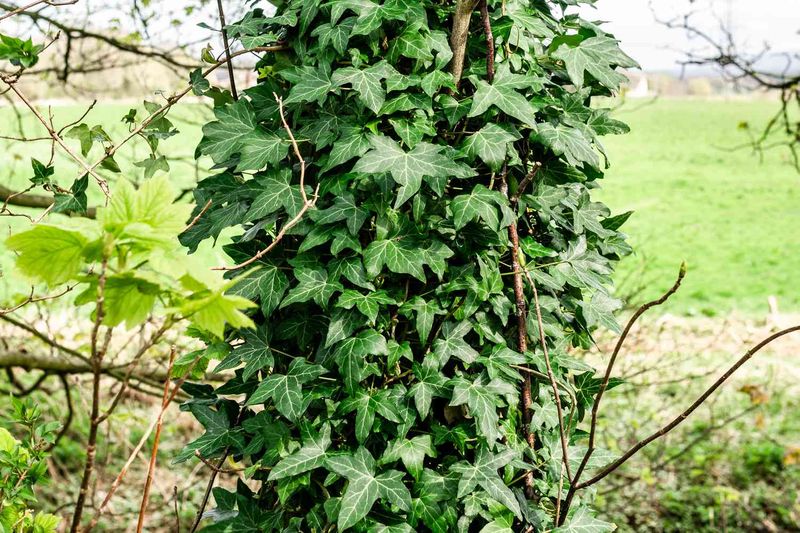
English ivy looks tidy in a shaded tree bed, but that lush green carpet can quietly become one of the worst things you put near your trees. In North Carolina, this plant is classified as a severe-threat invasive species, and once it starts climbing, it can add serious stress to even healthy trees.
Swapping it out for a low-growing native groundcover is one of the most practical things a homeowner with shady beds can do this season.
Identify the ivy before deciding what to do
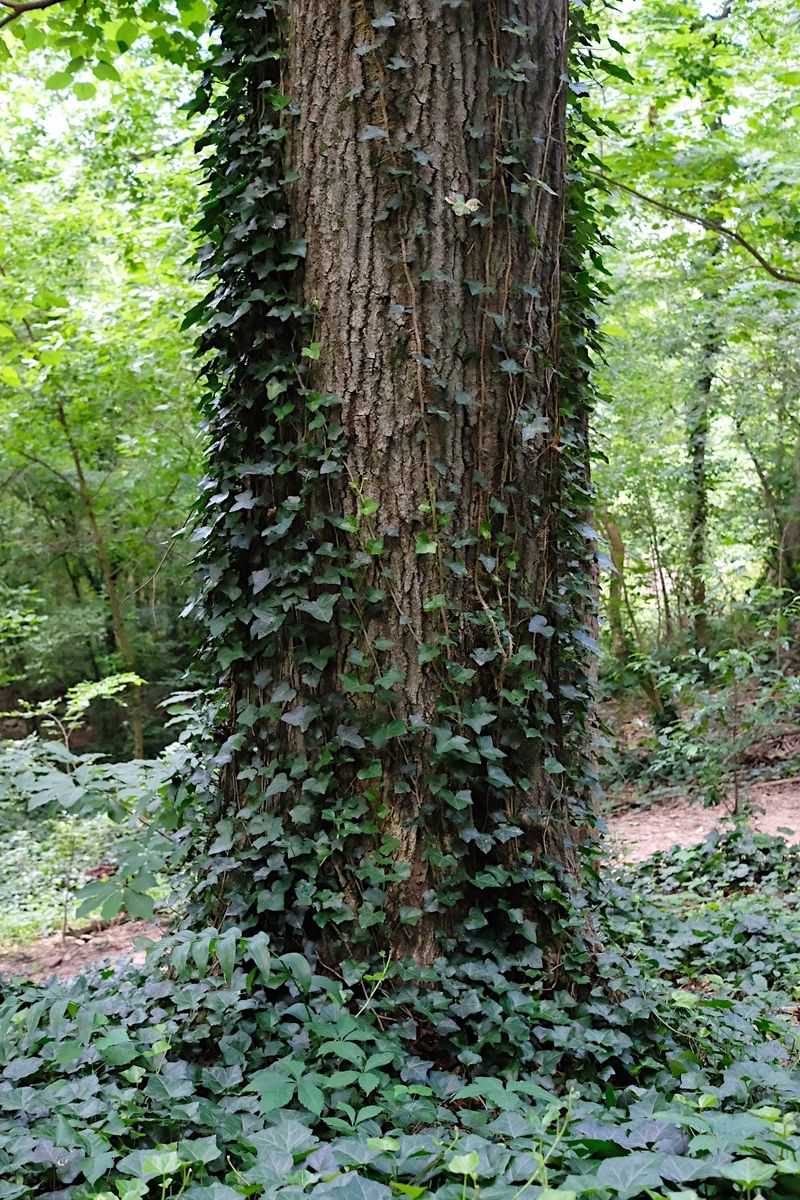
Not every plant people call “ivy” is the same, and that distinction matters before you pull out a single vine. The plant North Carolina homeowners need to watch for around tree trunks is English ivy, known botanically as Hedera helix.
This is a nonnative European species that behaves very differently from other plants that share the ivy name, including poison ivy, Virginia creeper, Boston ivy, and common houseplants like pothos. Those plants are separate species with their own characteristics and risks, and the concerns described here apply specifically to Hedera helix.
English ivy has two distinct growth stages. In its juvenile phase, the plant stays low and spreading, producing the familiar lobed, dark green leaves most people recognize.
As it matures, it shifts to an adult form with unlobed leaves, and it begins to flower and produce berries that birds carry into natural areas. NC State Extension’s plant profile for English ivy describes how the plant uses small aerial rootlets to attach itself to trees, fences, walls, and other vertical surfaces as it climbs.
Those rootlets are not roots in the soil-feeding sense, but they allow the vine to grip bark tightly as it moves upward.
North Carolina classifies English ivy as a Rank 1, “Severe Threat” invasive plant, the highest category on the state’s invasive plant list. According to the North Carolina Native Plant Society’s revised invasive plant list, that ranking is reserved for plants that spread readily into native plant communities and displace the native vegetation that local wildlife and ecosystems depend on.
English ivy can escape from planted beds, move into adjacent woodlands, and crowd out native understory plants that would otherwise grow there.
Understanding exactly which plant you are dealing with helps you make a focused decision. If the vine climbing your tree has those characteristic lobed leaves and is producing a thick mat at the base of the trunk, there is a good chance it is English ivy, and the guidance in this article applies directly to your situation.
Ivy can damage trees without literally strangling them
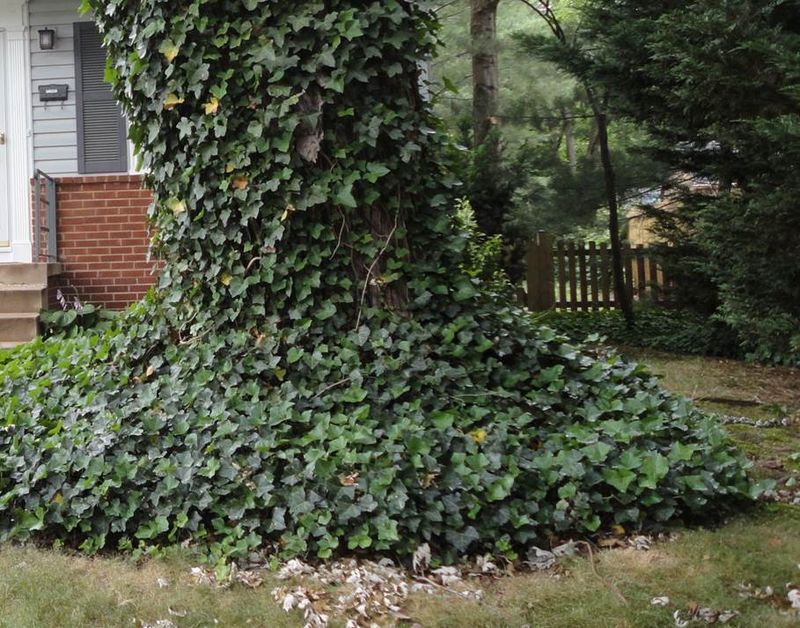
The phrase “strangling trees” gets used a lot when people talk about ivy, but the actual mechanism of harm is more complicated and worth understanding clearly. English ivy is not a parasite.
It does not insert itself into the tree’s vascular system or pull water and nutrients directly from the wood. What it does instead is create a set of physical conditions that can gradually increase stress on the tree, and those conditions become more serious the higher the ivy climbs.
University of Maryland Extension’s resource on English ivy outlines several ways heavy ivy growth can affect trees. When ivy reaches the canopy, it can shade the tree’s own foliage, reducing the amount of light available for photosynthesis.
A dense ivy canopy also adds significant weight to branches and increases wind resistance, which raises the chance of breakage or uprooting during storms. Moisture held against the bark by thick vine growth can contribute to bark problems and create conditions where pathogens find it easier to get a foothold.
There is another risk that gets less attention: ivy covering a trunk makes it much harder to spot early signs of structural problems. Cracks, soft spots, fungal growth, and evidence of pest damage can all hide underneath a dense mat of vines.
Alabama Cooperative Extension’s guide to English ivy identification and control notes that ivy-covered trees can look healthy from a distance while underlying issues go undetected.
How much risk any individual tree faces depends on several factors: how much ivy has accumulated, whether it has reached the upper canopy, the tree’s overall health and age, the site’s exposure to wind, and local storm patterns. A young tree with ivy just beginning to climb faces a different situation than a mature tree with decades of vine growth packed into its crown.
University of Arkansas Cooperative Extension reinforces that ivy is not parasitic but that heavy coverage can contribute to tree decline, particularly when the vine load becomes substantial. The practical takeaway is that heavy ivy growth can damage trees and can increase the risk of decline, branch breakage, or outright failure, even if the process is slower and less dramatic than the word “strangling” suggests.
Cut existing ivy at the ground instead of pulling it from bark
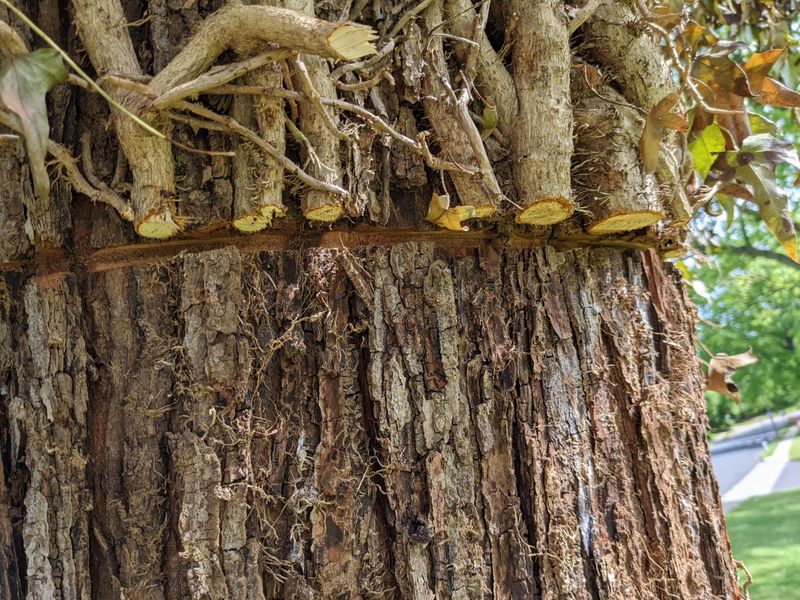
Once you decide to remove English ivy from around a tree, the safest place to start is at ground level, not up on the trunk. NC State’s integrated pest management guidance on controlling English ivy in urban landscapes recommends cutting the stems cleanly at or just above ground level and removing only as much growth from the trunk as you can reach comfortably from the ground.
The vines above the cut will lose their water supply and eventually die, dry out, and loosen their grip on the bark on their own.
Resist the urge to pull attached vines off the trunk aggressively. When ivy has been on a tree for years, its aerial rootlets can bond tightly to bark, and yanking hard can tear the bark itself.
Bark damage opens the tree to pathogens and pests, which is the opposite of what you are trying to accomplish. Ask Extension’s guidance on English ivy on trees supports this approach: sever at the base, allow upper growth to die back, and then remove loose dead vines carefully rather than forcing them off.
Do not climb the tree or attempt to remove ivy from the upper canopy yourself. That work belongs to a certified arborist with proper equipment.
Canopy removal is physically hazardous, and pulling large vine masses from height can dislodge dead wood or destabilize weakened branches.
Clearing the ground around the tree is its own challenge. Roots and stem fragments left in the soil can regenerate, so a single cutting session rarely finishes the job.
NC State notes that ground removal may require repeated hand-pulling or frequent mowing to wear the plant down over time. If you consider an herbicide, follow the product label exactly, protect nearby desirable plants and exposed roots, and be prepared for repeat treatment and ongoing monitoring.
NC State’s profile for English ivy also flags that the plant can cause skin irritation and blistering in sensitive individuals, so wear gloves, long sleeves, and eye protection throughout, and avoid touching your face while working.
Choose green-and-gold for a low-growing native alternative
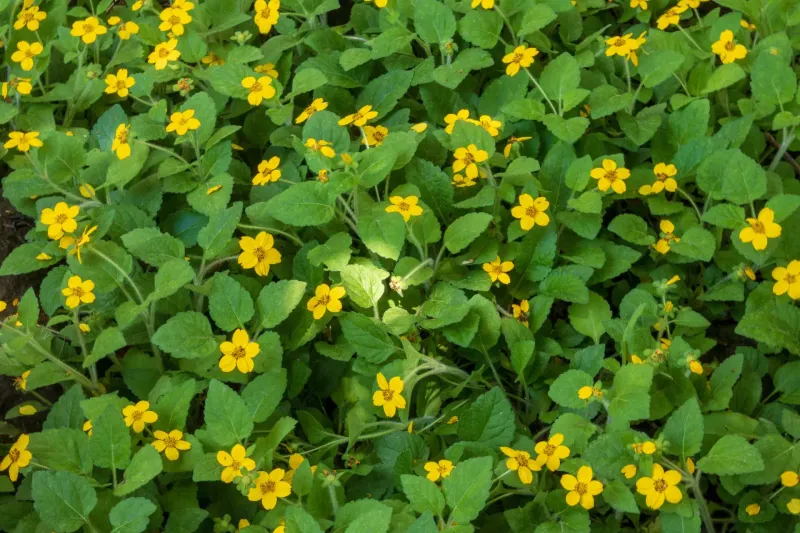
After clearing English ivy, the bed around a shaded tree trunk does not have to stay bare or go back to something equally problematic. Green-and-gold, Chrysogonum virginianum, is a North Carolina native perennial that forms a low mat of foliage rather than a climbing vine.
That distinction is the most important thing to understand about it: this plant stays on the ground.
NC State Extension’s plant profile for green-and-gold describes it as a semi-evergreen, rhizomatous groundcover that typically reaches about 2 inches tall and can spread 18 inches or more. It grows at a moderate to rapid rate under suitable conditions and produces cheerful yellow, daisy-like flowers that make it attractive in a woodland or native garden setting.
Because it spreads through rhizomes rather than climbing stems or aerial rootlets, it does not have English ivy’s ability to ascend a trunk.
That said, green-and-gold is rhizomatous, meaning it does spread laterally through underground stems. Presenting it as a plant that can never spread or affect surrounding areas would be inaccurate.
It simply does not have the climbing habit that makes English ivy a documented problem for trees.
Green-and-gold is native to woodland areas from Pennsylvania south through the Carolinas, which puts it squarely within North Carolina’s native plant range. The North Carolina Native Plant Society’s native plant booklet notes that its yellow flowers can become sparse during summer heat, and NC State characterizes it as semi-evergreen rather than reliably evergreen year-round.
Its winter performance will depend on site conditions, temperature, and the specific variety planted. For a shaded tree bed with reasonable moisture and good soil, it offers a low-growing native direction that does not carry the tree risks associated with English ivy.
Match green-and-gold to the conditions under the tree
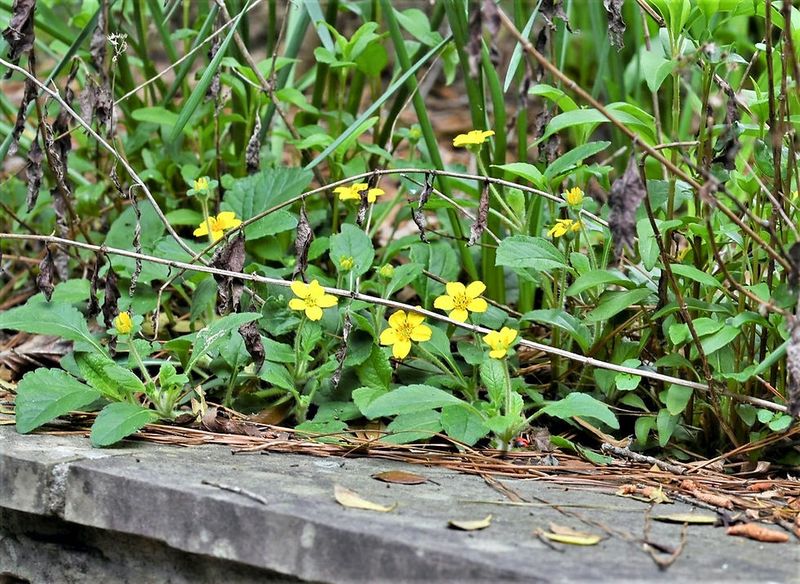
Green-and-gold performs well in the right spot, but it is not a universal solution that thrives everywhere you put it. Before planting, spend a few minutes honestly assessing the conditions under your tree.
The plant’s preference is for part shade to full shade, average moisture, well-drained soil, and acidic, humus-rich ground. A bed that gets dappled light through a tree canopy, retains reasonable moisture without staying soggy, and has organic matter worked into the soil gives green-and-gold the best chance to establish and fill in.
Hot, dry, or compacted sites are likely to produce disappointing results. If the bed under your tree bakes in afternoon sun, drains so fast that the soil dries out within a day of rain, or has soil that feels more like packed clay than woodland floor, green-and-gold may struggle or fail to spread.
NC State’s plant profile notes that full sun is tolerable only when the soil stays consistently moist, which is a condition that is hard to maintain under a large tree in a North Carolina summer.
Green-and-gold is one good option for a woodland-style bed, but it is not the only native groundcover worth considering. NC State Extension’s Forsyth County guide to invasive plant alternatives and the North Carolina Native Plant Society’s recommended native species list both point to other low-growing native options including wild strawberry, Allegheny spurge, foamflower, Christmas fern, sedges, and partridgeberry.
If your site runs drier or has different light conditions, one of those alternatives may fit better than green-and-gold.
Matching the plant to the actual site conditions under your specific tree is what makes the difference between a bed that fills in well and one that limps along or fails. Take a realistic look at your light levels, soil texture, drainage, and moisture before you plant.
Keep the planting clear of the trunk and root flare

Choosing the right plant is only part of the job. How you lay out the bed around the tree matters just as much for keeping the trunk healthy.
The root flare, the area where the trunk widens and meets the soil, should stay visible and dry. Burying it under soil, mulch, or groundcover plants creates the same kind of persistent moisture problem that made English ivy a concern in the first place.
NC State Extension’s Woody Ornamentals handbook recommends starting mulch at least 6 inches away from the trunk. That gap allows air circulation, keeps bark from staying wet, and reduces the risk of rot and pest entry at the base of the tree.
Apply mulch in a layer no deeper than 2 to 3 inches, and avoid piling it into a mound against the bark, a common mistake sometimes called “volcano mulching.”
Plant green-and-gold in the surrounding bed area, not directly against the trunk or over the root flare. NC State’s green-and-gold profile notes that the plant spreads laterally through rhizomes, so give it room to grow outward rather than positioning it so close to the trunk that spread naturally moves it into the bark zone.
A planting ring that begins a foot or more from the trunk and extends outward into the bed gives the plant space to do what it does naturally without crowding the tree’s base.
Monitor the bed in the first year or two after removing English ivy. NC State’s ivy removal guidance is clear that ivy root fragments and seeds in the soil can produce new growth, and you may see ivy returning before green-and-gold has fully filled in.
Pull new ivy shoots as soon as you spot them, and check the trunk regularly to catch any regrowth before it re-establishes a climbing habit.
Make the replacement a site-matched decision
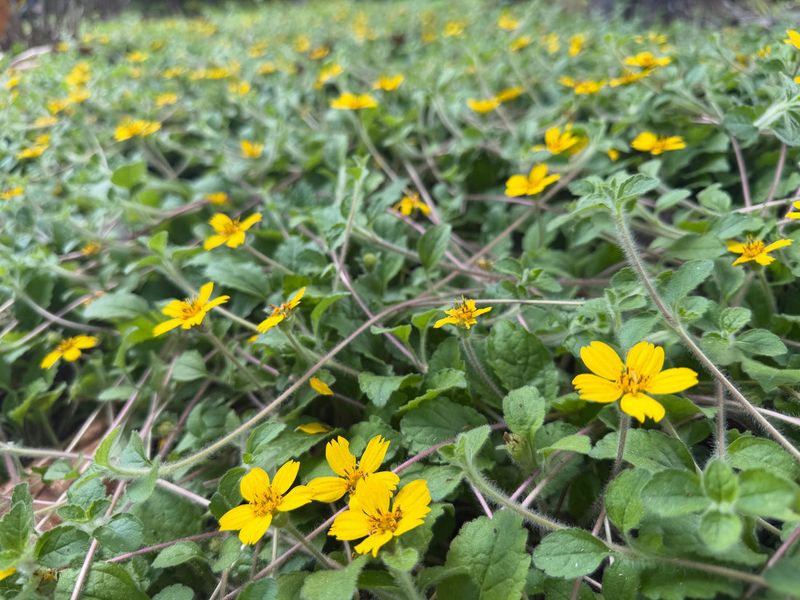
Replacing English ivy with a native groundcover is a practical decision, not a complicated one, but it works best when it starts with an honest look at your site. Remove the ivy carefully, cutting at the base and letting upper vines die rather than forcing them off the bark.
Understand that the risks English ivy creates come from climbing coverage, added physical load, and the stress of persistent moisture near the bark, not from any parasitic action on the tree itself.
Green-and-gold is a well-suited native option when your bed offers part shade or full shade, reasonable moisture, and well-drained, humus-rich soil. NC State’s profile for green-and-gold is the clearest guide to whether the plant matches your specific conditions.
It lacks English ivy’s climbing habit, stays low to the ground, and can contribute to a native or pollinator garden when site conditions are suitable. It does not directly guarantee improved tree health or specific wildlife outcomes, but it removes a documented invasive plant and replaces it with a species that belongs in North Carolina’s native landscape.
If your site does not match green-and-gold’s preferences, other North Carolina native plant alternatives are worth exploring, and NC State’s ivy removal guidance remains useful regardless of which replacement you choose. The strongest move you can make for the trees in your yard is removing a Rank 1 invasive and giving the ground beneath them back to a plant that evolved to be there.