
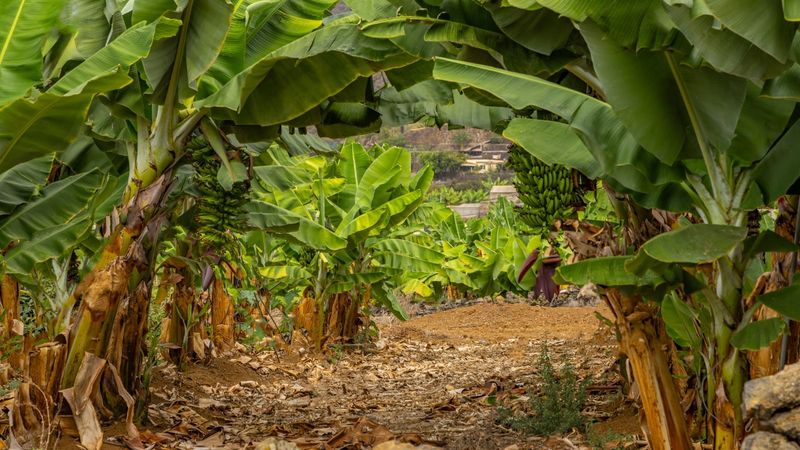
Planting a banana in a Florida yard sounds simple enough: drop it in the ground, give it some water, and wait for fruit. What most gardeners find out later is that bananas grow fast, spread wide, and need steady attention to actually produce a harvestable bunch.
The plant you bring home in a nursery pot is just the starting point of a much bigger commitment. Understanding what comes next can save a lot of frustration and help you decide whether a banana belongs in your yard at all.
The plant in the pot is only the beginning
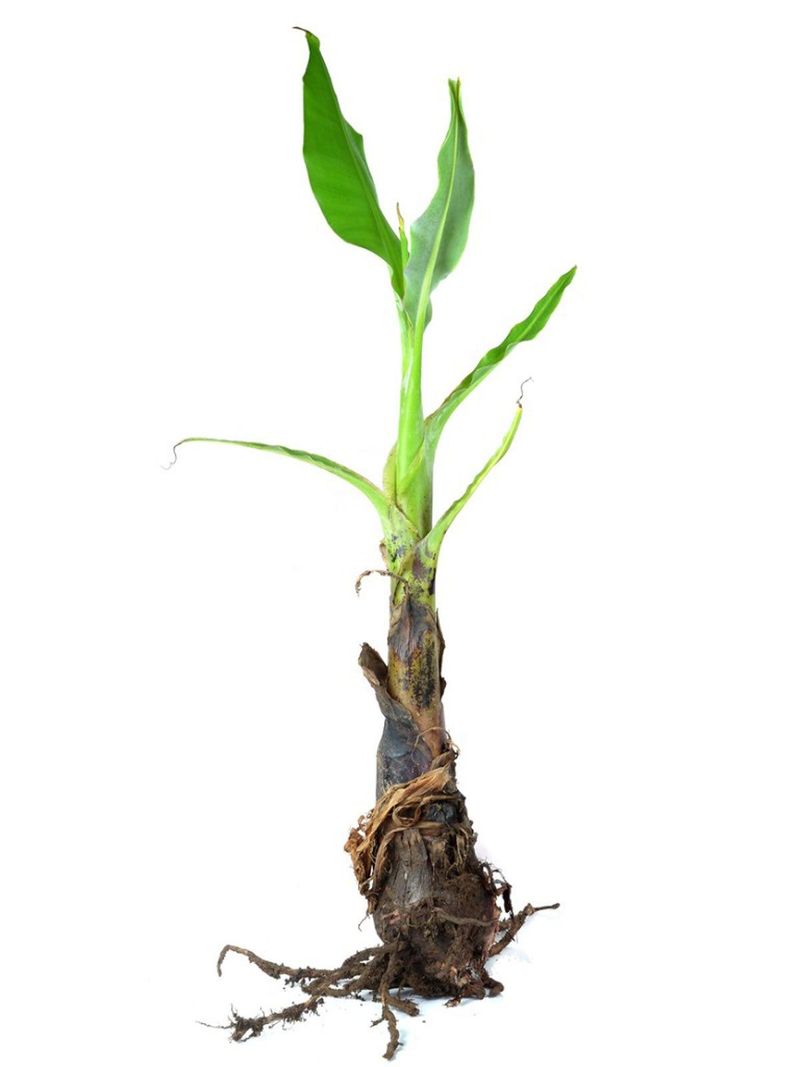
What you carry home from the nursery looks manageable. A single upright shoot, a modest root ball, and a price tag that makes it feel like a low-risk experiment.
The reality waiting underground is a different story.
A banana is not a woody tree. That thick, upright column rising from the soil is a pseudostem, a tightly wrapped stack of leaf bases that can reach 8 to 25 feet tall depending on the cultivar.
According to UF/IFAS guidance on banana growing in the Florida home landscape, each pseudostem produces fruit exactly once and then dies. It does not resprout from that same stem.
The plant’s future depends entirely on what is happening underground.
Below the soil sits the rhizome, a dense, starchy growing point that continuously sends up new shoots called suckers. Those suckers are how the planting keeps itself going after each fruiting stem finishes its single crop.
The rhizome is permanent, and it is the engine of the whole system.
This means that from day one, you are not managing a single plant. You are starting a living production system that will generate new growth, require periodic thinning, and need consistent inputs of water and fertilizer over multiple seasons to stay productive.
The pseudostem that eventually fruits will be replaced by a younger sucker, which will eventually be replaced by another one after that.
Gardeners who go in expecting a tidy, self-contained ornamental often get a surprise when the mat begins to expand and new shoots start pushing up around the base. Resetting that expectation before planting saves a lot of frustration.
A banana in the yard is a commitment to ongoing management, not a one-time installation.
A banana needs room for a mat, not just a planting hole
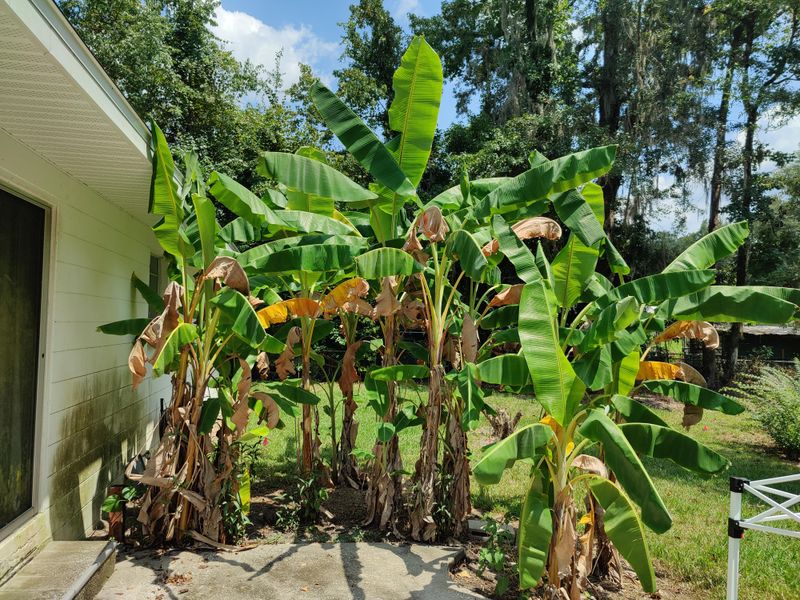
Most gardeners measure a planting hole by the size of the root ball in the pot. With bananas, that measurement misses most of what matters.
The real footprint of a banana planting is the mat it becomes over time, and that mat can stretch considerably beyond where you dug.
As the rhizome matures, its root system extends outward. UF/IFAS banana growing guidance notes that mature mats can send roots 6 to 10 feet beyond the original planting area.
Those roots are not deep anchors like a tree’s taproot; they spread laterally near the soil surface, which is why giving the mat adequate open ground matters more than digging a deep hole.
The lateral spread is worth taking seriously for site planning, but it is not a reason to expect structural damage. UF/IFAS guidance supports allowing plenty of space and avoiding nearby lawn chemicals, not a general warning about foundations or buried infrastructure.
The bigger practical concern is the suckers, which emerge from the rhizome and can crowd the planting quickly if left unmanaged.
Crowded suckers compete directly with each other for water, nutrients, and light. When too many stems grow in the same mat, the result is smaller, lower-quality bunches and a tangled mass that is harder to maintain.
UF/IFAS Gardening Solutions recommends limiting a productive mat to roughly three or four stems at different stages: one mature or fruiting stem, one mid-sized stem, and one or two younger replacement plants. That staggered structure keeps production moving while keeping the mat manageable.
Removing unwanted suckers takes some effort. Cutting them at ground level often is not enough because the bud below the soil can resprout.
UF/IFAS advises gouging out the remaining underground bud when the goal is to stop regrowth entirely. It is physical work, but it is the kind of routine task that keeps the mat from outgrowing its space.
For reference, the UF/IFAS Assessment of Musa acuminata does not classify common edible bananas as a problem species in Florida’s natural areas. Vigorous suckering and mat expansion are management challenges, not signs of an invasive plant.
The solution is routine thinning, not avoidance.
Each fruiting stem finishes one crop while the mat carries on
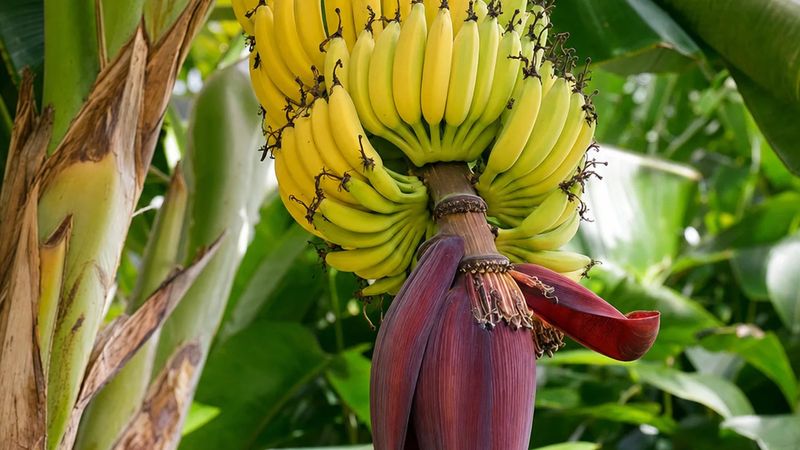
Getting a banana to actually produce fruit in Florida takes longer than most gardeners expect, and the timeline is not fixed. Temperature, cultivar, soil moisture, and care all influence how quickly things move from planting to harvest.
Under suitable conditions, first flowering commonly takes about 10 to 15 months after planting. After the flower stalk appears, the fruit itself needs roughly 80 to 180 days to develop and ripen, depending on the same variables.
UF/IFAS Extension Pinellas County and UF/IFAS home landscape guidance both confirm these ranges, which means a gardener planting today might be looking at fruit somewhere between one and two-plus years out, depending on conditions.
Once that first pseudostem flowers and the bunch is harvested, the stem is done. It will not produce a second bunch.
At that point it should be cut down and removed, and the responsibility for future fruit passes to the younger suckers already growing in the mat.
This is where the staggered-mat approach pays off. If you have been maintaining a mat with stems at different stages of development, a younger stem is already on its way toward flowering when the first one finishes.
That younger stem becomes the next fruiting candidate, and a newly selected sucker takes its place in the rotation. The mat keeps producing because the replacement system is already in motion.
The distinction between growing and fruiting reliably is worth repeating. Bananas can put on impressive vegetative growth throughout most of Florida, sometimes very fast, without ever producing a harvest-quality bunch.
Rapid leafy growth is not a guarantee of good fruit. Consistent care, a suitable cultivar, a protected site, and favorable weather all push the balance toward actual production.
Gardeners who understand that distinction from the start can manage their expectations and their mat with more intention.
The right Florida site balances sun, water, and drainage
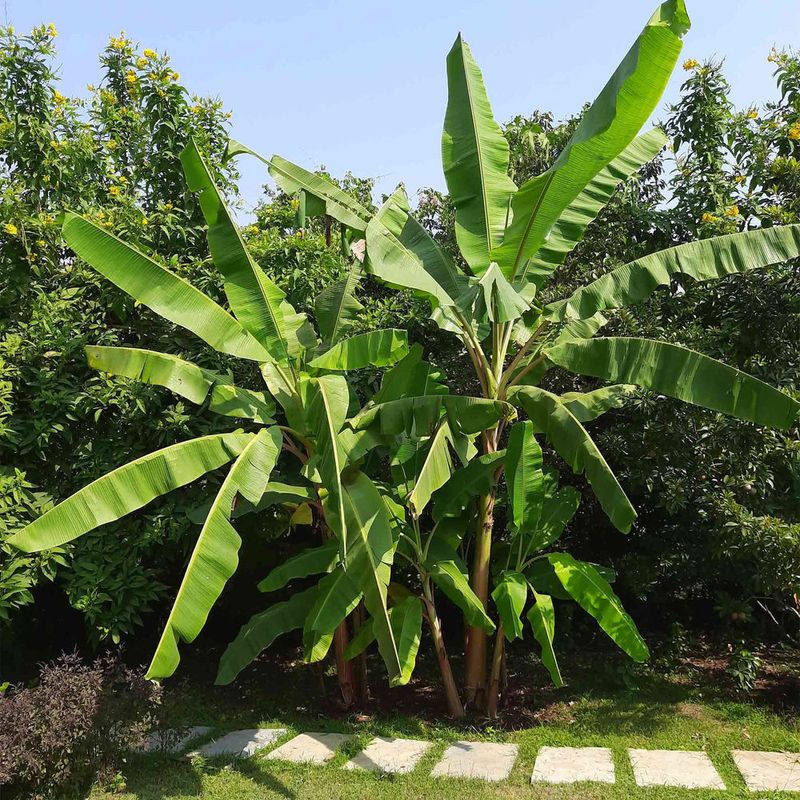
Picking the wrong spot is one of the most common and costly mistakes Florida banana growers make, because moving an established mat is not a simple task. Running through a short site checklist before planting saves significant trouble later.
Bananas want full or near-full sun, which in Florida typically means at least six hours of direct sunlight daily. Partial shade slows growth and reduces the likelihood of fruiting.
Fertile, well-structured soil gives the plant a better foundation than the sandy or calcareous substrates found across much of the state, though those soils can be amended at planting.
Wind protection matters more than many gardeners realize. Tall pseudostems and heavy fruiting bunches are vulnerable to storm damage, and Florida’s summer thunderstorms and hurricane season make this a real planning consideration.
A location sheltered by a fence, building wall, or established windbreak on the prevailing wind side reduces the risk of toppling or fruit loss. More detail on storm exposure appears in a later section, but the site decision starts here.
Water management is where many Florida banana plantings go wrong in both directions. UF/IFAS banana guidance describes consistent moisture as essential, with roughly 1 to 1.5 inches of water per week during dry periods as a general target.
However, bananas do not tolerate continuously saturated soil, stagnant floodwater, or sites with a persistently high water table. Root damage and decline follow when the soil stays wet without draining.
Low spots that collect water after rain, drainage swales, and areas that flood regularly are poor choices for a banana planting. UF/IFAS Gardening Solutions notes that raised beds or mounds can make wetter sites workable by improving drainage around the root zone.
That extra effort at planting is far easier than relocating a mature mat later.
The practical site test before planting: observe the spot after a heavy rain. If water stands for more than a few hours, the drainage is not adequate for a productive banana planting without modification.
Good sun, reasonable shelter, and reliable drainage are the non-negotiable starting points.
Florida soil turns feeding and protection into recurring jobs
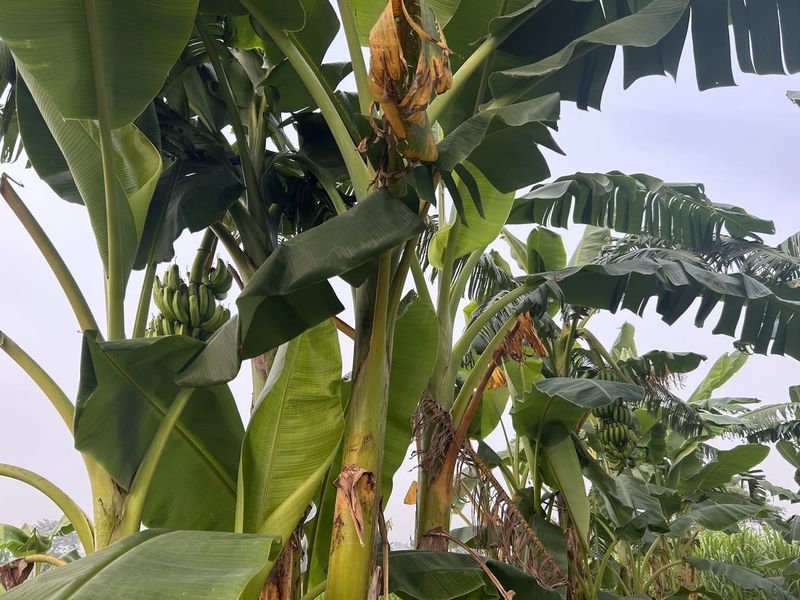
Florida’s soils are famously fast-draining. Sandy soil in particular does not hold nutrients well; rain and irrigation push them down through the root zone before the plant can fully use them.
Calcareous soils common in South Florida add another layer of complexity by affecting nutrient availability through pH. Both conditions mean that a single planting amendment at the start does little to sustain a banana through a full growing season.
For maximum production, UF/IFAS banana growing guidance describes four to six fertilizer applications per year. That frequency reflects how quickly nutrients move through Florida’s soils, not an unusual demand from the plant itself.
The recommended formulation leans toward relatively high potassium, with a 6-2-12-type fertilizer cited as an example. Potassium supports fruit development and overall plant health, and Florida’s leached soils often run low in it.
Rates should follow specific UF/IFAS fruit crop recommendations and the product label rather than a single universal figure, since application amounts vary by plant size, soil type, and growth stage.
Avoid applying lawn weed-and-feed products near the banana mat. Herbicide components in those formulations can injure or kill banana plants, and the mat’s surface roots cover more ground than the visible plant suggests.
Mulch does two useful jobs around a banana planting: it slows moisture loss from the soil surface between watering or rainfall events, and it suppresses weeds that would otherwise compete with the mat. A few inches of organic mulch applied around the base helps maintain more consistent soil moisture, which the plant needs to grow and fruit well.
One specific hazard that catches Florida gardeners off guard is lawn equipment. String trimmers and mower decks can slice into the base of a pseudostem, causing wounds that weaken the plant or kill it outright.
Keeping equipment away from the pseudostem and letting the mulch layer serve as a visual buffer around the base protects the plant from a common and entirely preventable source of damage.
Storms, freezes, and disease can delay the harvest
Florida’s climate gives bananas a long warm season to work with, but it also delivers the kind of weather events that can set a planting back by months or wipe out a season’s crop entirely. Knowing what to watch for helps gardeners respond quickly rather than wondering what went wrong.
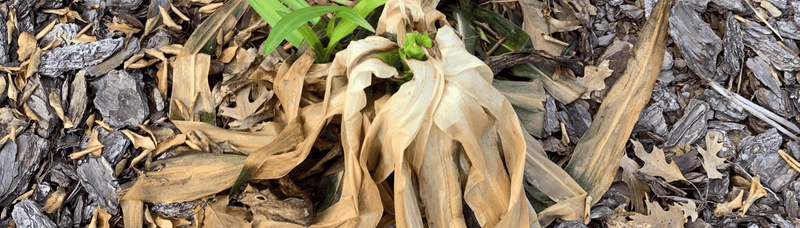
Frost and freezes are the most predictable threat for gardeners in North and Central Florida. A hard freeze can kill the aboveground growth of a banana plant down to the ground.
The rhizome often survives and will resprout when temperatures warm, but the plant then has to rebuild its pseudostem before it can flower and fruit again. A freeze-damaged planting may lose an entire season of production even if the underground portions survive.
South Florida gardeners face this risk less often, but occasional cold snaps still occur.
Wind damage is a recurring management issue throughout the state. Tall pseudostems and heavy fruiting bunches can topple in strong thunderstorms or tropical systems.
UF/IFAS guidance on hurricane and windstorm recovery for tropical fruit trees notes that bananas often recover after storm damage by producing new pseudostems from underground growing points. Recovery is real, but it does not deliver an immediate crop.
The replacement pseudostem still needs time to reach maturity and flower.
Disease and pests add another layer of unpredictability. UF/IFAS identifies Panama disease, Sigatoka diseases, banana weevil or borer, and nematodes as important banana problems in Florida.
Panama disease is a soilborne fungal infection that can kill pseudostems and persist in the soil for years. Sigatoka diseases attack the foliage and reduce the plant’s ability to ripen fruit properly.
Banana weevil larvae tunnel through the rhizome and pseudostem base, weakening or killing plants. Nematodes damage roots and reduce the plant’s ability to take up water and nutrients.
Clean planting material is the first line of defense against all of these problems. Disease-free tissue-culture plants or carefully inspected, non-infested suckers from a reliable source are far safer starting points than unknown divisions from a neighbor’s yard, which may carry pests or pathogens without any visible signs.
Sanitation practices, including removing and disposing of dead plant material promptly, and regular monitoring for early symptoms keep problems from compounding over time. UF/IFAS Musa species documentation supports this cautious approach to planting material selection.
Choose the banana that matches the job
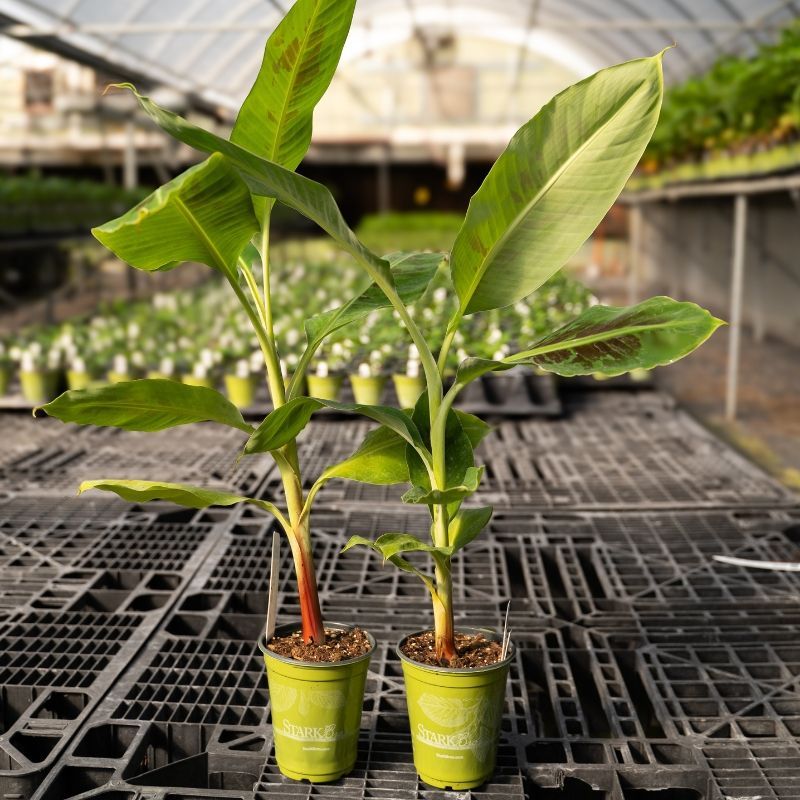
The cultivar choice is where a lot of Florida banana plantings go sideways. A plant labeled simply “banana” at a garden center could be a compact edible, a tall ornamental, a cold-tolerant variety that produces little usable fruit, or something in between.
Matching the cultivar to the actual job saves time, space, and disappointment.
For gardeners who want edible fruit from a relatively manageable plant, ‘Dwarf Cavendish’ is a widely available option that stays shorter than many standard cultivars, making it easier to harvest and less vulnerable to wind. UF/IFAS Gardening Solutions and UF/IFAS home landscape guidance list ‘Goldfinger’ and ‘Mona Lisa’ among recommended choices for Florida home landscapes.
These cultivars are recommended based on their overall performance in Florida conditions; any disease-related characteristics noted in UF/IFAS documentation apply to specific named pathogens and do not replace the need for clean planting material, good sanitation, and ongoing monitoring.
The phrase “cold-hardy banana” deserves careful reading before purchase. Cold hardiness in this context often describes the plant’s ability to survive a freeze by resprouting from the rhizome, not its ability to produce good edible fruit after cold exposure.
The Japanese fiber banana, for example, is cold-tolerant but is an ornamental plant, not a productive eating banana. UF/IFAS Extension Miami-Dade County guidance on growing bananas in South Florida reinforces that cultivars differ substantially in size, cold tolerance, and fruit quality.
Ornamental bananas have real value in a Florida landscape for bold foliage, striking flowers, or wildlife interest, but expecting grocery-store-quality eating fruit from every Musa species sets up a frustrating outcome. Knowing the intended use before buying keeps the selection process honest.
The final go-or-no-go question is really about commitment. A productive banana mat in Florida requires regular watering, repeated fertilization through the growing season, consistent sucker management, protection from equipment damage, monitoring for pests and disease, and the resilience to absorb weather setbacks without giving up on the planting.
Gardeners who can build those tasks into a routine tend to get good results. A banana that matches your site, your space, and your maintenance habits is genuinely rewarding to grow.