
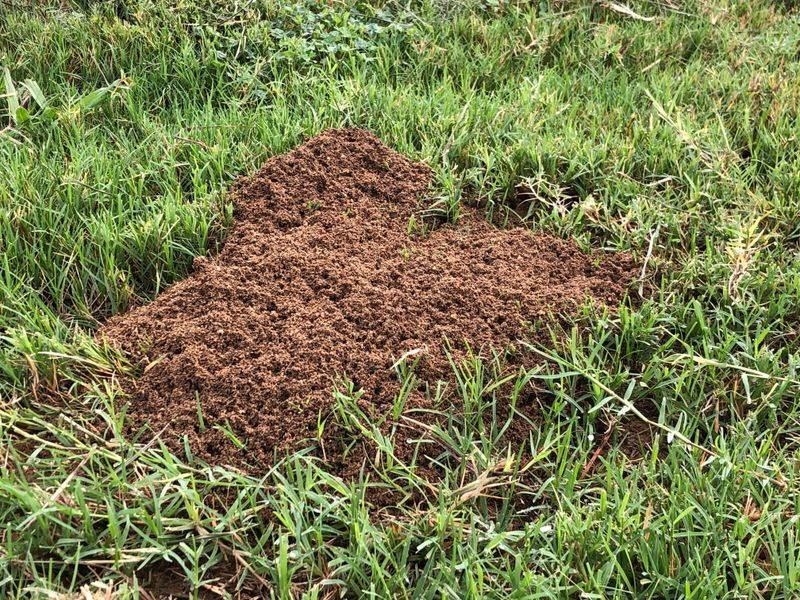
Walk across a Central Texas yard after a stretch of dry weather breaks and you might count a half-dozen dirt mounds that weren’t there last week. Those mounds can feel like an invasion, but the story behind them is a little more complicated than it looks.
Understanding what’s actually happening underground can help you treat the problem safely and keep it from getting worse by spring.
Some fall mounds may be newly visible, not newly created
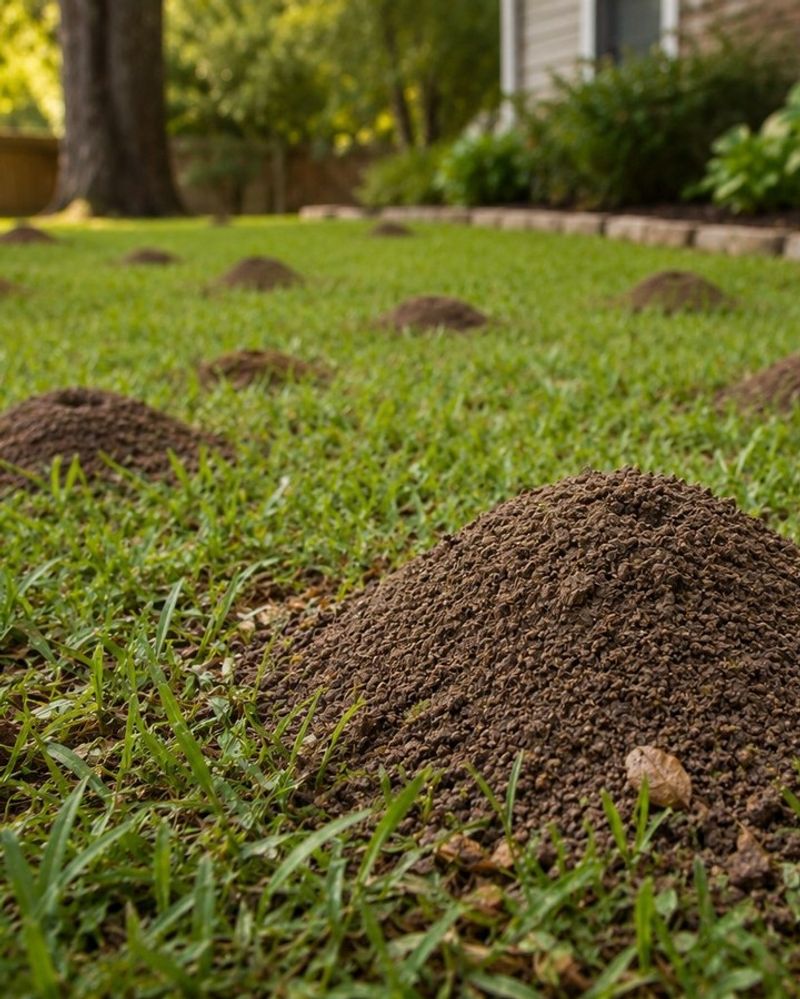
Walking your yard and counting mounds that weren’t visible a few weeks ago can feel alarming, but what you’re likely seeing is a change in colony behavior rather than proof that new colonies appeared overnight. Fire ant colonies can stay largely underground during extended hot, dry spells, suppressing visible mound-building while the colony remains very much alive.
When local soil moisture improves, even slightly, workers may rebuild tunnels closer to the surface, repair disturbed soil, or shift activity upward in ways that make mounds suddenly obvious.
According to Texas A&M’s fire ant FAQ, drought can suppress mound construction even though colonies persist underground, and colonies may become more noticeable once conditions improve. That means several mounds appearing at roughly the same time does not necessarily mean several new colonies arrived.
Existing colonies may simply be rebuilding or moving their visible activity after a period of suppression.
A Texas AgriLife Extension newsletter reinforces that point: rain does not create fire ant colonies or cause them to multiply from nothing. If your neighborhood recently got a meaningful rain after a dry stretch, that local event is the most likely explanation for mounds that appeared quickly.
One additional caution worth keeping in mind: National Weather Service drought reports for North and Central Texas described worsening drought conditions through September 2026, with limited rainfall across much of the region. That means any post-rain visibility surge should be tied to a specific local rain event at your address rather than assumed to reflect a region-wide fire ant explosion.
The evidence does not support a measured population surge across all of Central Texas this fall.
Identify the ant before treating the yard
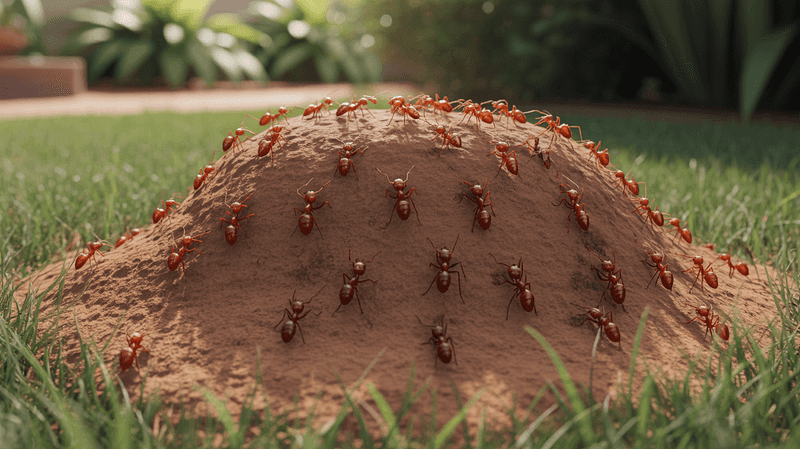
Before reaching for any pesticide, spend a few minutes confirming you’re actually dealing with fire ants. Red imported fire ant mounds tend to be loose and fluffy in texture, with no obvious central entrance hole on top.
That last detail is a useful clue because many other ant species build mounds with a clear opening at the center.
When you disturb a fire ant mound, even slightly, the workers respond fast and aggressively. They pour out and climb vertical surfaces, including your shoes and legs, within seconds.
The workers vary noticeably in size, ranging from small to medium within the same colony, and they are typically reddish-brown. Texas A&M’s fire ant identification guide describes these as common characteristics, not absolute proof, and specifically cautions that appearance alone cannot confirm a fire ant.
Central Texas is home to several native ant species as well as other introduced ants. UT Austin’s invasive species research program notes that the region supports a mix of native and non-native ants, which means a reddish ant or a dirt mound in your yard is not automatically a fire ant.
Treating the wrong species with a broadcast pesticide wastes money, disrupts beneficial insects, and can leave the actual problem untouched.
If you’re not certain after looking at the mound and the workers, check a reliable identification resource before applying anything. Your county’s Texas A&M AgriLife Extension office can help with identification, and the fire ant identification guide linked above includes photos and additional clues.
One more thing: Texas A&M’s Two-Step guidance and a University of Georgia fire ant publication both warn against disturbing the mound before treatment, because agitation can cause the colony to relocate and reduce how effectively any treatment reaches the ants.
Why fall can help reduce spring problems
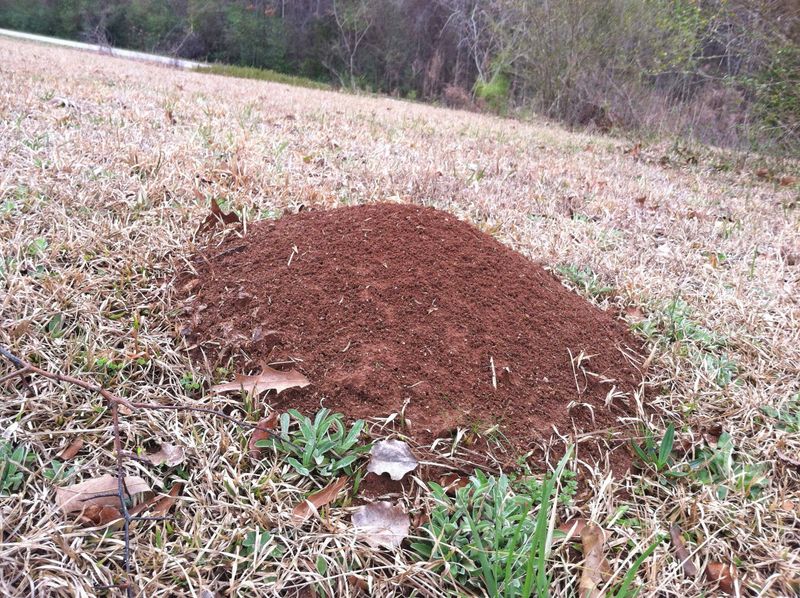
Fall is worth treating as a practical management window, though it is not the only time fire ant control works. The reasoning is straightforward: late August through October generally brings temperatures in which ants are still actively foraging above ground.
Slow-acting baits applied during this window can be carried into the colony, reach the brood and queen over several weeks, and reduce the overall population heading into winter. A smaller colony in winter means fewer queens available to expand territory when warm weather returns.
Texas A&M’s fire ant management page supports treating in fall specifically because ant activity and bait collection tend to remain favorable before cooler temperatures arrive. The Texas A&M fire ant FAQ also notes that baits can be applied during the warm season whenever ants are foraging, so fall is an opportunity rather than a hard deadline.
University of Georgia Extension echoes the seasonal logic. A Georgia Extension fall treatment guide explains that treating in fall targets colonies while they are still active and before they fully consolidate for winter, with the payoff showing up as reduced spring populations.
A separate Georgia Extension piece on bait effectiveness notes that soil temperature and moisture affect where colonies and brood are located, which means the “ants are closer to the surface in fall” rule of thumb does not apply universally to every weather pattern.
The actual best timing in your yard depends on your local temperature, current soil moisture, whether ants are actively foraging, and the specific product you choose. Fall is a management opportunity that can pay off the following spring, not a guarantee that every colony in every yard will respond the same way.
Use the Two-Step Method for widespread infestations
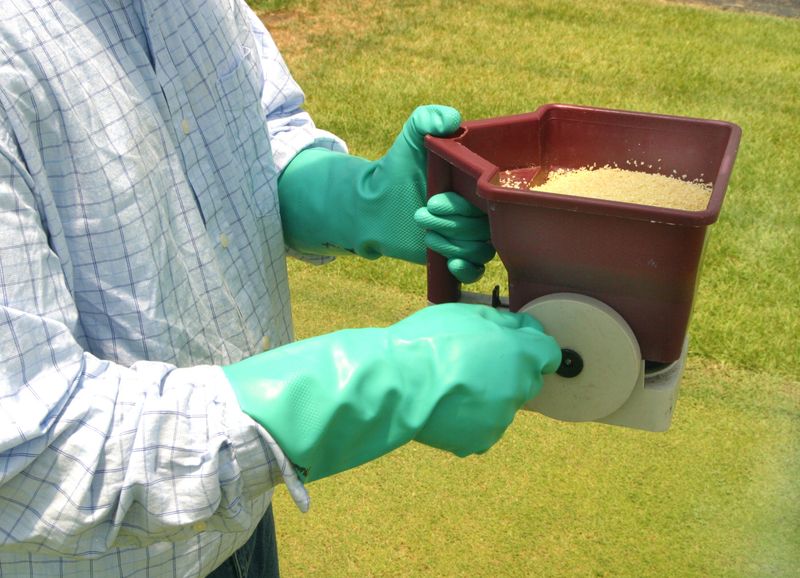
Targeting only the mounds you can see is a common mistake. Small or underground colonies may have no obvious surface mound yet, and those hidden colonies can grow and become a bigger problem by spring.
Treating only the largest visible mounds means a significant portion of the yard’s fire ant population stays untouched.
Texas A&M’s Two-Step Method addresses this by separating control into two distinct tasks with different purposes. The first step is broadcasting a fire ant bait labeled for your intended site and pest across the entire infested lawn or area.
Worker ants forage for food, collect the bait granules, and carry them back into the colony, where the active ingredient can reach the brood and queen. Because this happens across the full yard rather than mound by mound, broadcast baiting is far more efficient for yards with multiple mounds or hidden colonies.
The Texas A&M Extension fire ant control publication explains that broadcast bait is intended for population reduction across an area, while a direct mound treatment is primarily for immediate control of a specific hazard. Those two purposes are not interchangeable, and treating every mound individually with a drench or dust while skipping the broadcast step leaves the surrounding yard population largely intact.
The second step is targeted mound treatment for locations where a faster response is needed: near doorways, play equipment, sidewalks, or anywhere children and pets spend time. Direct mound treatments can act more quickly than baits, but they require more labor and may not eliminate the queen or deeper sections of a large colony.
University of Florida EDIS fire ant guidance notes that direct treatments work best when the colony is not disturbed beforehand and when the application reaches deep enough into the mound to contact the brood chamber. Use Step Two for urgent hazards; rely on Step One for broader yard-wide suppression.
Apply bait when ants are actively foraging
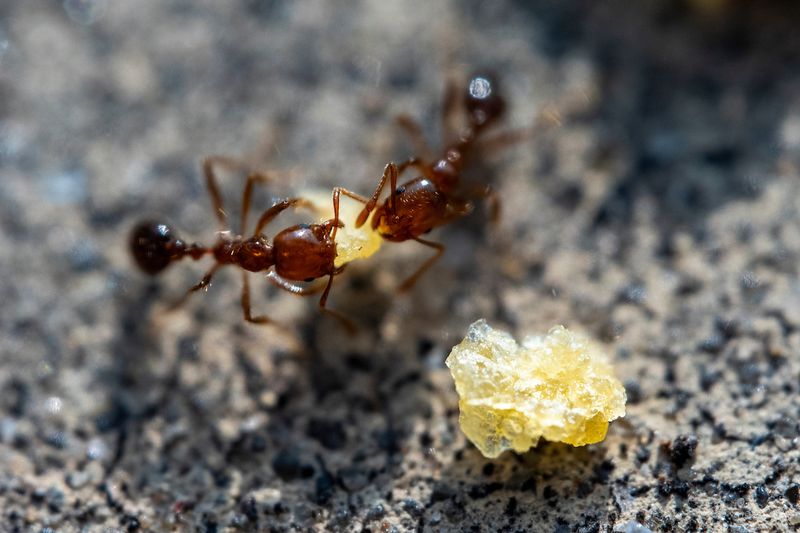
Even the best fire ant bait does very little if ants aren’t out collecting food when you apply it. Worker ants need to pick up the granules and carry them back to the colony, so timing the application to match active foraging is one of the most practical steps you can take to improve results.
A simple field test takes the guesswork out of it. Place a small amount of bait or another food attractant, such as a potato chip or a piece of hot dog, near ant activity and watch for roughly 30 to 60 minutes.
Texas A&M’s fire ant FAQ recommends this approach to confirm ants are foraging before committing to a full application. If ants begin collecting the test material within that window, conditions are favorable.
If nothing moves, wait for a warmer or drier period and test again.
In Central Texas’s fall heat, ants often forage most actively in late afternoon or early evening rather than midday. Choose a warm, dry day when the ground and grass surfaces are dry to the touch.
Wet bait quickly degrades and becomes unattractive to workers, so moisture is a real obstacle. Texas A&M’s Two-Step guidance recommends applying bait when the ground and grass are dry and rain is not expected soon, but the specific rain restriction varies by product, so follow your label rather than a universal waiting period.
Before you broadcast anything, confirm the product is labeled for fire ants specifically, for the site you’re treating (lawn, ornamental bed, edible garden, pasture), and for the application method and rate you plan to use. Check the label for restrictions related to children, pets, livestock, and edible plants.
EPA label guidance is clear that the pesticide label is a legal document, and EPA pesticide safety tips remind applicators to keep children, toys, and pets away during application and for the interval specified on the label. Applying a product at the wrong rate, on an unlabeled site, or without observing reentry restrictions can create safety problems and may not deliver the control you expect.
Check the Texas A&M fire ant site-selection guide for additional guidance on matching products to specific yard areas.
Expect delayed suppression and possible reinvasion

One of the most common frustrations with fire ant control is applying a product and then seeing mounds again a few weeks later. Setting realistic expectations before you treat saves a lot of disappointment.
Many fire ant baits are slow by design: the active ingredient needs to be carried into the colony, shared among workers, and eventually reach the queen before the colony declines.
Depending on the active ingredient and the season, Texas A&M’s fire ant FAQ notes that control can take anywhere from roughly two weeks to several months. Products using insect growth regulators, such as those reviewed in Texas A&M’s product-specific guidance, may take longer to show visible results because they disrupt reproduction rather than killing workers immediately.
A fall application of a slower-acting bait may not reach its maximum suppression effect until winter or early spring, which is exactly when you want the colony numbers low ahead of the warm-season surge.
Even a well-timed, correctly applied treatment will not permanently eliminate fire ants from your yard. Reinvasion is expected and normal.
New mounds can come from queens that escaped treatment, colonies in neighboring properties that were never addressed, or floodwater events that scatter new colonies into previously treated areas. Texas A&M’s fire ant control overview explicitly states that no single method is permanently effective.
The most practical response to reinvasion is a monitoring habit rather than a one-time fix. Check your yard every few months and retreat when mound counts climb again.
Texas AgriLife’s community fire ant management resource recommends coordinating with neighbors when possible, because treatment on one property loses ground quickly if adjacent yards are left untreated. Texas A&M’s tackle page frames long-term management as an ongoing commitment rather than a single seasonal event.
Protect water, people, pets, and beneficial ants
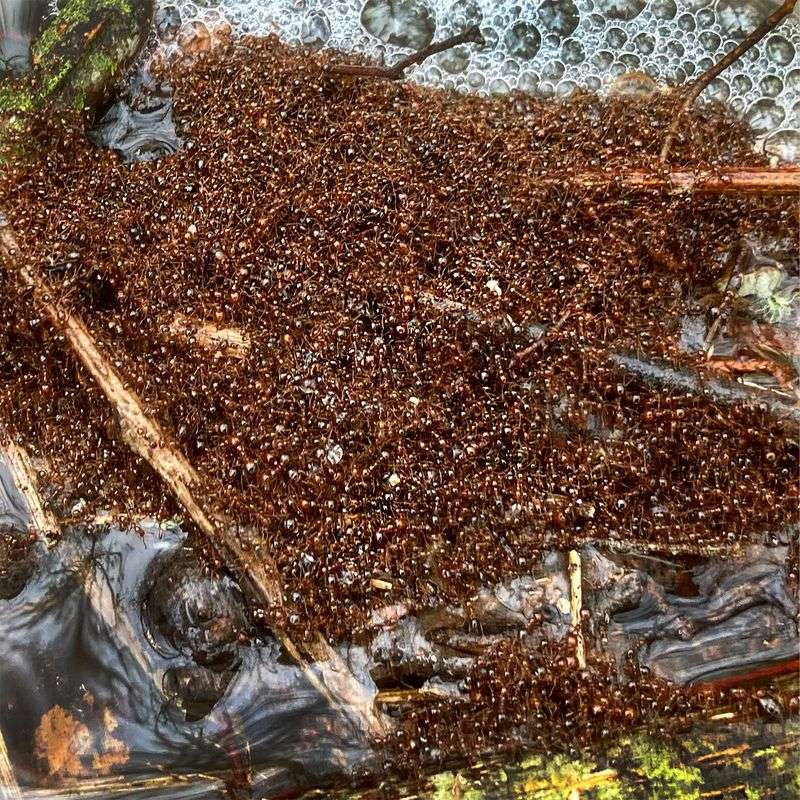
Where and how you treat matters as much as what product you choose. Some commonly used fire ant insecticides are highly toxic to fish and aquatic invertebrates, so applying them near ponds, drainage channels, streams, or other water bodies can cause serious environmental harm.
Texas A&M’s site-selection guidance warns against treating near water unless the product label specifically permits it and the application can be made without runoff risk. When in doubt, leave a treated buffer and check the label.
Broad, routine insecticide applications across a yard can also remove native and competing ant species that would otherwise occupy territory and slow fire ant recolonization. Texas AgriLife’s home ant control guide cautions that indiscriminate use of pesticides can create an “ant vacuum” that fire ants are quick to fill.
Targeted identification and treatment protects the beneficial insects that compete with them.
Avoid household remedies that sound intuitive but are either ineffective or genuinely dangerous. Gasoline, diesel, bleach, ammonia, and chlorine should never be poured on a mound.
Texas A&M Extension’s fire ant control publication specifically warns against flammable liquids, and these materials can contaminate soil, harm groundwater, and create fire or chemical hazards for you and your family. Grits, cornmeal, and club soda are not reliable control methods.
Boiling water can sometimes kill a surface mound but may damage nearby plant roots, burn the person carrying it, and fail to reach the queen in deeper sections of the colony.
Always follow EPA label requirements and review EPA pesticide safety tips before applying any product. Keep children, pets, and toys out of treated areas for the full label-specified reentry interval.
If someone is stung, brush ants off skin rather than crushing them, because crushing can trigger additional stings. CDC guidance on fire ant stings directs anyone experiencing breathing difficulty, severe swelling, chest pain, nausea, sweating, or other signs of a serious reaction to seek immediate medical help.
Start with identification and plan for maintenance
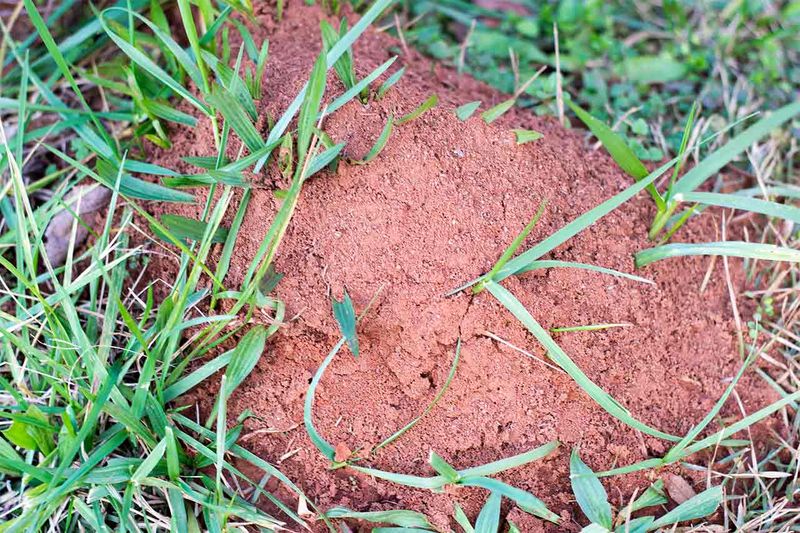
Fall mound visibility is mostly a story about existing colonies becoming easier to see, not about a wave of new infestations sweeping across the region. Keeping that distinction in mind helps you respond proportionately rather than over-treating or panicking about a problem that may be smaller than it looks.
Start by confirming the ant. Use multiple identification clues, check a reliable resource, and avoid broadcasting pesticide until you’re confident you’re targeting a fire ant.
Once you’ve confirmed the pest, broadcast a labeled bait across infested turf to reduce the broader population, then reserve direct mound treatment for urgent hazards near high-traffic areas. Follow the product label on rate, site, timing, rain restrictions, and reentry intervals every time you treat.
Plan to monitor and retreat rather than expecting one application to close the case. Texas A&M’s fire ant FAQ, the Two-Step Method, and Texas A&M’s long-term management guidance all frame fire ant control as an ongoing practice.
A yard that looks clear in December can develop new mounds by March, and that’s not a treatment failure. It’s just how fire ants work in Texas.