
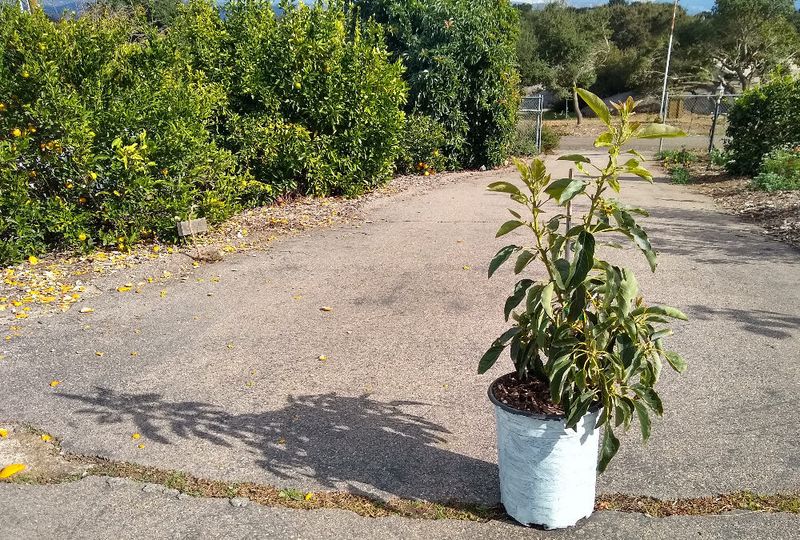
Growing an avocado tree on a small California patio sounds like a dream, but not every variety plays nice in a pot. Some stay compact and forgiving, while others sulk, shoot up too tall, or refuse to fruit without a huge yard.
Since water is precious here and space is tight in most suburban homes, picking the right tree the first time saves you money, disappointment, and wasted effort. Here is a friendly, honest guide to the varieties worth potting and the ones you should leave at the nursery.
1. Wurtz (Little Cado)
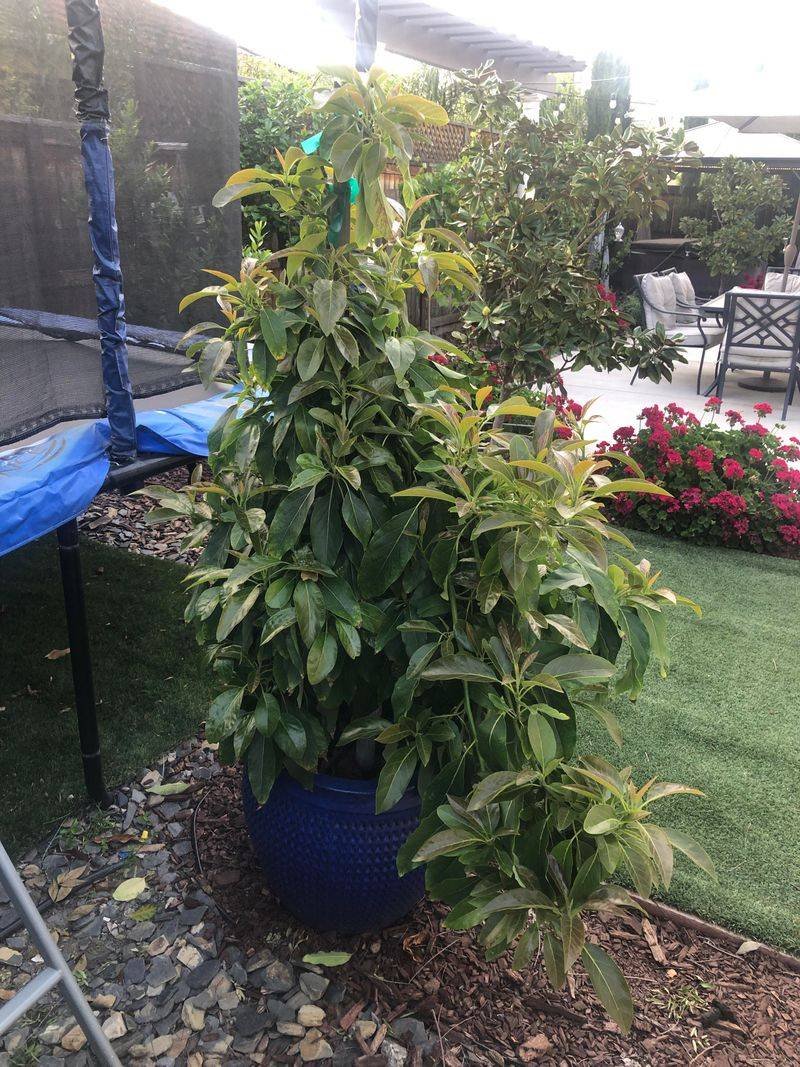
If there were a poster child for patio avocados, the Wurtz would win in a landslide. Nicknamed “Little Cado,” it is the only true dwarf avocado widely sold in California, topping out around 8 to 10 feet even in the ground, and staying much smaller in a container.
Its weeping, umbrella-like shape keeps it tidy, and it happily fruits in a large pot on a coastal or inland valley patio. The creamy, medium-sized fruit ripens in summer, which fits our long warm season perfectly.
Water-wise gardeners will appreciate that a potted Wurtz needs deep but infrequent soaks rather than daily sprinkling. Give it a spot with morning sun and afternoon protection during heat waves, and it can reward you for years without swallowing your whole yard.
2. Holiday
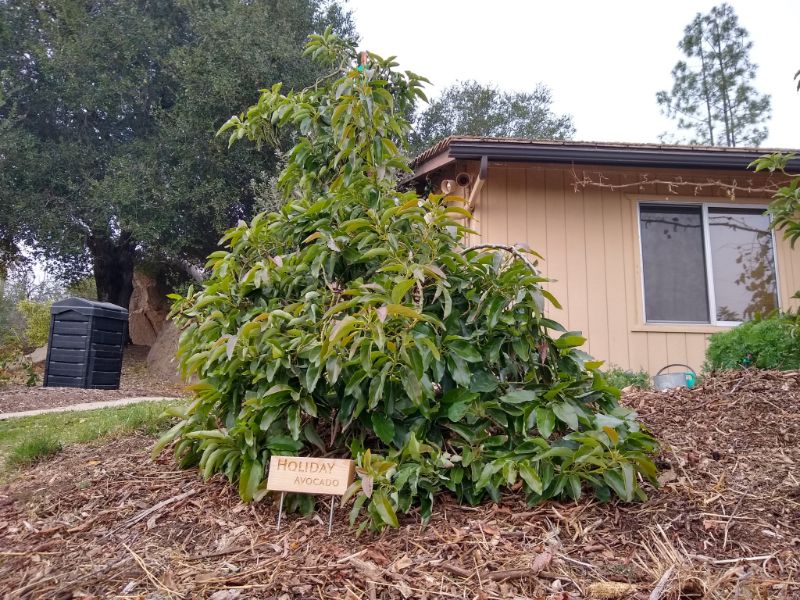
Some trees reach for the sky, but Holiday would rather sprawl out and relax. It grows low and wide with a slightly weeping habit, rarely climbing past 10 to 12 feet, which makes it a smart pick for a patio corner where height would be a problem.
The payoff is generous, pear-shaped fruit that hangs on the tree from late summer into fall, stretching your harvest across California’s extended warm season.
Because its branches spread sideways, give Holiday a wide, heavy container so it does not tip over when loaded with fruit. A little staking early on and consistent, deep watering will keep this easygoing spreader looking full and healthy.
3. Gwen
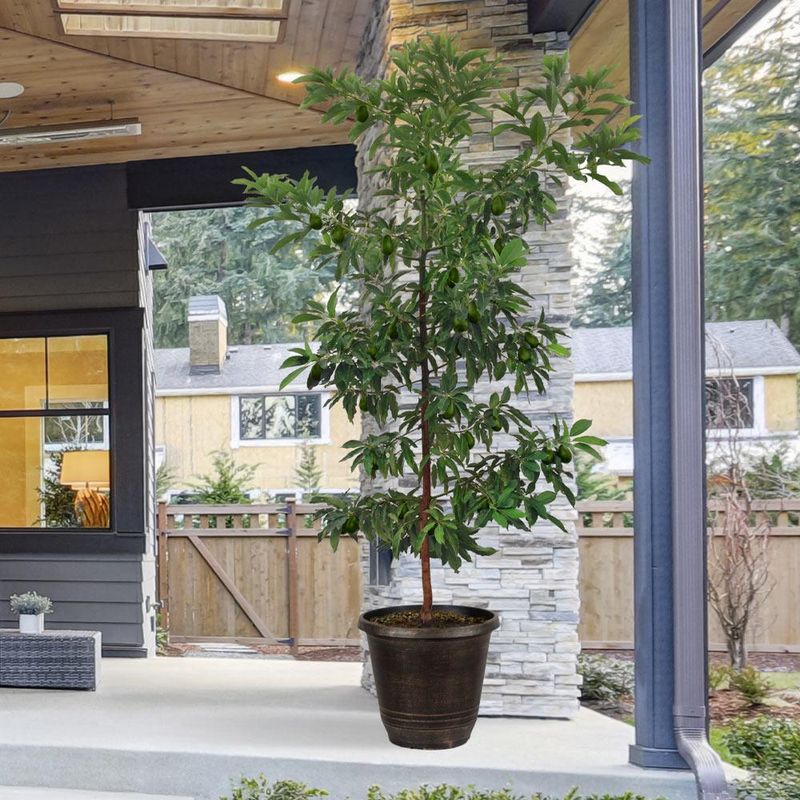
Gwen is the overachiever of the group, packing a heavy harvest into a compact, upright frame. Related to the famous Hass, it delivers rich, nutty fruit with that same pebbly skin, but on a tree that stays manageable enough for a roomy container.
Home gardeners love that it produces reliably in California’s mild coastal and inland zones, often setting more fruit than you would expect from such a tidy plant.
The one catch is that Gwen appreciates a bit of shelter from harsh inland heat and drying winds, so a patio with partial afternoon shade suits it well. Keep the root zone evenly moist but never soggy, and this dense little tree can turn a few square feet into a steady avocado supply.
4. Reed
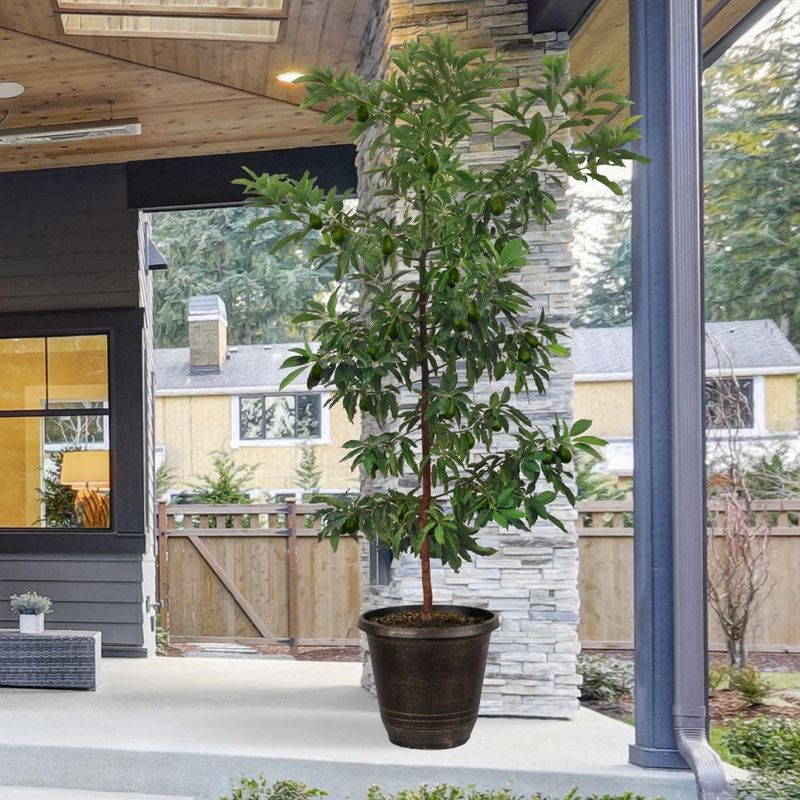
Short on floor space but tall on ambition? Reed grows in a slim, upright column rather than a wide canopy, which makes it a clever choice for narrow patios and tight corners where a spreading tree would never fit.
It rewards patience with unusually large, round avocados that have thick skin and buttery flesh, ripening through summer and holding well on the tree in California’s warm months.
Because Reed can eventually get tall, plan to prune it each year to keep it in check inside a container. A deep pot, steady deep watering, and a sheltered inland or coastal spot will help this vertical grower earn its keep on even the smallest patio.
5. Hass (Skip in Most Small Containers)
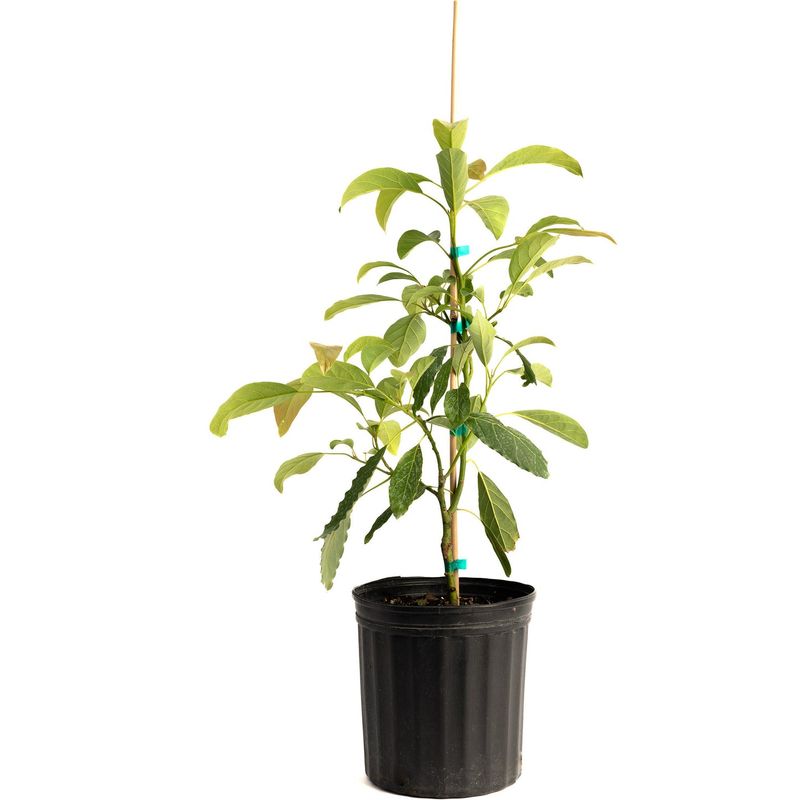
Everyone wants the Hass because it is the avocado they know from the grocery store, but this is the tree that breaks the most patio dreams. Left on its own, a Hass wants to become a sprawling, 20 to 30 foot giant, and cramming it into a pot usually means a stressed tree that fruits poorly or not at all.
You can grow one in a container for a few years as a novelty, but it will constantly fight you for size and rarely deliver a real harvest in tight quarters.
If your heart is set on that classic Hass flavor, reach for Gwen or Lamb Hass grown thoughtfully instead, and save the true Hass for gardeners with room to let it stretch out in the ground.
6. Fuerte (Skip for Tight Patios)
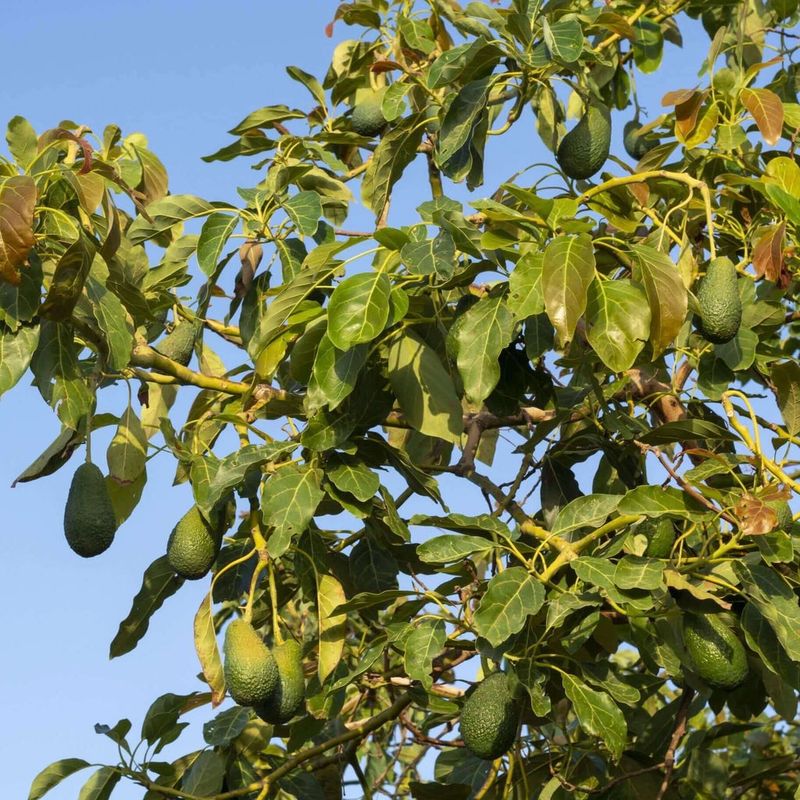
Fuerte has old-school charm and a smooth, buttery fruit that fans adore, but it is a poor match for container life. The tree naturally grows wide and rangy, throwing out long horizontal limbs that quickly outgrow any pot and any small patio.
On top of its size, Fuerte can be a moody bloomer that sets fruit unevenly, which is frustrating when you only have space for one carefully chosen tree.
Gardeners with a big yard and cooler coastal conditions can grow a lovely Fuerte in the ground. For a compact patio, though, its sprawling nature makes it one to admire from a distance rather than plant in a container.
7. Lamb Hass (Great with Regular Pruning)
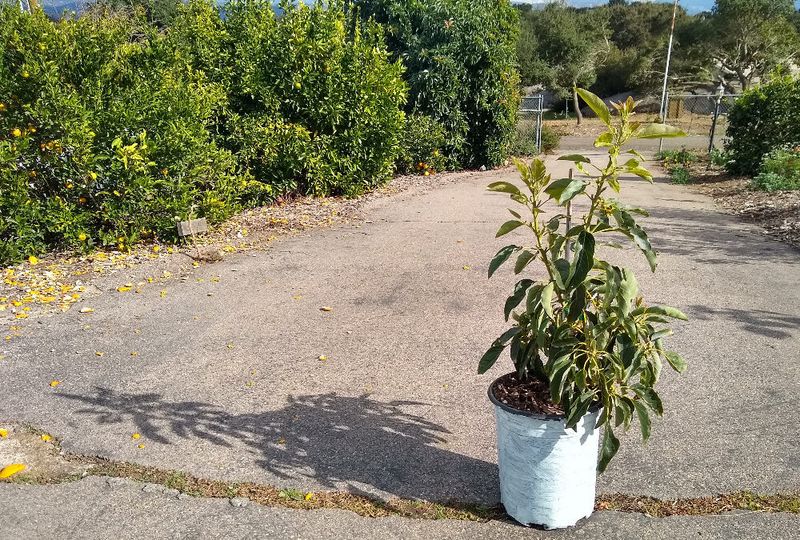
Think of Lamb Hass as the more patio-friendly cousin of the classic Hass. It carries that same rich, pebbly-skinned fruit but grows in a more upright, compact shape and shrugs off heat better, which is a real plus for inland valley gardeners.
With regular pruning, it stays in bounds in a large container and can produce respectable harvests in California’s long, sunny growing season.
The key word is pruning, since a neglected Lamb Hass will still try to climb. Keep it trimmed, give it a big deep pot, water it deeply and let the top inch dry between soaks, and you get grocery-store flavor on a tree that respects your limited space.