
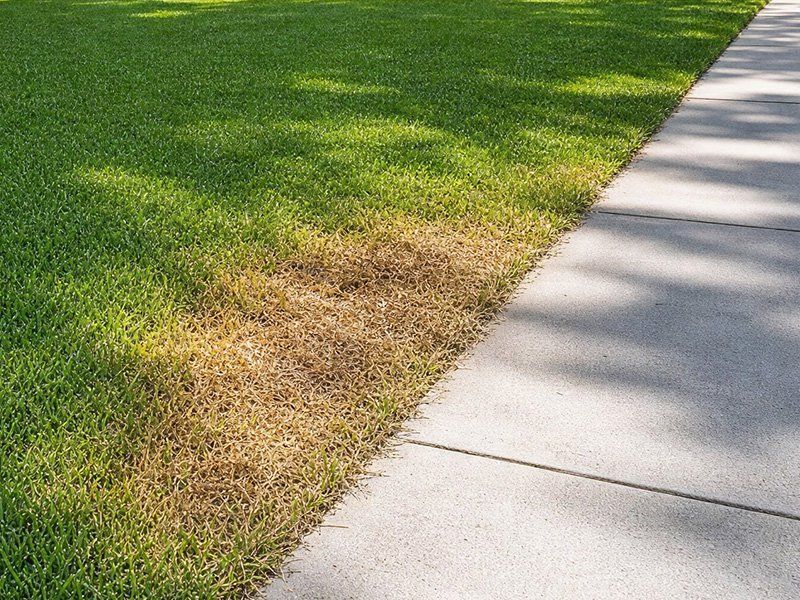
Brown patches spreading across a Central Texas lawn can feel alarming, especially when the grass that was green last month now looks scorched and dead. Chinch bugs are one possible cause, but drought stress, fall lawn diseases, and other insects can leave patches that look nearly identical.
Before you grab a hose or a spray can, a quick inspection can tell you a lot more than the damage pattern alone. Knowing what to look for, and what to rule out, puts you in charge of the fix.
Brown patches call for inspection, not an automatic diagnosis
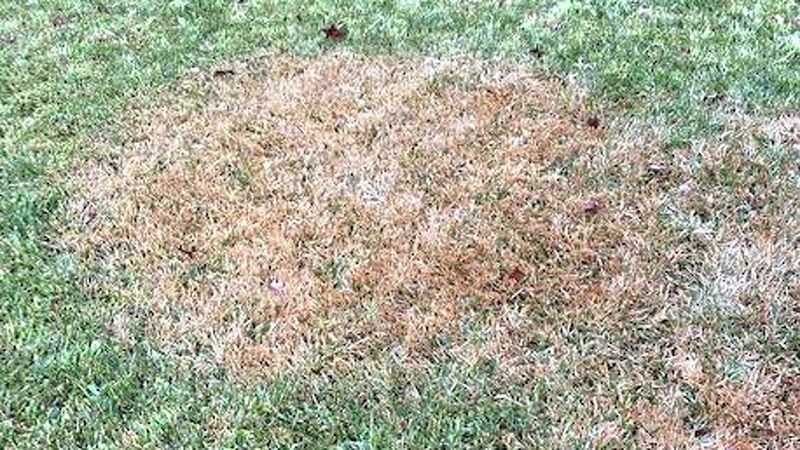
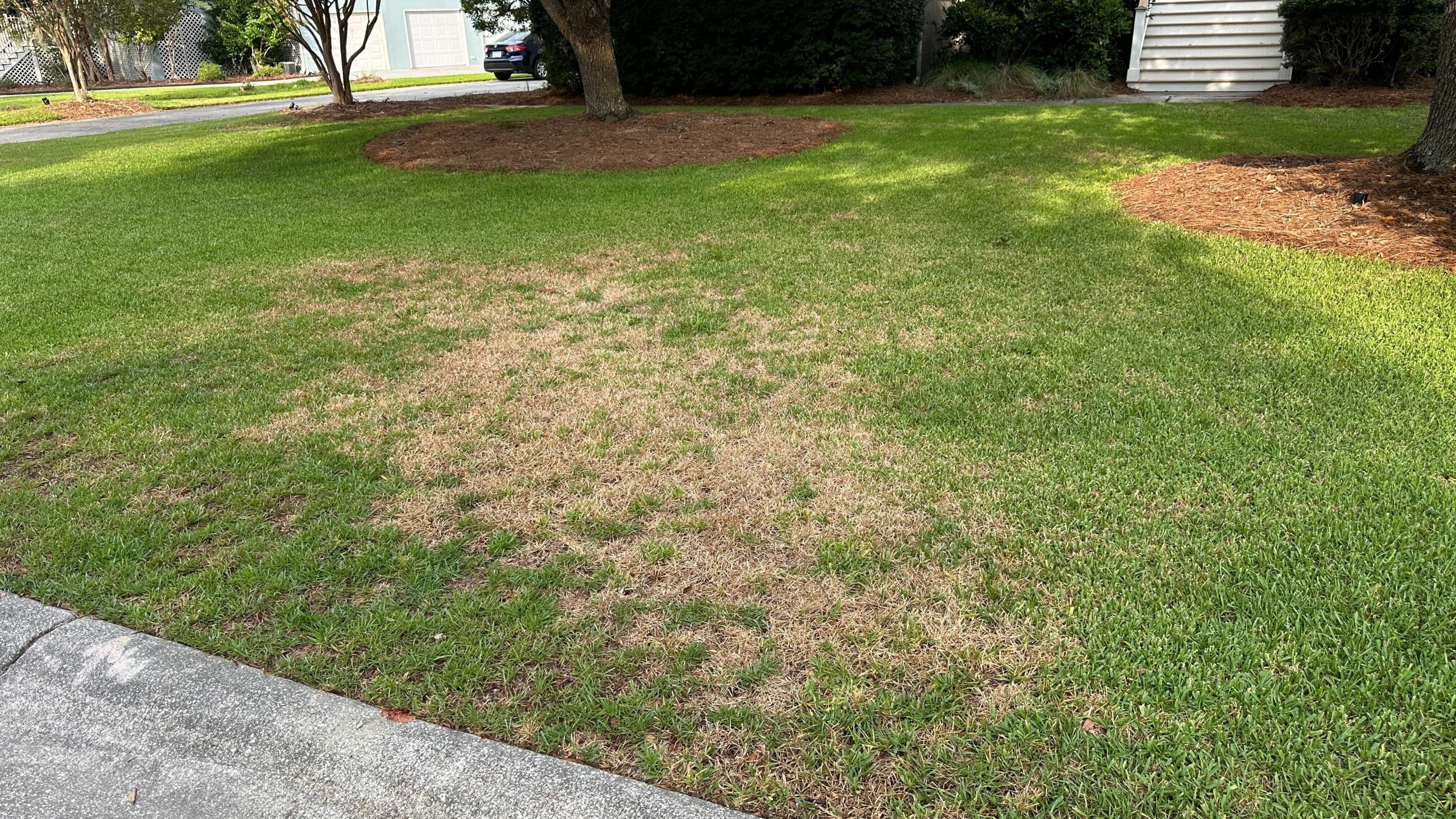
Stressed St. Augustinegrass growing in a hot, sunny spot can develop chinch-bug injury, but a brown patch by itself does not identify the cause. Drought, large patch disease, take-all root rot, gray leaf spot, nematodes, and white grubs can all produce dead or dying turf that looks remarkably similar to chinch-bug damage.
The pattern, location, moisture history, and presence of actual insects all need to factor into any conclusion you draw.
According to Texas A&M AgriLife Extension guidance on chinch bugs in St. Augustine lawns, these insects are most damaging in the Gulf Coast and southern half of Texas. That does not mean Central Texas lawns are immune, but it does mean you should not assume your lawn is part of a confirmed regional outbreak.
The available authoritative sources do not establish that chinch bugs are spreading faster across Central Texas this fall or that fall is the general peak season for these insects. Most guidance points to hot, dry summer conditions as the primary period of risk, though populations can remain active into fall in warm areas.
Expanding patches on a warm-season lawn in fall also deserve consideration as possible dormancy or seasonal slowdown, particularly if temperatures have recently dropped. St. Augustinegrass can begin to lose color and thin as cooler weather arrives, and that change can look alarming without being a pest problem at all.
University of Georgia extension research on southern chinch bug biology reinforces that diagnosis requires more than a visual impression. The right response to a suspicious patch is a careful inspection, not an automatic assumption that chinch bugs are to blame.
Chinch bugs suck plant fluids from heat-stressed St. Augustinegrass
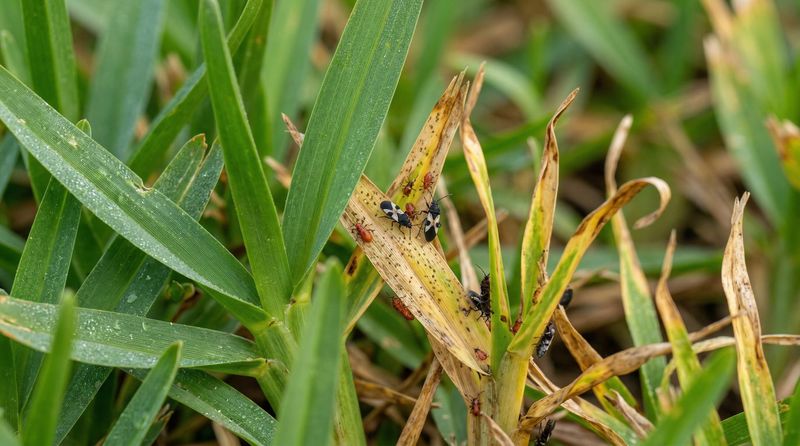
Chinch bugs are piercing-sucking insects, not chewing pests. They push a needle-like mouthpart into grass tissue, extract plant fluids, and may introduce a toxin during feeding that contributes to cell death and the visible browning that follows.
That distinction matters because it changes what you look for: chewing insects leave ragged or notched blades, while chinch-bug feeding leaves grass that wilts, yellows, and then dies from the inside out as the plant loses moisture and is exposed to the toxin.
Texas A&M’s southern chinch bug identification and control resource confirms that St. Augustinegrass is the turf most likely to suffer serious injury from these insects. Zoysiagrass, bermudagrass, centipedegrass, and bahiagrass can also host chinch bugs, but severe damage in those species is less typical.
If your lawn is St. Augustine, it carries a meaningfully higher risk of significant injury when conditions favor a population buildup.
Those conditions center on heat, drought stress, and sun exposure. University of Florida IFAS guidance on lawn chinch bug management identifies full-sun locations beside heat-reflective surfaces as the highest-risk zones.
Lawn edges that run along sidewalks, curbs, driveways, and building foundations absorb and radiate extra heat, creating the warm, dry microclimate where chinch-bug populations can build quickly. Turf that is already moisture-stressed in those locations has less ability to tolerate feeding pressure, which is why damage often appears there first and expands inward.
University of Georgia Cooperative Extension pest management guidance notes that chinch bugs of various life stages, from pale pink nymphs to black-and-white adults, are often found together at the base of grass stems and in the thatch layer. Knowing the insect’s biology and preferred hiding spots makes it easier to find them during an inspection rather than searching the open blade surface.
Patch patterns narrow the suspects without proving the cause
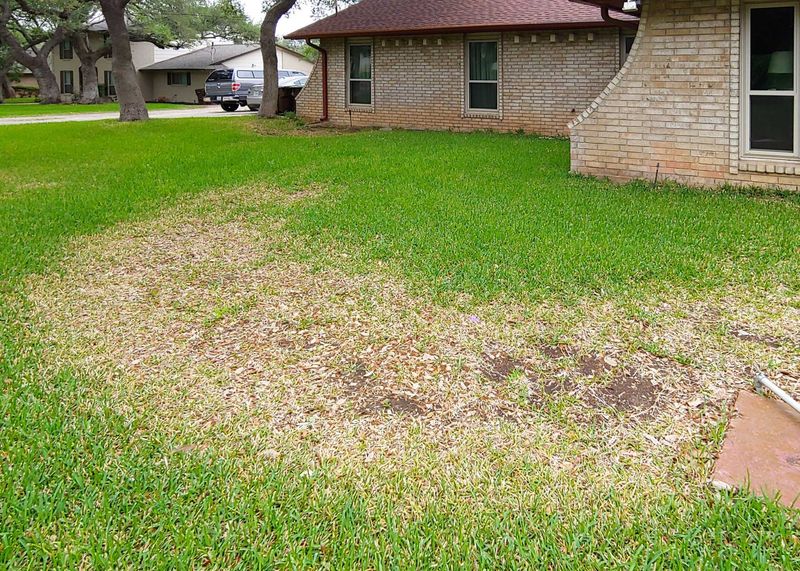
Chinch-bug damage tends to appear as irregular, expanding patches that start in the sunniest, most heat-stressed parts of the lawn and grow outward as the population increases. The dying grass often shows a yellowing halo at the edge of the brown area, and the damage does not follow the geometry of a sprinkler gap or a shaded zone.
Insects are typically found near the grass crowns and in the thatch along the border between healthy and dead turf, not in the center of the dead area where the grass is already gone.
Drought stress looks different in a few key ways. A lawn running short on water usually shows wilting or a blue-gray cast across a broad area rather than in one irregular pocket, and the turf often recovers its color after a thorough watering.
Texas A&M AgriLife Extension lawn management guidance describes wilting and a blue-gray cast as reliable visual cues for drought stress, and recommends using those signals to trigger irrigation rather than watering on a fixed calendar. If your whole lawn looks tired and perks up after a good soak, drought is a more likely explanation than insects.
Fall adds another layer of complexity because large patch disease becomes more active in St. Augustinegrass as temperatures drop and moisture increases. A University of Georgia Cooperative Extension update on Rhizoctonia large patch notes that disease patches can also be irregular in shape and may be associated with overwatering, poor drainage, heavy thatch, or nitrogen applied too late in the season.
According to Texas A&M’s St. Augustinegrass lawn management publication, take-all root rot and gray leaf spot are additional fall disease threats that can produce brown or thinning areas in St. Augustine.
Other lookalikes include nematode damage, white grub feeding on roots, and other insect pressure, all of which can cause irregular decline without a clear surface symptom. University of Florida IFAS entomology guidance on chinch bug identification emphasizes that visual clues are a starting point for prioritizing where to sample, not a substitute for finding and counting the actual insects.
Use the patch pattern to decide where to look, not to skip the looking.
A flotation test can help detect insects at the patch edge
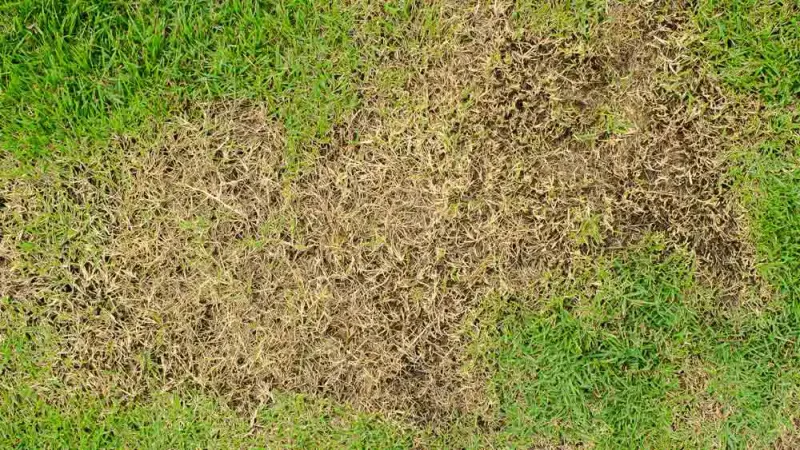
One of the most practical ways to check for chinch bugs without any special equipment is a flotation test. The goal is to concentrate insects from a small soil area so they float to the surface where you can see and count them.
Selecting the right location matters as much as the technique itself.
Start at the border between healthy green grass and the damaged area, not in the center of the dead patch where the insects have likely already moved on. Push a bottomless coffee can or similar cylinder, roughly three to five inches in diameter, about two to three inches into the soil so it creates a sealed column.
Fill it with water and keep it topped off for approximately five to seven minutes. University of Georgia Cooperative Extension’s chinch bug pest management guidance describes this method as a reliable detection approach when performed at the active edge of the damaged zone.
Chinch bugs, which are small and fast-moving, should float to the water surface as the air trapped around them escapes.
According to University of Florida IFAS chinch bug identification and management guidance, the flotation test is useful but not infallible. A shallow insertion that does not capture thatch depth, a sample taken from the wrong spot, or a sparse population can all produce a negative result even when chinch bugs are present.
That is why Texas A&M AgriLife Extension’s St. Augustinegrass lawn management publication recommends sampling several locations along the patch perimeter rather than relying on a single test.
Run the test in at least three to five different spots around the damaged area, spacing them out so you are sampling different sections of the active edge. Record how many insects you see in each sample.
A few bugs across multiple tests tells a different story than dozens appearing consistently, and that difference will shape your next decision. Think of the flotation test as a way to build a clearer picture, not as a single definitive answer.
Counts and context matter more than a stray bug
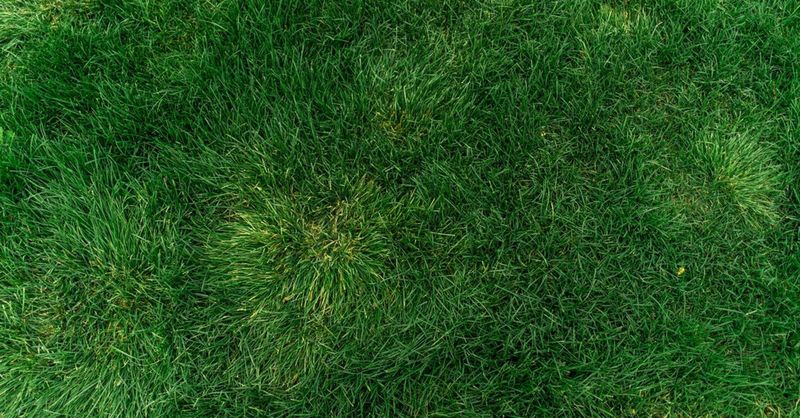
Finding one or two chinch bugs during a flotation test is not the same as confirming a damaging infestation. These insects are present in many lawns at low levels without causing visible harm.
What matters is whether the numbers you find, repeated across multiple samples, suggest a population large enough to be responsible for the damage you are seeing.
Texas A&M AgriLife Extension’s St. Augustinegrass management publication and University of Georgia Cooperative Extension chinch bug guidance both cite approximately 20 to 25 chinch bugs per square foot as a level associated with damaging infestations. However, UC IPM’s southern chinch bug turfgrass management resource uses a different reference point, citing 15 nymphs and adults per square foot or 135 per square yard as a treatment consideration threshold.
These figures are regional decision aids developed under different conditions, and none of them should be treated as a precise universal cutoff that applies equally to every lawn.
Your interpretation should factor in more than the count alone. The turf species matters because St. Augustinegrass is far more vulnerable than bermuda or zoysia.
The damage pattern matters: are patches expanding from sunny edges, or are they random and diffuse? Plant stress matters: heavily drought-stressed turf can suffer more from a moderate chinch-bug population than healthy turf can.
Combine your counts from repeated flotation tests with these contextual factors before deciding whether you have a problem that warrants treatment. A single sample showing a handful of insects in one location is not enough to justify spraying an entire lawn.
Confirmed infestations require a label-first treatment decision
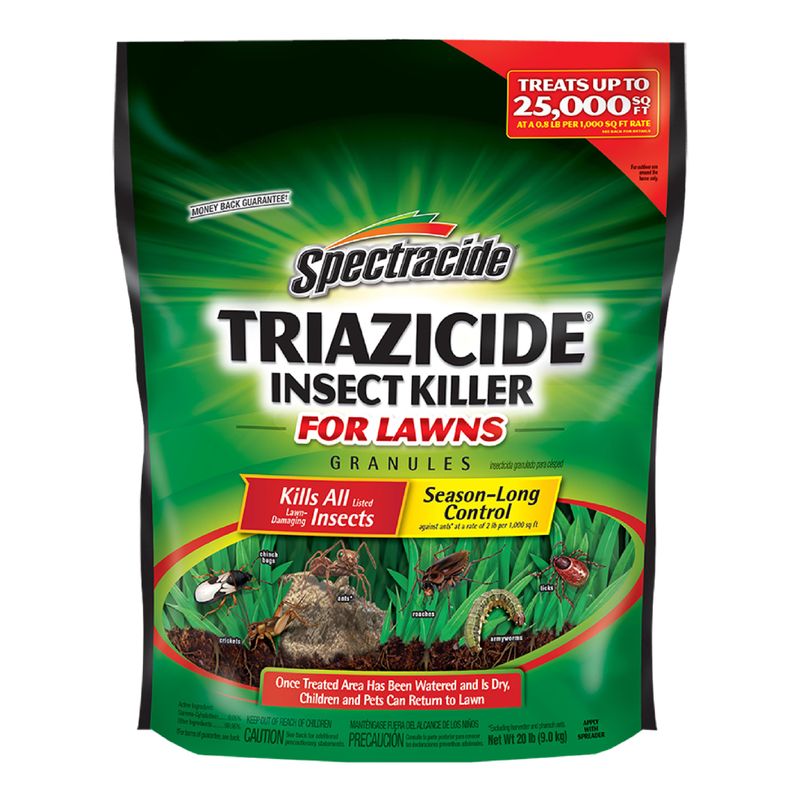
Treatment should follow a clear sequence: confirm the pest, verify that counts and damage justify action, then select a product and apply it according to its label. Spraying before you confirm chinch bugs risks wasting money, harming beneficial insects, and missing the actual problem.
Spraying after you confirm them but without reading the label risks harming the turf, the surrounding environment, or both.
Only use a product that is specifically labeled for chinch bugs and for the turfgrass species you are treating. EPA pesticide label guidance makes clear that the label is a legal document, and applying a product in a way that contradicts it is both ineffective and illegal.
The label will specify the application rate, any required pre- or post-application watering, weather restrictions, reentry intervals, and site-specific limitations. Follow all of those instructions exactly.
University of Georgia Cooperative Extension pest management guidance notes that when turf is not severely moisture-stressed, irrigating the lawn several hours to a day before treatment can improve product uptake and reduce the risk of phytotoxicity. Check your specific product label first, because not all products have the same pre-application watering requirements, and some carry restrictions about applying to wet or saturated turf.
Resistance is a real and documented concern with southern chinch bugs, particularly in populations that have been treated repeatedly with the same insecticide class. University of Florida IFAS chinch bug management research identifies resistance as a management challenge, and University of Georgia Lincoln County Extension guidance on chinch bug identification reinforces the value of rotating insecticide classes to reduce selection pressure.
No single product is guaranteed to solve every infestation, and UC IPM’s guidance on monitoring and treating turfgrass insects recommends treating only when pest evidence and population levels justify it, then monitoring afterward to confirm the treatment worked before deciding whether a follow-up is needed.
Protect pollinators while strengthening the lawn
When any pesticide application is part of your plan, environmental safeguards are not optional extras. Several insecticides used against chinch bugs carry serious risks to bees, native pollinators, and other beneficial insects.
EPA information on sulfoxaflor and relevant EPA pesticide product registration documents both highlight bee toxicity concerns that require careful attention to timing and placement. Do not spray blooming weeds or flowering plants within or near the treatment area, and avoid applications when drift could carry product onto adjacent gardens or natural areas.
Keep all pesticides away from storm drains, curb gutters, and water bodies. UC IPM’s southern chinch bug management resource emphasizes preventing runoff and drift as part of responsible turfgrass pest management.
Applying during calm conditions, avoiding applications before rain, and not treating impervious surfaces that drain toward water are all practical steps that protect the surrounding ecosystem.
Beyond the pesticide decision, several lawn care practices can reduce the conditions that favor chinch-bug population buildup. University of Florida IFAS chinch bug guidance and Texas A&M AgriLife Extension’s St. Augustinegrass maintenance publication both point to excessive nitrogen fertilization as a factor that can worsen chinch-bug pressure by producing the lush, succulent growth these insects prefer.
Heavy thatch buildup creates ideal habitat for chinch bugs to shelter and reproduce, so regular dethatching or core aeration helps reduce that refuge. Mowing at the right height for St. Augustine with a sharp blade keeps the turf healthier and less vulnerable to stress.
Maintaining adequate soil moisture without overwatering supports turf tolerance while avoiding the waterlogged conditions that promote disease. These practices improve the lawn’s resilience, but they do not guarantee that chinch bugs will never appear.
Follow an evidence-based next-step checklist
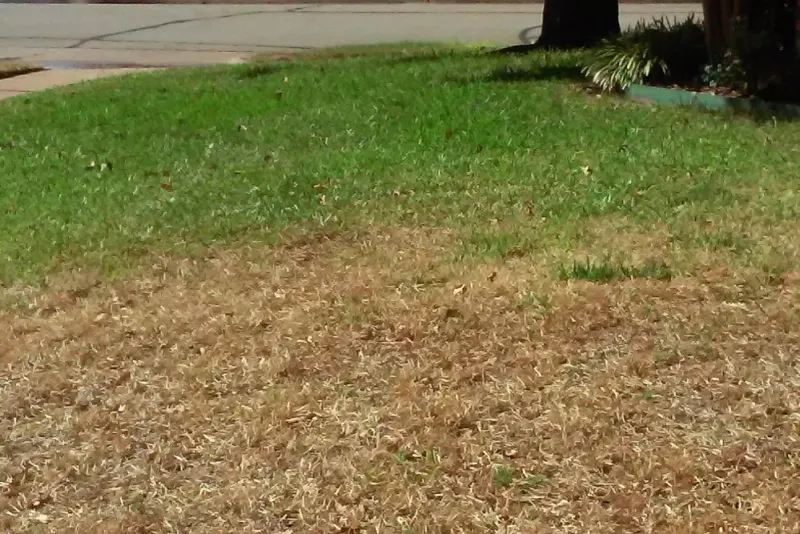
Working through a simple decision path keeps you from wasting time and money on the wrong fix. Start by confirming your turf species: St. Augustinegrass carries the highest risk of serious chinch-bug injury, so the species identification shapes every step that follows.
Then examine the patch pattern and moisture history. Did the damaged areas start near a sidewalk, curb, or driveway in full sun, or did the browning appear broadly across the lawn?
Has the turf been consistently dry, or has it received adequate water recently?
Check for fall disease clues next. Irregular patches that appeared after a period of wet or humid weather, especially if the lawn received late-season nitrogen, deserve a disease inspection before you assume insects.
Texas A&M AgriLife Extension’s St. Augustinegrass lawn management guidance covers large patch and other fall disease threats that can mimic insect damage. If the pattern and timing fit a disease scenario, a local extension office or certified lawn professional can help confirm it.
Perform repeated flotation tests at several points along the border between healthy and damaged turf, and record your counts. Use those numbers alongside the turf species, the damage pattern, and the plant stress level to decide whether treatment is justified.
UC IPM’s lawn insect management guidance reinforces that a confirmed pest at meaningful population levels is the basis for a treatment decision, not a visual impression alone. When counts are low, evidence conflicts, or damage continues despite a reasonable response, contact your local Texas A&M AgriLife Extension office or a licensed pest management professional for a site-specific evaluation.
Texas A&M seasonal lawn management resources can also help you distinguish normal fall color change and dormancy from active damage. A lawn that browns as temperatures drop in October is not necessarily under attack: sometimes the grass is simply resting, and the best thing you can do is wait, watch, and diagnose before you act.