
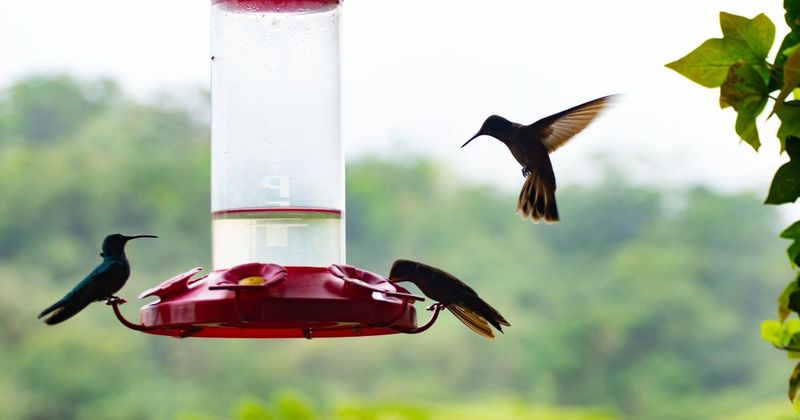
If your hummingbird feeder is going empty faster than you can keep up with in September, you are not imagining it. Something real is happening in your yard, and figuring out what that is will help you take better care of the birds showing up at your feeder.
The answer involves a mix of seasonal bird movement, feeder physics, insect behavior, and a few things worth checking before you assume a wave of migrants drank every drop.
September can increase hummingbird movement in parts of Texas
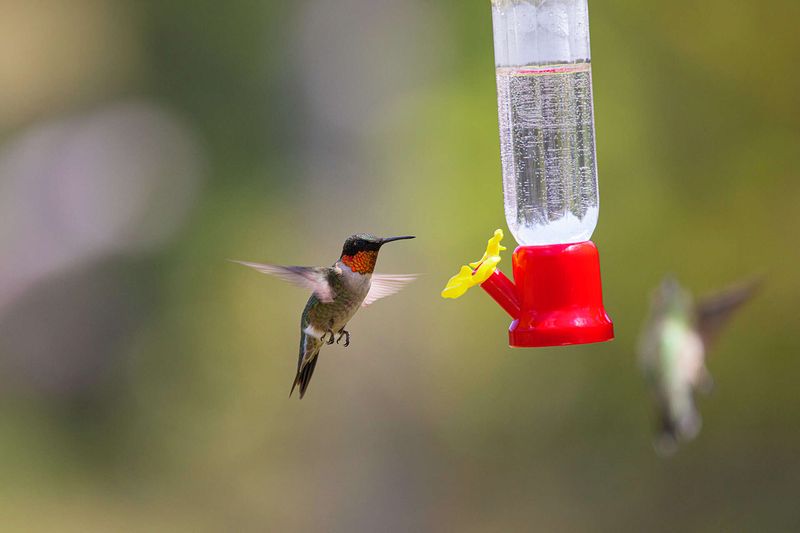
Fall migration gives Texas some of the most dramatic hummingbird activity in North America, and September sits right in the middle of it. Texas Parks and Wildlife Department documentation on hummingbird movement shows that birds begin crossing coastal Texas as early as mid-July, experience multiple major surges during September, and continue moving through into early November.
Ruby-throated Hummingbirds in particular concentrate near the coast as they build fat reserves before crossing the Gulf of Mexico.
A peer-reviewed study of Ruby-throated Hummingbirds at the northern Gulf Coast found that fall passage generally runs from late August through late October, with peak movement from early September through early October. That timing lines up almost exactly with when Central Texas homeowners start reporting feeders that can’t keep up.
The combination of resident birds, birds moving through, and multiple species stopping to refuel can genuinely push feeder demand higher than at any other point in the year.
That said, the strongest published evidence for September surges comes from coastal and eastern Texas, not from every Central Texas yard. TPWD’s Ruby-throated Hummingbird species page describes large-scale movement through Texas and mass staging along the coast, but Central Texas may experience increased passage with variable intensity depending on local habitat, rainfall, and available flowers.
Migration is a plausible and likely seasonal explanation when you are also seeing more birds at the feeder, but it is not a confirmed diagnosis for any single feeder emptying twice daily. Checking for other causes first gives you a clearer picture of what is actually happening in your yard.
An empty feeder measures demand, not migration
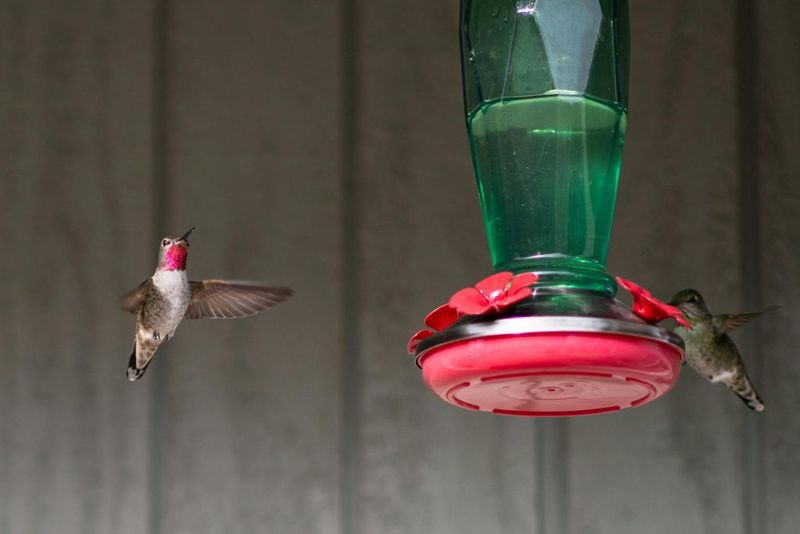
A feeder that empties twice a day tells you that nectar is leaving fast. What it cannot tell you is exactly how many birds are responsible, or whether those birds are migrants, residents, or a mix of both.
Hummingbirds visit repeatedly throughout the day, and a single territorial bird can drain a small feeder through sheer persistence without any migration surge at all.
Feeder size and design play a bigger role than many people realize. A four-ounce feeder that gets refilled twice daily sounds dramatic, but the total volume is modest.
Penn State Extension guidance on attracting hummingbirds notes that hummingbirds can be highly territorial, with one bird sometimes defending a feeder while others wait their turn or visit when the guard bird moves off. Multiple birds using the same feeder at staggered times can make consumption appear higher than any single observation would suggest.
Species variety also matters in Texas. Buff-bellied Hummingbirds, which breed in southern Texas, move north along the coast in fall and can show up at inland feeders.
Rufous and other western species also pass through or overwinter in parts of Texas. Your feeder may be hosting more than one species without you realizing it.
Insects complicate the picture further. Bees, wasps, and ants can consume nectar or contaminate what remains, reducing the amount available without a single hummingbird taking a sip.
All About Birds feeding guidance separates physical nectar loss from spoilage: leaks and insect access reduce the amount available, while mold or fermentation makes the remaining nectar unsafe and requires cleaning or replacement before refilling. Treating those two problems the same way leads to the wrong fix.
Inspect the feeder before assuming birds drank everything
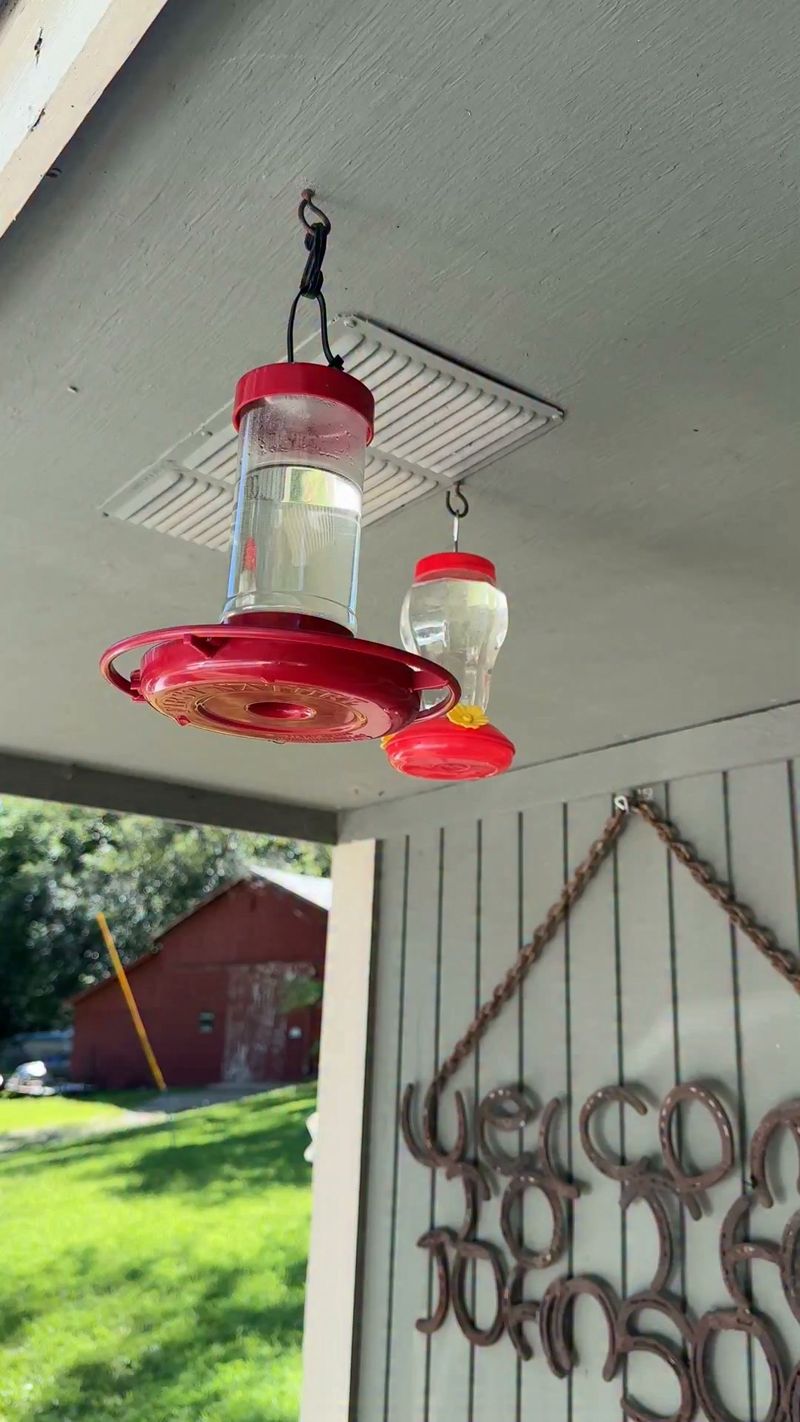
Before mixing another batch of nectar, take two minutes to look at the feeder and the area around it. A puddle on the ground directly beneath the feeder, a sticky hanger wire, nectar coating on nearby fence rails or siding, or a trail of ants heading straight up the mounting pole all point to physical loss rather than bird consumption.
These are easy clues to miss when you are focused on how fast the feeder empties.
Bottle-style feeders are particularly prone to leaking in direct Texas sun. As the air inside the bottle warms during the day, it expands and pushes nectar out through the ports.
All About Birds flags heat-related pressure as a common cause of apparent rapid emptying, especially when feeders hang in full afternoon sun. A feeder that looks half-empty by noon may have lost a significant portion of its nectar to dripping rather than drinking.
Work through a short checklist: look for cracks in the reservoir, check that the stopper or base seal seats properly, tilt the feeder slightly and watch for drips, and run your hand along the hanger and nearby surfaces to feel for stickiness. Cornell’s feeder pest and predator guide notes that ant activity and nectar drips around the feeder base are reliable signs of physical nectar loss that has nothing to do with bird visits.
Moving the feeder to a spot that gets morning sun but is shaded during the hottest afternoon hours can reduce heat-driven leakage and slow spoilage at the same time. Penn State Extension recommends partial shade as a practical way to extend nectar freshness without sacrificing feeder visibility.
The feeder still needs regular cleaning regardless of where it hangs, but shade gives you a meaningful head start against Texas September heat.
Prepare fresh nectar for hot September weather
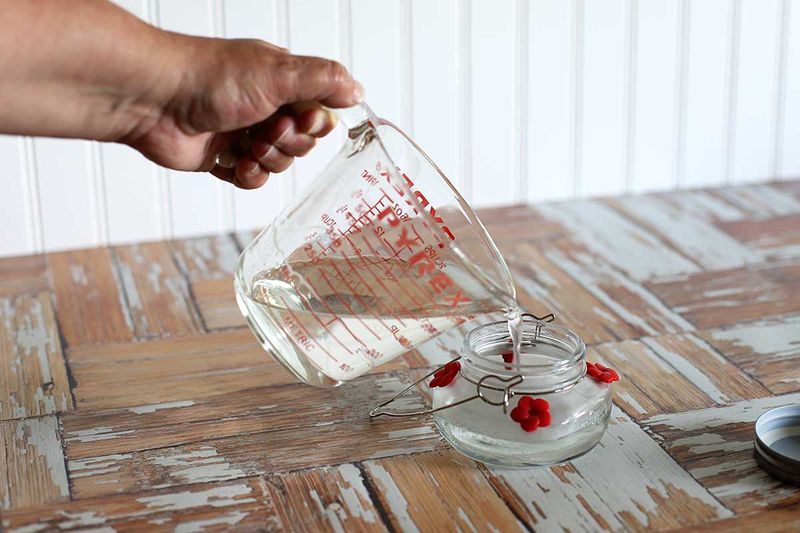
The recipe itself is straightforward: four parts water to one part plain white granulated sugar, stirred or gently heated until the sugar dissolves, then cooled before filling the feeder. Penn State Extension and University of Illinois Extension both specify this ratio and warn against substitutions.
Red food coloring is unnecessary because the feeder itself provides enough color to attract birds, and honey should never be used because it can ferment quickly and cause a potentially fatal fungal disease in hummingbirds.
When the feeder is being emptied frequently, the temptation is to mix a larger batch so you do not have to refill as often. In September heat, that logic works against the birds.
Smaller batches mean fresher nectar, and fresh nectar matters more in hot weather than convenience does. Mix only what the feeder holds, or at most a day’s worth of extra solution stored in the refrigerator.
Audubon’s hummingbird feeding guidance recommends emptying and cleaning feeders every day or every other day when temperatures are high, and immediately when you spot mold, insect contamination, or a bird that appears sick or lethargic near the feeder. In Central Texas, where September afternoons routinely push into the 90s, treating every refill as an opportunity to rinse the feeder is a sound habit rather than an overreaction.
Cleaning does not require soap every time, but it does require thorough rinsing with hot water and a bottle brush to remove any film, residue, or early mold growth. If you see black spots inside the reservoir or at the ports, that is mold, and the nectar needs to be discarded entirely before the feeder is scrubbed and refilled.
Topping off contaminated nectar rather than replacing it does not make the remaining solution safer for the birds using it.
Territory and insects can concentrate feeder traffic
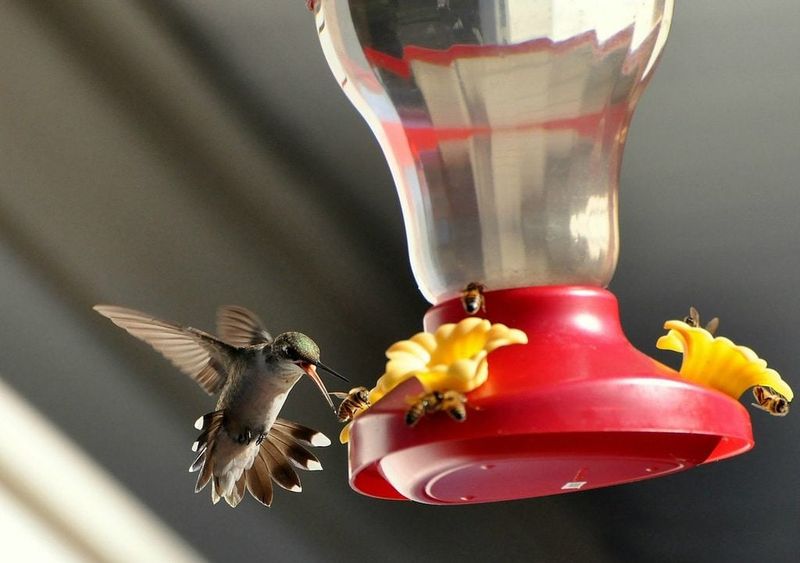
Watch the feeder for a few minutes before the next refill and you may notice that one bird spends more time chasing others away than actually drinking. Territorial behavior is common in hummingbirds year-round, but it can become especially visible in September when resident birds and passing migrants overlap in the same yard.
TPWD’s Ruby-throated Hummingbird species account notes that these birds can defend feeders and flower patches aggressively, keeping other individuals from feeding freely.
One practical fix is placing a second feeder well away from the first, ideally around a corner or behind a shrub so the guarding bird cannot see both at once. Penn State Extension recommends this approach specifically for yards where one bird monopolizes a feeder.
Splitting the feeder locations distributes activity, gives subordinate birds access to nectar, and often reduces the energy wasted on chasing.
Insects are a separate but related problem. Bees and wasps are drawn to the same sugar solution hummingbirds prefer, and when they crowd the feeding ports, birds may abandon the feeder temporarily or visit less frequently.
All About Birds guidance on keeping ants out of hummingbird feeders recommends an ant moat filled with water as the most reliable physical barrier for ants. For bees and wasps, purpose-built bee guards that fit over the ports or switching to a saucer-style feeder can reduce insect access without discouraging hummingbirds.
A few approaches that seem helpful are actually harmful. Do not apply petroleum jelly, cooking oil, or any sticky substance to the feeder pole or hanger where birds could contact it.
Cornell’s feeder pest guide notes that oily materials can foul feathers, affecting a bird’s ability to fly and regulate body temperature. Spraying insecticide anywhere near the feeder is equally problematic: University of Illinois Extension points out that hummingbirds actively consume insects and spiders for protein, so pesticide use around feeding areas can remove a food source the birds genuinely need.
Leave supplemental nectar available during fall movement
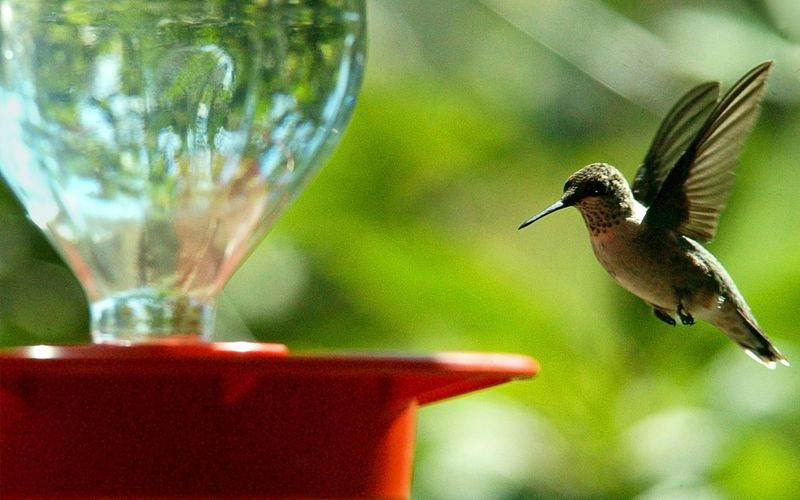
A concern that comes up every fall is whether keeping a feeder stocked will cause hummingbirds to linger in Texas past a safe departure window. The short answer, backed by reliable guidance, is no. Texas Parks and Wildlife Department states clearly that leaving feeders out does not stall migration, and recommends keeping feeders available until roughly two weeks after the last hummingbird is seen.
Migration timing is governed by day length and internal seasonal cues, not by whether sugar water is on offer.
All About Birds addresses this question directly and reaches the same conclusion: removing a feeder to push birds south is not supported by evidence and may deprive late migrants of a useful energy source during a demanding journey. The feeder you maintain through October may benefit a straggler that needs a quick refuel more than any bird in your yard during peak September activity.
Sugar water is supplemental, not a complete diet. TPWD and University of Illinois Extension both note that hummingbirds rely on insects and spiders for protein alongside flower nectar.
Preserving native flowering plants in your yard and avoiding broad pesticide applications in the area around the feeder supports the full range of food hummingbirds need. A yard with both a clean feeder and intact insect habitat is more useful to migrating birds than a feeder alone.
TPWD’s backyard wildlife habitat guidance encourages homeowners to think about feeders as one part of a broader habitat setup rather than the whole solution.
Use the refill as a prompt to monitor the setup
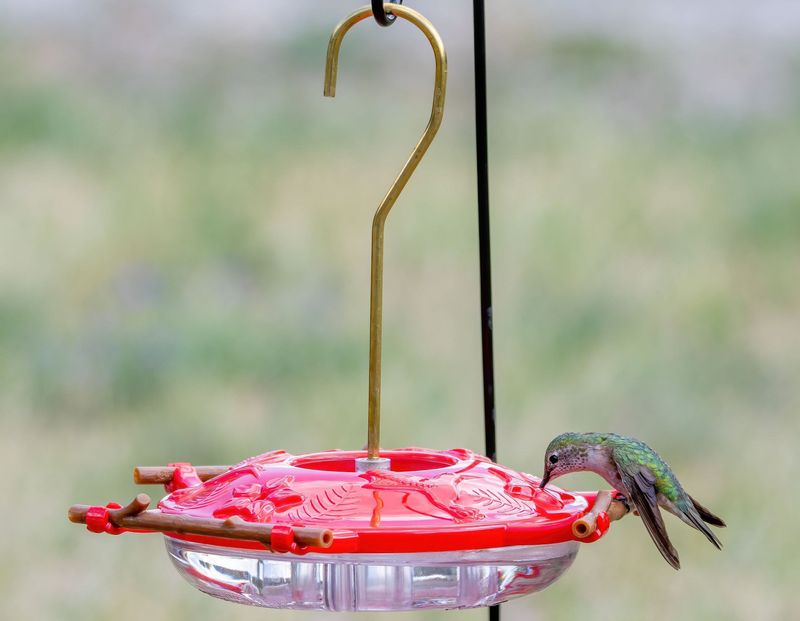
A twice-daily refill schedule is a useful signal, not a crisis. Treat each refill as a built-in reminder to run a quick check before pouring in fresh nectar.
Scan beneath the feeder for drips, feel the hanger for stickiness, look at the ports for insect activity, and notice whether actual bird visits seem higher than usual or whether the level just dropped without obvious bird traffic.
If bird activity genuinely increased, migration is a reasonable seasonal explanation, particularly given TPWD’s documentation of September movement through Texas. If the level drops without visible birds, a leak or insect problem is more likely.
Either way, Audubon’s feeder care guidance applies: fresh four-to-one nectar, regular cleaning, and prompt attention to mold or contamination are the right response regardless of the cause.
Add a second feeder in a separate location if one bird appears to be guarding the first. Shade the feeder during peak afternoon heat where the yard layout allows.
TPWD guidance supports keeping the feeder available through the season rather than pulling it early. Central Texas conditions vary from yard to yard, and a feeder that empties fast in one neighborhood may stay full for days a few miles away.
The refill pace tells you something is happening; your own observations over a few days will tell you what. September hummingbird activity in Texas is genuinely worth watching closely, and a well-maintained feeder gives you a front-row seat to one of the region’s more remarkable wildlife events.