
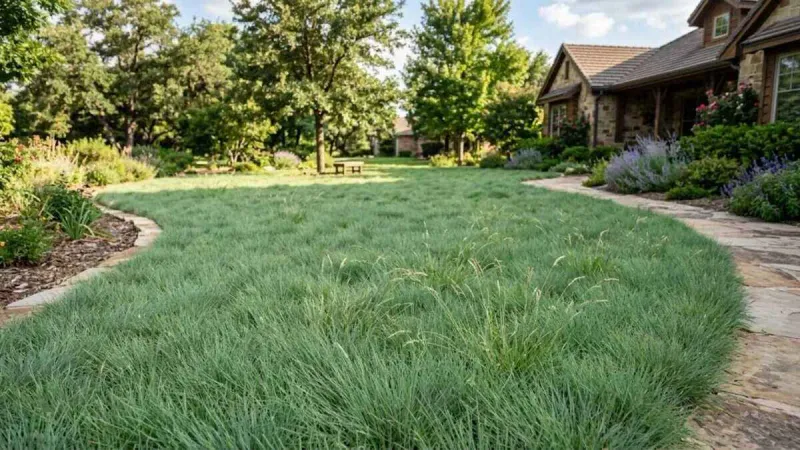
Bermudagrass has ruled Central Texas yards for decades, but some homeowners are taking a hard look at what it actually costs them in water, time, and effort. A tough, Texas-native warm-season grass is quietly getting attention as a lower-input alternative for the right sunny, well-drained yard.
That grass is most plausibly buffalograss, and whether it belongs in your yard depends almost entirely on your specific site. Getting that match right is what separates a satisfying switch from an expensive disappointment.
The unnamed native grass is most likely buffalograss
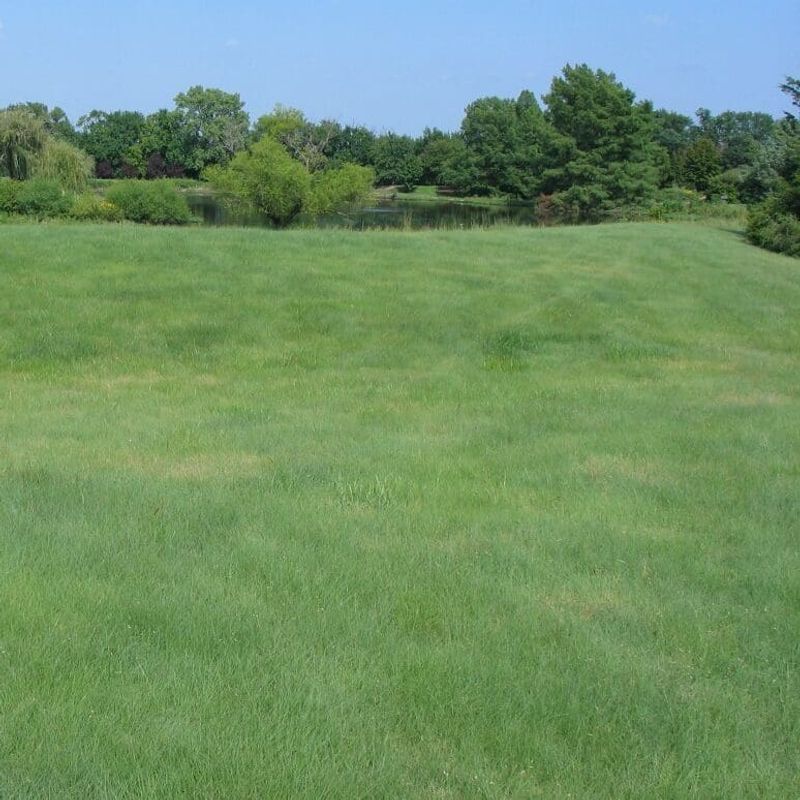
Buffalograss (Bouteloua dactyloides) fits the description of the unnamed native grass better than any other warm-season turf commonly discussed for Central Texas. Texas Parks and Wildlife identifies it as a drought-tolerant native alternative to conventional residential turf, and Texas A&M AggieTurf highlights its drought tolerance, low mowing requirements, and minimal fertilization needs as its core strengths.
That said, the available description does not rule out every other native warm-season grass, so the identification is most plausible rather than definitive.
Buffalograss is a stolon-forming perennial native to the North American Great Plains, including Texas. It has been used for turf, pasture, and prairie restoration, which makes it a genuinely versatile plant with a long track record in this climate.
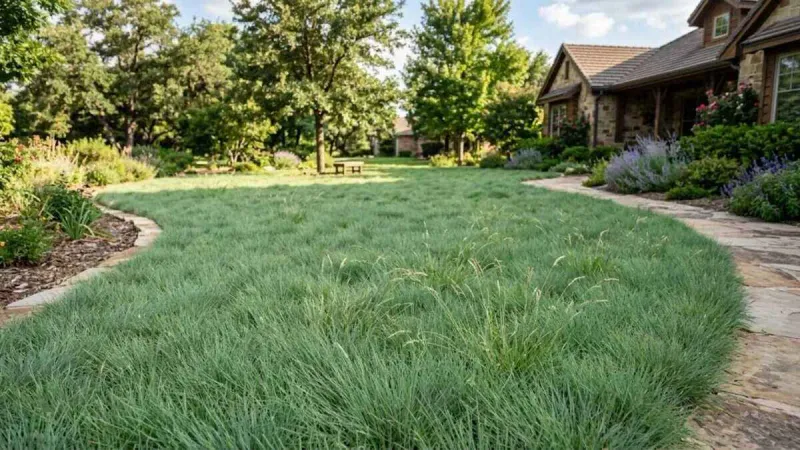
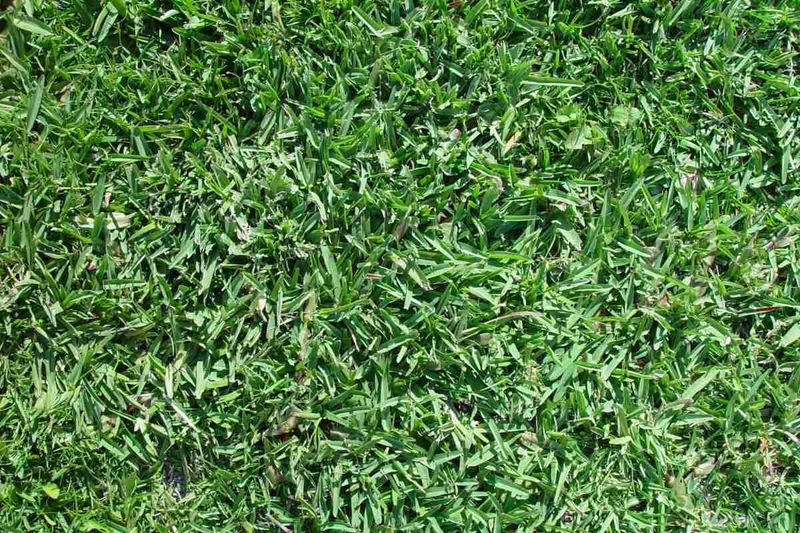
Its fine texture and blue-green color give it a distinctive look compared to the coarser, darker appearance of bermudagrass.
Calling buffalograss a lower-input option for the right yard is accurate and well-supported. Calling it the subject of a broad homeowner movement that is replacing bermudagrass across Central Texas is a different claim entirely, and the research does not support it.
No adoption surveys, sales data, or documented planting trends back up that picture. What the evidence does support is that buffalograss can be a smart, water-thrifty choice for a specific type of Central Texas yard, and understanding exactly what that means is the most useful place to start.
Sun and soil decide whether the switch works
Before buying a single plug or pound of seed, walk your yard at midday and count the hours of direct sun each area receives. Buffalograss needs roughly four to six hours of sunlight for dense, competitive growth, according to Texas Parks and Wildlife’s guidance on yard suitability.
Shaded spots under mature live oaks, cedar elms, or a covered patio are not candidates, and trying to force buffalograss into low-light areas almost always ends in a thin, weedy, struggling stand.
Soil type matters just as much as sunlight. Buffalograss favors heavy, well-drained clay or clay-loam soils with a neutral to slightly alkaline pH, which is exactly what much of Central Texas naturally provides.
The Texas A&M AgriLife buffalograss fact sheet is clear that sandy, acidic, or poorly drained soils undermine its performance significantly. If your yard sits in a low spot that holds water after rain, or if a soil test shows strongly acidic or sandy conditions, buffalograss is the wrong answer for that area.
The Texas Parks and Wildlife bayou planting guide reinforces that persistently wet conditions are a poor fit for this grass. Drainage is not a detail you can work around by choosing a tougher cultivar or watering less.
If the site stays wet, the grass will thin and eventually fail.
Geography also plays a role. Central Texas is generally a better fit than East Texas or the Gulf Coast, where annual rainfall can exceed the threshold buffalograss handles well.
Texas A&M AggieTurf notes that buffalograss performs poorly in East Texas where rainfall is higher and conditions are wetter. Central, North, and South Texas offer the drier, sunnier conditions where this grass actually delivers on its reputation.
If your property ticks the sun and soil boxes, you have a real candidate. If it does not, a different turf or a non-turf treatment will serve you better.
Lower water does not mean greener than bermudagrass
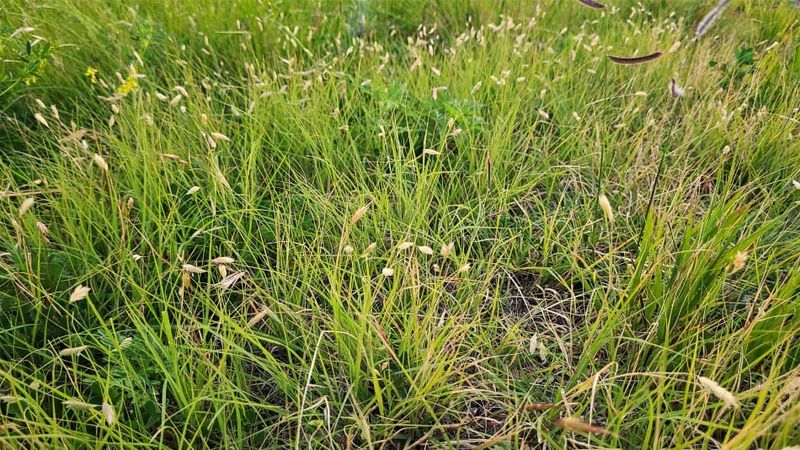
Here is the part most lawn articles skip: established buffalograss can survive extended drought and may stay alive on natural rainfall alone, but surviving and staying green are two different things. Colorado State University Extension’s buffalograss guide and Texas A&M both confirm that buffalograss will turn brown and go dormant under prolonged dry conditions.
If a green lawn matters to you during a Central Texas summer with no rain for six weeks, you will still need to irrigate.
The comparison with bermudagrass also needs to be honest. Texas A&M’s bermudagrass management calendar describes bermudagrass as one of the most heat- and drought-tolerant turfgrasses available in Texas, noting that it can often survive on natural rainfall.
That means the water-use gap between the two grasses is not as wide as many homeowners assume, and it depends heavily on how you manage each one.
The AgriLife buffalograss fact sheet positions buffalograss as a lower-input option, but that advantage is most meaningful when compared to thirstier grasses like St. Augustinegrass or to a highly manicured, frequently irrigated bermudagrass lawn. A homeowner who already runs their bermuda on a minimal irrigation schedule may see a smaller water savings than they expect after switching.
The defensible payoff from buffalograss is lower-input management overall: less fertilizer, less mowing, and the ability to let the grass go dormant during drought without killing it. That is a real and practical benefit for the right homeowner.
Expecting it to stay lush green through a Texas August without any water, or to dramatically outperform a drought-managed bermuda lawn on water use alone, sets up a disappointment that the grass cannot fix.
Removing Bermuda takes more than stripping off the visible lawn
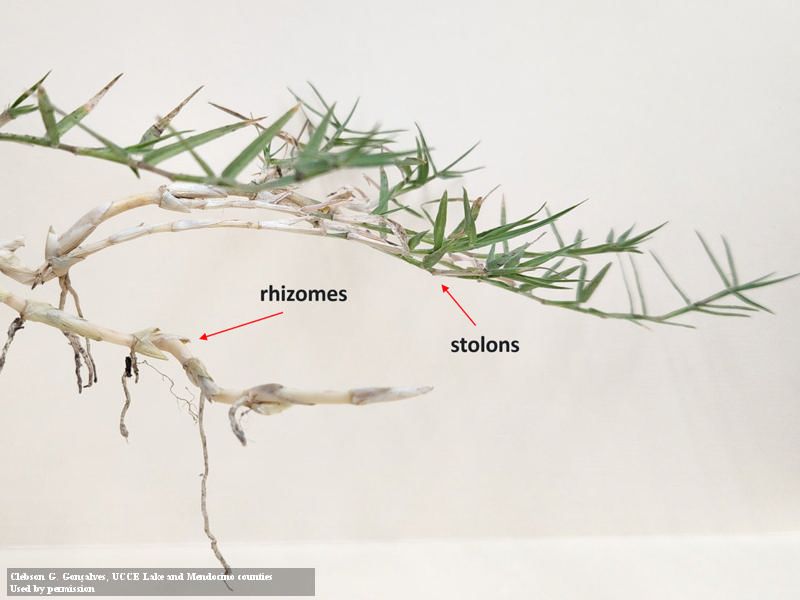
Bermudagrass does not give up a yard quietly. It spreads through both above-ground stolons and below-ground rhizomes, which means pulling or cutting the visible turf leaves behind a network of root material fully capable of regrowing.
Utah State University Extension’s research on bermudagrass persistence makes clear that incomplete removal is one of the most common reasons a new planting fails, because the old grass simply grows back through it.
Physical removal methods like sod cutters, repeated tilling, or solarization under clear plastic during hot summer months can reduce the bermudagrass population, but none of them guarantee a clean slate on the first pass. Solarization works best during Central Texas summers when soil temperatures are high enough to kill plant material several inches down, but it takes weeks and requires the plastic to stay sealed.
Even then, some rhizomes deeper in the soil may survive.
Herbicide options exist, and Texas A&M AgriLife’s turfgrass pest management guide addresses bermudagrass control in turf settings. Any herbicide use must follow the product label exactly, including application timing, rates, non-target precautions, and replanting restrictions before installing the new grass.
Labels are legal documents, and replanting too soon after treatment can kill the new buffalograss before it ever establishes. USU Extension’s bermudagrass IPM profile notes that multiple treatments are often needed to achieve adequate control.
Plan the removal process as its own project, not a single afternoon task. Rushing into planting before bermudagrass is thoroughly suppressed is the fastest way to end up with a patchy, hybrid mess that looks worse than what you started with and costs more to fix.
Establishment still requires careful watering
One of the most common misconceptions about switching to a low-water grass is that the low-water part starts on planting day. For buffalograss, it does not.
Texas A&M AgriLife’s turfgrass establishment guide explains that newly installed turf may require frequent short irrigation cycles, especially during hot, windy conditions, until roots develop enough to support the plant on their own. The water-thrifty payoff comes after establishment, not during it.
The form you choose affects how much patience and moisture management the process requires. Sod is the fastest route to an established stand and is generally easier to manage during the vulnerable early weeks because the root mat is already intact.
Plugs take longer to fill in but cost less upfront and can work well if kept consistently moist. Seed is the slowest option and the most demanding in terms of moisture management.
Texas A&M AggieTurf notes that seed requires careful moisture control throughout germination and early growth, and that timing the planting for late spring when soil temperatures are warm gives seed the best chance.
Regardless of which form you plant, keeping the surface consistently moist without waterlogging it is the goal during the first several weeks. Letting newly seeded or plugged areas dry out completely before roots are established can kill the planting quickly, especially when Central Texas temperatures are climbing through June and July.
Short, frequent watering cycles work better than long, infrequent ones during this phase.
Once the grass has rooted in and started actively spreading, you can begin stepping back the irrigation and letting the plant demonstrate its drought tolerance. That transition is the real reward, but it takes a full growing season or more to reach it depending on conditions and installation method.
The tradeoff is a relaxed lawn, not a perfect one
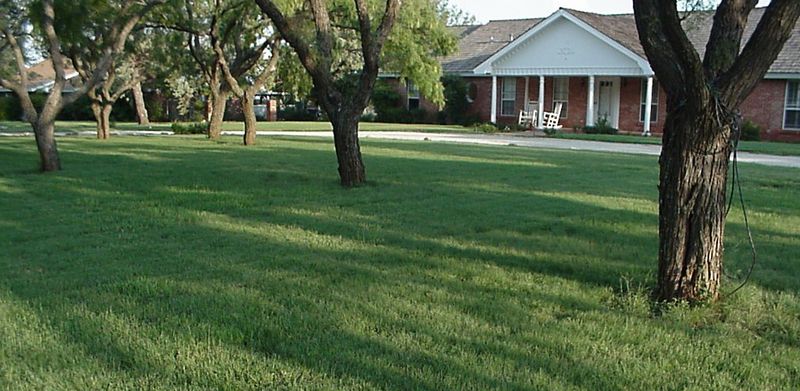
Mowing buffalograss feels different from mowing bermudagrass, and that difference is a feature rather than a flaw for the right homeowner. Texas A&M AggieTurf recommends a mowing height of approximately 2.5 to 4 inches and mowing roughly every 7 to 14 days depending on growth and management goals.
That is a noticeably taller, less frequent schedule than most bermudagrass lawns, and it gives the yard a softer, more relaxed appearance that not every homeowner will prefer.
Fertilization needs are genuinely low. Texas A&M lists a summer nitrogen range of 0 to 2 pounds per 1,000 square feet during the growing season, which is far below what a manicured bermudagrass lawn typically receives.
That lower fertilizer input is part of what makes buffalograss appealing from a cost and effort standpoint. However, the flip side is that overwatering and overfertilizing can actually increase weed pressure in a buffalograss lawn, because the extra inputs favor weedy competitors more than the grass itself.
Traffic tolerance is a real limitation. The AgriLife buffalograss fact sheet is direct about this: buffalograss suits low-use areas better than lawns with constant foot or pet traffic.
A yard where kids play daily, dogs run hard, or outdoor gatherings happen every weekend will thin out and develop bare patches faster than a lightly used front lawn or side yard.
Some homeowners are drawn to buffalograss because of its native status and hope it will automatically function as wildlife habitat. Texas Parks and Wildlife does recognize buffalograss as part of wildlife-friendly landscapes, and TPWD’s grassland vegetation guidance shows that diverse native plantings provide the most structural value for wildlife.
A closely mowed, single-species buffalograss lawn offers less habitat complexity than a mixed native planting with flowering plants and varied structure. Buffalograss can be one piece of a wildlife-friendly yard, but it is not a substitute for that diversity on its own.
Choose buffalograss only if your yard passes the test
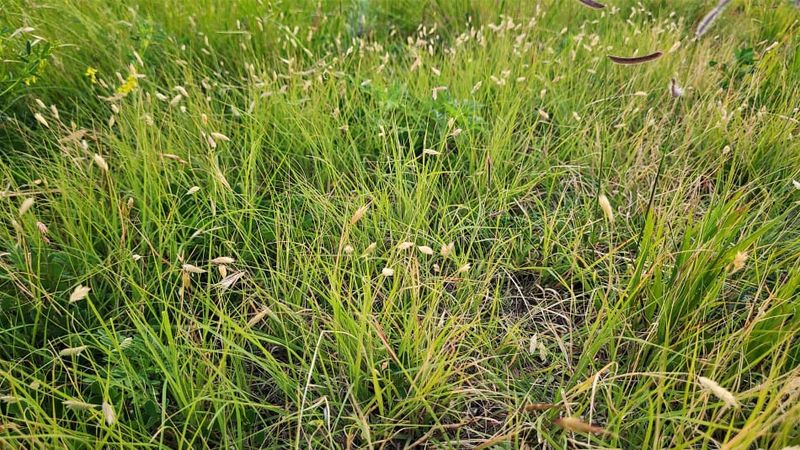
Buffalograss earns its place in a Central Texas yard that gets plenty of sun, drains well after rain, sits in clay or clay-loam soil, and belongs to a homeowner who is comfortable with seasonal browning during drought. If those conditions describe your property and you are ready to accept moderate traffic tolerance, establishment watering, and ongoing mowing and weed management, the grass is worth serious consideration.
Texas A&M AggieTurf’s buffalograss profile and Texas Parks and Wildlife’s yard suitability guidance together give you the clearest picture of where it works and where it does not.
Yards with significant shade, wet drainage areas, sandy or acidic soil, or heavy daily use are better served by a different turfgrass or a non-turf landscape treatment entirely. Trying to force buffalograss into a site it does not suit will cost time and money without delivering the lower-input lawn you were hoping for.
Whatever you plant and however you water it, remember that local watering restrictions apply to your yard. Texas municipalities and water providers operate under their own drought response stages and schedules, so check with your local provider before setting an irrigation program.
The Texas Commission on Environmental Quality drought response resources and TCEQ landscape irrigation rules are useful starting points for understanding what applies in your area. A grass that fits your site and your water reality is the one that will still be thriving three summers from now.