
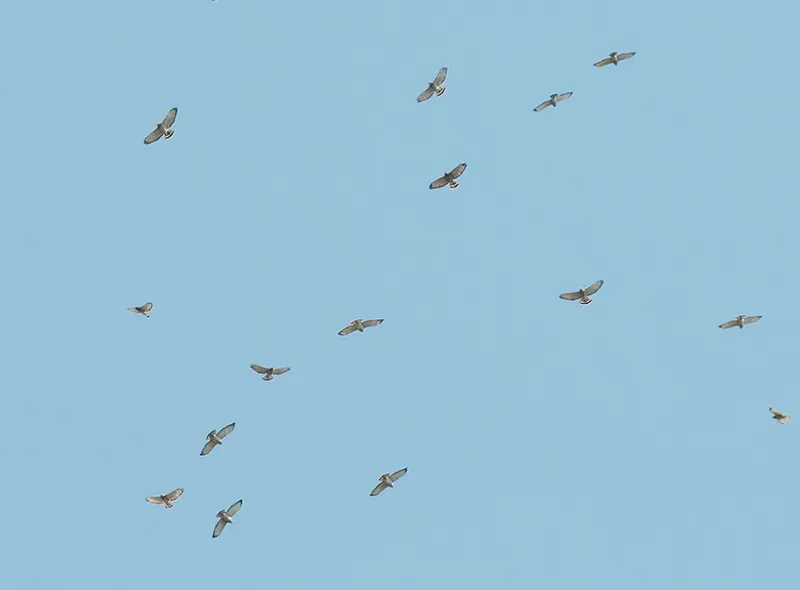
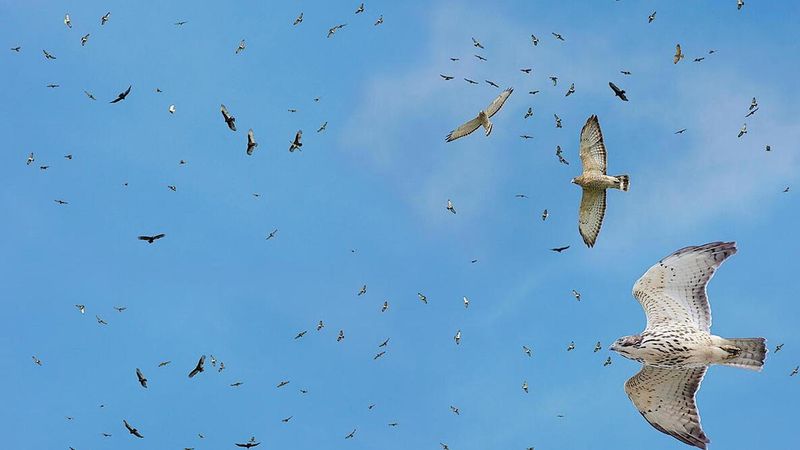
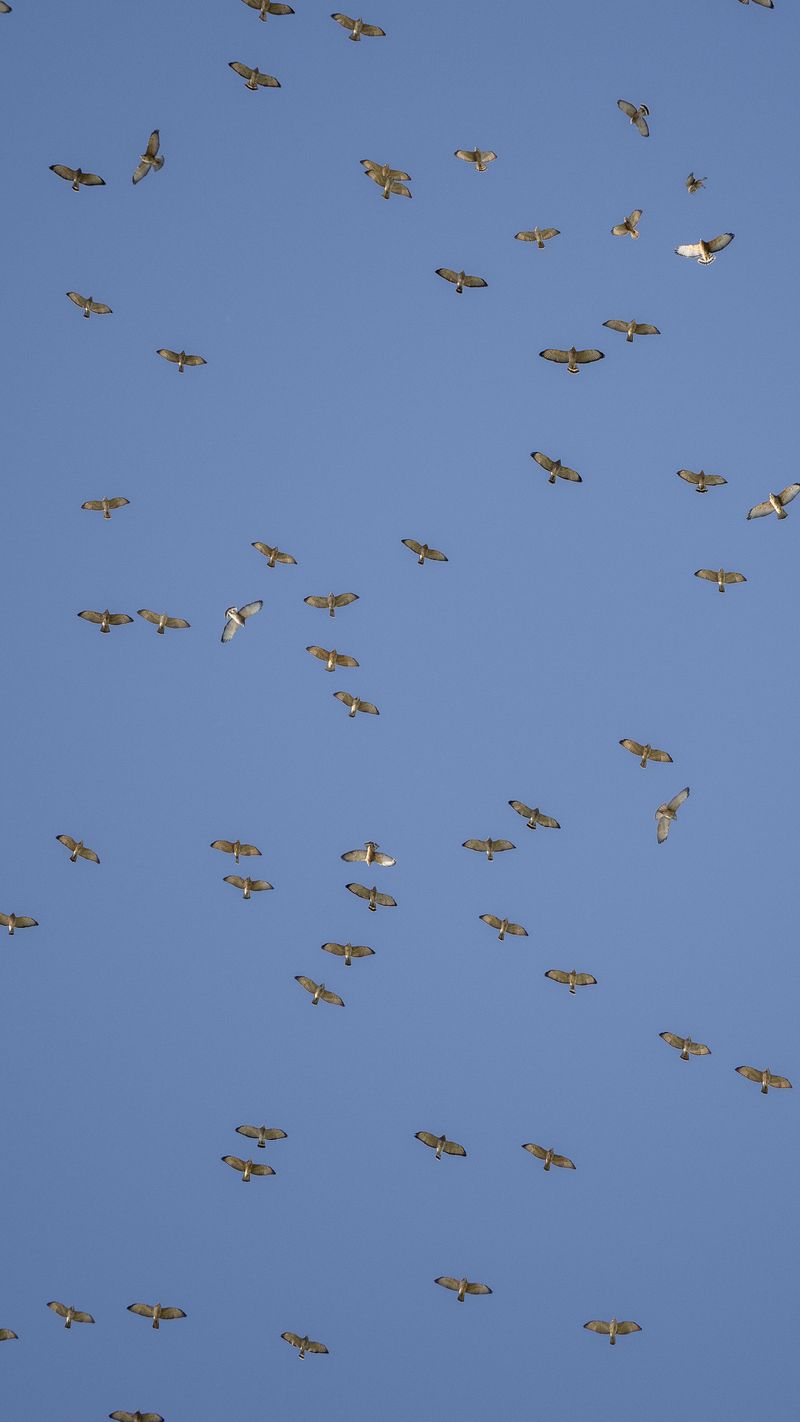
Look up on the right September afternoon in Central Texas and you might catch dozens of hawks spiraling overhead in a slow, silent wheel before gliding south and vanishing. That swirling formation has a name – a kettle – and watching one pass over your yard is one of the more dramatic wildlife moments the Texas fall season can offer.
Understanding what it actually means, and what it does not mean, helps you enjoy the sight without jumping to the wrong conclusions about your property or the birds themselves.
A kettle signals migration, not a message from the yard
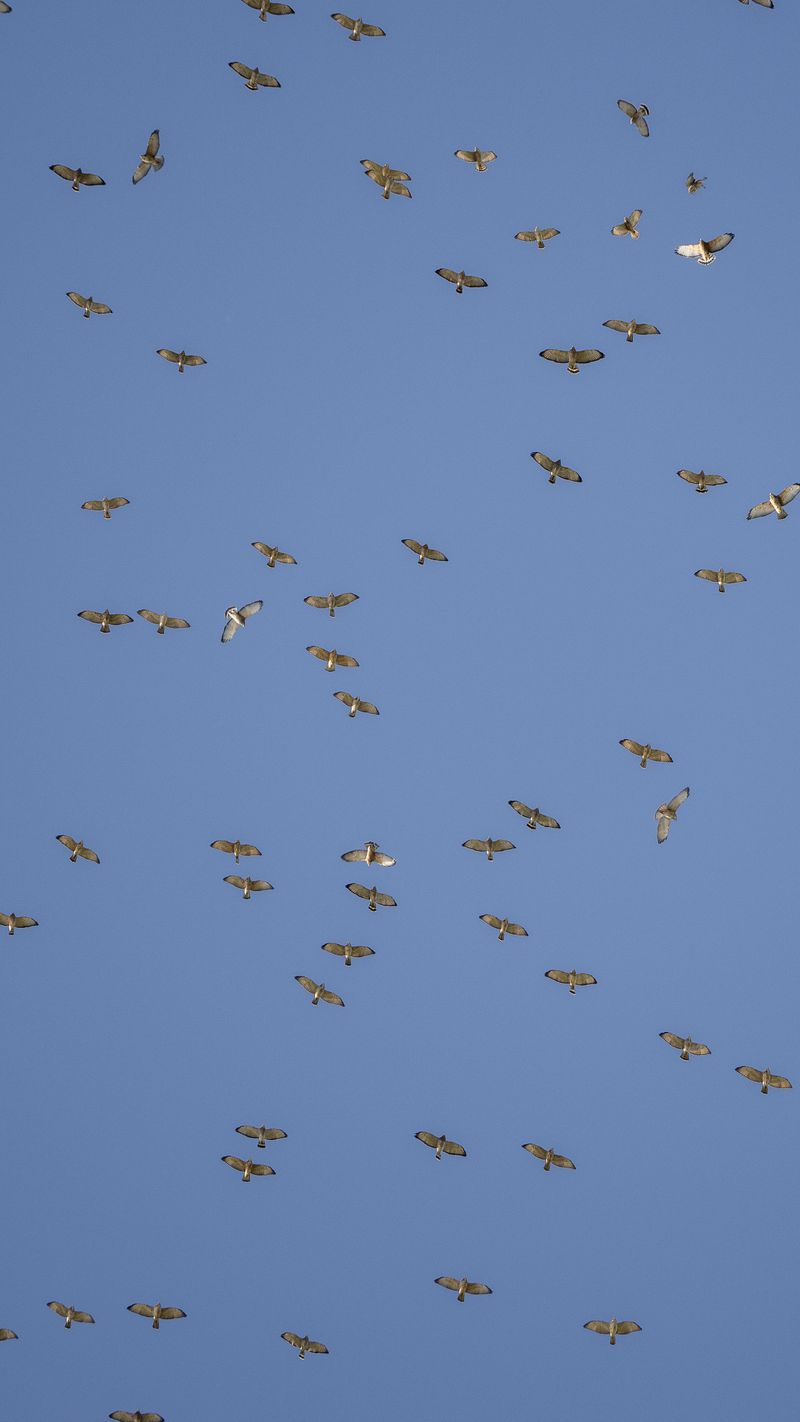
Spotting a swirling mass of hawks overhead feels personal, as if the birds chose your yard for a reason. The more accurate read is far simpler: you are standing beneath a migration highway, and the hawks are using a column of rising air to gain altitude before gliding south.
That rising air – a thermal – is the real attraction, not anything specific about your lawn, trees, or garden beds.
This formation is called a kettle, a term borrowed from the image of bubbling water. Cornell Lab’s Broad-Winged Hawk overview describes how these birds form large fall flocks, sometimes numbering in the thousands, as they funnel south through North America toward wintering grounds in Central and South America.
A kettle is not a flock that has settled on a territory – it is a moving column of birds exploiting atmospheric lift.
What the sighting does not tell you is equally worth knowing. The birds overhead have not selected your property because it holds an unusual abundance of prey, exceptionally healthy native plants, or some special ecological condition.
The species’ documented range and migration patterns show that migrants follow broad regional routes and use thermals wherever those thermals happen to form – which can be above a forest, a parking lot, a farm field, or a suburban backyard.
The title phrase “each fall” also deserves a reality check. Central Texas sightings are plausible during the fall migration window, but they are variable and weather-dependent rather than a guaranteed annual event at every yard.
Treat a kettle overhead as a regional migration moment you happened to witness, not as a repeating seasonal appointment your property has earned.
Thermals help Broad-Winged Hawks travel efficiently
Broad-Winged Hawks are built for long-distance travel, but flapping thousands of miles to South America would burn enormous energy. Thermals solve that problem.
A thermal is a column of warm air that rises when the sun heats the ground unevenly – dark pavement, open fields, and rooftops all create pockets of rising warmth that a hawk can ride like an elevator.
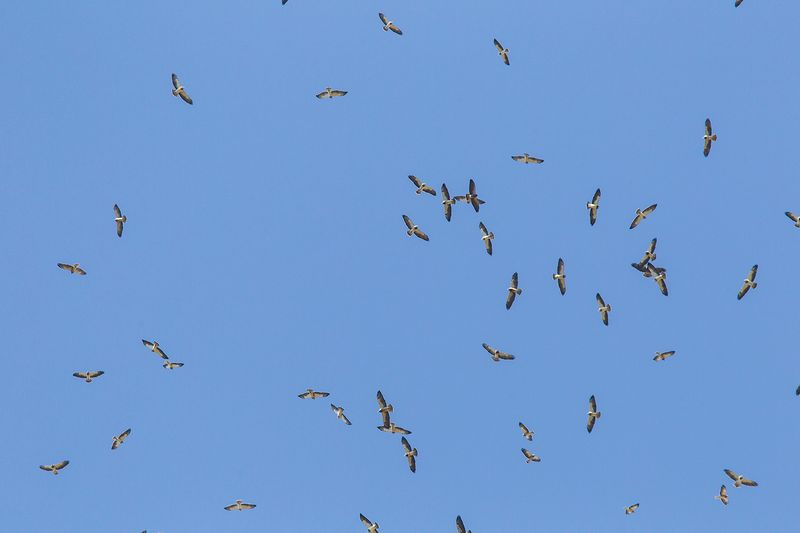
The bird enters the thermal and circles tightly within it, gaining hundreds or even thousands of feet of altitude with almost no wingbeats. Once it reaches the top of the thermal, it tilts into a long, efficient glide toward the next column of rising air, losing altitude gradually until it finds another thermal and repeats the process.
Migration data for the species supports this “thermal soaring and gliding” strategy as the engine behind their long southward passage each autumn.
The word “kettle” describes this circling behavior, not a precise headcount or a single-species guarantee. A kettle can hold a handful of birds or many thousands, and it may include more than one raptor species riding the same column of air.
Seeing twenty birds circle and then peel off to the south, followed minutes later by another group, is a textbook display of this energy-saving relay system in action.
From the ground, the motion looks leisurely – hawks tilting and banking in wide arcs – but each circle is purposeful work. The birds are reading the air the way a sailor reads the wind, finding the fastest and least costly path to their wintering grounds far to the south.
Fall migration carries the hawks across an uneven Texas landscape
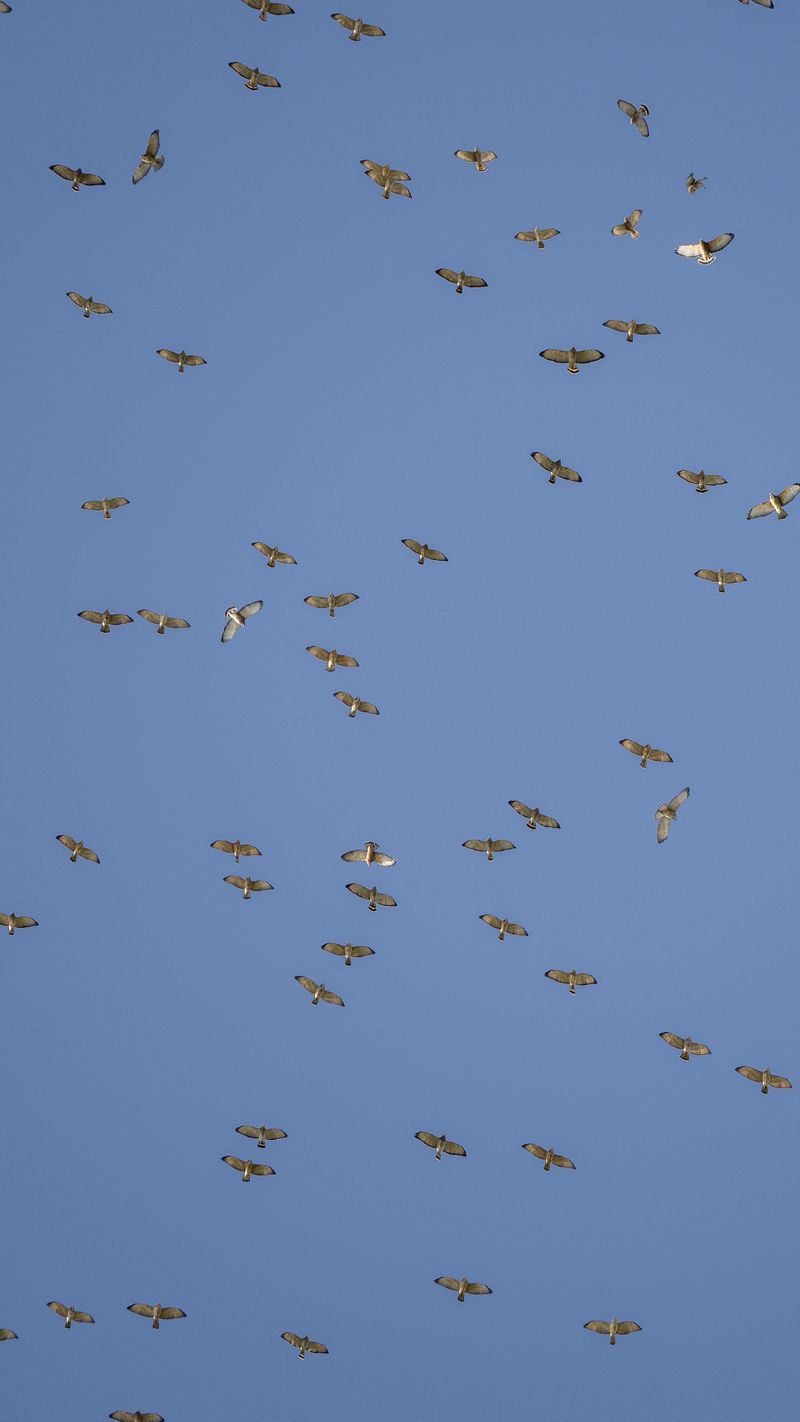
Every fall, Broad-Winged Hawks leave their breeding territories in the forests of eastern and central North America and head for wintering grounds stretching from southern Mexico through Central America and into South America. Cornell Lab’s species overview confirms this long southbound journey, which funnels birds through Texas as they compress toward narrower land corridors farther south.
Texas sits squarely in that funnel, but not all parts of the state see the same volume of migrants. The most dramatically documented concentrations occur along the coast and in South Texas.
Hazel Bazemore County Park near Corpus Christi, Smith Point on Galveston Bay, and sites in the Lower Rio Grande Valley have recorded staggering single-day counts, sometimes tens of thousands of birds. Texas Parks and Wildlife’s Santa Ana Loop resources highlight the Lower Rio Grande Valley as a premier fall raptor corridor, reflecting how birds compress toward the narrowest crossing points into Mexico.
Central Texas sits inland from those coastal concentration zones. Range and migration maps for the species show that the broad migration front does cross through the interior of the state, so a kettle over Austin, San Antonio, or the Hill Country is entirely plausible.
What it is not, however, is a guaranteed annual spectacle at any particular address.
Inland sightings tend to be more scattered and harder to predict than coastal counts. The birds are present, the routes are real, and an overhead kettle is a legitimate migration event – but calling it a reliable yearly appointment for Central Texas yards overstates what the evidence actually shows.
Sightings are worth celebrating precisely because they are not guaranteed.
Weather helps make the spectacle visible
Hawk migration does not run on a fixed calendar the way a school bus does. Wind direction, air temperature, barometric pressure, and the strength of thermals all shape when birds move in large numbers and when observers on the ground can actually see them.
A warm, sunny afternoon following a cool front often produces the most visible movement, because clearing skies and rising pressure can generate the strong thermals that make soaring efficient.
Migration geography research from Hawk Mountain Sanctuary documents how soaring migrants – including Broad-Winged Hawks – respond to atmospheric conditions along their routes, with movement often increasing when pressure rises and thermals strengthen after a frontal passage. Along the Texas coast, observers have noted that hawk counts spike under those conditions.
That coastal pattern is useful context, but it does not translate into a precise forecast for any single Central Texas yard. Texas Parks and Wildlife’s bird migration FAQ notes that weather influences when migrants move, without promising that any specific location will see a predictable flight on any given day.
One claim worth setting aside entirely: a kettle overhead is not a weather forecast. Hawks do not circle a yard to signal an approaching storm, a harsh winter, or an impending drought.
The relationship runs the other direction – weather shapes when hawks travel and when they are easy to spot, but the birds are responding to current atmospheric conditions, not announcing future ones. Watching the sky after a September cold front clears is a reasonable strategy for catching a kettle, but the hawks will not always cooperate.
Use shape and markings to identify the circling birds
Circling raptors are easy to spot and surprisingly hard to name with confidence from the ground. Broad-Winged Hawks have a distinctive look once you know what to check for.
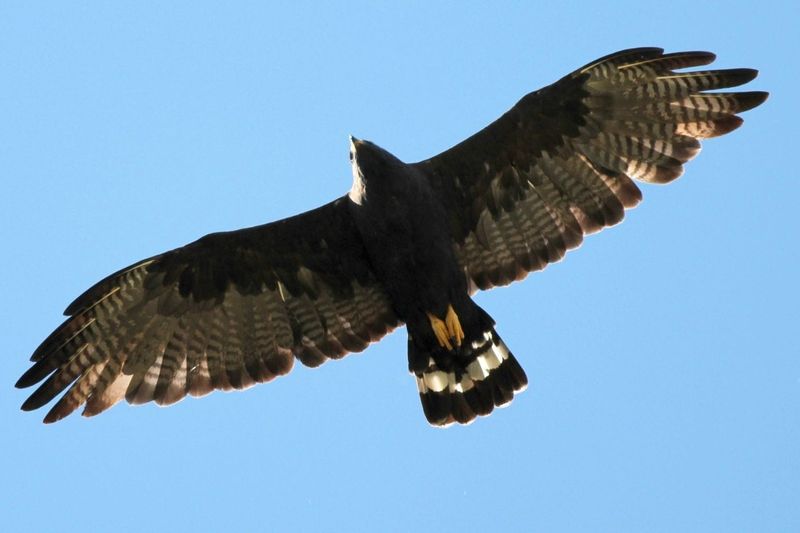
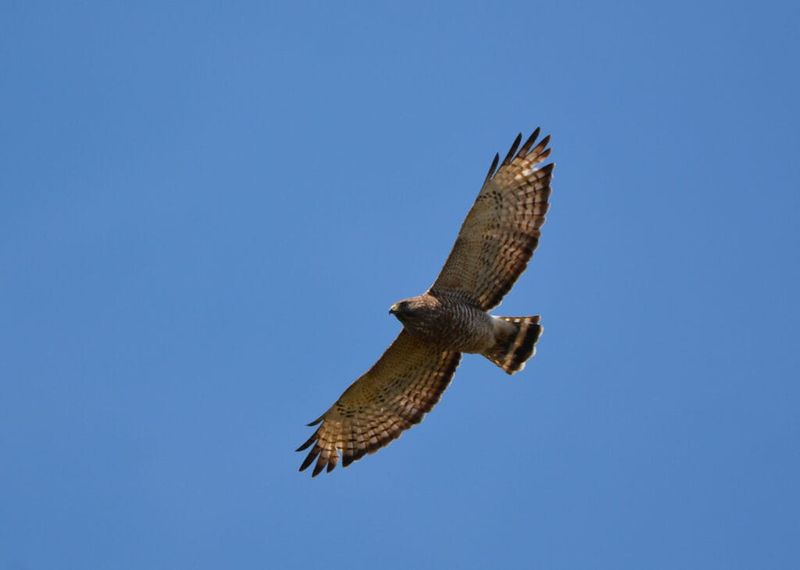
Adults show a compact, stocky body; broad, pointed wings that taper toward the tips; a relatively short tail; and – most usefully – bold, alternating black-and-white bands on the tail that can be seen from a considerable distance. Cornell Lab’s identification guide for the species walks through these field marks in detail, including the pale underparts with rufous barring on adult birds.
Juveniles complicate things. Young Broad-Winged Hawks are more heavily streaked below, their tail bands are less crisp, and they can be genuinely difficult to separate from similar species when seen from below at altitude.
If the birds are high and moving fast, a confident identification may require binoculars at minimum, and a photograph reviewed later can help confirm what you saw.
Turkey Vultures are the most common source of confusion, since they also circle on thermals and are abundant across Texas in fall. Vultures hold their wings in a shallow V – called a dihedral – and rock from side to side in flight, while Broad-Winged Hawks hold their wings flatter and more steadily.
Mississippi Kites, Swainson’s Hawks, and accipiters such as Cooper’s and Sharp-shinned Hawks also move through Texas in fall and may share airspace with Broad-Winged Hawks or join a mixed kettle. The species comparison tool at All About Birds and Texas Parks and Wildlife’s raptor resources both offer side-by-side help.
Circling behavior alone is not enough to call a bird a Broad-Winged Hawk. Check the wing shape, watch for the tail pattern, note the flight style, and resist the urge to name every distant silhouette without a closer look.
A kettle does not diagnose a healthier or more productive yard
Watching hawks spiral above your garden beds can feel like a stamp of approval – as if the birds have assessed your native plantings and found them worthy. That reading, while flattering, is not what the evidence supports.
A migrating kettle is using a thermal that happens to form above your neighborhood, and the location of that thermal depends on sun angle, ground cover, and air temperature, not on the ecological quality of your specific half-acre.
Broad-Winged Hawk life history data from Cornell Lab shows that the species hunts from perches in forested and semi-open areas, taking small mammals, frogs, toads, insects, and reptiles. Their diet is broad, but a high migrating kettle is not evidence that your yard contains an unusual supply of any of those prey items.
The pest-control angle deserves the same caution. A kettle passing over at several hundred feet is not positioned to hunt your garden, and even if individual birds drop lower, a brief migration stop does not translate into reliable rodent or insect control for your property.
Migration route data and migration geography research both reinforce that these birds are moving through, not settling in.
Concern about pets is also misplaced in this context. A high, migrating kettle is not hunting cats, small dogs, or backyard poultry.
Broad-Winged Hawks do not typically target animals of that size, and a flock in active southbound migration is focused on covering distance, not on hunting residential yards. Migrants may cross suburban and open landscapes without any intention of nesting or establishing a territory there, so a kettle overhead is a transit event rather than a sign that raptors are moving in.
Observe from a distance and respond only when a bird needs help
The best thing most Central Texas homeowners can do when a kettle passes over is exactly what feels natural: stand in the yard, look up, and watch. Binoculars sharpen the view and help with identification, but no special equipment, food, lures, or habitat modifications are needed to enjoy the spectacle.
Migrating Broad-Winged Hawks do not need supplemental feeding, and attempting to attract them closer by putting out prey animals or food would be both ineffective and contrary to responsible wildlife practice.
Feeders deserve a separate, more specific conversation. A high kettle of migrating hawks circling overhead is not a reason to take down your songbird feeders.
That advice applies only when a hawk – typically a Cooper’s Hawk or Sharp-shinned Hawk, not a migrating Broad-Winged – is repeatedly hunting the birds congregating at your feeder at close range. Cornell Lab’s guidance on feeder-hunting hawks explains that temporarily removing feeders for a week or two can disperse the prey concentration that keeps an accipiter returning – but that situation is distinct from a high, passing kettle.
Ground-level hawk encounters call for more care. A hawk sitting on the grass does not automatically need rescuing.
Young raptors sometimes spend time on the ground while developing flight skills, and approaching or handling a healthy bird causes unnecessary stress and may be illegal under federal migratory bird protections. Keep your distance, keep pets and children away, and watch to see whether the bird moves on its own.
If a hawk is visibly injured, clearly unable to fly, or in immediate danger from traffic or predators, Texas Parks and Wildlife maintains a directory of permitted wildlife rehabilitators who can advise you by phone and accept injured birds for professional care. Do not bring the bird indoors, offer it food or water, or attempt transport without guidance from a permitted rehabilitator first.
Treat the sighting as a migration event, not a yard diagnosis
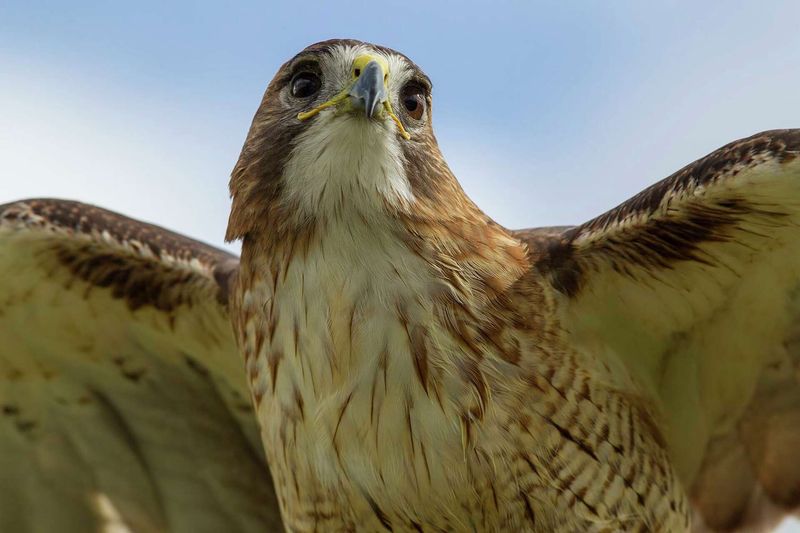
A fall kettle of Broad-Winged Hawks over a Central Texas yard is, at its core, a migration event. The birds have found workable rising air along a southbound route, and your yard happens to sit below that column of lift.
The species’ documented migration patterns and migration geography research both support that interpretation far more than any reading that ties the sighting to the specific ecological condition of the property below.
The sighting does not prove that your yard will host a kettle next fall, or the fall after that. Central Texas observations are real but variable, shaped by weather, route, and atmospheric conditions on any given day.
Enjoy the event for what it is rather than building expectations around its return.
The practical response stays simple: watch from a distance, use binoculars to check field marks, avoid any attempt to feed or handle the birds, and contact a permitted rehabilitator only if a bird is genuinely injured or grounded. Seeing thousands of hawks ride a single column of air before tilting south is one of the more quietly astonishing things a Texas autumn can produce – and it costs nothing to witness.