
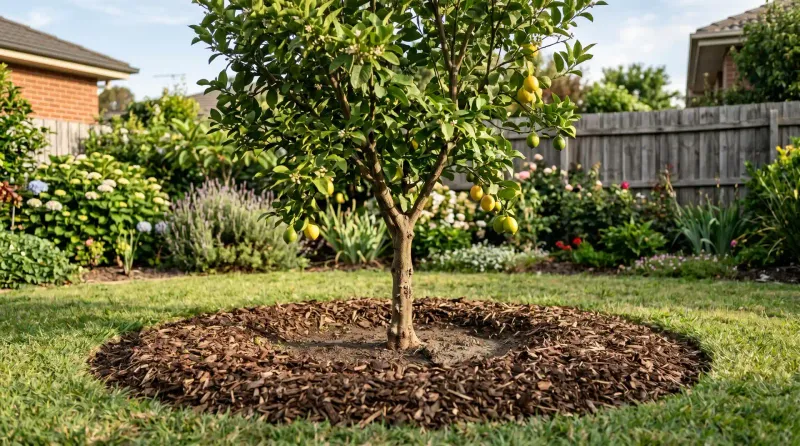
A thirsty-looking fruit tree in Florida is not always begging for more water. Many times, the real problem is hot, bare, sandy soil that cannot hold moisture long enough to help the roots.
Smart mulching can cool the ground, slow evaporation, feed the soil, and protect roots from stress. These seven habits can help a struggling mango, citrus, avocado, fig, peach, or guava bounce back with less guesswork.
1. Pull Mulch Away From the Trunk Before Anything Else
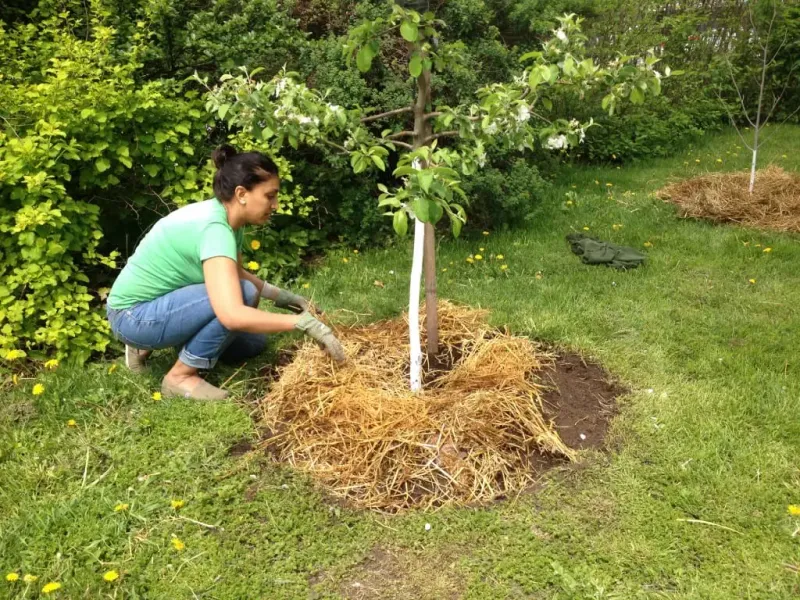
A ring of mulch should look like a doughnut, not a volcano. When mulch is piled against the trunk, it traps dampness around the bark, which can invite rot, pests, and fungal trouble in Florida’s humid weather.
Start by gently pulling mulch 4 to 6 inches away from the trunk of young fruit trees, and a little farther for older trees with wider bases. The root flare, where the trunk begins to spread into roots, should be visible instead of buried.
This habit matters because a struggling tree often has more than one stress at once. Extra water added to a buried trunk can make the problem worse, while a clean trunk zone lets the bark breathe and keeps irrigation focused on the feeder roots.
Check the trunk after heavy summer rain or after a lawn crew visits, since mulch can slide back into place. A few minutes with a gloved hand may prevent weeks of decline.
2. Stretch the Mulch Ring Out to the Drip Line
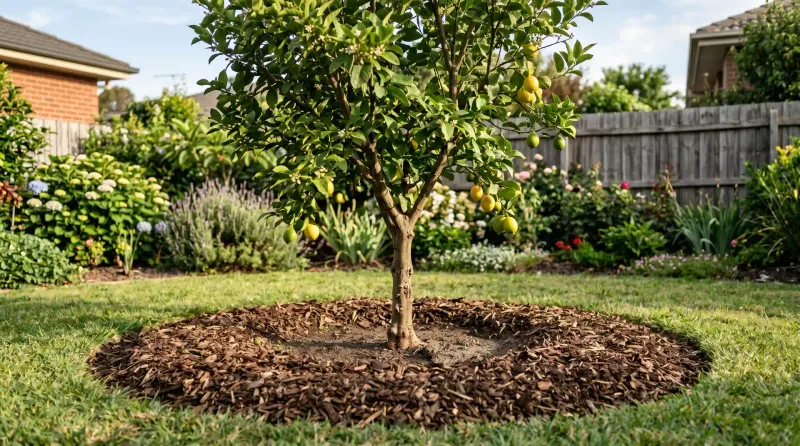
The most useful roots are not usually sitting right beside the trunk. They spread outward under the canopy, often near the drip line, where rain naturally falls from the leaves.
For a Florida fruit tree that looks wilted, yellow, or stalled, widen the mulch ring instead of simply making it deeper. Aim to cover as much of the root zone as practical, especially under the outer half of the canopy.
This is a different habit from adding more material. A wide, moderate layer cools far more soil, reduces grass competition, and gives feeder roots a better place to work.
Turfgrass can be a quiet thief around fruit trees because it competes for water and nutrients in the same shallow zone.
In small yards, you may not be able to mulch all the way to the drip line, and that is fine. Even expanding the ring by 12 to 24 inches can help sandy Florida soil hold moisture longer after rain or irrigation.
3. Keep the Layer Thick Enough, but Never Smothering
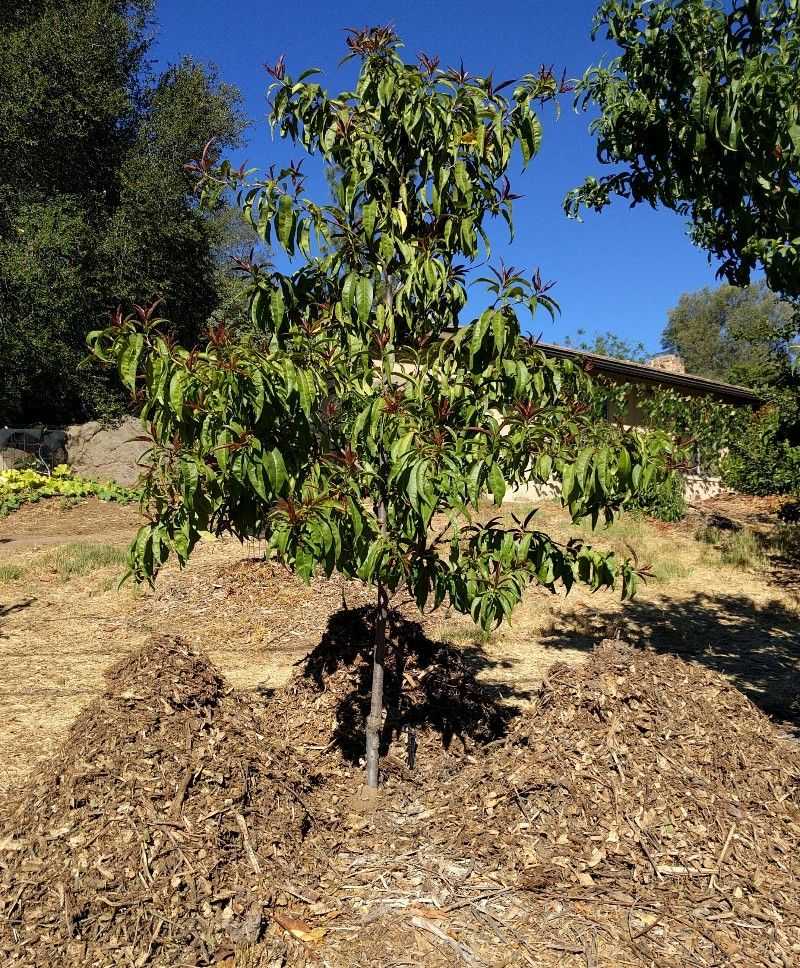
More mulch is not always better, even when the tree looks desperate. A layer that is too thick can block air from reaching the soil and may keep water from soaking in evenly.
For most Florida home orchards, a 2 to 3 inch layer of organic mulch is a sensible target. Coarse wood chips, pine bark, pine straw, leaves, or mixed yard trimmings can work when they are free of weed seeds and not packed into a mat.
The goal is to shade the soil without sealing it. In sandy soil, that shade can be a big deal because bare ground heats up fast and dries quickly after a sprinkler run or afternoon storm.
Use your finger as a simple test. If the soil under the mulch feels cooler and slightly damp while the surface mulch is dry, the layer is doing its job.
If water runs off or the bottom smells sour, thin it out and fluff the material so air can move again.
4. Choose Mulch That Breaks Down and Feeds Sandy Soil
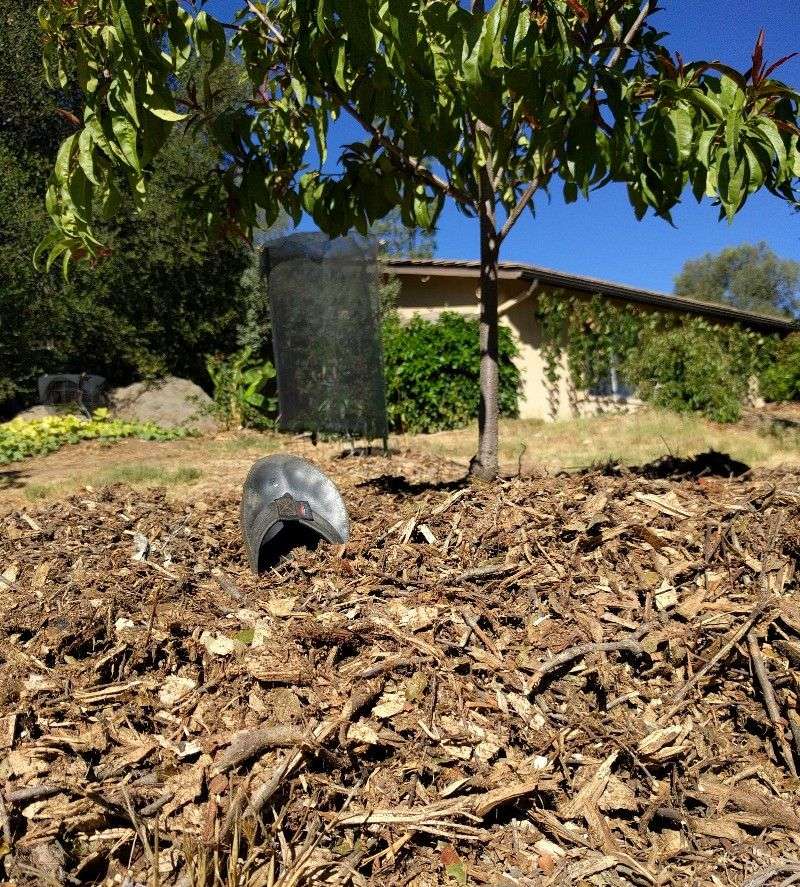
Florida’s sandy soil can feel like a leaky bucket. Water and nutrients move through it quickly, so a mulch that slowly breaks down is more than decoration.
Organic materials help build a thin, living layer at the surface over time. Wood chips, shredded leaves, pine bark, pine straw, and chipped prunings can support soil life as they decompose.
That gradual breakdown can improve moisture holding near the roots, where fruit trees need it most.
Skip dyed rubber mulch around edible fruit trees. It does not feed the soil, and it can heat up more than organic materials in full sun.
Also be cautious with fresh, hot compost or strong manure near young roots, since too much richness at once can burn or stress a weak tree.
A practical Florida habit is to use what the yard already gives you, when it is disease-free. Clean leaves, small chipped branches, and untreated tree trimmings can turn a tired planting area into a cooler, more root-friendly zone.
5. Refresh Mulch After Storms, Not Just on a Calendar
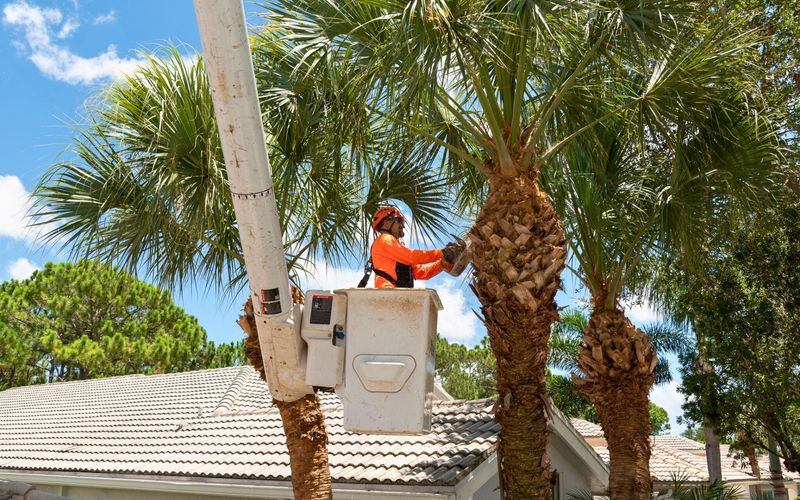
After a hard Florida downpour, mulch can move like beach sand. It washes into piles, thins out on the high side of the bed, or gets pressed flat in low spots.
A struggling fruit tree may decline faster when its mulch ring becomes uneven. One side of the root zone bakes, while another side stays soggy.
That uneven moisture can be especially rough on citrus, avocado, and young mango trees.
Instead of waiting for a spring or fall mulching day, walk the yard after major rain, tropical storms, or irrigation repairs. Rake mulch back into a level layer, open the trunk area, and remove any debris packed against graft unions or low branches.
Storm checkups are also a good time to spot standing water. Mulch helps conserve moisture, but it cannot fix poor drainage by itself.
If puddles sit for long periods, pull mulch back until the soil dries and consider improving drainage before adding more material.
6. Water Through Mulch Slowly Instead of Spraying the Surface
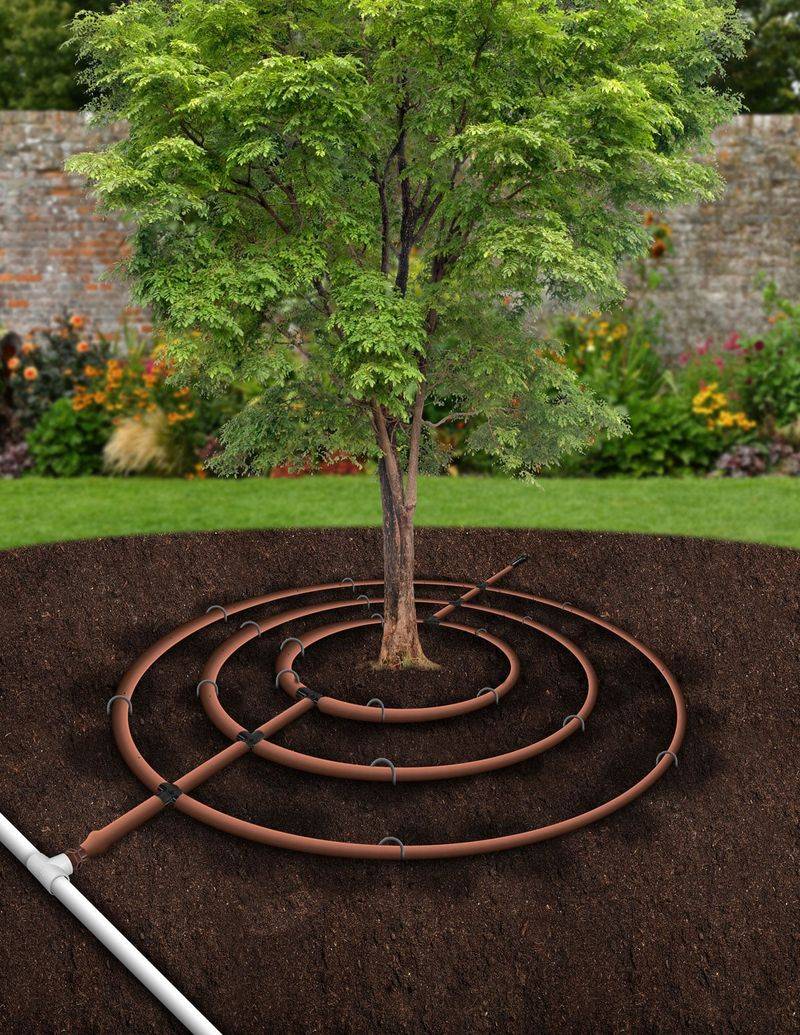
A quick spray over mulch can fool you. The top looks wet, but the root zone underneath may still be dry, especially when coarse mulch sheds water at first.
When a fruit tree is struggling, water slowly enough for moisture to pass through the mulch and sink into the soil. Drip irrigation, a slow hose trickle, or a basin-style watering method can help more than a fast blast from a sprinkler.
This habit makes mulch and watering work as a team. The water reaches the roots, then the mulch slows evaporation and keeps the soil cooler for longer.
That is usually more helpful than repeating shallow watering several times a day.
Do a quick check with a trowel or your fingers about 4 to 6 inches down at the edge of the mulch ring. If the soil is bone dry, water longer.
If it is soggy and sour-smelling, pause and let air return to the root zone.
7. Let Mulch Protect Roots From Heat, Weeds, and Lawn Equipment
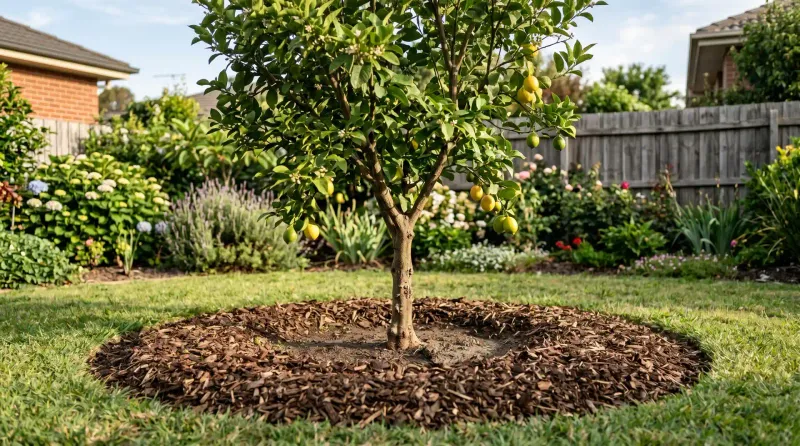
A mower nick on a young trunk can set a fruit tree back fast. Add heat, weeds, and sandy soil, and that small wound becomes part of a bigger stress pile.
A wide mulch ring acts like a quiet safety fence. It keeps string trimmers away from tender bark, discourages weeds that steal moisture, and shades shallow roots during long warm seasons in Florida.
That protection is especially useful for young trees that have not filled out yet. Mango, citrus, fig, persimmon, peach, and avocado trees all benefit from less competition while they are building a strong root system.
Even older trees can respond well when grass is removed from beneath the canopy and replaced with a steady mulch layer.
Keep the area tidy but not sterile. A natural mulch zone with clean edges can look intentional, save mowing time, and make watering more effective.
For a stressed fruit tree, reducing daily root competition can be just as valuable as adding another gallon of water.