
Texas summers are brutal, and most shrubs planted in spring barely survive their first season before the heat closes in. Planting the right native shrub in fall gives its roots a quieter window to settle in before next year’s punishing temperatures arrive.
Texas sage, also called cenizo, is built for exactly this kind of landscape, and timing its planting right could make all the difference between a struggling transplant and a shrub that handles summer on its own terms.
Texas sage fits the sunny, dry landscape
Leucophyllum frutescens goes by several names in Texas, including cenizo, Texas ranger, rain sage, and barometer bush. None of those names should be confused with culinary garden sage, which is an entirely different plant used in cooking.
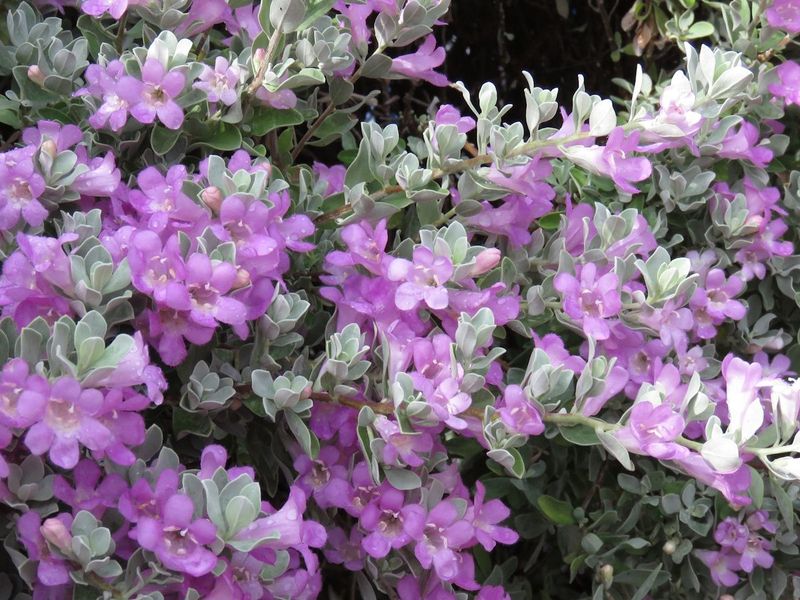
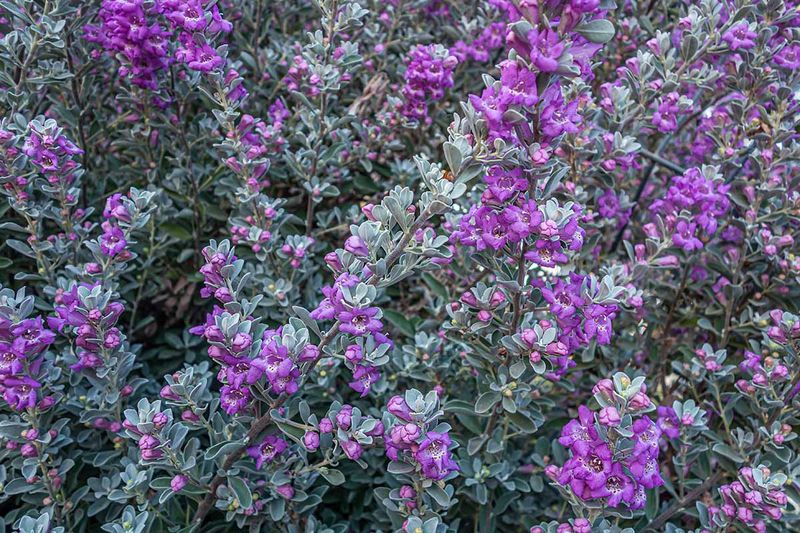
Texas sage is a woody, evergreen shrub native to Texas and northern Mexico, prized in landscapes for its silvery-gray foliage and bursts of lavender-to-purple flowers that follow changes in rainfall or humidity.
After establishment, the shrub demands very little. Texas SmartScape lists it as a low-water, full-sun plant with very high drought tolerance, making it a strong candidate for homeowners who want a good-looking landscape without a heavy irrigation bill.
North Carolina Extension similarly describes the shrub as having excellent heat and drought tolerance once it has settled into its site.
That said, Texas sage is not a one-size-fits-all solution for every yard in the state. Regional conditions, including freeze timing, rainfall, humidity levels, and soil type, all affect how well it performs.
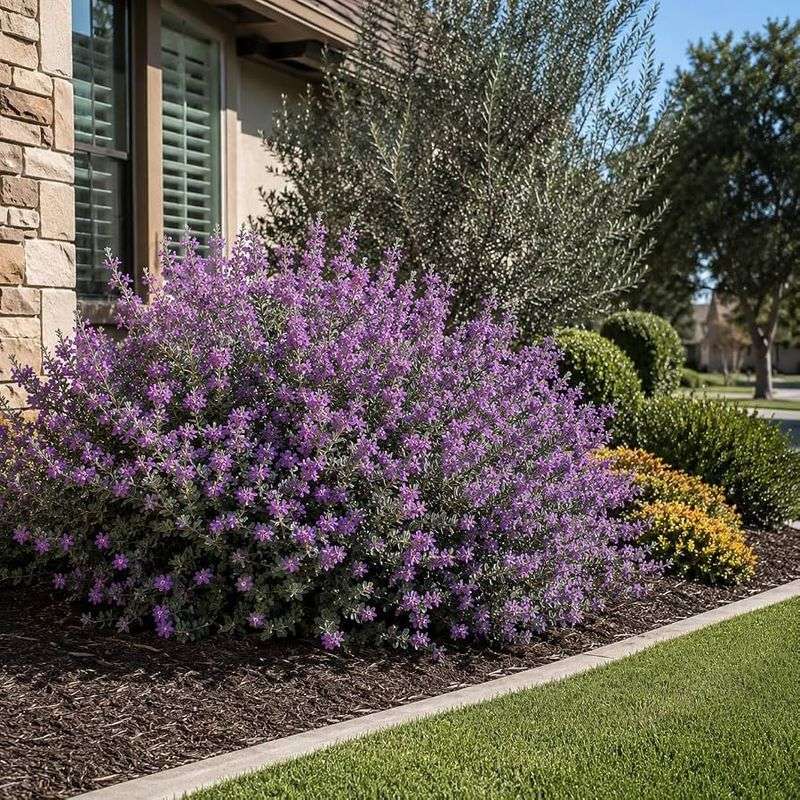
Choosing it as your hero shrub makes sense when your site matches what the plant genuinely needs: full sun and soil that drains freely. Mature size also varies depending on the cultivar you select, with some staying closer to 6 feet tall and 4 feet wide while others can push toward 12 feet under ideal conditions, so checking the label before you buy is worth the extra minute.
Fall may give the root system a lower-stress head start
Woody plants have a useful trait that most gardeners never think about: their roots do not stop growing when cooler weather slows down the leaves and stems above ground. That continued underground activity is the core reason fall planting can benefit a shrub like Texas sage before the following summer arrives.
When you plant in fall, the shrub puts energy into root expansion during a period when air temperatures are manageable and water demand is lower. By the time the following summer heats up, the plant has had months to push roots into surrounding soil rather than struggling to establish from scratch in dry, baking conditions.
University of Georgia Cooperative Extension guidance on landscape best management practices supports this general principle for woody plants, explaining that fall-planted shrubs can develop root systems during the cooler months that improve their readiness for summer stress.
Texas A&M AgriLife Extension makes a similar point in its native habitat planting material, recommending cool-season installation so plants can establish before hot, dry weather sets in. The Texas A&M AgriLife Extension December 2025 newsletter echoes that guidance, framing fall as a planting window worth using for exactly this reason.
The honest qualifier here is that this advantage comes from general woody-plant guidance, not from a Texas-sage-specific field trial comparing fall-planted versus spring-planted shrubs. No published source puts a number on how many additional roots form or how many more heat days a fall-planted Texas sage can tolerate.
What the evidence does support is the mechanism: cooler soil temperatures, lower evaporation, and reduced top-growth demand create conditions where root expansion is possible for a longer stretch before summer arrives. That is a real potential advantage, even if it is not a guarantee.
Check whether your yard suits Texas sage
Before you buy a plant, your yard deserves an honest look. Texas sage has real strengths, but it will underperform or fail entirely if the site works against it.
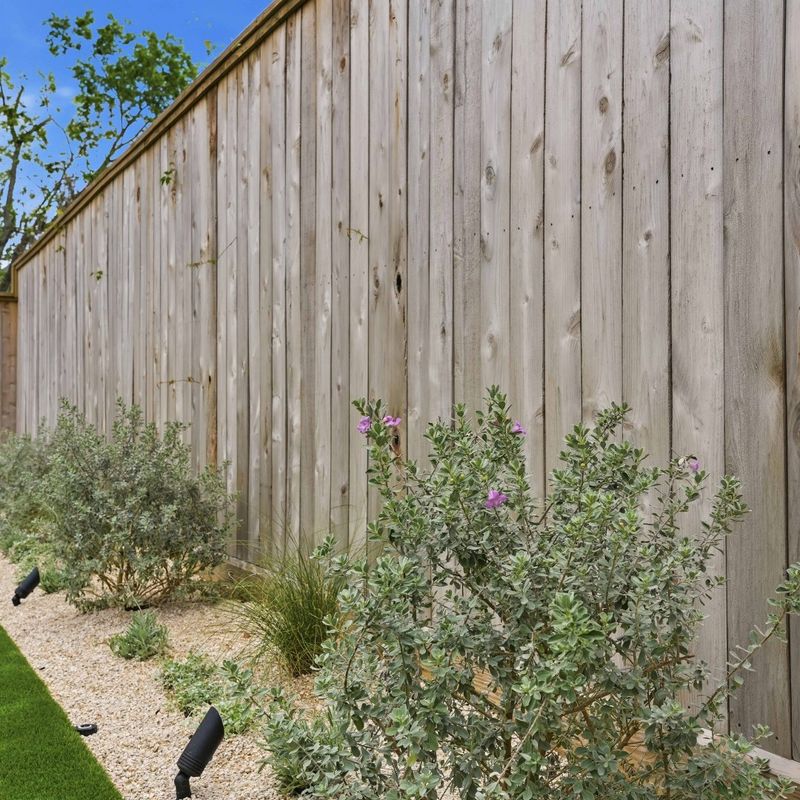
The two requirements that matter most are full sun and excellent internal drainage, and neither is negotiable.
A bed that sits in partial shade, collects water after rain, or stays damp for days after irrigation is a poor match for this shrub. The same goes for compacted clay that does not allow water to move through freely, spots near downspout outlets, and low-lying areas where runoff pools.
North Carolina Extension’s plant profile for Leucophyllum frutescens specifically flags humidity and warm nights as potentially problematic and warns that poor drainage can contribute to cotton root rot, a serious fungal disease that can kill the plant.
Being a Texas native does not mean Texas sage belongs in every Texas yard. The shrub has its strongest track record in sunny, relatively dry regions, including much of central, north-central, south, and west Texas.
Texas Parks and Wildlife Department ecological systems data places cenizo in South Texas shrubland systems, which are characterized by low rainfall and well-drained soils, a useful reminder of its natural home ground.
For gardeners in the wetter, more humid parts of East Texas or along the Gulf Coast, a different native shrub may be a better fit. Heavy annual rainfall, high humidity, and soils with limited drainage shift the odds against Texas sage in ways that fall planting cannot fix.
Checking the Texas SmartScape listing for Texas sage, which is specifically calibrated for North Central Texas conditions, gives you a useful starting point for comparing your site against the shrub’s actual preferences.
Choose a regional fall planting window
Fall in Texas is not one season. The Panhandle can see its first hard freeze weeks before South Texas even feels a chill, and the Gulf Coast may stay warm well into November while West Texas nights are already cold.
Treating fall as a single statewide planting date would set up a lot of gardeners for failure.
The practical rule is straightforward: plant after the worst summer heat has eased, but early enough that roots have time to grow before your area’s most damaging freezes arrive. A shrub planted too close to a hard freeze does not get the establishment window that makes fall planting worthwhile.
Texas A&M AgriLife’s native habitat planting guidance recommends cool-season installation for exactly this reason, emphasizing that the goal is giving roots time to grow before heat and drought return.
In North Texas and the Panhandle, that window often opens in late September or early October and may close by mid-November. Central Texas gardeners typically have a longer window, often stretching from October into early December.
South Texas and the lower Rio Grande Valley can plant even later, since hard freezes are less frequent and the warm season extends further into the calendar year. West Texas has its own freeze patterns that vary significantly by elevation.
Local knowledge matters more than any general guideline. Your county’s Texas A&M AgriLife Extension office or a reputable local nursery can tell you when the planting window opens and closes for your specific area.
That local guidance, combined with watching the forecast for the two to four weeks after planting, is the most reliable way to time your fall installation right.
Plant at the original depth and protect the root zone
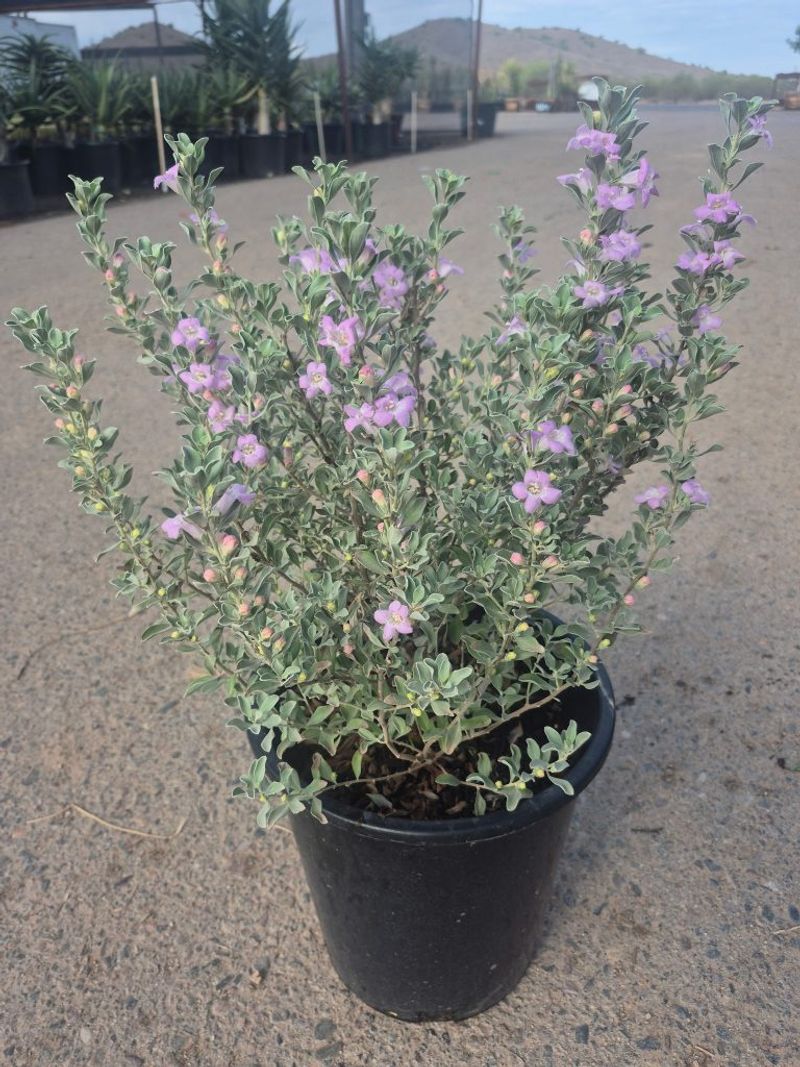
Getting the planting right from the start protects all the root-establishment potential that fall timing is supposed to deliver. The most common mistake is planting too deep, which smothers the root flare and creates conditions for rot and disease.
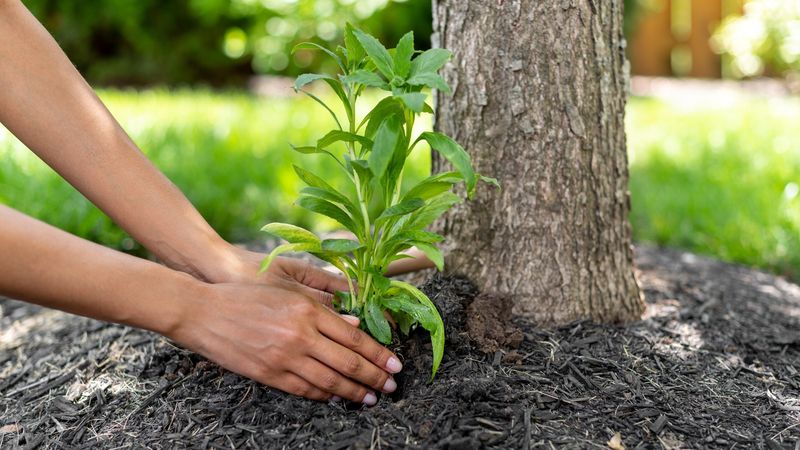
Set the shrub so the top of the root ball sits at or very slightly above the surrounding soil level, matching the depth it occupied in its container.
Penn State Extension’s planting guidance is clear on this point: do not bury the stem or root flare, and use the existing soil as backfill unless a soil test or site-specific recommendation says otherwise. Amending the backfill with rich compost can actually discourage roots from spreading into surrounding native soil, which is the opposite of what you want during establishment.
After the shrub is in the ground and watered in, apply roughly two to three inches of organic mulch over the root zone. Mulch slows evaporation, moderates soil temperature during winter cold and spring warm-up, and reduces weed competition.
Penn State Extension’s ornamental planting guidance and their mulching guidance both emphasize keeping mulch pulled back from the stem itself. Piling mulch against the trunk, sometimes called volcano mulching, traps moisture against the bark, reduces oxygen at the root collar, and can promote decay over time.
A wide, shallow mulch ring that covers the root zone without touching the stem is the right target. For a newly planted Texas sage, that ring does not need to be enormous, but extending it out a foot or two beyond the edge of the root ball gives the mulch layer room to do its job as roots begin to expand outward through the fall and winter months.
Water establishment before relying on drought tolerance
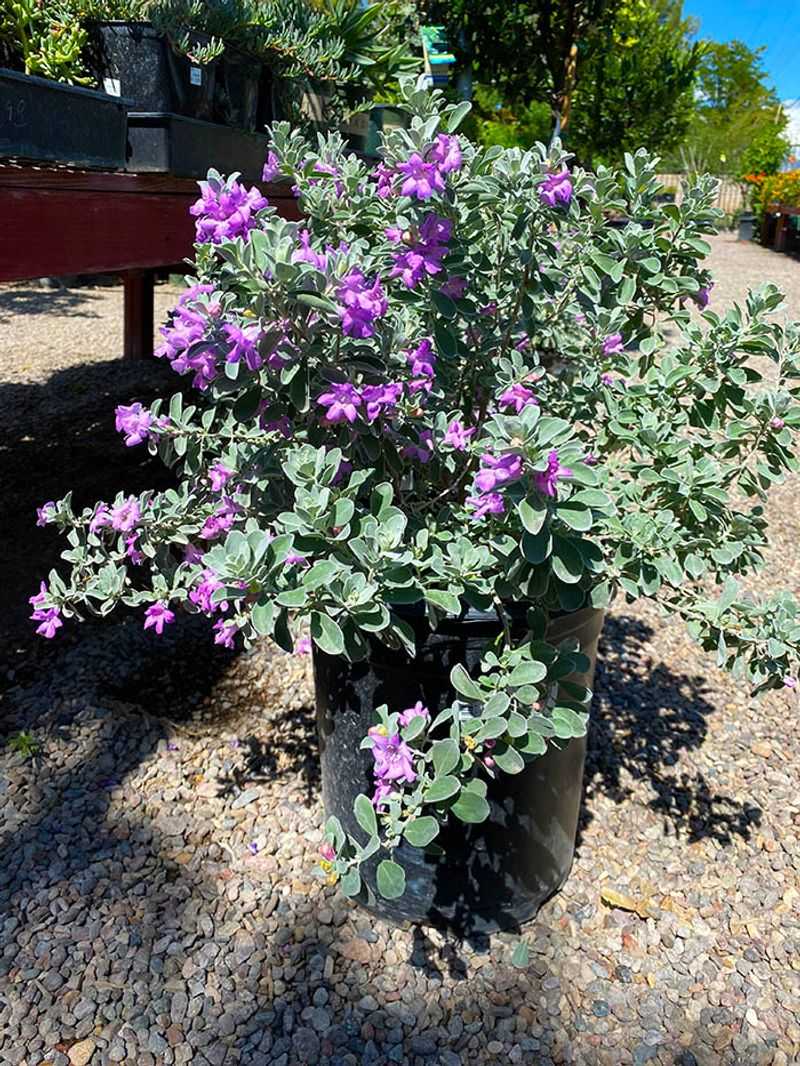
Texas sage’s reputation for drought tolerance is well earned, but it applies to an established plant, not a freshly dug-in transplant. A newly planted shrub has a limited root system that cannot yet reach moisture deep in the soil, which means it depends on you for consistent water while it gets settled.
Water thoroughly at planting to collapse air pockets around the root ball and give the shrub a full drink before it starts working on new roots. After that, consistent moisture during the establishment period is the goal, not constant saturation.
Penn State Extension’s guidance on watering newly planted trees and shrubs makes the point clearly: the root ball itself needs to stay adequately moist, but overwatering in poorly drained soil can be just as damaging as letting the plant dry out, because waterlogged roots lose access to oxygen.
During the first summer after a fall planting, monitor the shrub during dry stretches. Even a shrub with a solid fall establishment period is not yet fully independent, and a prolonged dry spell without supplemental water can set back progress.
Check the soil around the root zone before watering rather than irrigating on a fixed schedule. If the soil feels dry a few inches down, water.
If it still feels moist, wait.
Two other practices to skip: do not use heavy irrigation in an attempt to trigger flowers, and do not reach for high-nitrogen fertilizer as a shortcut to faster growth. Texas SmartScape explicitly advises against heavy watering to force blooms, and North Carolina Extension’s profile for Leucophyllum frutescens recommends against fertilizing the plant altogether.
Excess nitrogen pushes leafy growth at the expense of root development and can make the shrub less resilient, not more.
Expect gradual establishment and weather-linked flowers
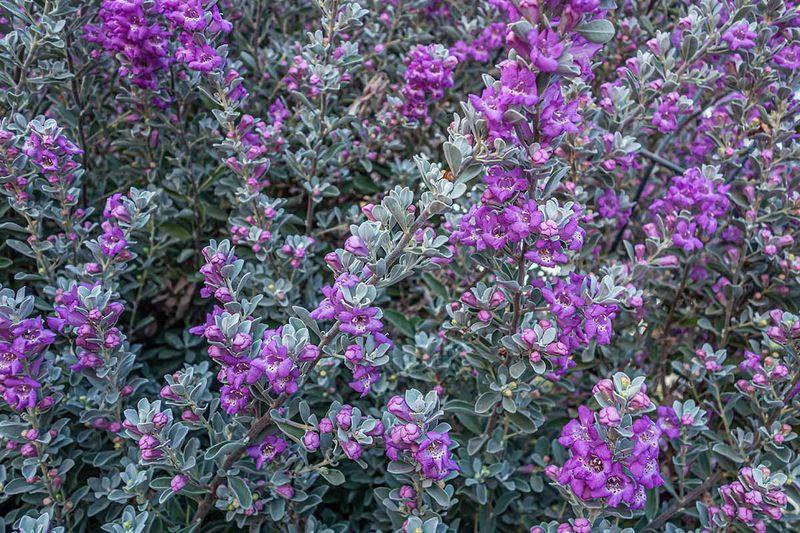
Patience is part of the deal with Texas sage. Texas SmartScape notes that the shrub may take up to two years to become fully established and bloom reliably, so a plant that looks quiet in its first spring is not necessarily a failure.
Root development is happening underground even when the top of the shrub shows little visible change.
Mature size is another variable worth planning for before you buy. Reported dimensions vary considerably depending on the cultivar and growing conditions.
Texas SmartScape puts the typical range at roughly 6 to 8 feet tall and 4 to 6 feet wide, while North Carolina Extension’s data suggests some plants can reach 6 to 12 feet. Checking the cultivar label at the nursery and allowing room for the shrub’s full mature spread will save you from a pruning battle later.
Compact cultivars are available if your space is limited.
The flowers are one of Texas sage’s most distinctive features, but they come on the plant’s schedule, not yours. Blooming is typically triggered by changes in humidity or rainfall rather than by a fixed calendar date, which is why the shrub sometimes earns the nickname barometer bush.
North Carolina Extension’s description of Leucophyllum frutescens supports this connection to environmental moisture cues. The plant should not be counted on to bloom after every rain, and it is not a reliable weather forecasting tool.
Treat the flowers as a seasonal reward rather than a predictable event, and resist the urge to overwater or overfertilize to speed things along.
The fall advantage depends on site and follow-through
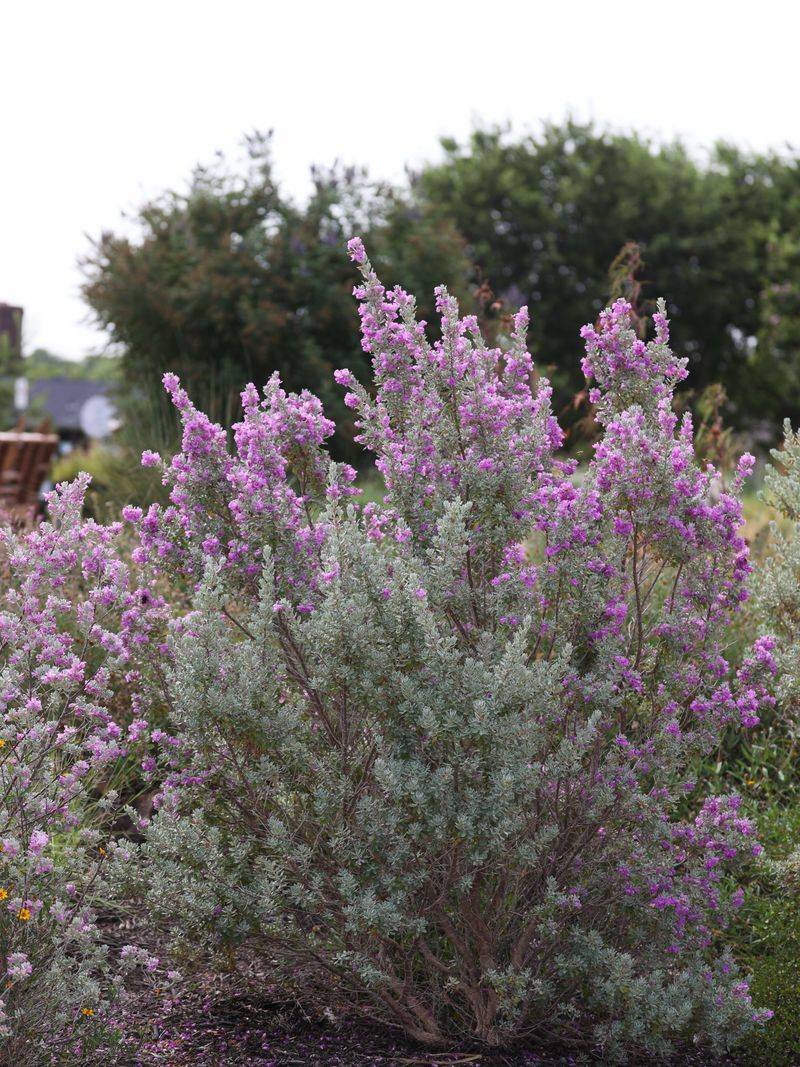
Fall planting gives Texas sage a potentially valuable runway. Cooler temperatures, lower evaporation, and continued root activity through winter mean the shrub may enter its first Texas summer with a more developed root system than a spring-planted transplant would have.
That head start can translate to less visible stress when heat arrives, but it is a potential advantage, not a promise.
The conditions that determine whether the advantage holds are the same ones covered throughout this article: regional fit, a site with full sun and genuinely good drainage, timely installation before damaging freezes, correct planting depth, and consistent watering while the root ball establishes. Texas A&M AgriLife Extension’s fall planting guidance frames the cool season as an opportunity worth taking for exactly these reasons.
A poorly drained site, a too-late planting date, or a dry root ball through winter can erase the benefit that good timing was supposed to provide.
Choose Texas sage because your yard is sunny, your soil drains well, and your region is a reasonable fit for the shrub’s natural preferences. Treat fall timing as one more factor working in your favor, not as a substitute for the right site.
A shrub planted in the right place, at the right time, with honest follow-through on watering and mulching is the version most likely to reward you when summer heat returns. The best native plants do not ask for much, but they do ask for a fair start.