
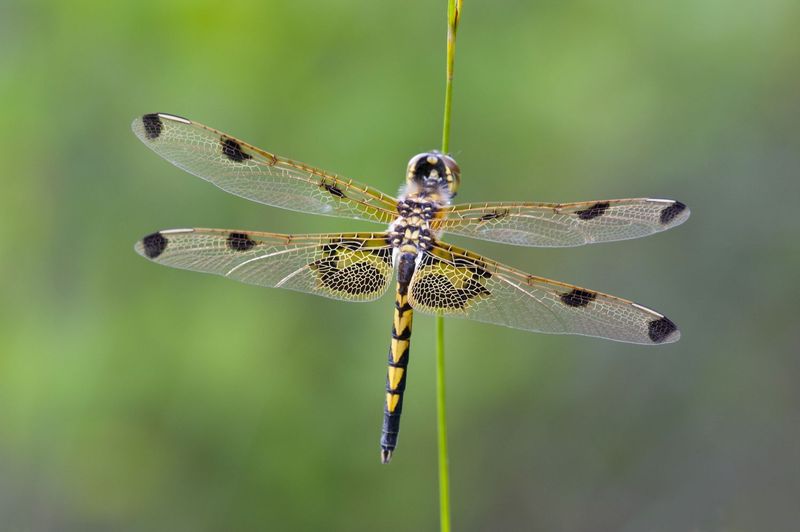
Stepping outside to find dozens of dragonflies zipping around your yard can feel like something unusual is happening, and in a way, it is. Florida hosts more than 100 dragonfly species, and when they gather in numbers, most people want to know what it means for their mosquito problem.
The honest answer is encouraging but more complicated than the rumors suggest, and understanding the difference can help you make smarter decisions for your yard and your family.
A Florida Dragonfly Swarm Does Not Prove Mosquitoes Are Disappearing
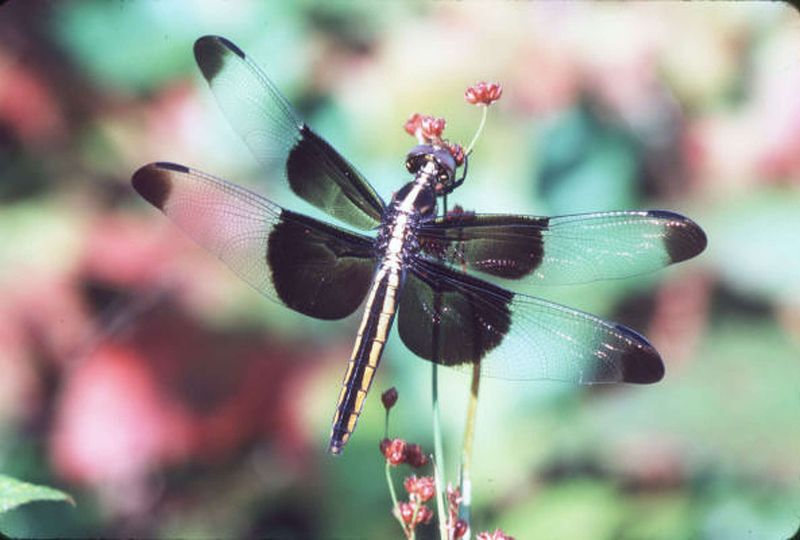
Seeing a yard suddenly full of dragonflies is genuinely exciting, but it is worth pausing before concluding that your mosquito problem is solved. UF/IFAS garden wildlife guidance identifies more than 100 dragonfly species in Florida, including migratory common green darners and other species that can appear in large numbers during seasonal movement.
A sudden concentration is evidence of dragonfly activity, not a sign that mosquito populations have collapsed.
Several things can bring many dragonflies into the same space at once. Migration routes, mating activity, favorable warm and humid weather, nearby breeding water, and a temporary abundance of flying prey can all pull individuals into a yard from well beyond its borders.
Bay Nature’s reporting on dragonfly swarming behavior notes that gatherings often track concentrated food sources or weather patterns rather than conditions specific to one location.
Adult dragonflies are strong fliers that regularly forage far from wherever they hatched. A group hovering over your lawn may have traveled from a pond, wetland, or drainage ditch several blocks away.
University of Maryland Extension’s dragonfly spotlight reinforces that adults range widely, so their presence above a yard does not establish that the yard itself contains suitable breeding habitat or that local mosquito numbers have dropped to a meaningful degree.
None of that should dampen the welcome. A swarm is a real sign of dragonfly vitality in your neighborhood, and these insects are genuine predators of flying insects, including mosquitoes.
The practical takeaway is simply to read the swarm as an encouraging wildlife signal rather than as confirmation that your biting-insect troubles are behind you.
Nymphs and Adults Meet Mosquitoes in Different Ways

Most people picture a dragonfly as the iridescent adult darting through summer air, but that stage represents only a fraction of the insect’s total life. The bulk of a dragonfly’s existence plays out underwater, as an aquatic nymph called a naiad, and that hidden stage is where the most direct mosquito predation happens.
Naiads are ambush predators that feed on whatever small aquatic organisms they can catch, and mosquito larvae rank among their regular prey. NC State Extension’s beneficial predators profile describes dragonfly nymphs as voracious aquatic hunters, confirming their role in consuming mosquito larvae alongside other small invertebrates.
This is the life stage most tightly connected to mosquito management, and it depends entirely on suitable permanent or semi-permanent freshwater habitat.
Adult dragonflies are generalist aerial hunters. They catch flying insects mid-air with impressive accuracy, and mosquitoes do end up in their diet, but so do flies, midges, moths, small wasps, beetles, and many other winged insects.
UF/IFAS notes that adults are opportunistic rather than selective, taking whatever prey is available and catchable at a given moment.
An adult dragonfly crossing your patio is not necessarily on a mosquito-hunting mission. A published urban odonate study found that adult damselflies, close relatives of dragonflies, consumed a wide variety of prey, with mosquitoes making up a small fraction of identifiable gut contents.
Adults may help reduce the number of flying mosquitoes in a local area, but that contribution does not translate into dependable population control around any particular home.
Research Supports Predation, Not a Bite-Free Yard
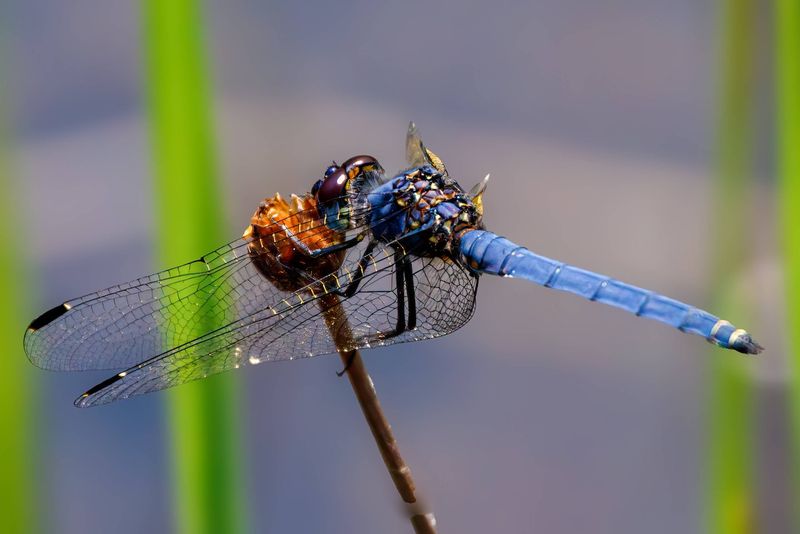
Dragonflies have a solid scientific reputation as mosquito predators, but the strength of that evidence differs sharply between life stages and between laboratory conditions and real backyards. Getting those distinctions right helps set expectations that are both honest and genuinely useful.
The most robust evidence concerns nymphs and larvae. A meta-analysis spanning 31 studies and 47 odonate nymph species found that dragonfly and damselfly naiads can be effective predators of mosquito larvae under experimental conditions.
That is a meaningful finding, but experimental conditions are controlled settings, not the variable, complex environment of a Florida backyard pond with competing predators, fluctuating water levels, and varying mosquito densities.
The adult picture is less clear. The urban adult-damselfly study mentioned earlier found that only 2.4 percent of identified prey consisted of two Aedes mosquito species.
The researchers suggested that adult odonates may contribute to natural regulation of mosquito populations, but they called for more research before drawing firm conclusions. A Canadian field study of adult dragonfly prey in northern Alberta similarly confirmed that mosquitoes appear alongside many other prey types, reinforcing the generalist picture.
The practical meaning is straightforward. Dragonflies are real allies against mosquitoes, particularly during the nymphal stage in water, but they cannot guarantee a bite-free yard on their own.
UF/IFAS explicitly advises homeowners not to rely solely on natural predators for protection from mosquito-borne disease. Source reduction, EPA-registered repellents, window and door screens, and other standard precautions remain essential regardless of how many dragonflies are patrolling overhead.
Managed Water and Sunny Structure Can Support Dragonflies
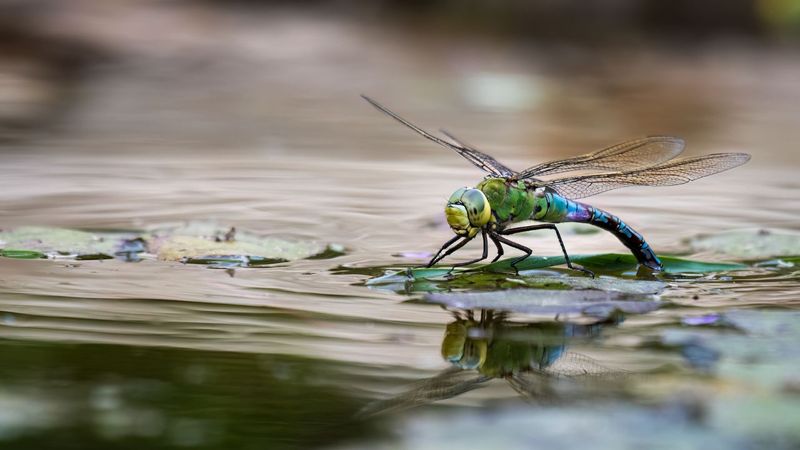
Supporting dragonflies in a Florida yard starts with water, but not just any water. Permanent or semi-permanent freshwater with shallow edges gives nymphs the stable aquatic environment they need to complete their long underwater development, which can span months to years depending on the species.
Penn State Extension’s pond habitat guidance recommends a combination of open sunny water, gradual depth transitions at the margins, upright emergent stems for perching and adult emergence, and surrounding vegetation that supports the broader insect food web. A planted, managed pond margin outperforms a bare ornamental basin with a fountain and no vegetation because it provides the structural complexity nymphs and newly emerged adults actually use.
Sunlight matters more than most gardeners expect. Dragonflies are cold-blooded and need warmth to fly and hunt efficiently, so ponds shaded by overhanging trees or dense shrubs attract fewer adults than open, sun-drenched water features.
UF/IFAS pond design guidance also supports maintaining clear, open water edges rather than allowing vegetation to completely encircle the pond and block access.
Fish deserve a careful mention here. Mosquitofish and other small fish can reduce mosquito larvae in a pond, which sounds compatible with a dragonfly habitat plan, but fish also eat dragonfly nymphs.
UF/IFAS pond planting documentation notes this trade-off. Adding fish is not automatically the right choice if your goal includes maximizing dragonfly populations, and the decision depends on which benefit matters more in a given situation.
A managed pond without fish, or with very low fish density, may produce more dragonfly adults over time.
Use Florida-Native Plants for Pond-Edge Structure, Not Mosquito Repellent
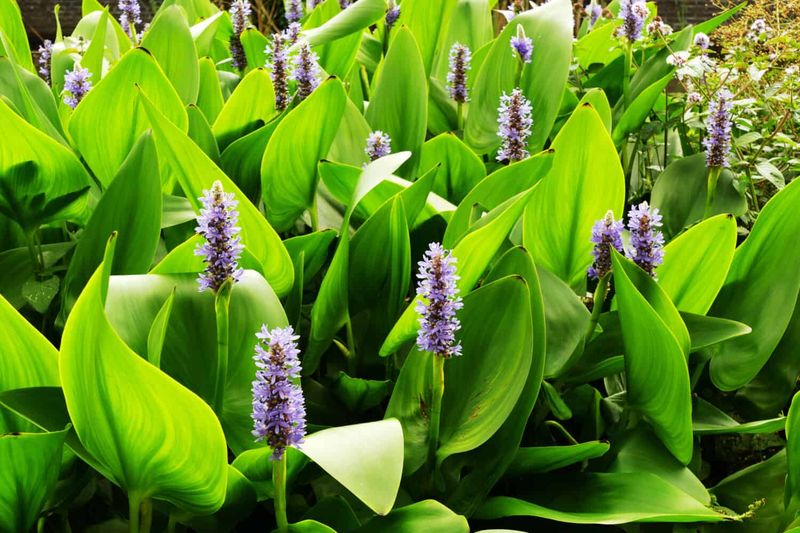
Choosing the right plants for a pond margin makes a real difference in whether dragonflies can use the space effectively. Florida-native aquatic and emergent plants are the practical starting point because they are adapted to local water fluctuations, heat, and soil conditions, and they provide the physical structure dragonflies rely on at multiple life stages.
Pickerelweed (Pontederia cordata) is a strong choice for Florida pond edges. UF/IFAS pond-edge plant guidance lists it as suitable for shoreline planting, and its upright stems create perching and emergence opportunities for adult dragonflies climbing out of the water after their final nymphal molt.
Duck potato, also called arrowhead (Sagittaria lancifolia), offers similar structural value with broader leaves and stout stems that work well in the shallow-water zone. Spikerush (Eleocharis species) fills a slightly different niche, forming dense stands of thin upright stems that suit smaller dragonfly species and provide cover for nymphs near the water surface.
The full UF/IFAS pond planting publication recommends matching each plant to water depth, light availability, and expected fluctuation in water level rather than simply choosing favorites. A layered margin works better than a single row of one species: emergent plants at the water’s edge, upright stems slightly landward for perching, and a managed buffer of native grasses or low groundcover beyond that to reduce erosion and provide additional insect habitat.
UF/IFAS Sarasota County’s pond plant blog reinforces that native selections support the broader food web, which ultimately sustains the prey base dragonflies need. UF/IFAS Osceola County’s Halloween pennant dragonfly feature highlights how native vegetation supports specific Florida species, but no single flowering plant can be called a guaranteed dragonfly magnet or a mosquito repellent.
The habitat combination, water plus vegetation plus sunlight plus prey, is what matters most.
Keep Dragonfly Habitat From Becoming a Mosquito Nursery

A well-planted pond designed to support dragonflies and a poorly managed water feature teeming with mosquito larvae can look surprisingly similar from the outside. The difference comes down to how the water is managed, because stagnant, uncontrolled water grows mosquitoes regardless of how many dragonflies visit the yard.
CDC guidance on mosquito control at home is direct: empty, scrub, turn over, cover, or throw away any item that holds water at least once a week. Flowerpot saucers, clogged gutters, old tires, birdbaths, buckets, and even bottle caps can produce mosquitoes in the time it takes for a Florida summer week to pass.
None of those containers help dragonflies, and all of them help mosquitoes, so eliminating them is a straightforward win on both counts.
Larger water features that cannot be drained or covered require a different approach. EPA guidance on Bti for mosquito control identifies Bacillus thuringiensis israelensis as a larvicide that targets mosquito larvae in standing water.
Bti products are widely available and are generally considered compatible with the broader pond ecosystem, but every product must be used strictly according to its label directions. When in doubt about which product fits a specific water feature, a local UF/IFAS Extension office is a reliable resource.
Dragonflies themselves pose no meaningful threat to people under ordinary circumstances. UF/IFAS confirms that dragonflies do not sting or bite people, and the best response when they are present, especially when newly emerged adults are drying their wings near a pond edge, is simply to leave them alone.
Handling or disturbing emerging adults can injure insects that are still hardening their exoskeletons and wings. Watching from a respectful distance is both safer for the dragonfly and more rewarding for the observer.
Welcome the Swarm Without Overreading It
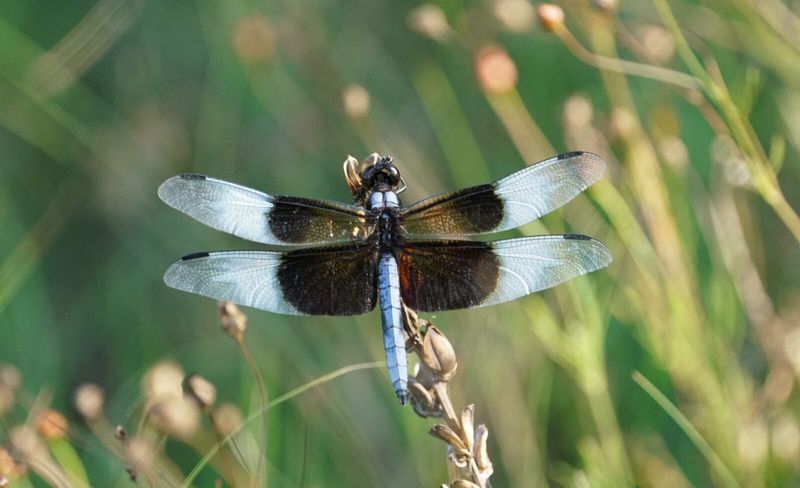
A sudden gathering of dragonflies in a Florida yard can mean migration is passing through, nearby water is producing healthy populations, mating season is peaking, weather conditions are favorable, or prey is temporarily concentrated in that spot. Reporting on dragonfly swarming makes clear that no single explanation covers every event, and the swarm itself does not prove any particular condition exists inside your yard unless you can independently observe it.
The right response is to welcome the activity, protect any managed water-edge habitat you have already created, and keep up with weekly removal of small stagnant-water sources around the property. Extension wildlife guidance consistently frames dragonflies as beneficial neighbors worth supporting, and that framing holds whether a swarm lasts an afternoon or returns across multiple seasons.
UF/IFAS mosquito management guidance and CDC home mosquito control recommendations both make the same essential point: natural predators are allies, not replacements for repellents, screens, and source reduction. Dragonflies, especially during their long aquatic nymphal stage, are among the more useful neighbors a Florida yard can attract.
They are simply not a complete mosquito-control system, and no single swarm overhead is a promise of a bite-free summer.