
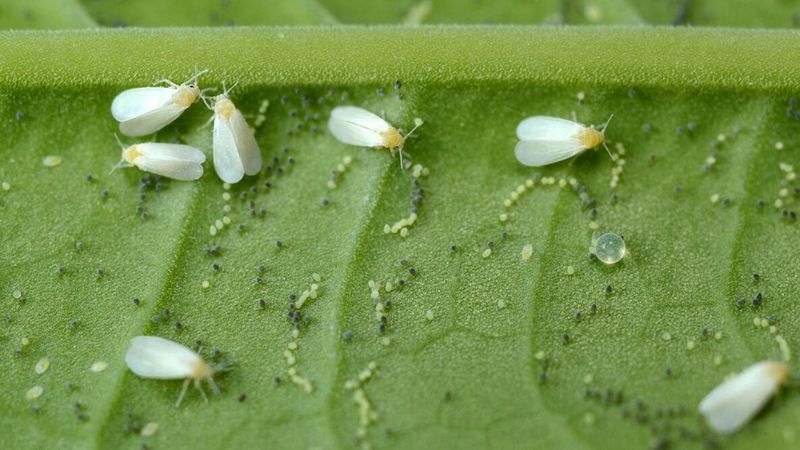
If your Central Texas tomato leaves look shiny, feel sticky, or have developed a black, soot-like coating, something is feeding on your plant. That combination of symptoms is a signal worth paying attention to, especially during the fall growing season when pest pressure can build quietly.
Whiteflies are a real possibility, but they are not the only insect that can cause these signs, and knowing what you are actually dealing with makes a big difference in how you respond.
Sticky leaves point to honeydew, not one proven culprit
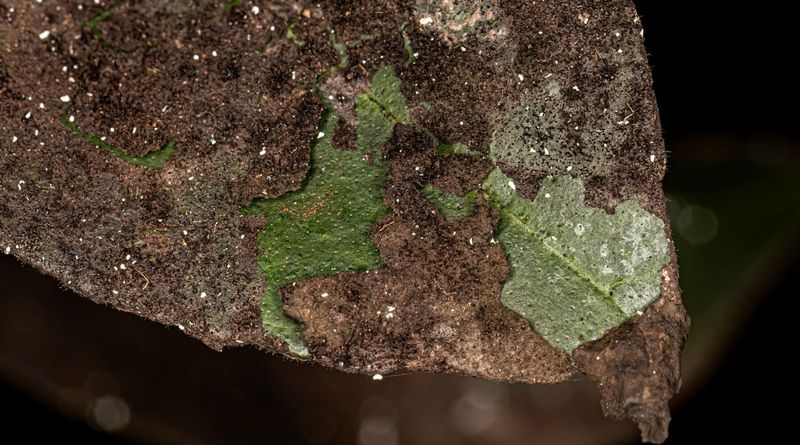
Shiny or sticky tomato leaves combined with a black, powdery coating are a recognizable pattern for Central Texas gardeners, and the cause is almost always the same starting point: honeydew. Honeydew is a sugary liquid excreted by sap-feeding insects, and sooty mold, the black coating you see, grows on top of that residue.
Texas A&M agricultural guidance identifies sticky or shiny leaves as a possible sign of whitefly honeydew and sooty mold on garden crops.
Whiteflies are a leading possibility when tomatoes show these symptoms, but the symptoms themselves do not confirm whiteflies. Aphids, soft scales, mealybugs, psyllids, and other sap-feeding insects all produce honeydew, and any of them can support sooty mold on the same plant.
The sticky surface tells you that a sap feeder is present somewhere on the plant; it does not tell you which one.
Pest pressure also varies considerably across Central Texas depending on the weather, your planting date, how old the crop is, and what host plants are growing nearby. Texas A&M AgriLife’s fall vegetable gardening guide provides regional planting windows for the state but does not establish that whiteflies are currently active in every Central Texas garden.
Treat the sticky-leaf symptom as a reason to investigate, not as proof of a specific pest or a region-wide outbreak. Inspection always comes before treatment.
Inspect the leaf undersides before you treat
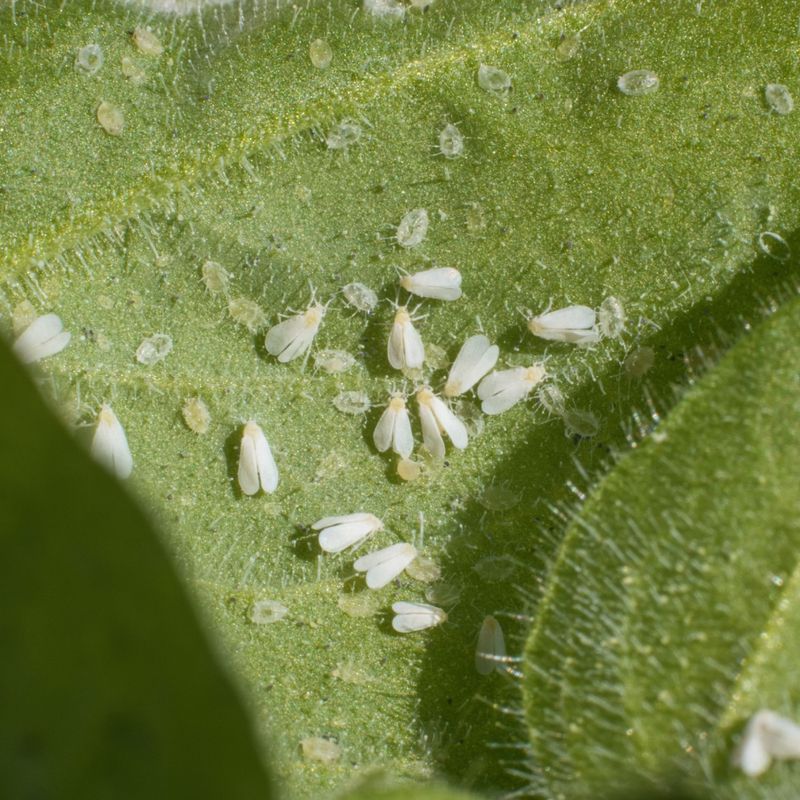
Flip a few leaves before you reach for any product. Whiteflies spend most of their lives on the undersides of leaves, and that is where adults rest, where eggs are laid in small circular clusters, and where the immature stages called nymphs feed while remaining attached to the plant surface.
Start with the lower leaves, which tend to be colonized first, and work your way up the plant.
After checking the undersides carefully, gently shake or brush the plant. UC IPM’s whitefly guidance describes how adult whiteflies will flutter up in a small, visible cloud when the plant is disturbed, which is one of the clearest field signs that whiteflies are present rather than another pest.
Nymphs and eggs stay attached and do not fly, so look for both reactions together.
If your inspection turns up something other than whiteflies, the diagnosis changes. Aphids are soft-bodied and often cluster on new growth or stems; soft scales appear as waxy or crusty bumps attached to stems and leaf veins; mealybugs look like small tufts of white cottony material; psyllids are jumping insects that may leave tiny, granular honeydew deposits.
Each of those pests calls for its own response, and treating for whiteflies when aphids are actually the problem wastes time and can harm beneficial insects unnecessarily.
Even when you do find whiteflies, note how many you see and whether the plant shows active stress such as yellowing, leaf curl, or dropping foliage. A small number of adults on an otherwise healthy tomato plant is a different situation from a heavily colonized plant with visible decline.
That distinction matters when you decide how urgently to act and which tools to use.
Sooty mold is a surface symptom, not the underlying disease
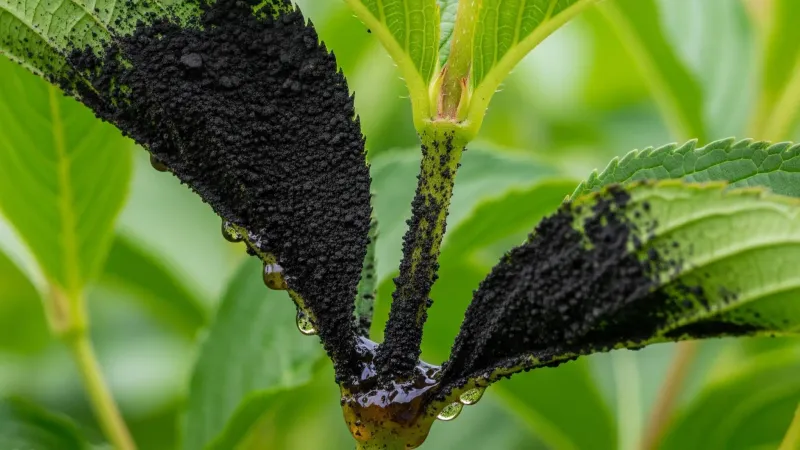
The black coating on your tomato leaves is sooty mold, a fungus that grows on the surface of honeydew-covered plant tissue. UC IPM’s sooty mold resource explains that the fungus does not infect or invade the tomato tissue itself; it simply colonizes the sugary film left behind by sap-feeding insects.
You can rub a bit of it off with your finger, and underneath the leaf surface is still intact.
That distinction matters because it redirects your attention to the right problem. A heavy coating of sooty mold can block sunlight from reaching the leaf surface, which reduces the plant’s ability to photosynthesize and may affect growth over time.
But scrubbing or washing away the visible mold without addressing the insect producing the honeydew accomplishes very little. The mold will return as long as the pest continues feeding and excreting.
Redirect your energy toward confirming and reducing the honeydew-producing insect. Once the insect population drops and honeydew production slows, the sooty mold will stop spreading and may gradually weather away on its own.
Any surface cleanup is secondary and should never substitute for pest control. Think of the black coating as a symptom indicator, not the problem you are actually solving.
Know when whiteflies are not the whole diagnosis
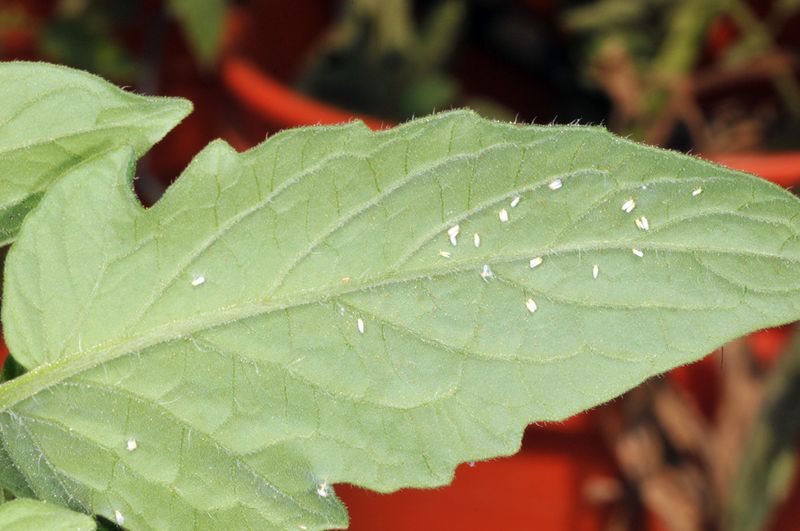
Finding whiteflies on your tomato plant answers one question but raises another. Whiteflies are capable of transmitting certain tomato viruses, and some gardeners worry immediately about viral infection when they spot the insects.
UF/IFAS guidance on managing whitefly and tomato yellow leaf curl virus documents this relationship in Florida commercial production, but the presence of whiteflies on a Central Texas backyard tomato does not prove that your plant has a virus. Those are two separate diagnoses.
Virus symptoms worth watching for separately include severe leaf curling that does not resolve with watering, pronounced yellowing along leaf margins or between veins, significant stunting of new growth, or misshapen and abnormally colored fruit. If you observe those signs alongside whitefly activity, contact your local Texas A&M AgriLife Extension office for a more specific assessment.
Do not assume a virus is present based solely on whitefly sightings.
The same caution applies to other honeydew-producing pests. UC IPM’s tomato whitefly page notes that whitefly feeding can cause yellowing, leaf curl, and leaf drop, symptoms that also appear with aphid infestations, nutrient deficiencies, heat stress, and irregular watering.
Tie your diagnosis to what your inspection actually shows rather than to the symptom list alone. A sticky leaf with sooty mold and confirmed whiteflies is a whitefly problem.
A sticky leaf with sooty mold and confirmed aphids is an aphid problem. Each deserves its own response.
Start with a careful water knockdown
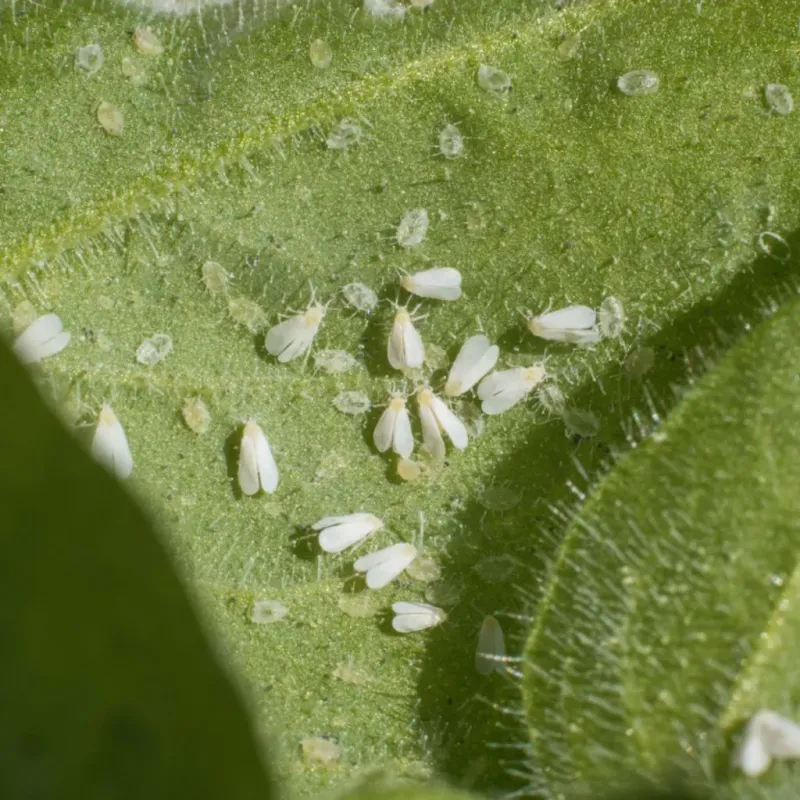
Water is the lowest-risk first response when your tomato plant is healthy and adequately hydrated. A focused, forceful stream directed at the undersides of leaves can dislodge adults and some of the less firmly attached immature stages, physically removing them from the plant without introducing any chemical product.
UC IPM’s sooty mold guidance supports water as a reasonable starting tool for reducing sap-feeding pest populations on garden plants.
Concentrate the spray on the leaf undersides where the insects are feeding. Use enough pressure to dislodge insects without tearing or bruising the foliage, and work through the plant systematically rather than giving it a quick rinse from above.
After washing, allow the foliage to dry fully before evening, since prolonged moisture on leaves can create conditions favorable to fungal problems unrelated to sooty mold.
Water provides a knockdown, not a cure. Some insects will survive, and others will move back onto the plant from nearby vegetation.
After the foliage dries, wait a day or two and then return to the leaf undersides to scout again. If the population is still clearly active and the plant is showing continued stress, that scouting result is the signal that a follow-up treatment may be warranted.
The decision to escalate should come from what you observe, not from a fixed spray schedule.
Use labeled contact products with thorough coverage
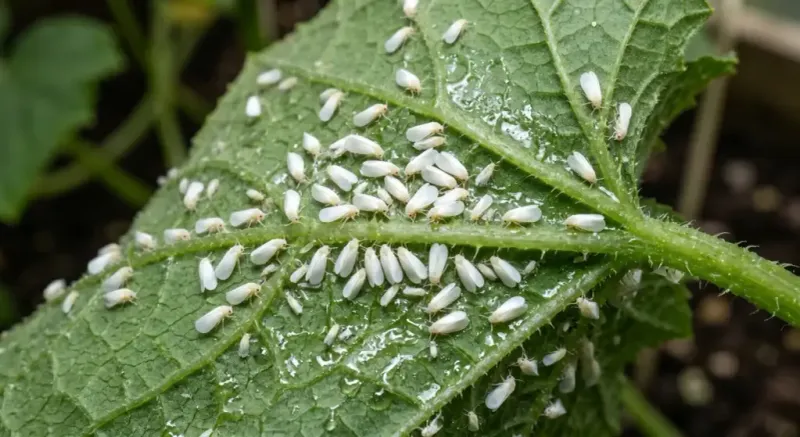
When scouting confirms that the pest population is still active after a water knockdown, labeled insecticidal soaps and horticultural oils are reasonable next steps. Both work by direct contact with the insect: soap disrupts the pest’s outer layer, while oil suffocates or interferes with feeding.
UC IPM’s home whitefly guidance describes these products as useful for reducing whitefly populations when applied with thorough coverage, particularly to leaf undersides where adults, nymphs, and eggs are concentrated.
Coverage is the most common reason contact treatments underperform. Spraying only the tops of leaves misses the majority of the population.
Work the sprayer nozzle underneath the foliage and apply until the leaf surface is evenly wet but not dripping. Expect to repeat applications because eggs and early nymphs may survive the first treatment and develop into a new feeding generation within a week or two.
UF/IFAS guidance on natural pest management products recommends testing any soap or oil on a small section of the plant first and waiting roughly a day to check for signs of leaf injury before treating the entire plant. Drought-stressed tomatoes and plants with hairy leaves can be more sensitive to these products.
Avoid applying soaps or oils when temperatures are above 90 degrees Fahrenheit; UC IPM and UF/IFAS both flag high heat as a risk factor for phytotoxicity. Always read and follow the individual product label, which may set stricter conditions than any general guidance.
Neither insecticidal soap nor horticultural oil is a single-application solution. Populations can require two or three rounds of treatment spaced several days apart, with scouting between each application to confirm whether the pest level is actually declining.
The goal is to reduce the population to a level the plant can tolerate, not to guarantee that every insect is gone.
Protect beneficial insects and manage active ants
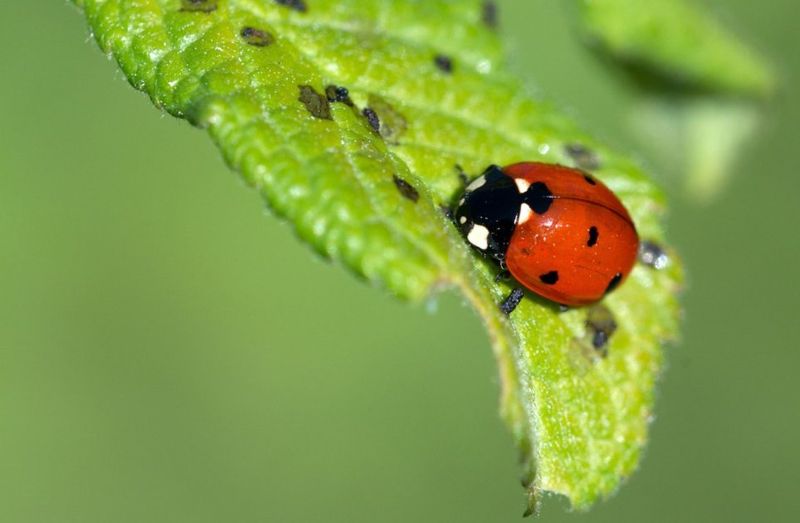
Broad-spectrum insecticides can seem like the obvious escalation when a pest problem feels urgent, but they carry a significant downside in a living garden. Lacewings, lady beetles, minute pirate bugs, and parasitic wasps all feed on or parasitize whiteflies and other sap-feeding insects, and UC IPM’s whitefly resource notes that broad-spectrum products can disrupt these natural enemies, sometimes causing secondary pest problems to worsen after treatment.
Resistance is also a real concern: whitefly populations that survive repeated broad-spectrum applications can pass that tolerance to the next generation.
Ants add another layer to this dynamic. When ants are actively tending honeydew-producing insects on your tomato, they are essentially guarding them from predators and parasitoids.
UC IPM’s sooty mold guidance points out that managing ant activity around infested plants can help natural enemies reach the pests more effectively. Sticky barriers around the base of a tomato cage or stem, or targeted ant bait placed away from foraging beneficials, are lower-risk ways to interrupt ant tending without harming the broader insect community.
One shortcut that should be avoided entirely is substituting ordinary dish detergent for a labeled insecticidal soap. Penn State Extension’s review of home remedies explains that household detergents contain additives, surfactants, and fragrances that are not evaluated for routine use on plants and can cause significant leaf burn.
UF/IFAS guidance reinforces that point, recommending only products specifically labeled for pest control on plants. An unlabeled homemade recipe has no tested rate, no plant-safety data, and no regulatory review behind it.
UF/IFAS research on whitefly management further supports preserving natural enemy populations as a core strategy, especially in situations where repeated chemical use has historically contributed to resistance. Give the beneficials a chance to work before escalating to anything stronger than a labeled contact product.
Keep scouting while protecting the fall harvest
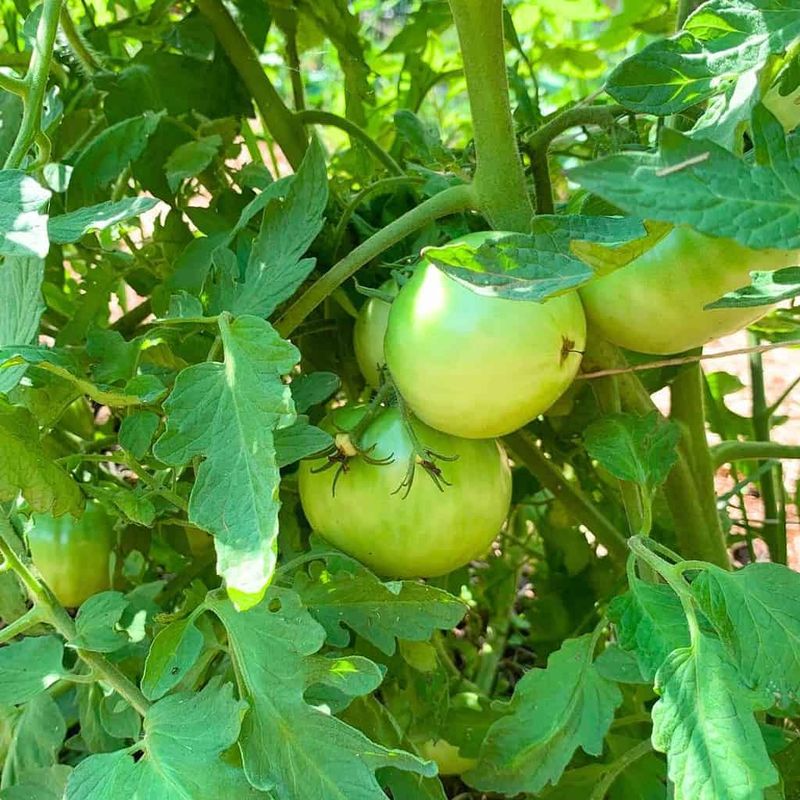
Returning to the leaf undersides every few days is how you know whether the steps you have taken are actually working. Look for continued adult activity, new egg clusters, or nymphs on leaves that were previously clear.
Watch the plant itself for signs of ongoing stress: new yellowing, fresh leaf curl, or foliage that was healthy last week but is now dropping. UC IPM’s whitefly guidance emphasizes that contact treatments often require repeat applications and that scouting between rounds is the only reliable way to judge whether retreatment is warranted.
Repeat a label-compliant contact treatment only when scouting shows the population is still active and the plant is still under stress. Spraying on a fixed calendar schedule without checking the plant first wastes product, increases the risk of phytotoxicity, and puts unnecessary pressure on beneficial insects.
The objective is to reduce the confirmed pest to a level the tomato can tolerate through the rest of the season, not to eliminate every trace of mold or guarantee a full recovery for a heavily stressed plant.
Texas A&M AgriLife’s fall vegetable gardening guide recommends careful, consistent watering and harvesting tomatoes at the pink stage when weather or pest pressure threatens the crop. Those are sound crop-preservation practices for Central Texas fall conditions, but they do not reduce whitefly populations on their own.
Bringing in a fruit that has reached the pink stage lets it ripen safely indoors while sparing the plant from additional stress. Pest management and harvest timing work together rather than substituting for each other.
A garden that is scouted regularly, treated only when evidence supports it, and harvested at the right moment gives your fall tomatoes the best realistic chance.