
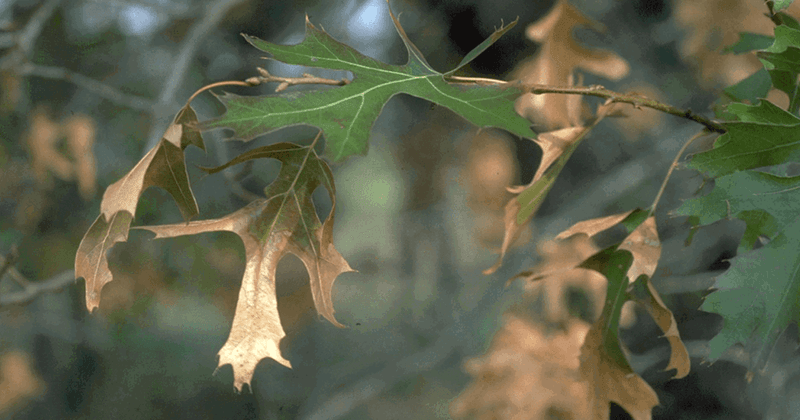
Brown edges on your oak leaves in the middle of a Central Texas summer can stop you cold, especially when the tree looked fine just a few weeks ago. Before you chalk it up to fall color arriving early or assume the worst, the cause needs a closer look because several very different problems can create nearly identical symptoms.
One of the most serious possibilities is oak wilt, a fungal disease that has killed countless oaks across Central Texas, and catching the right warning signs early can make a real difference for the trees nearby.
Premature edge browning deserves a closer look
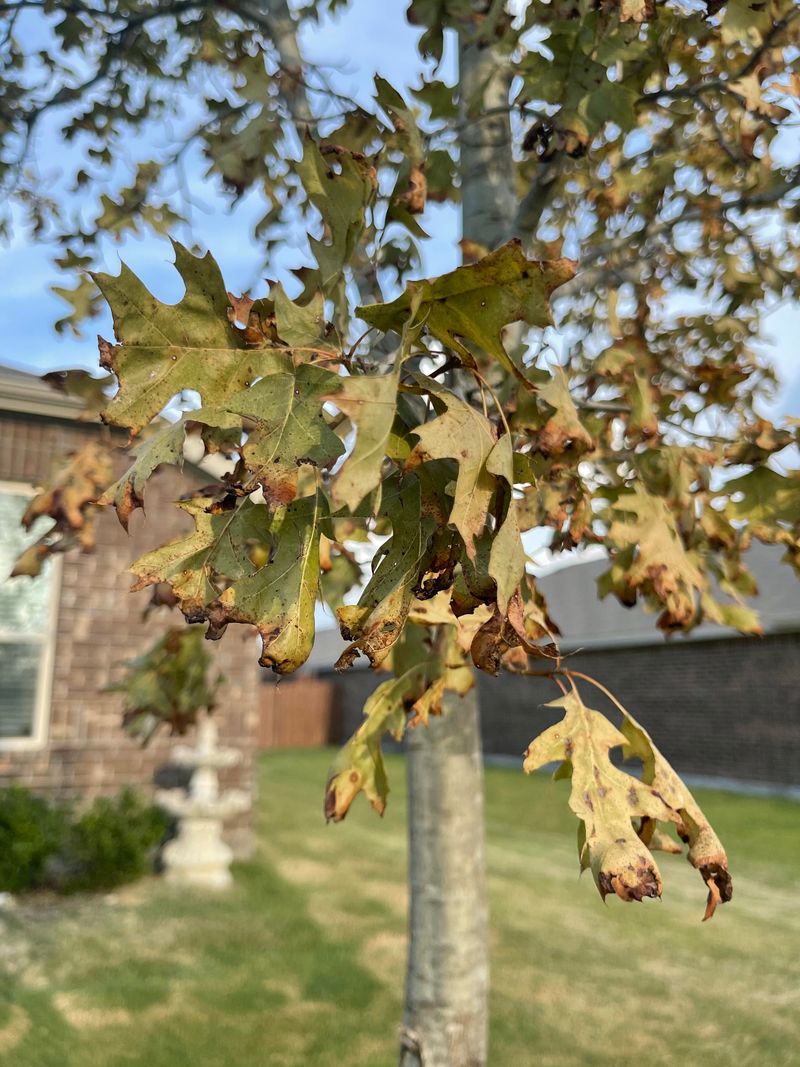
Brown leaf margins on a Central Texas oak during the warm season are easy to misread. Homeowners often assume the tree is simply responding to heat, getting a head start on fall color, or showing the effects of a dry spell.
All of those explanations are plausible, but none of them can be confirmed from a single leaf, and neither can the more serious possibility of oak wilt.
Edge browning and tip burn can occur with oak wilt, but Texas A&M AgriLife Extension guidance on oak wilt identification identifies yellowing veins that turn brown or necrotic as the more characteristic symptom in live oaks. Marginal scorch is considered a less reliable indicator on its own, particularly because drought, heat stress, overwatering, herbicide exposure, bacterial leaf scorch, excess fertilizer or salt, and lightning can all produce similar-looking damage.
A brown leaf edge tells you something is wrong. It does not tell you what.
The pattern across the canopy and the neighborhood matters far more than the color of any single leaf margin. Texas Oak Wilt’s comparison of drought stress and oak wilt makes clear that even experienced observers need multiple diagnostic factors before drawing a conclusion.
Rapid defoliation, vein discoloration, the speed of decline, the specific oak species involved, and whether nearby trees are also struggling all carry more diagnostic weight than edge color alone.
This guide is not a substitute for a professional diagnosis. What it will do is help you read the full picture on your tree, understand which clues are worth taking seriously, and decide how quickly to contact someone who can confirm what you are actually dealing with.
Oak wilt is a vascular disease, not a root rot
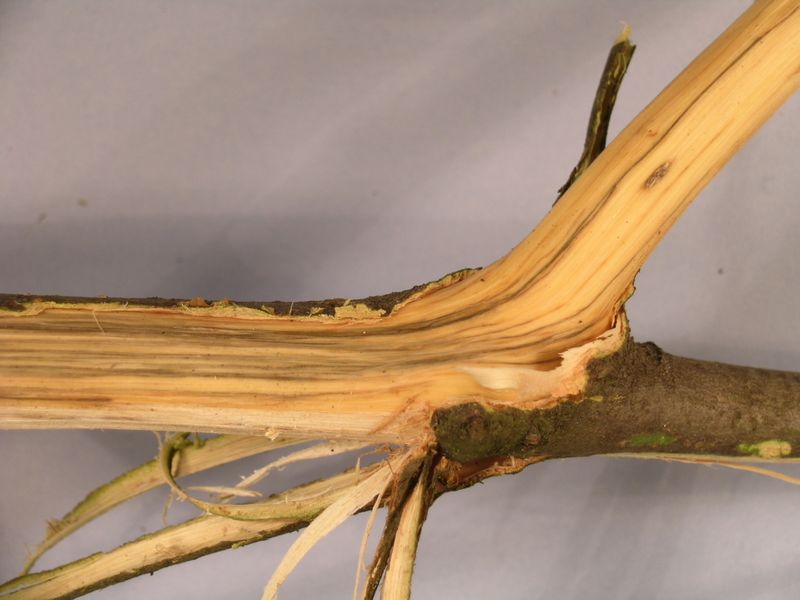
The term “root rot” tends to conjure images of soggy soil and rotting underground tissue, but oak wilt works differently. The disease is caused by a fungus called Bretziella fagacearum, formerly known as Ceratocystis fagacearum, and its primary target is the tree’s xylem, the network of vessels that carries water from the roots up through the trunk and into the canopy.
When the fungus colonizes those vessels, it triggers the tree’s own defensive responses, and the resulting blockage starves the crown of water even when the soil has plenty.
So why do so many people associate oak wilt with roots? The answer is in how the disease spreads.
Texas Oak Wilt’s frequently asked questions explain that neighboring oaks, especially live oaks growing close together, often share root connections or root grafts. The fungus can travel through those connections from an infected tree to a healthy one without any above-ground contact.
That underground pathway is why an entire grove or a row of live oaks can decline in sequence even when none of them has been wounded or exposed to infected wood.
That root-to-root movement is also why examining nearby trees matters as much as examining the one you noticed first. USDA Forest Service research on oak wilt in Texas documents how the disease can expand outward from an infection center through root connections, sometimes affecting trees that appear healthy until the fungal colonization is already advanced.
Calling oak wilt a root rot is more than a terminology problem. It can send a homeowner toward treatments designed for soil-borne pathogens that have nothing to do with a vascular fungal disease.
Accurate language is the first step toward choosing the right response, and the right response starts with understanding exactly what the fungus does and how it moves.
Oak species change the symptom pattern
Identifying the oak before interpreting its symptoms is not optional. The three broad groups present in Central Texas, live oaks, Texas red oaks, and white-oak-group species, each respond to oak wilt differently, and confusing one for another leads to very different conclusions about urgency and risk.
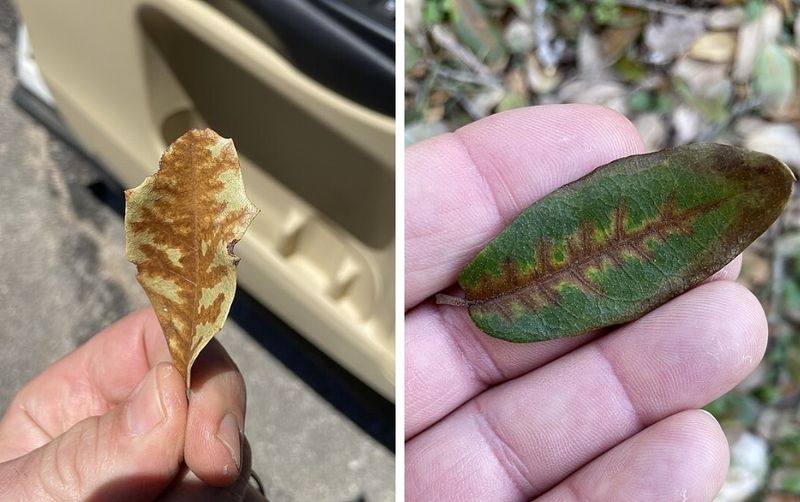
Live oaks are among the most common oaks in Central Texas and also among the most important hosts for oak wilt. Their characteristic symptom is veinal necrosis: the veins of the leaf turn yellow and then brown, sometimes leaving a distinctive banding pattern where discolored veins run alongside still-green tissue.
Texas A&M AgriLife Extension’s identification guide notes that live oaks may also show tip or margin browning and rapid defoliation, dropping leaves that are still partly green rather than fully dried. Infected live oaks commonly decline over three to six months, though the timeline varies and some trees survive longer depending on the extent of infection and root connections.
Texas red oaks follow a much faster and more dramatic course. Texas Oak Wilt’s identification resource describes bronze or brown, autumn-like foliage developing across the canopy, sometimes within weeks of the first symptoms appearing.
Red oaks can die within roughly four to six weeks after symptoms become visible, which means there is very little time to wait and see. If a Texas red oak is showing premature fall-like color in July or August, that warrants immediate professional attention rather than a wait-and-see approach.
White-oak-group species, including plateau live oak and Lacey oak in parts of Central Texas, tend to decline more slowly. Some infected trees in this group survive for years, which makes the symptom pattern harder to read and easier to mistake for drought or other chronic stress.
Knowing which species you have is the starting point for any honest assessment of what the browning might mean.
Inspect the canopy and neighborhood, not just the leaf
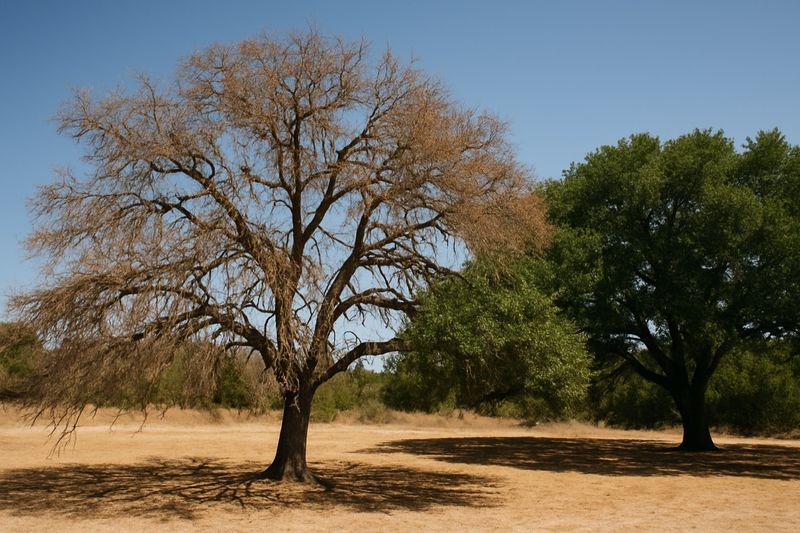
A single brown leaf at the edge of an oak branch in August is not a diagnosis. The bigger picture, how fast the browning is spreading, which part of the canopy it started in, and whether the trees next door are also struggling, carries far more weight than any individual leaf’s color.
Timing is one of the most useful clues available. Texas Oak Wilt’s identification guidance points to premature autumn-like color appearing in summer as a red flag, particularly when it contrasts with surrounding green vegetation and progresses rapidly.
The concern rises when leaves are dropping while they are still partly green rather than after they have fully dried and cured. Normal seasonal color change in Central Texas oaks tends to be gradual and relatively uniform across the canopy.
Where the symptoms start and how they move through the crown also matters. Oak wilt often begins in one limb or one section of the canopy and spreads outward or downward, while drought and heat stress tend to affect the canopy more evenly, especially the outermost and uppermost leaves that face the most sun and wind exposure.
That said, a single limb showing drought symptoms is not unusual after a severe dry spell, and a localized canopy problem does not automatically point to oak wilt.
Checking the trees nearby is equally important. Texas Oak Wilt’s drought-comparison resource explains that oak wilt becomes more suspicious when decline radiates through multiple nearby susceptible oaks in a connected pattern, suggesting root-to-root spread, while drought or other abiotic stresses may affect trees scattered across different soil conditions or exposures.
A single symptomatic tree surrounded by healthy oaks could reflect almost anything. A cluster of declining oaks in a connected arc demands closer professional scrutiny.
Seek confirmation before taking drastic action
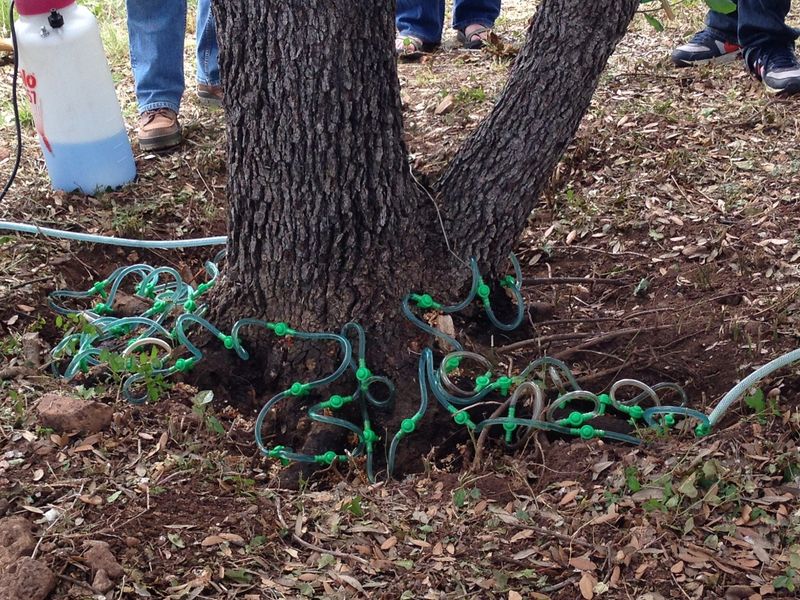
Acting on a hunch when an expensive, decades-old oak is involved is a gamble no homeowner should take. Before cutting anything down, trenching roots, or moving wood off the property, get a professional opinion from someone qualified to evaluate the full picture.
Start by gathering information you can collect safely from the ground. Record the oak species if you know it, or photograph the leaves, bark, and acorns for identification help.
Note when you first noticed the browning, which part of the canopy it appeared in first, how quickly it has spread, and whether any nearby oaks are showing similar symptoms. That documentation gives a forester or arborist a much clearer starting point than a general complaint about brown leaves.
The Texas A&M Forest Service offers a county-based resource to help homeowners connect with local expertise. Texas Oak Wilt’s Find My Forester tool lets you locate the forester assigned to your county, which is often the fastest path to a knowledgeable, no-cost field assessment.
Texas A&M AgriLife Extension offices and qualified certified arborists are also appropriate contacts.
When the symptom pattern is suspicious enough to warrant laboratory testing, the Texas Plant Disease Diagnostic Laboratory can analyze branch samples for oak wilt. The lab’s general diagnostic form and instructions describe what to collect: symptomatic branches approximately 1 to 2 inches in diameter and about 6 inches long, with leaves still attached when possible.
Samples must be kept cool, packaged carefully to prevent drying, and shipped promptly so they arrive in good condition. Do not leave samples in a hot car or allow them to sit for days before mailing.
Set realistic expectations about timing. The lab’s plant sampling guidance notes that oak wilt testing requires a minimum of about 21 days.
Laboratory confirmation is a valuable tool, but it is not an instant answer, and the process works best when samples are collected and submitted while symptomatic tissue is still fresh and viable.
Limit avoidable spread while you wait
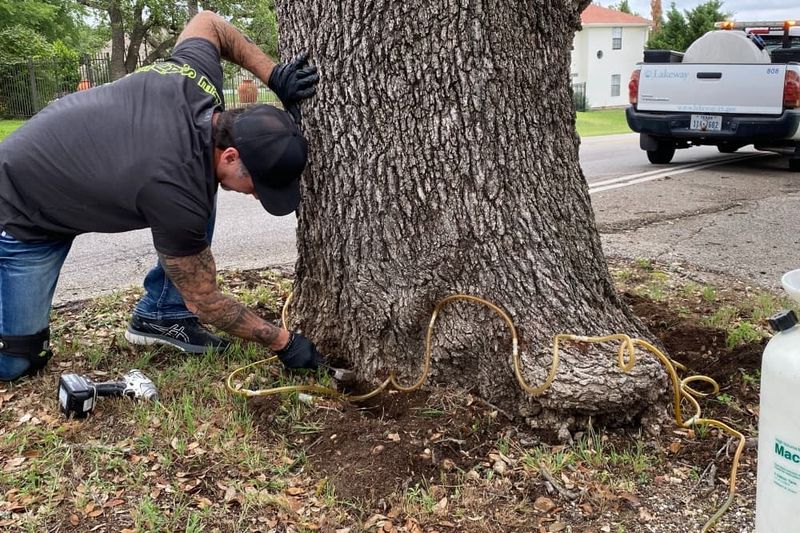
Waiting for a professional assessment does not mean doing nothing. Several practical precautions can reduce the chance of accidentally spreading oak wilt or making the situation worse before you have a confirmed diagnosis and a management plan.
Pruning is one of the highest-risk activities during the warmer months in Central Texas. Texas Oak Wilt’s integrated management guidance recommends avoiding unnecessary oak wounds, including pruning cuts, from approximately February 1 through June 30.
That window covers the period when sap-feeding beetles that can carry the oak wilt fungus are most active and when fresh wounds are most attractive to them. Outside that period, fresh wounds should still be painted immediately with a commercial tree-wound dressing.
The paint does not cure disease, but it reduces the window of time the wound stays attractive to insects that could introduce the pathogen.
Firewood deserves equal attention. USDA Forest Service research on oak wilt documents that unseasoned or infected oak wood can harbor fungal mats or the insects associated with them.
Oak firewood of unknown origin should not be stored near healthy oaks or transported to uninfected areas. Burning infected wood is safe because fire destroys the pathogen, but stacking suspect wood against a live oak or loading it into a truck and hauling it across the county is not.
Resist the impulse to cut down a symptomatic tree before receiving professional guidance. USDA Natural Resources Conservation Service guidance on oak wilt management in Texas makes clear that removal without a coordinated plan can increase risk rather than reduce it, particularly if roots are not severed before the wood is moved or if infected red-oak material is transported or stored near healthy trees.
A symptomatic tree that comes down impulsively can become a source of spread rather than an eliminated threat.
Professional management depends on the site
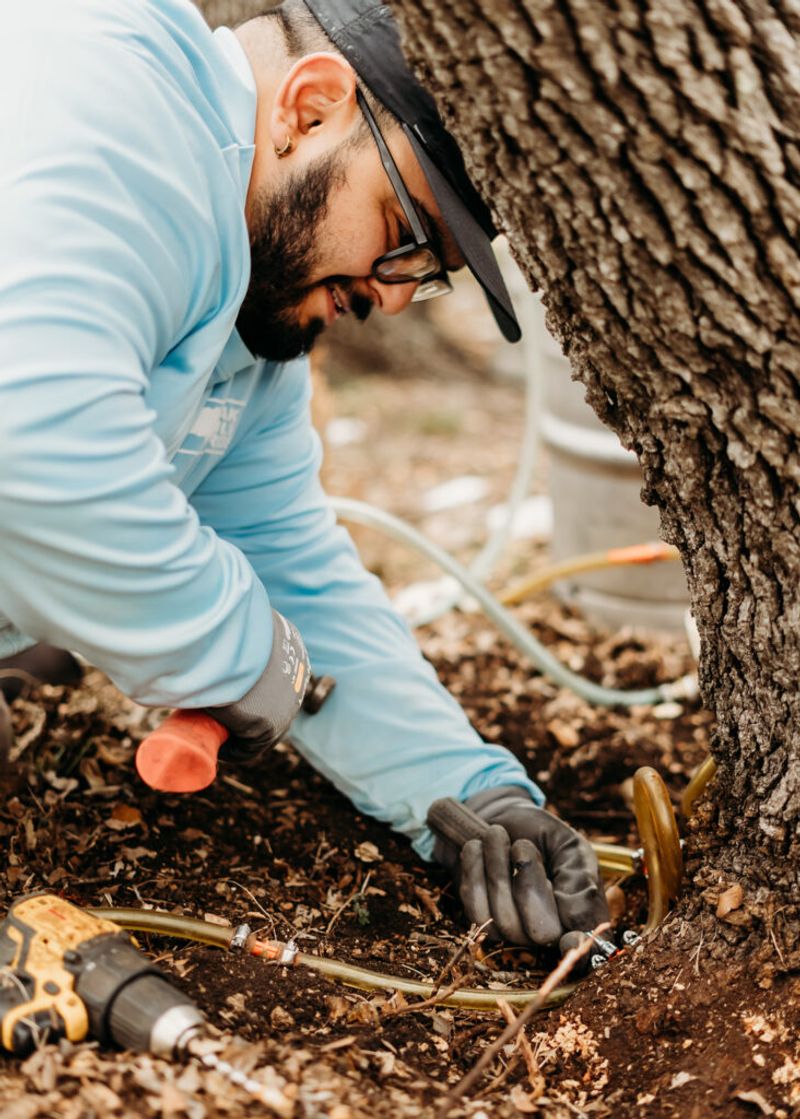
Once a professional has assessed the situation, management options range from watchful monitoring to a combination of interventions that may include root disruption, sanitation, removal, and fungicide treatment. Which of those tools applies to your property depends on factors that no article can evaluate from the outside.
Root-disruption trenches are one of the primary tools for slowing the underground spread of oak wilt between connected trees. Texas Oak Wilt’s management overview describes trenches at least four feet deep, placed roughly 100 feet beyond the outermost symptomatic trees to break root connections before the fungus travels further.
That placement benchmark is a starting point for a professional assessment, not a measurement a homeowner should apply independently. In rocky Central Texas soils, reaching four feet of depth may require specialized equipment, and the actual infection perimeter may not match the visible canopy symptoms because the fungus can travel through roots before the crown shows any sign of stress.
Tree removal and sanitation are sometimes part of the response, but their timing and sequence matter. Removing a tree without first severing its root connections may allow the fungus to move into connected neighbors through dying roots.
A qualified professional will assess root patterns, species, terrain, and the confirmed extent of infection before recommending removal as part of a coordinated plan.
Fungicide injection with propiconazole is available as a professional treatment option for selected high-value trees. Texas Oak Wilt’s FAQ and Texas A&M AgriLife Extension’s oak wilt management publication both describe propiconazole as most effective when applied preventively to trees near an infection center that are not yet showing symptoms.
It is not described as a reliable cure for a tree already in active decline. The treatment requires proper professional application, and outcomes depend on the tree’s species, its current health, the stage of infection, and whether root connections have been addressed.
Use the pattern to decide how urgently to act
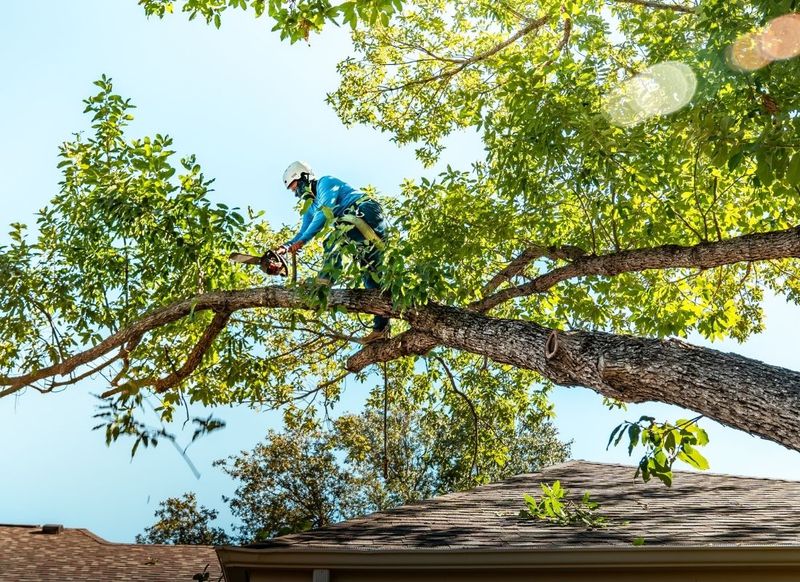
Brown edges on one oak leaf in August do not require an emergency call. The same symptom showing up across most of the canopy, combined with yellowing or browning veins, leaves dropping while still partly green, and two or three nearby oaks beginning to decline in the same direction, warrants a call that day.
Texas A&M AgriLife Extension’s oak wilt identification guidance and Texas Oak Wilt’s drought-comparison resource both reinforce that no single symptom settles the diagnosis. Species, timing, speed of decline, vein discoloration, and the pattern among neighboring trees all need to be part of the evaluation.
Drought and heat can produce convincing look-alike symptoms, and the two problems can even occur on the same tree at the same time.
Early professional involvement tends to matter most for protecting the trees around the one you noticed first. Management options for the individual tree depend heavily on its species, how far the disease has progressed, and what root connections exist.
What a homeowner can control is how quickly they gather good information and get it in front of someone qualified to act on it. An oak that has been part of a Central Texas yard for fifty years deserves that much.