
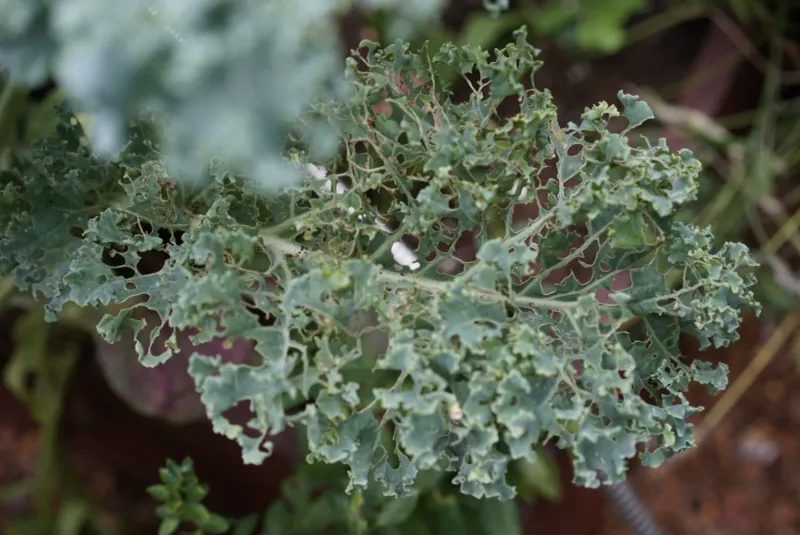
Walking out to your fall kale bed and finding the leaves chewed to lace is a frustrating way to start the morning. Central Texas gardeners planting brassicas in September and October need to know that caterpillar pressure does not stop just because temperatures are dropping.
If new holes appeared between last night and this morning, that is a reason to grab a flashlight and start inspecting, not a confirmed verdict on which pest did it.
Fall kale can face looper pressure in Central Texas
September and October are prime planting months for Central Texas kale growers. According to the Texas A&M AgriLife Fall Vegetable Gardening Guide, kale and other cole crops are well-suited to the region’s fall conditions, and local master gardener calendars place transplants in the ground right as temperatures begin to moderate.
That timing feels like a relief after summer, but it does not mean insect pressure disappears.
Cabbage loopers, Trichoplusia ni, are documented brassica feeders in Texas, and Texas A&M’s insect identification resource notes that several generations can occur annually in southern Texas. Fall overlap with an active looper generation is a real possibility, which is why a new brassica bed deserves scouting attention from the day transplants go in, not just after damage appears.
When a gardener steps outside and finds leaves that looked fine the previous evening now riddled with holes, the natural reaction is to name a culprit immediately. That morning observation is a useful alarm, but it tells you when you noticed the damage, not how quickly it developed or which insect caused it.
Williamson County Master Gardener guidance reinforces that fall brassica growers in Central Texas should keep scouting rather than assuming cooler weather ends caterpillar activity. Treat the overnight discovery as your cue to inspect carefully, compare what you find against known pests, and then decide on a response.
The damage points toward a caterpillar, not automatically a cabbage looper
Ragged, irregular holes in kale leaves are a classic sign of caterpillar feeding, but that observation alone cannot tell you which caterpillar is responsible. Several species feed on brassicas in Texas, and their damage can look remarkably similar at first glance.
Shredded foliage is a reason to keep looking, not a finished diagnosis.
Young larvae often feed on the underside of a leaf without breaking through the top surface, leaving a thin, papery “windowpane” or skeletonized patch. Older, larger larvae chew all the way through, creating the irregular holes that alarm gardeners most.
Frass, the small dark pellets caterpillars leave behind, is often visible near active feeding sites and confirms that a caterpillar has been working the plant recently. The Texas A&M AgriLife key to common caterpillar pests describes these patterns across multiple brassica-feeding species, which is why the damage pattern alone cannot close the case.
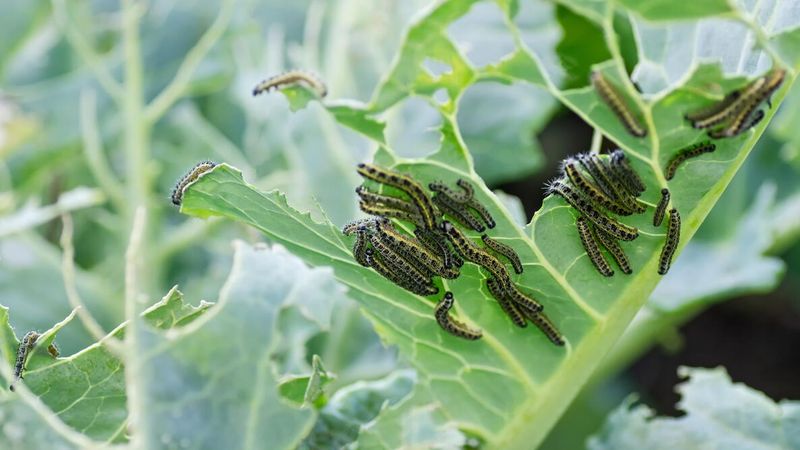
Imported cabbageworms are velvety green with a different body-leg arrangement than cabbage loopers. Diamondback moth larvae are smaller and tend to produce translucent windowpane damage rather than full holes.
Beet armyworms are also capable of chewing brassica foliage and can be confused with loopers by a quick glance. The University of Minnesota cabbage damage diagnosis tool and the UC IPM caterpillar identification guide for cole crops both illustrate these distinctions with photographs and body descriptions.
Before reaching for any treatment, compare the caterpillar you find against a reliable identification guide or take a clear, close photograph. Getting the species right matters because control options, timing, and thresholds can differ between pests.
Treating for the wrong insect wastes time, money, and risks disturbing beneficial insects that are already working in your bed.
Look underneath the leaves for clues that support a looper diagnosis
Flipping leaves over is the single most productive move a gardener can make after finding chewed kale. Most caterpillars, including suspected cabbage loopers, spend their daylight hours on the undersides of lower and older leaves where they are harder to spot.
Checking hole edges and plant crowns is also worthwhile because larvae sometimes rest near their last feeding site.
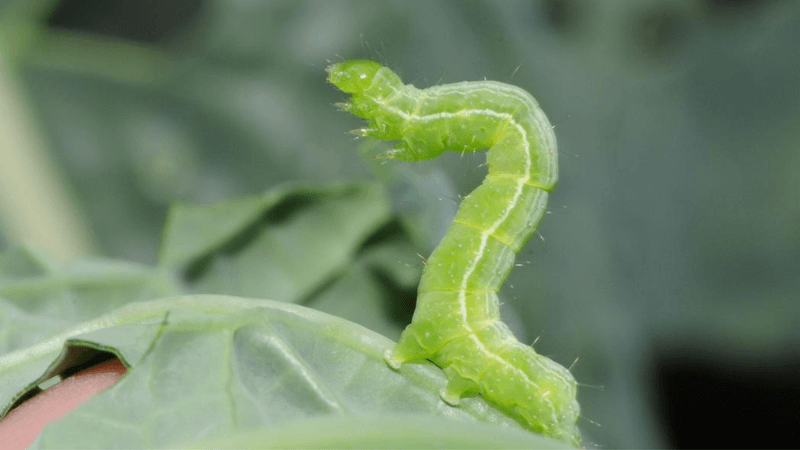
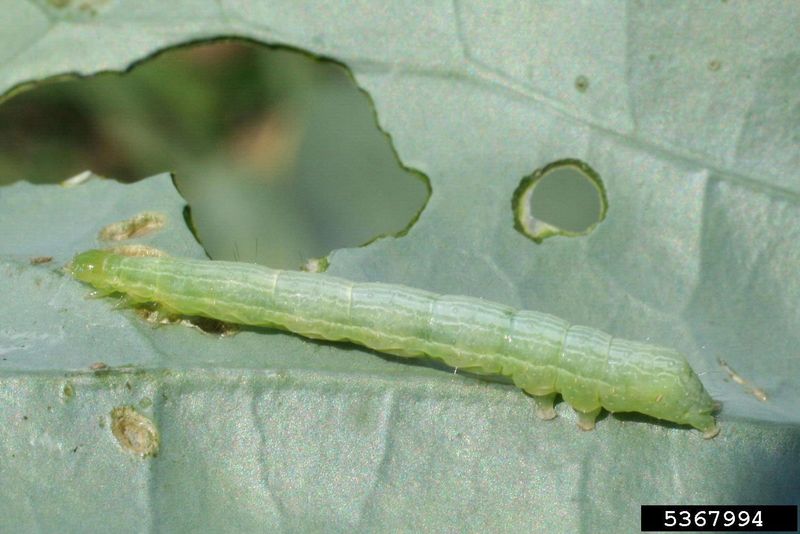
A cabbage looper larva is generally smooth and light green, marked with pale stripes running lengthwise along the body. Its most distinctive feature is its gait: it arches the middle of its body upward and pulls the rear forward in a looping motion, which is where the name comes from.
Texas A&M’s cabbage looper profile notes that mature larvae can reach roughly one and a half to two inches in length. Eggs are laid singly on leaf surfaces, are dome-shaped, and have visible ridges; finding them on undersides suggests active egg-laying is still occurring.
Timing your inspection matters. UC IPM’s home and landscape looper guidance recommends checking plants at dusk or after dark with a flashlight because larvae can be hard to locate during the day.
The adult moths are nocturnal, and larvae may feed more actively in low light. A brief evening walk through the bed often reveals caterpillars that a midday search would miss entirely.
Repeat your inspections every few days. UF/IFAS research on cabbage loopers explains that eggs and very young larvae are easy to overlook, and a missed hatch can mean a fresh wave of feeding before you realize the population has grown.
The Texas A&M caterpillar key is a useful companion for comparing your specimen’s body features before committing to a species identification.
Handpicking stops a small infestation before it grows
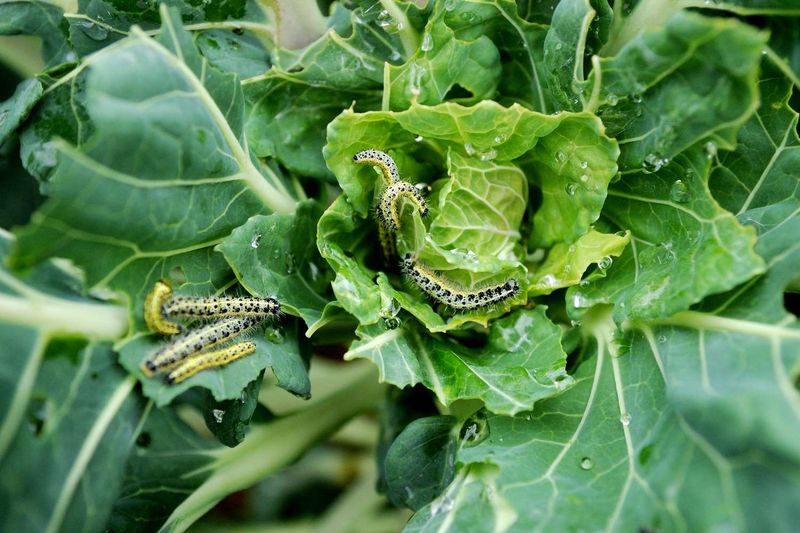
For a small home kale bed, handpicking is the right first move. Go through every plant, turn the leaves over, check the crowns, and remove every caterpillar you can find.
Drop them into a container of soapy water or seal them in a bag before disposing. UC IPM’s looper management page lists handpicking as a practical starting point for small plantings, and it has the advantage of causing no collateral harm to beneficial insects.
Seedlings deserve extra attention during this process. Young kale plants have limited leaf area, so even a handful of actively feeding larvae can set a plant back quickly.
That urgency is real, but it does not mean stripping every damaged leaf from the plant. Removing a badly chewed leaf that has almost no green tissue left is reasonable, but pulling leaves from a small seedling reduces the photosynthetic area the plant needs to recover.
The priority is getting the caterpillars off, not achieving cosmetic perfection.
Texas A&M AgriLife horticultural guidance reinforces that early intervention in a small garden setting is more effective than waiting for damage to reach a threshold. Focus your attention on new growth at the center of the plant, because that is where the next flush of leaves will emerge.
Utah State University’s cabbage looper guide notes that frequent rechecks are essential because eggs and tiny first-instar larvae are easy to miss on a first pass, and a second generation of caterpillars can build up before the gardener realizes the initial removal was incomplete.
Row covers protect clean seedlings before moths lay eggs
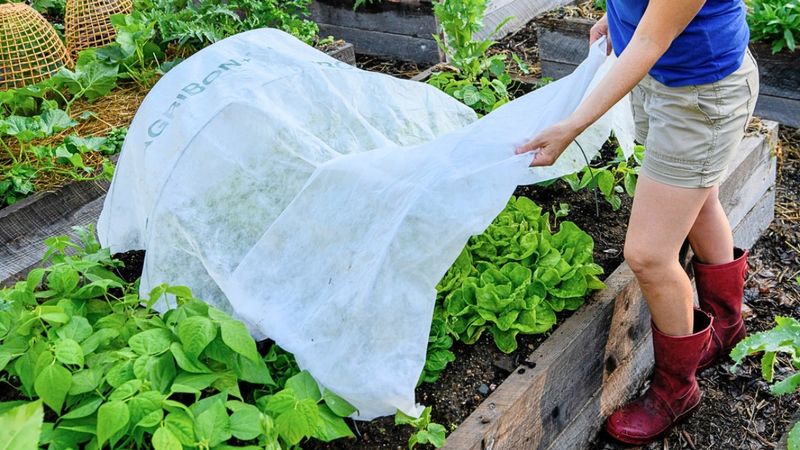
A floating row cover installed on the day you transplant or seed is one of the most reliable tools available to a fall brassica grower. The fabric creates a physical barrier that prevents cabbage looper moths and other brassica-feeding insects from reaching the plants to lay eggs.
UC IPM’s looper resource lists row covers as an effective preventive measure when installed before infestation begins.
Installation details matter more than most gardeners expect. The edges of the cover must be secured tightly against the soil on all sides, using soil, rocks, boards, or fabric staples, so that moths cannot slip underneath to lay eggs.
Any gap is an invitation. Utah State University’s row cover research emphasizes that secure edge contact is what makes the barrier effective; a loosely draped cover provides much weaker protection.
Once covers are in place, monitor them regularly. Heat can build up underneath lightweight fabric during warm fall days in Central Texas, and weeds that germinate beneath the cover compete with seedlings without being visible from outside.
Watering schedules may also need adjustment depending on how the cover interacts with rainfall and irrigation. USU’s caterpillar pest guidance for brassicas notes that covers can trap pests already inside the bed, so inspect the planting area carefully before installation.
Row covers work preventively. If moths or larvae are already present when the cover goes down, the fabric may protect the pests along with the plants.
For a bed that already shows active feeding damage, handpicking comes first. Consider covers for any new transplants or a second succession planting rather than as a fix for an infestation already underway.
The Texas AgriLife fall gardening guide supports succession planting as a practical strategy for extending the harvest season.
Bt targets young loopers when scouting shows control is needed
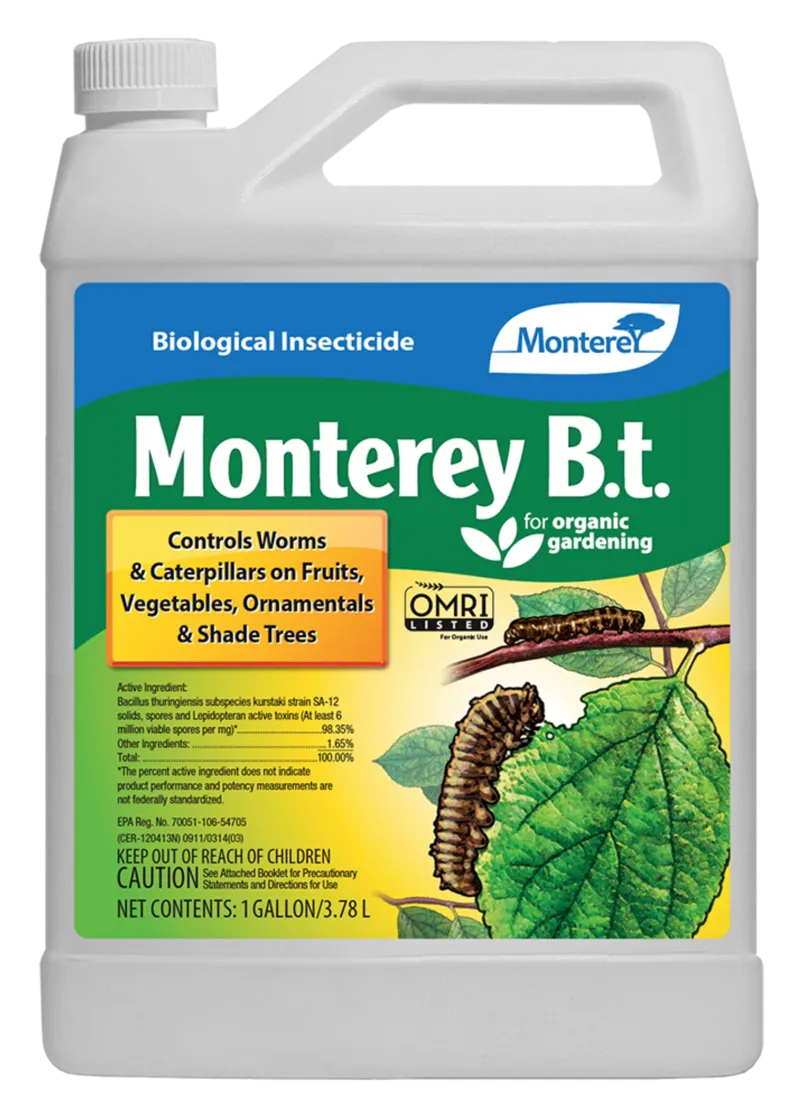
When handpicking is not keeping pace with the infestation and row covers are not a practical option for an established bed, Bacillus thuringiensis var. kurstaki, commonly called Bt or Btk, is a well-established caterpillar control option. Utah State University’s cabbage looper guide describes Bt as a standard treatment for young looper larvae on brassicas, and it works selectively on susceptible caterpillar species rather than broadly across all insects.
The mechanism is specific: a caterpillar must eat foliage that carries the Bt protein. Once ingested, the protein disrupts the larva’s digestive system and feeding stops within hours, though the caterpillar may take a day or two to die.
Young larvae are far more vulnerable than large, mature ones, which is why scouting early and treating while caterpillars are still small produces better results. UC IPM’s looper resource reinforces that thorough coverage of leaf surfaces, including undersides where larvae feed, is essential for the treatment to work.
Product label compliance is not optional. EPA registration requirements mean that a Bt product’s label is a legal document specifying which crops and pests it covers, how many applications are permitted per season, and what pre-harvest intervals apply.
Use only a product whose label lists kale or cole crops and caterpillar pests, follow the listed application rate, and observe the stated interval between the last application and harvest. UC IPM’s cole crop looper guidance also notes that Bt does not control aphids, flea beetles, fungal diseases, or any non-caterpillar pest, so do not expect it to solve multiple problems at once.
Spinosad is sometimes listed as an alternative for looper control, but it is not interchangeable with Bt in every situation. Product-specific approvals, application limits, and pollinator precautions vary significantly, and some spinosad formulations carry restrictions on use during bloom periods or near pollinators.
EPA insecticide guidance underlines that all registered pesticides carry label requirements that must be followed regardless of how the product is marketed. Read the specific label for whatever spinosad product you are considering before applying it.
A lace-like seedling does not justify a blanket spray
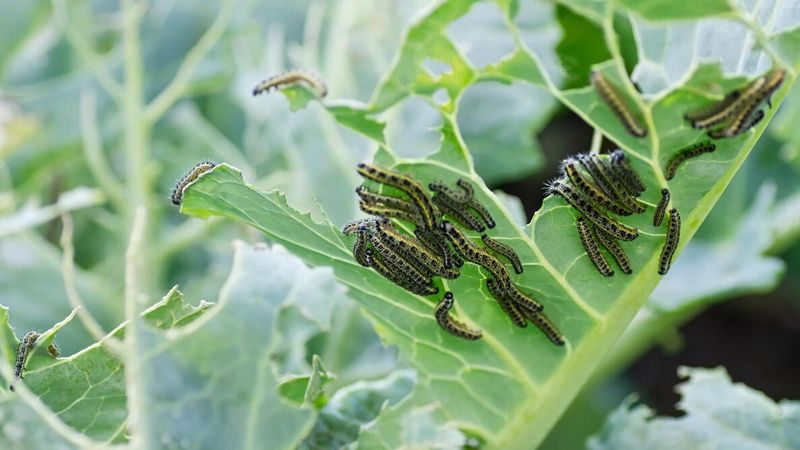
Finding a seedling with lace-like leaves is alarming, but the right response is not automatically a broad pesticide application. Damage tolerance varies with plant age, crop stage, and what the gardener ultimately wants from the planting.
A kale bed grown for loose leaves can absorb more early-season damage than a head-forming crop where caterpillars tunneling into the center create bigger problems. Published thresholds, such as the figure of roughly 0.3 larvae per plant cited in some extension literature, are scouting references developed for commercial production.
UF/IFAS research on cabbage loopers makes clear that thresholds vary by crop, growth stage, and market standards, so applying a commercial trigger number rigidly to a home bed of a dozen plants is not meaningful.
Natural enemies already present in the garden are worth considering before reaching for a spray. Parasitic wasps, tachinid flies, and generalist predators all attack looper larvae and eggs.
UC IPM’s floriculture and nursery looper page notes that naturally occurring enemies can suppress looper populations, and UC IPM’s tachinid fly resource describes how these parasitoids specifically target caterpillars. Broad-spectrum insecticides can kill those beneficial insects alongside the loopers, potentially making future pest pressure worse rather than better.
Shortcuts that sound appealing often have limited support. Deep tilling is sometimes suggested as a way to kill pupating loopers, but moths can fly in from outside the garden and multiple generations may occur through the season, so tillage alone does not solve the problem.
Utah State’s looper guide and UC IPM’s cole crop management guide both center on scouting, handpicking, selective treatments, and covers rather than soil disturbance or broad sprays. Neem, dish soap, and homemade mixtures are not supported by the extension sources reviewed here as reliable looper controls, and EPA pesticide safety guidance applies to all pesticide products, including those marketed as natural or organic.
Focus on removing active larvae and protecting new growth rather than erasing every existing hole.
Confirm, remove, and protect the next flush of leaves
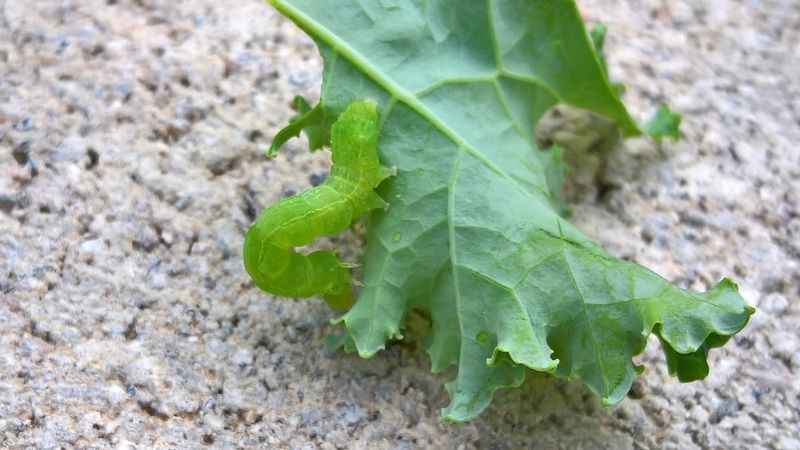
Start at the leaf undersides and crowns, flashlight in hand, and compare any caterpillar you find against an identification guide before deciding on a response. Smooth green larvae with pale stripes that arch as they move strongly suggest cabbage looper, but that combination supports the diagnosis rather than confirming it with certainty.
Texas A&M’s looper profile and the Texas A&M caterpillar key together give you the body features needed to narrow the identification before you commit to a treatment.
Handpick every visible larva, recheck plants at dusk or after dark over the following days, and cover any uninfested transplants with a secured row cover to prevent new egg-laying. UC IPM’s looper guidance and Utah State’s row cover research both support this sequence as the foundation of caterpillar management in a small planting.
If repeated scouting over several days shows the population is growing despite handpicking, a labeled Bt product applied to young larvae is the next step.
The goal throughout is to stop active feeding and give new growth a chance to develop, not to restore every damaged leaf to perfect condition. Holes already in the foliage will remain, but a plant that keeps its center growing has a real chance to recover.
Cabbage looper stays the most likely explanation when the insect’s distinguishing traits match up, but that identification is always worth confirming before you treat.