
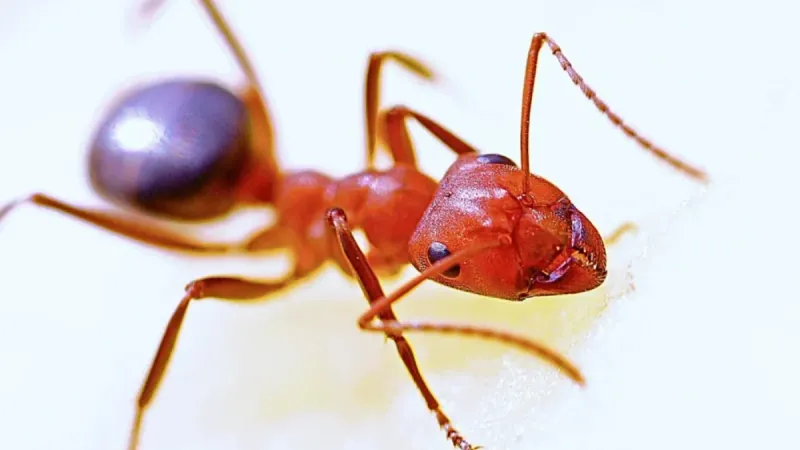
Tiny holes in a Florida lawn can make a neat yard look messy overnight. Some come from helpful wildlife, while others point to pests, soft soil, or hidden grubs.
Knowing the difference helps you avoid wasting money on the wrong fix. Here are seven common causes and the real reasons they show up.
1. Armadillos Digging for Grubs and Soil Insects
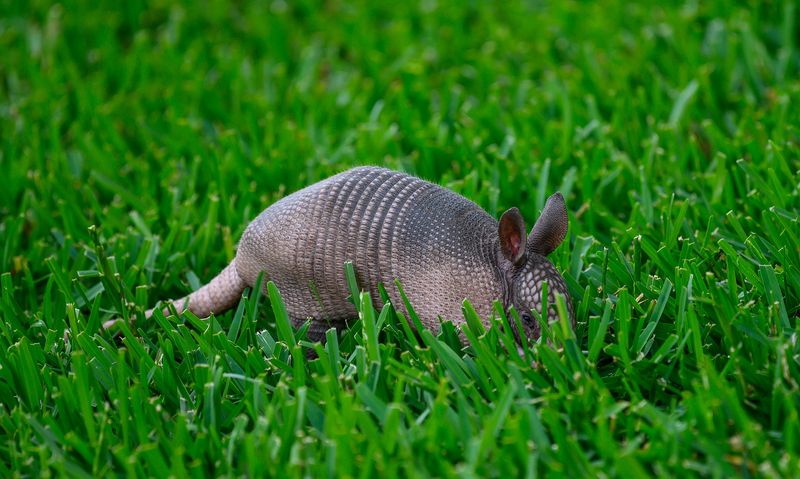
A Florida lawn can look like someone poked it with a garden trowel after an armadillo visits. Nine-banded armadillos are famous for rooting through turf at night, leaving small to medium holes that often look cone-shaped or shallowly scooped.
What pulls them in is usually food, not the lawn itself. White grubs, beetle larvae, mole crickets, earthworms, and other soil insects create a buffet just under the grass, especially in moist sandy soil after rain or irrigation.
Armadillo holes are often scattered, not arranged in neat tunnels or mounds. You may notice the damage near landscape beds, under shrubs, along fences, or in quieter corners where the animal feels safe moving after dark.
The best first step is to check the turf for grubs before blaming the armadillo alone. Cut and peel back a small square of sod, look in the top few inches of soil, and focus on pest control only if you find enough larvae to justify treatment.
Reducing overwatering can also make the yard less inviting. Florida lawns need careful irrigation because soggy soil brings insects closer to the surface and makes digging easier.
2. Mole Crickets Tunneling Through Sandy Turf
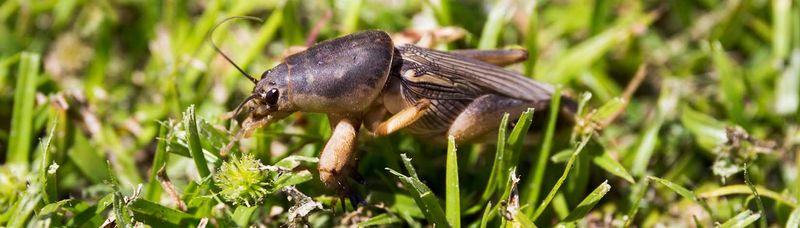
One sneaky lawn pest makes damage below the surface before most homeowners notice anything is wrong. Mole crickets tunnel through Florida turf and can leave small openings, loose soil, thinning grass, and spongy patches that lift more easily than healthy sod.
Florida’s sandy, fast-draining soil suits them well. They are especially troublesome in bahiagrass, bermudagrass, and some St. Augustinegrass lawns, where their tunneling dries roots and weakens turf during warm weather.
What attracts mole crickets is a mix of suitable grass, loose soil, moisture, and easy root access. Outdoor lights may also draw adult crickets during flights, which can lead to egg-laying nearby.
A simple soapy water flush can help confirm the problem. Mix a small amount of dish soap in water, pour it over a suspect patch, and watch for mole crickets rising to the surface within a few minutes.
Timing matters more than panic spraying. UF-IFAS guidance often points homeowners toward treating young nymphs when they are easier to manage, rather than waiting until large crickets have already caused visible damage.
3. Ground-Nesting Bees Using Bare Sunny Spots
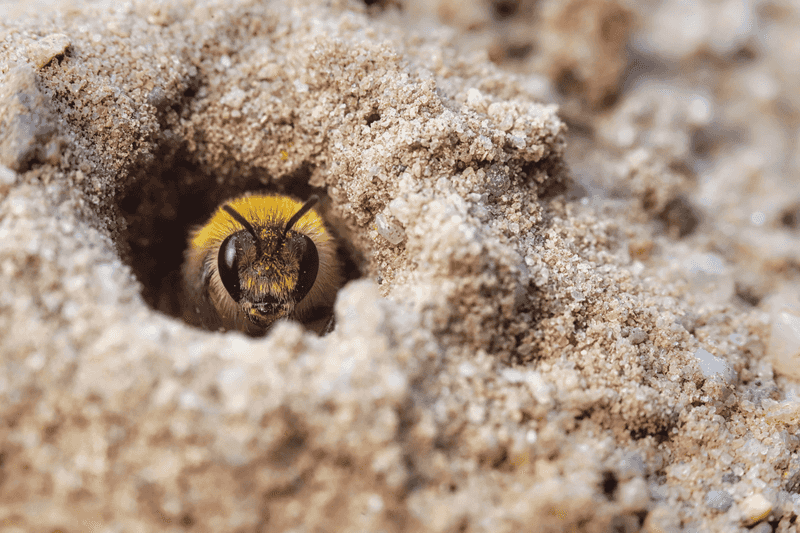
Not every hole is bad news. In sunny, thin patches of turf, tiny round openings may be made by native ground-nesting bees, many of which are important pollinators for Florida yards and nearby gardens.
Unlike fire ants or wasps, many solitary ground bees do not build large colonies or defend a nest as aggressively. You may see small bees hovering low over bare soil in spring or warm periods, with each female tending her own little tunnel.
They are drawn to open, well-drained, sandy soil with little mulch or dense grass cover. That makes weak lawn edges, dry slopes, and bare spots near flower beds especially attractive.
Before reaching for insecticide, watch the area from a safe distance. If the insects are small, not swarming aggressively, and the holes have little to no mound, they may be harmless pollinators doing useful work.
To gently discourage nesting in a high-traffic spot, improve turf density, topdress thin areas, and keep bare soil covered with mulch in beds. In low-use corners, leaving them alone can support pollinators without much downside.
4. Cicada Killer Wasps Excavating Mini Burrows
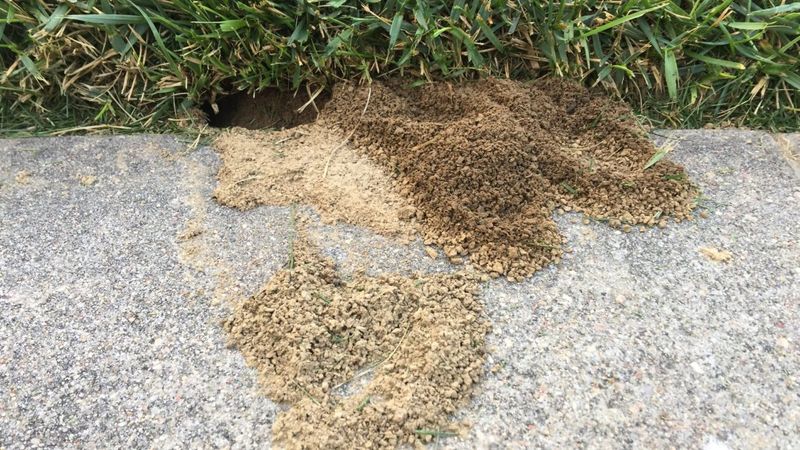
That thumb-sized hole near the driveway might look alarming, especially when a large wasp cruises past like a tiny helicopter. Cicada killer wasps dig burrows in well-drained soil, and their entrances often have a small fan of loose sand nearby.
Females use the burrow as a nursery, stocking it with cicadas for their young. The adult wasps are big, but they are usually focused on nest work and are less interested in people than their size suggests.
What pulls them in is open sandy ground, sunny exposure, and a good supply of cicadas in nearby trees. Florida’s warm season, loose soils, and tree-lined neighborhoods can provide all three.
The holes often appear along sidewalks, driveways, bed edges, and sparse lawn areas where digging is easy. You may see fresh sand pushed out around the entrance after a female works the tunnel.
If the nest is away from children, pets, or heavy foot traffic, tolerance is often the easiest option. For prevention, thicken the turf, mulch bare bed edges, and reduce exposed sandy strips where they can start new burrows.
5. Fire Ants Starting Small Before Mounds Grow
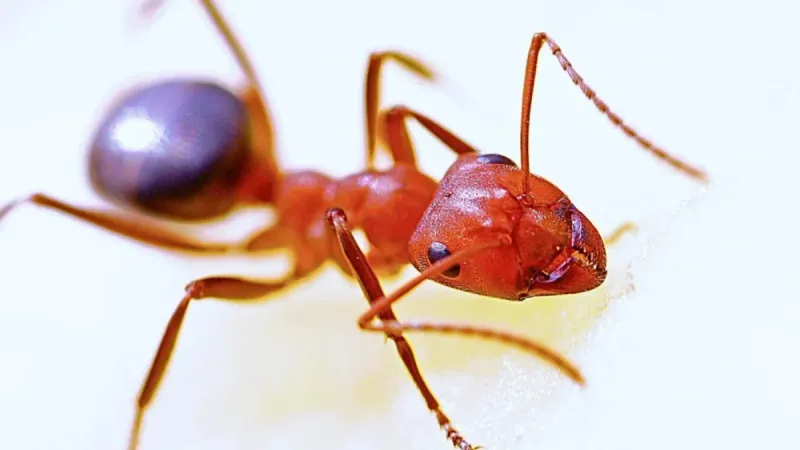
A few tiny holes can be the early warning sign of a much bigger problem underfoot. Red imported fire ants often begin with small openings or low, loose soil before a more obvious mound forms, especially after rain, irrigation, or disturbance.
They are pulled into lawns by warmth, open soil, moisture, and easy access to food. In Florida, colonies can shift after heavy rain or flooding, so a yard that looked clear one week may show new activity the next.
Fire ant openings are different from solitary bee holes because the insects defend the area quickly. If you disturb the soil and many ants rush out, back away and avoid testing the spot with bare hands or sandals.
For homeowners, correct identification matters because fire ants sting and can be dangerous to children, pets, and sensitive adults. Treatments labeled for fire ants can help, but they should be used exactly as directed and kept away from edible gardens unless the label allows that use.
Regular yard checks are smart after storms and during warm, wet stretches. Pay close attention to play areas, mailbox paths, garden edges, and irrigation zones where colonies can surprise you.
6. Birds Pecking for Chinch Bugs, Grubs, and Worms
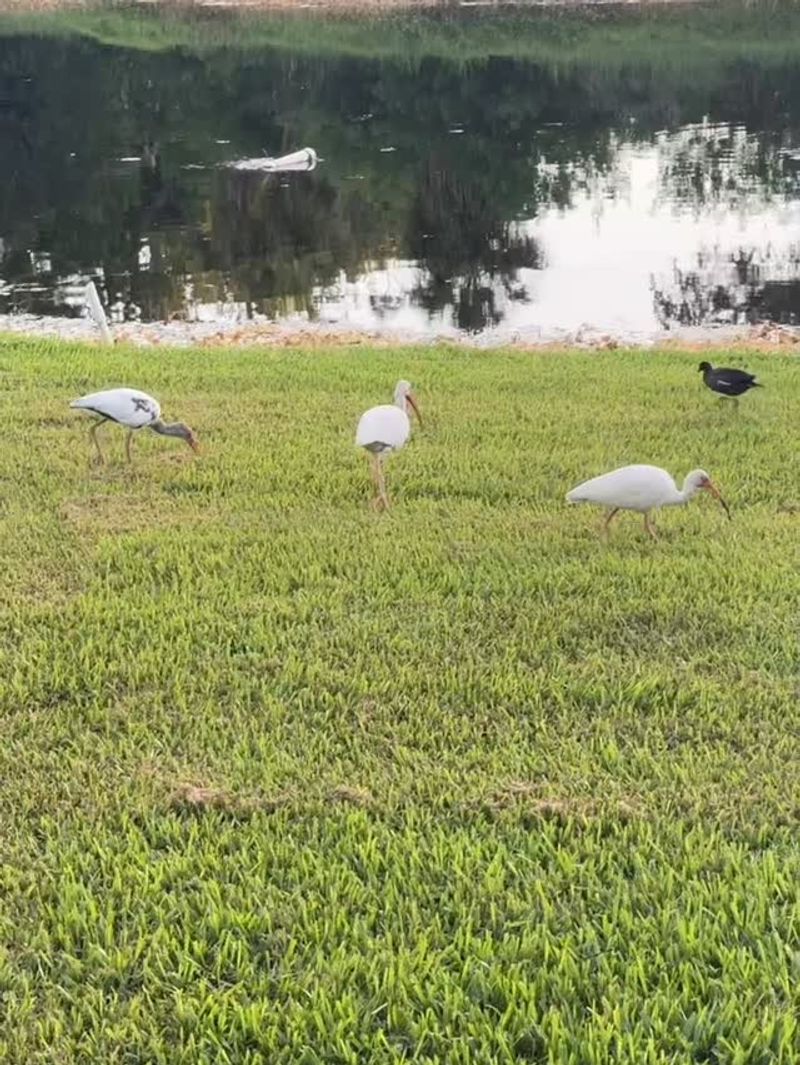
Sometimes the hole-maker has wings, not claws. Birds such as ibises, grackles, crows, and blue jays may pepper a lawn with small pecks while hunting insects in the thatch and soil.
Bird feeding marks tend to be shallow, narrow, and clustered where prey is active. You might see the birds working the same patch repeatedly in the morning, then find tiny punctures and pulled bits of grass later.
What pulls birds in is movement and easy protein. Chinch bugs, caterpillars, grubs, mole crickets, and earthworms can all draw attention, especially in lawns already stressed by heat, drought, or uneven watering.
In many cases, birds are not the real problem. They are the clue.
If a section of St. Augustinegrass is yellowing, thinning, or crunchy while birds keep visiting it, inspect for insects before repairing the turf.
A wildlife-aware response is to diagnose first, then treat only when needed. Healthy turf, correct mowing height, and irrigation that follows local watering rules can reduce pest outbreaks while still letting helpful birds clean up minor insect activity.
7. Water, Rotting Roots, and Soil Settling After Heavy Rain
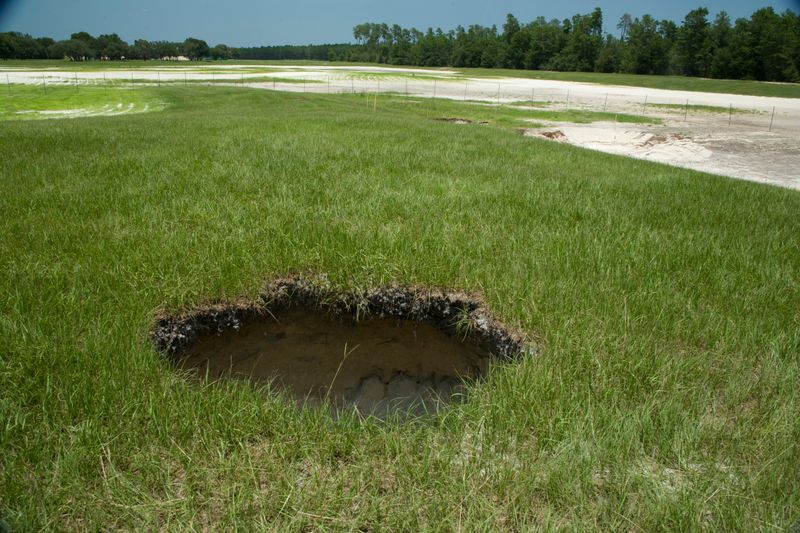
After a hard Florida downpour, a lawn can develop holes without any animal being involved. Sandy soil moves, settles, and collapses into tiny voids, especially where old roots, buried organic matter, or loose fill are breaking down below the surface.
Heavy rain, hurricane-season flooding, broken irrigation lines, and poor drainage can all pull the ground downward. The result may be a small round hole, a soft depression, or a spot that keeps sinking after each storm.
Rotting tree roots are a common hidden cause in older yards. When a tree was removed years ago, leftover roots may slowly decay underground, leaving empty pockets that eventually cave in.
Unlike insect or wildlife holes, settling spots usually do not have fresh digging marks, pellets, active insects, or repeated pecking. The edges may look washed, soft, or slumped rather than scratched open.
Small depressions can often be repaired with gradual topdressing and sod repair, but deep, widening, or sudden holes deserve caution. Keep people and pets away from unstable spots and contact a local professional if the area keeps expanding or appears near a structure, septic system, or drainage line.