
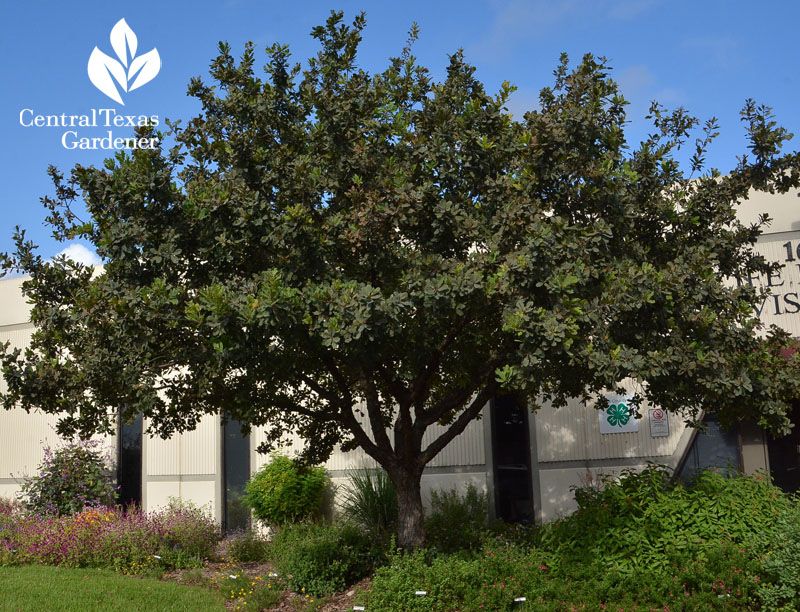
Tucked into the limestone canyons of Central Texas grows a native oak that most nurseries rarely carry and most homeowners have never heard of. Lacey oak, also called blue oak, earns its reputation through distinctive blue-green foliage, reliable fall color, and a deep tolerance for the alkaline soils that defeat so many other trees.
For homeowners on the Edwards Plateau who want a long-term native shade tree rather than a generic box-store placeholder, it may be worth the search to find one.
Meet the Hard-to-Find Lacey Oak
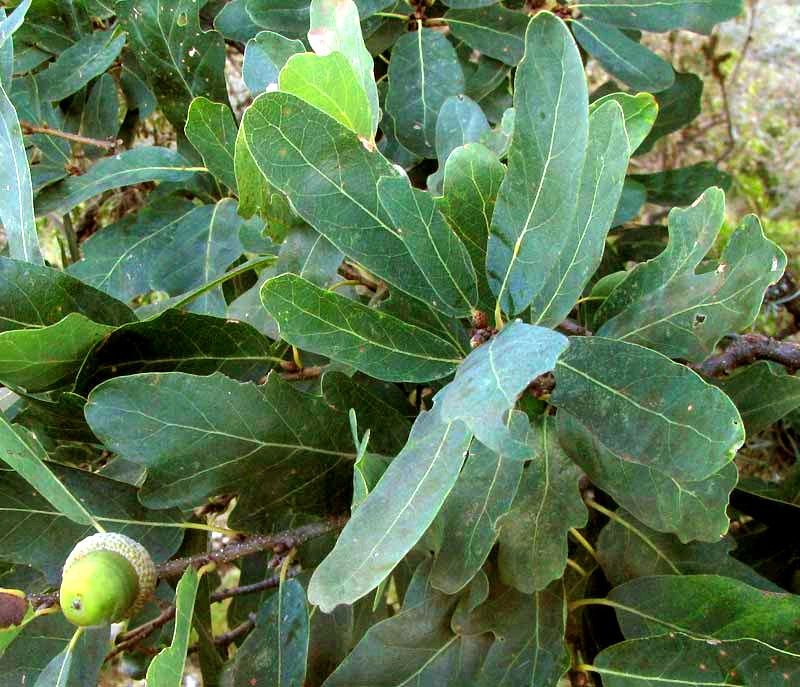
Somewhere between the cedar elm and the live oak on the Texas native tree roster sits a quieter option that most homeowners walk right past, mostly because they never see it at a nursery. Lacey oak, also called blue oak, goes by two scientific names in Texas A&M literature: the Texas A&M Texas Tree Selector lists it as Quercus glaucoides and notes Quercus laceyi as an alternate name.
Both names appear in official A&M sources, so the taxonomy is not entirely settled, and using either common name alongside both scientific names is the clearest approach.
The tree earns attention through a handful of traits that set it apart from the standard nursery lineup. New foliage emerges in a soft peach tone, matures to a blue-green color that stands out among Central Texas oaks, and then returns to warm peach tones in fall before the leaves drop.
That seasonal color shift, combined with the unusual blue-green canopy through the growing season, gives the tree a look that is genuinely different from the live oaks and cedar elms most homeowners already have.
Beyond its appearance, Lacey oak tolerates drought and alkaline soils, which makes it a practical candidate for limestone-heavy sites where other species struggle. Its acorns provide food for wildlife, and it carries the habitat value that native oaks generally offer.
Texas A&M’s selector notes that it may be difficult to find in nurseries, which is a real limitation, though that does not mean major retailers never carry it. What it does mean is that a homeowner committed to planting one will likely need to search specialty native-plant nurseries or contact a native-plant society rather than assuming the nearest garden center will have it in stock.
Match the Tree to Central Texas Limestone Country
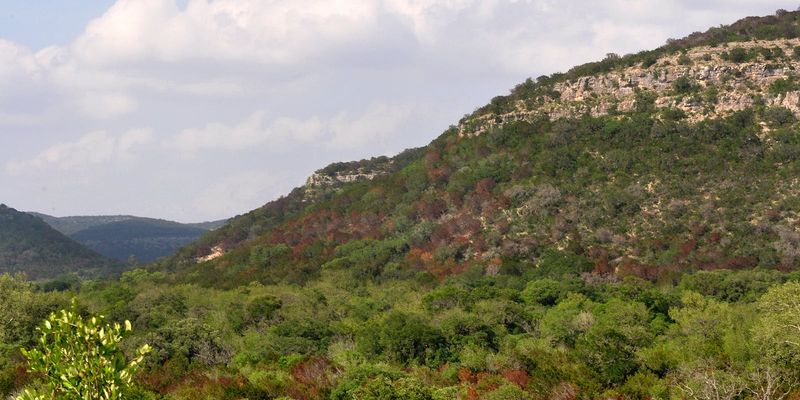
Before ordering a tree or reserving one at a specialty nursery, the most useful thing a homeowner can do is look hard at the ground underfoot. Lacey oak is most strongly associated with Central Texas and the Edwards Plateau, particularly limestone outcrops, canyon slopes, and dry hillsides where soil pH runs high and moisture is seasonal at best.
Texas A&M’s tree identification guide for Lacey oak places it squarely in Edwards Plateau habitats, emphasizing its affinity for rocky, alkaline conditions that other oaks often cannot handle.
That regional specificity matters. A tree that thrives on a limestone ridge outside Kerrville or Fredericksburg may perform poorly on heavy black clay in the Dallas-Fort Worth area, in the acidic sandy soils of East Texas, in the salt-influenced Gulf Coast lowlands, or in the extreme aridity of West Texas.
South Texas presents its own set of conditions that the available evidence does not connect to Lacey oak’s documented range. Extending the recommendation beyond Central Texas and the Edwards Plateau requires site-specific knowledge that goes beyond what the general literature supports.
Soil drainage is as important as soil chemistry. Lacey oak grows naturally on slopes and in canyons where water moves through quickly rather than pooling around roots.
A yard with heavy clay that holds water after rain, or a low spot that stays wet seasonally, is a poor match regardless of how appealing the tree sounds on paper. Checking county soil maps, testing pH, and observing how your yard drains after a hard rain will tell you more than any species description alone.
Homeowners in other parts of Texas are not without native shade-tree options. Cedar elm, bur oak, chinkapin oak, Shumard oak, and Mexican sycamore are among the alternatives that Texas A&M lists for different regions and conditions.
The goal is matching the right tree to the actual site, not forcing a regional specialist into a landscape where it does not belong.
Plan for Slow Growth and a Medium-Sized Canopy
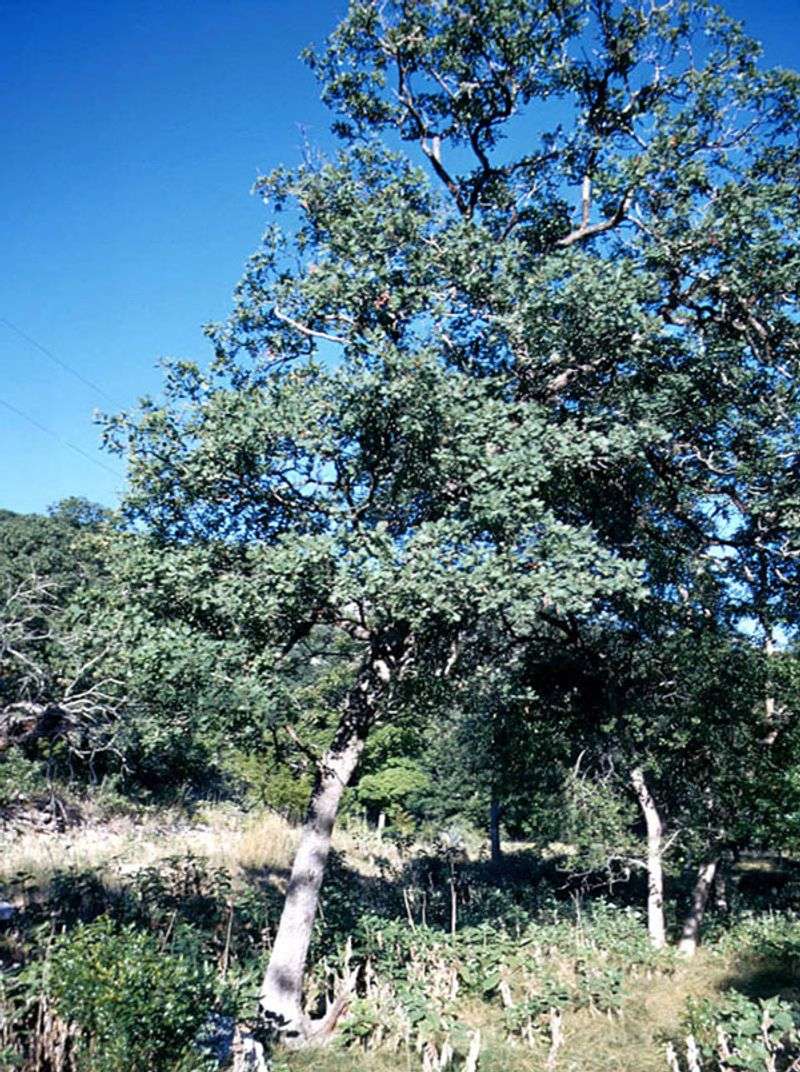
Patience is the price of admission with Lacey oak. The Texas A&M Texas Tree Selector describes it as slow-growing, and that label carries real consequences for anyone hoping to sit under meaningful shade within a few years of planting.
Depending on the source, mature height estimates range from roughly 30 to 50 feet, with some descriptions placing it at 40 feet or more. That eventual size makes it a genuine shade tree over time, but the timeline is measured in decades rather than seasons.
Slow growth is not a flaw for a homeowner thinking long-term, but it does change how the tree fits into a planting plan. A yard that needs substantial shade coverage within five or ten years will require a faster-growing species alongside or instead of a Lacey oak.
Planting one now while also establishing a faster-maturing native such as cedar elm can give a yard both short-term canopy and a lasting structural tree that will outlive most of its neighbors.
Medium size still means substantial size, and placement decisions need to account for what the tree will eventually become. Texas Parks and Wildlife recommends identifying buried utilities and considering a tree’s mature height before planting, and that advice applies here with extra weight given the canopy a mature Lacey oak can develop.
Overhead power lines, roof overhangs, fences, driveways, and the mature canopy spread of any neighboring trees all deserve a look before the planting hole goes in. A tree placed too close to a structure today becomes a problem a homeowner’s grandchildren will have to solve.
Use Fall as a Regional Planting Window
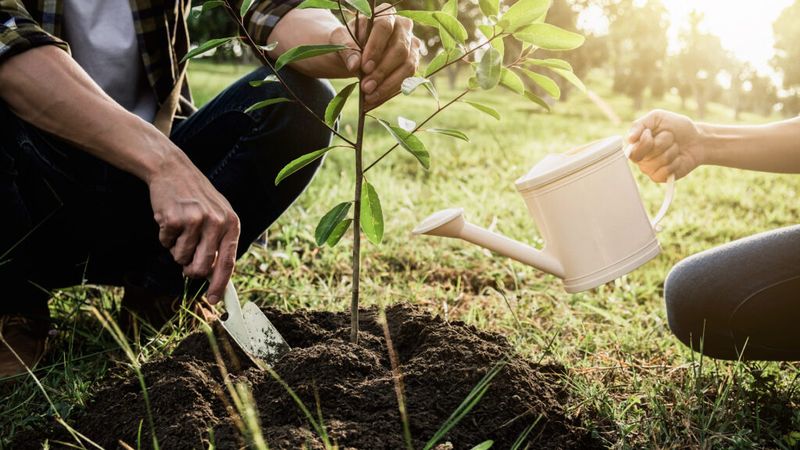
Cool-season planting gives woody trees a real head start in Texas. When soil temperatures drop and the brutal heat of summer backs off, a newly planted tree can push roots outward without simultaneously fighting triple-digit air temperatures and high evaporation.
Texas Parks and Wildlife recommends cool-season planting, particularly late fall or early spring, so woody plants can establish before hot, dry summer conditions arrive. That general principle applies to Lacey oak as much as any other native species.
For Central Texas specifically, Austin’s native tree growing guide identifies October 15 through March 15 as the main tree-planting window for the region. That range is not a universal Texas deadline.
Homeowners in other parts of the state should factor in local heat patterns, soil moisture levels, current drought conditions, municipal watering restrictions, and the advice of a local nursery professional before settling on a date. Planting into dry, hot soil in September is generally less favorable than waiting until temperatures moderate and the soil retains some moisture.
Finding a Lacey oak in the first place can take more effort than the planting itself. Because the tree can be hard to locate at standard nurseries, searching native-plant specialty nurseries, contacting local chapters of the Native Plant Society of Texas, or checking with regional conservation organizations is often the most reliable path to securing healthy nursery stock.
Calling ahead to confirm that a tree is actually in stock and in good condition before making a trip is worth the extra step. A root-bound or stressed specimen purchased in a rush is a poor investment regardless of how well the site fits the species.
Test the Site Before You Buy
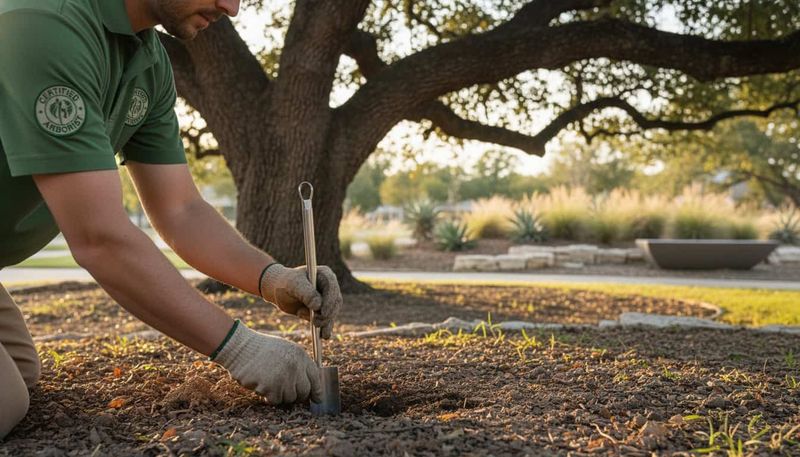
A practical checklist run through before purchasing a tree can prevent years of frustration. Start with overhead and underground space.
Measure the clearance between the intended planting spot and any utility lines, roof edges, or structures, then compare that to the tree’s mature canopy width and height. Texas Parks and Wildlife advises locating buried utilities and evaluating mature height before any tree goes in the ground, and a quick call to 811 before digging protects both the homeowner and underground infrastructure.
Soil and drainage come next. Lacey oak’s documented preference for limestone and alkaline conditions means a yard with naturally high pH and good drainage is a strong candidate, while a site with compacted clay, poor drainage, or acidic sandy soil is a mismatch.
A basic soil pH test from a garden center or county extension office can confirm whether the numbers align with the tree’s preferences. Observing how the yard drains after a hard rain is equally useful: standing water that persists for hours after a storm signals drainage conditions that do not suit this species.
Sun exposure and existing canopy competition also matter. Texas A&M’s tree selector describes Lacey oak as suited to full sun conditions, so a spot shaded by an existing large tree is not the right placement.
Check the Texas A&M Lacey oak identification guide for additional habitat notes that can help you compare your yard’s conditions against the tree’s natural range.
Wildlife value is real but measured. Acorns produced by a mature Lacey oak can provide food for deer, squirrels, and birds that eat hard mast.
Oaks generally support insect life and habitat structure that benefits a yard’s ecology over time. One tree will not guarantee a dramatic change in the birds or animals that visit, but it adds to the native habitat value of a landscape in ways that non-native ornamentals typically do not.
Set the Root Flare High and Mulch Correctly
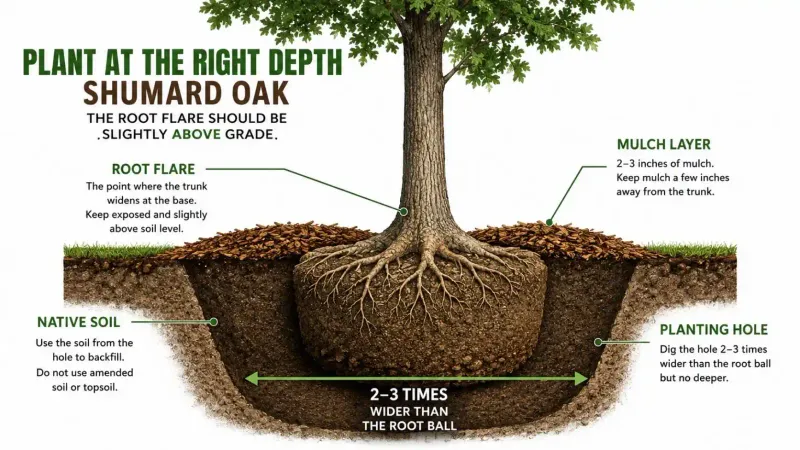
Getting the planting hole right is where many well-intentioned tree installations go wrong. University of Minnesota Extension research on tree planting technique consistently emphasizes that the hole should be wider than the root ball, not deeper, and that the root flare, the point where the trunk begins to widen at its base, must remain visible at or slightly above the finished soil surface.
Burying the root flare is one of the most common mistakes homeowners make, and it can contribute to rot, girdling roots, and long-term decline that may not become obvious until years after planting.
Dig the hole two to three times the diameter of the root ball, but match the depth to the height of the root ball itself. Before setting the tree, remove any burlap, wire baskets, or container material that would restrict root growth.
Position the tree so the root flare sits at or slightly above grade, then backfill with the native soil that came out of the hole. Unless a qualified local professional has identified a specific site condition that calls for amendment, native soil backfill is generally the right approach because it avoids creating a textural interface that can discourage roots from spreading outward.
Mulch applied correctly protects soil moisture, moderates temperature, and reduces competition from grass and weeds. Spread a 2-to-4-inch layer in a broad ring extending as far from the trunk as practical, but keep the mulch several inches away from the trunk itself and completely clear of the root flare.
Texas Parks and Wildlife cautions against volcano mulching, the practice of piling mulch against the trunk in a cone shape, because it traps moisture against the bark, invites pests and fungal problems, and can encourage girdling roots to form near the surface. A flat, wide mulch ring rather than a tall, narrow pile is the correct form.
Protect the trunk from mower and string trimmer contact from day one. Mechanical damage at the base of a young tree creates wounds that invite disease and pests, and repeated small injuries can girdle a tree over time just as surely as buried mulch.
A simple physical barrier or a clearly marked mulch ring that keeps equipment away from the trunk is a low-effort protection that pays off across the tree’s entire life.
Water Establishment and Avoid Oak-Wilt Wounds
Drought tolerance is an established-tree characteristic, not a license to neglect a newly planted specimen. A Lacey oak that goes into the ground this fall will spend its first one to two years pushing roots outward into unfamiliar soil, and during that period it depends on supplemental water to survive.
University of Minnesota Extension guidance on watering newly planted trees and shrubs recommends slow, deep watering that allows moisture to penetrate the root zone rather than running off the surface. Frequency should adjust based on rainfall, soil drainage, air temperature, and any local watering restrictions, with the goal of keeping the root ball and surrounding soil consistently moist but not waterlogged.
A general starting point for newly planted trees is watering every few days during the first month, tapering to weekly or less as the tree establishes and as cooler weather reduces evaporation demand. Checking the soil a few inches down before watering avoids both under-watering and over-watering.
During an unusually dry stretch, even a tree planted in fall may need more frequent attention than the season suggests.
Oak wilt is a separate but equally important concern that every Central Texas homeowner with an oak tree needs to understand. All oaks can be infected, and Lacey oak is not an exception.
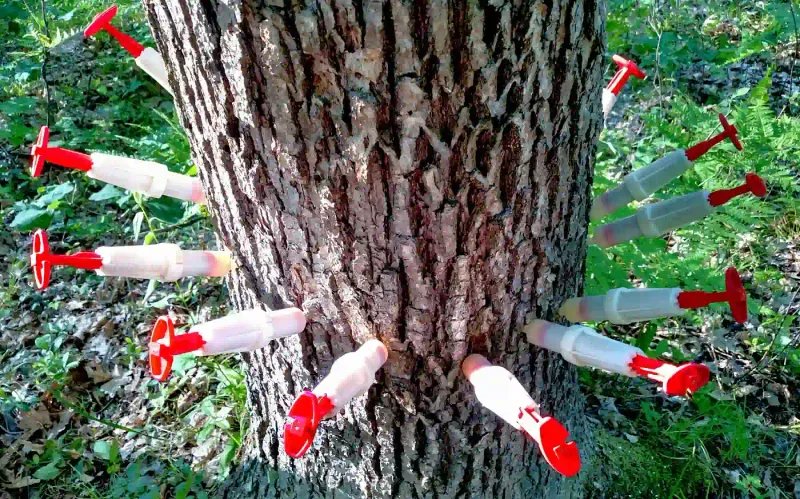
Texas Oak Wilt guidance on pruning identifies Lacey oak among white oaks that remain susceptible to the disease and can die in significant numbers where root connections allow spread between trees. The disease can move through root grafts between neighboring trees and can also be transmitted by sap beetles attracted to fresh wounds.
Avoiding unnecessary wounds is the most practical protection available. The highest-risk period for wound-related oak wilt transmission runs from February through June, when the fungal mats that attract sap beetles are most active.
Texas Oak Wilt’s integrated management guidance recommends avoiding oak pruning or wounding during that window when possible, painting fresh wounds immediately with a latex-based sealant when pruning cannot be avoided, and scheduling planned pruning for late fall or winter. Fall planting does not create the same risk as fall pruning, but installation should still avoid unnecessary bark damage, broken branches left unaddressed, or wounds left unpainted if they occur during a higher-risk period.
Choose It for the Yard You Will Have Later
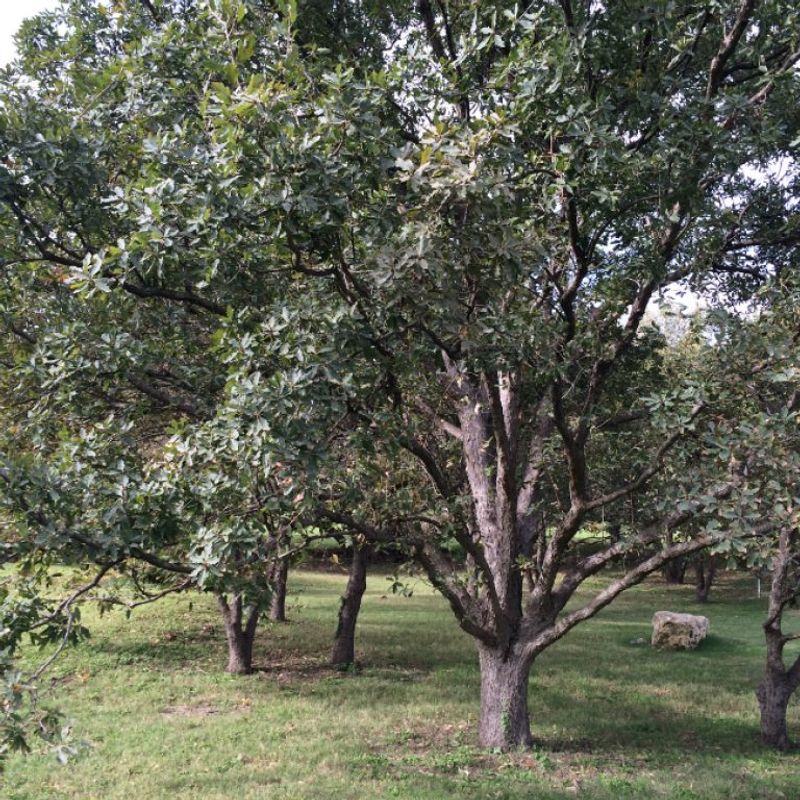
Lacey oak earns its strongest recommendation for Central Texas and Edwards Plateau homeowners who have the right conditions: alkaline or limestone soil, good drainage, full sun, and enough room for a medium-sized tree to develop over many years. Texas A&M’s tree selector and the Lacey oak identification guide together make clear that this is a regional specialist, not a one-size-fits-all solution for every Texas yard.
Homeowners who need faster shade, garden in a different part of the state, or have soil conditions that do not match the tree’s natural range will likely find a better fit among the other native options Texas A&M recommends for their county and conditions. There is no single best native shade tree for all of Texas, and Lacey oak does not pretend to be one.
The practical next step is straightforward: confirm that your site fits the tree, locate a reputable source for healthy nursery stock, plan to plant during the Central Texas cool-season window of October 15 through March 15 or follow local guidance for your region, and commit to establishment watering and oak-wilt precautions from the first season forward. A tree planted with that kind of care and that kind of patience tends to outlast the homeowner who planted it, which is exactly the point.