
Fall pansies are one of the most satisfying cool-season plants a Central Texas gardener can grow, but when they stretch out, look yellow, or refuse to flower, it is easy to blame the plants. Warm soil at root-ball depth is a real and common contributor to those symptoms, especially during an October that has not cooled down yet.
Before you pull everything up, though, it helps to know what the soil is actually doing and whether something else might also be at work.
Warm soil may explain the stretch, but not every symptom
Planting a cool-season pansy into a root zone that has not cooled down yet can contribute to stretched stems, yellowish foliage, weak establishment, and fewer flowers than you expected. Texas A&M AgriLife Extension guidance for Bexar County specifically links planting into soil above approximately 70 degrees F with leggy plants, yellowish leaves, and reduced flower production.
That connection is real and worth taking seriously, but warm soil alone does not explain every case of a pansy that looks stretched or refuses to thrive.
The difference between stretching and true stalling matters here. Warm conditions are strongly associated with elongated, weak-looking growth and reduced flowering, but actual stunting or a plant that simply sits without growing can have other causes entirely.
Cold soil, root damage from rough transplanting, drought, saturated ground, crown rot, or a nutrient problem can all slow a pansy down without warm temperatures being involved at all.
Other factors can produce leggy growth on their own. Iowa State University Extension guidance on growing pansies notes that inadequate light is a common cause of tall, weak stems.
Warm overnight air temperatures, excessive nitrogen fertilizer, crowding, overwatering, or poor drainage can push plants in the same direction. A controlled study published in Scientia Horticulturae found that raising growing temperature from 68 degrees F to 86 degrees F reduced flower number and size across tested cultivars, with large differences among varieties, which means cultivar choice matters alongside planting timing.
There is also the nursery question. Some pansies arrive at the garden center already stretched because they were grown under warm or low-light conditions before you bought them.
UF/IFAS guidance on pansies recommends starting with healthy, compact transplants, and a plant that was leggy at purchase may not recover regardless of what your bed conditions look like. Warm soil is a strong first suspect in Central Texas fall gardens, but a complete diagnosis checks light, moisture, drainage, roots, fertilizer, and transplant quality before settling on a single cause.
Pansies establish best within a moderate cool-season range
Pansies are cool-season plants, and their roots respond to soil temperature in ways that directly affect how they look and flower. Texas Master Gardeners of Galveston County place a favorable soil-temperature range at approximately 45 to 65 degrees F for active, healthy pansy growth.
That narrower range reflects what the roots can use most efficiently, and it gives you a practical target when you are deciding whether your bed is ready.
Texas-specific guidance from Texas A&M AgriLife Extension in Bexar County uses approximately 70 degrees F as an upper practical limit, associating soil above that threshold with the stretched growth, yellowing leaves, and reduced flower counts that Central Texas gardeners often see after an early October planting. These are guidelines tied to regional production experience, not a precise biological cutoff that applies equally to every cultivar and microclimate.
The cold end of the range matters just as much as the warm end. University of Georgia Cooperative Extension guidance on pansies in the winter landscape reports that soil below roughly 45 degrees F can slow or stop root activity, leading to stunting, pale foliage, and poor flowering.
Waiting until the soil is as cold as possible is not the answer; the goal is to land within the middle range, not simply to plant as late as the calendar allows.
Cultivar selection adds another layer to this picture. The Scientia Horticulturae study cited earlier found substantial differences among pansy varieties in how much they lost in flower number and size when temperatures climbed.
Treating all pansies as a uniform group understates how much a heat-tolerant variety might outperform a standard one in a bed that cools slowly. If your planting site tends to hold heat into late October, choosing a cultivar bred for warm-season tolerance gives you a meaningful advantage before you even pick up a trowel.
Measure the root zone instead of trusting a calendar date
A calendar date is a rough starting point, not a reliable planting signal for Central Texas pansies. Bell County Master Gardener guidance for Central Texas places pansy planting generally in October, but local exposure, bed type, and yearly weather variation can shift that window by weeks in either direction.
The only way to know what your specific bed is doing is to measure it.
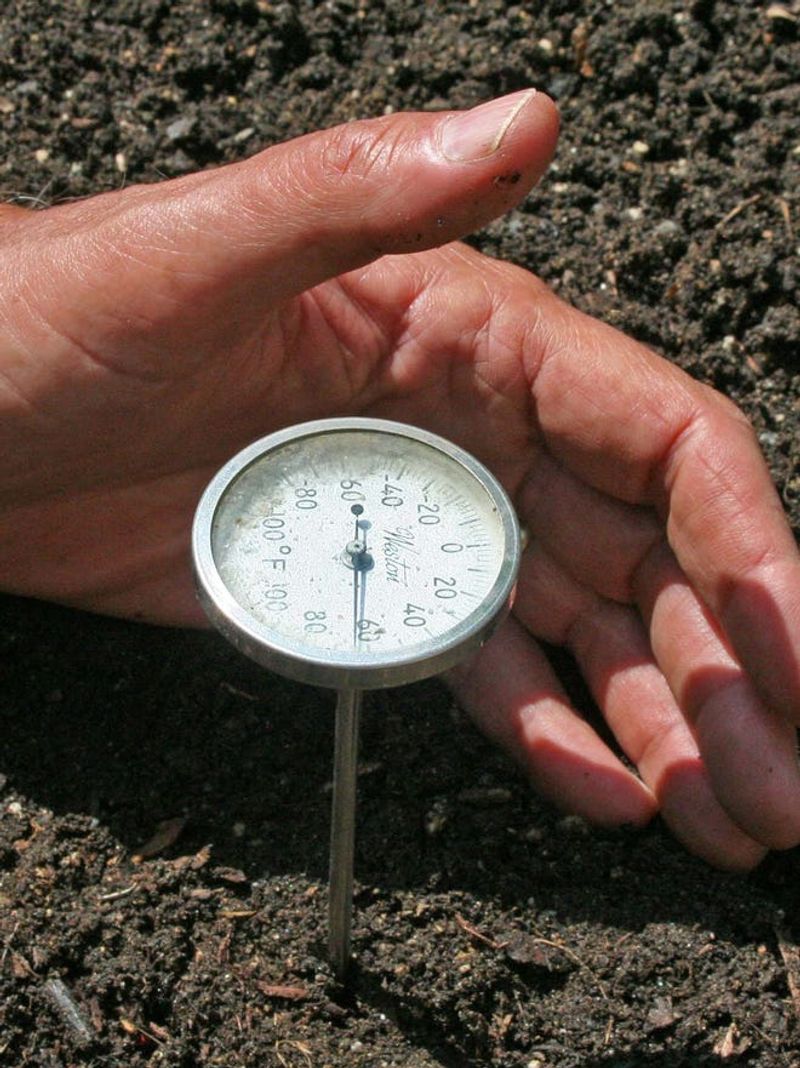
Ask Extension guidance on measuring soil temperature recommends inserting a thermometer into the soil at the depth being evaluated, which for pansies means the depth where the root ball will actually sit, not just the top inch of surface soil. Surface readings can run several degrees warmer than the root zone, especially in beds with dark mulch, full sun exposure, or dense clay that holds heat.
A reading taken at the surface on a warm October afternoon may look acceptable while the root zone is still running above 70 degrees F.
Bed type and position make a real difference. South-facing beds, raised planters, beds against a brick wall, and low-lying spots with poor air drainage all cool at different rates than a shaded north-facing border or a ground-level bed under a large tree canopy.
University of Georgia Cooperative Extension pansy guidance reinforces that temperatures can vary substantially across bed types and exposures, which is why a statewide planting date is less useful than an actual thermometer reading in your particular spot.
When your reading comes back above approximately 70 degrees F, the practical signal is to wait and recheck after the next cool front passes through. A reading in the 45 to 70 degree range suggests conditions are workable, with the 45 to 65 degree window being closer to the narrower favorable range described in extension literature.
Below 45 degrees F, root activity slows and the risk of stunting increases, so very late planting carries its own set of problems. Use a few readings over several days, factored against your local forecast, to build a clearer picture than any single measurement can give you.
Start with a healthy transplant and a well-prepared bed
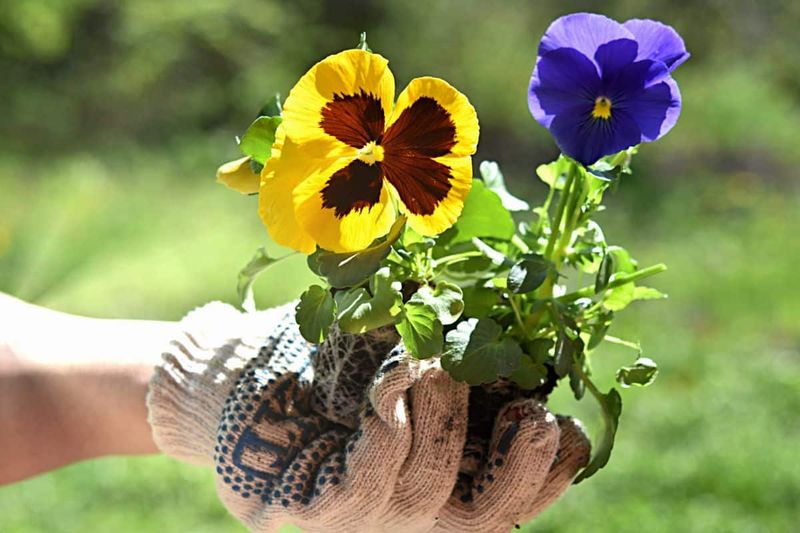
Even a perfectly timed planting can underperform if the transplant or the bed is not ready. Victoria County Master Gardener guidance on pansies recommends choosing plants that have several strong green leaves and warns against yellow or already-leggy specimens at the nursery.
A stretched plant that came off the shelf that way may not have been caused by anything in your yard at all, and its recovery potential is limited regardless of how well you prepare the bed.
Light is one of the most overlooked factors in pansy establishment. These plants prefer full sun to part shade, and afternoon protection during warm fall spells can reduce stress on newly planted transplants.
Texas A&M AgriLife Earth-Kind seasonal color guidance supports well-drained soil and appropriate sun exposure as baseline requirements for seasonal color plants to perform. A bed that gets only two or three hours of direct sun each day is likely to produce stretched growth regardless of soil temperature.
Soil drainage deserves equal attention. UF/IFAS pansy guidance notes that consistently wet conditions raise the risk of crown and root rots, which can mimic heat stress in their early stages.
Amending heavy clay with compost before planting and ensuring the bed sheds excess water freely gives roots a better environment from the start.
At planting, water thoroughly to settle the root ball and eliminate air pockets. After that, the goal is evenly moist soil that never sits saturated.
Iowa State University Extension pansy guidance describes consistent moisture as important for establishment, while UF/IFAS adds that allowing some drying between waterings reduces disease pressure. Organic mulch applied around the plants, but kept a few inches back from the crown, can moderate soil temperature and slow moisture loss without creating the airless, wet pocket that encourages rot.
Check light, moisture, roots, and fertilizer before replacing a plant
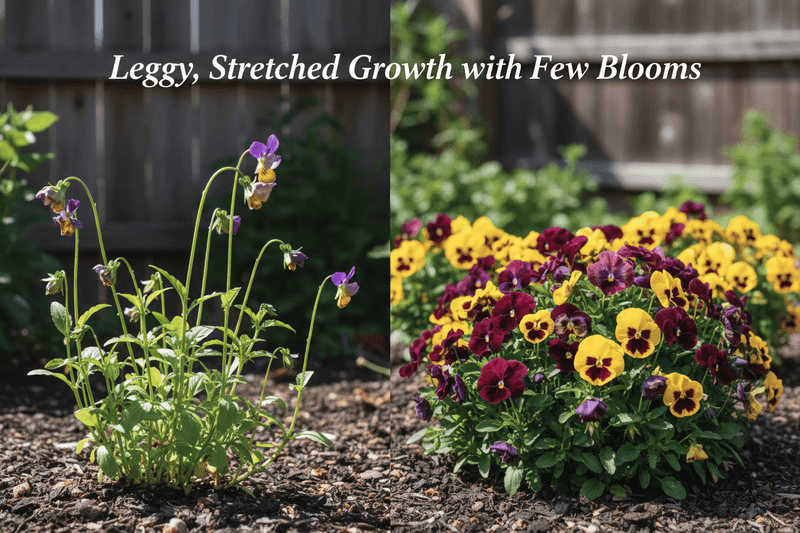
Before pulling up a struggling pansy, work through a short diagnostic sequence. Start with light: count the actual hours of direct sun the bed receives on a typical fall day.
Iowa State Extension pansy guidance identifies inadequate light as a straightforward cause of tall, weak stems, and a bed that shifted into shade as nearby trees leafed out or as fall sun angles changed may be producing leggy growth with no connection to soil temperature at all.
Moisture and drainage come next. Probe the soil a few inches down before each watering session.
A bed that stays soggy can rot roots and produce yellowing that looks like heat stress or nutrient deficiency. Iowa State Extension guidance on spindly seedlings notes that overwatering is among the conditions that weaken plant structure, and the same principle applies to transplants in garden beds.
Conversely, a bed that dries out between waterings faster than you expect can also stall establishment through drought stress.
Gently lift a plant and look at the roots if you are unsure whether the problem is above or below ground. Healthy roots are white to cream-colored and firm.
Brown, mushy, or foul-smelling roots point toward rot rather than heat stress, and that distinction changes the corrective action entirely. University of Georgia Cooperative Extension pansy guidance cautions against applying pesticides based solely on yellowing or legginess without a clear diagnosis, since heat stress, nutrient problems, watering issues, and disease can all look similar from above.
Fertilizer history is worth reviewing as well. Soft, lush, weak growth that flops over rather than simply reaching upward can be a sign of excessive nitrogen rather than warm soil.
High nitrogen, particularly during warm weather, promotes that kind of tissue. UF/IFAS pansy guidance recommends buying healthy plants, maintaining good sanitation, and improving drainage and watering practices as the foundation for reducing disease and establishment problems.
Plants with firm, healthy roots that have simply stretched under warm or low-light conditions may recover once temperatures improve and conditions are corrected. Severely stretched, root-damaged, diseased, or poor-quality transplants are more practical candidates for replacement.
Cooler conditions can support recovery without reversing every problem
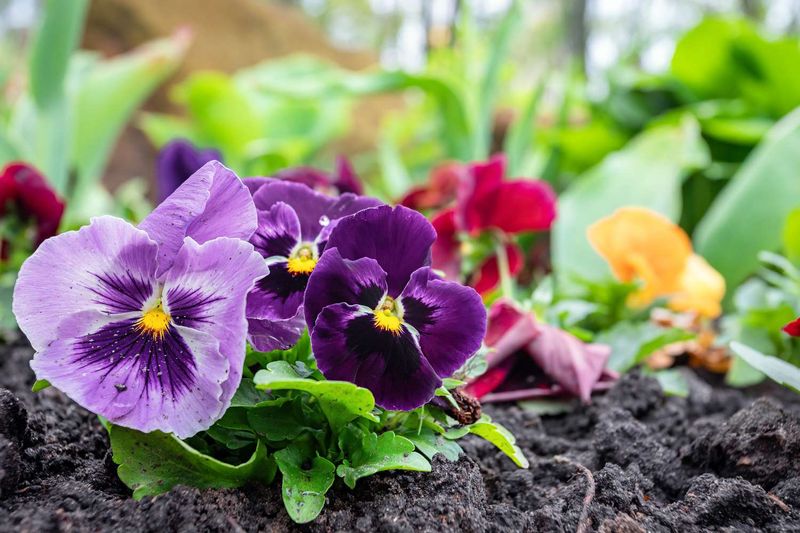
Once soil temperatures drop into the workable range, pansies that were stressed by warm conditions often begin producing more compact growth and additional flower buds. That improvement is real, but it comes with limits.
Cooler conditions support better growth going forward; they do not instantly erase stems that already stretched, and they cannot repair roots that were damaged by rot, drought, or rough handling at transplanting.
The practical approach is to adjust care rather than wait passively. UF/IFAS pansy guidance supports removing spent flowers and seedpods regularly to encourage continued flowering, and light trimming of the longest stems can improve the plant’s overall appearance.
Pruning will not undo the effects of prolonged heat or fix root damage, but it can redirect energy toward new, more compact growth once conditions are favorable.
Fertilizer restraint matters during the recovery period. University of Georgia Cooperative Extension pansy guidance advises against heavy nitrogen applications while warm weather persists, because high nitrogen can push soft, stretched tissue that is more vulnerable to cold injury once temperatures really drop.
A balanced, slow-release fertilizer applied after the soil has cooled is a safer choice than a quick nitrogen boost aimed at forcing growth.
Watering should follow the bed’s actual drying rate rather than a fixed schedule. Texas A&M AgriLife Earth-Kind seasonal color guidance and Texas AgriLife fall gardening guidance both support thorough watering at transplanting followed by consistent moisture management, with frequency adjusted as the season cools and evaporation slows.
Finally, cold tolerance in established pansies is genuine, but it does not remove the need for proper establishment before severe cold arrives. A plant that never rooted well through a warm October is more vulnerable to a hard freeze than one that had weeks of cool, steady growing conditions to anchor itself.
Use the planting bed, not the headline, as your diagnosis
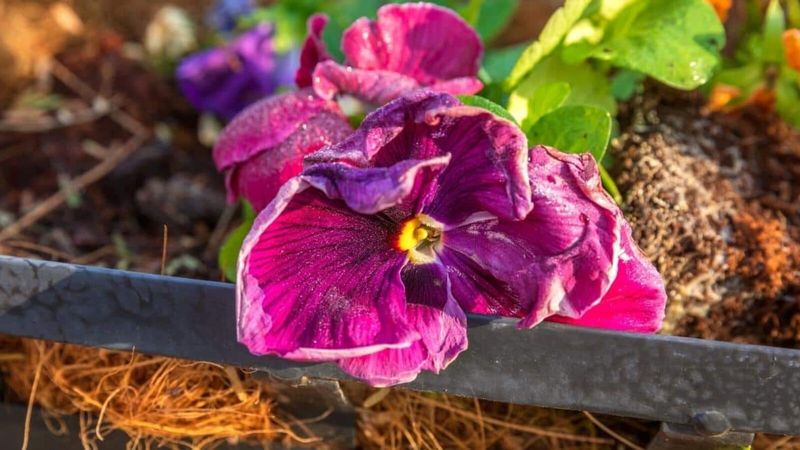
Warm October soil is a strong possible explanation for leggy, poorly flowering pansies in Central Texas, but it is not a confirmed cause for every struggling plant in every yard. The most useful first step is to push a thermometer to root-ball depth and compare the reading with the practical cool-season range of roughly 45 to 70 degrees F, with 45 to 65 degrees F representing the narrower window described in some extension guidance.
Texas A&M AgriLife Extension in Bexar County and Ask Extension soil-temperature guidance both support measuring at depth rather than relying on surface readings or a fixed date.
From there, pair the soil reading with an honest look at light, drainage, moisture, fertilizer history, and root condition before settling on warm soil as the culprit. Bell County Master Gardener monthly guidance reflects the reality that Central Texas planting windows shift with yearly weather, so local bed conditions and actual thermometer readings are more reliable guides than any single calendar recommendation.
Your planting bed already has the answer – the thermometer just helps you read it.