
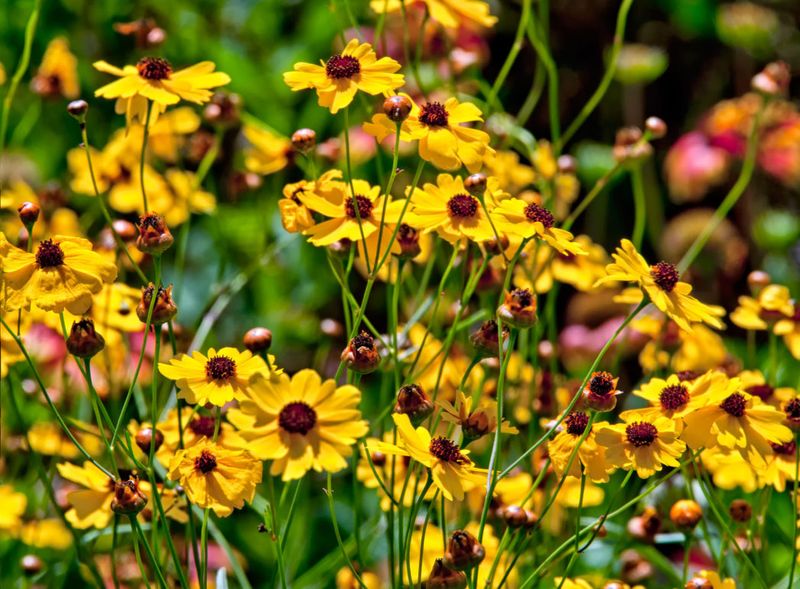
Replacing a front-yard annual bed every season costs time, money, and a lot of water. Leavenworth’s tickseed, a Florida-native wildflower with bright yellow flowers, offers a different approach: sow it in the right spot and it can reseed itself, filling the bed back in without a full replant.
For HOA gardeners who want a lower-maintenance bed that still looks intentional and supports pollinators, that kind of return is worth understanding clearly before making the switch.
Start with Leavenworth’s tickseed, not just any coreopsis
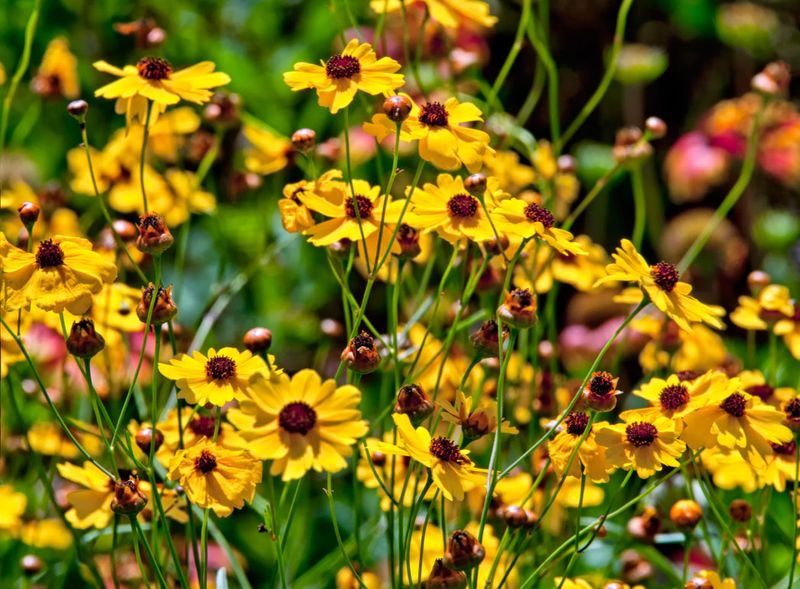
Coreopsis is Florida’s official state wildflower, and the name covers several native species that look similar but behave differently depending on where you garden. The one most worth seeking by name for a cultivated Florida bed is Leavenworth’s tickseed (Coreopsis leavenworthii), a species native to Florida habitats and listed for much of the state.
It produces cheerful, golden-yellow flowers and works well in full-sun beds, edging, naturalized areas, and butterfly gardens.
What makes this species worth specifying is that not every coreopsis performs the same way across Florida. Lanceleaf coreopsis, for example, is described by UF/IFAS as poorly suited to central and south Florida.
Leavenworth’s tickseed has a broader Florida footprint, which is why it shows up in wildflower guides aimed at Florida gardeners specifically. When you visit a native plant nursery or order seed, ask for Coreopsis leavenworthii by its full name to make sure you’re getting the right plant for your region.
The case for trying it in a former annual bed is practical rather than dramatic. Florida Native Plant Society records confirm it as annual to short-lived perennial, self-seeding, and suited to cultivated beds.
That means a well-prepared planting can carry itself forward through reseeding rather than requiring a fresh tray of transplants each season. The color won’t be as perfectly uniform as impatiens or marigolds, and performance depends on site conditions, but for a gardener who wants a Florida-native, lower-replanting option, this is the species to start with.
Look for seed from a reputable Florida native supplier or a UF/IFAS-affiliated extension source to make sure you’re planting locally appropriate stock.
What actually comes back each year?
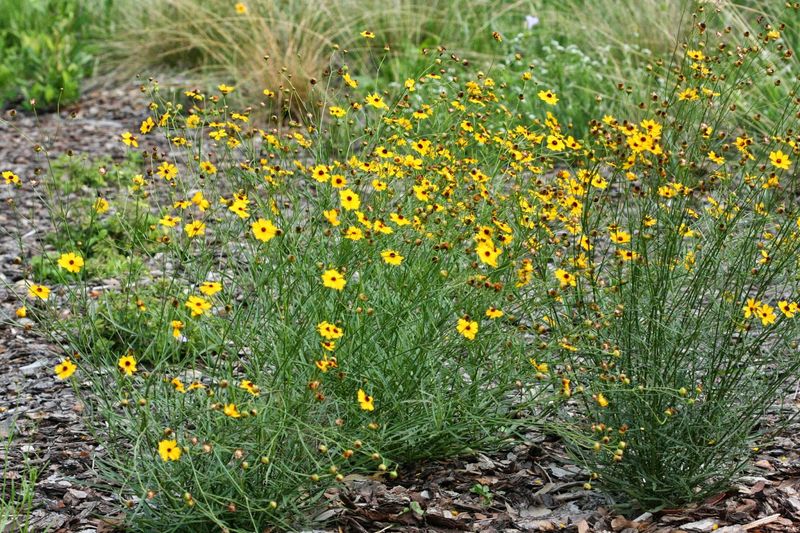
The phrase “comes back every year” is shorthand that deserves a plain explanation before you plan around it. Leavenworth’s tickseed is classified as annual to short-lived perennial, which means the original plants you grow from seed are not guaranteed to persist indefinitely.
UF/IFAS notes that coreopsis species are generally short-lived, often lasting only three to four seasons, and that stems can become weak in wind and rain. The plant itself is not growing permanently stronger each year.
What can persist, under the right conditions, is the bed as a whole. When mature flowers are allowed to drop seed and those seeds find bare, prepared soil with adequate moisture, new seedlings germinate and fill the space left by older plants.
The result is a planting that looks like it returned, even though it’s technically a new generation. UF/IFAS wildflower establishment guidance makes clear that this kind of renewal depends on site conditions, not on a guaranteed biological cycle.
Several factors can make one season’s return denser or nearly absent. A dry spell during the germination window, aggressive weed growth, mowing that removes seed heads too early, or soil disturbance that buries seed too deep can all interrupt the cycle.
Conversely, a season with good late-summer rainfall, minimal weed pressure, and flowers left to mature can produce a bed that fills in thickly with very little intervention. The honest expectation is a planting that has a good chance of renewing itself in a suitable site, with occasional gaps or thin spots that may need supplemental seeding rather than a full replant.
The right site determines whether the swap works
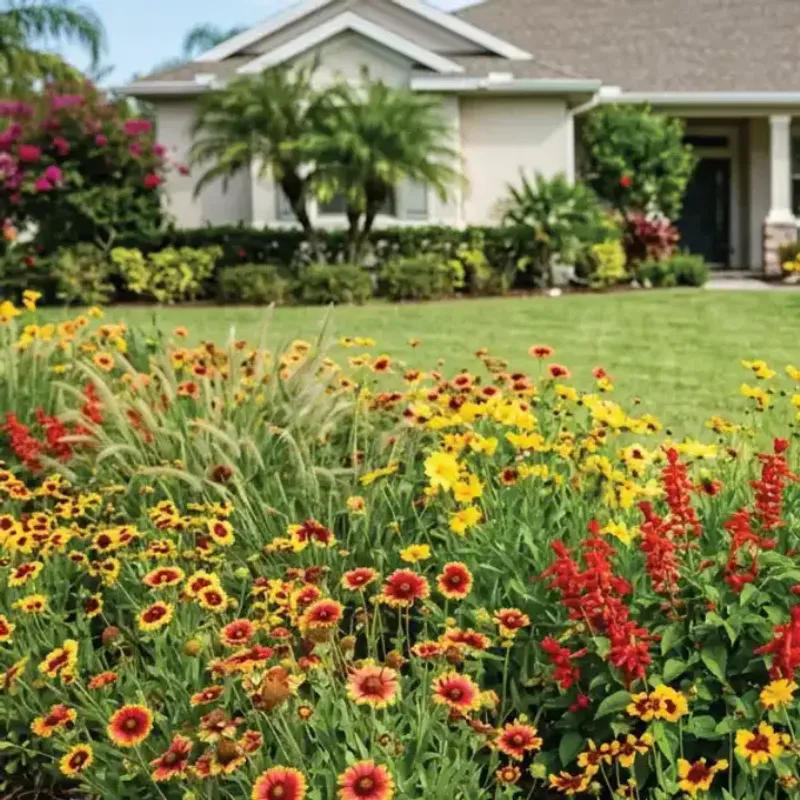
Before scattering seed over an existing annual bed, spend a few minutes honestly evaluating the site. Full sun is the safest starting point: UF/IFAS recommends full sun for coreopsis to encourage compact growth and reliable flowering.
A bed that gets fewer than six hours of direct sun daily is a risky candidate for this swap, and a shadier spot is better served by a different plant selection.
Soil drainage matters just as much as light. Leavenworth’s tickseed prefers well-drained soil that isn’t overly rich.
Sandy soil is fine as long as water moves through it freely. Rich, heavily amended, or consistently wet soil tends to produce the weak, floppy growth that UF/IFAS flags as a coreopsis problem.
Flood-prone areas or beds that hold standing water after heavy rain are a poor fit regardless of how much sun they receive.
One nuance worth noting: Florida Museum records associate Leavenworth’s tickseed with moist to moderately moist habitats, which means it can need more regular moisture than a gardener expecting a purely drought-tolerant plant. It is not a no-water species.
A bed that dries out completely and stays dry for extended periods may not sustain a self-renewing stand. Gardeners on very dry, sandy coastal sites may find blanket flower a better fit for those extreme conditions.
Florida Native Plant Society listings confirm this species across a wide range of Florida habitats, but regional differences still matter. Gardeners in central and south Florida should verify with a local extension office or native plant supplier that Leavenworth’s tickseed is the right coreopsis for their specific county and conditions before committing to a full bed conversion.
A quick call or extension publication check is faster than a failed planting.
Prepare the bed before you scatter seed
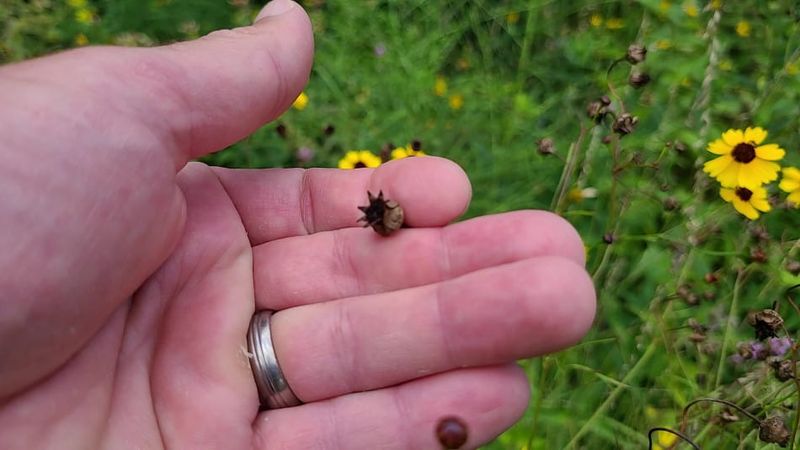
Scattering seed over an existing dense annual bed or into turf almost never produces a reliable wildflower stand. Weed competition is the most common reason wildflower plantings fail, and UF/IFAS wildflower establishment guidance is direct about this: substantial site preparation and good seed-to-soil contact are necessary, not optional.
Clear the bed of existing plants, roots, and as much weed seed as practical before you do anything else.
Once the bed is cleared, rake the soil surface smooth and firm it lightly. Good seed-to-soil contact means the seed touches bare mineral soil, not a thick layer of mulch or loose debris.
Sow Leavenworth’s tickseed no deeper than about one-eighth inch. UF/IFAS sowing guidance specifies this shallow depth because the seed needs light to germinate and will fail if buried even slightly too deep.
Press the seed gently into the surface after broadcasting rather than raking it in.
Timing the sow correctly improves your odds. UF/IFAS guidance for Florida wildflowers places the general seeding window between September and January, which aligns with Florida’s cooler, drier months when weed pressure eases and soil temperatures support germination.
That window is a starting point, not a guarantee. Timing varies by region and species, so check with your local county extension office or seed supplier for the recommendation that fits your specific area.
Moisture is the critical variable from sowing through early establishment. Keep the seedbed consistently moist until seedlings are several inches tall and showing strong root development.
Florida Museum records note that Leavenworth’s tickseed does best with at least moderate moisture, particularly early on. Once plants are established, supplemental irrigation can decrease, but this is not a plant you sow and then ignore through a dry spell.
Calling it drought-proof would set the wrong expectation for anyone relying on natural rainfall alone through the establishment phase.
Choose flowers or seed for the bed’s next phase
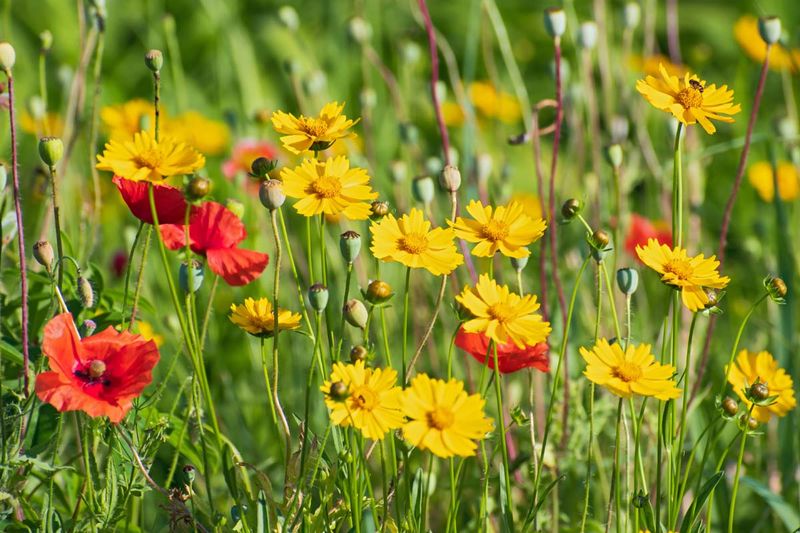
Every tickseed bed eventually reaches a point where you have to make a choice: remove the spent flowers to keep the current bloom going, or leave them to set seed for next season. Both approaches are valid, but they pull the bed in opposite directions.
UF/IFAS guidance explains that deadheading can extend the flowering period, which is appealing if you want maximum color right now. The tradeoff is that removing seed heads before they mature cuts off the supply of next season’s plants.
A workable middle path is to deadhead selectively through the peak bloom period, then stop and let the remaining flowers mature fully as the season winds down. County wildflower guides from UF/IFAS reinforce that allowing seed set is necessary if natural annual renewal is the goal.
Letting the last flush of flowers go to seed, then leaving the dried stems in place until seed disperses, gives the bed its best chance of self-renewing without supplemental seeding.
Maintenance doesn’t stop at the deadheading decision. UF/IFAS coreopsis notes acknowledge that stems can become weak and sprawling, which means the bed may need occasional editing or light thinning as seedlings emerge in numbers.
Continuing weed control is also necessary because bare soil between seedlings is exactly where weeds germinate fastest. Plan for a looser, less uniform look than a formal annual bed delivers, and accept that volunteer seedlings may appear at the edges of the original footprint.
That spread can be managed by pulling seedlings outside your intended boundary, but it requires a seasonal pass through the bed rather than a hands-off approach.
A single-species bed offers color, but a mixed planting offers more habitat
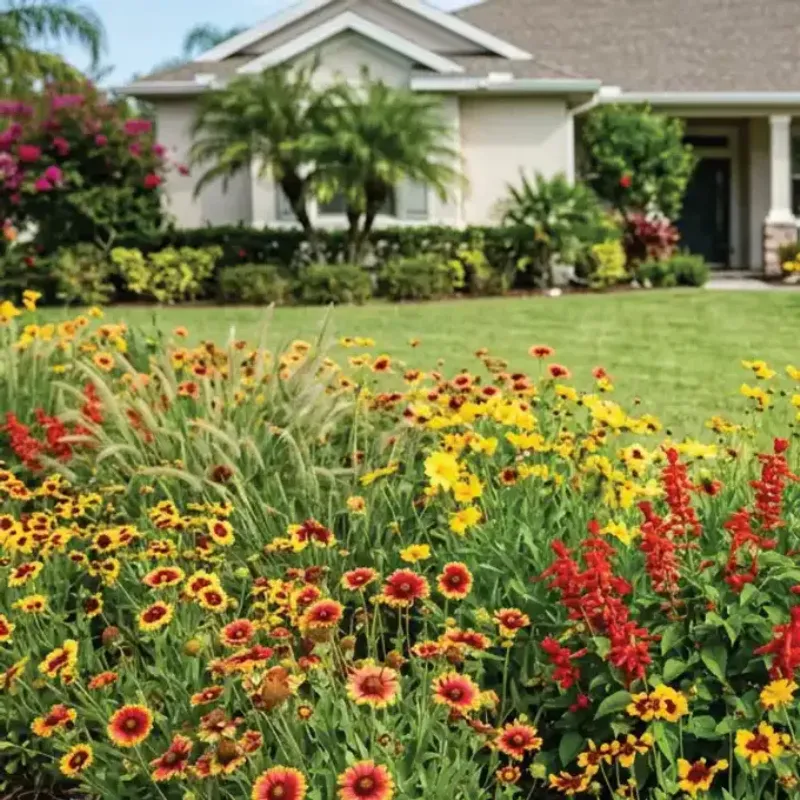
Leavenworth’s tickseed draws pollinators reliably. Bees, butterflies, and other beneficial insects visit the flowers for nectar and pollen, and a bed full of yellow blooms is visually active from spring through fall in the right conditions.
UF/IFAS wildflower and pollinator guidance confirms that Florida-native wildflower plantings can provide meaningful forage and nesting-related habitat for a range of beneficial insects.
A single-species planting has limits, though. That same UF/IFAS guidance recommends using multiple species with different bloom times, flower shapes, colors, and heights to support a wider range of pollinators.
A monoculture of tickseed offers one flower shape and a relatively concentrated bloom window. Adding even one or two compatible natives extends the season and broadens the range of insects the bed can support.
For an HOA bed where the visual anchor needs to read as intentional, keeping tickseed as the dominant plant and adding a companion or two along the back or edges is a practical approach. Native species that bloom at different times, grow at different heights, or offer different flower forms can fill in visually while increasing habitat value without making the bed look unplanned.
The key is choosing companions that share the same full-sun, well-drained site requirements so you’re not managing two conflicting sets of needs in the same space. Check with your local native plant society chapter or county extension office for companion species that work in your specific region of Florida.
The Florida-Friendly option still needs an HOA-aware design
Florida law does offer homeowners real protection here. Florida Statute 720.3075 limits HOA governing documents from prohibiting Florida-Friendly Landscaping, which includes native plants.
That protection is meaningful and worth knowing. What it does not do is erase every design, maintenance, visibility, or approval requirement your specific association has written into its governing documents.
The statute and your HOA rules can coexist, and the details matter.
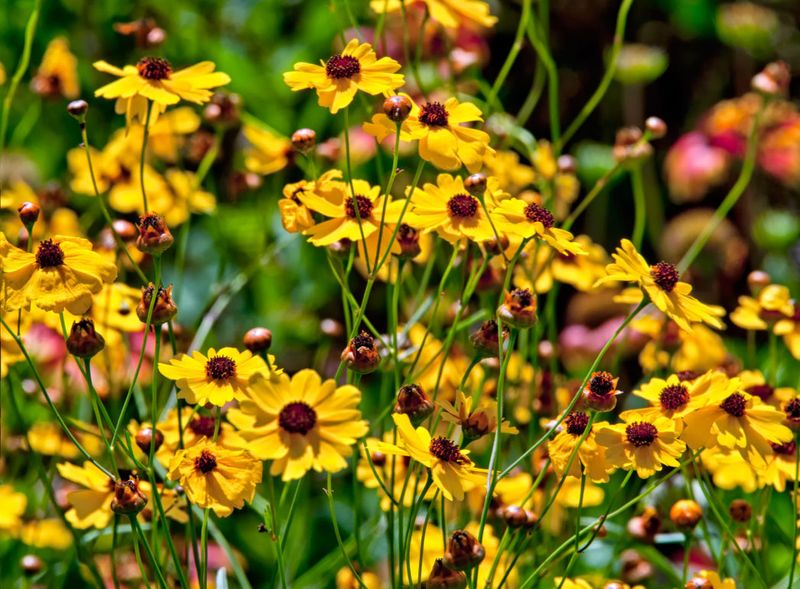
The practical move is to present your wildflower bed as a designed, maintained space rather than an unmowed patch. UF/IFAS notes that coreopsis works well in formal and semi-formal settings when planted in masses or as edging with defined borders.
Crisp bed edges, visible mulch between plants, and controlled volunteer spread go a long way toward making a self-seeding planting look intentional rather than neglected. A small sign identifying the plants as Florida natives can also help neighbors and board members understand what they’re looking at.
County-level Florida-Friendly Landscaping guides suggest that a wildflower bed in a visible front-yard location benefits from clear definition and a maintained appearance. If your HOA requires pre-approval for landscape changes, submit a simple plan with a plant list and a description of how you’ll manage edges and volunteer seedlings.
Going through that process before you sow is far easier than addressing a complaint after the bed is established.
Make the swap for a renewing bed, not a no-work bed
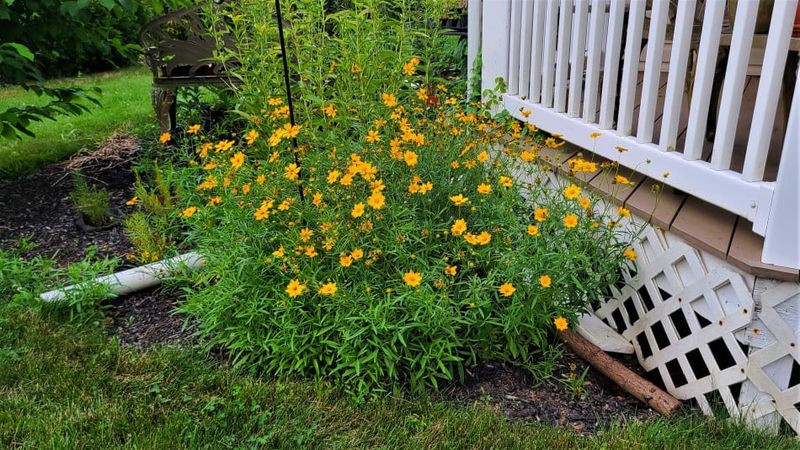
Leavenworth’s tickseed is a strong candidate for a Florida-native, full-sun bed that can reseed and reduce seasonal replanting when the site is suitable. UF/IFAS identifies it as appropriate for cultivated beds, edging, naturalized areas, and butterfly gardens across much of Florida.
That is a real benefit over buying and planting fresh annual transplants every season.
The essentials bear repeating briefly: choose the right species for your region, verify that the bed gets full sun and drains well, clear and prepare the soil before sowing, press seed no deeper than one-eighth inch, water consistently through germination and establishment, and leave some flowers to set seed each season. UF/IFAS establishment guidance and Florida Museum records both reinforce that skipping any of those steps reduces the chance of a reliable return.
Some gardeners should keep their annuals. If perfectly uniform color is non-negotiable for your HOA or your own preference, if your bed lacks drainage, if you cannot provide establishment moisture, or if you’re unwilling to manage volunteer seedlings at the bed’s edges, a seasonal annual planting will serve you better.
The swap works best for gardeners who can accept a slightly looser look in exchange for a bed that has a real chance of carrying itself forward. A wildflower bed that renews itself through reseeding is not effortless, but it asks for different work rather than more of the same work every spring.