
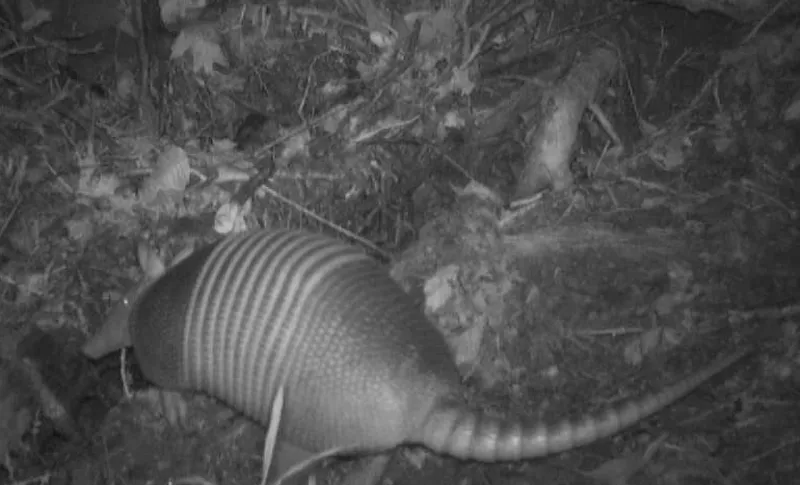
Finding a cluster of shallow holes scattered across your lawn on a Texas morning can stop you in your tracks. Most of the time, the culprit is a nine-banded armadillo that passed through overnight, nose to the ground, searching for a meal.
Understanding why it showed up and what the damage actually means is the fastest way to decide what, if anything, you need to do about it.
Nighttime digging usually means the armadillo is feeding
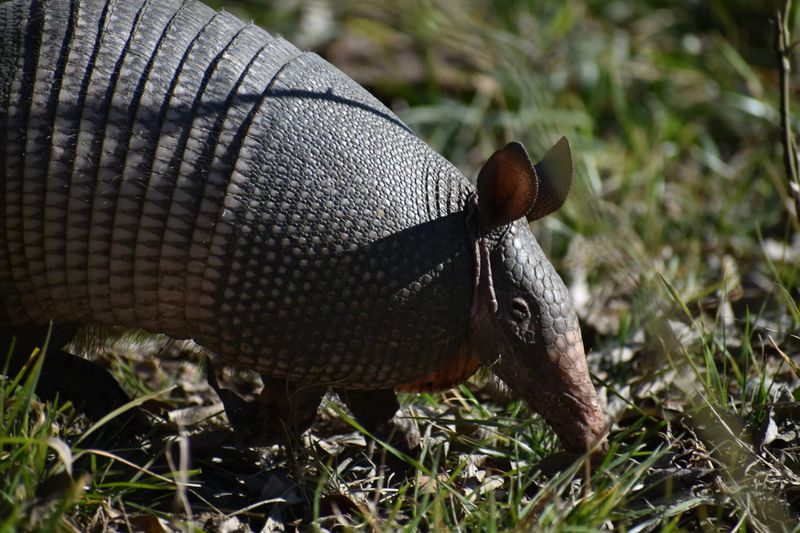
Nine-banded armadillos are built for exactly this kind of work. Their long, tapered snouts and powerful front claws are specialized tools for probing loose soil and leaf litter, and Texas Parks and Wildlife Department describes them as insectivores that feed on beetles, beetle larvae, grubs, earthworms, ants, termites, and a range of other soil-dwelling invertebrates.
When one turns up in your yard at night, that is almost always what it is doing: hunting a meal in the dirt beneath your grass.
Nocturnal activity is completely normal for this species, particularly during warm Central Texas weather. Animal Diversity Web notes that armadillos adjust their activity timing with temperature and conditions, sometimes shifting to daytime foraging when nights are very cold or when overcast, rainy, or mild days make the soil easier to work.
Seeing one after dark in summer is about as unremarkable as a deer grazing at dusk.
None of this signals aggression, sickness, or anything unusual about the animal’s behavior. An armadillo working through your lawn at 2 a.m. is not an omen, and it is not especially bold or confused.
It found ground that is worth searching, and it is doing what nine-banded armadillos have always done across Texas.
That said, repeated visits and spreading hole patterns can become a real nuisance, and the digging does mean something worth paying attention to. The practical question is not whether the behavior is strange but whether your yard conditions are drawing the animal back night after night, and what a proportionate response looks like once you have confirmed what is actually going on.
What makes a Central Texas yard worth searching?
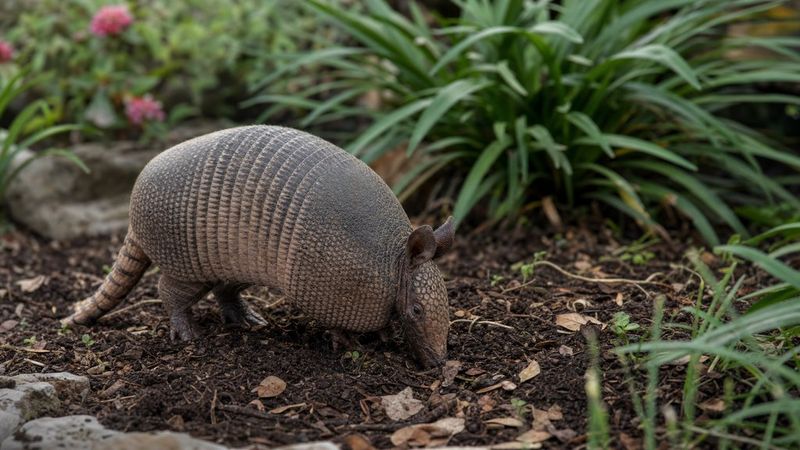
Armadillos do not pick yards at random. Several overlapping conditions make a property attractive, and understanding them helps homeowners figure out whether anything practical can change.
Soil that is easy to dig is probably the most consistent factor. Oklahoma State University Extension notes that recently moist or irrigated soil can be easier for an armadillo to probe and may make prey more accessible near the surface.
That does not mean irrigation is causing a grub infestation or driving larvae upward in any proven way; it simply means a well-watered lawn in clay-heavy Hill Country soil or sandy loam is physically easier for a snout and claws to work through than bone-dry, compacted ground.
Food availability matters just as much as soil texture. TPWD’s species profile makes clear that armadillos eat a wide range of invertebrates, not just grubs.
Earthworms, ants, termites, beetles, and other soil organisms can all draw a foraging animal. A yard with rich organic material, deep mulch beds, or damp compost areas may simply host more invertebrate life than a neighboring property.
Cover and access routes also play a role. Brush piles, dense shrubs along a fence line, or a culvert nearby can give an armadillo a sheltered path into and out of the yard.
Yards that back up to a creek, a greenbelt, or undeveloped land see more armadillo traffic because the animals range widely each night.
Seeing an armadillo once does not prove the lawn is overrun with damaging grubs. The animal eats broadly, and its presence is better read as a signal that your yard offers workable soil and some invertebrate food, which describes most maintained Central Texas lawns at some point during the year.
The holes reveal whether it is feeding or burrowing
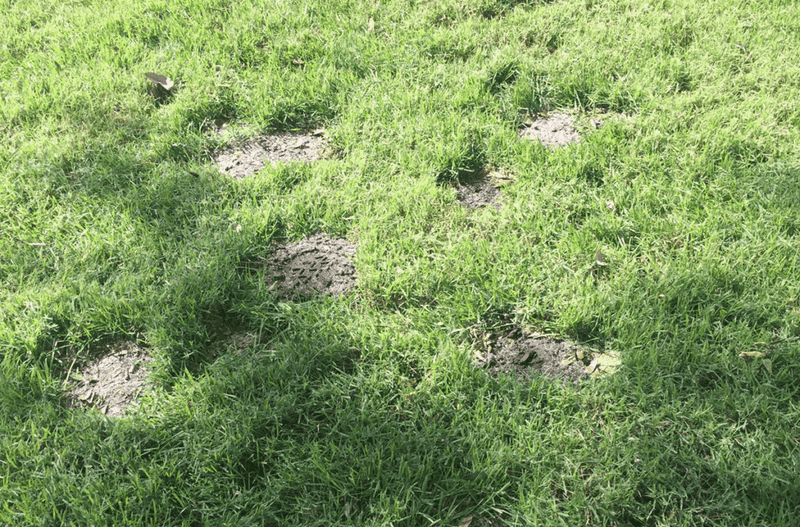
The shape and size of the holes tell most of the story. Feeding pits left by a foraging armadillo are typically small, shallow, and cone-shaped.
University of Georgia Extension describes these as roughly 1 to 3 inches deep and about 3 to 5 inches wide, though individual pits vary depending on soil type and what the animal was pursuing. The edges are usually ragged rather than cleanly cut, and the displaced soil is pushed up or scattered nearby.
A pattern of many small pits spread across an open lawn area is the clearest indicator of nighttime foraging. The animal moved through, probing repeatedly, and left a trail of shallow divots that may look alarming in the morning light but rarely extend more than a few inches into the ground.
Burrow entrances look completely different. TPWD notes that armadillos dig burrows for shelter as well as food, and those openings are substantially larger and deeper than feeding pits.
A den entrance is typically wide enough for the animal’s body, and it tends to appear near brush piles, along creek banks, under dense shrubs, beside concrete slabs, or in other protected spots that offer overhead cover.
UGA’s wildlife damage guide and Texas A&M AgriLife Extension both distinguish between surface feeding damage and burrowing activity near structures, and that distinction matters for how you respond. A handful of shallow pits in a Bermuda grass lawn is a nuisance.
A substantial opening beside a foundation or under a deck raises a different concern entirely and deserves a closer look from a professional.
When you find holes in the morning, crouch down and check their depth with a finger or a stick before assuming the worst. Shallow and scattered almost always means feeding.
Deep and positioned near a structure means something else may be going on.
Document the damage before changing the lawn
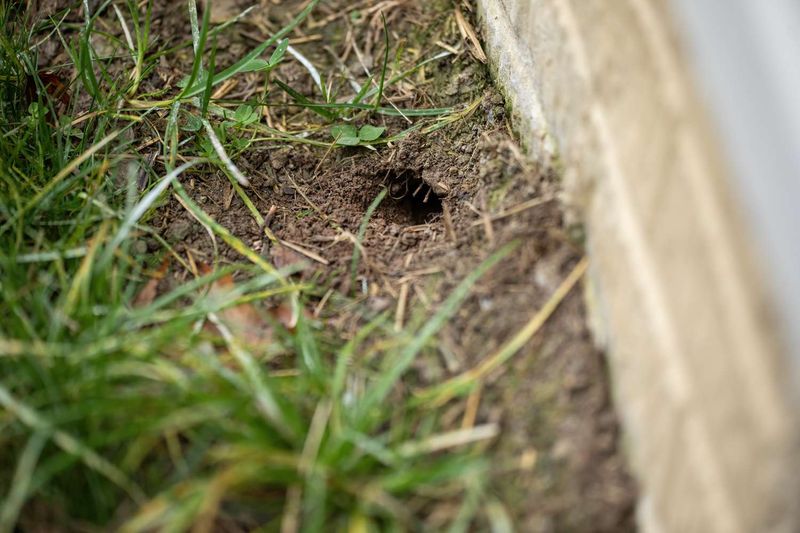
Before pulling out a shovel, a bag of insecticide, or a trap, take a few minutes to document what you are actually dealing with. Photograph the holes from above and from the side, and note their approximate depth and shape.
That information will help you figure out whether you are looking at armadillo activity or something else entirely.
Skunks, raccoons, feral hogs, and even lawn insects can all produce digging or rooting damage that looks superficially similar to armadillo work. Oklahoma State Extension’s nuisance armadillo guide recommends identifying the animal causing the damage before applying any controls, because the wrong treatment wastes time and money and may not address the actual problem.
UGA Extension echoes that advice, noting that damage identification is the essential first step in any wildlife management decision.
If you have not seen the animal directly, a trail camera set near the damage area for two or three nights is the most reliable way to confirm what species is visiting. Many hardware and farm-supply stores in Central Texas carry affordable models that work well for this purpose.
Also walk the perimeter of your yard and any adjacent structures to check for a larger burrow entrance. A confirmed sighting or a clear photo of the hole pattern gives you far more useful information than a guess based on a single disturbed patch of turf, and it prevents you from treating a lawn for grubs when the real visitor is a skunk, or installing fencing aimed at an armadillo when feral hogs are the actual culprits.
Small beds can be protected more easily than whole lawns
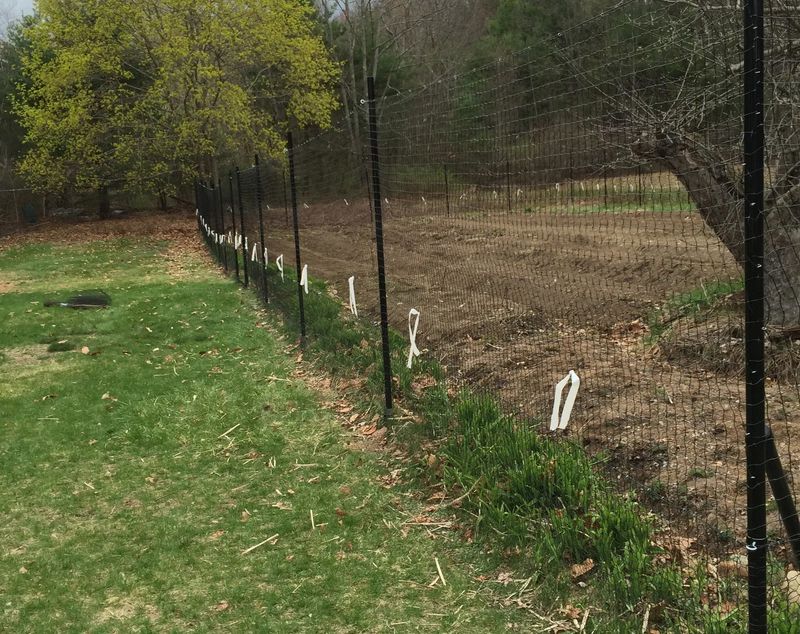
Once you have confirmed armadillo activity, the response should match the scale of the problem. For most Central Texas homeowners, that means protecting specific areas rather than attempting to secure the entire property.
Exclusion fencing is the most reliably supported at-home control option. Oklahoma State Extension’s armadillo damage guide recommends fencing at least 12 inches high with the bottom edge fitted tightly to the ground or buried slightly, which prevents the animal from squeezing under.
Hardware cloth or welded wire works well for this application. A small vegetable bed, a flower border, or a newly seeded patch of grass can be protected this way without much expense or effort.
Fencing a large open lawn is a different matter. The perimeter length and cost make whole-yard exclusion impractical for most homeowners, so the realistic goal is protecting the areas that matter most to you, not making the entire property inaccessible.
Reducing unnecessary irrigation is a secondary tactic worth trying if your watering schedule is keeping soil consistently loose and moist. OSU’s county-level armadillo guidance notes that drier, harder soil may be less appealing to a foraging armadillo, though this is a limited measure rather than a guaranteed fix.
Any irrigation changes should keep plants healthy and stay within local watering restrictions, which matter in Central Texas communities under drought-related rules.
Repairing the damage itself is straightforward. Smooth the displaced soil back into shallow pits with the back of a rake, press any lifted turf sections back into contact with the ground, and replace scattered mulch in bed areas.
OSU Extension specifically notes that healthy Bermuda grass, common across Central Texas lawns, can recover relatively quickly from this kind of superficial surface disturbance when the underlying soil structure is intact.
Why treating the soil can make the problem worse
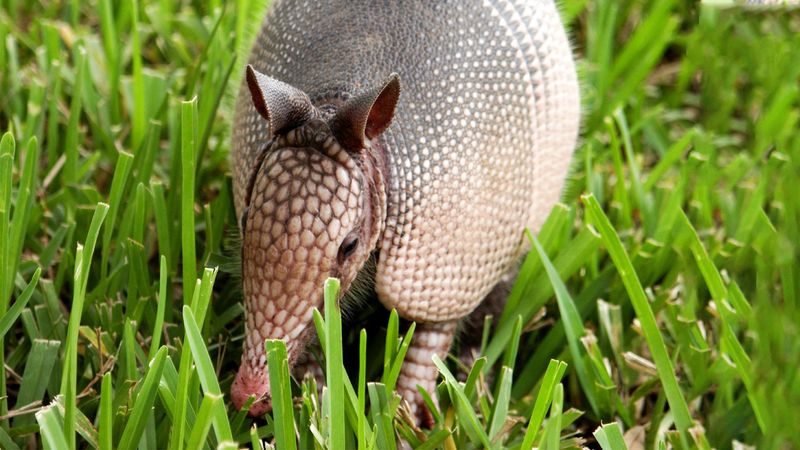
Reaching for a bag of grub killer is a tempting first move when you find holes in the lawn, but applying soil insecticide solely to drive away an armadillo can backfire in more than one way.
OSU Extension’s armadillo resource explains that treating the soil for insects can kill beneficial organisms, including earthworms and other invertebrates that support healthy turf, without reliably stopping the armadillo. In some cases, reducing one food source causes the animal to search more intensively across a wider area, spreading the damage rather than ending it.
OSU’s nuisance armadillo publication is direct on this point: insecticide application is not a recommended control method for armadillos. If you independently identify a genuine insect pest problem in your lawn, treat it with an appropriate product for that pest.
Do not treat the soil simply because an armadillo appeared.
Repellent products deserve the same skepticism. Internet Center for Wildlife Damage Management reports that research-based wildlife guidance does not support ultrasonic devices, predator urine, hot pepper products, mothballs, or common household repellents as reliable solutions for armadillo problems.
These products are widely sold, but the evidence that they deter armadillos in real yard conditions is thin.
Poison, fumigation, and improvised chemicals around burrows are in a different category entirely. UGA Extension states that toxicants and fumigants are not registered for armadillo control and should not be used.
Beyond being ineffective, these approaches carry real risks to other wildlife, pets, children, and the homeowner. No extension or wildlife management source recommends them, and using them around a burrow near a structure could create hazards that outlast the original nuisance problem.
When a professional should handle the next step

Most armadillo damage in a Central Texas yard stays at the nuisance level and can be managed with the steps already described. A few situations call for outside help, and recognizing them early saves both time and money.
A substantial burrow entrance positioned beside a foundation, under a concrete slab, or beneath a deck or porch warrants professional assessment. Texas A&M AgriLife Extension’s armadillo damage resource distinguishes between superficial lawn disturbance and burrowing activity near structures, noting that undermining near a foundation is a different concern.
A single shallow feeding pit is not foundation damage, but an active burrow that has been in place for weeks beside a structure is worth having a professional evaluate.
Trapping is another area where professional guidance matters before you act. Texas has specific rules that apply to capture, possession, and relocation of nuisance wildlife.
TPWD’s nongame species regulations and TPWD’s nuisance fur-bearing animal rules both address what is and is not allowed. Relocating a trapped armadillo to another property may require authorization and permission from the release-site landowner, and a licensed wildlife professional will know what applies in your county.
Health precautions are worth covering here as well. Some armadillos in the southern United States carry bacteria associated with Hansen disease, and CDC guidance states that the risk to most people who encounter armadillos is very low.
Briefly watching one cross your yard is not considered a meaningful exposure. The practical precautions are straightforward: do not handle a live or dead armadillo with bare hands, wear gloves when filling holes or working in soil that has been disturbed by an armadillo, and wash your hands thoroughly afterward.
Published research on armadillo-associated Hansen disease associates risk with prolonged or repeated direct contact, not with ordinary outdoor observation.
The useful meaning is simple: your yard offers food and workable soil
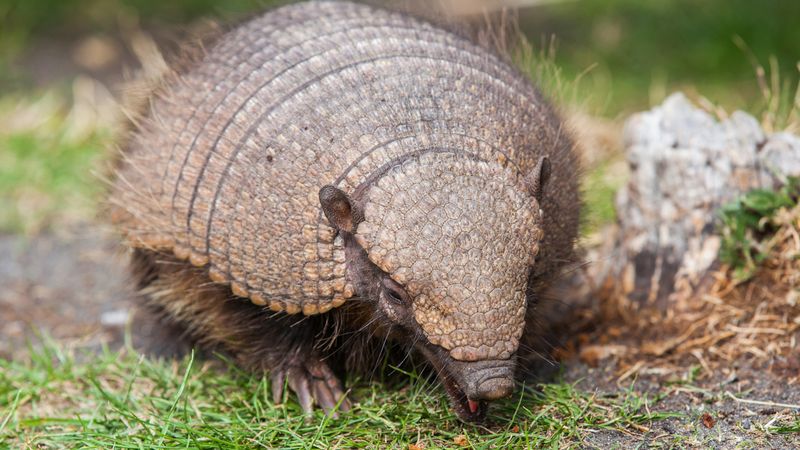
An armadillo working through your yard at night is doing exactly what TPWD describes as normal behavior: foraging for invertebrates in soil that is accessible and worth searching. The holes are a nuisance, not an emergency, and they do not by themselves confirm a grub infestation, a sick animal, or an impending structural problem.
Read the hole pattern, document the activity with a photo or trail camera, protect small beds with a properly fitted exclusion fence, and repair shallow pits by smoothing the soil and pressing turf back into place. Escalate only when a burrow appears near a structure or when repeated damage exceeds what sensible at-home measures can address, at which point extension-backed guidance and a licensed wildlife professional are your most reliable resources.
Texas has its own rules around nuisance wildlife handling, so check before you trap.
Armadillos have been crossing Central Texas yards for a very long time. The ones that visit yours are not delivering a message so much as following their nose to the next good meal.