
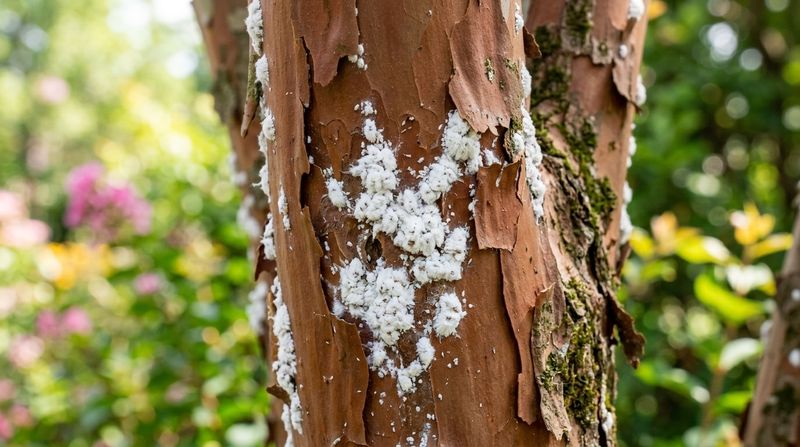
White fuzzy patches creeping across crape myrtle trunks, followed by a sticky black coating, are turning heads in Central Texas yards this fall. That combination of symptoms points strongly toward crapemyrtle bark scale, an introduced pest that has been expanding across the Southern United States since it first showed up near Dallas in 2004.
Knowing what you are actually looking at, and confirming it before you treat, can save your trees, protect pollinators, and keep the problem from moving to the next yard.
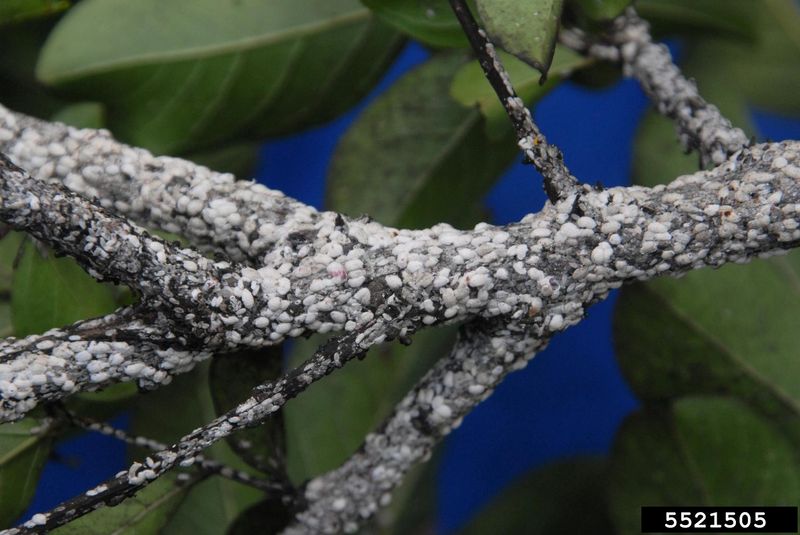
White felt-like clusters can signal crapemyrtle bark scale
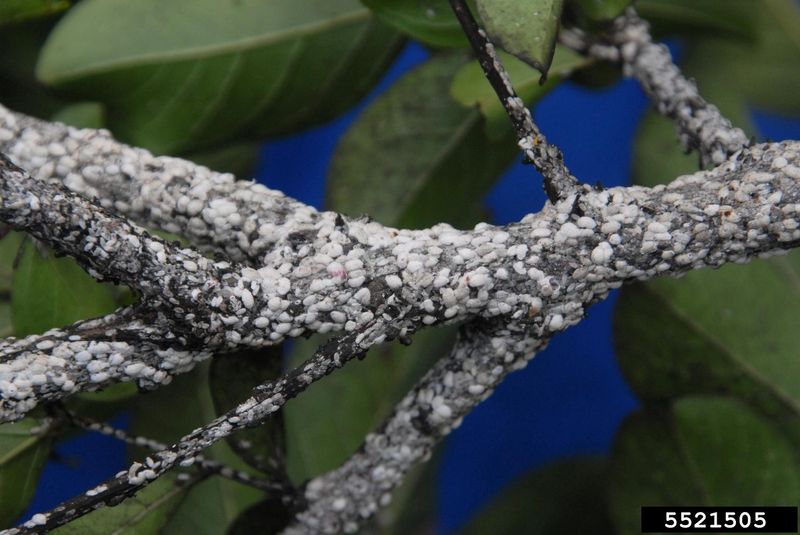
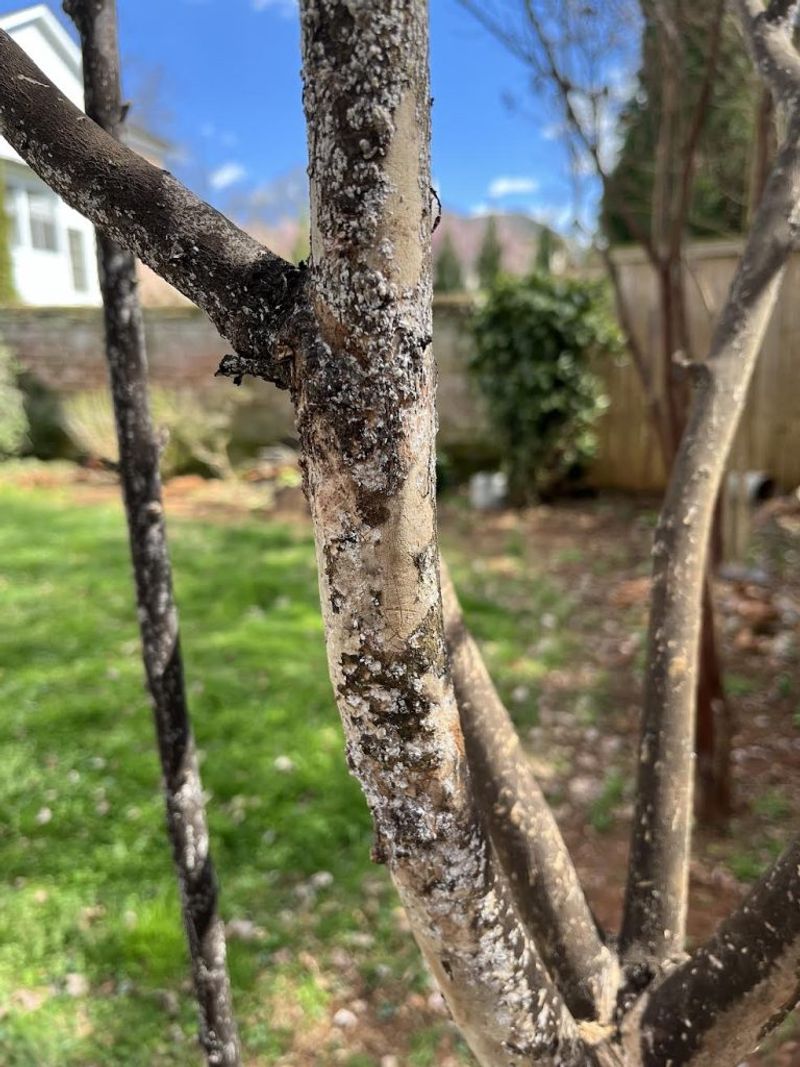
Fuzzy white or gray patches that seem to appear overnight on crape myrtle trunks and branches are one of the more alarming sights a Texas homeowner can find in the yard. When those patches occur alongside a blackened, sticky coating on the bark, the most likely explanation is crapemyrtle bark scale, scientifically known as Acanthococcus lagerstroemiae.
Older publications sometimes list it under the synonym Eriococcus lagerstroemiae, so do not be confused if you come across that name in an older guide.
The pest is native to Asia and was first recorded in the United States near Richardson, Texas, in 2004, as documented in USDA ARS research on the first U.S. detection of crapemyrtle bark scale. Since that initial find, it has spread to crape myrtles across much of the South, showing up in nursery stock, established landscapes, and street plantings.
The pest feeds directly on the vascular tissue of twigs, branches, and trunks, and that feeding is what sets off the chain of symptoms homeowners notice.
A strong visual match, white or gray felt-like coverings combined with black sooty mold, is a reasonable reason to investigate further. As Texas A&M AgriLife Extension guidance on crapemyrtle bark scale makes clear, however, the appearance alone is not a confirmed diagnosis.
Other insects can produce similar-looking deposits, and regional surveys have not established a single uniform outbreak sweeping Central Texas this season. Treat the white coating as a prompt to inspect carefully and confirm, not as automatic proof that your tree is infested or that every crape myrtle in the neighborhood is next.
Inspect the whole tree and confirm the diagnosis
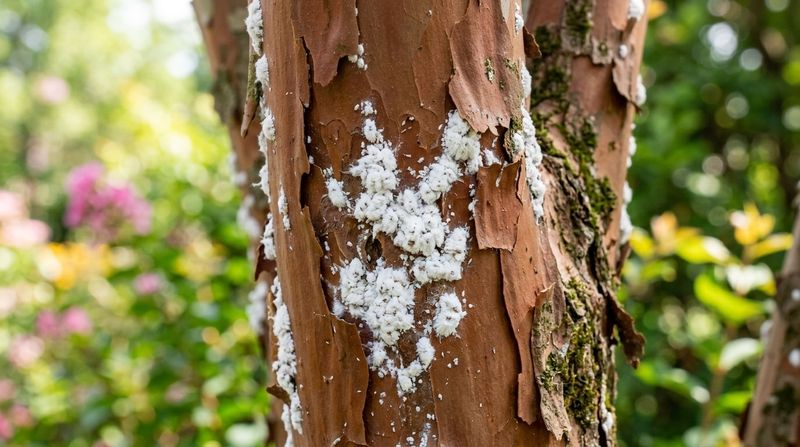
Starting your inspection at eye level on the lower trunk and stopping there is one of the most common mistakes homeowners make. Crapemyrtle bark scale can colonize the entire tree, so work your way up from the base through the branch crotches, around any pruning wounds or areas of loose bark, and out along the small twigs into the upper canopy.
Low-level infestations are easy to overlook if you only scan what is convenient to reach.
According to Mississippi State University Extension guidance on crape myrtle bark scale identification and control, mature females and egg masses look like white to gray, fuzzy, waxy, or felt-covered clusters. Each mature female can produce roughly 100 to 300 eggs tucked inside her protective covering.
Crawlers, the immature stage that hatches and moves to new feeding sites, are tiny and range from pinkish to purplish in color. They are easy to miss unless you look closely or use a hand lens.
The most useful field test is simple. Gently press a coin or your fingernail against one of the white coverings and crush it.
A pink or reddish streak left behind is a strong supporting sign that you are dealing with crapemyrtle bark scale rather than another white deposit such as lichens, mold, or a different insect’s egg mass. Penn State Extension describes this pink-streak test as a practical supporting clue in their overview of crapemyrtle bark scale.
If the infestation looks light, if you cannot produce a clear pink streak, or if you are simply not sure what you are looking at, contact your county Extension office or send a sample to a plant diagnostic lab. Getting a confirmed identification before you spend money on treatment is always worth the extra step, and Extension staff can also point you toward local timing and product guidance specific to your part of Texas.
Sooty mold explains the black coating
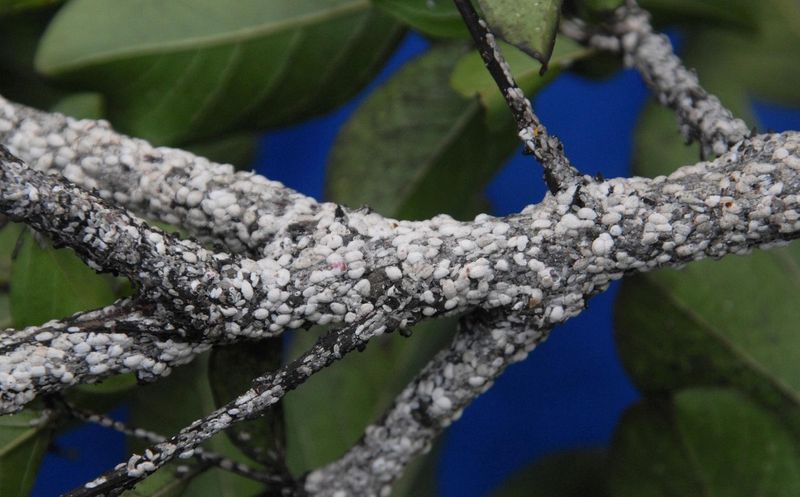
The black coating that makes infested crape myrtles look scorched or diseased is sooty mold, a fungus that grows on the sticky honeydew secreted by scale insects as they feed. The mold itself is not the pest, and it is not the primary driver of the damage.
Controlling the insects that produce the honeydew is what allows the mold to stop spreading and eventually weather away on its own.
Worth knowing before you draw conclusions: sooty mold is not exclusive to crapemyrtle bark scale. Aphids, mealybugs, whiteflies, and other soft-bodied insects also produce honeydew, and any of them can coat bark and leaves with the same black film.
Mississippi State University Extension is clear that black sooty mold alone is not enough to confirm which pest you have. The white felt-like scale coverings and the pink crush test are the stronger indicators.
Once the insects are under control, the mold gradually flakes and washes away with rain and wind. You can speed up the cleanup on trunks and lower limbs by gently scrubbing with a soft-bristle brush, water, and a small amount of mild dish detergent.
As noted by Dallas County Texas A&M AgriLife Extension, scrubbing improves appearance and can remove some insects, but it is not a substitute for pest management. Think of it as cosmetic care, not a cure.
Heavier infestations can reduce the tree’s overall vigor, cut back on flowering, and limit photosynthesis by blocking sunlight from reaching the bark. Those are real concerns worth addressing, but a black trunk is not a death sentence.
Established crape myrtles are tough, and the evidence from extension sources does not support the idea that crapemyrtle bark scale routinely kills mature trees. Prompt, targeted management is the goal, not panic or preemptive removal.
Several pathways can move the pest to nearby trees
Crapemyrtle bark scale does not fly from tree to tree in the way a moth or beetle might. Female scales and most of the immature stages are wingless, and adult males, while winged, are short-lived and not responsible for the ordinary tree-to-tree spread that homeowners worry about.
Understanding the actual movement pathways helps you focus on the right prevention steps.
Short-range spread most commonly involves crawlers, the tiny mobile first-instar nymphs that hatch and walk to new feeding sites. Wind can carry crawlers or dislodge them from branches, birds and other animals can pick them up on feet or feathers, and insects moving through an infested tree may carry crawlers away as well.
People and landscaping equipment, including pruning shears, pole saws, and even clothing, can transfer crawlers when working in an infested tree and then moving to a healthy one nearby. University of Florida IFAS Extension on crapemyrtle bark scale identifies these as plausible local dispersal routes, while noting that the relative importance of each pathway has not been fully established by research.
Long-distance establishment is a different story. The pest’s expansion across the South since 2004 is most strongly tied to the movement of infested nursery stock and plant cuttings.
A single infested tree purchased from a supplier and planted in a new neighborhood can introduce the scale to an area that had none before. Research exploring the role of wind and phoresy, the hitchhiking of small organisms on other animals, in off-plant movement is ongoing, as reflected in peer-reviewed work quantifying wind and phoretic movement of scale crawlers.
Penn State Extension also notes that the pest has spread patchily rather than as a single advancing front. No current surveillance data establishes a precise spread rate across Central Texas this fall, so avoid assuming a nearby infested tree will automatically colonize every crape myrtle on your block within a set timeframe.
Stay alert, inspect regularly, and act on confirmed infestations rather than preemptive fear.
Use fall for inspection, monitoring, and limited cleanup
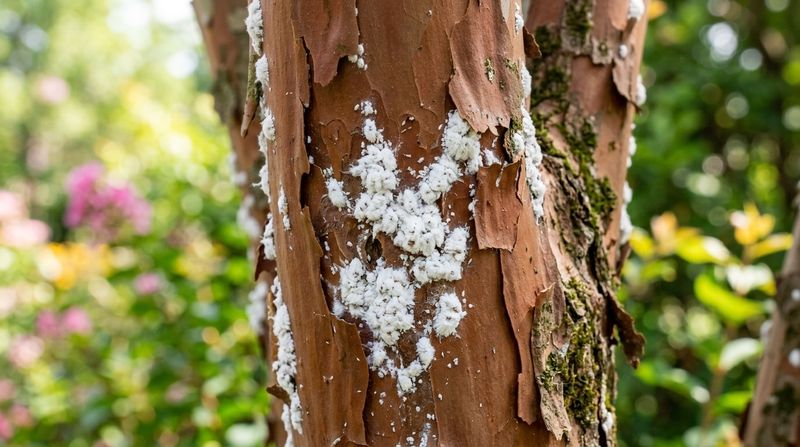
Leaf drop is actually one of the better times to get a clear look at your crape myrtles. Once the foliage is gone, the trunk and branch structure are fully exposed, making it much easier to spot white scale clusters, sooty mold patches, and suspicious bark changes that would have been hidden all summer.
Walk the perimeter of the tree, look up into the canopy, and check branch crotches where scale tends to concentrate.
Document what you find before you treat anything. Photograph the affected areas, note how much of the trunk and upper canopy is involved, and compare the extent of coverage to what you may have noticed earlier in the season.
If the infestation looks light or the identification is uncertain, reach out to your county Extension office before spending money on products. Treating a tree for the wrong problem is a waste of resources and can harm beneficial insects unnecessarily.
Fall and winter do offer a practical window for one management option: horticultural oil. After leaf drop, exposed crawlers and early-instar nymphs on the bark surface are more vulnerable to oil sprays.
Mississippi State University Extension explains that horticultural oil can help reach these exposed stages, but it has limited ability to penetrate the waxy, felt-like coverings protecting mature females. Oil is a useful tool in a broader management plan, not a guaranteed solution on its own.
Always follow the product label for temperature restrictions, mixing rates, and plant-safety guidelines.
As noted by University of Georgia Extension on crape myrtle bark scale activity after leaf drop, the pest can remain visible and active even after the tree goes dormant, which is why fall monitoring matters. For heavy sooty mold buildup on trunks and accessible lower limbs, Dallas County Texas A&M AgriLife Extension suggests gentle scrubbing with a soft-bristle brush, water, and mild dish detergent.
That step can improve the tree’s appearance and remove some scale insects, but cleaning alone does not control the infestation. Pair it with appropriate pest management timed to the pest’s life stage and your local conditions.
Plan spring treatments around the label and pollinators
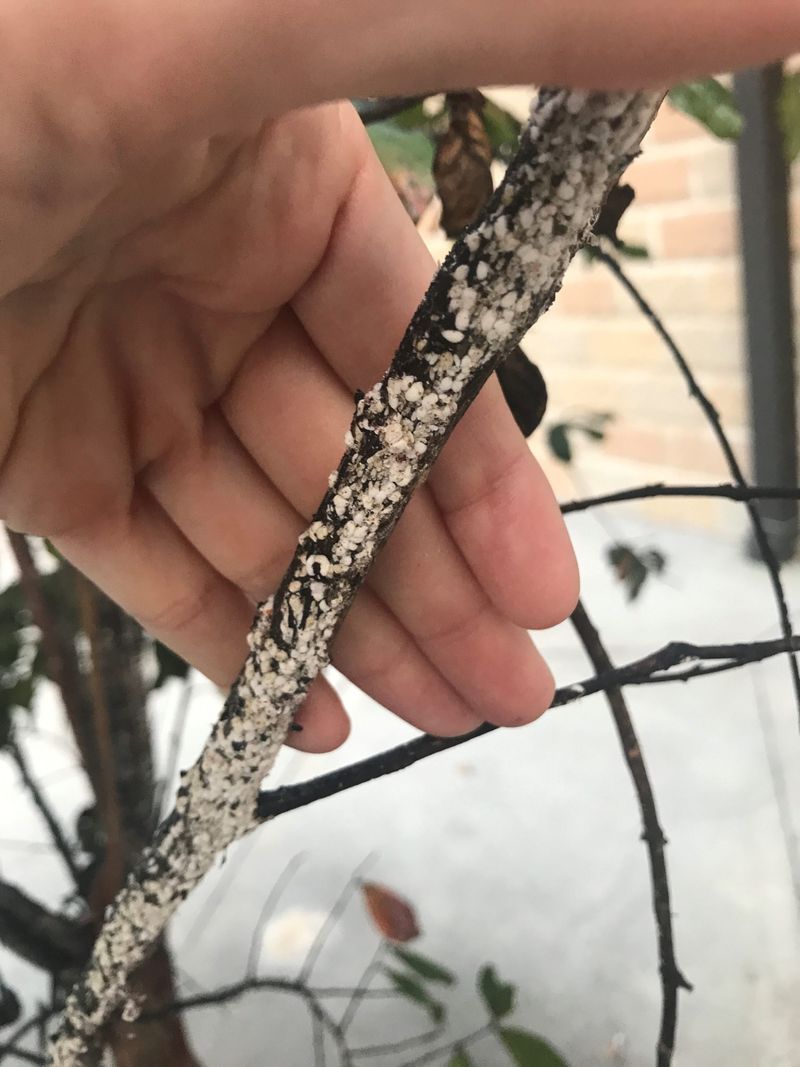
Spring is the season when most extension-recommended systemic treatments for crapemyrtle bark scale are applied, and timing matters more than many homeowners realize. The general guidance from multiple university sources places soil-applied systemic insecticide applications near spring leaf-out or just before peak crawler activity.
That window varies depending on your specific location in Texas, the weather that year, which generation of the pest is active, and the product you choose. There is no single universal date that applies everywhere.
Mississippi State University Extension identifies several active ingredients that have shown effectiveness in extension trials: imidacloprid, dinotefuran, thiamethoxam, and formulations containing clothianidin. These are examples, not a prescription.
Each of those active ingredients appears in multiple products with different formulations, concentrations, application methods, and legal homeowner-use classifications. Before you buy anything, read the current product label carefully to confirm it is registered for use on crape myrtle, that it lists scale insects as a target pest, that the formulation is legal for homeowner application in Texas, and that the rate and timing match your situation.
Pollinator protection is not optional. All of those active ingredients belong to the neonicotinoid class of systemic insecticides, and systemics move through the plant’s vascular system into pollen and nectar.
University of Florida IFAS Extension is explicit: do not apply systemic insecticides to crape myrtles while they are flowering or while bees and other beneficial insects are actively visiting the tree. Exposure through contaminated pollen can harm pollinators even when you apply the product correctly at the soil level.
The safest approach is to apply soil-applied systemics well before bloom begins, giving the product time to move through the root system and reach the canopy before flowers open. Virginia Cooperative Extension on crapemyrtle bark scale reinforces that timing applications to target the crawler stage improves effectiveness while reducing the amount of product needed.
Contact your local Texas A&M AgriLife Extension office for guidance on local crawler timing, product options currently available in your county, and any state-specific restrictions that apply.
Contain infestations and protect natural enemies
Preventing the pest from moving to new trees and properties is just as important as treating the ones already affected. Before you buy a crape myrtle from a nursery, look closely at the trunk, branches, and twigs for white fuzzy clusters or dark sooty patches.
Buying a visibly infested tree and planting it in your yard introduces the scale to a clean site, and moving cuttings or pruned material from an infested tree to another location carries the same risk.
Equipment hygiene is easy to overlook. Pruning shears, loppers, pole saws, and even gloves can carry crawlers from an infested tree to a healthy one during the same work session.
After pruning or working on a tree you suspect is infested, clean your tools with rubbing alcohol or a diluted bleach solution, and bag or dispose of pruned material rather than composting or transporting it. University of Florida IFAS Extension identifies nursery-stock movement and contaminated equipment as key vectors for spreading crapemyrtle bark scale to new locations.
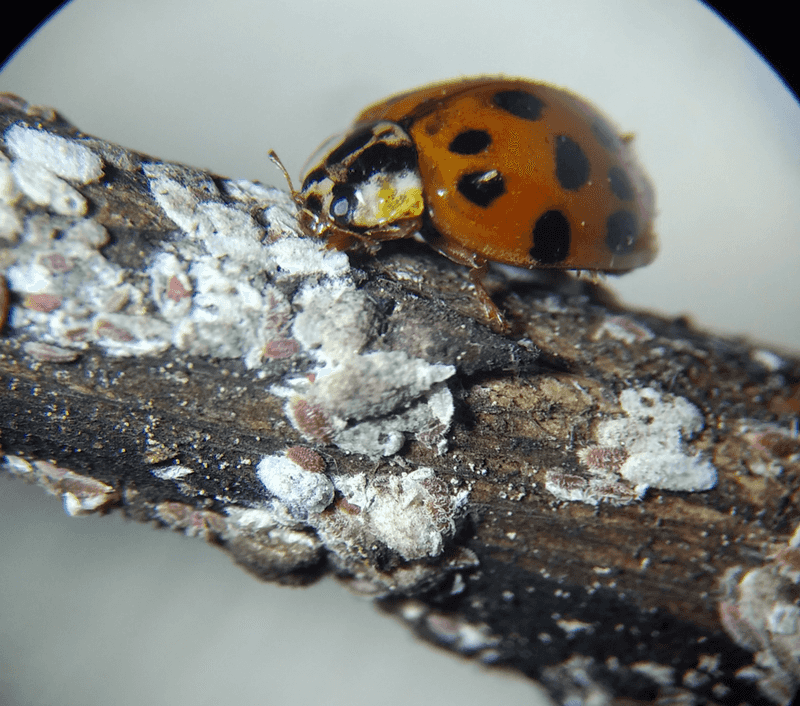
Natural enemies are working in your favor if you let them. Lady beetles and lacewing larvae both feed on crapemyrtle bark scale, and their populations can provide meaningful suppression when they are not disrupted.
Virginia Cooperative Extension cautions that broad-spectrum contact insecticide sprays can kill these beneficial insects along with the pest, which may actually worsen later pest problems by removing natural controls from the yard.
Targeted, crawler-stage management is more effective and less disruptive than indiscriminate spraying. Mississippi State University Extension supports an integrated approach: confirm the pest, contain it by avoiding movement of infested material, treat according to the label at the right life stage, and then monitor nearby trees through the growing season to catch any new activity early.
Confirmation turns a worrying coating into a management plan
White felt-like clusters paired with a pink streak from crushing and a coating of black sooty mold give you a strong case for crapemyrtle bark scale, but confirmation through your county Extension office or a plant diagnostic service turns a suspicion into an action plan. Knowing exactly what you have makes every subsequent decision, when to treat, what product to use, and how to protect pollinators, more precise and more effective.
Preventing movement of infested material, monitoring the full tree from trunk to canopy, and applying seasonally appropriate, label-compliant control are the three habits that protect both your crape myrtles and the beneficial insects sharing your yard. Mississippi State University Extension frames this as a manageable pest problem, not a tree emergency.
A crape myrtle with a black trunk is asking for attention, not a chainsaw.