
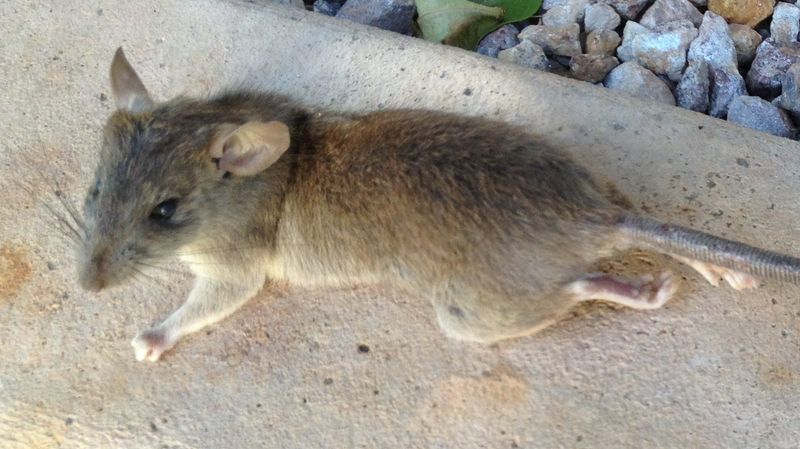
Finding your orange tree picked apart overnight is unsettling, and your mind goes straight to rats. Before you reach for traps or poison, take a breath: one damaged tree is a clue, not a confirmed infestation.
Knowing what the damage actually tells you, and what it doesn’t, puts you in a much better position to respond without overreacting or harming the wildlife sharing your yard.
Citrus is the strongest answer—but not a universal rule
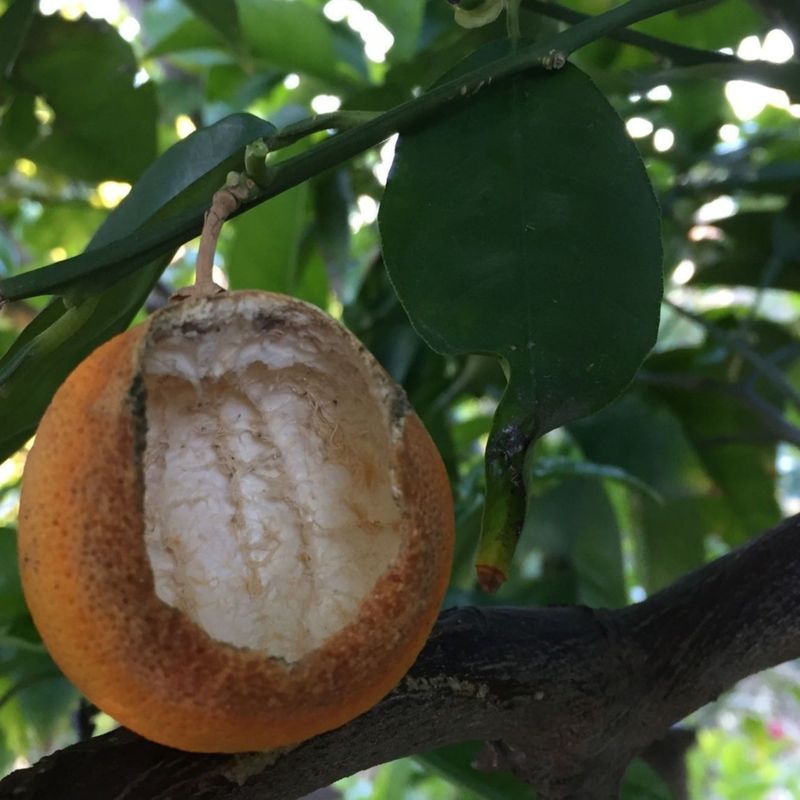
Orange trees tend to be where homeowners first notice possible roof-rat activity, and that pattern has real backing. UC IPM’s roof-rat guidance for citrus growers specifically documents roof rats feeding on oranges, sometimes hollowing out a fruit completely while it still hangs on the branch.
Avocados, other fruit, berries, and tree nuts also appear on that list, so citrus is the best-supported starting point, not the only answer.
No California-wide study has established that roof rats follow a fixed sequence, hitting citrus before every other tree in fall. What the research shows is that oranges and avocados are well-documented targets, and that UC IPM’s home and landscape rat management guide identifies roof rats as common pests across many fruit and nut crops.
Treating citrus as the most likely first target is a useful practical shorthand, not a biological rule that holds everywhere.
A damaged orange tree tells you where to begin your investigation, not which fruit rats universally prefer. Roof rats also eat insects, snails, dog food left outside, compost scraps, and birdseed, so a yard with any of those food sources can attract them regardless of which fruit is ripening.
Use the first damaged tree as your starting point and then look at the wider picture before deciding how serious the situation is.
What a fall pattern may actually signal
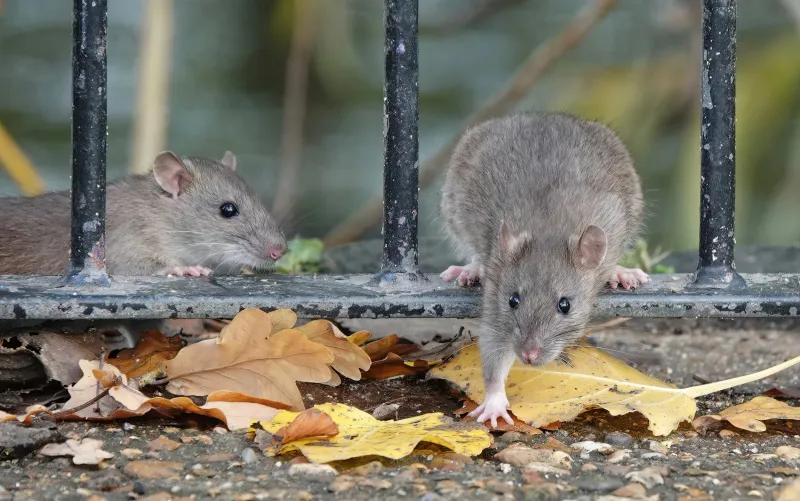
Roof rats do not hibernate or become seasonally active in fall. They are active year-round, and UC IPM confirms that roof-rat populations remain present throughout the year in California.
Fall damage is more visible partly because fruit is available and partly because homeowners are outside harvesting and notice the signs more easily.
Several fall-specific conditions can push rat activity into view. Surrounding vegetation dries out as summer ends, which can reduce alternative food sources in open areas.
UC ANR guidance on rodents and fruit trees notes that rodents move toward planted areas, including avocado groves, when surrounding hills become dry. Fallen fruit accumulates beneath trees, offering easy ground-level feeding.
Dense summer growth in ivy, bougainvillea, and ornamental shrubs creates thick cover that can support a nearby nesting site.
Access often matters as much as fruit preference. A tree that sits close to a fence, utility line, or roofline gives a roof rat a convenient, elevated travel path.
A less attractive fruit on an easy route may receive damage before a theoretically tastier fruit that requires a riskier approach. That is why a suddenly damaged tree signals an active route nearby, not necessarily the rat’s top food choice.
Citrus ripening schedules also vary by cultivar and location, which complicates any simple fall narrative. UC IPM’s citrus harvesting guide notes that navel oranges may not reach full sweetness until late winter, while Valencia oranges are generally mature in summer.
A color change in fall does not mean every orange on your tree is ripe or equally attractive. Local ripeness, not a statewide seasonal trigger, is likely driving when and which fruit gets hit first.
The damaged fruit does not identify the culprit
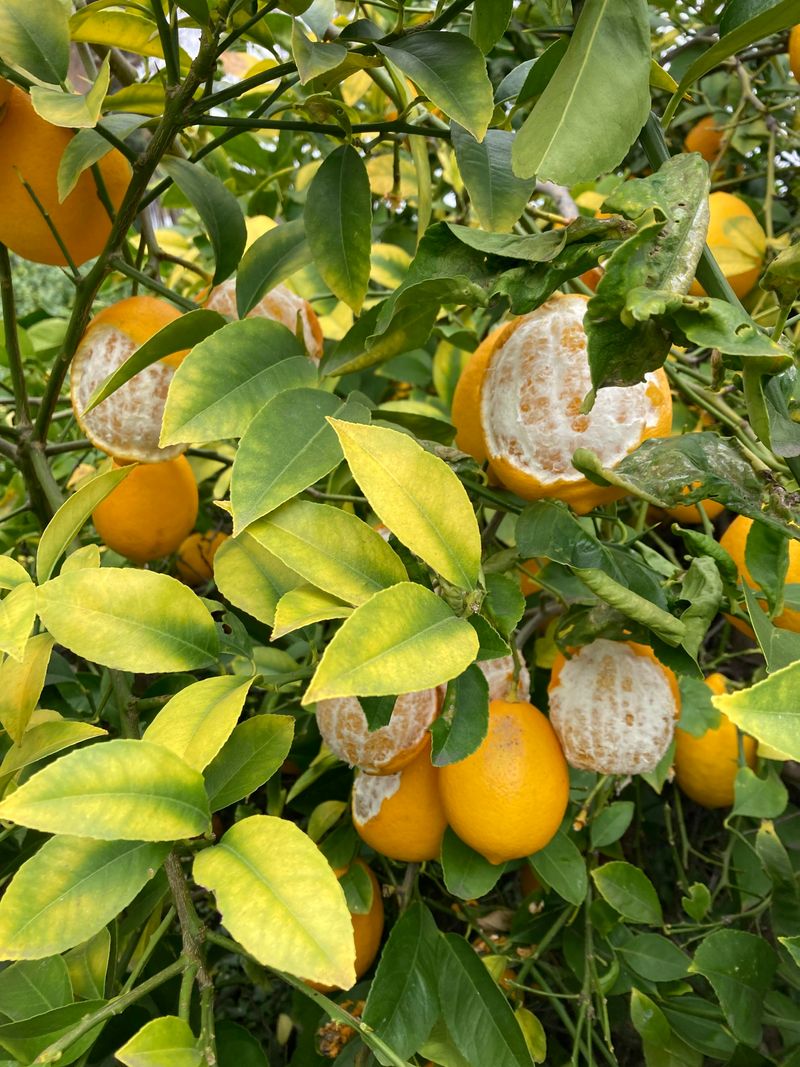
Fruit disappearing from your tree overnight is frustrating, but the tree itself cannot tell you who took it. Squirrels, opossums, raccoons, crows, scrub jays, woodrats, and other animals all feed on backyard fruit in California, and their damage can look remarkably similar at a glance.
UC IPM’s fruit damage identification guide covers the range of vertebrates responsible and helps homeowners sort out the likely culprit before taking action.
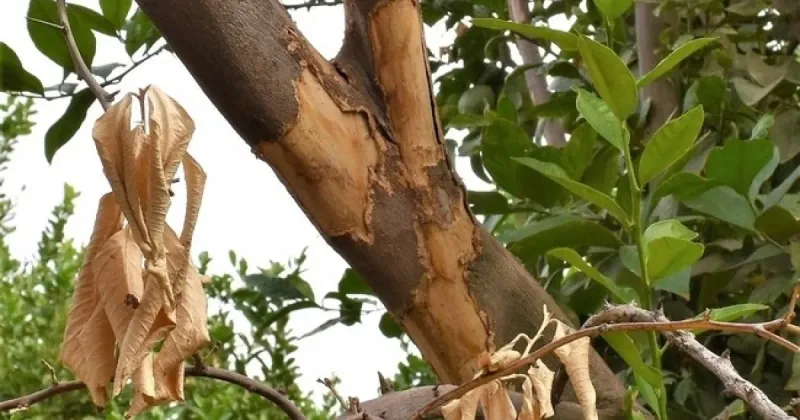
Roof-rat damage tends to have a specific profile. Look for small, clean entry holes chewed into the skin of an orange, with the inside hollowed out while the rind stays mostly intact.
UC IPM’s citrus vertebrate damage page describes this hollowed-fruit pattern as a key indicator. Gnaw marks on woody stems, chewed avocado flesh, and scattered nut shells with teeth marks are also consistent with roof rats, though not exclusive to them.
Raccoons and opossums tend to tear fruit open more roughly, often leaving larger pieces of rind behind. Squirrels frequently carry fruit away entirely or leave it half-eaten on a fence or wall.
Birds peck irregular surface wounds rather than boring in cleanly. These distinctions are useful starting points, but overlapping damage patterns mean you need more evidence than the fruit alone.
UC IPM recommends looking for droppings, which are dark, spindle-shaped, and about half an inch long for roof rats, as well as greasy smear marks along fence rails or pipes, and nighttime movement along elevated routes. A trail camera set up for two or three nights near the damaged tree is one of the most reliable ways to confirm which animal is responsible before you commit to any control method.
Native California rodents add another layer of caution. Woodrats and kangaroo rats have furry tails, while roof rats have mostly hairless, scaly tails.
Some native species are protected under California law, so positively identifying the animal before using lethal control is not just good practice, it is legally relevant.
Inspect the route, not just the damaged tree
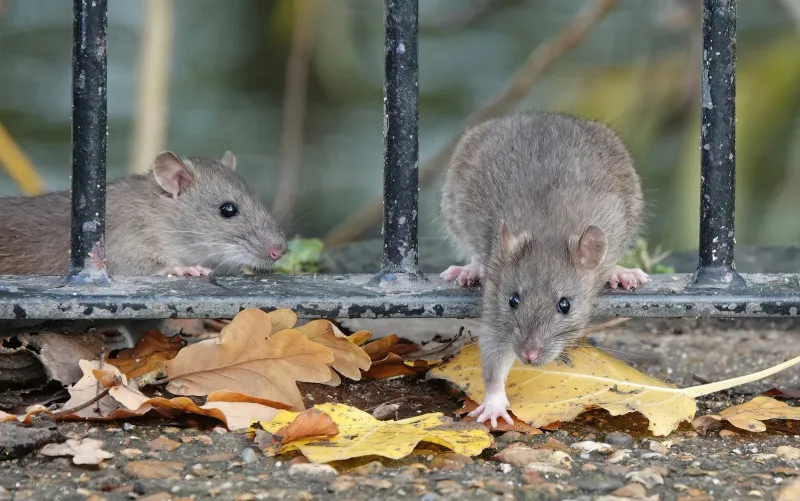
A single damaged tree is the beginning of an investigation, not the end of it. Roof rats are agile climbers that can travel 300 feet or more from their nest to a feeding site, meaning the animals raiding your citrus may be living in a neighbor’s ivy, your attic, a woodpile, or a drainage channel nearby.
UC IPM’s rat management guide emphasizes looking beyond the damaged food source to the full route the animals are using.
Start at the tree and work outward. Check the fence lines and utility wires running toward the tree for greasy smear marks, which are left by rat fur repeatedly contacting a surface.
Look at the roofline above and around the tree for gaps, loose vents, or overhanging branches that could serve as entry points. Examine nearby ivy, dense bougainvillea, tall ornamental grasses, and stacked debris for signs of nesting, including shredded material, droppings, or worn paths through the vegetation.
Compost bins, pet-food bowls left outside, and areas beneath bird feeders are worth checking as supplemental food sources that may be sustaining activity in your yard independent of the fruit tree. A rat population that has reliable access to multiple food sources is harder to discourage with trapping alone.
UC ANR’s IPM response plan for orchard growers describes monitoring tools that translate well to home gardens. Tracking tunnels, ink cards placed along suspected travel routes, and trail cameras set at fence level or slightly elevated can help you identify where activity is concentrated.
Check them every day or two for fresh evidence, and revisit the same spots over at least one to two weeks before concluding whether activity is current, increasing, or declining. Locating the hotspot before escalating control saves time and reduces the risk of misdirected effort.
Remove the food and cover that sustain activity
Sanitation is not a one-time task you complete after spotting damage. Roof rats return to reliable food sources repeatedly, and a yard that offers fallen fruit, open compost, overnight pet food, and dense cover will attract activity again even after trapping removes the animals currently present.
UC IPM’s citrus-specific roof-rat guidance lists sanitation as a foundational step precisely because trapping without removing attractants produces only temporary results.
Start with the obvious food sources. Pick up fallen fruit and nuts from beneath trees every day or two during the season, and harvest ripe fruit promptly rather than leaving it on the branch longer than needed.
Secure garbage cans with tight-fitting lids, and use a compost bin with a solid base and a latching cover rather than an open pile. Bring pet food and water bowls inside each evening, and sweep up spilled birdseed from beneath feeders.
Each of these steps removes a reason for rats to keep visiting.
Cover matters just as much as food. UC IPM recommends thinning dense ivy, bougainvillea, and ornamental grasses that can shelter a nest close to your yard.
Remove stacked woodpiles from against fences or structures, clear dead wood from fruit trees, and eliminate piles of debris or unused materials that create protected hiding spots.
Pruning limbs that provide roof access is also part of this step. UC IPM gives different guideline distances in different contexts, ranging from three to six feet of clearance between branches and rooflines or structures.
Rather than treating one number as a universal rule, keep branches clearly separated from any surface a rat could use to reach your roof or attic. That separation reduces travel routes and makes your home less convenient as a nesting site, which is the practical goal regardless of the exact measurement.
Choose control methods after identifying the animal
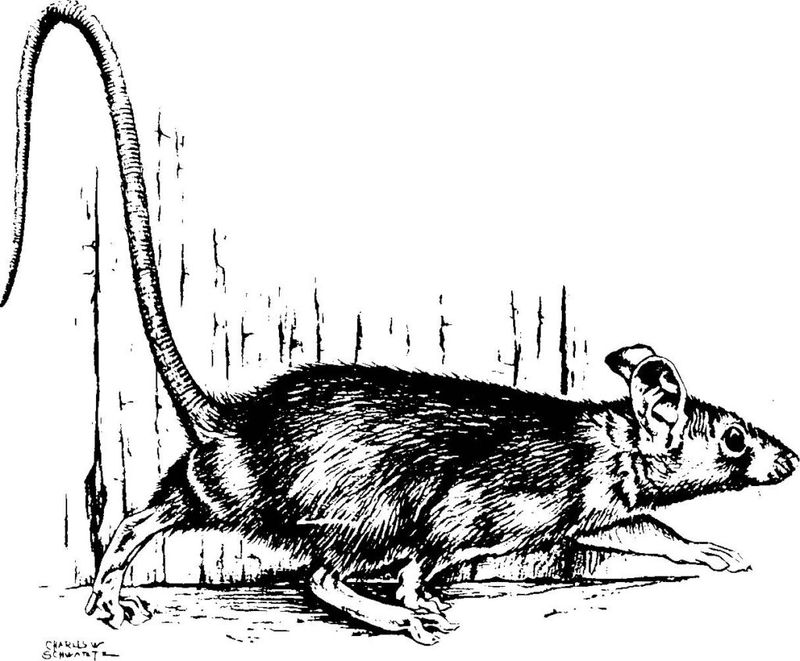
Species identification is not a formality. Roof rats have mostly hairless, scaly tails and are agile, slender climbers.
Native woodrats and kangaroo rats have noticeably furry tails and different body shapes. Because some native California rodents are protected, UC IPM advises confirming the species before using any lethal control.
A trail camera or a clear look at the tail and body profile is usually enough to make that call.
For confirmed roof rats, snap traps are the most straightforward starting point. Roof rats are climbers, so traps placed on the ground where other animals can reach them are less effective and more likely to catch something unintended.
UC IPM recommends placing snap traps along elevated routes, such as fence rails, overhead pipes, branches, or ledges where rats have been observed traveling. Secure the trap so it does not fall, and position it where children and pets cannot access it.
Check traps daily and reset them promptly.
Rodenticide is a last resort, not a first response. Outdoor bait can be consumed by pets, hawks, owls, and other nontarget animals, and some products are restricted or not registered for residential outdoor use in California.
EPA guidance on choosing bait station products outlines which formulations are available for household use and what containment requirements apply. California adds its own layer of restrictions: CDPR’s guidance on second-generation anticoagulant rodenticides and its diphacinone restricted-material rules both limit where and how homeowners can legally use these products.
Always read the product label and follow it precisely.
Two methods to skip entirely: outdoor glue boards and casual poison placement. UC IPM specifically advises against glue boards outdoors because lizards, birds, and other nontarget wildlife become trapped.
Scattering bait without a tamper-resistant station is both unsafe and, in many cases, illegal under California regulations. Proportionate, targeted control keeps the focus on the confirmed pest and reduces collateral harm to the native wildlife sharing your yard.
Follow up safely and proportionately
Once you have identified signs and taken initial action, keep checking. Return to the damaged tree and the routes you mapped every few days to look for fresh droppings, new gnaw marks, or movement on camera.
UC IPM notes that early control, when populations are small, is considerably easier than managing an established population later, so persistent monitoring pays off even if activity seems to have slowed.
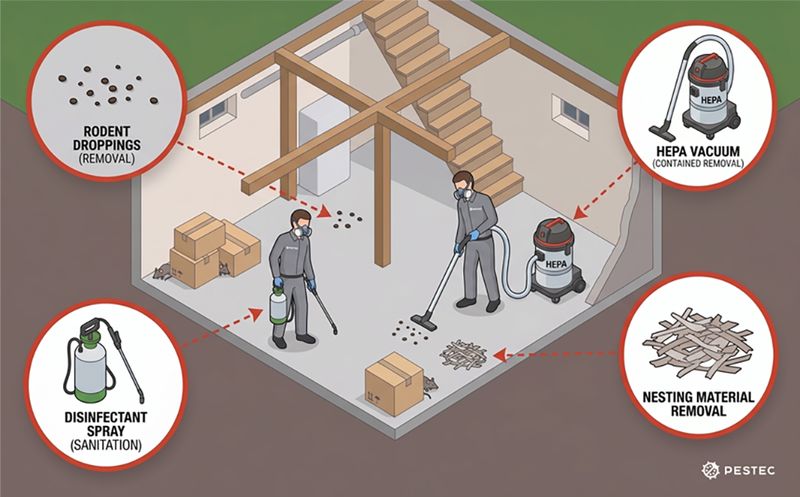
If you find droppings, nesting material, or urine during your inspection, handle the cleanup carefully. CDC guidance on rodent cleanup is clear: never sweep or vacuum dry droppings or nesting material, because doing so can push contaminated particles into the air.
Instead, wet the area thoroughly with a disinfectant, allow it to soak for several minutes as directed on the product label, then wipe up the material while wearing disposable gloves. Bag everything and wash your hands.
Heavy contamination in an attic or crawlspace warrants professional help or a call to your county public health department.
Keep your expectations proportionate throughout the process. A single damaged orange is a useful signal that something is active nearby, not confirmation of a large infestation or a guarantee that damage will escalate.
Work through the steps in order: confirm the signs, map the route, remove food and cover, monitor for fresh activity, and escalate only if the evidence keeps building. A citrus tree that gets hit first gives you a visible, concrete place to start, and that early visibility is actually an advantage worth using.