
Roaches love warm, damp hiding spots around Florida homes. Tree frogs hunt at night, which is exactly when many roaches are moving along walls, patios, mulch, and porch lights.
The right native plants can turn your yard into better frog habitat without making it look wild or messy. Start with plants that offer shade, cover, insects, and safe places for frogs to rest during the day.
1. Simpson’s Stopper
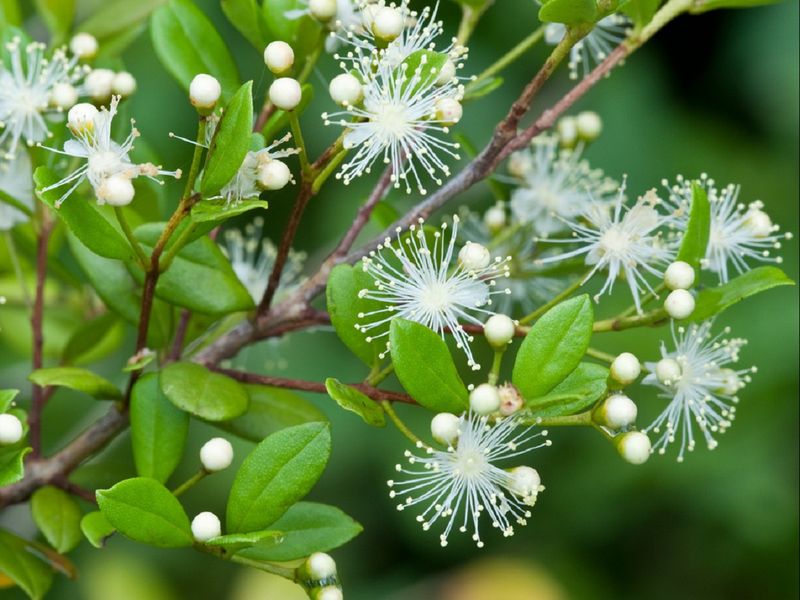
A neat evergreen shrub can do more than dress up the front of the house. Simpson’s stopper gives tree frogs a cool, leafy place to tuck themselves away during the hot part of the day, especially when planted near porches, patios, or shaded walls.
Florida homeowners like it because it behaves well in small yards. It can be kept as a hedge, allowed to grow into a small tree, or used as a privacy screen that still feels tidy.
The small white flowers bring in pollinators, and more small insects in the landscape can help support frogs without needing a bug zapper or harsh yard sprays.
Place Simpson’s stopper where it gets sun to part shade, and give it room for air flow after heavy rains. Once established, it handles Florida’s sandy soil better than many fussy ornamentals.
A light layer of pine straw or leaf mulch under it creates a damp, shaded hunting edge where frogs may wait for nighttime prey, including roaches passing close to the house.
2. Firebush
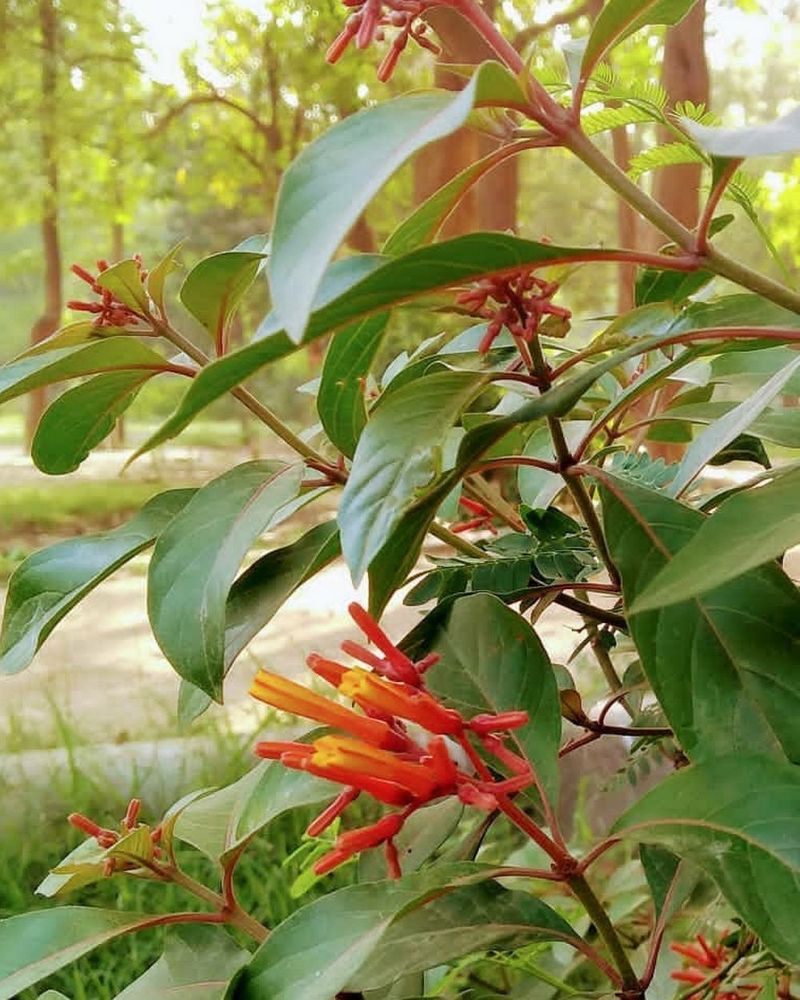
Bright orange-red flowers make firebush feel like a backyard snack bar for hummingbirds and butterflies. For tree frogs, the bigger benefit is the busy insect life and layered foliage that build up around a healthy shrub.
Firebush is a strong choice for sunny Florida yards because it takes heat with far less drama than many flowering shrubs. In South and Central Florida it can become a large, lush plant, while in colder parts of North Florida it may freeze back and return when warm weather settles in.
Either way, it can fill a bare corner near a patio where roaches often travel after dark.
Use firebush as a loose screen, not a clipped box. That natural shape gives frogs more stems, leaves, and shaded pockets to use.
Avoid spraying the flowers with broad insecticides, because those sprays can remove the very insect activity that makes the plant useful to frogs.
A smart spot is several feet away from the wall, close enough to improve the hunting zone but not so close that branches scrape siding. Add a shallow saucer of clean water nearby, refreshed often, if your yard is very dry.
3. Walter’s Viburnum
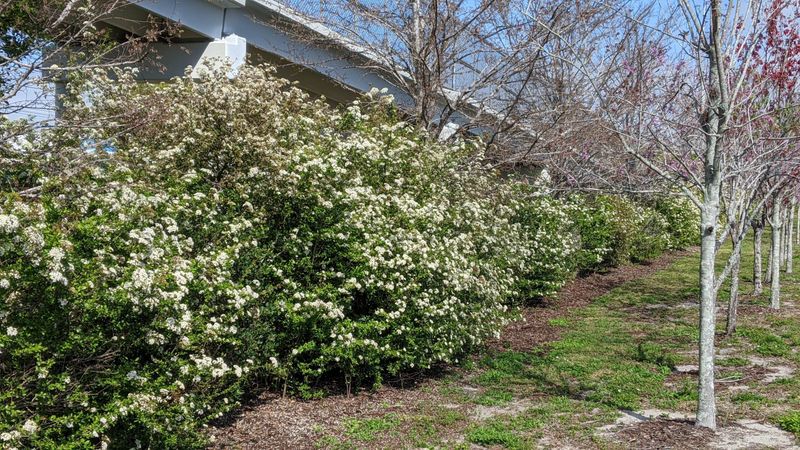
For gardeners who want a polished hedge with wildlife value, Walter’s viburnum earns its space. Its dense branching creates the kind of protected daytime cover tree frogs need before they come out to hunt at night.
Many Florida yards have exposed foundation beds that bake in the afternoon sun. A row of Walter’s viburnum can cool that edge, soften the view of the house, and create a shaded strip where small insects gather.
Roaches often use similar protected edges as travel lanes, so a frog-friendly hedge can put hunters closer to the problem area.
Small white flower clusters appear in season and support pollinators. Birds also use the plant, which makes it a good all-around native for homeowners who want more life in the yard without sacrificing curb appeal.
Dwarf selections are useful where space is tight, while larger forms can work as screening plants.
Give it sun to part shade and avoid constantly wet soil unless you choose a site with good drainage. Prune lightly instead of shearing hard every few weeks.
A looser structure leaves more little perches for frogs and keeps the hedge from becoming a sterile green wall.
4. Beautyberry
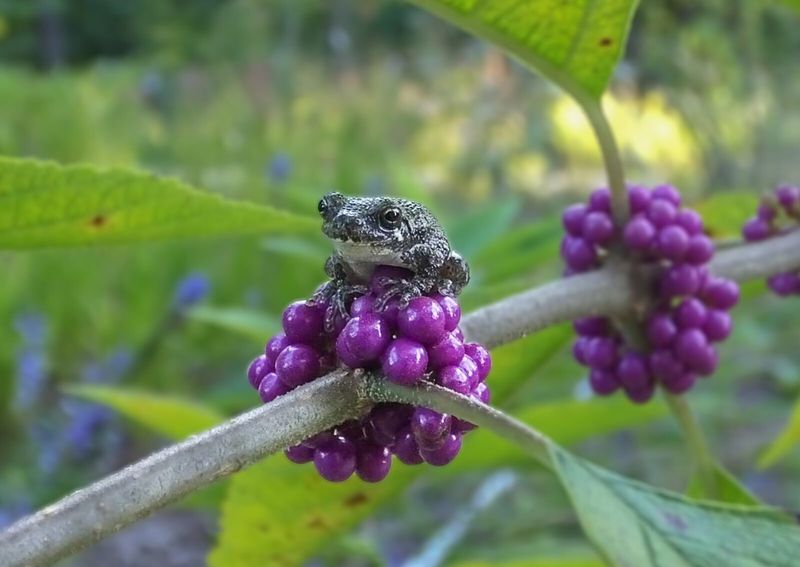
Purple berry clusters make beautyberry look almost too colorful to be native, but it belongs right at home in Florida landscapes. Its open, arching shape creates a different kind of frog cover than a tight hedge, with flexible stems and broad leaves that shade the ground below.
Beautyberry is especially useful along the edge of a backyard, fence, or side yard where the landscape shifts from sunny to partly shaded. Those transition zones can hold moisture longer after rain or irrigation.
Tree frogs often use leafy plants near these damp pockets as daytime shelters, then move out after dark to feed.
The berries are a favorite for birds, while the flowers draw small pollinators. More importantly for a frog-friendly yard, beautyberry helps build a living edge instead of a bare strip of wall, gravel, or thin turf.
That living edge gives frogs a reason to stay close enough to patrol around patios and outdoor storage areas where roaches may hide.
Cut older stems back in late winter if the shrub gets rangy. Skip heavy pesticide use nearby, and let some leaf litter remain beneath the plant.
That low, slightly messy layer is where many insects move, and where frogs can find cover between hunting trips.
5. Coontie
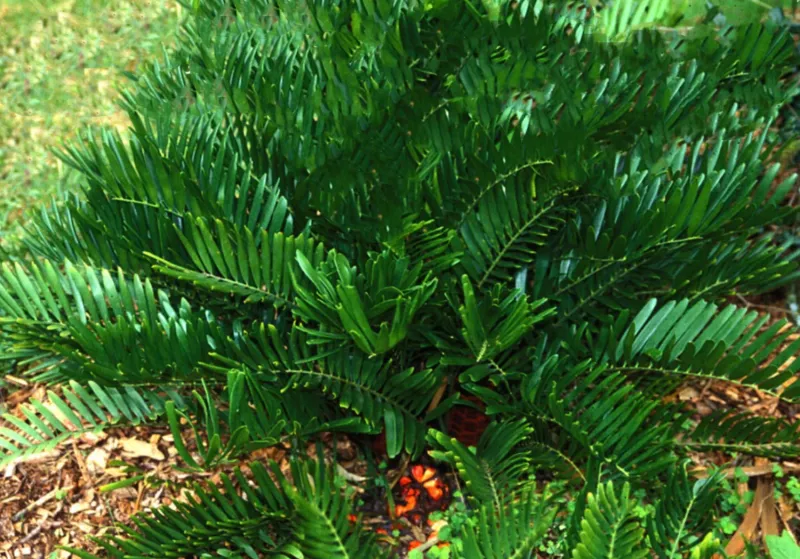
Low to the ground and tough as nails, coontie is a quiet workhorse for frog-friendly planting. It forms clumps of stiff, fern-like leaves that create cool little shelters close to the soil, right where many nighttime pests move.
Coontie stands apart because it fits places where larger shrubs would feel crowded. Use it near steps, along a walkway, beside a porch, or in a partly shaded foundation bed.
It stays tidy, tolerates sandy soil once established, and does not need pampering to look good.
Florida gardeners also know coontie as the host plant for the atala butterfly, a native butterfly with a remarkable comeback story in South Florida. That wildlife connection makes it more than just a filler plant.
It helps create a small, active habitat patch that can support insects, frogs, and a more balanced yard.
For roach pressure around the house, coontie works best as part of a layered planting. Put it under taller natives like Simpson’s stopper or Walter’s viburnum so frogs have both low cover and higher perches.
Keep mulch thin near the foundation and avoid piling it against the wall, since deep, wet mulch can favor roaches more than frogs.
6. Pickerelweed
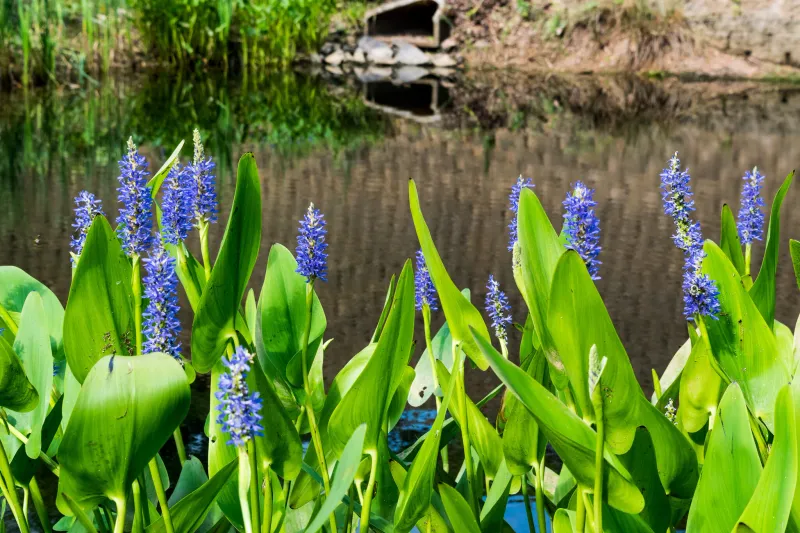
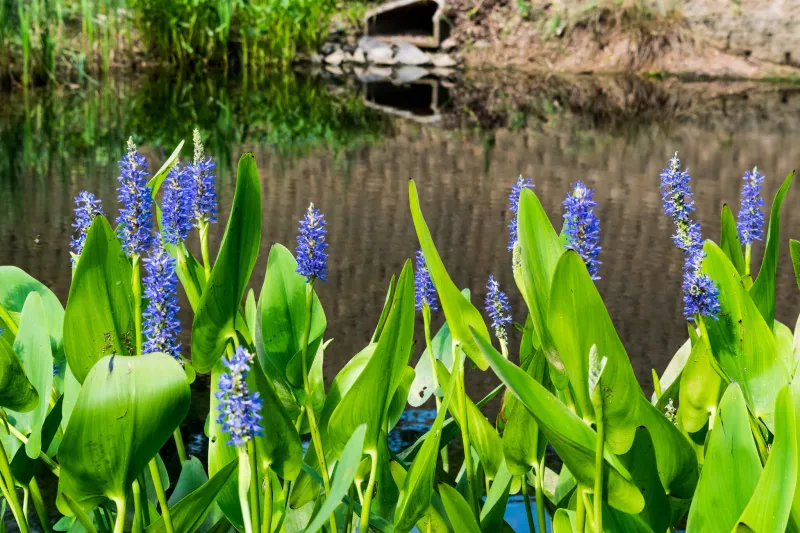
A small wet spot can become the busiest wildlife corner in the yard. Pickerelweed brings purple flower spikes, glossy leaves, and excellent cover to pond edges, rain gardens, and low areas that stay damp after Florida storms.
Tree frogs need moisture to thrive, and many suburban yards are too dry or too exposed between rain events. Pickerelweed helps solve that problem if you already have a pond, swale, or container water garden.
Its upright leaves create shaded, humid pockets where frogs can rest and hunt.
The flowers attract bees, butterflies, and other insects, while the plant helps soften the hard edge of water features. In a yard with porch lights nearby, frogs may move between moist plantings and lit areas where insects gather.
Roaches can also roam along damp edges at night, so a planted water zone can help keep frogs active in the same general area.
Good maintenance matters here. Do not create stagnant, forgotten water that breeds mosquitoes.
Use moving water, mosquito dunks labeled for wildlife-sensitive use, or a well-managed pond with proper circulation. Pickerelweed is best for homeowners who can give it consistent moisture and keep the water feature clean.
7. Fakahatchee Grass
Big, graceful clumps of Fakahatchee grass can turn a plain fence line into a living screen. At the base of those arching blades, frogs find shade, humidity, and hiding places that mowed turf simply cannot offer.
Fakahatchee grass is different from the shrubs on this list because it builds habitat from the ground up. The dense crown protects small wildlife during the day, while the surrounding leaf litter and soil surface support beetles, crickets, and other night-moving insects.
Tree frogs hunting through that area may also grab small roaches that wander out from sheds, patios, or outdoor kitchens.
Use it where you have space. Standard Fakahatchee grass can get large, while dwarf forms fit better in smaller beds.
It works well near rain gardens, along drainage areas, or in back corners that need a low-care native with a bold shape.
Cut back tired foliage only when needed, and wear gloves because the blades can be rough. Leave a little natural material at the base instead of cleaning it down to bare sand.
For a Florida yard trying to reduce roaches without turning to constant sprays, that sheltered base can be part of a healthier nighttime food web.