
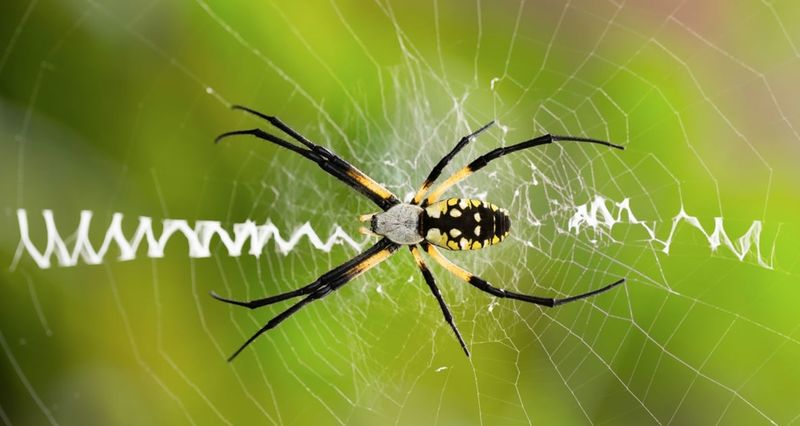
Most California homeowners have knocked down a spider web stretched across a doorway or garden path without thinking twice about it. What many don’t realize is that the spider building that web was likely hunting the same flies, mosquitoes, and aphids causing problems in the yard.
Garden spiders are free, low-maintenance predators that California extension experts actually recommend protecting. That said, they work best as one part of a bigger pest-management plan, not as a replacement for it.
California spiders can provide potential natural pest control
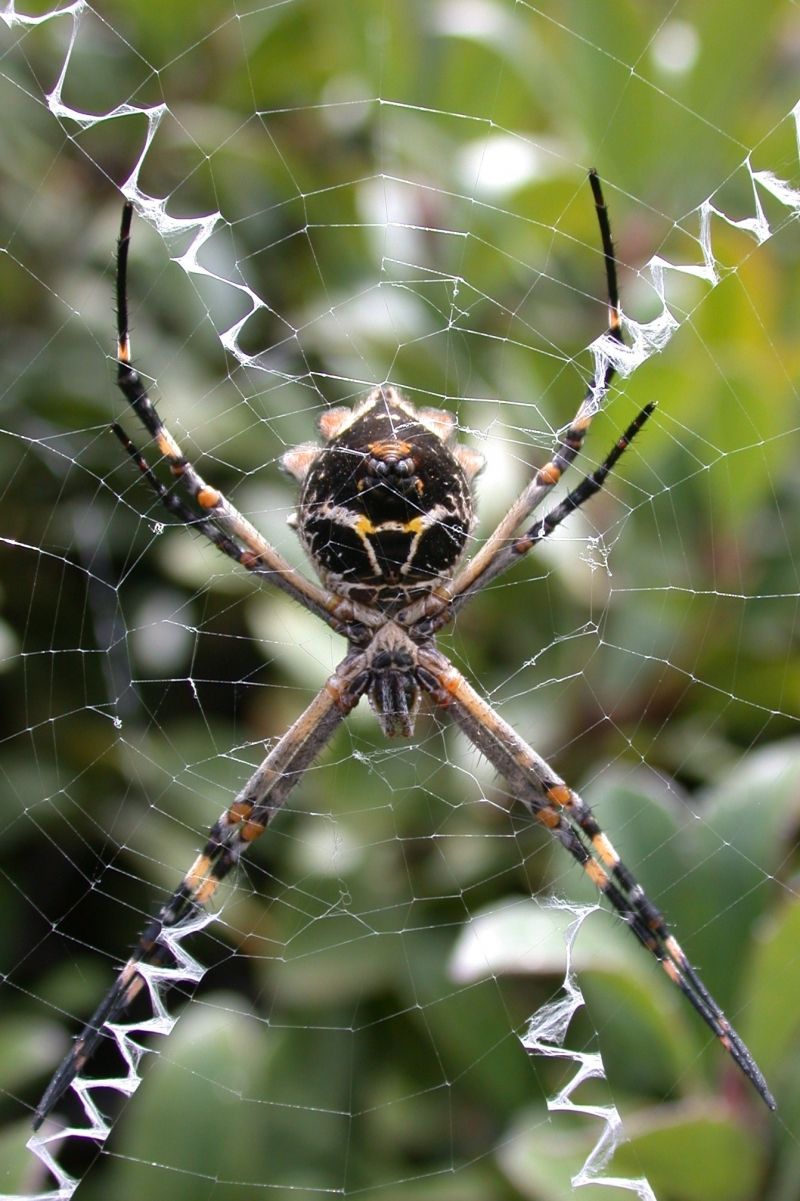
Most people’s first instinct when they spot a spider web across a shrub or porch railing is to grab a broom. Before reaching for one, consider what that web might be doing.
UC IPM’s guidance on natural enemies identifies spiders as beneficial predators that feed on insects and other arthropods, making them a genuinely useful presence in a California yard.
The California Department of Pesticide Regulation goes further, specifically listing flies and aphids among the nuisance and garden pests that spiders may consume. A UC Master Gardener resource for California homeowners adds that garden spiders can prey on mosquitoes, leafhoppers, leaf miners, wasps, and moths, covering a broad range of arthropods that often frustrate gardeners.
That kind of range means a preserved web in a low-traffic area of your yard represents a potential source of natural predation at no cost to you.
The key word here is potential. Spiders are opportunistic, generalist predators.
They catch whatever flies or crawls into their web, not what a homeowner most wants eliminated. Keeping a spider and its web in place does not guarantee a mosquito-free evening on the patio or an aphid-free rose bush.
What it does provide is an additional layer of biological activity that may reduce some pest encounters over time, without any chemical input or extra effort on your part.
Think of garden spiders as supporting cast rather than headliners. They can contribute meaningfully to natural pest control, but they work alongside good yard habits rather than replacing them.
A yard with healthy spider populations still needs standing-water management for mosquitoes and direct aphid treatment when infestations build up. Spiders are worth protecting; they just aren’t worth counting on exclusively.
“California garden spider” describes a group, not one exact spider
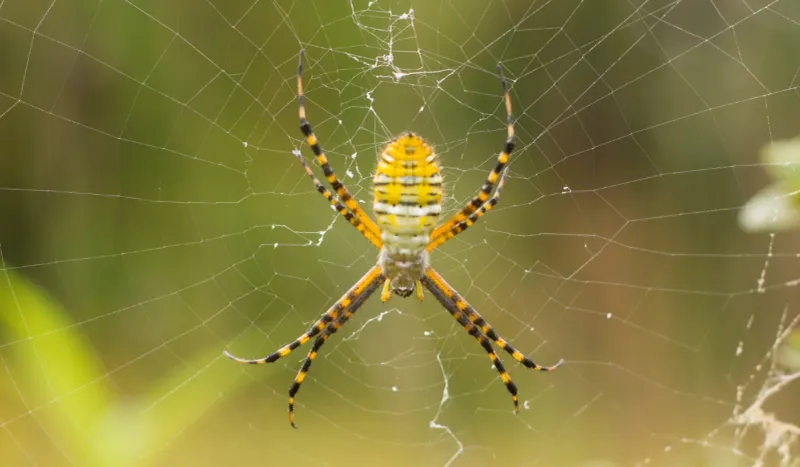
When someone says “California garden spider,” they’re usually picturing a large, colorful orb-weaver with a geometric web stretched between plants. That image is accurate for some species, but the label covers far more ground than most people expect.
UC IPM’s natural enemies resource notes that California is home to more than 1,000 spider species across at least 54 families, making “garden spider” a casual term rather than a precise identification.
Orb-weavers are one group among many. The familiar yellow-and-black banded Argiope species, sometimes called a garden or writing spider, belongs to this group.
So do the rounder, brown cat-faced spiders that often appear near porch lights in late summer. Other web-building species, including cobweb spiders, funnel-web builders, and sheet-web spiders, all show up in California gardens and serve similar predatory roles without building the classic spiral orb.
UC IPM’s common garden spiders page covers several of these groups and explains how web type and location can help with rough identification.
Why does this matter for a homeowner? Because assuming that every large spider shares the same prey preferences or behavior leads to decisions based on incomplete information.
A funnel-web spider in a ground-level grass clump hunts differently than an orb-weaver suspended between fence posts. Both are predators, but their placement, web structure, and likely prey differ in ways that affect where they’re useful and where they might be in the way.
Rather than trying to identify a spider to species, focus on two practical questions: Is the web in a location where it can intercept flying or crawling insects without interfering with regular yard use? And is the spider building it a visible, web-based hunter or a ground-dweller in a sheltered area?
Those answers matter more for your decision-making than a species name.
Their webs may catch mosquitoes and aphids, but they catch other insects too
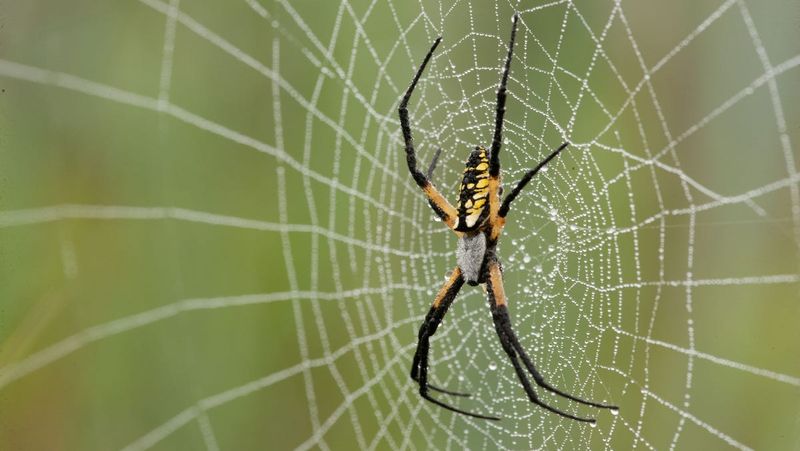
An orb-weaver’s web is essentially a passive trap. The spider builds it, retreats to the center or a nearby hide, and waits for something to fly or crawl into the sticky spiral threads.
UC IPM’s garden spiders page describes exactly this hunting strategy: the spider detects vibrations in the web and moves quickly to wrap and subdue prey. It’s an efficient system, but it has no filtering mechanism.
Research confirms that web spiders do catch mosquitoes. A 2022 review of spider predation on mosquitoes documented web spiders capturing adult mosquitoes across multiple study contexts, and a 2019 literature review found evidence of spiders consuming mosquitoes at larval, pupal, and adult stages.
A 2021 applied sciences study characterized most spiders as generalist predators, noting that evidence for meaningful local mosquito suppression from spiders alone remains limited and context-dependent. In plain terms: spiders eat mosquitoes when mosquitoes fly into their webs, but they don’t seek out mosquitoes, and they won’t clear a yard of them.
The same logic applies to aphids. Winged aphids that disperse between plants can become entangled in webs, and extension guidance lists aphids among the prey garden spiders may consume.
But aphids that stay clustered on plant stems are largely out of reach of a web-building spider waiting at the center of a spiral trap.
Pollinators, parasitoid wasps, beneficial hoverflies, and harmless moths can also end up in a garden spider’s web. A web is not a selective device.
Preserving webs in garden areas supports a form of natural predation, but the actual mix of captured insects will reflect whatever is flying nearby, not just the species causing problems. That’s worth keeping in mind when deciding which webs to leave in place and where.
Repeated cleanup can disrupt a web at one location
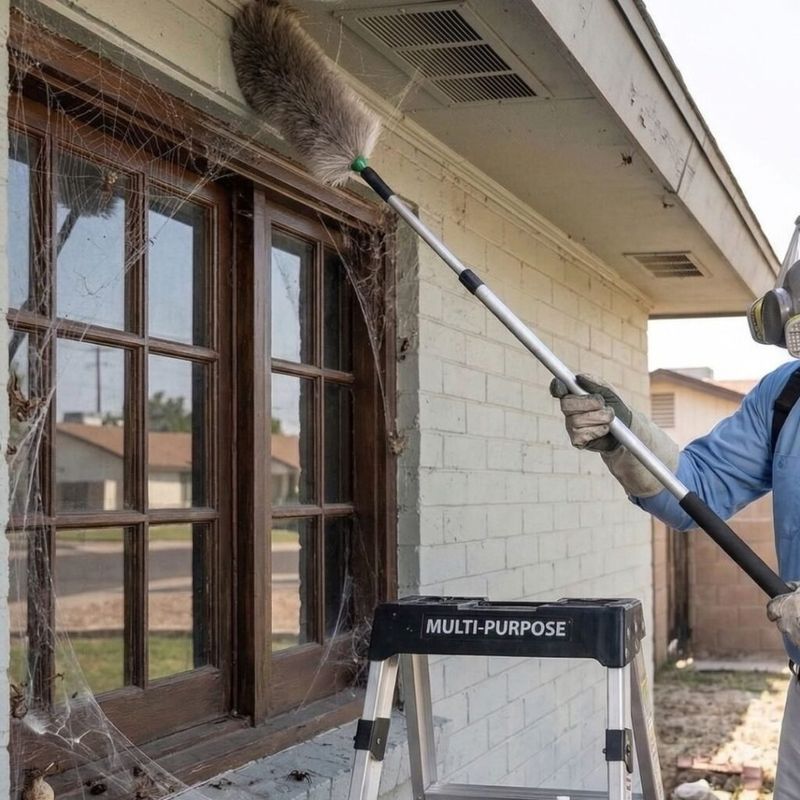
Sweeping a web off a doorframe takes about five seconds. What happens after that is more complicated than most people expect.
Brushing, sweeping, vacuuming, hosing, or pressure-washing exterior webs can remove both the web and the spider using that structure. UC IPM’s spider management page lists these mechanical methods as effective ways to remove webs from buildings and exterior surfaces, and University of Minnesota Extension’s home spider guidance recommends regular vacuuming and sweeping of webs as a practical control approach for spiders on structures.
The effect, though, is limited to the spot you clean. Removing a web from one corner of a porch does not eliminate the spider from your yard or even from your porch.
Spiders are mobile enough to relocate to a nearby surface, rebuild in the same spot, or set up in a different area of the garden where food is available. Colorado State Extension’s cat-faced spider fact sheet notes that these spiders can rebuild webs readily, which is consistent with what most gardeners observe after sweeping one down.
Repeated cleaning of the same surface can, over time, make that spot less appealing for web maintenance. A spider that keeps losing its web to a broom every morning may eventually move to a less-disturbed location.
That’s a reasonable outcome if the goal is to redirect web-building away from a doorway or path without harming the spider.
What repeated cleanup does not do is permanently eliminate a spider or local population. If prey is abundant and the structure offers good anchoring points, a spider may persist nearby even after multiple web removals.
The most realistic framing is this: cleaning removes a web from a surface and may discourage rebuilding at that exact spot, while the spider itself likely remains somewhere in the vicinity.
Keep low-conflict webs and remove or relocate obstructive ones
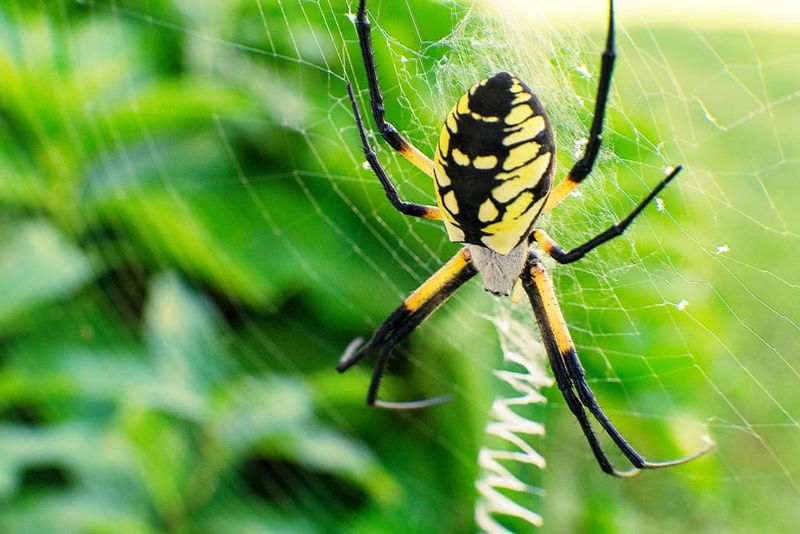
Not every spider web deserves the same response. The practical rule is straightforward: if a web is in a location where it doesn’t interfere with daily yard use, leave it alone.
Low-traffic shrubs, fence lines, tall ornamental grasses, garden margins, and the back corners of raised beds are all spots where a web can do its hunting work without bothering anyone. Tolerating webs in those areas costs nothing and keeps a potential predator in place.
Webs that cross doorways, garden paths, outdoor seating, children’s play areas, or frequently handled plants are a different situation. Those locations create real inconvenience and, in some cases, safety concerns.
UC Cooperative Extension Ventura County’s spider guidance recommends a less-destructive approach for obstructive webs: cut away only the section that’s in the way, or use a stick or gloved hand to move the spider to a nearby shrub or fence where it can rebuild without conflict. That approach keeps the spider in the garden ecosystem while solving the immediate problem.
If relocation isn’t practical and the web needs to come down entirely, that’s a reasonable call. Remove it, clean the surface, and check back in a few days.
If the spider rebuilds repeatedly in the same high-conflict spot, consistent removal is a workable long-term strategy, though the spider may simply shift to a nearby location rather than leaving the garden.
One caution worth stating clearly: avoid handling unidentified spiders with bare hands. UC IPM’s spider page notes that most outdoor spiders visible during the day are unlikely to bite people or cause lasting harm, but California does have black widows, which are medically significant.
Black widows tend to favor sheltered, cluttered spots like wood piles, garages, and sheds rather than open garden webs, but caution is always warranted with any spider you can’t identify at a glance.
Manage mosquitoes and aphids directly through integrated pest management
Spider webs are not a substitute for direct pest management, and treating them as one is how mosquito problems get worse through a whole summer. UC IPM’s mosquito management page is clear on the priority: eliminate, drain, cover, fill, or appropriately treat any object that holds water for more than a few days.
Flower pot saucers, buckets, clogged gutters, tarps with pooled water, tree holes, and old cans are all productive mosquito breeding sites. A spider web won’t address any of those.
For standing water that can’t be removed or drained, such as ornamental ponds or large containers, biological larvicides containing Bacillus thuringiensis israelensis (Bti) are an effective and low-impact treatment option. Screens on windows and doors keep adult mosquitoes out of living spaces, and personal protection like long sleeves or repellent matters during peak activity times, typically dawn and dusk.
These measures work at the source and the point of contact in ways that no amount of preserved spider habitat can replicate.
Aphid management follows a similar logic. UC IPM’s aphid guidance recommends starting with nonchemical methods: knock aphids off sturdy plants with a firm spray of water from a garden hose, and check for ants farming aphid colonies on plant stems.
Ants actively protect aphids from predators and parasitoids, so managing ant access to infested plants can make a real difference. Sticky barriers around plant stems or trunk banding can help with that.
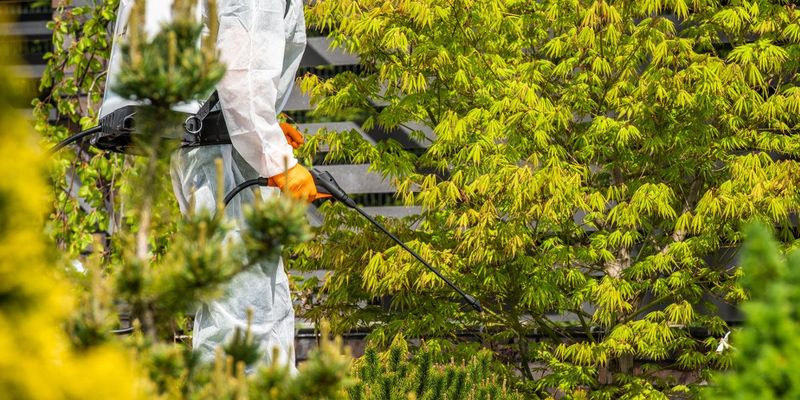
Broad-spectrum insecticides are a poor default for either pest. UC IPM’s biological control guidance explains that these products can kill spiders, parasitoid wasps, and other natural enemies alongside the target pest, often leaving the yard worse off over time.
UC IPM’s integrated pest management overview recommends using pesticides only when necessary and after nonchemical methods have been tried. Keeping that order of operations protects the beneficial insects and spiders already working in your yard.
Balance useful spider habitat with household safety
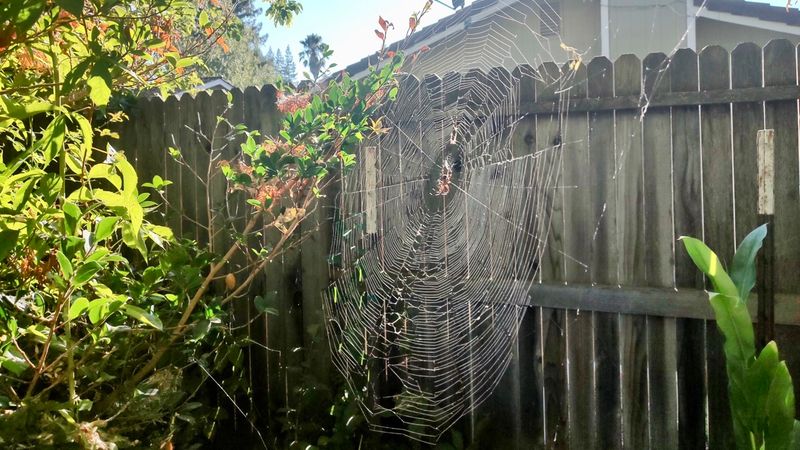
A workable approach for most California homeowners comes down to one straightforward habit: decide by location. Webs in low-traffic garden areas, along fence lines, in native plantings, and at the margins of the yard can stay.
They represent potential predator habitat that costs nothing to maintain and may contribute to natural pest activity over time. UC Cooperative Extension Ventura County supports this approach, recommending tolerance for garden spiders in areas where they aren’t causing problems.
Webs that cross paths, doorways, play areas, or seating spaces can be removed or relocated without guilt. Removing an obstructive web doesn’t harm the garden’s overall spider population, and the spider involved will likely rebuild nearby.
Repeated cleaning of a high-conflict spot may eventually redirect web-building to a less-disruptive location, which is often the best realistic outcome. UC IPM’s spider page reinforces that mechanical removal from structures is a practical, low-impact management strategy.
Mosquito breeding sites and aphid infestations still need direct attention regardless of how many webs are preserved. Spiders offer supporting natural predation, not guaranteed results.
UC IPM mosquito guidance keeps source reduction at the top of the priority list, and that should stay true for any California yard. One practical note on safety: most outdoor spiders seen during the day are low-risk, but black widows do occur in California and tend to hide in cluttered, sheltered spots rather than open garden webs.
Avoid handling any spider you can’t identify, and be cautious around wood piles, sheds, and garage clutter where black widows are more likely to be found. A yard with active spider habitat and sensible cleanup habits is a yard working closer to how a healthy garden ecosystem actually functions.