
The first Florida rainy season can turn a pretty new backyard into a puddle map. Water collects near patios, along fences, and in low spots where grass gives up fast.
The right native plants can help slow runoff, drink up extra moisture, and make those soggy areas look planned instead of messy. Here are seven Florida natives that earn their keep when the rain starts coming down hard.
1. Swamp Milkweed
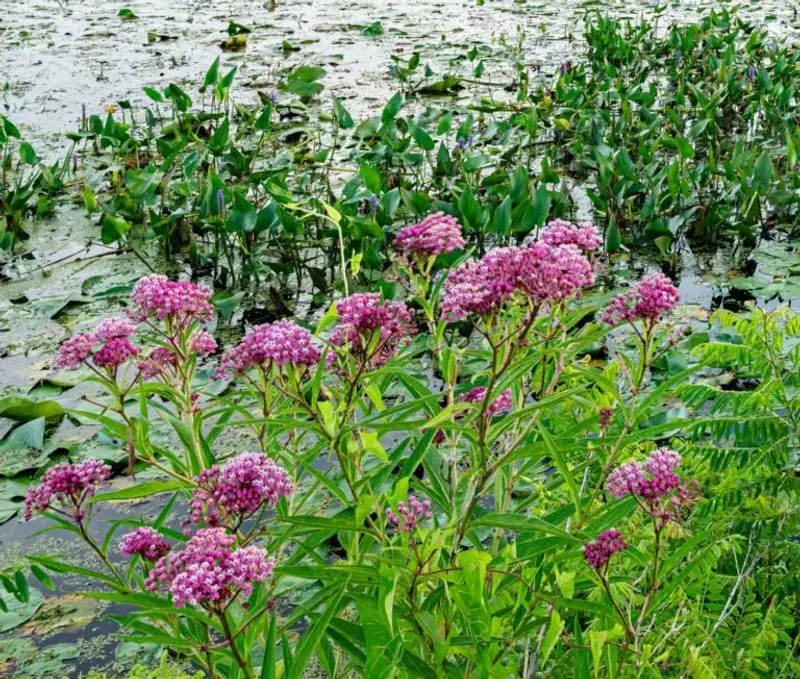
A soggy corner by the fence can become the prettiest butterfly stop on the block when swamp milkweed moves in. Unlike the tropical milkweed often sold in garden centers, this Florida native is built for moist ground and seasonal wet spots.
Swamp milkweed, also called Asclepias incarnata, likes sun and soil that stays damp without being underwater all the time. That makes it a smart pick for shallow rain gardens, low lawn edges, or the area where roof runoff naturally spreads after a storm.
Its deep roots help hold soil in place, while the upright stems keep the planting from looking flat or weedy. Pink flower clusters bring monarchs, bees, and other pollinators, so the fix feels more like a garden upgrade than a drainage repair.
Give it room to grow 3 to 5 feet tall, and skip heavy mulch piled against the stems. In much of Florida, it may die back in cooler months and return when warmth and moisture line up again.
2. Pickerelweed
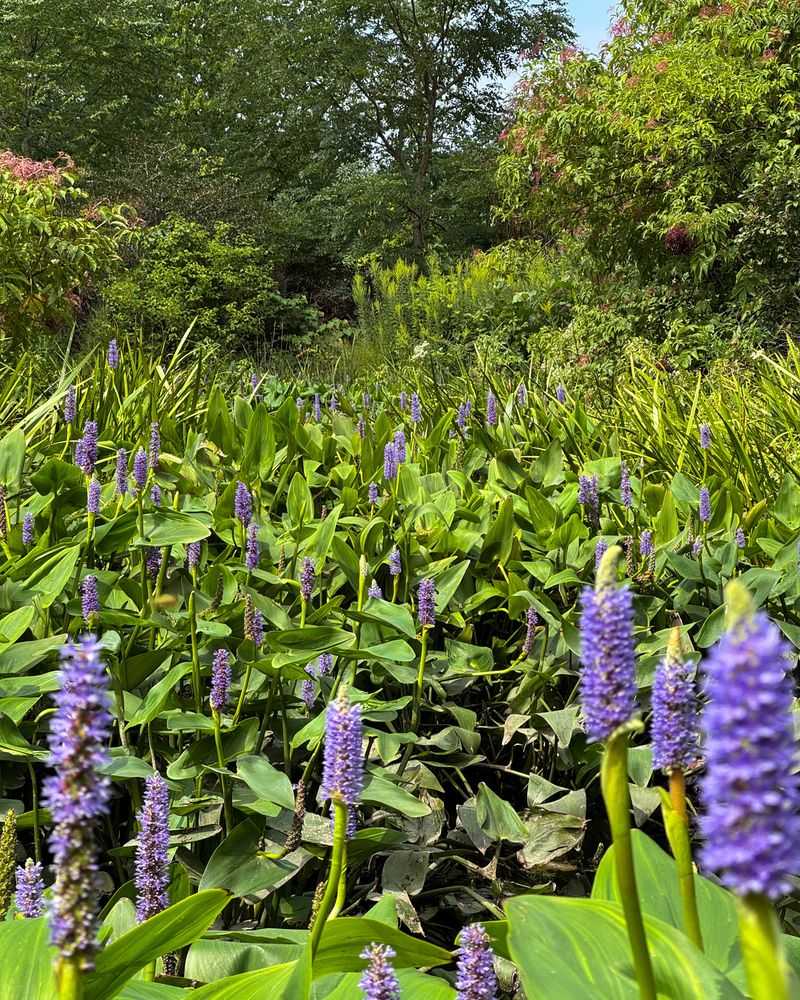
Got a low spot that looks like a mini pond for a day or two after heavy rain? Pickerelweed is one of the native plants that can make that situation look intentional.
Pickerelweed, or Pontederia cordata, naturally grows along pond edges, ditches, marshes, and wetland margins across Florida. In a home landscape, it works best where water collects regularly, such as the lowest part of a rain garden, a shallow swale, or beside a retention pond.
The glossy leaves rise above wet soil, and the purple flower spikes add strong color during the warm season. Bees visit the blooms, while the dense growth helps soften bare, muddy edges that can form when stormwater cuts through sandy soil.
Place it where moisture is dependable, because pickerelweed is not the right choice for a dry, high spot. If it is happy, it can spread, so use it where a fuller wet planting is welcome rather than in a tiny bed beside delicate plants.
3. Muhly Grass
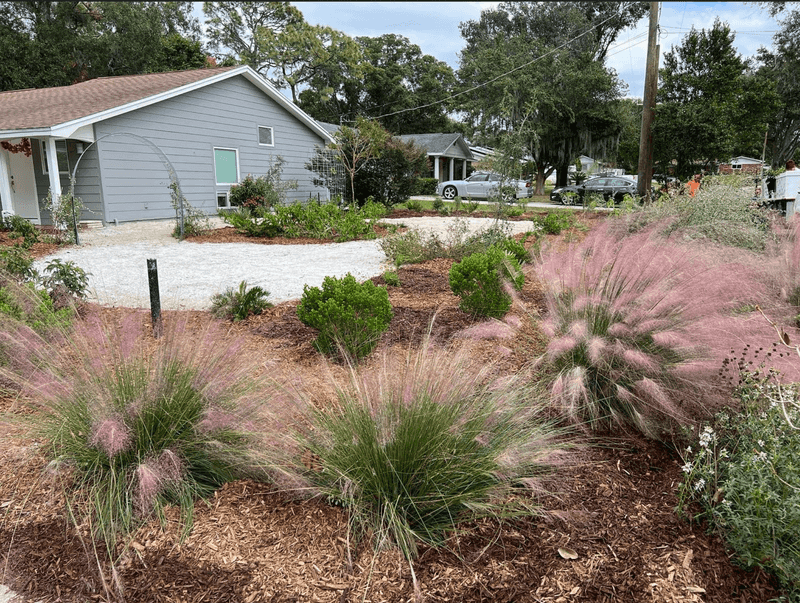
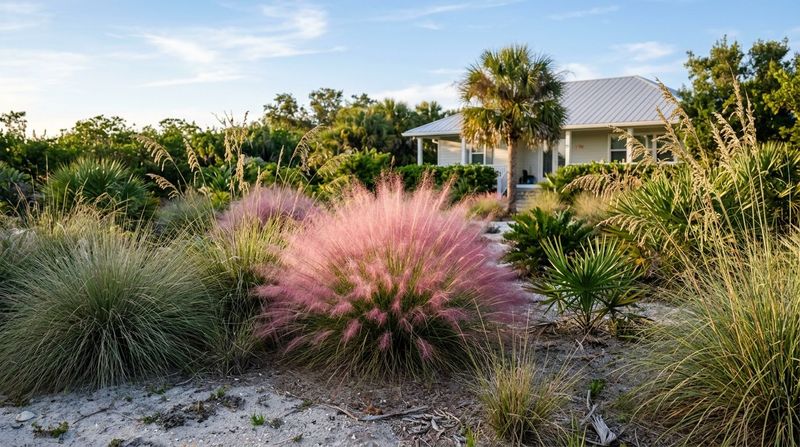
Some drainage fixes look too useful to be beautiful, but muhly grass proves otherwise. When its airy pink plumes show up in fall, even a plain swale can look like a designed landscape feature.
Florida native muhly grass, often sold as Muhlenbergia capillaris, is helpful along the upper edges of damp areas rather than in standing water. It handles sandy soil, heat, salt spray in coastal yards, and short wet spells once established.
Use it where rainwater runs across the yard and needs slowing down before it reaches a low area. The fine roots help stabilize soil, while the clumping form keeps mulch and sand from washing away as easily during downpours.
For a clean look, plant several in a curve along a drainage path instead of dotting one here and there. Cut back old growth in late winter before fresh blades appear, and avoid overwatering after the first establishment period.
Muhly grass is the best pick on this list for homeowners who want drainage help without making the yard feel wetland-like. It brings movement, curb appeal, and structure while staying fairly low-maintenance.
4. Blue Flag Iris
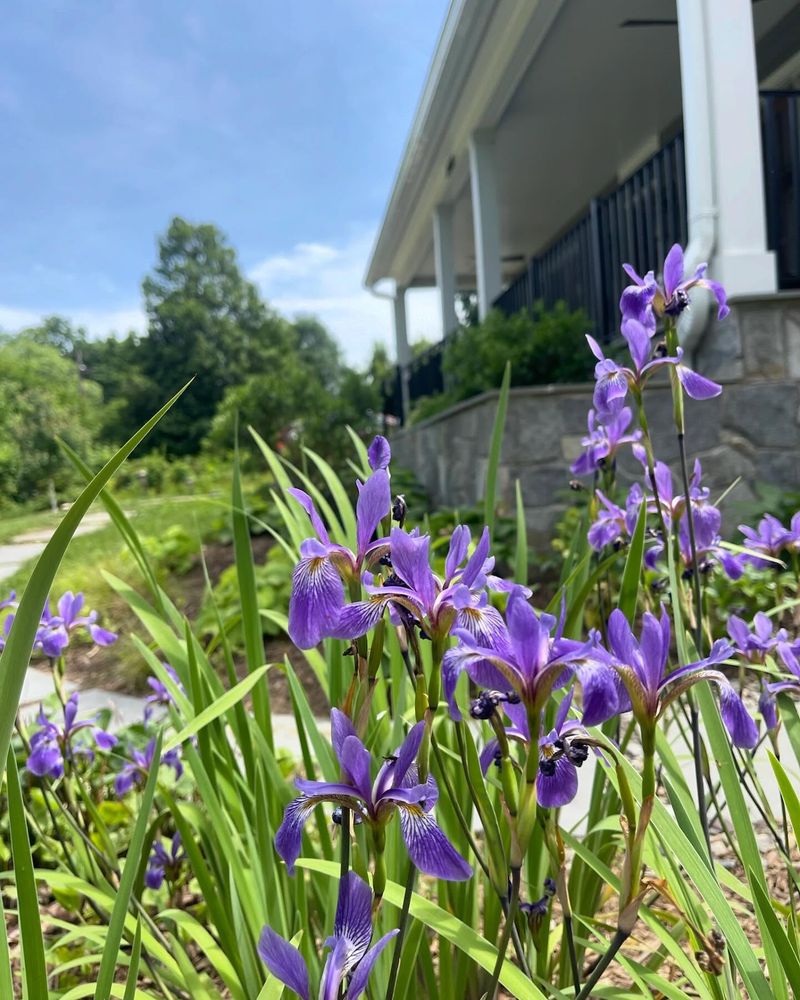
A strip of wet soil near a patio can feel like wasted space until blue flag iris turns it into a spring show. The flowers look polished enough for a front-yard bed, but the plant is tough enough for rain garden work.
Blue flag iris, commonly Iris virginica in Florida landscapes, grows well in moist to wet soil and can tolerate shallow standing water for periods of time. It is especially useful in the middle or lower zone of a rain garden, where runoff gathers before soaking in.
The sword-like leaves create a neat vertical shape, which helps balance softer plants like swamp milkweed or spreading wetland species. In bloom, the blue to violet flowers give a cool-color break from the hot pinks, yellows, and oranges often seen in Florida yards.
Plant rhizomes where they can stay moist, but do not bury them too deeply. If clumps become crowded after a few years, divide them to refresh growth and spread the drainage help to another soggy spot.
Blue flag iris is a strong choice when you want a native that looks ornamental first and functional second. Guests may notice the blooms before they realize the bed is handling stormwater.
5. Buttonbush
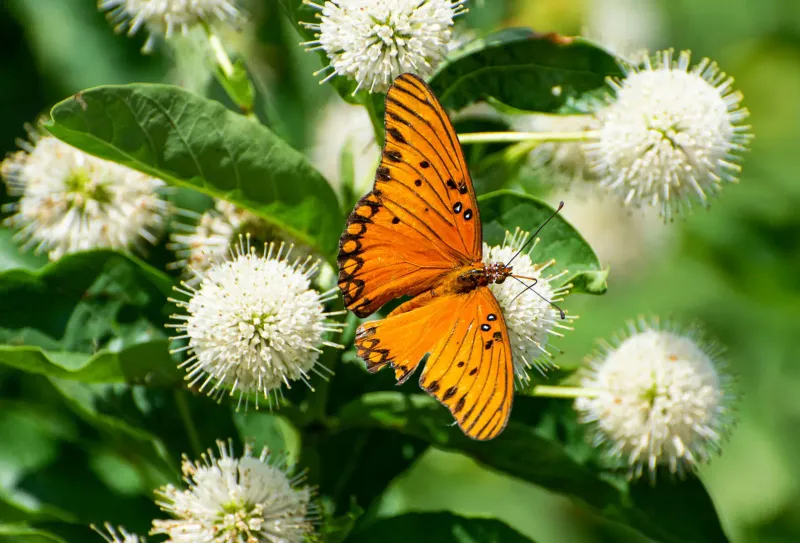
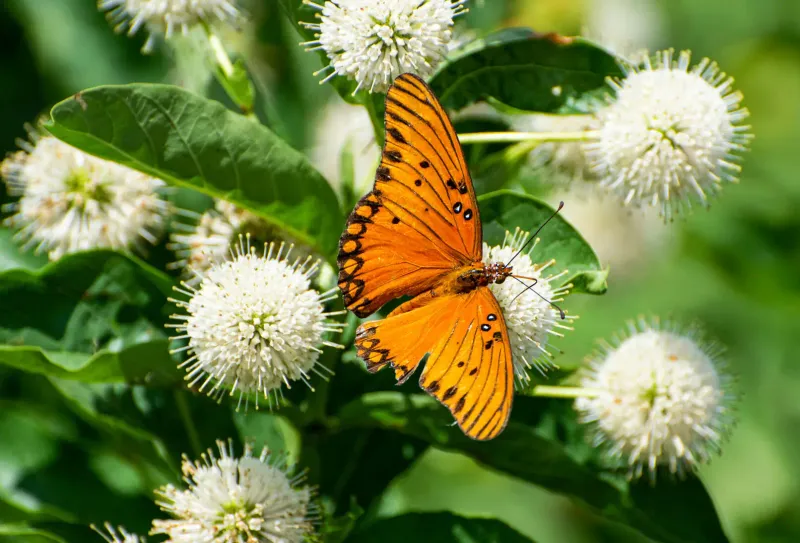
Round white flowers that look like tiny pincushions make buttonbush hard to ignore. For a homeowner staring at a damp back corner, that quirky bloom is a welcome bonus on a very practical shrub.
Buttonbush, Cephalanthus occidentalis, is native to wetlands, pond margins, and stream edges, so it is comfortable in places many common shrubs dislike. It can handle wet feet better than typical foundation shrubs, making it useful near a drainage basin, pond edge, or large rain garden.
Because it can grow into a sizable shrub, buttonbush is not the plant for a narrow strip beside the AC unit. Give it space in a back corner, along a property edge, or near a low area where a taller plant can screen a view and drink from moist soil.
The flowers draw butterflies, bees, and other beneficial insects, and the seed heads add interest after bloom. In Florida yards that border natural areas, it can also help create a softer transition between lawn and wetland-like ground.
Prune lightly if needed to shape it, but avoid forcing it into a tight little ball. Buttonbush looks best when allowed to keep a loose, natural form.
6. Soft Rush
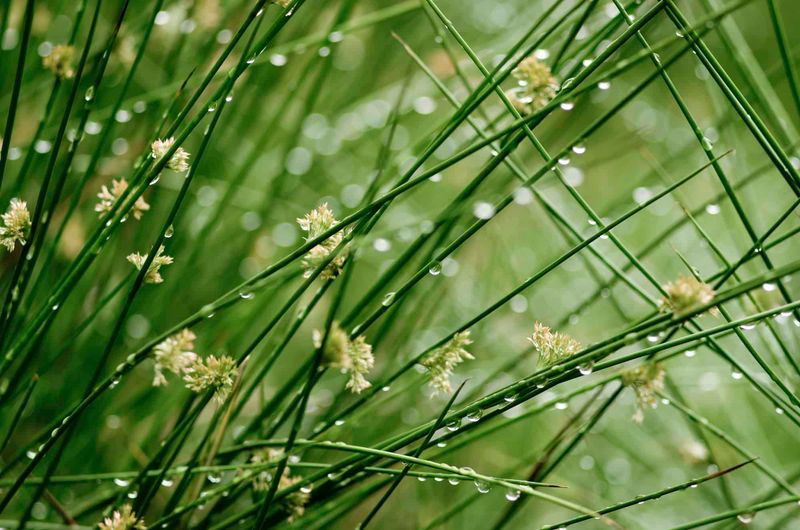
For the spot where water keeps carving a little path through the yard, soft rush brings order without pretending to be a flower bed star. Its upright green stems act like living punctuation marks in wet ground.
Soft rush, Juncus effusus, is a Florida native often found in moist areas, ditches, marshes, and pond edges. In home landscapes, it is useful in swales, rain garden channels, and low strips where runoff moves after a storm.
The plant forms dense clumps that slow water and help reduce the bare-soil look that often appears in drainage trouble spots. It has a clean, modern shape, which makes it surprisingly easy to use near patios, walkways, and contemporary landscapes.
Soft rush is not flashy, and that is exactly why it works. It blends with bolder bloomers like blue flag iris or swamp milkweed while doing quiet work at the waterline.
Plant it in sun to part sun where soil stays moist, and group several plants together for the best effect. Once established in the right spot, it usually asks for little more than occasional cleanup of older stems.
7. Fakahatchee Grass
Big yards with big water problems need a plant with some muscle. Fakahatchee grass brings that strength, especially where runoff rushes along a fence line or gathers near the back of a property.
Fakahatchee grass, Tripsacum dactyloides, is a large Florida native grass that can handle moist soil and periodic flooding once established. It grows in bold clumps with wide, arching leaves, giving drainage areas a lush, almost tropical look.
Because it can reach several feet tall and wide, placement matters. Use it as a backdrop, along a drainage ditch, beside a pond, or in a roomy rain garden where smaller plants would get overwhelmed.
The thick root system helps hold soil, which is useful in sandy Florida yards that wash out during intense rain. It also provides cover and habitat value for wildlife, making it a practical choice for homeowners who want a more natural backyard edge.
Cutting it back once a year can refresh the clump and keep the planting tidy. For small lots, choose carefully or use fewer plants, because Fakahatchee grass is more of a landscape anchor than a polite border filler.