
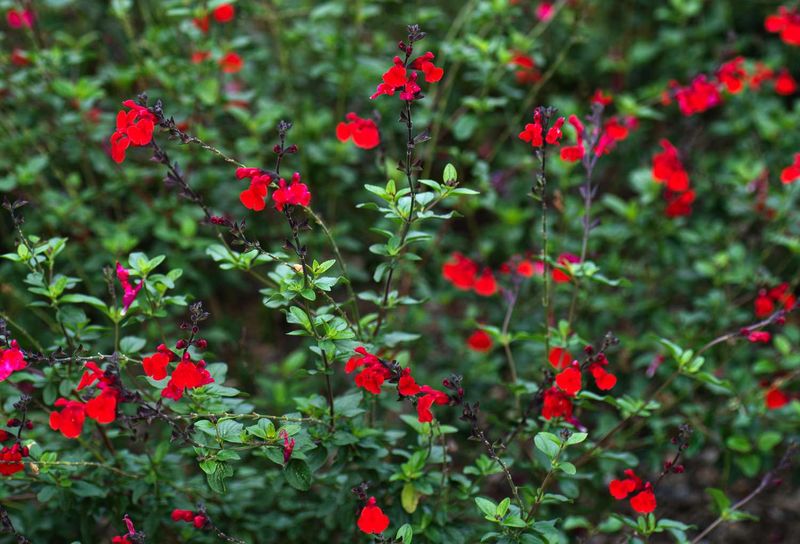
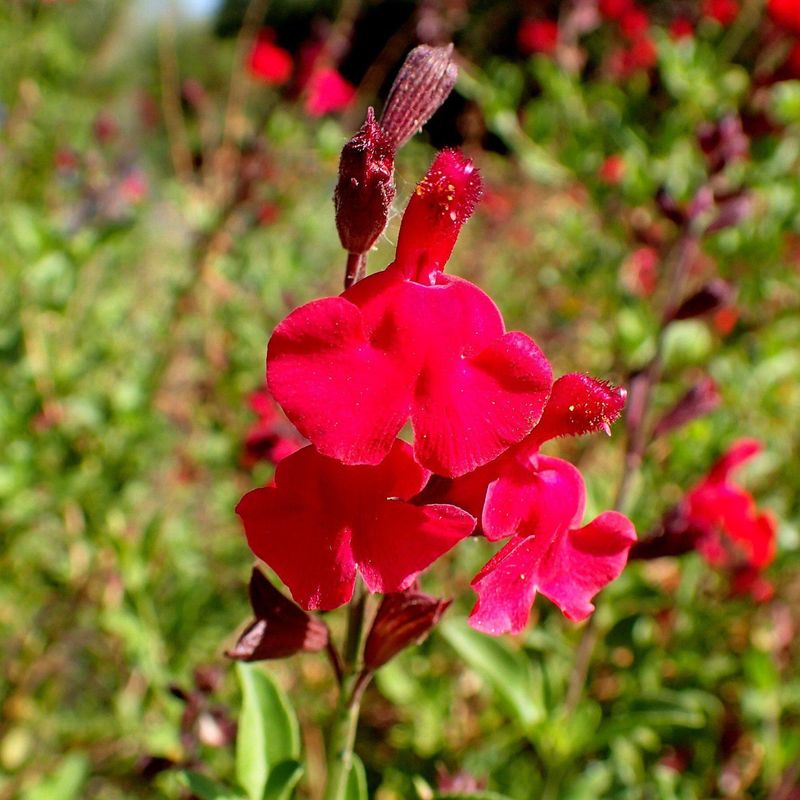
Autumn sage, known botanically as Salvia greggii, is a Texas-native plant that has been refreshing sunny borders with color from spring through fall for decades. Gardeners who feel stuck with sprawling, tired lantana borders are starting to take a second look at this compact, heat-tolerant subshrub.
Its tubular flowers draw hummingbirds and bees, its foliage holds up through much of the year in favorable spots, and its water needs drop considerably once roots are settled in. Understanding where it fits best, and where it may not, makes the difference between a thriving border and a frustrating one.
Autumn sage is a border plant worth a closer look
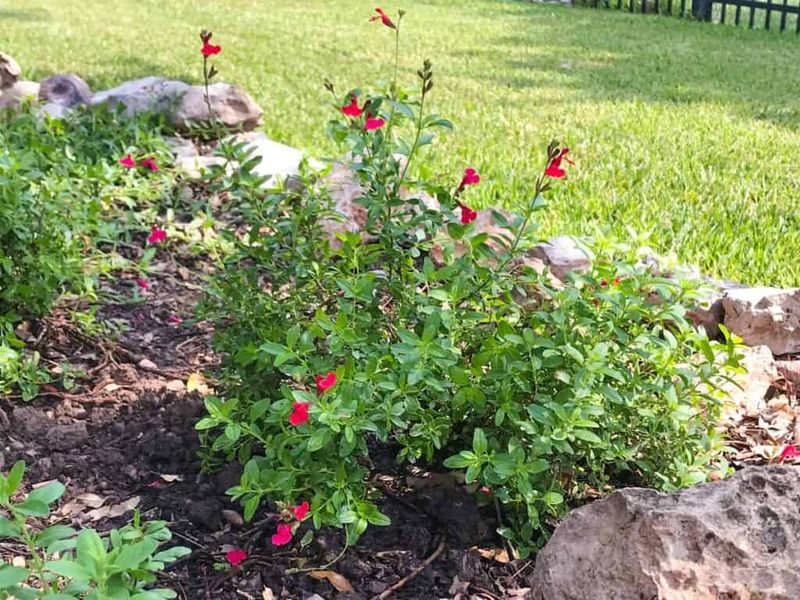
Salvia greggii goes by several names. Cherry sage and Red Chihuahuan sage are both used interchangeably, and some nurseries simply label it autumn sage.
Whatever the tag says, the plant itself is a Texas-native perennial or semi-woody subshrub that typically matures to roughly 2 to 3 feet tall and about as wide, depending on cultivar and growing conditions. The Native Plant Society of Texas identifies it as native to the Trans-Pecos and Edwards Plateau regions, though it is widely grown across much of the state.
One common mix-up worth clearing up immediately: autumn sage is not the same plant as Texas sage. Texas sage most often refers to Leucophyllum frutescens, a silvery-leaved shrub with purple blooms that responds to humidity.
The two plants look and behave quite differently, so confirming the Latin name before purchasing avoids confusion at the garden center.
What makes Salvia greggii worth considering for a tired border is a combination of traits that are hard to find together in a single plant. The NC State Extension plant profile describes it as suited to full sun, well-drained soil, heat, and low-water landscapes, making it a practical match for many Texas gardening conditions.
It is commonly recommended for borders, mass plantings, and pollinator gardens.
That said, autumn sage is a strong candidate for refreshing a border, not a guaranteed universal replacement for lantana. Specific site conditions, local climate, soil drainage, and which lantana is already growing in that spot all affect whether making the swap actually improves the garden.
Knowing those details upfront leads to a much better decision than treating any single plant as an automatic upgrade.
Its best performance comes from a long, not constant, bloom season
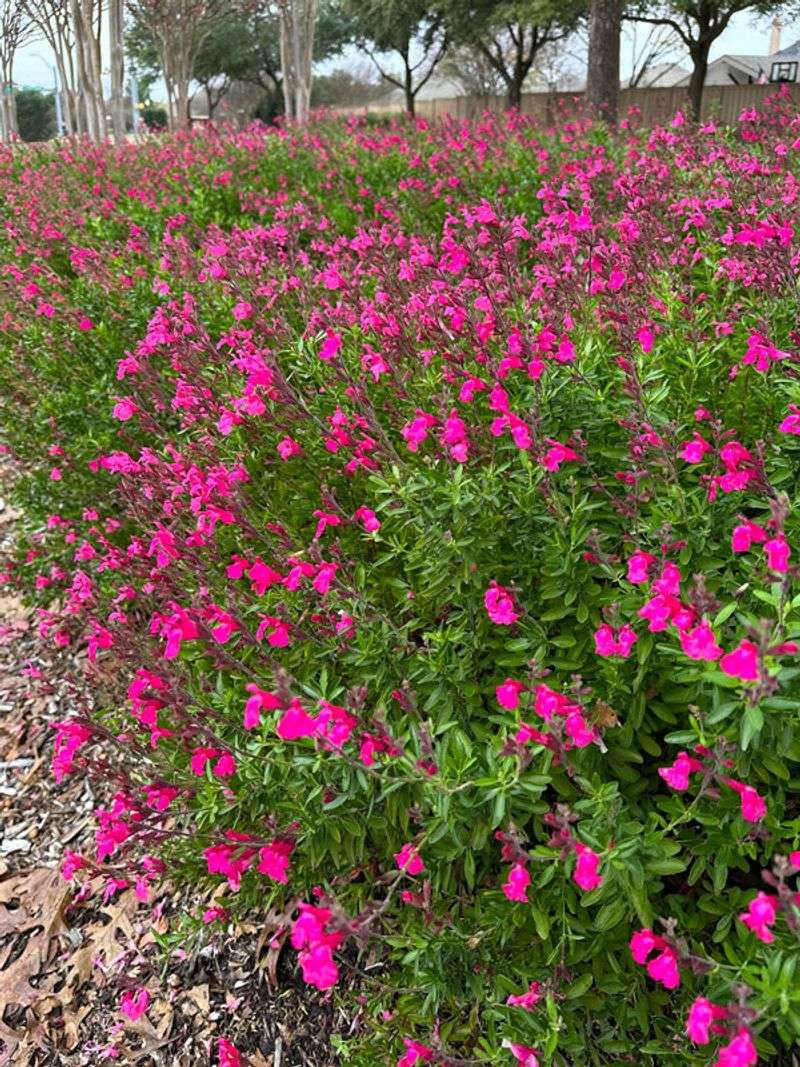
One of the most useful things to understand about autumn sage before planting it is that its flowering runs long, not uninterrupted. The Fort Worth Botanic Garden reports bloom from April through October, with heavier flowering concentrated in the cooler bookends of that window, meaning spring and fall are typically the showiest periods.
Summer is where expectations need adjusting. During peak Texas heat, flowering can slow noticeably or become sparse.
University of Arkansas Extension notes that the most showy performance arrives in spring and fall, with only scattered blooms during the hottest stretch. That summer lull is a normal part of the plant’s rhythm, not a sign that something has gone wrong.
In some warmer Texas regions, flowering can stretch into November or even December in mild years. The foliage situation in winter is similarly conditional.
The University of Florida IFAS plant profile describes autumn sage as semi-evergreen, and other regional sources agree that winter foliage depends heavily on zone, cultivar, freeze intensity, winter moisture, and local microclimate. Gardeners in warmer parts of Texas may hold green leaves through the coldest months, while those in colder zones should expect at least some dieback after hard freezes.
Thinking of autumn sage as a multi-season plant rather than a year-round bloomer sets realistic expectations and makes it easier to appreciate what it genuinely delivers. A border that looks good from April into fall, with two strong flowering peaks and reasonable foliage through much of the year in suitable climates, is a meaningful contribution to a Texas yard.
Will autumn sage fit your Texas yard?
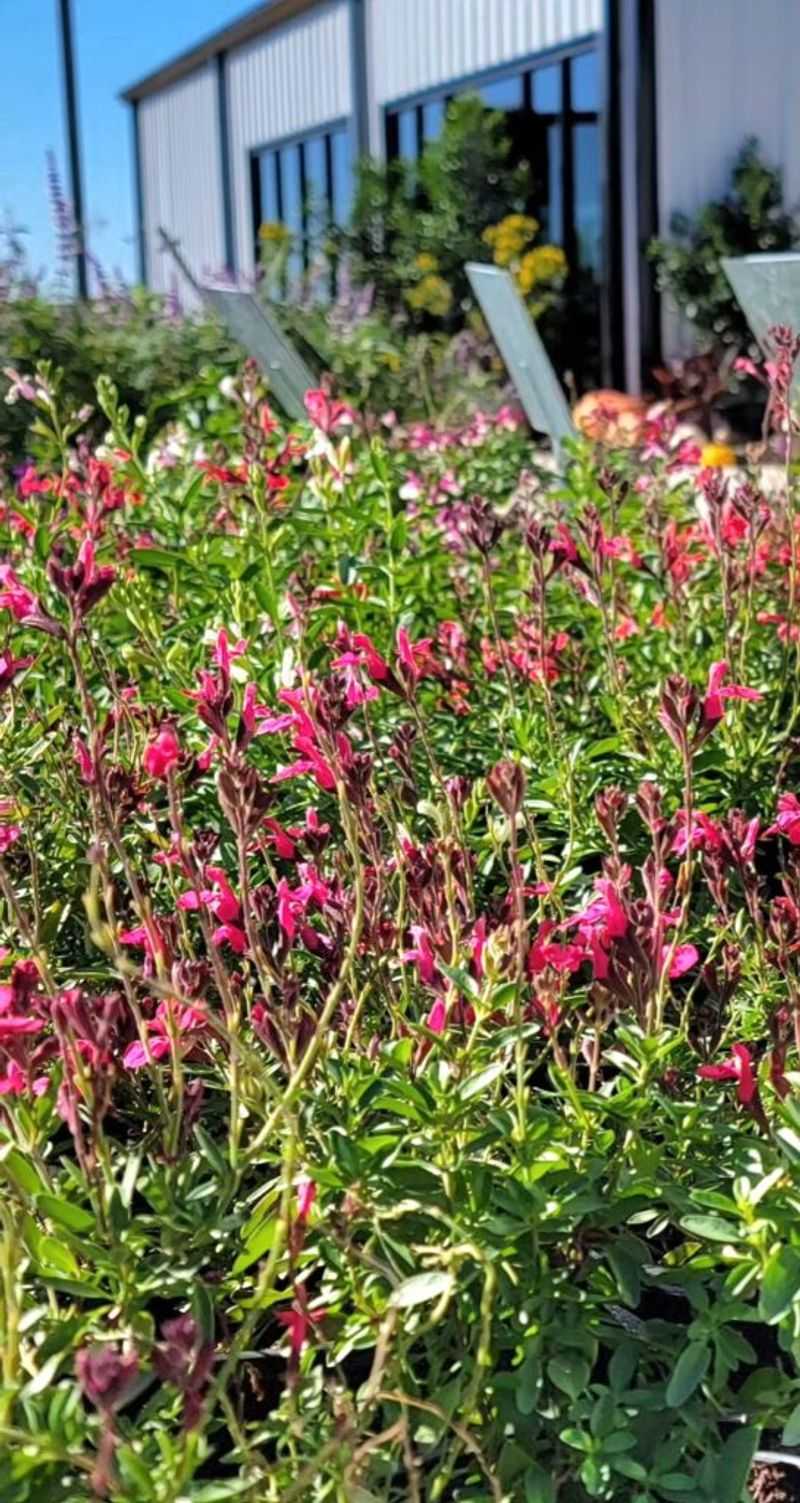
Before buying a single plant, run a quick site check. Autumn sage performs best in full sun, and that means at least six hours of direct sunlight daily.
Flower production drops in shadier spots. In the hottest parts of Texas, some afternoon shade can take the edge off during peak summer, but deep shade is not a workable substitute for real sun exposure.
Soil drainage matters at least as much as sunlight. NC State Extension recommends well-drained soil and specifically flags poor drainage as a problem.
Autumn sage is a poor choice for beds that stay soggy after rain or that sit in low spots where water pools. Even a drought-tolerant plant can fail quickly when its roots are sitting in water for extended periods, so checking how a bed drains after a heavy rain is a practical first step before planting.
Texas is ecologically diverse enough that regional differences genuinely change the outcome. Autumn sage is native to West Texas and the Edwards Plateau, where rocky, alkaline, freely draining soils and low humidity match its preferences closely.
NPSOT notes that the plant may need additional care when grown outside its natural range, which includes the more humid Gulf Coast and East Texas where heavier clay soils and higher moisture levels can stress the plant.
Freeze exposure is another variable. Autumn sage is generally reliable in USDA Zones 7 through 9, but cultivar selection affects cold hardiness, and a severe winter can cause dieback even in areas where the plant normally does well.
Texas A&M AgriLife’s Earth-Kind Plant Selector is a useful starting point for matching plants to local conditions by ecoregion, so using it before committing to a border-wide planting is time well spent. The goal is a site-specific decision, not a statewide guarantee.
A compact habit makes it useful along a border
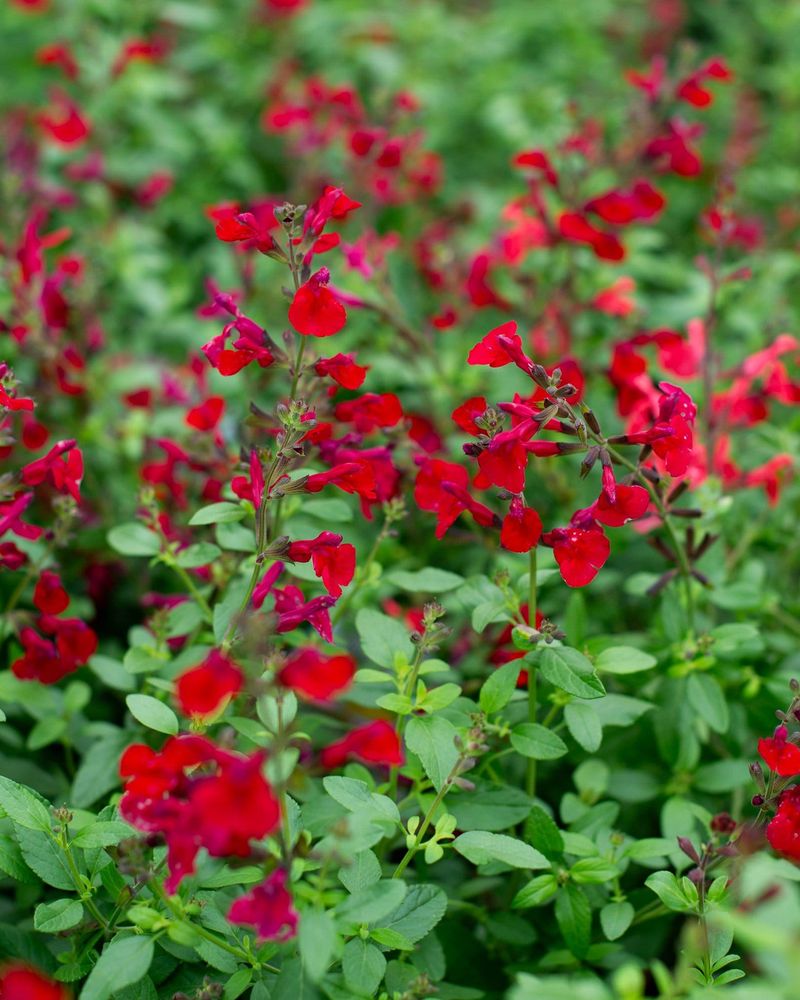
A mature autumn sage plant typically settles into a rounded mound roughly 2 to 3 feet tall and wide. That compact, self-contained form is one of its practical strengths along a border, because it does not require constant cutting back to stay in its lane the way some sprawling perennials do.
It fits front-of-border placement without overwhelming shorter plants behind it or crowding a walkway edge.
For massed edging installations, the University of Florida IFAS plant profile suggests spacing plants approximately 18 to 24 inches apart. At that spacing, a row of autumn sage fills in to create a cleaner, more intentional edge while still allowing enough airflow between plants to reduce moisture-related stress.
Closer spacing can create a denser look faster but may invite problems in humid conditions.
Beyond a straight border line, autumn sage works well in rock gardens, on slopes where drainage is naturally sharp, in raised beds, and even in containers where drainage can be controlled directly. The Fort Worth Botanic Garden highlights it as a strong choice for mass plantings in sunny, ecosystem-friendly gardens, which speaks to how well it holds visual interest when repeated across a larger area rather than used as a single specimen.
Because cultivars vary in mature size, checking the label before planting is worth the extra minute. Some selections stay closer to 18 inches, while others can push past 3 feet under favorable conditions.
Matching the cultivar’s expected size to the actual space available keeps the border looking intentional rather than crowded after a season or two of growth.
Establishment determines how little water the plant needs later
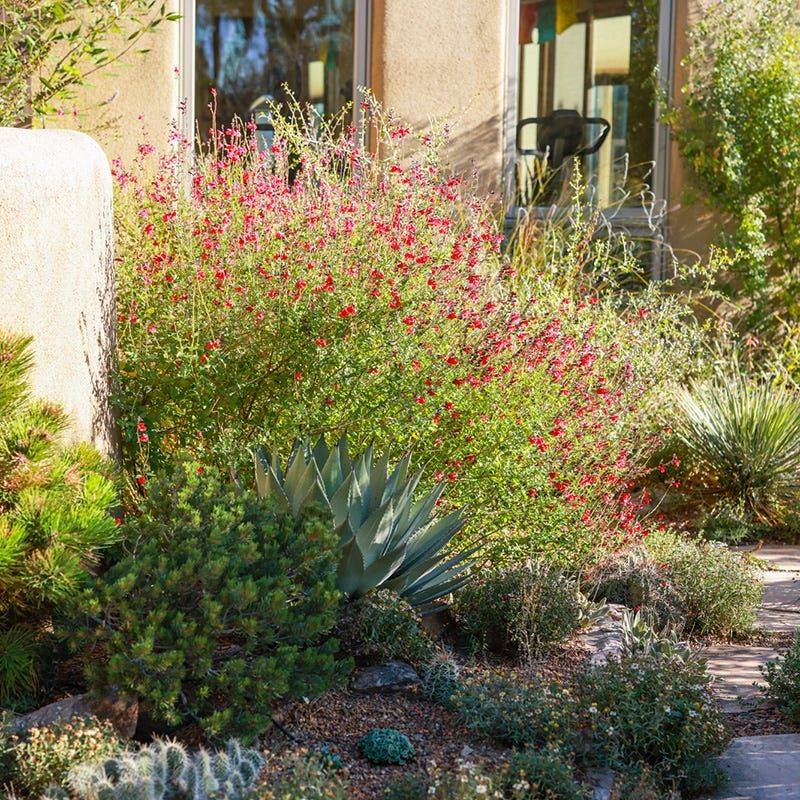
Autumn sage has a well-earned reputation as a low-water plant, but that reputation applies to established plants, not newly transplanted ones. A fresh planting needs regular watering while roots spread into surrounding soil, and skipping that establishment phase is one of the more common reasons the plant fails in an otherwise suitable site.
How long establishment takes depends on planting time, soil type, and summer heat. A plant put in the ground during a mild Texas spring may settle in within a few months.
One planted right before a brutal August can take longer and may need more frequent attention to survive. NC State Extension describes autumn sage as drought tolerant once established, which is accurate, but the phrase “once established” carries real weight in Texas conditions.
Even after roots are fully established, low-water does not mean no water. During prolonged heat waves, extended drought, or periods when municipal watering restrictions limit how often a gardener can run the irrigation system, mature plants can still benefit from supplemental water.
NPSOT’s plant profile supports this, noting that while the plant tolerates dry conditions, it is not entirely self-sufficient under every stress scenario Texas throws at a garden.
Drainage ties directly into watering success. A well-drained bed allows roots to dry out between waterings, which is what autumn sage prefers.
In soil that stays wet, even careful watering can lead to root problems. Pairing a sensible watering schedule with a site that actually drains well gives the plant the conditions it needs to develop the low-maintenance root system that makes it worth growing in a water-conscious Texas yard.
Pruning and freeze timing help keep the mound productive
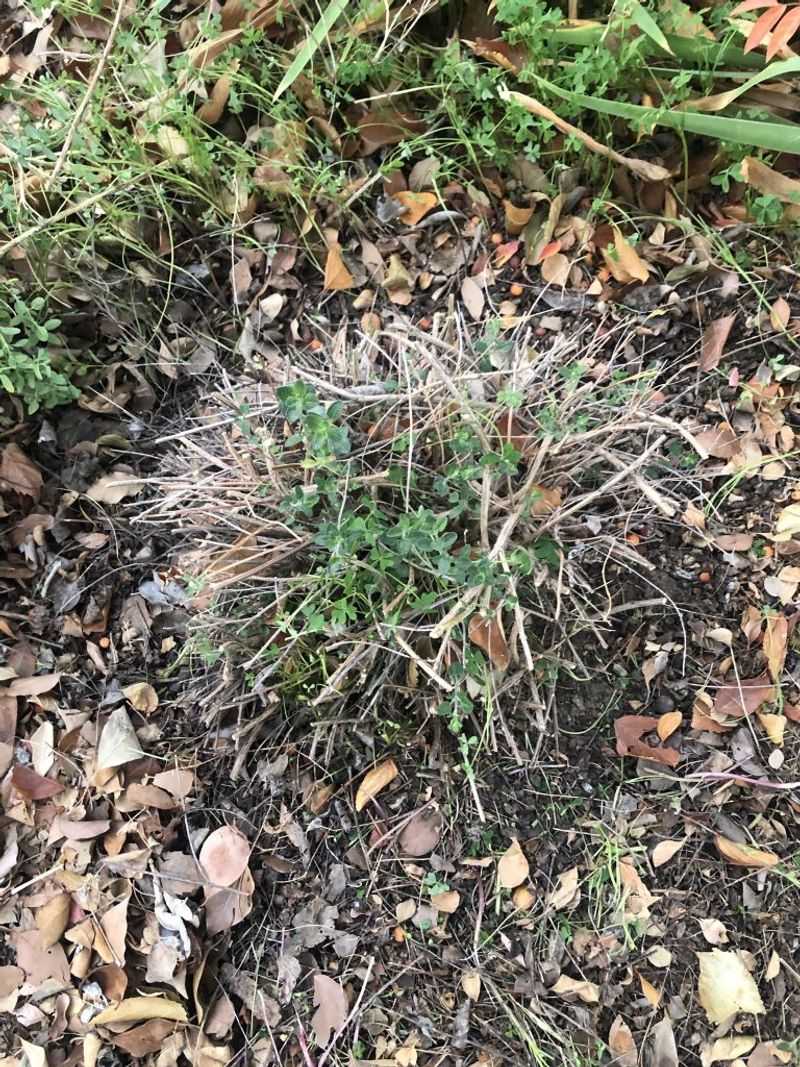
Left entirely to its own devices, autumn sage tends to develop a woody base over time and can become less floriferous and more open-centered. Periodic pruning helps limit that woodiness, encourages fresh growth from lower stems, and can keep the plant looking more like a tidy mound than a leggy shrub.
This does not mean pruning prevents woodiness in every plant under every condition, but it does make a consistent difference in how the plant looks and performs season to season.
The Fort Worth Botanic Garden recommends cutting autumn sage back to approximately 6 to 8 inches in late February and trimming by about one-third in late August to encourage stronger fall growth. Those two cuts, timed to the shoulders of the growing season, address both the late-winter reset and the mid-season refresh that leads into the fall bloom flush.
The late-February timing works well in much of central Texas, but gardeners in colder parts of the state or in areas with unpredictable late freezes should not treat that date as a hard rule. Texas A&M AgriLife guidance on protecting landscapes from frosts and freezes underscores why timing hard pruning around local freeze risk matters.
Cutting a plant back hard and then exposing fresh new growth to a late cold snap can set the plant back considerably.
The practical rule is to wait until freeze damage is clearly visible and the threat of additional hard freezes has passed before doing any heavy cutting. Texas A&M AgriLife Bexar County extension advice on timing cutbacks for fall bloom reinforces the value of the late-summer trim, which is easy to skip but pays off when fall temperatures arrive and the plant responds with a strong second flush of flowers.
The right comparison depends on which lantana you have
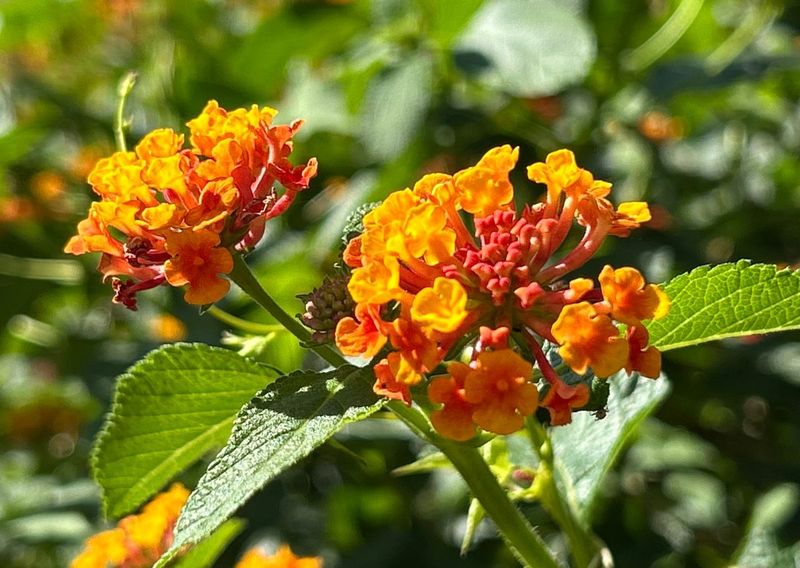
Lantana is not one uniform plant, and that distinction matters before deciding whether autumn sage is a sensible swap. Two very different plants share the common name lantana in Texas gardens.
Texas lantana, Lantana urticoides, is itself a Texas native, drought tolerant, and genuinely valuable to butterflies. Replacing it with autumn sage is not an automatic ecological upgrade; it is a trade of one native plant for another, each with different strengths.
Common lantana, Lantana camara, is a separate ornamental species or species complex. NC State Extension describes Lantana camara as non-native, and University of Florida IFAS lists Salvia greggii among alternatives to invasive lantana in North Florida landscapes.
In Texas, common lantana is grown widely as an ornamental, and some cultivars are sterile, which changes the invasive-risk picture. Knowing which species is growing in the border affects how meaningful a swap actually is.
On toxicity, UF/IFAS documentation on common poisonous landscape plants notes that common lantana carries documented toxicity concerns involving leaves and berries, with the risk depending on species and plant part. Replacing it does not automatically make a yard safer for pets or children unless the specific concern is tied to Lantana camara and the replacement plant’s safety profile is also confirmed.
Where autumn sage earns a genuine comparison advantage is in specific traits. Its tubular flowers attract hummingbirds in a way that lantana’s flat flower clusters do not, its compact mounding form can make a tidier edge, and its Texas-native identity gives it a regional ecological credential.
University of Arkansas Extension confirms that autumn sage’s showiest periods are spring and fall, so gardeners who want strong summer color may find that common lantana still outperforms it during the hottest weeks. The best choice comes down to drainage, the specific lantana in question, what the garden needs most, and which plant fits the site.
Choose autumn sage for the conditions it can actually handle
Autumn sage earns its place in a Texas border when the site genuinely suits it. A sunny bed with well-drained soil, a location outside the most humid Gulf Coast zones, and a gardener willing to water through establishment and prune twice a year gives the plant the conditions it needs to deliver spring-through-fall flowers, pollinator appeal, and a manageable footprint.
NPSOT’s profile and Texas A&M’s Earth-Kind Plant Selector both support using local ecoregion and site data to guide the decision rather than applying one recommendation statewide.
Expect a summer lull in flowering, possible freeze dieback in colder zones, and performance that varies by cultivar. The UF/IFAS plant profile reinforces that drainage and regional climate shape outcomes more than any single general recommendation can capture.
Autumn sage is a thoughtful lantana alternative for the right site, not a universal replacement or a verified statewide trend. A plant that fits its spot quietly earns its keep season after season, and that turns out to be recommendation enough.