
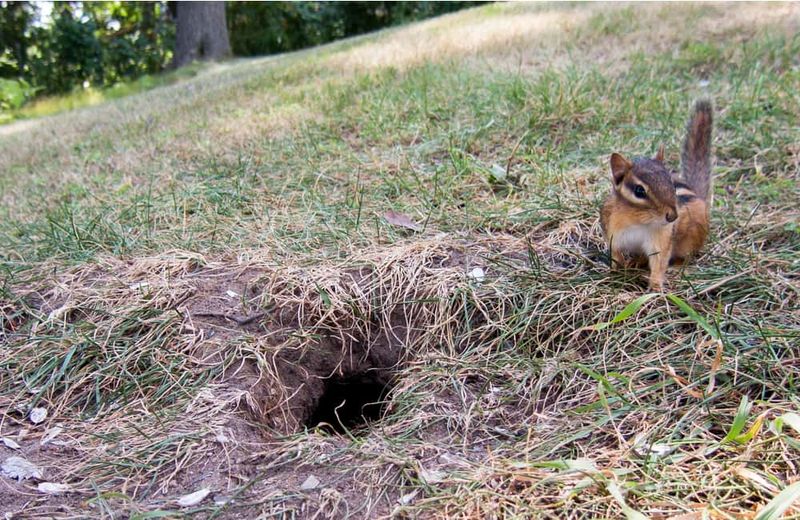
Small holes appearing near garden beds this fall have some North Carolina homeowners wondering whether chipmunks are to blame. In the Piedmont and western parts of the state, that concern is worth taking seriously, though the answer is rarely as simple as one animal and one purpose.
Understanding what those burrows actually do, and whether a chipmunk made them at all, can save a lot of unnecessary worry and misplaced effort.
First, confirm that the hole belongs to a chipmunk
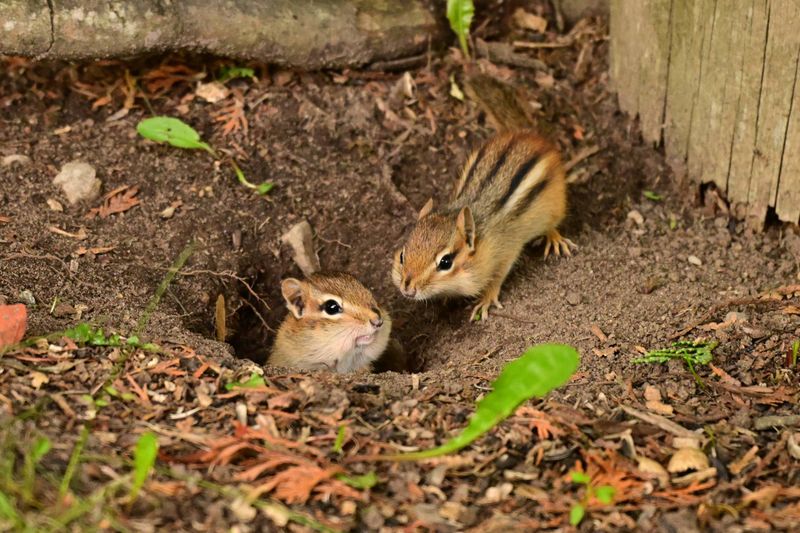
Before drawing any conclusions about what is happening under your garden bed, the first step is confirming which animal made the hole. NC State wildlife guidance places eastern chipmunks chiefly in the Piedmont and western part of North Carolina.
If you live along the Coastal Plain, a small burrow in your yard is more likely to belong to a vole, mole, skink, crayfish, or another burrowing species entirely. Assigning chipmunk guidance to the wrong animal can lead to wasted effort and missed solutions.
The entrance itself offers some clues. Chipmunk burrow openings typically measure about 1.5 to 2 inches across, and Penn State Extension’s chipmunk resource notes that the opening usually lacks a conspicuous soil mound because the animal carries excavated dirt away in its cheek pouches.
A neat, clean-edged hole with no pushed-up earth nearby is a useful starting point, but it is not enough on its own to make a definitive call.
The most reliable identification comes from watching the animal directly. Eastern chipmunks are small, ground-dwelling rodents with five dark stripes running down their backs and two pale stripes bordering each dark stripe.
They move in short, quick bursts and are most active during daylight hours, particularly in the morning and late afternoon. Look for feeding damage on bulbs, seeds, or seedlings nearby, and check for small paired tracks in soft soil.
A wildlife camera set near the opening for a few days can be especially useful when the animal is not cooperating with direct observation. NC State’s Extension Gardener Handbook recommends assessing actual damage before intervening, and University of Georgia wildlife-conflict guidance reinforces that proper identification is the foundation of any effective response.
A hole alone does not tell you who made it or why.
A chipmunk burrow serves several purposes
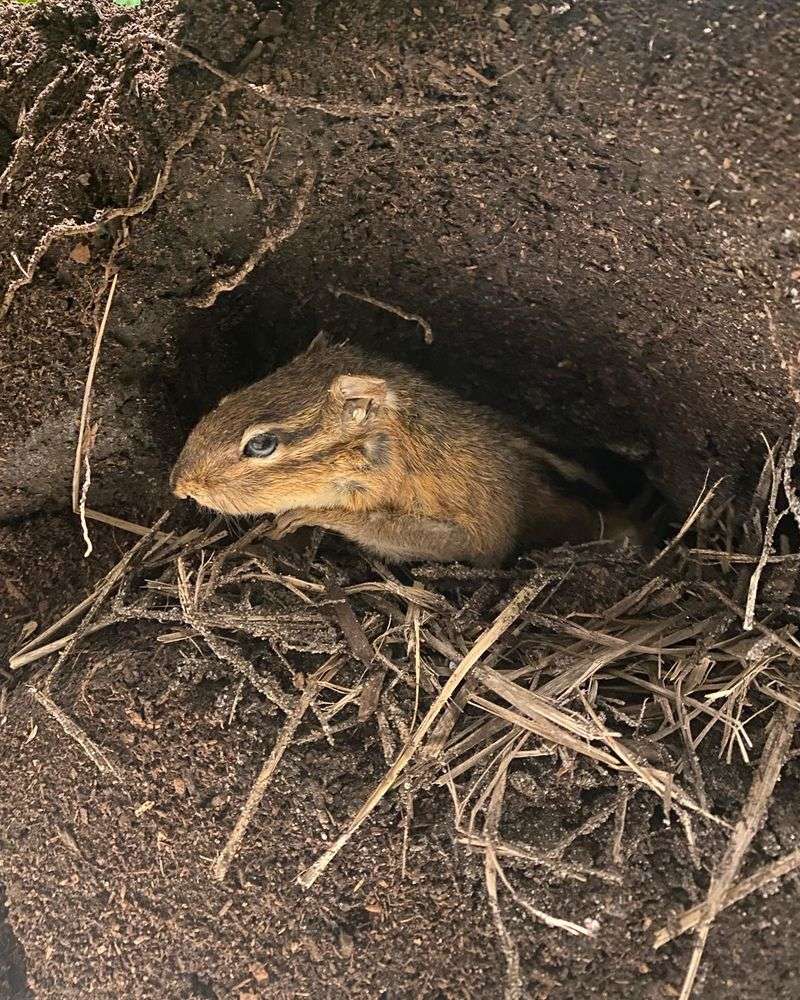
A chipmunk burrow is not simply a hole where the animal stashes stolen garden goods. Penn State Extension describes the burrow system as a multi-use structure that can include a main nest chamber lined with plant material, separate food-storage chambers, side pockets, and one or more escape tunnels.
Main tunnels may extend roughly 20 to 30 feet, though dimensions vary considerably depending on the individual animal and the terrain.
The nest chamber is where the chipmunk rests, raises young, and spends extended periods of winter inactivity. Food-storage areas hold the seeds, nuts, and other items the animal collects throughout the active season.
Escape tunnels branch off at angles and typically open in concealed spots under roots, rocks, or dense vegetation, giving the animal a fast exit when a predator appears.
Understanding this structure reframes what it means to find a burrow near a garden bed. The animal may have chosen that location because loose, well-amended garden soil is easier to dig than compacted ground nearby.
Animal Diversity Web’s account of Tamias striatus notes that chipmunks select burrow sites with good cover and convenient access to food sources, which means the garden bed may be attractive for its soil texture or its proximity to shrubs and leaf litter, not necessarily because the animal is targeting what you planted there.
Proximity to cover and easy digging conditions can matter as much as the presence of specific food. A burrow that happens to run under a raised bed is not automatic proof that every bulb in that bed is at risk.
Assessing what the animal is actually eating or disturbing, rather than assuming the worst from the tunnel’s location alone, keeps the response proportionate and better aimed.
Fall activity can make chipmunks more visible
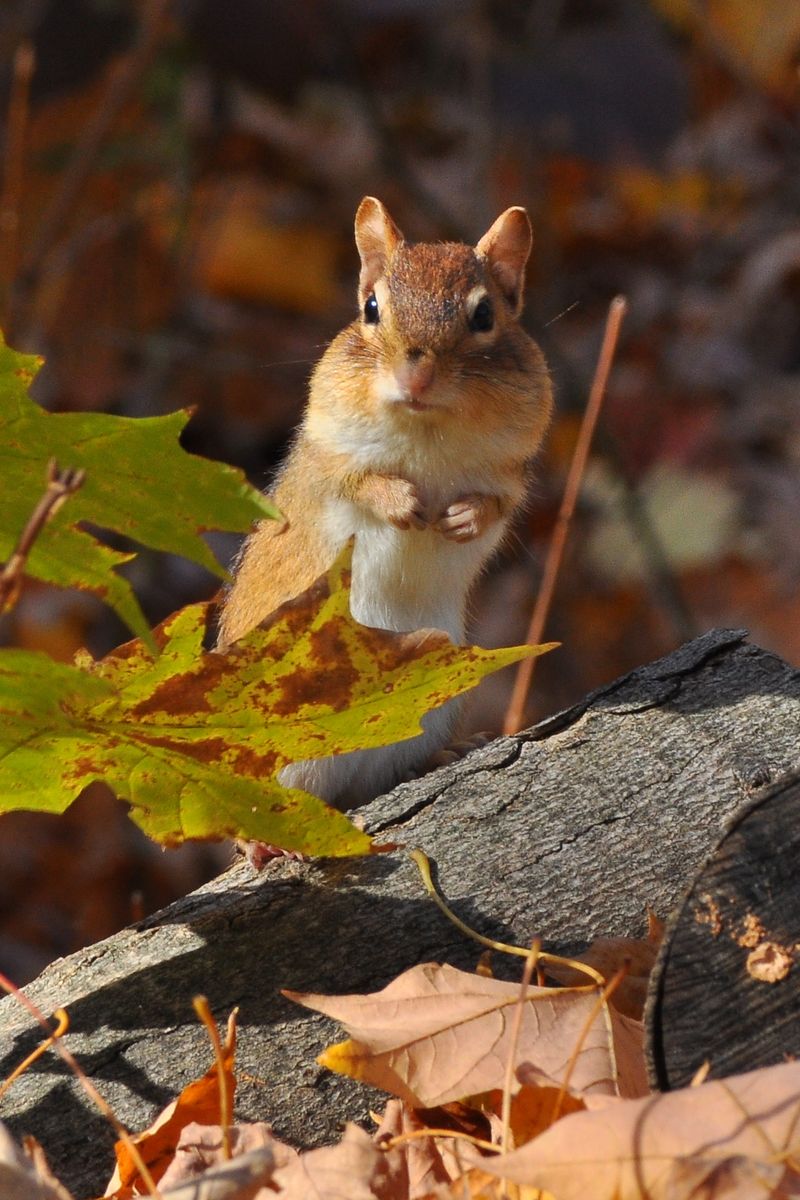
Autumn is the season when chipmunks shift into high gear, and that shift in behavior is often what homeowners notice first. Penn State Extension explains that eastern chipmunks collect and cache large quantities of food before winter, including seeds, nuts, berries, grains, mushrooms, and insects.
The repeated trips from food source to burrow, cheeks packed full each time, can make the animals appear suddenly abundant even when their numbers have not changed.
That visibility is worth separating carefully from any claim about population size. Seeing chipmunks frequently in fall is a reasonable sign that they are caching food actively, not reliable evidence that your yard has experienced a population surge.
Published research on mast-seed pulses and small-mammal populations shows that a strong acorn or beech crop can support higher chipmunk reproduction in some forest settings, and a related study on pulsed resource effects suggests these dynamics can influence abundance over time. But neither study establishes a universal autumn population spike in North Carolina suburban yards, and more recent chipmunk population research confirms that the relationship between food availability and local numbers is complex and plays out across seasons rather than within a few weeks.
Other factors can also push activity up without changing population size. Young animals dispersing from their birth territories in late summer and early fall may pass through yards they did not previously occupy.
Bird feeders and garden produce can concentrate foraging trips near the house. A warm, dry fall can extend the active season longer than usual.
Once the caching work is done, chipmunks enter extended periods of winter inactivity. Research on eastern chipmunk torpor makes clear that this is not continuous deep sleep like that of some other hibernating mammals.
The animals wake periodically throughout winter to draw on their stored food, which is why a well-stocked burrow matters so much to their survival. The fall rush you observe is preparation for that long, interrupted rest.
Read the food and cover around the burrow
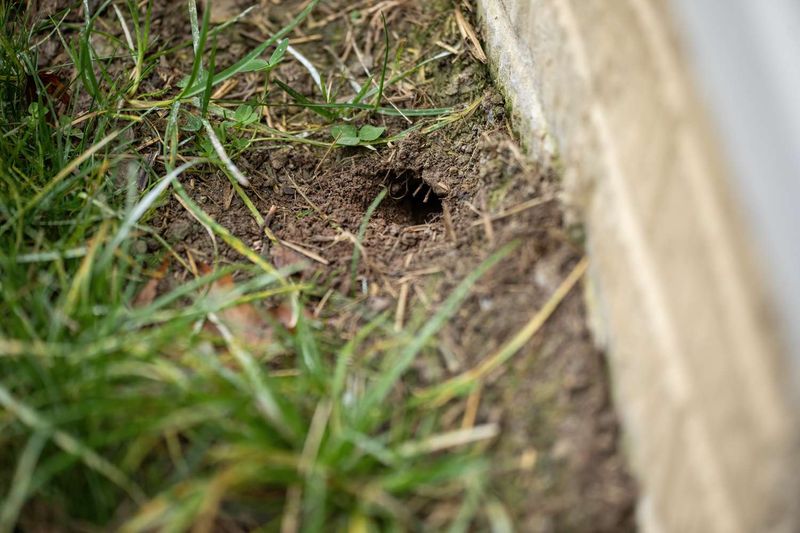
Once you have confirmed the animal and noted the burrow’s location, a walk around the nearby yard can tell you a lot about why activity is concentrated there. NC State’s Extension Gardener Handbook recommends assessing actual plant or structural damage rather than drawing conclusions from sightings alone, and that assessment starts with reading what the yard is offering.
Bird feeders are one of the most common contributors. Spilled seed accumulates quickly under tube feeders and platform feeders, and chipmunks are efficient at exploiting that supply.
Pet food left outdoors, ripening vegetables, fallen fruit, and stored bulbs or seeds near the soil surface can all concentrate foraging trips in the same area. Wildlife damage identification guidance from ICWDM notes that chipmunks frequently target flower bulbs, seeds, seedlings, and newly planted material, so a freshly planted fall bed sits at higher risk than an established perennial border.
Cover matters just as much as food. Brush piles, wood stacks against buildings, dense continuous ground cover, and gaps along foundation edges all give chipmunks concealed routes to move between food and burrow without exposure.
ICWDM’s chipmunk prevention guidance identifies these features as enabling conditions rather than guaranteed causes, meaning their presence increases the likelihood of conflict near structures but does not explain every yard situation.
At the same time, logs, brush, and seed-producing native plants serve real ecological value in a yard. NC State’s guidance on snags and downed logs describes how these features support a range of native wildlife.
The practical question is placement: wildlife-friendly habitat features work best when they are not positioned directly beside foundations, vulnerable beds, or active bird feeders. Track what is actually being damaged over several days before deciding how much intervention the situation warrants.
Protect vulnerable plantings without removing all habitat
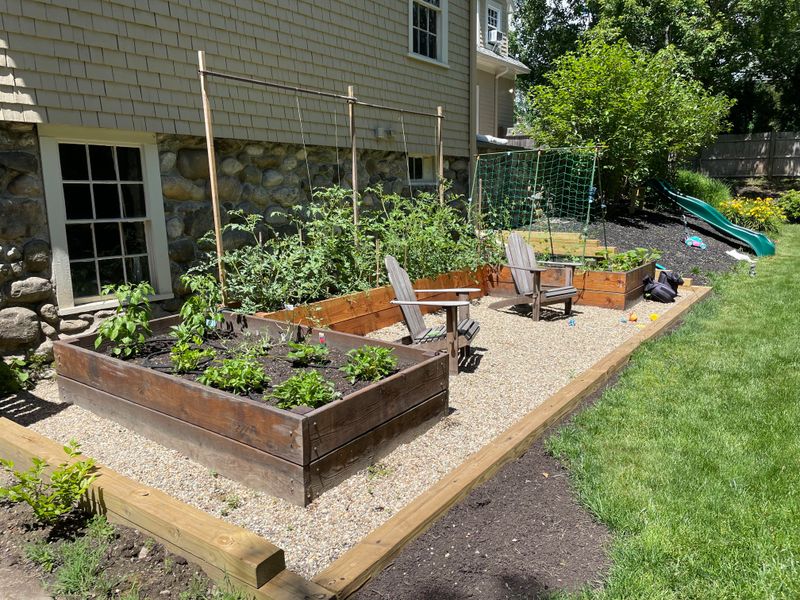
Protecting specific beds does not require turning the yard into a bare, inhospitable space. Targeted measures applied close to vulnerable plantings can reduce conflict while leaving the rest of the property intact for wildlife.
The most reliable physical barrier for bulbs, seeds, and seedlings is 1/4-inch hardware cloth laid over the planting area. Penn State Extension recommends extending the material several inches beyond the planting margins and pressing or burying the edges into the soil so animals cannot slip underneath.
A light covering of mulch on top keeps the barrier in place and less visible.
For raised beds or containers, the same hardware cloth can line the bottom before soil goes in, adding a layer of protection that does not interfere with planting. ICWDM’s prevention and control guidance notes that barriers work best when they are installed before damage begins rather than after an animal has already established a foraging habit in a particular spot.
Reducing the food supply near problem areas is the next practical step. Move bird feeders at least 15 to 20 feet from the foundation or the affected bed, use feeders with catch trays to limit spillage, and bring pet food inside after feeding.
NC State’s wildlife handbook and University of Georgia conflict-resolution guidance both recommend securing supplemental food sources as a foundational step before other measures.
Selectively reducing cover near the problem area, such as moving a wood pile away from the foundation or thinning dense ground cover that runs directly to a vulnerable bed, can limit concealed access routes without stripping the yard of habitat value. NC State notes that logs and brush serve native wildlife broadly, so the goal is repositioning rather than wholesale removal.
Repellents labeled for chipmunk use are available but offer variable, temporary results that require repeated application and do not replace physical barriers or habitat adjustments.
Escalate when burrowing threatens a structure
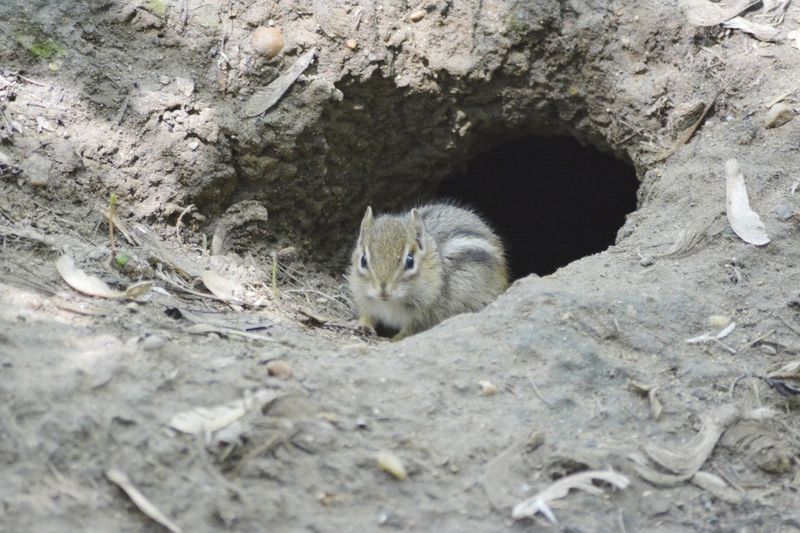
A burrow running under a garden bed in the middle of the yard is a different concern from one opening at the base of a retaining wall, stair, patio, foundation, or pool liner. Soil removed from beneath a hard surface can create voids that shift or crack the structure above over time.
ICWDM’s chipmunk damage identification resource specifically flags burrows near patios, stairs, retaining walls, and foundations as warranting closer attention than isolated holes in planting beds, and Penn State Extension echoes that the structural risk justifies a more active response.
Repellents can be part of that response, but only as a supplement. Products must be legally registered for the intended use and applied exactly according to label directions.
ICWDM’s prevention and control guidance describes repellents as variable and temporary, requiring repeated application to maintain any effect, and notes that they do not guarantee complete control. They may slow activity near a treated area while other measures are put in place, but they should not be the only tool when structural integrity is at risk.
If closing a burrow becomes necessary, confirm that the animal is not inside before filling the opening. Watch the entrance during peak activity hours, in the morning and late afternoon, until you see the chipmunk leave and stay out for a period.
Then fill the hole firmly with compacted soil or gravel and cover it with a heavy flat stone or paver. Sealing an active burrow without confirming occupancy can trap the animal underground or cut off a nursing female from her young.
Trapping and any form of lethal control in North Carolina are governed by wildlife laws that may involve seasons, permits, and local restrictions. NC State’s Extension Gardener Handbook and the North Carolina animal damage control guide both advise consulting the North Carolina Wildlife Resources Commission or a certified Wildlife Damage Control Agent before trapping or taking any wildlife.
NC State’s agricultural chemicals manual on animal damage control outlines further restrictions on chemical methods, which should not be attempted without professional guidance.
Use the lightest response that fits the evidence
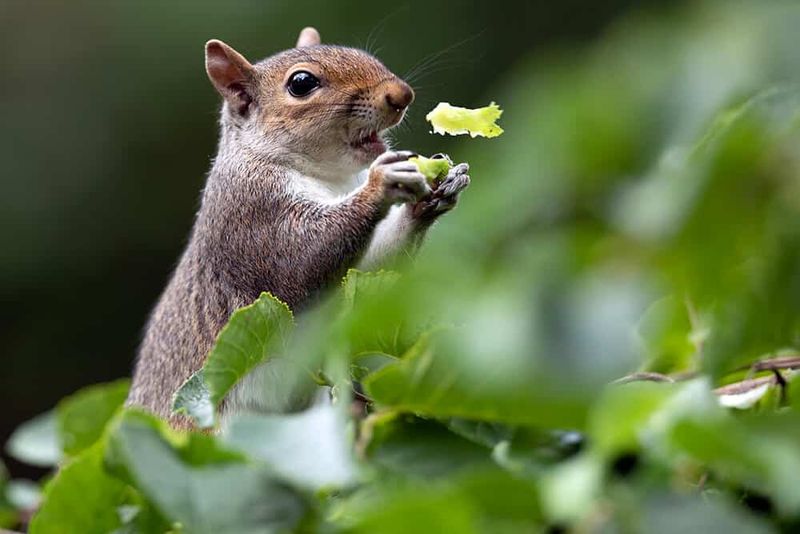
Working through this in order keeps the response proportionate. Confirm the animal first, because a hole alone does not identify its maker and Coastal Plain residents should be especially careful before applying chipmunk guidance.
Once identification is solid, treat increased fall activity as a likely sign of food gathering and caching rather than proof of a population surge. Then read the yard for the food sources and cover features that may be concentrating activity near beds or structures you care about.
Physical barriers protect vulnerable plantings directly and reliably. Habitat adjustments near problem areas reduce the conditions that draw repeated visits.
Structural burrows deserve faster, more deliberate attention than isolated holes in a planting bed. NC State recommends tolerating minor wildlife activity when actual damage is negligible, and ICWDM’s control guidance ties intervention to documented damage rather than to the presence of the animal alone.
Penn State Extension reinforces that a burrow is a shelter, a nursery, and a winter pantry all at once, not automatic evidence of a serious problem.
A chipmunk working a Piedmont yard in October is doing exactly what the season asks of it. Whether that activity becomes a problem worth addressing depends on what the yard offers and where the tunnels run.