
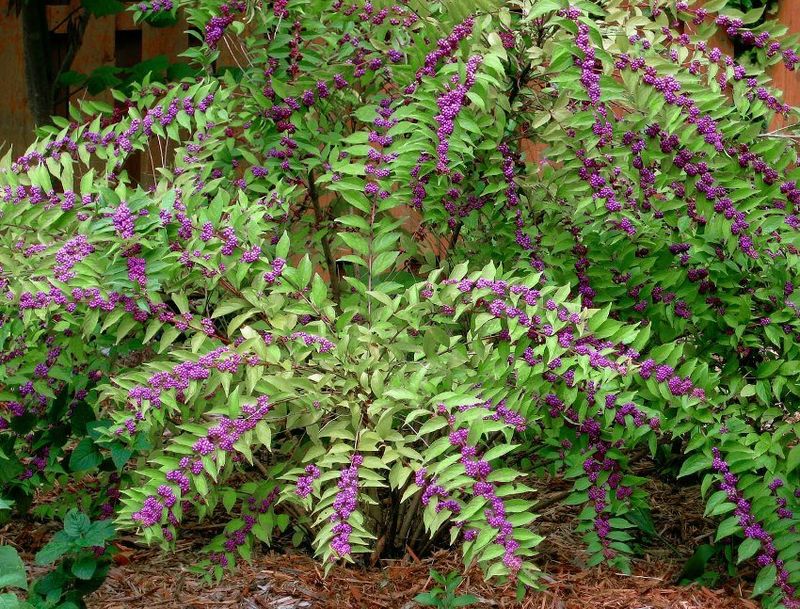
A native shrub called American beautyberry has been getting attention from North Carolina homeowners who want a natural way to push ticks back from the wooded edge of their yards. The appeal makes sense – it grows wild across the state, feeds songbirds, and its leaves contain compounds that researchers have actually tested against ticks.
Before you start digging planting holes along your tree line, though, the science behind that reputation deserves a closer look. What the research found is more specific than most social media posts let on, and knowing the difference could change how you protect your family this summer.
American beautyberry explains the appeal—but not the promise
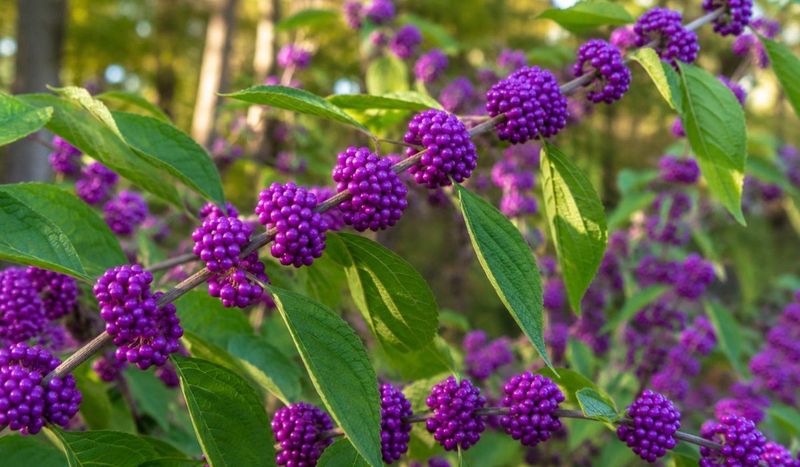
Callicarpa americana earns its common name the moment those vivid purple berries appear in late summer and hang on well into fall. NC State Extension’s plant profile confirms it as a native, deciduous shrub found across North Carolina’s Coastal Plain, Piedmont, and Mountains, and describes it as generally reaching about 3 to 8 feet tall and 3 to 6 feet wide at maturity.
It prefers full sun to part shade and needs good drainage to stay healthy – conditions that matter when you are choosing where to site it.
The wildlife value is real and well documented. Songbirds including mockingbirds, catbirds, and robins consume the berries, and small mammals such as foxes and raccoons also feed on them, according to the USDA Forest Service species review.
University of Georgia Cooperative Extension guidance on native shrubs for birds reinforces that point, listing beautyberry among the native shrubs most reliably used by wildlife in the Southeast. That is reason enough to consider planting it on a suitable site.
The tick-repellent reputation comes from a different source: compounds found in crushed beautyberry leaves. Researchers identified specific chemicals in the plant’s foliage and tested them against ticks in a laboratory setting.
That finding, covered in more detail in the next section, is what sparked the headlines. What it does not support is the idea that a living shrub planted at the edge of your yard will stop ticks from crossing onto your lawn – those are two very different claims, and conflating them leads homeowners toward false confidence.
The study tested beautyberry compounds, not a planted shrub
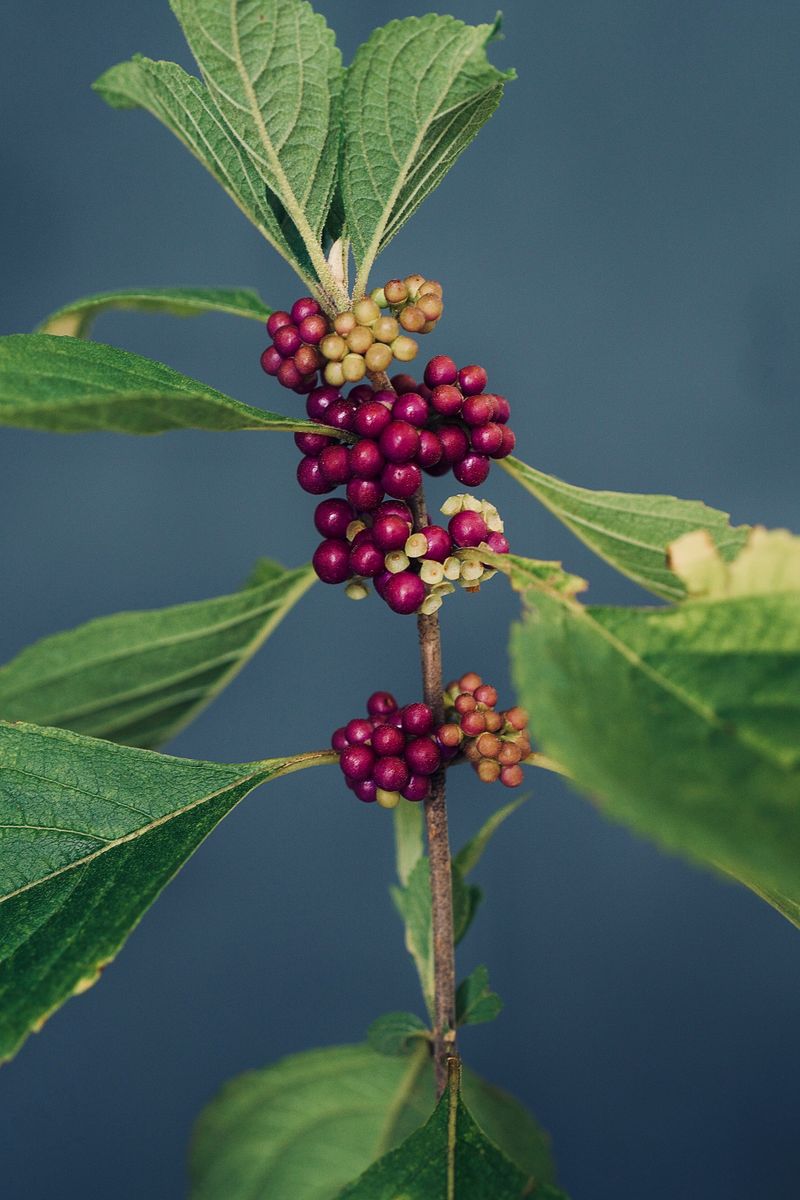
The research behind beautyberry’s tick reputation centers on two compounds: callicarpenal and intermedeol, both isolated from the plant’s leaves. Scientists extracted these compounds and applied them at measured concentrations to cloth, then ran controlled laboratory bioassays to see how tick nymphs responded.
The peer-reviewed study published in the Journal of Medical Entomology found that the compounds repelled blacklegged tick nymphs under those controlled conditions.
What the researchers did not test is equally important to understand. They did not place an intact beautyberry shrub in a yard and observe whether ticks avoided it.
They did not measure tick movement across a lawn, track tick abundance near planted shrubs, or assess any change in disease risk for people living near the plant. The USDA Agricultural Research Service summary of the project describes the work as a promising lead for developing new repellent products – not as a recommendation to plant the shrub as a yard-scale tick barrier.
The full Carroll et al. research paper also shows that performance against lone star tick nymphs was weaker and less consistent than results against blacklegged tick nymphs. That gap matters considerably in North Carolina, where lone star ticks are widespread and frequently encountered by people spending time outdoors.
Treating beautyberry as a proven yard-control device goes well beyond what the data show. The more accurate framing is that beautyberry holds genuine scientific interest as a source of repellent compounds, and it is also a worthwhile native plant – but neither of those facts means the shrub itself creates a tick-free zone around your property.
North Carolina’s tick mix limits the claim
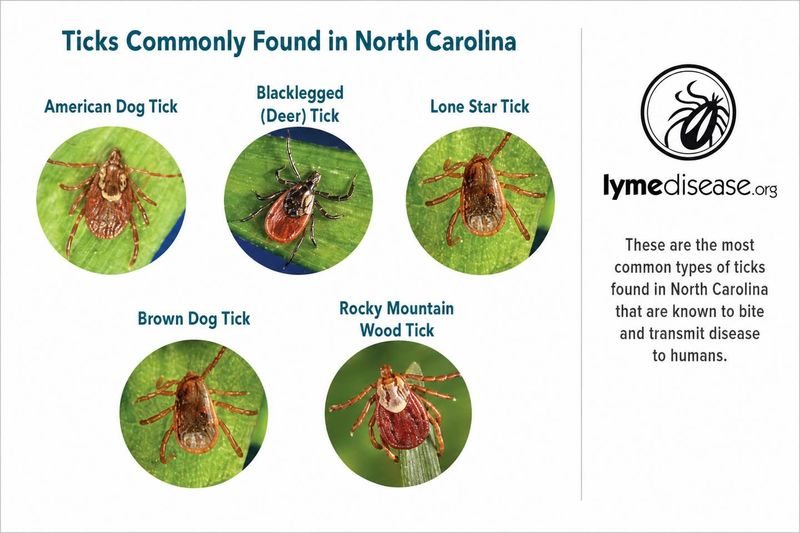
North Carolina homeowners are not dealing with a single tick species, and that reality matters when evaluating any repellent claim. The state has three medically relevant species that commonly bite people: the lone star tick, the American dog tick, and the blacklegged tick (also called the deer tick).
Each carries different disease risks and occupies somewhat different habitat niches, though all three can show up in wooded and brushy yard edges across the state.
The NC Department of Health and Human Services tick identification poster illustrates all three species and their size at various life stages – a useful reference for anyone doing tick checks after yard work. Lone star ticks are particularly abundant across the Piedmont and coastal regions.
A North Carolina outdoor-worker tick surveillance study covering 2011 and 2012 found that lone star ticks accounted for more than 90 percent of the ticks submitted by participants during that period. That figure reflects the study population and its two-year window, not a universal statewide estimate for every year or setting, but it does signal how dominant lone star ticks can be in many parts of the state.
Since the beautyberry laboratory results were strongest against blacklegged tick nymphs and weaker against lone star tick nymphs, a claim built on that research cannot honestly promise control across North Carolina’s broader tick mix. CDC guidance on where ticks live also reminds homeowners that ticks are not limited to wooded edges – they occur in grassy, brushy, and wooded areas and can be found throughout residential yards.
The edge between your lawn and the tree line is a useful place to focus management attention, but treating it as the only entry point underestimates where exposure can actually happen.
Use a CDC-recommended buffer to manage the yard edge
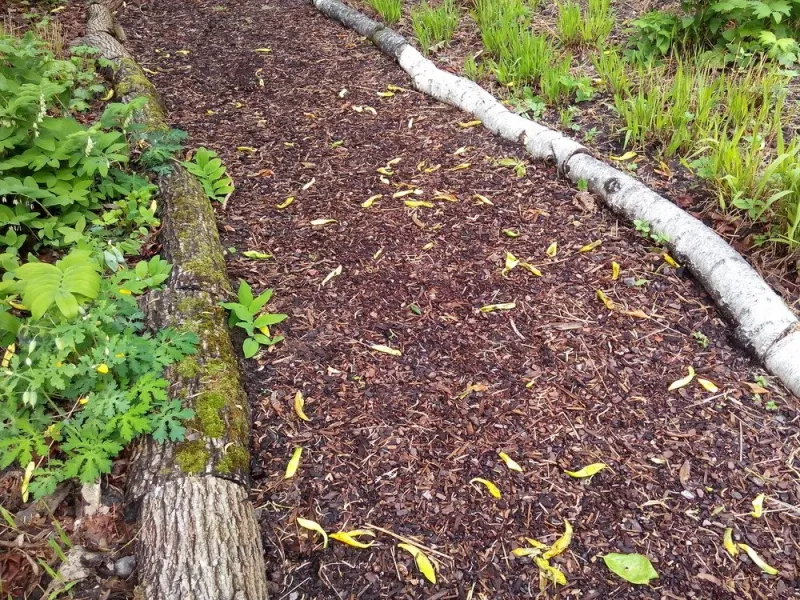
The most practical, evidence-supported thing you can do at the lawn-woodland boundary is install a 3-foot-wide strip of wood chips or gravel. CDC guidance on preventing tick bites specifically recommends this buffer as a measure that may restrict tick migration into recreational areas.
Ticks prefer moist, shaded environments, and a dry, sunny strip of coarse material creates conditions they tend to avoid crossing. Running the strip continuously along the full edge of your yard where lawn meets woods gives it the best chance of doing what it is designed to do.
Pair that strip with a few other habitat-management steps that address the broader conditions ticks prefer. Remove leaf litter and brush from areas where your family spends time – play zones, garden paths, patios, and seating areas.
Keep grass mowed short, since tall grass holds moisture and gives ticks a better vantage point for questing. Prune lower branches and thin dense shrubs where feasible to let more sunlight reach the ground and dry out the microenvironment near high-use spaces.
CDC Lyme disease prevention guidance echoes these steps as part of a layered approach to reducing exposure.
The CDC and Connecticut Agricultural Experiment Station guide on tick management in the landscape reinforces that these habitat changes can make parts of a yard less favorable to ticks without eliminating them entirely. The strip is not a wall.
Ticks can still enter the yard through other routes – hitching rides on deer, rodents, birds, or pets – and personal protection remains necessary. Think of the buffer as one useful layer in a broader plan, not the single intervention that solves the problem.
Plant beautyberry without creating a dense high-use edge
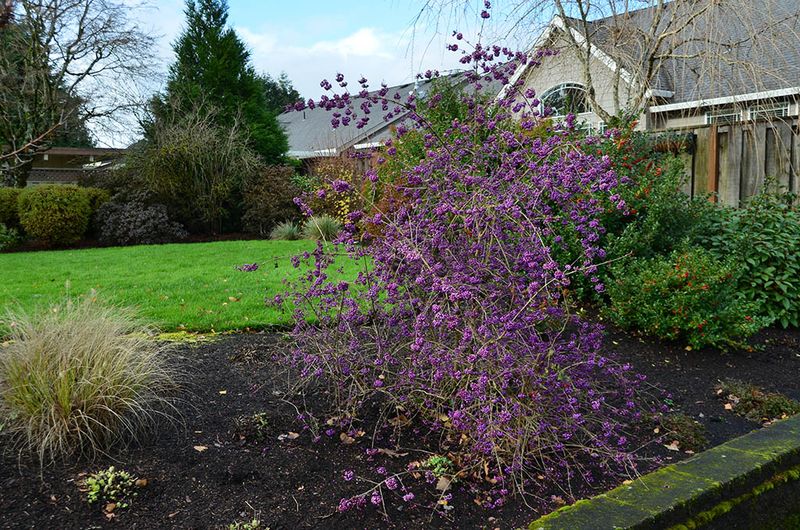
Beautyberry can absolutely earn a place in a North Carolina yard – on the right site and with a thoughtful plan for the area around it. NC State Extension recommends a spot with full sun to part shade and good drainage, and that guidance also points toward the kind of open, well-lit conditions that are less hospitable to ticks.
A shrub planted where it gets genuine sun, with clean ground beneath it rather than a deep mat of leaf litter, fits far better into a tick-aware landscape than one tucked into a damp, shaded corner.
Placement relative to where your family actually spends time matters just as much as sun exposure. Avoid siting beautyberry or any dense shrub directly beside play equipment, patios, garden benches, or paths that see regular foot traffic.
An evidence review of environmental tick-management strategies notes that dense groundcover and shrub density in frequently used areas are recognized management concerns, because dense vegetation near high-use spaces can increase the chance that a person brushes against tick-harboring foliage. Spacing plants generously and keeping the ground beneath them clear of accumulated debris goes a long way toward offsetting that risk.
Deer and rodents are worth considering in this context too. Both can carry ticks onto your property, and CDC tick-prevention guidance includes reducing deer and rodent access as a supporting landscape measure.
The Connecticut Agricultural Experiment Station tick management guide reinforces that point. Beautyberry berries do attract wildlife, which is part of its ecological value, so siting it farther from the patio rather than immediately beside your seating area is a reasonable tradeoff.
Research on shrub structure and tick abundance confirms that moist litter and dense vegetation are associated with higher tick presence, a reminder that native status supports biodiversity but does not by itself demonstrate tick control. Plant beautyberry where it suits the site, manage the surrounding area for lower density and more sunlight, and separate the shrub from the spaces where your family lingers.
Keep personal and pet protection in the plan
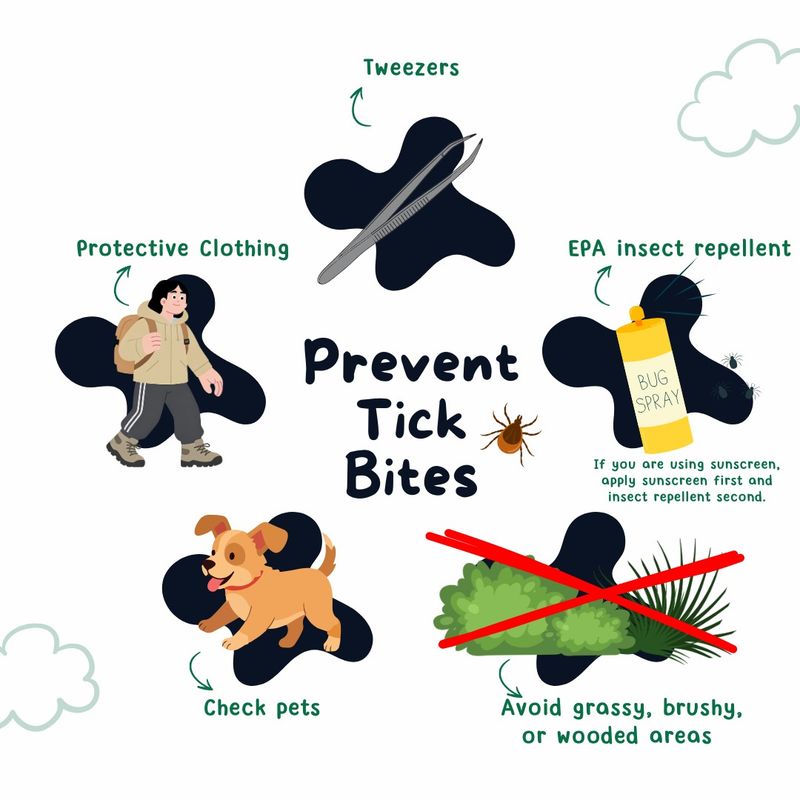
Yard management can make parts of your property less comfortable for ticks, but no combination of shrubs, strips, or mowing eliminates them. Personal protection is what closes the gap.
Start with an EPA-registered skin repellent applied according to the product label. The EPA’s repellent finder tool lets you search by active ingredient, hours of protection, and age group, which makes it easier to choose the right product for each person in your household.
DEET, picaridin, IR3535, and oil of lemon eucalyptus are among the active ingredients with established efficacy records.
EPA guidance on insect repellents explains that registered repellents have been reviewed for both safety and effectiveness, which is a meaningful distinction when comparing them to untested alternatives. That point applies directly to homemade beautyberry-leaf preparations.
Rubbing crushed leaves on skin, children, or pets is not supported by the available evidence. The laboratory research involved purified compounds applied at controlled concentrations – not fresh foliage pressed onto an arm – and no published data establish a safe dose, effective duration, or protection level for any topical home application of beautyberry material.
Permethrin-treated clothing adds another layer of protection for yard work, hiking, or any extended time near wooded or brushy areas. Treat boots, socks, pants, and shirts according to the product label, or purchase pre-treated clothing.
After every outdoor session, do a full-body tick check – including the scalp, behind the ears, under the arms, around the waist, and behind the knees. CDC Lyme disease prevention guidance recommends showering within two hours of coming indoors and tumbling clothes in a hot dryer to kill any ticks that may have come inside.
Pets need veterinarian-recommended tick prevention year-round, since they move freely between high-risk areas and living spaces. CDC tick-prevention guidance is clear that homeowners should not rely on pesticide spraying alone to reduce infection risk – and the same logic applies to any single landscape intervention, including the wood-chip strip.
Plant beautyberry for its value, and manage the edge for exposure
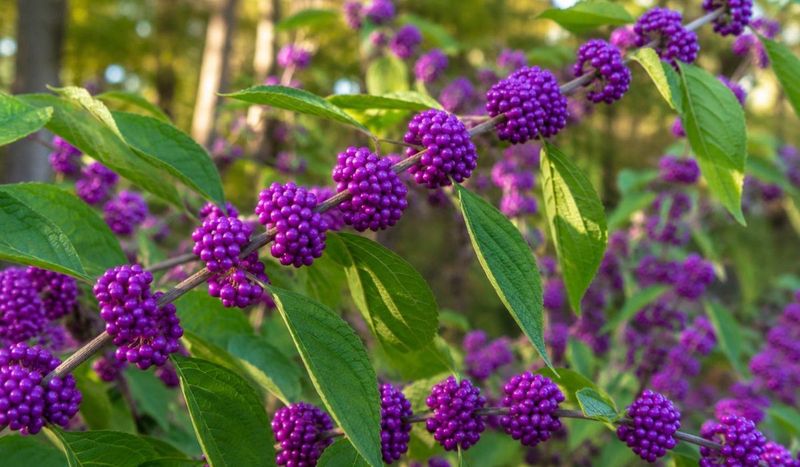
American beautyberry is a genuinely worthwhile native shrub for a North Carolina yard that offers the right conditions – good drainage, reasonable sun, and enough room for a plant that reaches 3 to 8 feet tall. NC State Extension’s profile describes it as native throughout the state, and its late-season berries reliably support songbirds and small mammals.
Those are solid reasons to plant it.
What beautyberry cannot do is stop ticks at your yard boundary. The laboratory study that identified callicarpenal and intermedeol tested isolated compounds on cloth – a meaningful research step, but not evidence that a living shrub controls tick movement across a residential property.
The practical decision rule is straightforward: choose beautyberry because you want its berries, its native character, and the wildlife it supports. Then use the CDC-recommended 3-foot wood-chip or gravel buffer, cleaner and sunnier conditions near high-use areas, sensible planting density, EPA-registered personal repellents, and veterinarian-recommended pet prevention to manage tick exposure.
A native shrub that feeds birds is a landscape asset; a guaranteed tick-control product is a different thing entirely, and no plant currently on the market qualifies as one.