
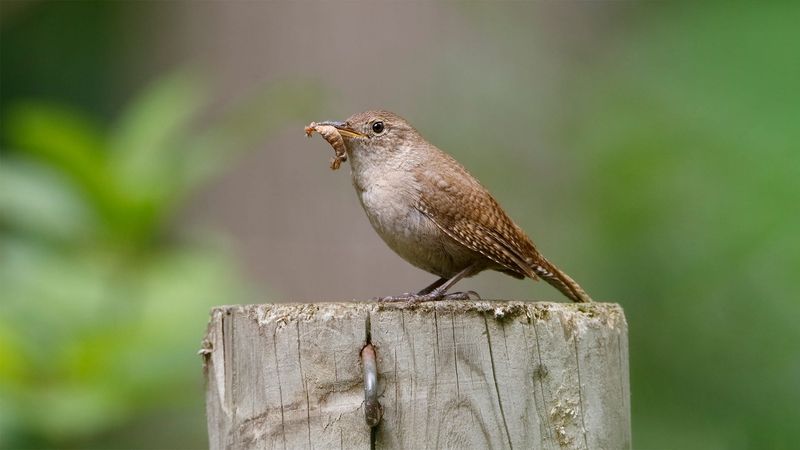
Small, fast, and easy to overlook, wrens are some of the most active insect hunters visiting California backyards. They probe bark, poke through leaf litter, and dart into dense shrubs searching for caterpillars, beetles, spiders, and other invertebrates that share your garden.
The trouble is that many California homeowners are gradually removing the exact features these birds depend on, without realizing it. Understanding what wrens actually need, and what the evidence really says about their role, can help you make smarter choices for your yard.
Replace the misleading wren name
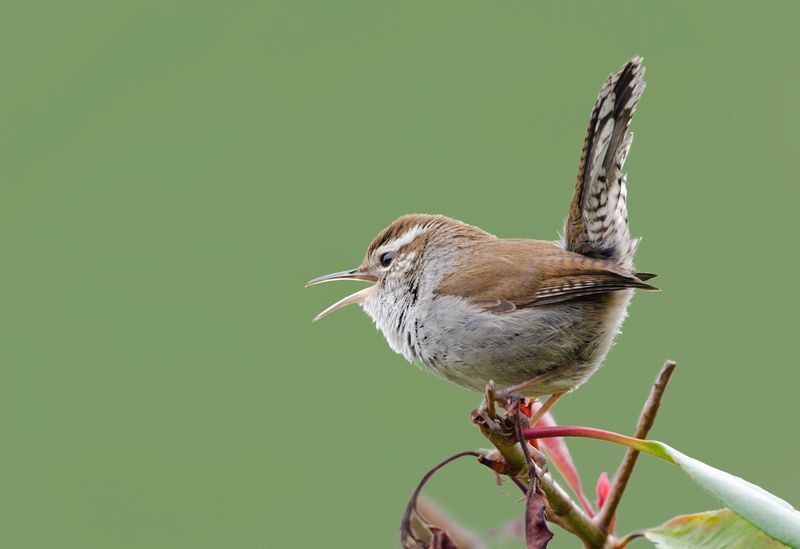
No bird species carries the official name “California wren.” That label gets used casually, but it does not appear on any recognized checklist, including the California Checklist maintained by California Birds. Using it as though it were a real species name sets up gardening advice on a shaky foundation, so the first step is getting the taxonomy right before talking about what these birds eat or where they forage.
For most suburban California gardeners, the wren most likely visiting a yard is the Bewick’s Wren. Cornell Lab of Ornithology describes Bewick’s Wren as a bird of brushy areas, open woodlands, thickets, and suburban gardens across much of the western United States.
It is the species most relevant to a general California garden article, whether the yard sits near the coast, in an inland valley, or on a hillside.
Other wren species occupy different niches. Cactus Wrens are associated with desert scrub, cactus, and coastal sage-scrub habitats in southern California, not typical suburban flower beds.
Pacific Wrens prefer dense, moist forest understories along the northern California coast and mountains, a very different setting from most homeowner yards.
Gardeners in Florida and much of Texas are more likely hosting Carolina Wrens, a separate species with its own habitat preferences. The general principle, that wrens forage in yards with suitable cover and invertebrate-rich habitat, applies broadly.
But the specific bird and its needs will vary by region, so the advice here focuses on Bewick’s Wren as the most common California garden species while acknowledging that other wrens behave similarly in their own ranges.
Wrens forage where gardens hold insects
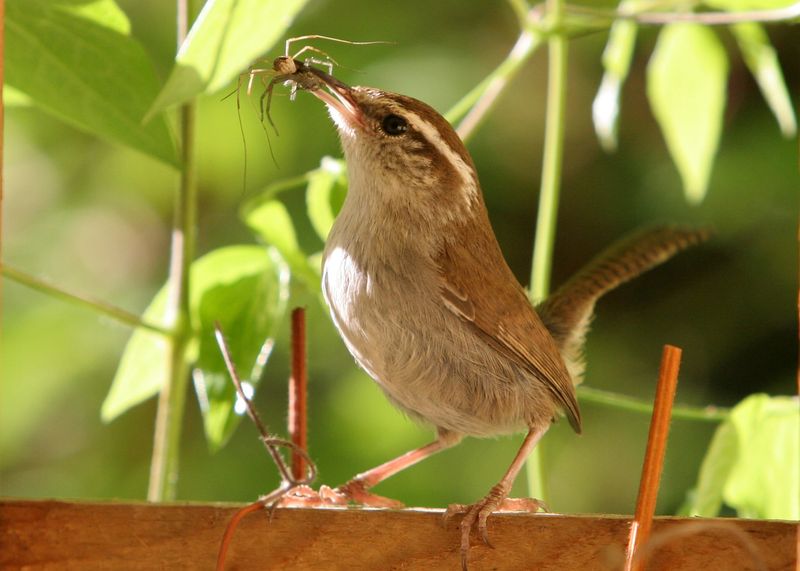
Bewick’s Wrens are methodical hunters. Their documented diet includes insects, spiders, caterpillars, beetles, grasshoppers, flies, insect eggs, larvae, and pupae.
They search branches, bark crevices, trunks, low vegetation, and the ground layer, moving quickly and probing into gaps that larger birds ignore. When feeding nestlings, adults bring primarily caterpillars, spiders, grasshoppers, and insect pupae, which reflects how protein-dense and accessible those prey items are in a well-vegetated yard.
The foraging range is worth picturing. A single Bewick’s Wren might work its way along a fence draped in vines, drop into a shrub border, poke through a pile of fallen stems, and then cross to a patch of bare soil near a planting bed, all within a few minutes.
The bird is not targeting one pest on one plant. It is scanning the entire low layer of a yard for whatever invertebrates are present and catchable.
Carolina Wrens follow a similar pattern in eastern and southern yards, working through tangled vegetation, leaf piles, and brushy edges. House Wrens also consume a wide range of insects and spiders.
What the evidence documents is foraging behavior and diet composition, not a measurable pest-control outcome at the garden level. A wren eating caterpillars from your rose canes is genuinely useful, but that contribution works alongside other factors and does not replace monitoring or management when damage gets serious.
The practical takeaway is that wrens can add real insect predation to a yard that supports them, particularly where low cover, woody structure, and leaf litter keep invertebrate populations robust. A yard stripped of those features gives a foraging wren little reason to stay.
Removing all leaf litter can reduce useful habitat
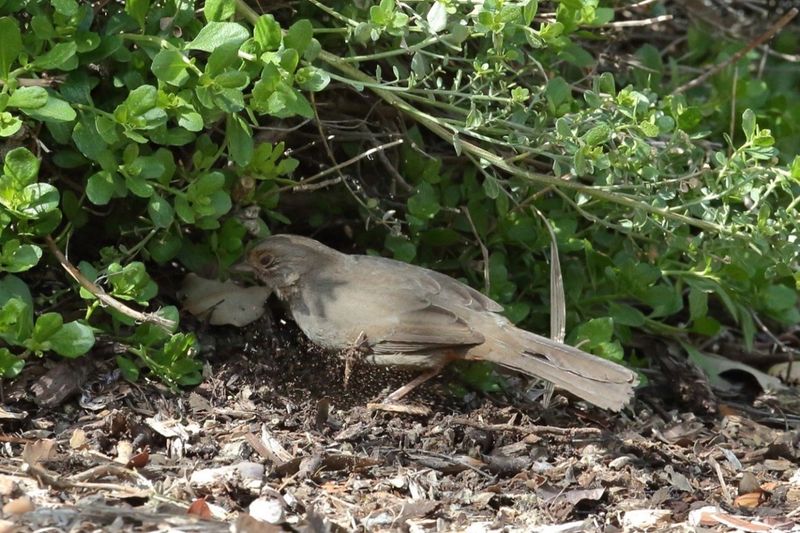
Fallen leaves do quiet, useful work. They shelter ground beetles, spiders, pill bugs, fly larvae, and other invertebrates that make up a significant portion of a foraging wren’s diet.
When all leaf litter is removed from a planting bed, that layer of habitat disappears with it, and so does much of the food that drew a bird there in the first place. Cornell Lab’s gardening for birds guidance identifies leaf litter as a key habitat feature for birds that forage on or near the ground.
The shift toward bare, raked beds has become a standard suburban aesthetic, and it is worth reconsidering in at least part of the yard. Rather than bagging every fallen leaf from a shrub border or naturalistic bed, moving leaves beneath suitable shrubs or redistributing them into a designated garden area keeps the invertebrate community intact while still looking intentional.
Songbird habitat guidance from Cornell consistently points to ground-level cover as one of the most accessible improvements a homeowner can make.
That said, there are real reasons to remove leaves in some places. Fire safety, gutter clearance, plant disease management, and access paths all justify clean removal.
CAL FIRE defensible-space guidance is clear that dry organic debris near structures creates fire risk. The goal is not to abandon yard care but to choose where leaf litter stays and where it goes, rather than treating every leaf as waste to be eliminated.
Build one intentional refuge instead of an overgrown yard
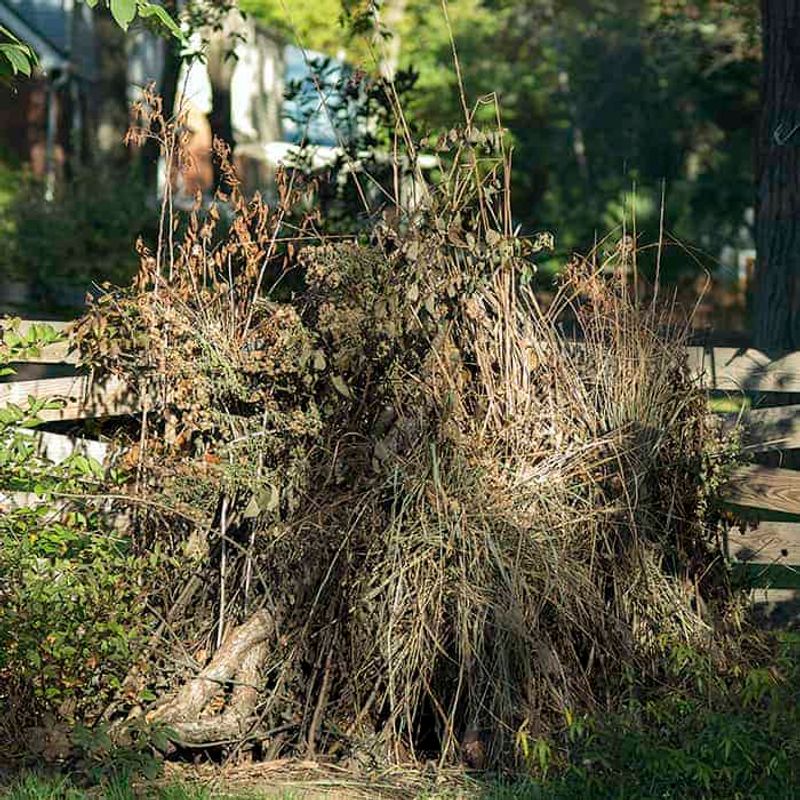
A wildlife-friendly yard does not have to look neglected. The most useful approach for most California homeowners is concentrating habitat into one managed corner rather than letting the entire property go untended.
That kind of intentional refuge gives foraging wrens what they need, a patch of cover, invertebrate-rich soil, and structural complexity, without sacrificing the rest of the yard to disorder.
Start with the shrub layer. Cornell Lab specifically lists native shrubs and brush piles as backyard features that support Bewick’s Wrens.
California native shrubs such as toyon, coffeeberry, coyote brush, and native sages provide dense, low branching that wrens use for cover and foraging. Planting even one or two natives along a fence line or back border creates structure that a bare ornamental bed cannot offer.
Carolina Wrens in other regions respond to the same kind of tangled, shrubby edges, so the principle holds across wren species.
A small brush pile adds another layer. Stack a few fallen limbs, dry stems, and pruned woody material at the edge of the yard or behind shrubs, away from fences shared with neighbors and well clear of the house.
Songbird habitat recommendations point to brush piles and decaying wood as reliable invertebrate habitat that birds return to repeatedly. Cornell’s shelter guidance reinforces that woody cover at ground level supports a wider range of birds than feeders or nest boxes alone.
Keep the area modest and maintained. A pile the size of a wheelbarrow or two, tucked behind shrubs and away from structures, accomplishes the goal.
UC Cooperative Extension habitat guidance supports hedgerows and native plantings as practical options for homeowners who want to improve wildlife value without giving up a functional yard. The rest of the property, the lawn, the vegetable beds, the patio edges, can stay tidy and accessible.
Let defensible space set the habitat boundary
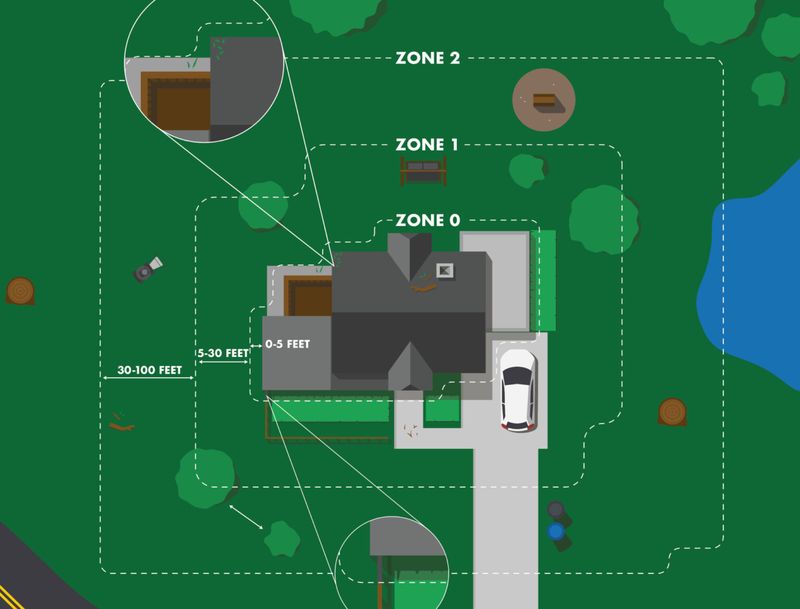
Before moving any leaves or stacking any brush, California homeowners need to know where those materials cannot go. Dry organic debris near a home is a fire hazard, and that concern overrides any wildlife-gardening preference.
CAL FIRE defensible-space requirements establish clear expectations for what must be cleared around structures, and those rules apply whether a homeowner is motivated by aesthetics, fire risk, or bird habitat.
Leaf litter, brush piles, dead stems, and woody debris should not accumulate against or near the house, under decks, near vents or eaves, next to wood piles, or along gutters. These are exactly the spots where dry material becomes a fire pathway or a pest harborage.
The same logic applies to fences and gates that connect to structures. Distance and separation matter.
California Board of Forestry and Fire Protection defensible-space zone guidance divides the area around a home into zones with different clearance requirements. Zone 1, the area closest to the structure, requires the strictest removal of flammable vegetation and debris.
Zone 2 allows more vegetation but still requires spacing and management. Any habitat feature, whether a brush pile, a patch of leaf litter, or a cluster of dense shrubs, should be placed where it does not conflict with those zone requirements.
Local ordinances may be stricter than state minimums, so checking with the local fire authority or municipality before establishing any habitat feature is a practical first step. Wrens can absolutely use a yard that follows defensible-space rules.
The key is placing the refuge in a location that is both ecologically useful and genuinely safe, not treating fire safety and wildlife habitat as competing goals that cannot coexist.
Use integrated pest management when plants need help
Wrens can contribute to insect predation in a well-structured yard, but they are not a pest-control service a gardener can schedule or depend on. When aphids or caterpillars are causing real damage, the yard needs a practical response, not a wait-and-see approach built around hoping a bird shows up.
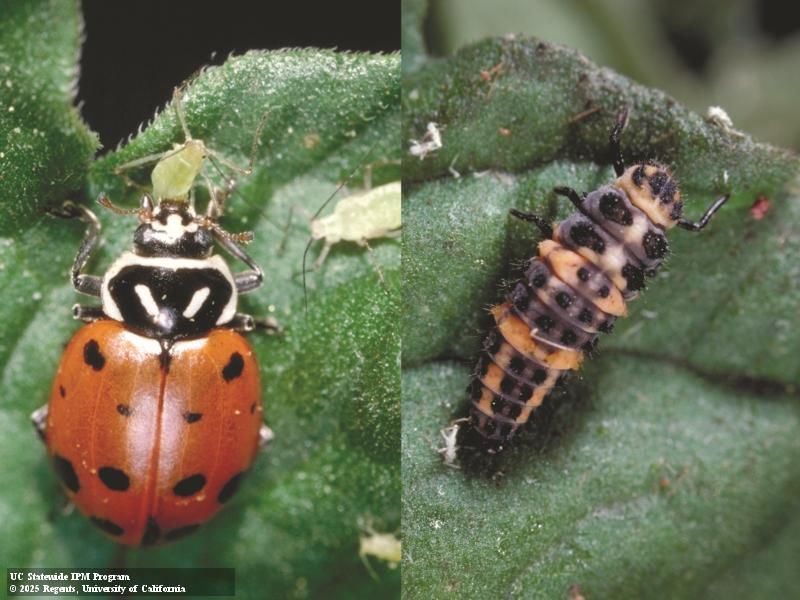
For aphids, the first step is monitoring. UC IPM aphid guidance notes that established plants often tolerate light infestations without significant harm, and natural enemies including lady beetles, lacewings, syrphid fly larvae, and parasitic wasps frequently suppress aphid populations on their own.
If populations are building on a specific shoot or stem, pruning that growth out is a clean, immediate fix. For sturdy plants, a strong stream of water directed at infested foliage knocks aphids off and reduces numbers without chemicals.
Avoid spraying drought-stressed plants and hold off on soap or oil applications during very hot weather, and always follow the product label.
Caterpillars require identification before treatment. UC IPM caterpillar guidance makes this point clearly: some caterpillars will become butterflies or moths, and treating them reflexively does more harm than good, especially in a garden that includes milkweed, parsley, or other butterfly host plants.
For caterpillars causing unacceptable damage, handpicking, pruning infested leaves, and relying on natural enemies are the first options. When small larvae require a treatment, Bacillus thuringiensis var. kurstaki, known as Btk, is a more selective option that affects caterpillars without the broad toxicity of conventional insecticides, though it must be used according to the label and is not appropriate for every situation.
Broad-spectrum insecticides are worth avoiding when other options are available. EPA guidance on reducing pesticide impacts to wildlife explains that these products can harm beneficial insects along with pests, and reducing the insect community in a yard also reduces the food available to any bird foraging there.
A yard that routinely uses broad-spectrum sprays is a yard that becomes less hospitable to the birds a gardener is trying to attract.
Set realistic expectations for a wren’s contribution
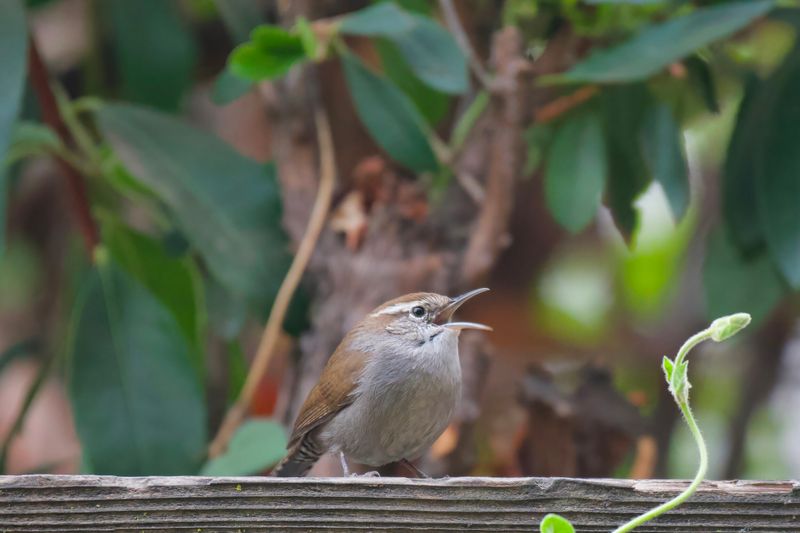
A Bewick’s Wren foraging through your yard is a genuinely good sign. The documented diet of Bewick’s Wren covers a wide range of invertebrates, and a bird working through shrubs, leaf litter, and woody cover will consume caterpillars, spiders, beetles, and other garden inhabitants throughout the day.
That adds up to real predation pressure, and it happens for free when the habitat supports it.
What the evidence does not support is the idea that wrens provide predictable or measurable aphid control. Aphid populations are primarily regulated by natural enemies such as parasitic wasps, lady beetles, and lacewing larvae, not by birds.
UC IPM aphid resources do not list wrens among the significant natural controls for aphids, and no reliable garden-level study establishes wrens as meaningful aphid suppressors. Framing a wren as an aphid hunter overstates what the bird actually does and can lead a gardener to skip monitoring and management steps that the plants actually need.
Nest boxes are sometimes promoted as the key to attracting wrens, but Cornell’s Bewick’s Wren overview makes clear that habitat structure and food availability are more central to supporting these birds than supplemental features. A nest box placed in a yard without suitable cover and invertebrate-rich habitat is unlikely to draw a resident wren.
House Wrens will use nest boxes but can displace other cavity-nesting birds, so placement and predator protection matter if a box is added.
Creating habitat does not guarantee a wren will arrive, stay, or solve a specific pest problem. The honest expectation is that a yard with suitable cover, native shrubs, and some leaf litter is more likely to attract and hold foraging wrens than a yard without those features, and that the bird’s contribution complements, rather than replaces, careful plant monitoring and integrated management.
UC IPM caterpillar guidance reinforces that identification and assessment always come before any treatment decision, regardless of how many birds visit the garden.
Start with one safe, managed corner
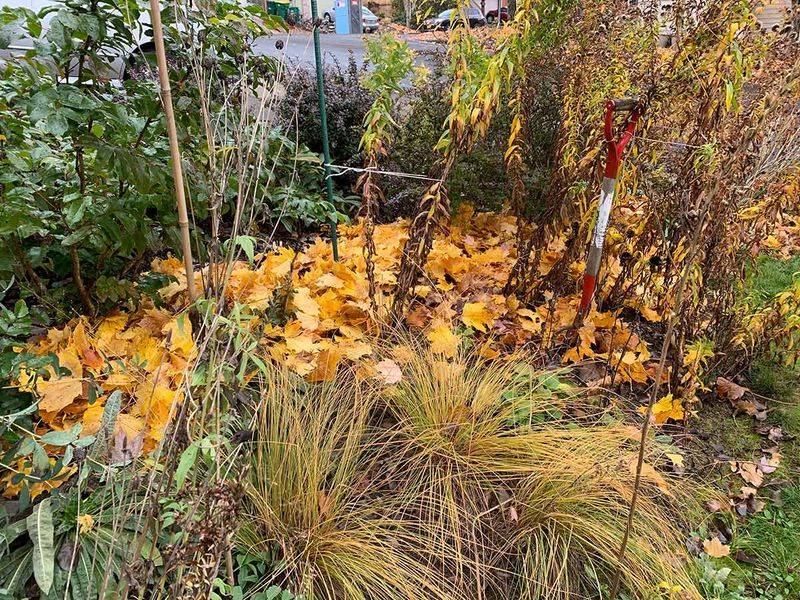
Putting this into practice does not require redesigning the whole yard. Pick one bed, preferably one with an existing shrub or two, and stop removing every leaf from it.
Let a shallow layer accumulate under the plant canopy where it does not create a fire risk or block access. That single change gives ground-foraging birds something to work with while the rest of the yard stays maintained and functional.
If the property allows it, add a small brush feature at the yard’s edge, away from structures and well outside any defensible-space zones. Cornell’s songbird habitat guidance consistently identifies low woody cover and leaf litter as the highest-value habitat features for ground-foraging birds, more valuable than feeders or nest boxes for this purpose.
Keep the feature compact and positioned according to CAL FIRE defensible-space requirements.
Continue monitoring plants for aphids and caterpillars, because a yard that supports wrens still needs a gardener paying attention. UC IPM aphid management starts with observation, not treatment, and that approach works alongside whatever birds happen to be foraging.
A yard can be tidy, fire-conscious, and genuinely useful to insect-eating birds at the same time. The wrens do not ask for much, just enough cover to feel at home.