
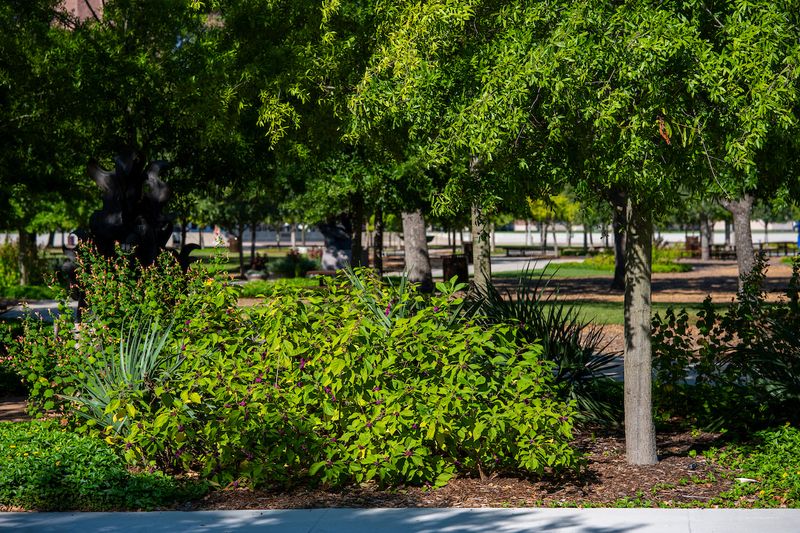
One native shrub has been quietly earning a reputation as a mosquito-fighter across the Southern United States, and it grows just fine in Central Texas heat. That shrub is American beautyberry, and its leaves contain real compounds that researchers have tested against mosquitoes in a laboratory setting.
The story behind those findings is more nuanced than the headlines suggest, but it is still worth knowing if you are planning a porch border or patio edge. Growing beautyberry gives you a tough, wildlife-friendly native plant with genuinely interesting leaf chemistry, as long as you pair it with the right expectations and proven mosquito-control habits.
American beautyberry is the shrub behind the mosquito claim
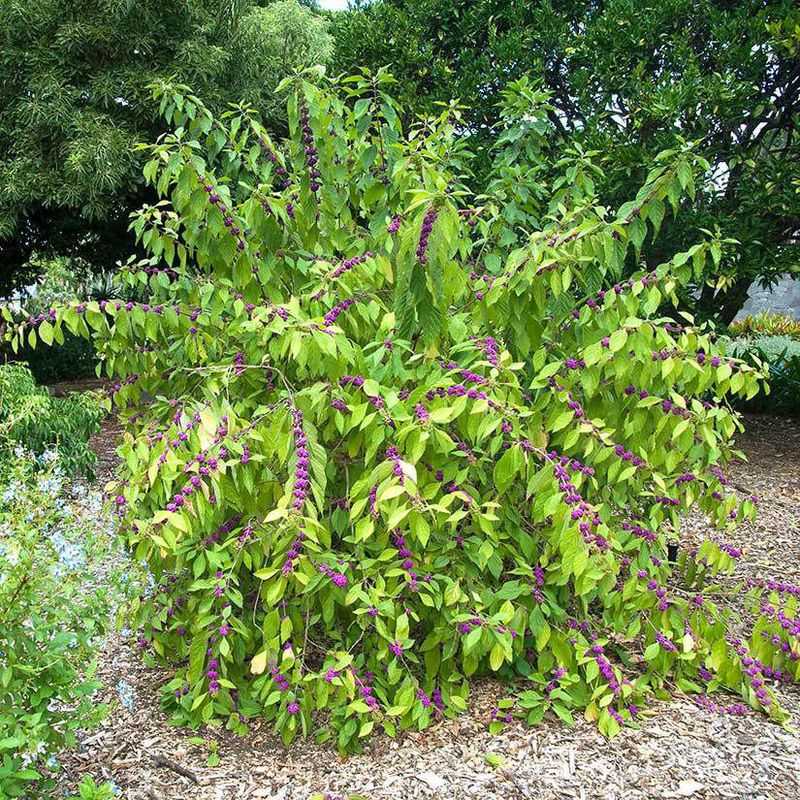
Callicarpa americana, commonly called American beautyberry, is the native shrub at the center of the mosquito-deterrent conversation. It grows across the Gulf Coastal Plain, from Texas through Florida and up into the broader Southeast, putting it squarely in the range of Central Texas homeowners looking for a landscape plant that belongs here.
The USDA Forest Service species review confirms that beautyberry is adapted to hot, humid Southern climates and tolerates clay, loam, and sandy soils, which covers a wide range of the soil types Central Texas gardeners actually deal with.
As a deciduous shrub, it drops its leaves in winter and flushes back with new growth each spring. What really catches the eye, though, are the berry clusters.
In late summer and into fall, the plant produces tight whorls of purple, pink, or white berries along its stems, creating a display that looks almost artificial in its intensity. Those berries attract songbirds and small mammals, giving the plant genuine wildlife value that has nothing to do with mosquitoes.
The plant’s reputation as a mosquito deterrent comes from real laboratory research and documented historical use, both of which are worth understanding on their own terms. What the research does not show is that placing a beautyberry beside a patio chair automatically clears the surrounding area of mosquitoes or provides season-long protection.
North Carolina Extension’s plant profile describes beautyberry as an ornamental native with practical landscape value, and that framing is the honest one. Grow it for what it reliably delivers: adaptability, striking berries, and wildlife appeal, while treating its mosquito chemistry as an intriguing footnote rather than a guaranteed patio defense.
What the beautyberry mosquito research actually tested
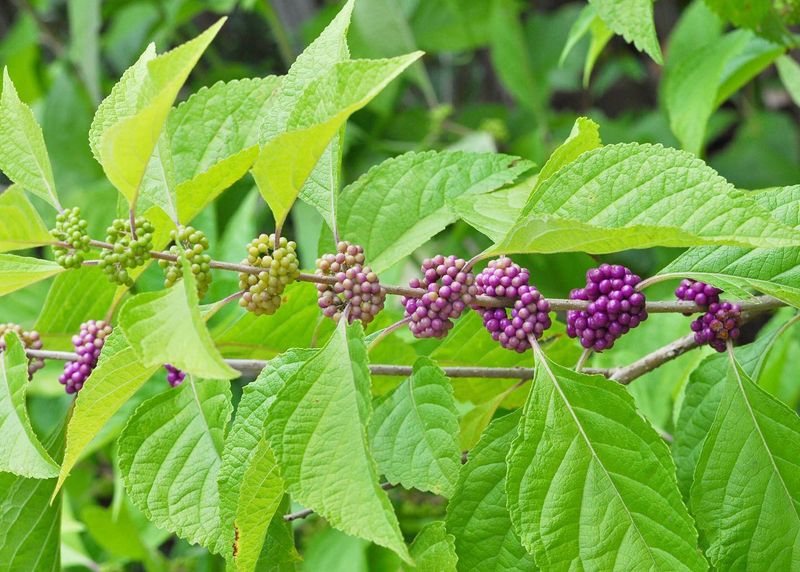
Researchers at the USDA Agricultural Research Service identified two terpenoid compounds in beautyberry leaves, callicarpenal and intermedeol, and found that both showed mosquito bite-deterrent activity in controlled laboratory tests. The published study tested these compounds against Aedes aegypti, the yellow fever mosquito, and Anopheles stephensi, a malaria-associated species.
Those results represent a real and meaningful finding, but they describe how isolated or extracted compounds performed in a laboratory setting, not how a shrub growing beside a patio chair performs on a summer evening in Austin or San Antonio.
The historical context adds another layer. USDA researchers documented that farmers and ranchers in the South traditionally crushed beautyberry leaves and placed them under horse harnesses or rubbed the leaf residue on skin to deter insects.
That practice suggests people noticed something real about the plant’s chemistry long before laboratory instruments confirmed it. It is historical context, though, not a modern consumer recommendation backed by safety and formulation testing.
The distinction between those two things matters. Crushing a leaf releases volatile compounds in a way that a plant simply growing in the ground does not.
The concentration, the duration of exposure, and the direct contact with skin or animal hide in the traditional practice are all different from the conditions created by a potted or in-ground beautyberry growing near outdoor furniture. The USDA Forest Service species profile documents beautyberry’s range and ecology without making pest-control claims for the intact plant, which is itself a useful signal about where the evidence actually lands.
Beautyberry has a credible research story, one worth sharing and worth knowing. The honest version of that story is simply more specific than the viral headline version.
A planted shrub does not create a mosquito-free patio
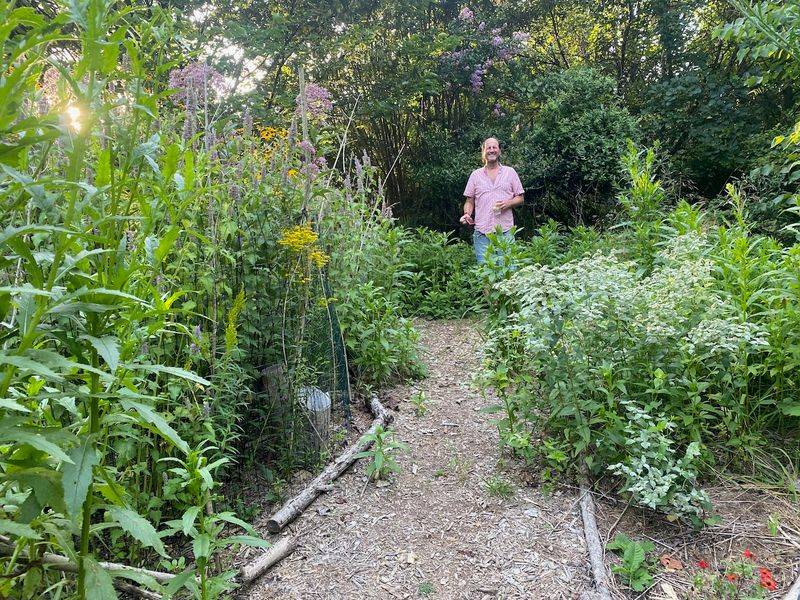
Placing a beautyberry beside a patio chair will not automatically push mosquitoes out of the surrounding space. University of Florida IFAS experts specifically caution that mosquito-repellent plants generally provide little passive protection when left growing in a garden.
The plant is not continuously releasing compounds at concentrations that would deter mosquitoes from landing on a person sitting several feet away. That is the core gap between the laboratory finding and the patio promise.
The strongest beautyberry evidence, as noted in the published research, concerns purified or extracted compounds and freshly crushed leaves. Those conditions involve much higher concentrations of active compounds than the ambient air around an intact, undisturbed shrub.
Plant-based repellents in general vary considerably based on concentration, formulation, volatility, and how they are applied. A review of plant-based repellent research underscores that these variables make it difficult to draw a straight line from laboratory activity to real-world outdoor protection.
There is also a species question worth keeping in mind. The laboratory study examined Aedes aegypti and Anopheles stephensi, two specific mosquito species under controlled conditions.
Central Texas is home to multiple mosquito species, and the research results should not be assumed to apply equally across all of them or across an entire outdoor season.
None of this erases beautyberry’s interesting chemistry. What it does is clarify the gap between a compound deterring bites in a laboratory chamber and a shrub protecting a person sitting on a porch.
CDC guidance on complementary approaches reinforces that plant-derived options should be evaluated carefully before relying on them for meaningful bite protection. Beautyberry earns a place in a Texas landscape on its own merits, not on a promise it has not been shown to keep.
Give beautyberry room to thrive in Central Texas
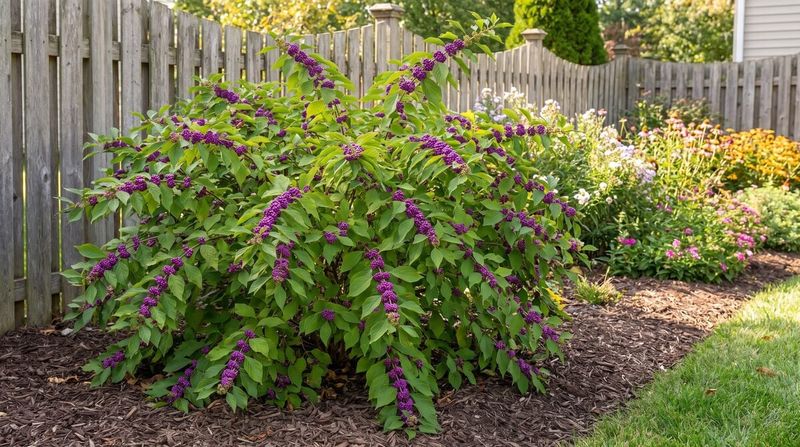
Before adding beautyberry to a porch border or patio edge, check the available space carefully. Mature plants commonly reach 6 to 7 feet tall and nearly as wide, and in favorable conditions they can grow even larger.
Texas A&M AgriLife Extension notes those dimensions and makes clear that this is a plant that needs room to spread. A tight corner between two posts or a narrow strip beside a walkway is likely to feel cramped within a few seasons.
Full sun to partial shade both work for beautyberry. In Central Texas, a site that gets morning sun and some afternoon shade can reduce heat stress during the most intense summer weeks, while a full-sun location with adequate moisture tends to produce the most vigorous growth and berry display.
Good drainage matters more than soil type, since the plant tolerates clay, loam, and sandy soils as long as water does not pool around the roots after rain. The North Carolina Extension plant profile confirms this adaptability across a range of Southern soil conditions.
For patio placement specifically, a spot along the outer edge of a patio or at the corner of a porch gives the shrub room to mature without crowding furniture or blocking sightlines. A minimum of 4 to 5 feet of clearance from structures allows the plant to reach its natural form without constant hard cutting to keep it in bounds.
Planting too close to a wall or fence tends to push the shrub toward a lopsided shape as it reaches for light.
The USDA Forest Service review describes beautyberry as well-suited to the hot, humid conditions across the Gulf Coastal Plain, which maps directly onto the climate Central Texas gardeners are working with. That native-range alignment is one of the best arguments for choosing it over an exotic ornamental that requires more coaxing to survive a Texas summer.
Pruning shapes the shrub and affects its berry display
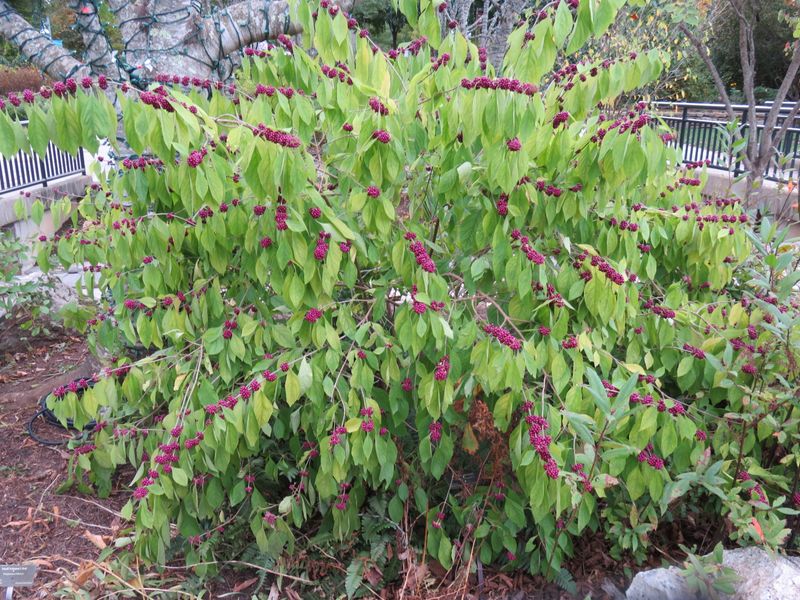
Beautyberry flowers and fruits develop on new growth produced each season, which shapes the entire pruning strategy for the plant. Cut it at the right time and you encourage vigorous new shoots that will carry the late-summer berry display.
Cut it at the wrong time or too aggressively and you can remove the growth that would have held this season’s fruit. North Carolina Extension’s guidance recommends pruning in late winter or before spring growth begins, which is the window that keeps the plant’s seasonal rhythm intact.
When a compact, tidy form is the goal, Texas A&M AgriLife Extension recommends cutting the shrub back to roughly 6 to 12 inches above the ground. That kind of hard renewal pruning produces strong, upright new growth and keeps the plant from sprawling into nearby beds or pathways.
The tradeoff is that heavy cutting will delay berry production until the new growth has matured enough to flower and fruit, so the display may be reduced or absent in the first season after a major cut.
For gardeners who want both a managed size and a reliable fall berry show, a lighter approach works well: remove crossing or dead stems, cut the oldest canes back hard, and leave younger stems to carry the season’s fruit. UGA Cooperative Extension’s ornamental plant guidance supports selective thinning as a way to balance size control with flowering and fruiting performance.
Those berries are worth protecting. The tight clusters of purple, pink, or white fruit that appear in late summer and persist into fall attract mockingbirds, robins, catbirds, and other songbirds, along with small mammals like raccoons and opossums.
That wildlife value gives beautyberry a clear reason to earn a spot in a Texas landscape beyond any discussion of mosquito chemistry.
Build the patio defense around source reduction

Standing water is the starting point for every mosquito problem on a Texas patio, and removing it consistently is the single most dependable step a homeowner can take. CDC guidance on home mosquito control recommends a weekly inspection of anything that can hold water: flowerpot saucers, buckets, tarps, children’s toys, birdbaths, clogged gutters, and any container left outside.
Mosquitoes can complete their larval development in surprisingly small amounts of water, so even a bottle cap or a folded tarp crease can serve as a breeding site during a wet week.
Scrubbing containers before refilling them matters too, because mosquito eggs can stick to the sides and survive drying out. For items that cannot be emptied, like a birdbath you want to keep active, changing the water every few days or adding a small agitator or fountain breaks the still-water conditions mosquitoes need to breed.
Covering rain barrels and other permanent water storage with tight-fitting lids or fine mesh removes those sites from the equation entirely.
Adult mosquitoes also need places to rest during the day, and a Central Texas patio provides several of them. Dark spaces under patio furniture cushions, inside carport corners, along garage walls, and behind stored equipment are all common daytime sheltering spots.
Reducing clutter and humidity in those areas makes the patio less hospitable to resting adults even after the breeding sites have been addressed.
Screens on doors and windows, keeping doors closed when they are not in use, and properly labeled mosquito-control products applied according to their directions round out a practical defense. CDC’s integrated mosquito management framework emphasizes combining source reduction, barriers, and labeled products as more reliable than any single measure on its own.
Beautyberry can grow alongside all of these steps, but it does not replace any of them.
Use beautyberry as a landscape ally, not a repellent substitute
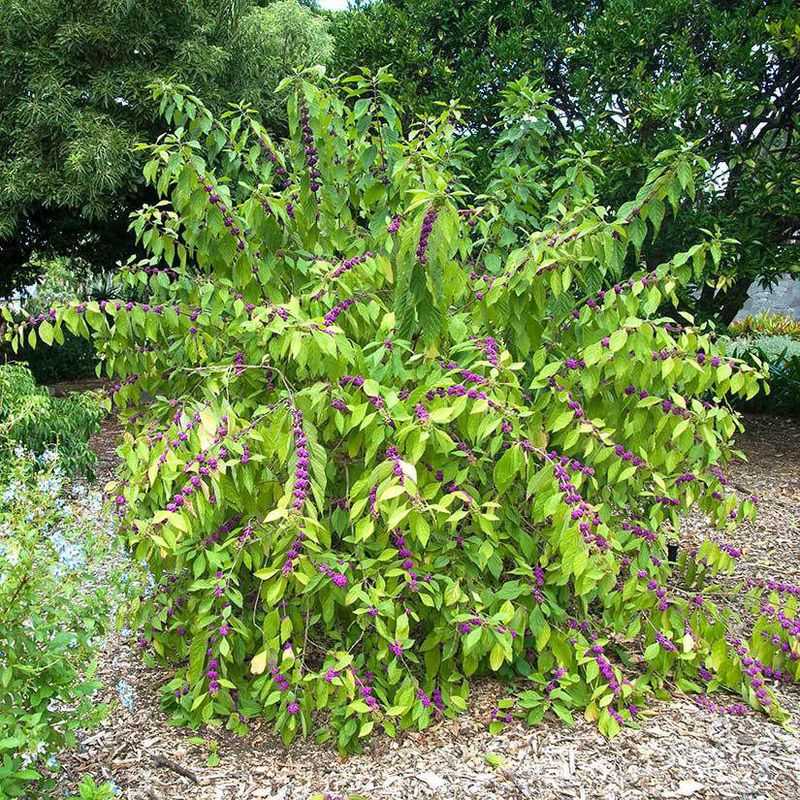
Beautyberry earns its place in a Central Texas landscape through its adaptability to Southern soils and heat, its striking late-season berry display, and its value to birds and small mammals. Those are concrete, reliable benefits that show up every year without requiring any particular management beyond sensible pruning and adequate space.
The leaf chemistry documented in laboratory research adds an interesting dimension to the plant’s story, but the living shrub has not been shown to clear a patio of mosquitoes or provide season-long protection for the people sitting on it.
Making a homemade preparation from beautyberry leaves, whether a spray, a tincture, or a salve applied to skin, is not supported by the cited research as a safe or effective consumer repellent. The dose, duration, formulation, and safety of topical contact with raw beautyberry foliage have not been established by that research.
Readers who need reliable personal bite protection should choose a product from the EPA’s registered repellent database and follow its label directions. EPA registration evaluates both safety and effectiveness, which no homemade plant preparation can claim.
A practical combined strategy looks like this: plant Callicarpa americana, the correctly identified native species rather than a Japanese or other ornamental Callicarpa, for its landscape value and wildlife benefits. Remove standing water every week, reduce resting habitat around the patio, use screens and barriers where they fit, and reach for a labeled repellent when personal protection matters.
That combination addresses mosquitoes through proven channels while giving beautyberry the role it actually fills well.
A native shrub that feeds the birds, survives the Texas summer, and carries a genuinely interesting research history is already a good trade for a patio border. The mosquito story just gives you something to talk about while you are out there enjoying it.