
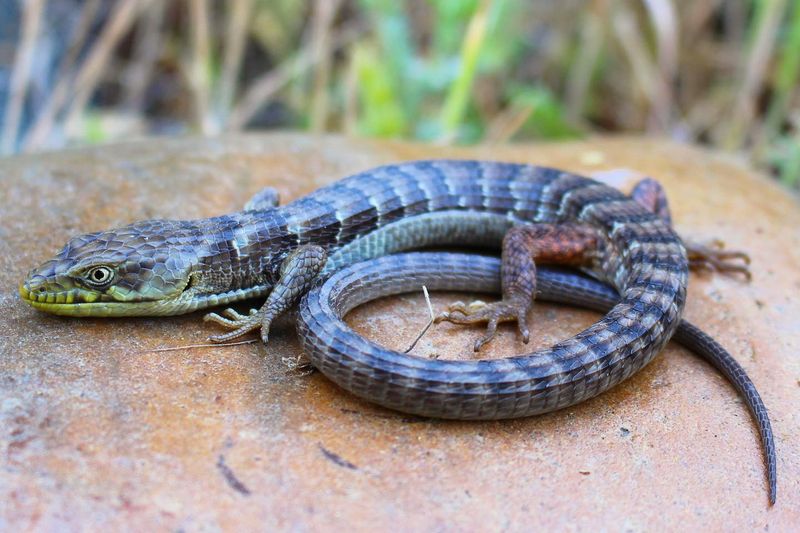
A scaly, slow-moving lizard you might mistake for a small snake could be doing quiet work in your California yard. The southern alligator lizard, a native species found across much of coastal and inland California, has a documented appetite for spiders, snails, and other arthropods that many homeowners would rather not share their garden with.
Understanding what this lizard actually eats, where it lives, and what the research really shows can help you make smarter choices about your yard without overstating what one reptile can do.
In much of coastal and Southern California, the yard lizard is the southern alligator lizard
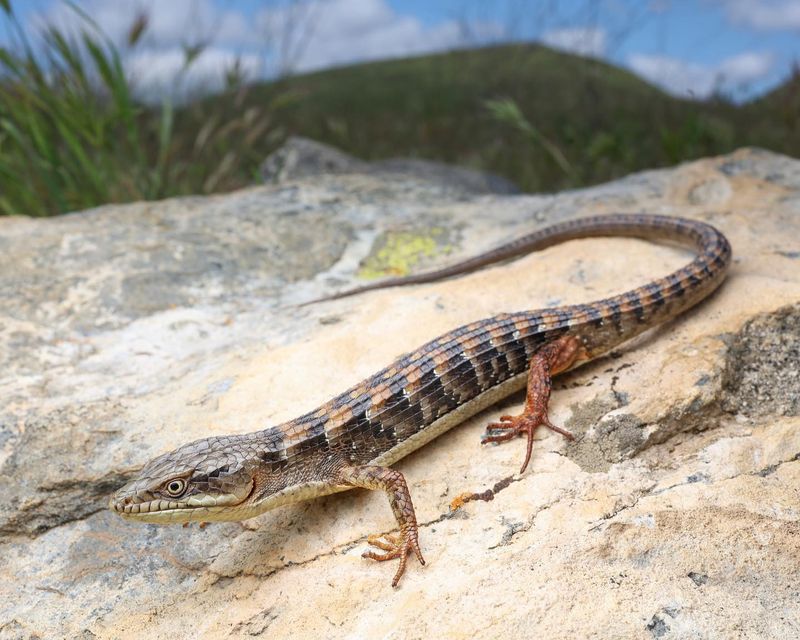
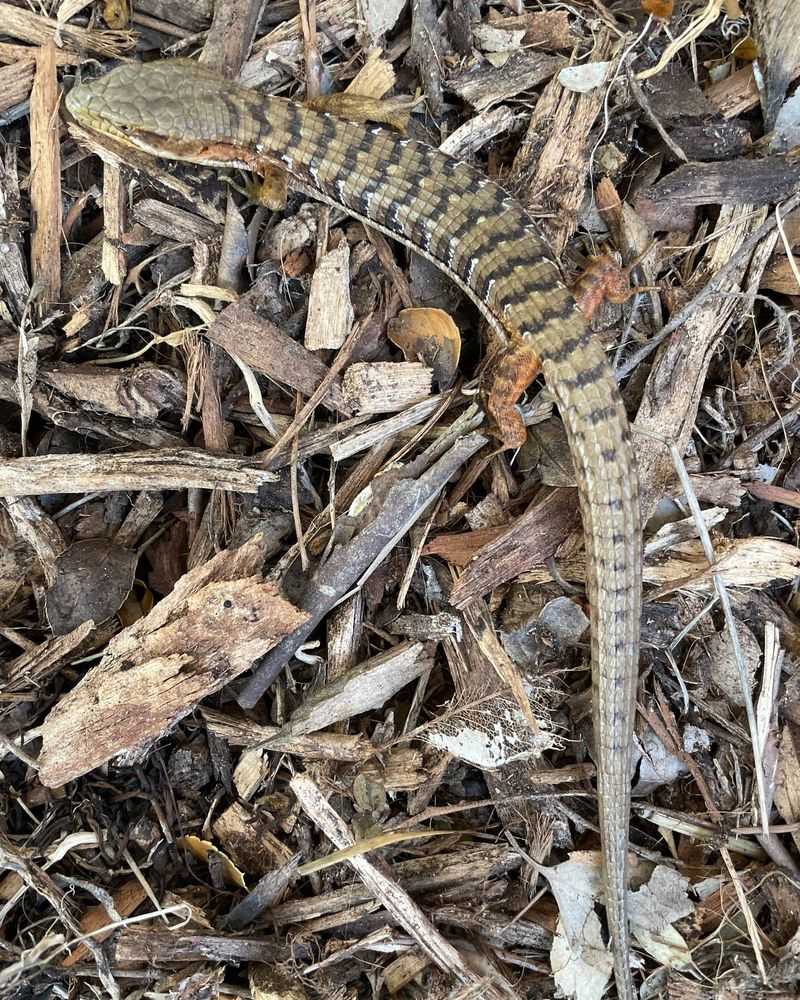
Spotting a thick-bodied, slow-moving lizard with keeled scales and a tail nearly twice the length of its body is a good sign you have a southern alligator lizard, Elgaria multicarinata, sharing your yard. The common label “California alligator lizard” gets tossed around loosely, but it does not refer to a single recognized species.
Using it without qualification can cause real confusion, because two distinct alligator lizard species live in California with different ranges and habits.
The southern alligator lizard is the one most likely visiting yards across much of coastal, foothill, and inland Southern California, as well as parts of the Central Coast and the San Francisco Bay Area. The California Department of Fish and Wildlife life-history account for the southern alligator lizard places its range through much of the western and southern portions of the state, favoring grasslands, chaparral, open woodlands, and suburban areas with suitable cover.
Its cousin, the northern alligator lizard, Elgaria coerulea, occupies cooler, wetter areas farther north and at higher elevations, and the two species are not interchangeable in habitat or behavior.
Recognition in the yard is fairly straightforward once you know what to look for. Southern alligator lizards tend to be brownish or grayish with irregular crossbands, a stiff-looking body, short legs, and a very long, regenerating tail.
The National Park Service’s profile of the southern alligator lizard notes that the species commonly uses rocks, logs, boards, leaf litter, and other surface cover as shelter, which is why it turns up under garden pots, wood piles, and dense ground-level plantings.
Southern alligator lizards do not occur uniformly across every California yard. Desert regions, the extreme northern part of the state, and parts of the southern Central Valley fall outside their typical range.
Confirming that the species is actually present in your area before planning around it is a reasonable first step.
Its diet includes spiders and mollusks, but it is not a dedicated pest hunter
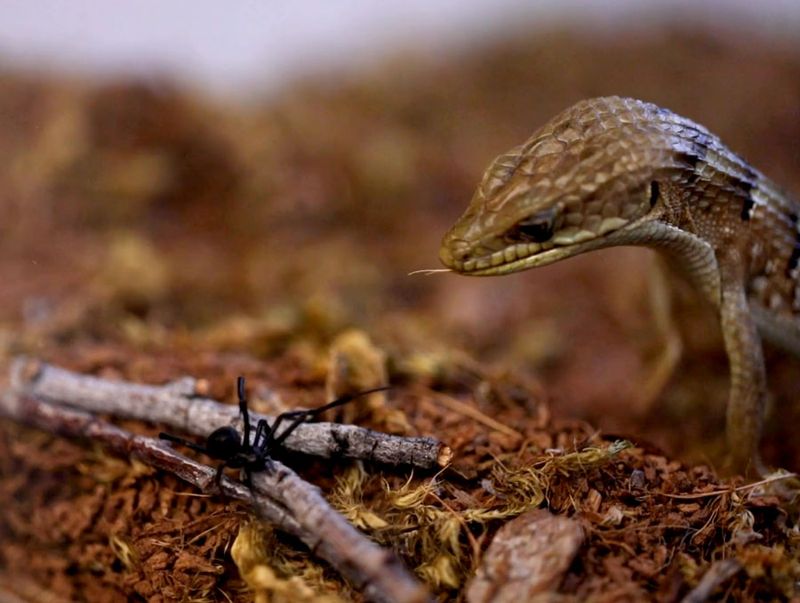
Generalist is the word that best describes how a southern alligator lizard eats. Rather than targeting one type of prey, it takes what it finds: insects, spiders, centipedes, scorpions, sow bugs, snails, and other arthropods and mollusks all appear in documented diet records.
The National Park Service specifically lists black widow spiders among the prey of southern alligator lizards, which is part of why the species has earned a reputation as a useful backyard ally.
Mollusks, including snails, are also part of the picture. A historical stomach-content study of the San Diego alligator lizard documented spiders and mollusks among prey items found in specimens, which gives the mollusk claim a firmer footing than pure anecdote.
Slugs are often mentioned in general descriptions of the species’ diet, and it is plausible that a lizard willing to eat snails would also take a slug if it encountered one. The honest qualifier is that slugs are less firmly established in the research record than snails, so saying the lizard may eat slugs or related mollusks is more accurate than claiming it specializes in them.
The bigger caution applies to pest-control expectations. No study located in the research record measures whether one or several resident alligator lizards meaningfully reduce black-widow, snail, or slug numbers in a typical California yard.
A lizard eating whatever it encounters is not the same as a lizard systematically hunting a pest population. Black widows and garden mollusks also respond to prey availability, shelter, temperature, and other predators, so a single reptile is unlikely to tip those numbers in a measurable direction.
The practical takeaway is that a southern alligator lizard in your yard may contribute to natural pest pressure in a modest way, but it is not a substitute for targeted pest management when a real problem exists. Treating it as a bonus rather than a solution keeps expectations realistic and avoids the trap of leaving a genuine spider or mollusk problem unaddressed while waiting for a lizard to fix it.
Venom-resistance research helps explain black-widow predation
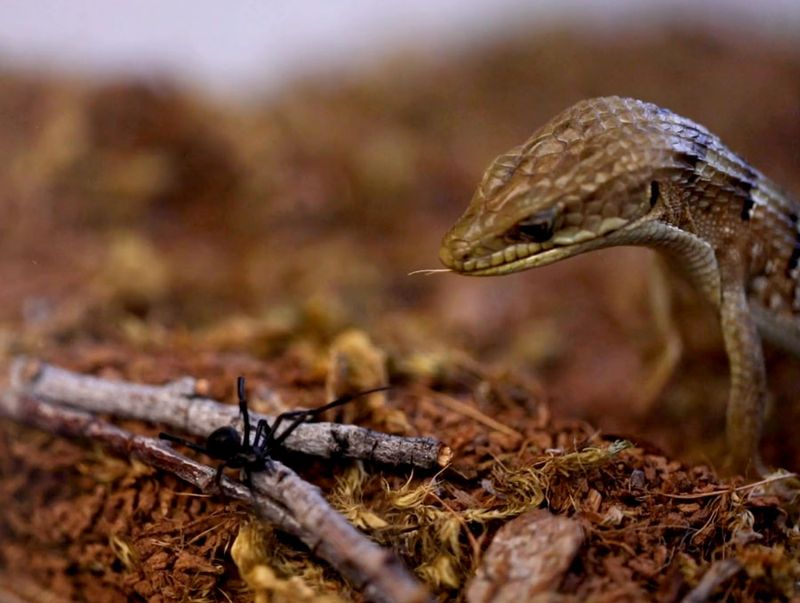
One of the more striking pieces of research behind the southern alligator lizard’s reputation came out in 2022. A peer-reviewed study published in Royal Society Open Science tested how southern alligator lizards responded to injected western black-widow venom under experimental conditions.
The lizards in the study showed substantial tolerance, experiencing neither the impairment nor the tissue damage that western fence lizards suffered when exposed to the same venom. That finding helps explain how these lizards can prey on one of North America’s more medically significant spiders without apparent harm.
The same paper summarized earlier records of southern alligator lizards consuming western black widows and their egg sacs. Those are reported and summarized observations, not controlled backyard experiments, and they do not tell us how often a yard lizard actually encounters and eats a black widow or whether that predation changes local spider numbers.
Treating them as proof of routine pest control would stretch the evidence further than it goes.
Resistance is also not the same as immunity. The study tested western black-widow venom on particular lizard populations under laboratory conditions.
It does not establish that every individual southern alligator lizard tolerates all widow species, all spider venoms, or every possible bite scenario. The research supports the conclusion that these lizards can safely pursue western black widows as prey, which is biologically meaningful.
It does not support the broader claim that southern alligator lizards are invulnerable to spider venom in general.
For homeowners, the practical significance of the venom study is more ecological than managerial. It helps explain a behavior that has been observed but not fully understood, and it adds credibility to the idea that this lizard is genuinely capable of preying on black widows when it encounters them.
What the study does not do is demonstrate that resident lizards will find, hunt, and eliminate the black widows in your shed, garage, or wood pile on any predictable schedule.
Removing every bit of cover may make a yard less suitable
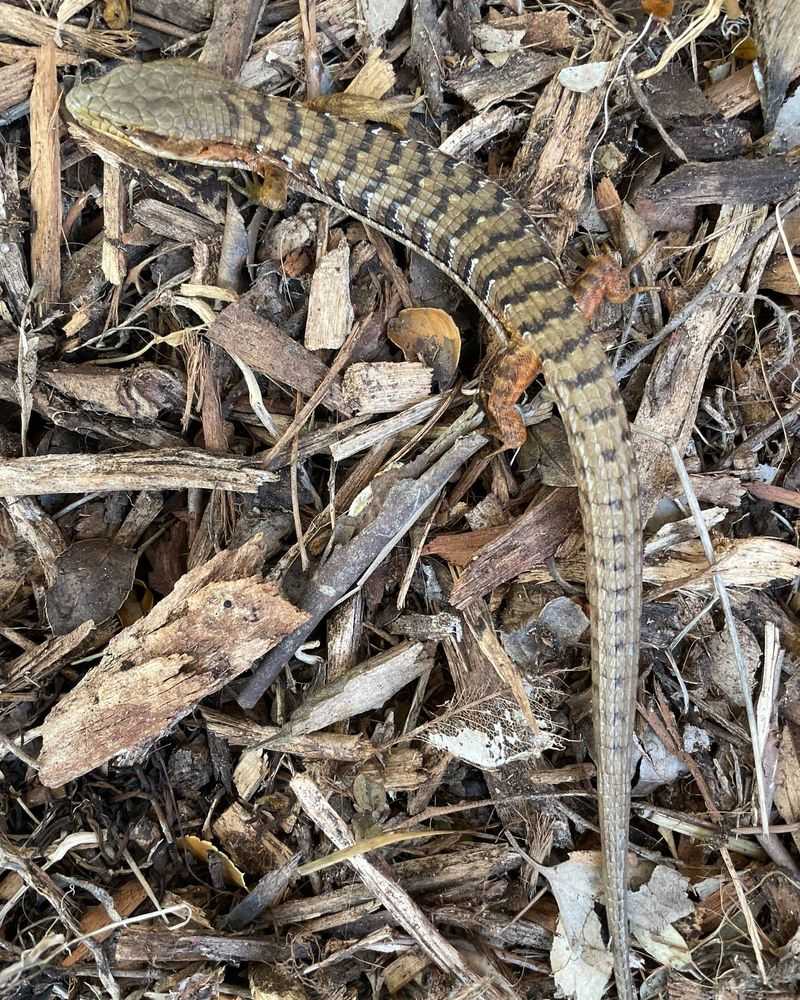
Southern alligator lizards are not free-ranging animals that wander open lawns looking for food. They are cover-dependent, using rocks, logs, boards, leaf litter, crevices, and dense low vegetation as shelter, hunting structure, and thermoregulation sites.
The National Park Service’s species account lists rocks, logs, boards, and other surface cover as the places these lizards characteristically hide, and the species is associated with grassland, chaparral, open woodland, and mixed habitats that provide this kind of structural complexity.
When a yard is cleared down to bare soil or uniform turf, the shelter and foraging structure that lizards depend on disappears with the debris. The CDFW life-history account reinforces this connection, describing the species as closely tied to surface cover across its range.
The reasonable inference is that removing every rock, board, log, and leaf-litter pocket from a yard can make it a less attractive place for a lizard to shelter or hunt. Direct evidence that ordinary residential brush clearing has driven southern alligator lizards away from specific yards has not been established in the research record, so this remains a habitat inference rather than a measured outcome.
The distinction between useful habitat and unmanaged combustible material matters here. A carefully placed flat rock in a garden bed, a short section of untreated log set away from the house, or a patch of native ground cover in a cleared zone are not the same as a tangled brush pile against a fence or dead vegetation stacked near a structure.
UC Master Gardeners of Orange County recommend habitat elements such as rocks and native plantings as part of sustainable California landscaping, and these features can provide lizard-friendly structure without adding meaningful fire fuel when placed thoughtfully.
Homeowners who want to support native lizards without compromising yard safety can think about structure rather than debris. A few well-chosen rocks, a managed native shrub, or a tidy pile of larger stones in a cleared zone may offer enough cover to make a yard usable for a foraging lizard, without the fire-risk or clutter of unmanaged brush accumulation.
Keep habitat choices subordinate to California fire safety
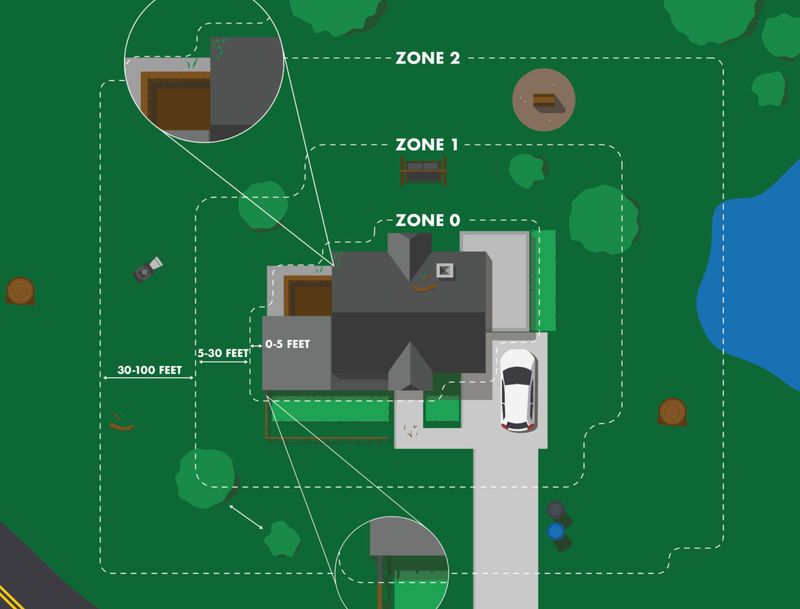
Fire safety is not one consideration among many in California yards. For homeowners in or near wildland-urban interface areas, it is the overriding one, and no wildlife habitat goal should come at the expense of required defensible-space compliance.
California’s Board of Forestry and Fire Protection defines defensible-space zones that require specific treatment within 100 feet of a structure, with the most stringent requirements applying to the first five feet immediately surrounding the home.
That innermost zone, sometimes called the ember-resistant or noncombustible zone, should be free of combustible vegetation, mulch, wood piles, and debris. Decks, fences, vents, propane tanks, and eaves all require special attention because embers can lodge in or around them and ignite a structure even before flames arrive.
No habitat feature, including a rock pile, a log, or a dense native shrub, belongs within that first five feet if it adds combustible material or blocks ember-resistant design.
Beyond five feet and out to 30 feet (Zone 1), CAL FIRE’s defensible space guidance requires removing dead vegetation, spacing plants to reduce fire continuity, and pruning lower limbs on trees. Habitat features can exist in this zone only when they comply with spacing, pruning, and fuel-reduction requirements.
A flat rock placed in a cleared, well-spaced planting area is very different from a log surrounded by dry grass or leaf litter.
Local fire district rules, insurance conditions, and city or county ordinances may be stricter than the state baseline, so verifying requirements with your specific jurisdiction before retaining any habitat feature near a structure is the right approach. UC Master Gardeners of Orange County offer California-specific guidance on native plantings that can be fire-appropriate when selected and placed correctly.
The goal is to find the overlap between lizard-friendly structure and fire-safe design, not to treat them as competing priorities where wildlife wins.
Support native lizards without promising pest control
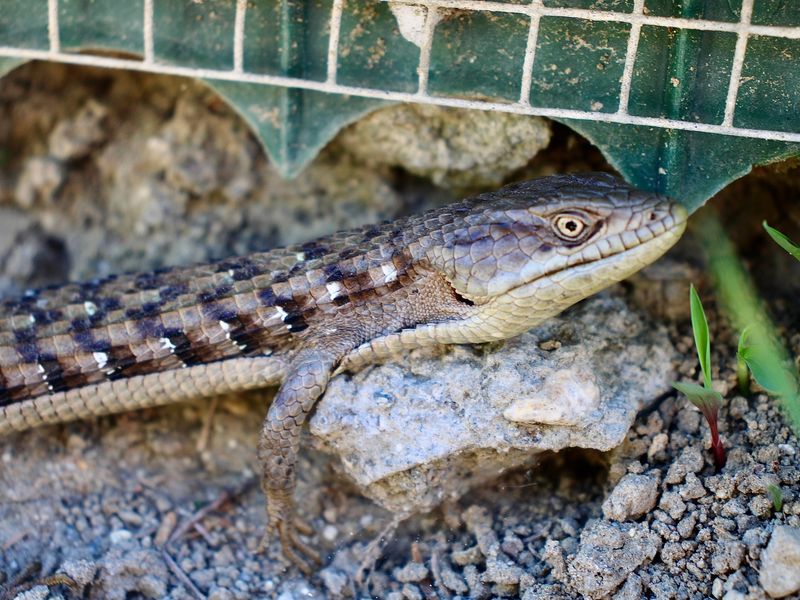
Coexisting with a southern alligator lizard in your yard requires very little active effort, which is part of what makes it a reasonable stewardship goal. UC IPM describes California lizards as generally beneficial predators and recommends leaving them alone, which is the most effective and safest approach for both the lizard and the homeowner.
Chasing, cornering, or attempting to relocate a wild lizard stresses the animal and serves no practical purpose.
One of the more consequential things a homeowner can do for native lizards is reconsider routine broad-spectrum insecticide applications. These products do not distinguish between target pests and the insects, spiders, and other arthropods that lizards depend on for food.
Eliminating the prey base reduces the incentive for lizards to use a yard, and some pesticides can harm reptiles directly through skin contact or secondary poisoning. That does not mean abandoning pest control entirely.
It means applying products only when a genuine pest problem exists, following label directions and California pesticide regulations, and choosing targeted treatments over blanket spraying when options allow.
CDC guidance on wildlife contact advises people not to handle unfamiliar wild animals, and that applies directly to alligator lizards. They can deliver a firm bite if restrained, and handling wild reptiles is unnecessary when the goal is simply to encourage the animal to stay.
Never grab a lizard by the tail. The tail can detach as a defense mechanism, which stresses the animal and deprives it of an energy reserve it needs to survive.
Purchasing, introducing, or relocating alligator lizards for pest control is not a sound idea under any framing. No evidence supports moving wild lizards between locations for pest management, and relocated animals face serious survival challenges in unfamiliar territory.
The practical path is to make the yard a place a resident lizard is already likely to use, then let the animal do what it does naturally.
Black-widow precautions still apply
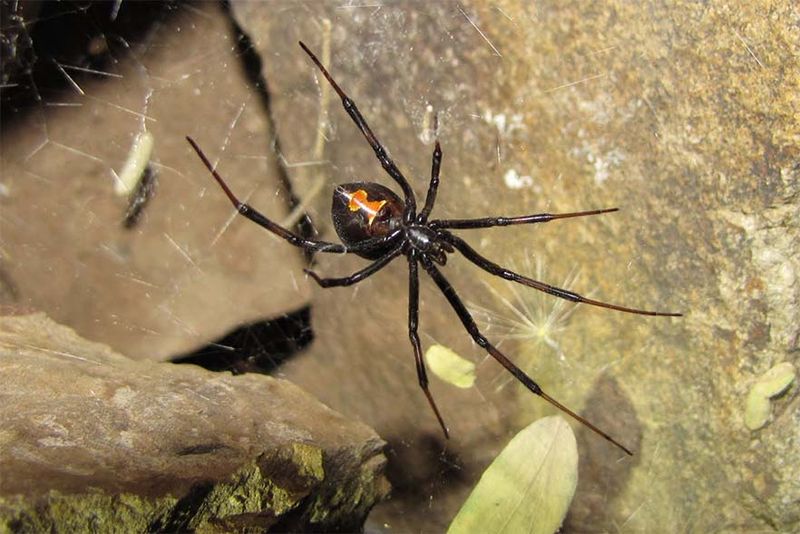
Whatever a southern alligator lizard may eat when it encounters a black widow, that fact changes nothing about how a homeowner should handle spider safety in their own yard. Western black widows are present across California, they favor sheltered, undisturbed spots, and a bite can cause real medical problems.
Relying on a lizard to manage that risk is not a safety plan.
Poison Control’s black widow guidance describes bite symptoms that can include immediate sharp pain, muscle cramps, nausea, sweating, and other systemic effects. For significant symptoms, contacting Poison Control or seeking medical care promptly is the right response, and severe or uncontrolled symptoms warrant emergency care.
The American Association of Poison Control Centers’ hotline (1-800-222-1222) is available around the clock.
Practical prevention comes down to consistent habits. Wear gloves whenever you move wood, mulch, garden pots, brush, or debris, because black widows build webs in exactly those kinds of sheltered, undisturbed spaces.
Shake out shoes and gloves before putting them on, especially if they have been sitting in a garage, shed, or outdoor storage area. Avoid reaching into spaces you cannot see clearly, including behind boards, under ledges, inside hollow logs, and into the back corners of storage shelves.
When a black widow is found near a living area, a frequently used shed, a child’s play area, or any other spot where contact is likely, cautious removal or professional pest control is a reasonable response. That is true regardless of whether lizards are present in the yard.
The spider’s location and the risk of human contact are what determine the appropriate action, not the theoretical possibility that a lizard might eventually eat it. Keeping these two topics separate, wildlife stewardship on one side and human spider safety on the other, prevents one from being used to rationalize skipping the other.
Preserve safe habitat, but keep the evidence and limits in view
Southern alligator lizards can eat western black widows and some mollusks, and that is backed by more than folklore. The 2022 Royal Society Open Science venom study and the National Park Service species account together give the dietary claim a reasonable scientific foundation.
What neither source establishes is that a yard lizard will reliably suppress a black-widow population, eliminate a snail problem, or stay put if cover is removed. Those conclusions go further than the evidence.
Habitat removal as a driver of lizard loss remains an inference, not a measured residential outcome. A yard stripped of all rocks, logs, boards, and ground-level structure may simply offer less reason for a lizard to stay, but no study has tracked that effect yard by yard.
Keeping that distinction clear prevents the stewardship message from sliding into overstatement.
The practical priority order is straightforward: follow your fire-district’s defensible-space rules first, apply safe spider precautions independently of wildlife considerations, avoid unnecessary broad-spectrum pesticides, and then preserve low-fuel habitat features where local rules allow. Defensible-space compliance and leaving native lizards alone are not competing goals.
A yard managed with both in mind gives native wildlife a reasonable chance without asking anyone to trade safety for stewardship.