
Florida sun is rough on vinyl fences, especially when heat, storms, and sandy soil all team up. A living screen can give you privacy, shade, wildlife, and a softer view without the plastic glare.
The right native plants are built for local weather and can last for decades with smart placement. Here are seven Florida-friendly screens that earn their space in a real yard.
1. Simpson’s Stopper
A neat yard can still feel alive, and Simpson’s stopper proves it. Instead of a hard white wall along the property line, you get a glossy green screen that looks tidy enough for the front yard but still feeds birds with bright red-orange berries.
Florida gardeners like this native because it handles heat, wind, and occasional dry spells once established. It can be clipped into a formal hedge or allowed to grow looser for a softer, cottage-style look.
In many home landscapes, it reaches a useful privacy height without becoming a monster that swallows the sidewalk.
Plant it where you want year-round cover near patios, side yards, pool equipment, or street-facing windows. Give new plants regular water during establishment, then ease back as roots settle in.
Sandy soil is not a deal-breaker, but a wide mulch ring helps hold moisture and keeps weed trimmers away from the trunk.
One extra perk is the wildlife value. The small white flowers draw pollinators, while the berries bring in birds, so the screen does more than block a view.
For homeowners who want a polished hedge with native credentials, Simpson’s stopper is one of the cleanest swaps for a vinyl panel.
2. Wax Myrtle
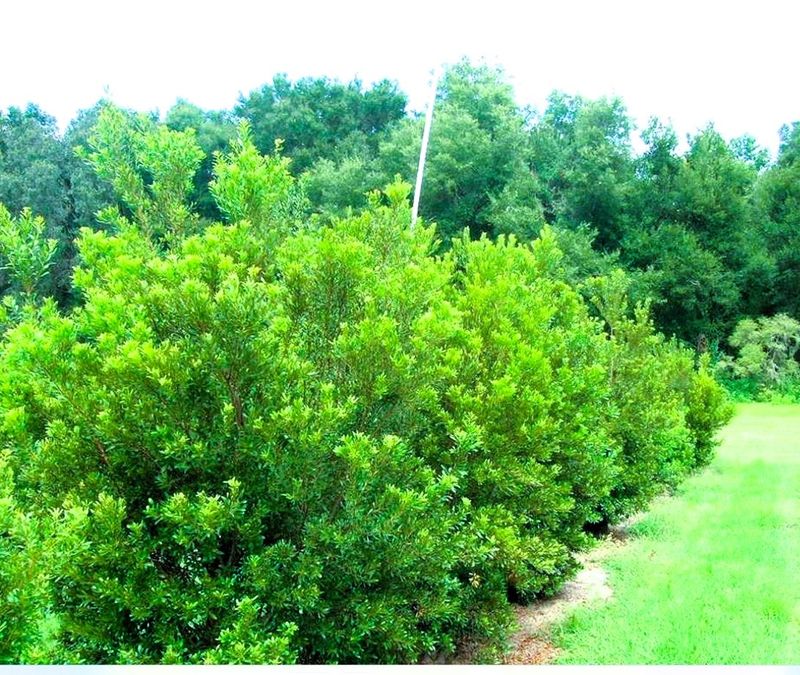
When a neighbor’s second-story window feels a little too close, wax myrtle is the fast-moving friend you want on your side. It grows quickly for a native shrub and can create a relaxed green wall without waiting half a lifetime.
Wax myrtle is especially useful in larger Florida yards where a looser, natural screen fits the setting. Its fine-textured leaves catch light beautifully, and the plant can be limbed up into a small tree or kept shrubby for denser cover.
Many gardeners use it along back property lines, drainage areas, and wide side yards where a rigid fence would feel harsh.
Moisture is where wax myrtle stands apart. It can handle damp spots better than many privacy plants, which matters in parts of Florida that flood after summer downpours.
At the same time, established plants show good toughness in heat and ordinary sandy soils.
Give wax myrtle room to breathe, because crowding it too tightly can lead to thin growth and more pruning than you wanted. A staggered row often looks better and performs better than a straight soldier line.
Birds appreciate the berries, and the evergreen cover gives them shelter during storms, turning a privacy fix into backyard habitat.
3. Florida Privet
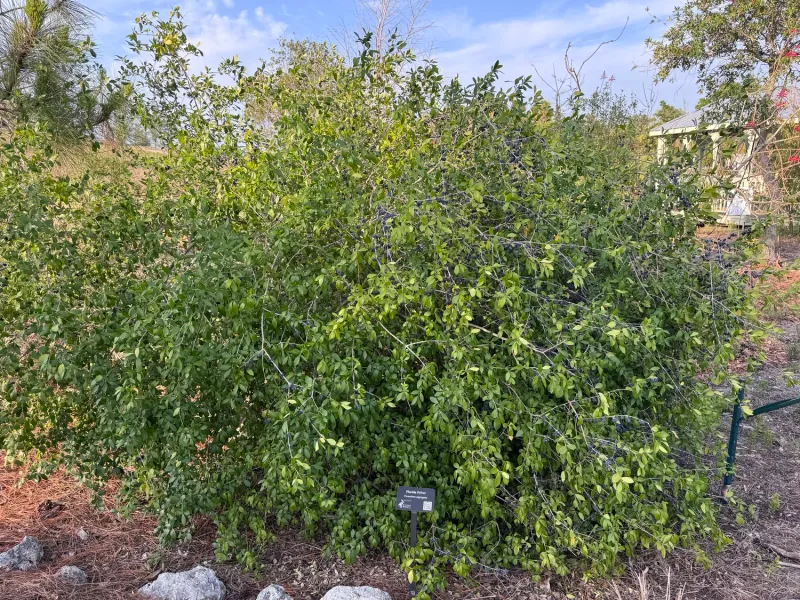
Small spaces need a screen that knows its manners. Florida privet, also called forestiera in many native plant circles, can give patios and tight side yards a leafy buffer without the oversized footprint of a large tree line.
The plant has a lighter, more open look than a boxy hedge, which is part of its charm. In spring, its small flowers may not shout from across the yard, but they support pollinators when many home landscapes are still waking up.
Birds also use the fruit, making it a practical choice for gardeners who want privacy and wildlife value in one planting.
Florida privet works well where you need a medium-height screen, such as between driveways, around a sitting area, or along a low fence that needs softening. It accepts pruning, but it often looks best when shaped gently instead of sheared into a hard rectangle.
That natural form is one reason it feels more at home in Florida than a plastic barrier.
Site it in sun to part shade and water during the first growing season. Once established, it can manage typical dry spells, though mulch helps in sandy beds.
If your goal is privacy without making the yard feel closed in, Florida privet offers a lighter touch.
4. Cocoplum
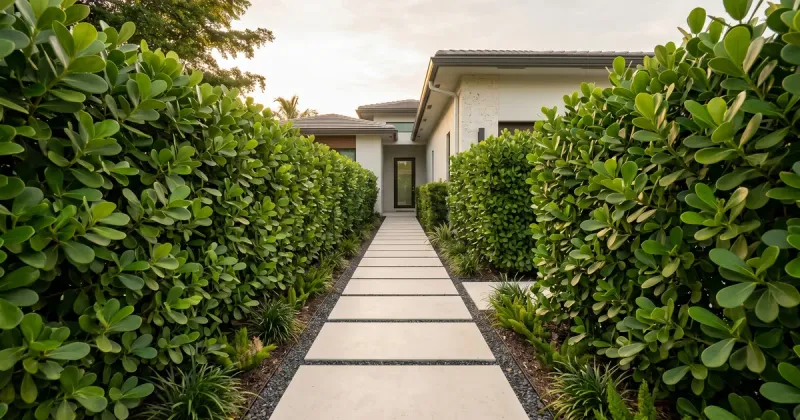
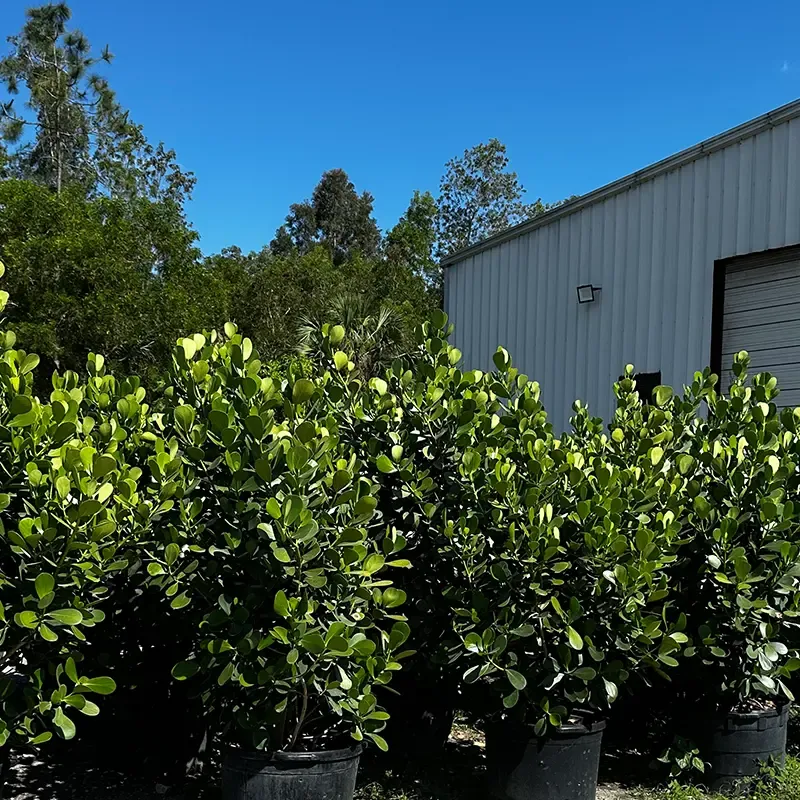
Pool cages, air conditioners, and blank walls can all use a little tropical polish. Cocoplum brings that resort-style look while still being a Florida native, especially in warmer parts of the state where it is commonly used as a hedge.
The rounded leaves are glossy, dense, and often touched with coppery new growth. That color gives the hedge more personality than a plain green screen.
In South Florida and frost-free coastal areas, cocoplum can be one of the best-looking native choices for a living fence around patios, pools, and front entries.
Its strength is density. A well-grown cocoplum hedge can block low views beautifully, which is exactly where many vinyl fences fail visually even before they crack.
The fruit is edible for wildlife and historically has been used by people too, though homeowners usually plant it for structure and screening first.
Cocoplum does best with warmth, sun, and decent drainage. It can tolerate sandy coastal conditions once established, but young plants need steady water while roots spread.
In colder inland spots, check local suitability before planting, because freeze damage can spoil the look. Where the climate fits, cocoplum gives Florida yards a lush screen that feels intentional instead of improvised.
5. Marlberry
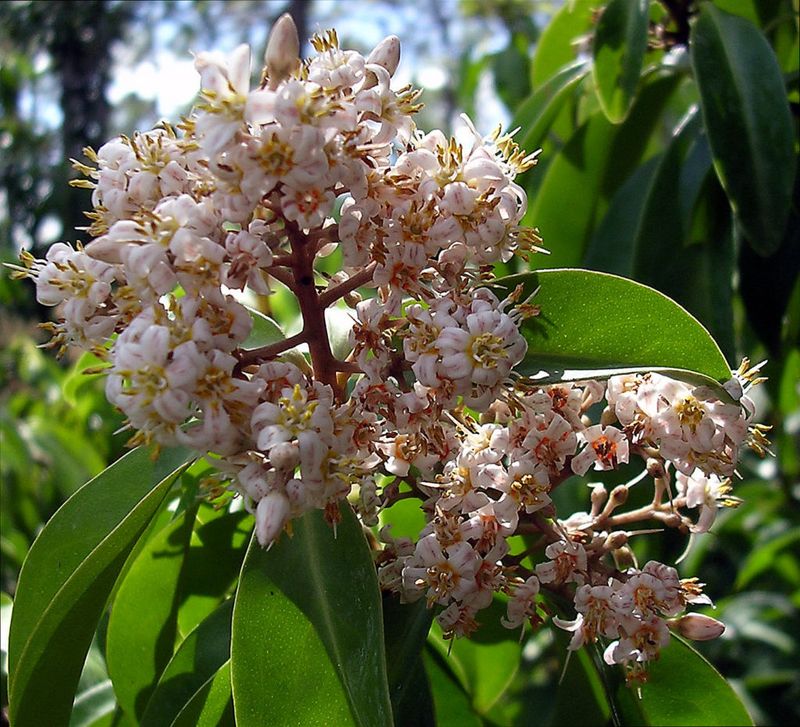
Not every privacy problem sits in blazing sun. Under oaks, beside porches, and along shaded property lines, marlberry can step in where sun-loving hedge plants sulk.
Marlberry has a graceful, woodland look with dark green leaves, fragrant white flower clusters, and berries that birds notice. It is not the plant for a razor-straight formal wall.
Its value is in creating a layered screen that feels natural, calm, and settled, especially in older Florida neighborhoods with tree canopy.
Use it as a middle layer between taller trees and lower groundcovers, or plant several together to soften a view into a neighboring yard. It can also help hide utility areas without making the space feel boxed in.
Because it tolerates part shade, marlberry solves a problem that vinyl fencing cannot solve well: privacy in a living, shaded garden room.
Give it organic mulch and avoid burying the root crown. Like many natives, it benefits from thoughtful watering while young, then becomes more self-reliant with age.
In sandy soil, compost worked into the planting area can help during establishment, but do not overdo fertilizer. Marlberry is for gardeners who want privacy with a quiet, native-woodland mood.
6. Yaupon Holly
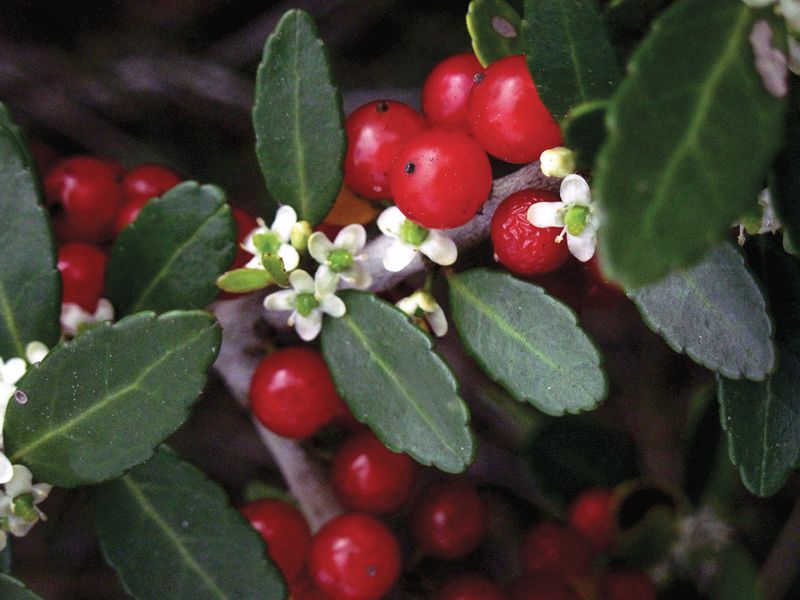
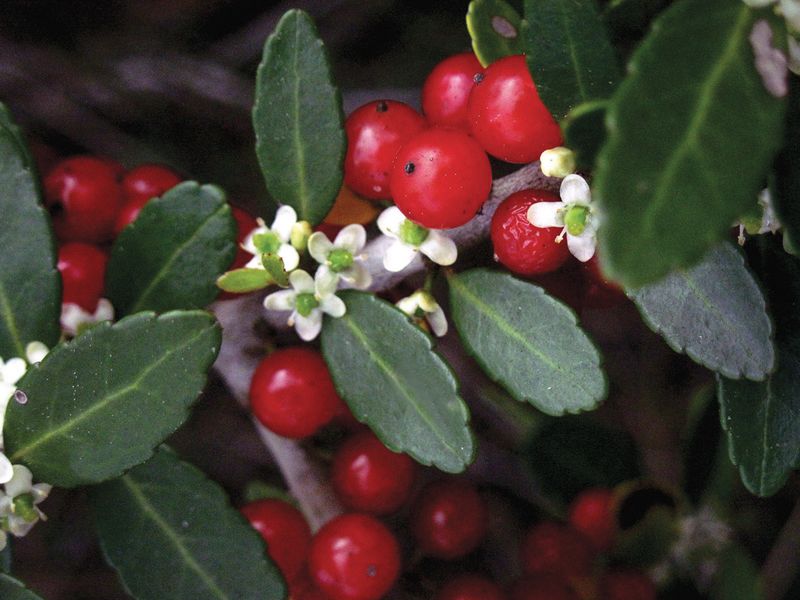
A screen that can look refined, rugged, or even a little wild is a rare thing. Yaupon holly earns its spot because it adapts to so many Florida yard styles, from clipped entry hedges to informal wildlife borders.
The small evergreen leaves keep the plant looking clean through the year, and female plants produce red berries that brighten the landscape when many beds look tired. Birds use those berries heavily, so a yaupon screen can become a winter feeding stop instead of a blank barrier.
It is also one of the native choices that feels comfortable in both home landscapes and more naturalized edges.
Yaupon holly handles pruning well, which makes it useful near walkways, driveways, and front-yard sight lines. Left alone, some forms grow into small trees, while dwarf or compact selections can fit tighter spots.
For a privacy screen, choose the form carefully so you are not fighting the plant’s natural size every month.
Heat, sandy soil, and periodic dry weather are all within its comfort zone once roots are established. It also has better storm sense than many brittle ornamentals, especially when pruned to a strong structure.
If you want a long-lived native screen that can be formal near the house and friendly to birds at the same time, yaupon holly is hard to beat.
7. Southern Red Cedar
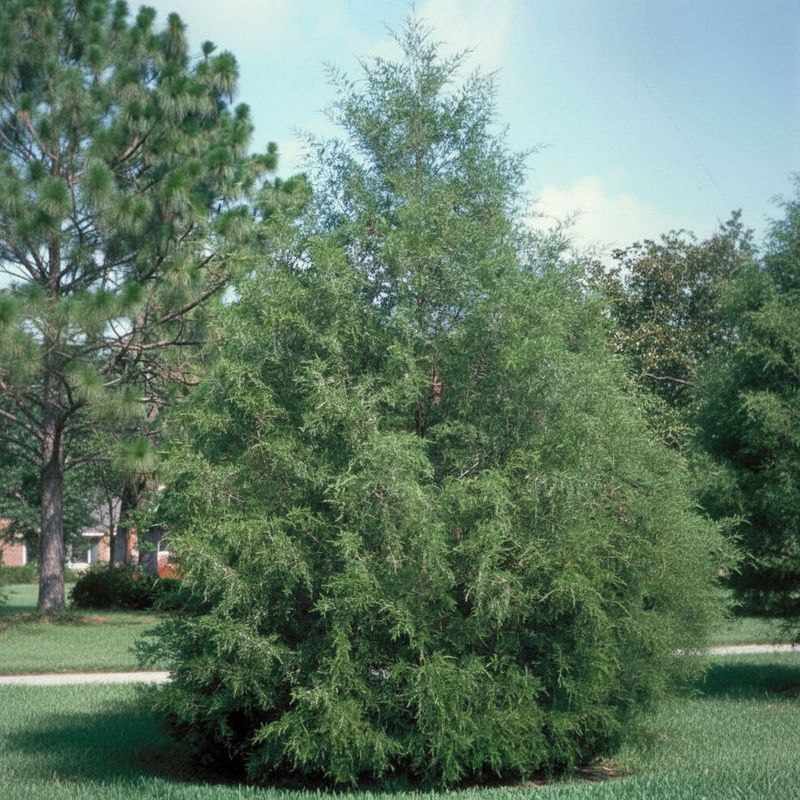
For the yard that needs height, not just a waist-high hedge, southern red cedar brings the backbone. A row of these native evergreens can screen rooftops, road views, and open side lots in a way shrubs simply cannot.
The foliage has a blue-green cast, and mature trees develop a sturdy presence that feels more like a windbreak than a decorative border. That makes southern red cedar a strong choice for larger lots, rural edges, coastal yards, and places where privacy also means reducing wind and visual exposure.
Birds use the cover, and the berry-like cones feed wildlife.
Spacing matters more here than with smaller shrubs. Plant too close, and the trees may become crowded and thin; plant with patience, and they form a durable, handsome screen.
A staggered layout is often better than a single straight row because it creates depth and looks less like a living fence trying to imitate vinyl.
Southern red cedar prefers sun and good drainage, both common in many sandy Florida yards. Young trees need watering during establishment, but older trees are notably tough when planted in the right spot.
Keep them away from tiny foundation beds and tight utility corridors. Given room, they can outlast several fence replacements and make the property feel more grounded over time.