
A small, brightly colored caterpillar hiding on your hibiscus or crape myrtle can cause a seriously painful sting before you even realize what happened. The saddleback caterpillar is a genuine contact hazard that Florida gardeners may encounter during the species’ fall generation, and knowing how to recognize it could save you a lot of pain.
You do not need to panic if you spot one, but you do need to act smart: keep your hands off it, protect your family and pets, and know exactly what to do if contact happens.
Fall sightings are plausible, but a statewide outbreak is not established
Gardeners across Florida have been spotting an unusual caterpillar on ornamental plants this season, and while the sightings are real and the hazard is genuine, the situation deserves a clear-eyed look before alarm sets in. Florida has two reported generations of the saddleback caterpillar each year, one in spring and one in fall, so encounters during autumn months are seasonally plausible.
What the available evidence does not support is a verified statewide surge or outbreak happening on any specific date.
UF/IFAS guidance on stinging and venomous caterpillars of the Southeast identifies the saddleback as medically significant and confirms its presence in Florida, but stops well short of documenting a current population explosion. Treating a seasonal fall appearance as a timely reminder to stay alert is reasonable.
Treating it as evidence that saddlebacks are everywhere right now is a stretch the science does not support.
The practical takeaway is straightforward. If you see a caterpillar matching the saddleback’s distinctive look on a plant in your yard, treat it as a contact hazard regardless of the season.
Do not touch it with bare hands. Keep children and pets a safe distance away.
Decide whether it actually needs to be moved, because leaving it undisturbed is often the lowest-risk choice. If removal is unavoidable, use protective clothing and a tool.
And if contact does happen, respond quickly with the right first-aid steps. The sections that follow walk through each of those decisions in order.
The saddle-shaped marking gives this caterpillar its name
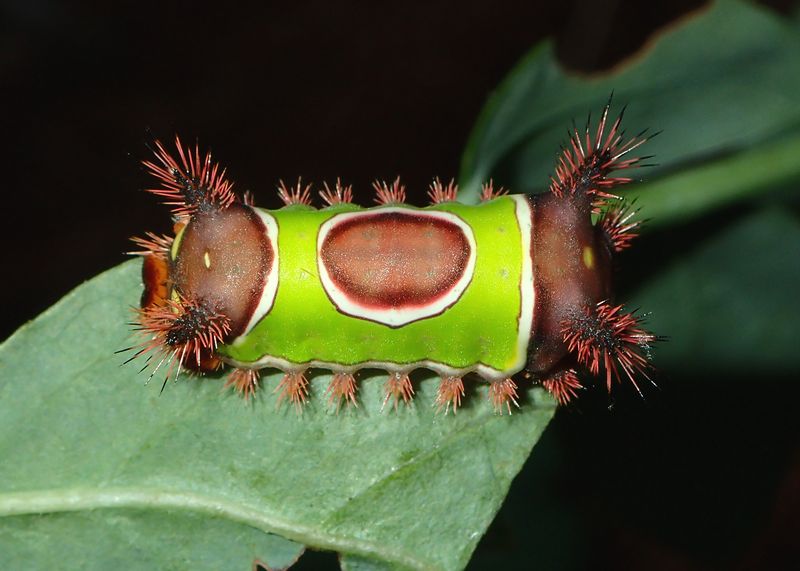
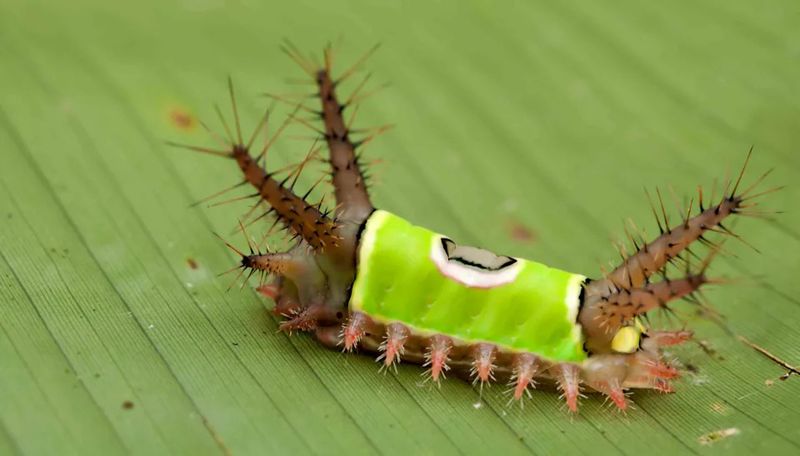
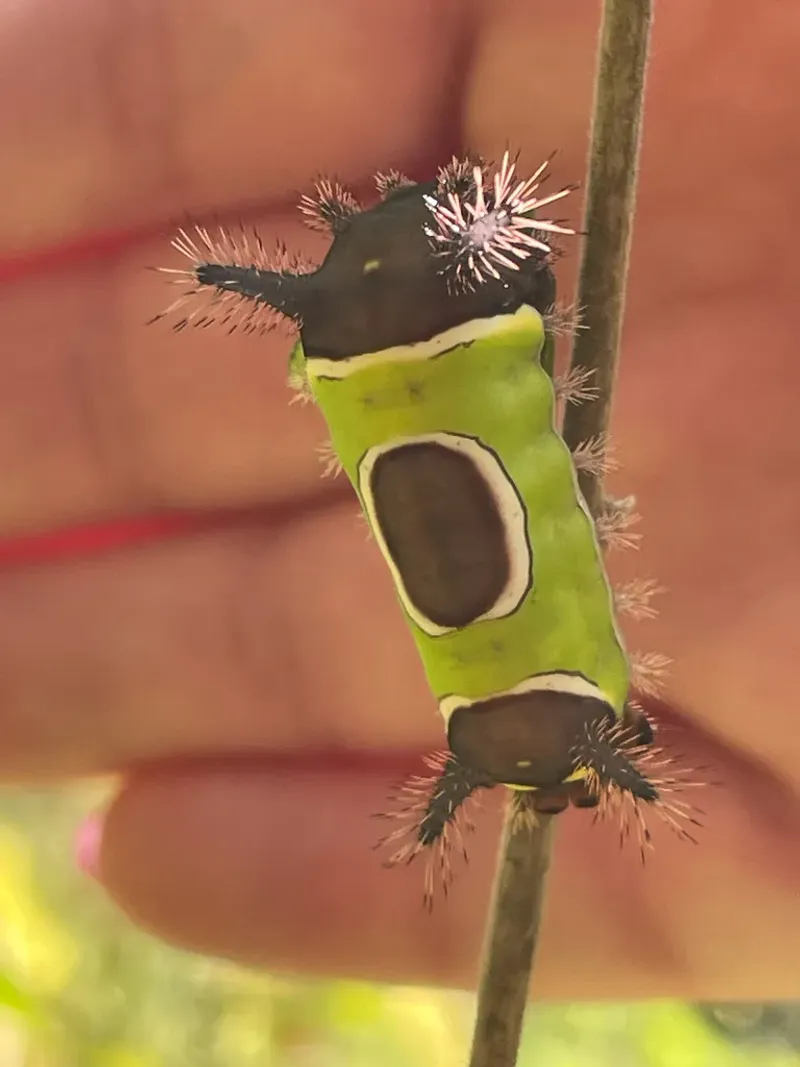
Spotting a saddleback for the first time can be startling because its color pattern looks almost artificial. A fully grown specimen measures roughly 2 centimeters long, about the width of a thumbnail.
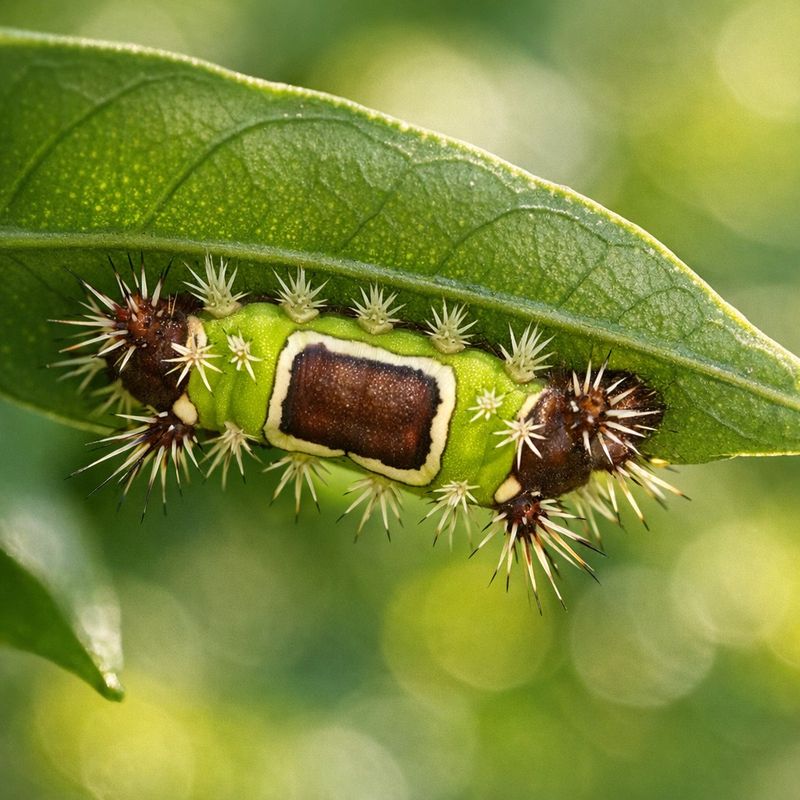
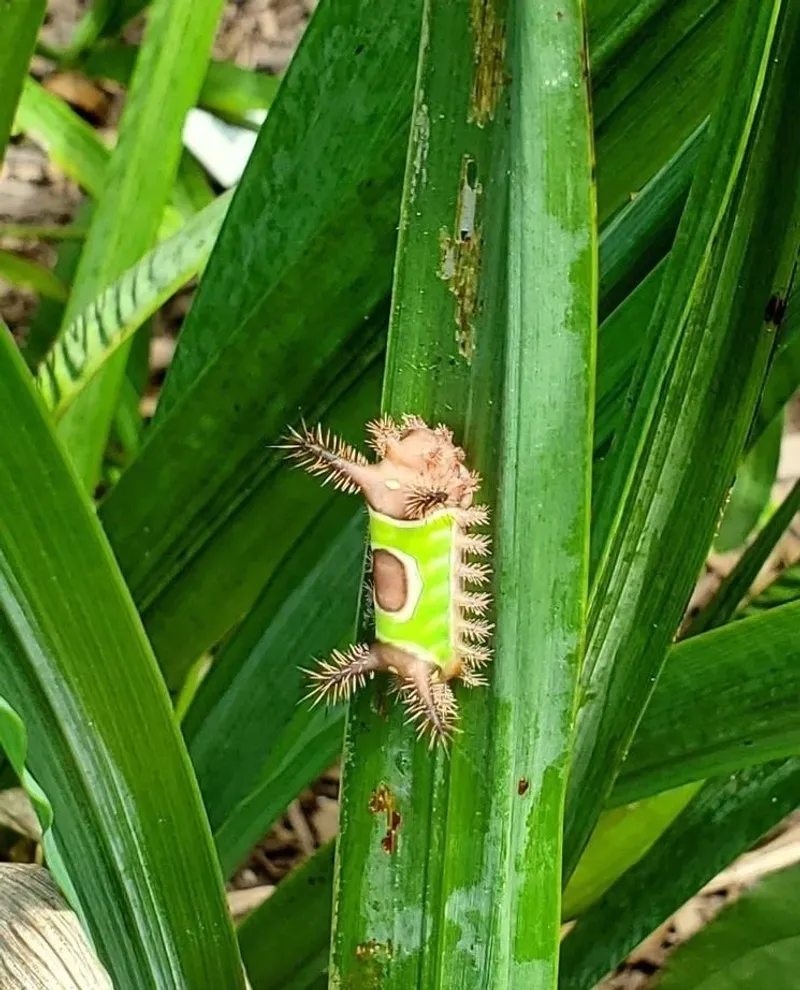
The front and rear sections are brown, the middle section is vivid green, and sitting in the center of that green band is a brown oval patch edged in white, the saddle that gives the caterpillar its name.
The spines are what make this caterpillar genuinely dangerous, and they are hard to miss once you know what to look for. Prominent, branched spine clusters appear near the front and rear of the body.
Smaller but still active stinging structures run along the sides. UF/IFAS’s dedicated saddleback caterpillar profile describes these structures in detail and confirms that both the large and small spines can deliver toxin on contact.
Saddlebacks are not picky eaters. They feed on maple, hibiscus, crape myrtle, palms, viburnum, holly, Brazilian pepper, podocarpus, and many other plants.
Finding one on your hibiscus does not mean hibiscus is its only host; it may simply be the plant it landed on today.
Florida also has several other stinging caterpillars, including the puss caterpillar, the Io moth caterpillar, and the hag moth caterpillar. UF/IFAS Gardening Solutions covers Florida’s full roster of stinging caterpillars, and the differences matter because each species has its own risk profile and management considerations.
If you are not certain what you are looking at, do not pick it up to get a closer look. A photo taken from a safe distance is a much smarter identification tool than bare fingers.
Its spines deliver toxin through contact
Many people assume a caterpillar stings the way a bee does, with a dedicated stinger that punctures skin. The saddleback works differently, and understanding the mechanism helps explain why even a brief, accidental brush can hurt so much.
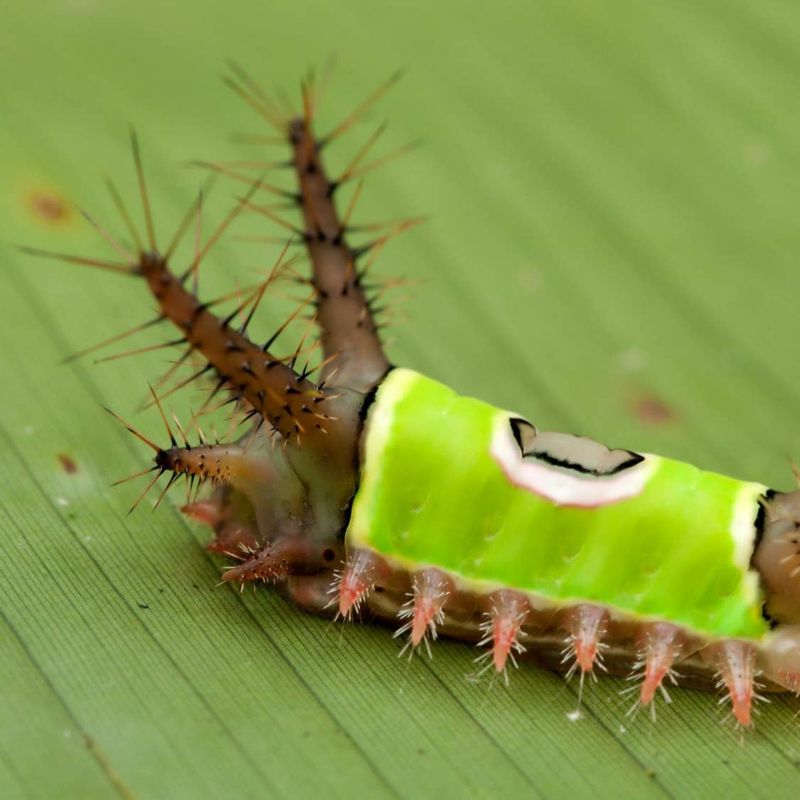
The caterpillar’s spines are hollow, barbed, and associated with toxin-producing cells. When they make contact with skin, they break off and embed themselves, delivering the irritating substance directly into the tissue.
There is no deliberate strike involved; the caterpillar does not chase or attack anyone. Contact happens when a person accidentally brushes against it while gardening, reaches into foliage, or handles a plant without checking it first.
Poison Control’s guidance on caterpillar stings describes the immediate reaction: burning, redness, swelling, welts, and itching that can begin within seconds of contact. MedlinePlus documentation on caterpillar reactions notes that some individuals develop more widespread symptoms, though the severity depends on both the person and the number of spines embedded.
One detail that catches many gardeners off guard: loose spines do not lose their potency the moment the caterpillar moves on. Spines can remain on clothing, fabric, garden furniture, plant surfaces, and other objects after contact with the caterpillar, creating a secondary hazard for anyone who touches those surfaces later.
A shirt that brushed against a saddleback should be handled carefully and washed before wearing again.
Keeping the risk proportionate matters here. A painful local reaction with redness and burning is the most common outcome.
Uncomfortable as that is, it is not the same as a medical emergency. Most people who have brief, limited contact will experience localized symptoms that respond to proper first aid.
The situations that require escalation are covered in a later section.
Keep people and pets away before you decide what to do
Seeing a saddleback on a plant in your yard calls for a pause before any action. Your first move is not removal; it is separation.
Step back, make sure no one else is close enough to accidentally touch the plant, and give yourself a moment to assess whether the caterpillar actually needs to be disturbed at all.
Children are at particular risk because they are naturally curious about colorful insects and may reach out to touch one before an adult can intervene. Teaching kids a simple rule helps: never touch a caterpillar that is brightly colored, spiny, bristly, or fuzzy, even if it looks interesting or harmless.
The same guidance applies broadly, because Florida has multiple stinging caterpillar species, and a child cannot reliably distinguish a saddleback from a puss caterpillar or an Io moth larva by sight alone.
Pets present a different challenge. Dogs especially tend to investigate unfamiliar insects with their noses and mouths.
UF/IFAS’s saddleback caterpillar fact sheet focuses on human exposure, but the same spine-and-toxin mechanism applies to any animal that makes contact. If a dog or cat mouths a suspected stinging caterpillar, contact a veterinarian or a poison control service for guidance rather than waiting to see what develops.
Gloves, long sleeves, and closed-toe shoes are the right gear any time you are working in dense vegetation where stinging caterpillars might be present, whether or not you have spotted one yet. If the caterpillar is on a plant in a low-traffic area and is not near a walkway, play space, or frequently handled surface, leaving it alone is often the most sensible choice.
Saddlebacks are slow-moving and defensive, not aggressive. The hazard exists only if someone makes contact.
Remove a hazardous caterpillar without using your hands
When a saddleback is sitting on a plant along a walkway, near a children’s play area, or on a container plant that gets handled regularly, leaving it in place becomes a genuine risk rather than a cautious choice. In those situations, removal is reasonable, but how you do it matters as much as whether you do it.
Wear thick gloves, long sleeves, and closed-toe shoes before approaching the plant. Use forceps, tongs, or another long-handled tool to move the caterpillar rather than picking it up with your fingers.
Work slowly and deliberately to avoid brushing against the caterpillar or crushing it, since either action can scatter spines onto your skin, clothing, or the surrounding surface. Place the caterpillar in a container with a lid if you plan to relocate it, or deposit it on a leaf well away from foot traffic.
Wash any tools that made contact before storing them.
UF/IFAS Extension Washington County’s saddleback advisory reinforces careful manual handling as the practical first response for a single caterpillar in a hazardous location, rather than immediately reaching for a pesticide.
If you are considering a chemical treatment, slow down and identify the caterpillar first. Florida’s gardens host many caterpillar species, and the majority are harmless or actively beneficial as pollinators in their adult moth and butterfly forms.
Spraying broadly to eliminate one suspected saddleback risks harming non-target insects, including the very moths and butterflies that make a Florida garden worth tending.
When a treatment genuinely seems warranted after proper identification and a realistic assessment of the infestation level, EPA-registered Bacillus thuringiensis products labeled for caterpillar control represent one option that targets caterpillars with lower impact on other insects. Always read the full product label and confirm it is registered for the specific plant and pest before applying anything.
Tape, washing, and cold treatment are the first-aid basics

Contact with a saddleback caterpillar calls for a calm, ordered response. Panicking and rubbing the area is one of the worst things you can do, because it pushes embedded spines deeper into the skin and spreads the irritating toxin.
Work through the following steps instead.
Start with spine removal. Press a strip of adhesive tape firmly over the affected area, then lift it straight away from the skin.
Poison Control’s caterpillar sting guidance describes this tape method as a practical way to pull out embedded spines without forcing them further in. Repeat with fresh strips until you have covered the whole contact area.
Do not scrape, squeeze, or rub the skin during this step.
Once you have addressed the spines, wash the area thoroughly with soap and water. MedlinePlus’s caterpillar sting entry includes washing as part of the standard response.
After washing, apply a cold pack or a bag of ice wrapped in a thin cloth to the area for 10 to 20 minutes at a time to reduce burning and swelling. Repeat the cold treatment as needed for comfort.
Call Poison Help at 1-800-222-1222 for case-specific advice. The service is available around the clock throughout the United States, and you do not need to be in a crisis to use it.
The specialists there can help you decide whether what you are experiencing requires further medical attention or can be managed at home.
If spines or hairs from the caterpillar contacted your eyes, do not wait. Flush the eyes immediately with plenty of clean water and get medical help right away.
Eye exposure is not a wait-and-see situation. Steer clear of alcohol, hydrogen peroxide, bleach, essential oils, or any other household chemical on the affected skin; those are not supported by medical or extension guidance and can irritate already-damaged tissue.
Know when a sting needs urgent medical care
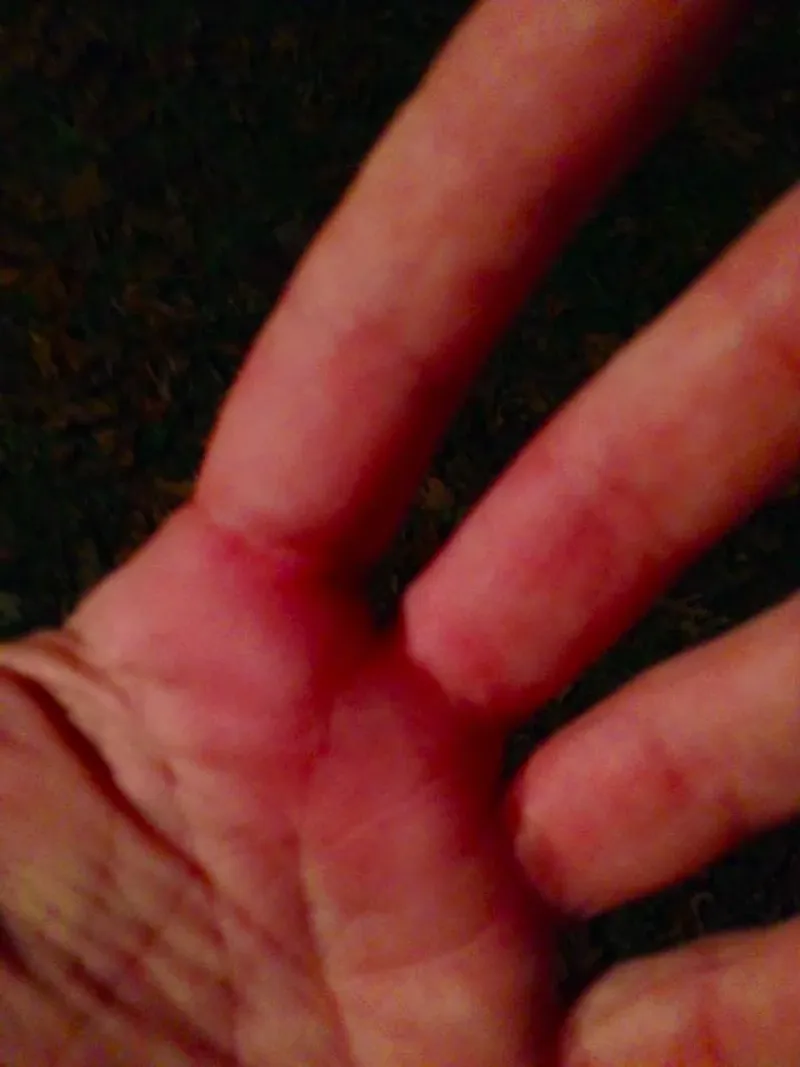
Most people who make brief contact with a saddleback caterpillar experience localized burning, redness, and swelling that, while genuinely painful, can be managed with the first-aid steps described above. That is the expected outcome for a limited exposure.
A smaller number of people develop reactions that go well beyond local discomfort, and recognizing those warning signs quickly is critical.
Seek urgent medical care without delay if any of the following occur after contact: trouble breathing or tightness in the chest, signs that hairs or spines were inhaled, any injury or irritation to the eyes, severe pain that spreads beyond the original contact site, faintness or dizziness, widespread hives across the body, or other signs suggesting a serious allergic reaction. MedlinePlus guidance on caterpillar reactions and a published emergency medicine case involving South Florida caterpillar envenomation both describe how reactions can escalate and why medical evaluation is warranted when symptoms are severe or spreading.
Poison Control and UF/IFAS both note that medical attention may be necessary for significant reactions, without suggesting that every contact automatically warrants an emergency room trip. The distinction matters: use the warning signs above as your guide, not the intensity of the initial sting alone.
Children, older adults, and anyone with known allergies or sensitivities to insect stings deserve extra caution. When in doubt, call Poison Help at 1-800-222-1222 and describe what happened; the specialists there can help you gauge the right level of response.
The full action sequence comes down to this: do not touch a suspected saddleback, isolate the hazard and protect others, remove it carefully only when it poses a clear risk, use tape and washing immediately after any skin contact, and escalate to medical care the moment warning signs appear. A garden that occasionally hosts this caterpillar is not a garden to fear; it is one worth knowing well.