
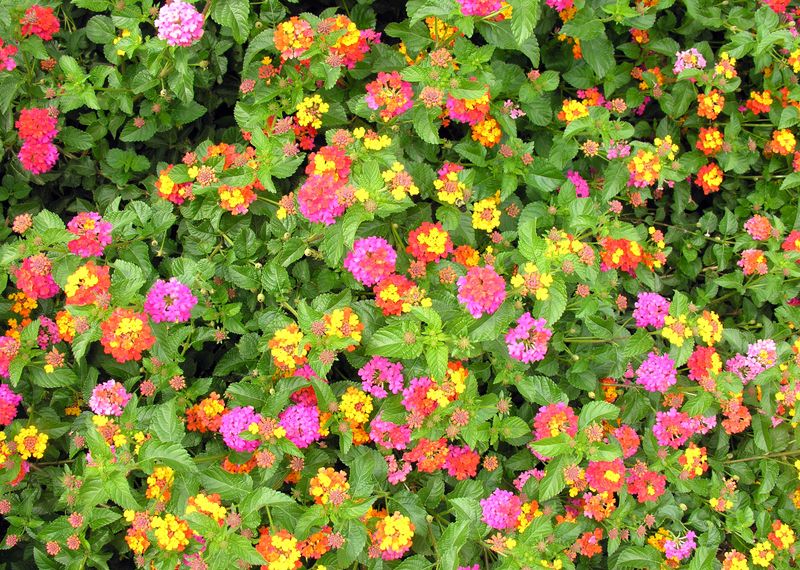
Lantana is one of the most familiar shrubs in Central Texas yards, showing up in front beds, highway medians, and xeriscape gardens across the region. Its cheerful clusters of orange, yellow, pink, and red flowers make it easy to overlook the small, berry-like fruit that follow.
Those fruit can pose a real poisoning risk to children, pets, and livestock, so every homeowner who grows lantana should know what to watch for and what to do if someone eats them.
Lantana Is the Central Texas Shrub Behind the Warning
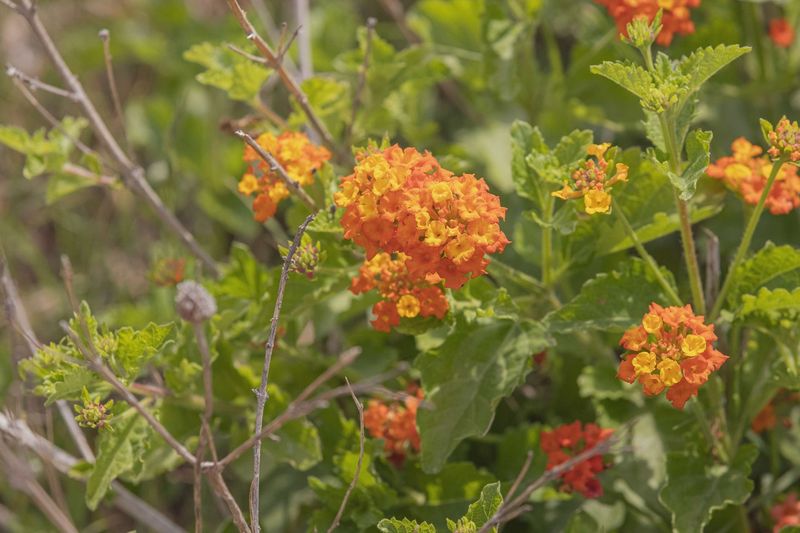
Walk through almost any Central Texas neighborhood during the warm months and you will find lantana growing somewhere nearby. The University of Texas at Austin identifies Texas lantana as ubiquitous in Central Texas, thriving in full sun, rocky or sandy soils, and the kind of triple-digit heat that kills less rugged plants.
Its tolerance for drought and neglect has made it a go-to choice for low-maintenance landscaping, xeriscape gardens, and highway plantings throughout the region.
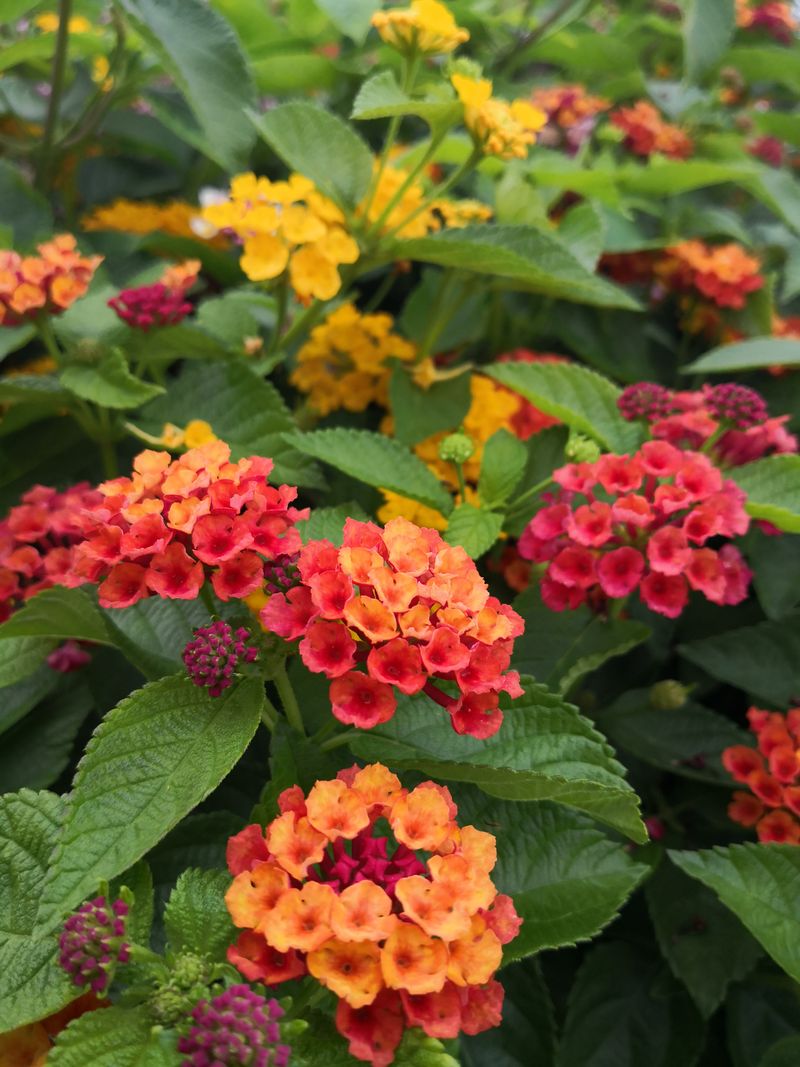
The plant announces itself with dense, rounded clusters of tiny flowers that cycle through shades of orange, yellow, red, pink, and sometimes white, often showing multiple colors on the same cluster. After the flowers drop, small, fleshy fruit develop in their place.
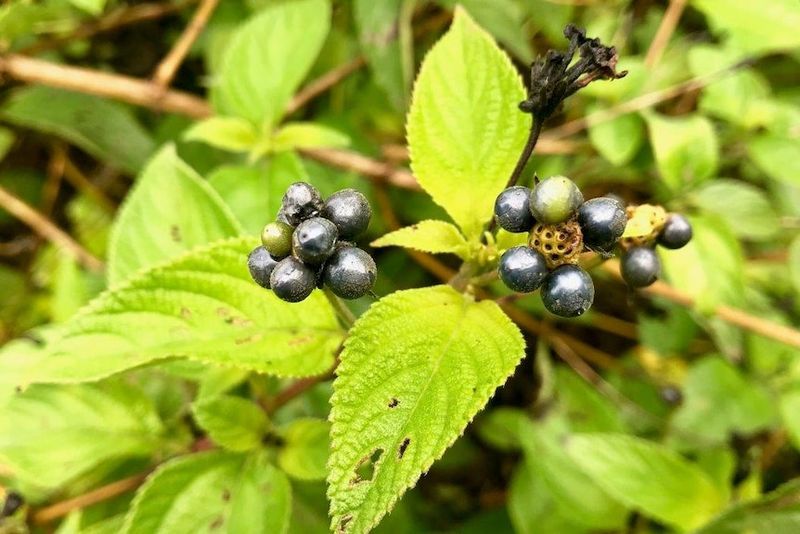
Those fruit start out green and firm, then gradually ripen to a deep purple or near-black color. Botanically they are drupes rather than true berries, but most people call them berries, and that is what makes them a hazard: they look like something a curious child or pet might pop into their mouth.
Identifying exactly which lantana is growing in a particular yard is harder than it sounds. Texas lantana (Lantana urticoides, sometimes listed under the older name Lantana horrida) is the native species most common in Central Texas, but ornamental Lantana camara, trailing lantana, and various hybrids and cultivars are also planted widely and can look nearly identical to an untrained eye.
Because casual identification is unreliable and because toxicity data varies across species and cultivars, this article uses “lantana” broadly to cover the group rather than treating every plant as the same species. Knowing that any shrub in your yard fits this general description is the first and most important step toward managing it safely.
Lantana Deserves Caution, but Not a Snakebite Comparison
Headlines claiming lantana berries are “more poisonous than most snakebites” grab attention, but that comparison does not hold up to scrutiny. Snake venom is injected directly into tissue and bloodstream, while plant toxins are swallowed and processed through the digestive system.
The two exposures involve entirely different compounds, routes, doses, and outcomes, and no reliable toxicology source makes a direct equivalence between them. Treat that comparison as a sensational hook, not a measured finding.
What the evidence does support is genuine caution. Texas A&M’s rangeland plant database identifies pentacyclic triterpenes, including lantadene A and lantadene B, as the toxic compounds in largeleaf lantana, and notes that these compounds occur throughout the plant, not just in the fruit.
In livestock, significant exposure to these compounds has been linked to liver-cell death, jaundice, severe photosensitivity, and death. Those outcomes are documented and serious, and they are the main reason lantana has a reputation for danger.
For people and pets, the picture is more complicated because risk depends on several overlapping factors. The species or cultivar matters, since not every lantana has identical toxin levels.
The plant part matters, because fruit, leaves, and stems do not carry the same concentration of compounds. Ripeness, the amount consumed, and the body size of the person or animal all shift the outcome.
Touching lantana foliage may cause mild skin irritation in some people, and wearing gloves while pruning is a reasonable precaution, but skin contact is not the primary concern. Ingestion is.
Whether the fruit are green, partly ripe, or fully dark, the responsible rule is the same: do not allow children or pets to eat any part of a lantana plant, and do not assume that a particular color or ripeness stage makes the fruit safe.
The Pediatric Evidence Supports Caution Without Panic
Parents who discover their child has eaten lantana berries often search online and find alarming claims. The published human evidence paints a more nuanced picture, though it does not give anyone reason to be careless.
A study of 641 reported pediatric Lantana camara ingestions found mostly no or minimal symptoms, no deaths, and only two hospital admissions. The authors concluded that children who were asymptomatic or had mild symptoms could generally be managed at home with guidance from a poison center rather than requiring emergency care.
That finding is genuinely reassuring, but it comes with important limits. The study covered reported Lantana camara exposures in California, not the full range of lantana species found in Texas landscapes.
It does not establish that Texas lantana, ornamental hybrids, or other cultivars carry the same risk profile, nor does it address exposures involving leaves, stems, or unripe fruit specifically. The researchers also noted that there was no significant difference in symptom frequency or severity between children who ate ripe versus unripe berries, which complicates the common claim that unripe fruit is always more dangerous.
Still, the safest rule remains the same regardless of ripeness: no child should eat lantana fruit of any color.
A separate publication documented pediatric Lantana camara ingestions reported specifically to Texas poison centers, confirming that these exposures happen here and that local poison centers handle them regularly. The practical takeaway is that the evidence does not justify panic, but it absolutely justifies prompt action.
Calling Poison Control after a child eats lantana is the right move every time, because the species, the amount consumed, and the child’s age and size all matter in ways that a quick online search cannot resolve.
Pets and Livestock Face the Stronger Documented Risk
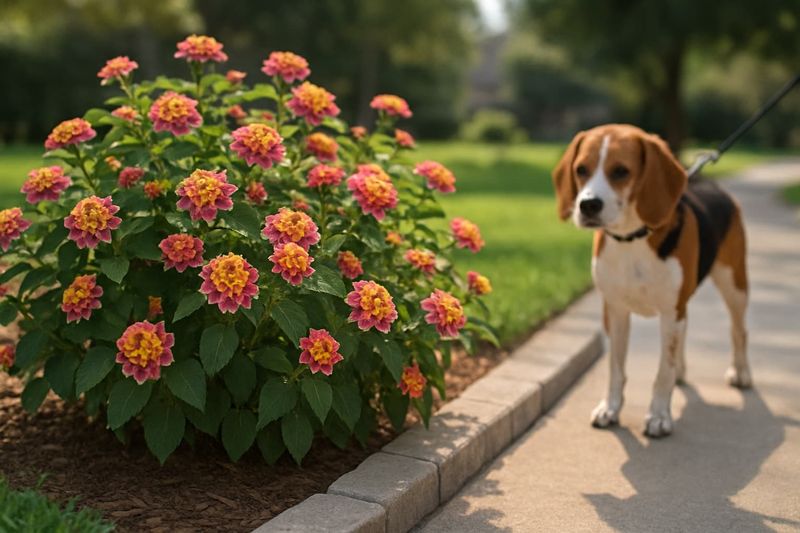
Among the groups most clearly at risk from lantana, animals come first in the weight of documented evidence. The ASPCA lists Lantana camara as toxic to dogs, cats, and horses, with reported signs including vomiting, diarrhea, weakness, and labored breathing.
These are not theoretical concerns. Pet owners and veterinarians have encountered them, which is why the ASPCA Poison Control Center tracks the plant by name.
Livestock carry the heaviest documented burden. Texas A&M’s rangeland database records that cattle, sheep, goats, horses, dogs, and humans are all susceptible to lantana’s toxic compounds, and that substantial exposure in grazing animals can lead to liver injury, jaundice, extreme photosensitivity to sunlight, and death.
These outcomes are associated with animals consuming significant quantities of plant material over time, which is exactly the kind of exposure that can happen when lantana grows in or near a pasture. Keeping grazing animals away from lantana, especially during dry periods when forage is scarce and animals are less selective, is a straightforward precaution with real consequences if skipped.
A few distinctions matter here. The ASPCA listing specifically names Lantana camara, and the toxicity profile described there should not automatically be applied to every Texas lantana native species or cultivar without qualification.
The practical recommendation, however, is the same regardless of which species is growing: prevent pets from chewing or eating any part of the plant. If a dog, cat, or other pet has eaten lantana, contact a veterinarian promptly rather than waiting to see whether symptoms develop.
Birds eating the fruit do not signal that it is safe for pets or people; birds process plant compounds differently, and their tolerance is not a useful guide for mammals.
Reduce Exposure Without Automatically Removing the Plant
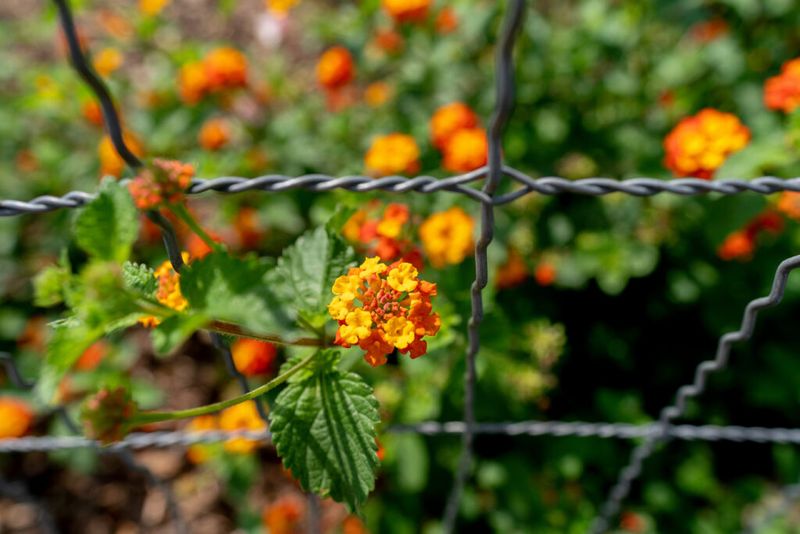
Removing every lantana from a Central Texas yard is not the only path to safety, and for many households it would mean losing a genuinely useful plant. Texas lantana supports pollinators, tolerates drought and heat, and thrives in challenging soils where other plants struggle.
The goal is managing access, not necessarily eliminating the shrub.
Start with identification. Walk your yard and locate every lantana, then make sure anyone who supervises children or pets in that space knows exactly where the plants are.
Remove fallen fruit from paths, patios, and play areas regularly, because small children and dogs often pick things up off the ground rather than reaching for the plant itself. During the fruiting season, which typically follows the main bloom period in summer and fall, more frequent checks make sense.
Supervise young children and pets around any fruiting shrub, and consider a physical barrier around plants that grow near play equipment or sandboxes.
Wear gloves when pruning or handling lantana. Foliage can cause mild skin irritation in some people, and keeping a barrier between your hands and the plant is a simple habit worth building.
After pruning, bag and dispose of cuttings rather than leaving them on the ground where a pet could chew them. If a household cannot reliably control access, such as a yard where a toddler plays unsupervised or where dogs roam freely, replacing lantana near those areas with a lower-risk plant suited to Central Texas conditions is a reasonable choice.
The ASPCA maintains a searchable list of non-toxic plants that can help homeowners find suitable alternatives for spots where the risk of accidental ingestion is harder to manage.
Respond Promptly to a Suspected Ingestion

Speed matters more than certainty when a child may have eaten part of a lantana plant. The right response is a short sequence of steps, not a wait-and-see approach.
First, remove any remaining plant material from the child’s mouth and hands. Second, save a sample of the plant or take a clear photograph of it, including the fruit and leaves, so that the poison specialist can help identify it.
Third, rinse the child’s mouth gently with water. Then call Poison Control.
Texas Poison Center guidance is explicit: call immediately rather than waiting for symptoms to appear, because some plant toxins take time to produce visible effects and early guidance can change the outcome. Do not try to make the child vomit.
Poison Control’s national first-aid guidance specifically advises against inducing vomiting after plant ingestions, as it can cause additional harm. The national Poison Control number is 1-800-222-1222, and it is staffed 24 hours a day, every day of the year.
If the child collapses, has a seizure, is struggling to breathe, or cannot be woken up, call 911 immediately rather than Poison Control. Those signs require emergency response, not a phone consultation.
Texas operates six regional poison centers that provide free, 24-hour advice, so help is always available regardless of where in the state you are. For pets or livestock that have eaten lantana, contact a veterinarian promptly.
Do not attempt a home treatment or wait to see if symptoms develop. A vet can assess the animal’s size, the likely amount consumed, and the appropriate next step far more accurately than any general guideline can.
Treat Every Lantana Fruit as Inedible
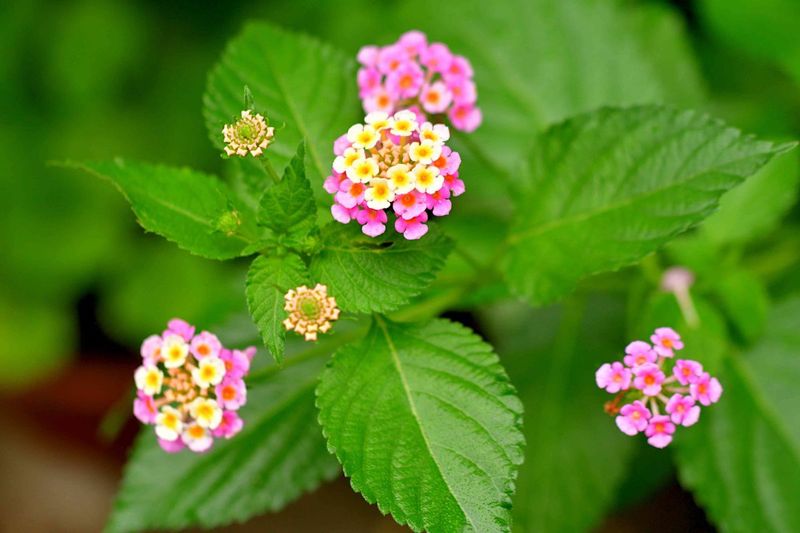
The clearest rule for Central Texas homeowners is also the simplest: no lantana fruit is safe to eat, regardless of color or ripeness. Green, partially ripe, or fully dark berries all carry uncertainty, and berry color is not a reliable guide to whether a particular plant or cultivar poses a risk.
The University of Texas specifically advises leaving lantana fruit for birds rather than treating it as edible, and that guidance applies to children and pets just as firmly.
The claim that lantana berries are more poisonous than most snakebites is not supported by the available evidence. But the absence of that comparison does not mean lantana is harmless.
The largest pediatric study found mostly mild or no symptoms in reported Lantana camara ingestions, yet that finding covers one species in one state and does not extend to every lantana exposure a Texas homeowner might encounter. Documented toxicity in livestock and pets is real, and the responsible approach is prevention combined with a fast call to Poison Control at 1-800-222-1222 or a veterinarian whenever an ingestion happens.
Identify the lantana in your yard, keep children and animals away from the fruit and foliage, clean up fallen berries regularly, and know the number to call before you ever need it. A familiar plant does not have to be a hidden hazard if you treat its fruit as off-limits from the start.