
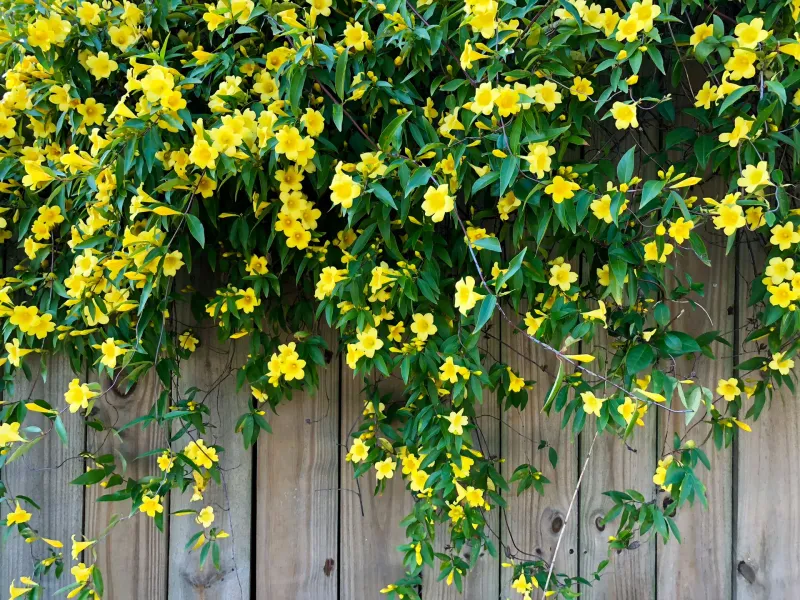
A sweet-smelling yellow vine that can handle Texas heat sounds almost too good to be true, and the reality is a bit more nuanced than that. Carolina jessamine is a strong candidate for covering a fence or trellis with fragrant blooms, but it comes with real conditions: it needs establishment water, a proper support structure, and a site that suits its preferences.
Getting those details right is what separates a thriving vine from a struggling one.
A strong candidate for a fragrant fence vine
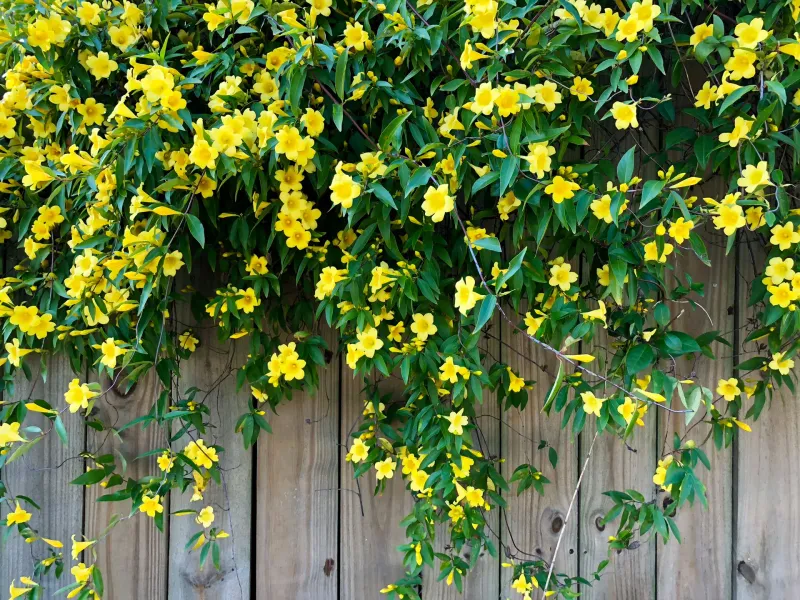
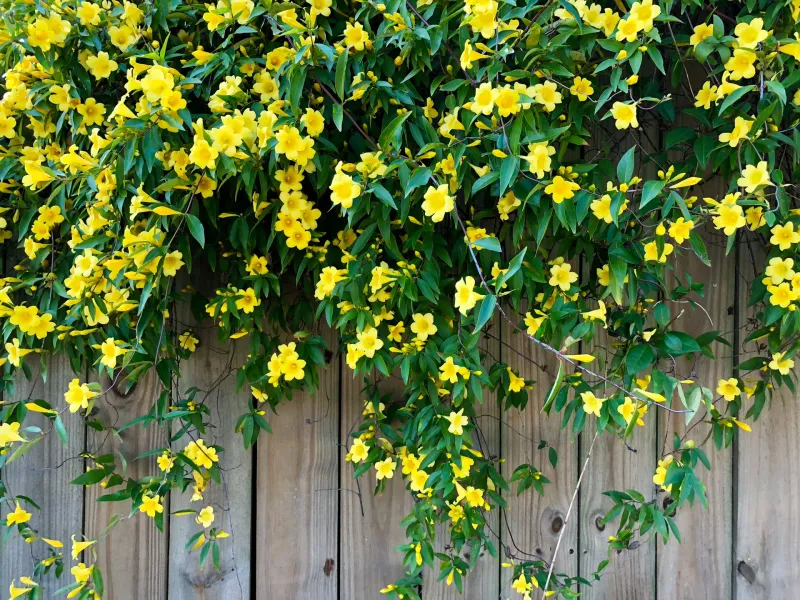
Carolina jessamine, known botanically as Gelsemium sempervirens, earns serious consideration for anyone wanting a fragrant, yellow-flowering vine on a supported fence or trellis. The plant is a woody, twining vine with glossy, lance-shaped leaves that stay green through much of the year – semi-evergreen in colder winters – and produce clusters of funnel-shaped yellow flowers that extension sources consistently describe as sweetly scented.
When trained on an appropriate support, the North Carolina Extension Gardener Plant Toolbox notes the vine can reach roughly 10 to 20 feet in length.
That twining habit is worth understanding before you buy. Carolina jessamine climbs by wrapping its stems around whatever is nearby, so a bare wooden fence board offers little for it to grip.
A wire grid, lattice panel, chain-link fabric, or open trellis gives the stems something to wind around and dramatically improves how evenly the plant spreads. Plan the support structure before the vine goes in the ground, not after.
Common names create real confusion in the nursery aisle. Carolina jessamine also goes by yellow jessamine and Carolina yellow jasmine, but it is an entirely different plant from Confederate jasmine (Trachelospermum jasminoides), which is fragrant and popular in Southern landscapes but native to Asia rather than the United States.
A University of Georgia Extension article on the two vines spells out how often gardeners mix them up based on overlapping nicknames. Coral or trumpet honeysuckle (Lonicera sempervirens) is another native vine used on Texas fences, but its flowers are generally described as non-fragrant, making it a poor substitute when scent is the goal.
If fragrance matters most, Gelsemium sempervirens is the one to identify by its botanical name at the nursery.
Native to parts of Texas, not guaranteed across Central Texas
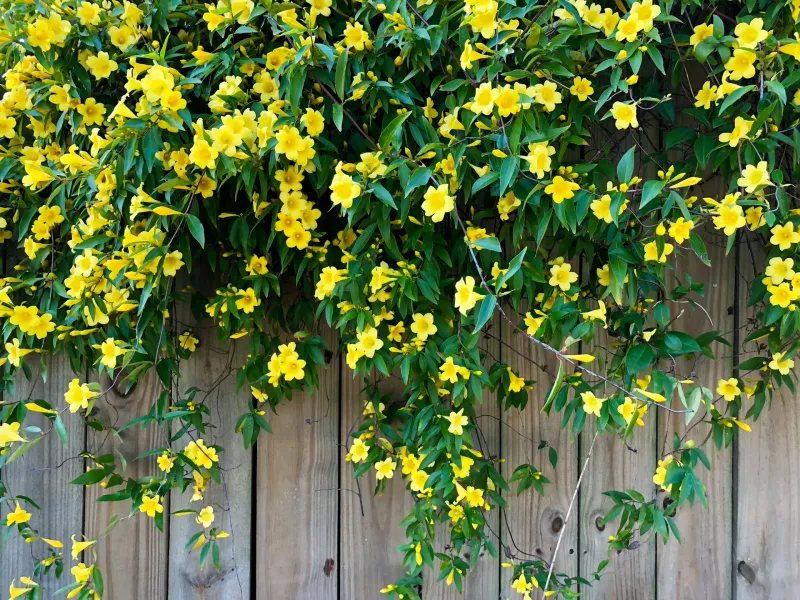
The word “native” carries a lot of weight in Texas gardening conversations, and it deserves careful use here. Carolina jessamine’s natural range covers the southeastern United States and extends into Texas, but the Texas A&M material most specific to the state identifies the plant primarily with East Texas rather than with the drier, rockier terrain of Austin, San Antonio, the Hill Country, or the Blackland Prairie.
That distinction matters because East Texas receives meaningfully more annual rainfall than Central Texas and has different soils.
A Texas A&M AgriLife presentation on native and adapted plants lists Carolina jessamine among plants with landscape potential in the region, which supports its use as a candidate. What the available sources do not establish is that the vine will perform equally well on a limestone ridge west of Austin, a heavy clay lot in the San Antonio suburbs, and a sandy site in the Cross Timbers.
Central Texas is not climatically uniform, and treating any single plant as a guaranteed fit across all of it invites disappointment.
The practical step is a regional check before purchase. The Texas A&M Earth-Kind plant selector allows you to search by region and plant type, which narrows the field to species with documented performance in your specific part of the state.
A local independent nursery is equally valuable because staff there see what survives in local conditions season after season. Carolina jessamine may well suit your site, but confirming that through a regional tool or a knowledgeable local source is a more reliable path than assuming that a plant found anywhere in Texas will thrive everywhere in it.
Heat tolerance still depends on water and soil
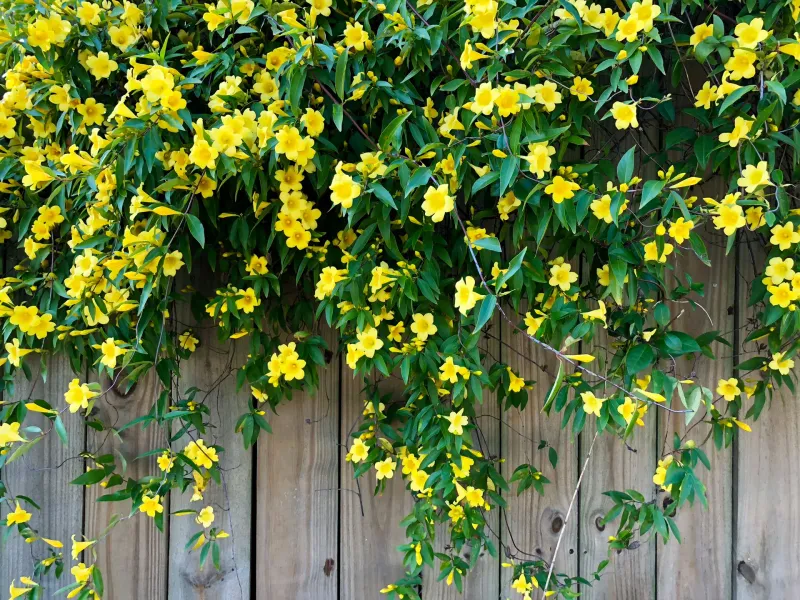
Describing a plant as heat tolerant is not the same as saying it needs no care under triple-digit temperatures. Extension guidance on Gelsemium sempervirens characterizes it as moderately drought tolerant once established and able to handle short dry periods – not as a plant that can be left without supplemental water through a prolonged Central Texas dry spell.
The difference between “tolerates short drought” and “survives summer without irrigation” is exactly the kind of gap that kills newly planted vines.
Soil conditions shape performance just as much as heat exposure. The vine prefers moist, well-drained soil, which is a combination that many Central Texas sites do not naturally offer.
Shallow limestone soils drain quickly but hold almost no moisture reserve; dense clay soils may hold water too long after rain, which creates root problems. Poor drainage does not become acceptable simply because the plant can handle dry spells – standing water after rain is a separate and more damaging stress.
Evaluate your actual soil before planting rather than assuming the vine will adapt.
Light matters too. Full sun generally produces the best flowering and most vigorous growth.
Shade from a building, a large tree, or a north-facing fence can reduce bloom production and push the vine toward thin, spindly stems that cover less area. If your fence gets fewer than six hours of direct sun daily, flowering may disappoint.
Before planting, walk the site at different times of day, check drainage after a heavy rain, and honestly assess whether supplemental irrigation is practical given local water restrictions. Native or adapted status does not override the need to match the plant to the actual conditions it will face.
Plant in the cool season and water until roots establish
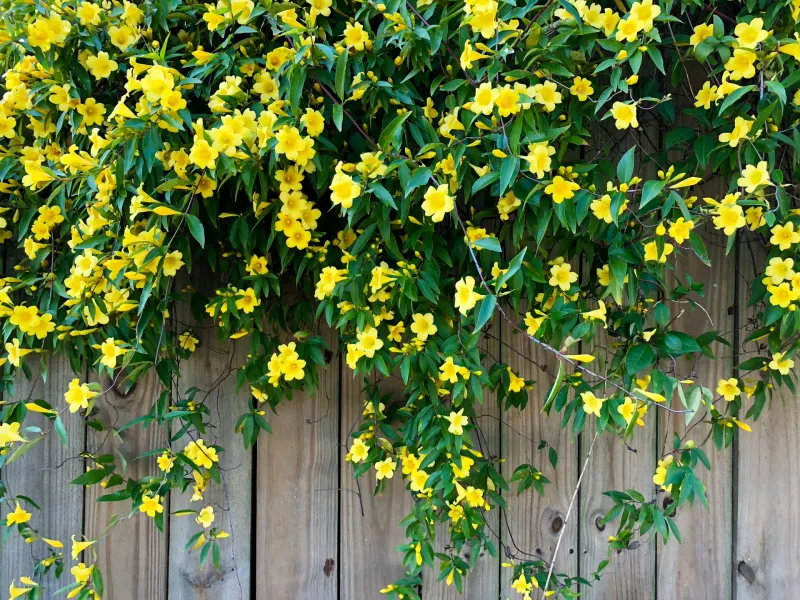
Timing the planting correctly gives the vine its best chance before the first serious summer heat arrives. Texas Parks and Wildlife recommends planting during the cool season – late fall or early spring – so new roots have weeks or months to spread before temperatures climb.
A vine planted in late March in Austin has a meaningfully better start than one dropped into the ground in July, simply because the soil temperature and air demand on the root system are lower during establishment.
Texas A&M AgriLife guidance on watering landscapes is clear that newly planted landscape plants need more frequent irrigation until they are well rooted, regardless of whether the species carries a drought-tolerant label. After roots are established, you can gradually reduce watering frequency to encourage the plant to reach deeper into the soil profile for moisture.
There is no fixed schedule that works for every site, soil type, and season, so watch the plant and the soil rather than following a rigid calendar.
Mulch plays a supporting role that is easy to underestimate. A layer of roughly 2 to 4 inches of organic mulch around the base of the vine reduces soil temperature, slows moisture loss between waterings, and suppresses weeds that would otherwise compete with a young plant.
Texas A&M AgriLife mulching guidance recommends keeping mulch pulled a few inches away from the stem to prevent rot and pest problems at the crown. Applied correctly, mulch does not replace watering – it makes each watering go further, which matters especially during the months when the vine is still building its root system and has not yet earned the right to be called drought tolerant.
Build the support and wait for gradual coverage
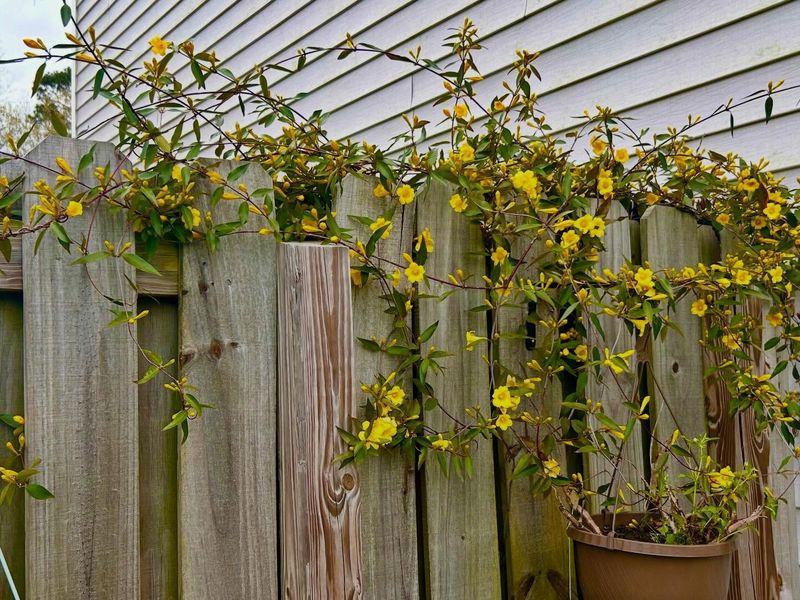
Getting the support structure right before planting saves a lot of frustration later. Carolina jessamine climbs by twining – its stems wrap around whatever they contact – so the support needs gaps or strands narrow enough for the vine to grip.
Horizontal wires spaced 6 to 12 inches apart on a fence post, a chain-link panel, an open lattice, or a freestanding trellis all give stems the purchase they need. A smooth, wide board offers almost nothing, and stems left without guidance tend to pile up in one spot rather than spread evenly across the fence.
Once growth begins, check new stems every week or two during the growing season and redirect any that are heading the wrong direction. Loosely tying a stem to the wire or trellis with soft garden twine helps train coverage toward the bare spots.
Patience is the main ingredient here. Extension guidance on the species estimates that reaching 12 to 20 feet on a trellis may take three to four growing seasons.
That is not a slow plant by any absolute measure, but it is far from instant coverage, and expecting a full fence screen by the end of the first summer will lead to disappointment.
Pruning timing matters more than most gardeners expect. Carolina jessamine blooms on growth from the previous season, which means cutting it back heavily in late spring or summer removes the wood that would have produced next year’s flowers.
The right window for shaping and training cuts is shortly after flowering ends, while the plant still has the full growing season ahead to set new growth for the following year. Light cleanup can happen anytime, but any significant pruning should wait until the last flowers fade.
If a stem is growing where you do not want it, redirect it early rather than cutting it later.
Expect the main flower show before summer
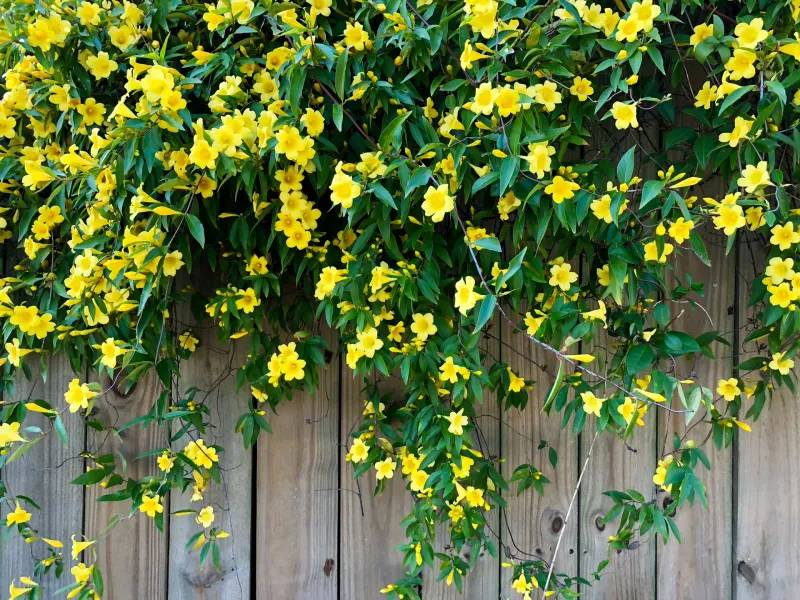
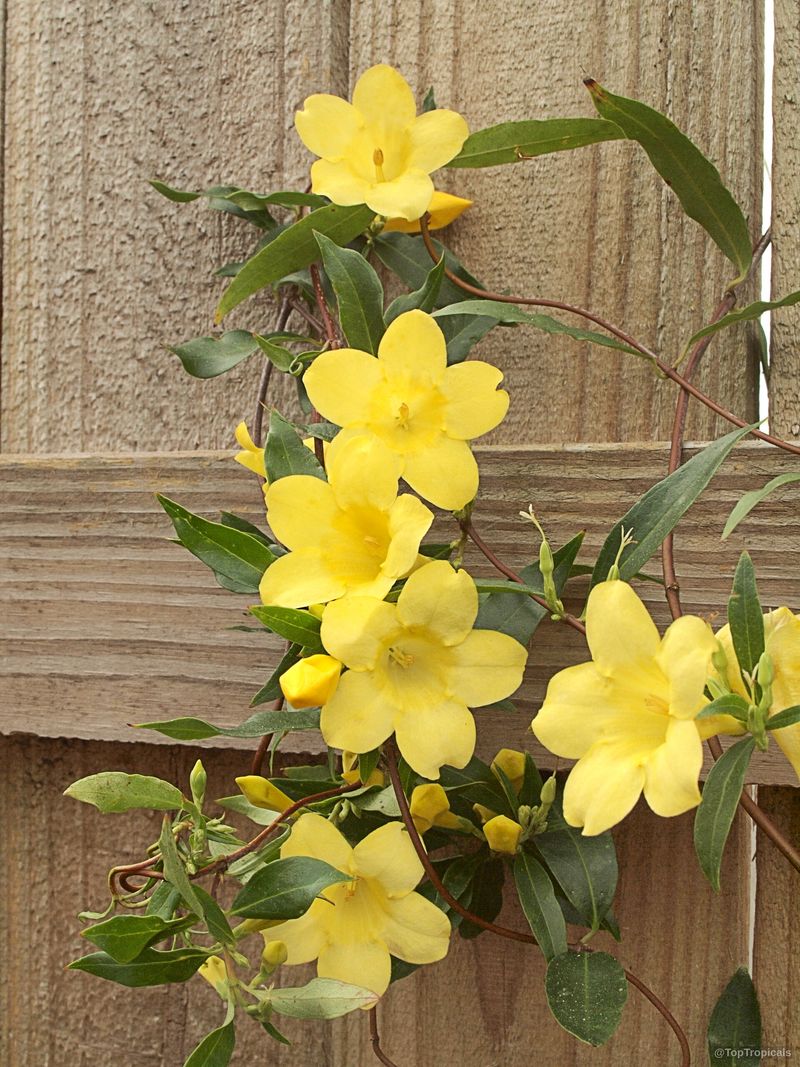
The flowers are the reason most people want this vine, and they are genuinely worth the wait. Carolina jessamine produces clusters of bright yellow, funnel-shaped blooms that extension sources consistently describe as fragrant or sweetly scented, with an intensity that can carry across a yard on a warm late-winter morning.
The color is a clean, warm yellow that reads well against dark fence boards or a brick wall, and the glossy foliage provides a tidy backdrop even when the plant is not blooming.
The bloom season, though, does not stretch through summer. The principal flowering period generally runs from late winter through spring – roughly February through May depending on location and the year’s weather pattern – and that is where most of the fragrance and visual impact concentrate.
Extension records for the species note that some plants produce a smaller flush of blooms in fall, but summer-long flowering is not a realistic expectation. The semi-evergreen foliage continues to provide screening and visual texture through the hottest months even when flowers are absent.
Wildlife visits during the bloom period can be a genuine bonus. Hummingbirds, butterflies, and various other pollinators have been observed at the flowers, and a Texas A&M AgriLife Central Texas bee-friendly plant list includes Carolina jessamine among plants of value to pollinators.
That listing comes with an important qualification: North Carolina Extension specifically warns that the plant’s pollen is toxic to honeybees and considers it unsuitable for beekeepers. The plant is not universally safe or universally harmful to every pollinator – hummingbirds and butterflies appear to visit without harm, while managed honeybee operations face a documented risk that warrants caution.
Check toxicity and fire exposure before planting
Two safety issues with Carolina jessamine deserve a place in the initial siting decision rather than an afterthought after planting. The first is toxicity.
Every part of the plant – flowers, leaves, roots, seeds, bark, fruit, and sap – is poisonous if ingested. Extension documentation on the species describes the symptoms of ingestion as potentially severe, and the risk applies to children, pets, and livestock alike.
A vine grown on a back fence away from a play area or dog run poses a different level of risk than one trained along a low front porch rail that a toddler or a curious dog can reach. The flowers look harmless and smell appealing, which makes accessibility the key factor to evaluate honestly before the plant goes in the ground.
Livestock owners face a particular concern. Goats, horses, and other grazing animals may sample unfamiliar plants, and a fence shared with or adjacent to a pasture is not an appropriate location for this vine.
If children or animals regularly spend time in the planting area, choose a different species or select a location where contact is genuinely unlikely rather than just inconvenient.
The second safety consideration is fire. North Carolina Extension assigns Carolina jessamine a high flammability rating and advises against placing it within a home’s defensible space.
A vine growing on a remote garden fence away from structures carries a different risk profile than one climbing a fence attached to a house, a wooden porch, a storage shed, or any other combustible structure. There is no single clearance distance that applies to every property, but the general principle is straightforward: the closer the vine is to a structure you cannot afford to lose, the more seriously you should weigh the flammability concern.
In wildfire-prone areas of Central Texas, that calculation deserves extra weight. A fence that runs along a property line well away from the house is a meaningfully safer location than a fence that doubles as a garden wall for a wooden deck.
Use this decision rule before choosing the vine
Carolina jessamine can be a genuinely rewarding fence vine for the right site. A sunny, well-drained location with a proper trellis or wire support, a homeowner willing to water consistently through the establishment period, and realistic expectations about a late-winter-to-spring bloom season add up to a combination where the plant has a strong chance of performing well.
Extension records document its fragrance, yellow flowers, and suitability for supported vertical structures – those qualities are well established.
The case for choosing a different plant is equally clear in certain situations. Toxicity rules it out anywhere children, pets, or livestock have regular access.
A high flammability rating makes it a poor choice within a home’s defensible space or against any combustible structure. Persistent poor drainage, heavy shade, or an inability to provide establishment irrigation are site conditions the plant cannot overcome on its own.
When any of those factors apply, selecting a different species is the more practical decision.
Before purchasing, run the site through the Texas A&M Earth-Kind plant selector or speak with a local nursery professional familiar with your specific part of Central Texas. Conditions in the Hill Country, the Blackland Prairie, and the urban core of Austin or San Antonio differ enough that a regional check is worth the few minutes it takes.
Carolina jessamine is a promising, fragrant fence-vine option – not a heat-proof, fast-covering solution for every yard in the region. The gardeners who get the most from it are the ones who matched the plant honestly to the site before they drove the first stake.