
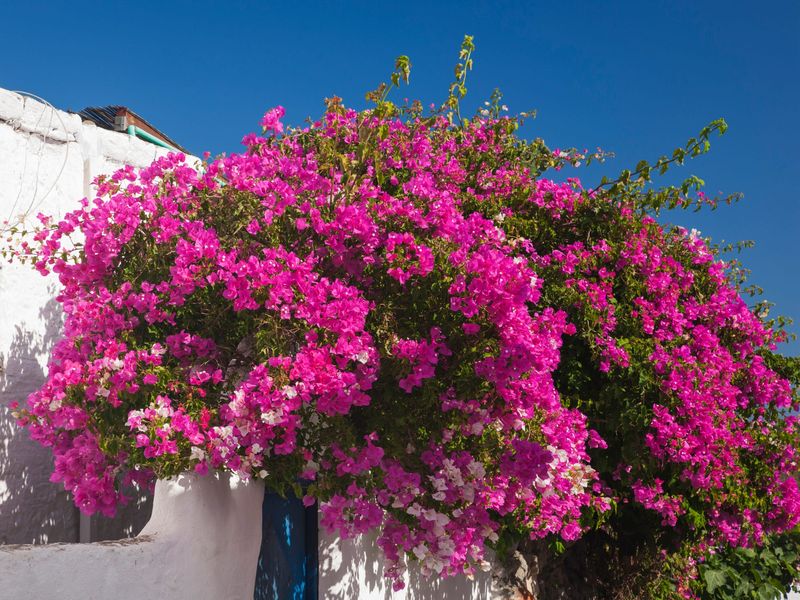
Bougainvillea is one of California’s most dramatic bloomers, and every fall, gardeners start worrying they’ll do something wrong and lose the show. The concern usually lands on fertilizer, specifically whether one feeding before cooler weather will shut down the flowers for good.
That fear is understandable but a little oversized. Getting your plant through the seasonal shift comes down to a handful of practical decisions, and knowing which ones actually matter can save you a lot of second-guessing.
Cool nights may help flowering, but they do not set a California-wide schedule
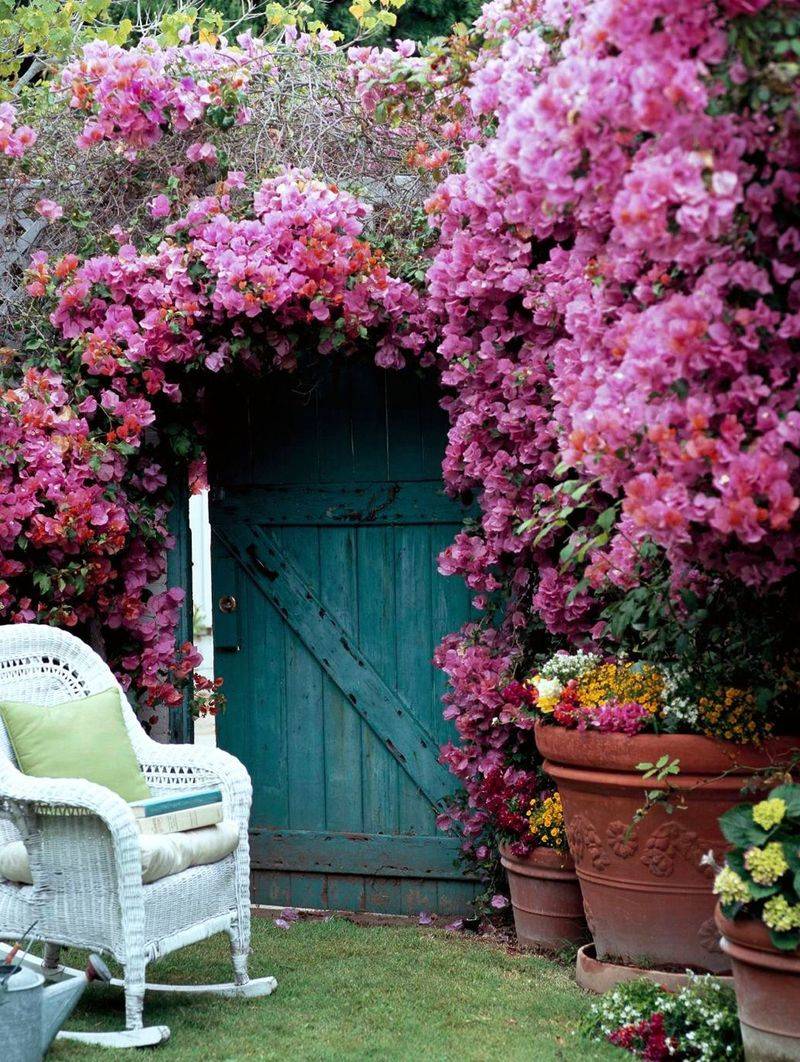
Shorter days and cooler nights arriving in autumn can nudge bougainvillea toward a new flush of color in some California gardens. University of Hawaii CTAHR research on bougainvillea describes how moderate temperatures and reduced daylength can support flowering, though the same guide makes clear that light exposure, irrigation habits, nutrition, and pruning all interact with those seasonal cues.
No single calendar date or nighttime temperature works as a reliable trigger across every California garden.
The state’s climate is simply too varied for a one-size deadline. A coastal garden in Santa Monica might see its first genuinely cool nights weeks after a hillside property in the Sierra Nevada foothills does.
Elevation, marine influence, valley position, and neighborhood microclimates all shift what “cool” means and when it arrives. Matching your care decisions to local conditions rather than a statewide rule is what actually protects the plant.
Ordinary seasonal cooling and damaging frost are two different things, and bougainvillea is frost-tender. UC IPM’s bougainvillea guidance confirms that freezing temperatures can injure the plant, while UC Marin Master Gardeners’ frost resource notes that cold damage risk depends on exposure, duration, and local site conditions rather than a simple statewide threshold.
The practical approach heading into fall is to stop pushing unnecessary new tender growth, keep existing growing conditions strong, and watch the local forecast rather than reacting to an arbitrary date. Avoid heavy fertilizing or major pruning that would force soft new shoots right before temperatures can dip.
Protecting the plant from actual freezing events is a separate task from optimizing it for a bloom display, and confusing the two is where many gardeners lose ground.
Excess nitrogen can trade flowers for leafy growth
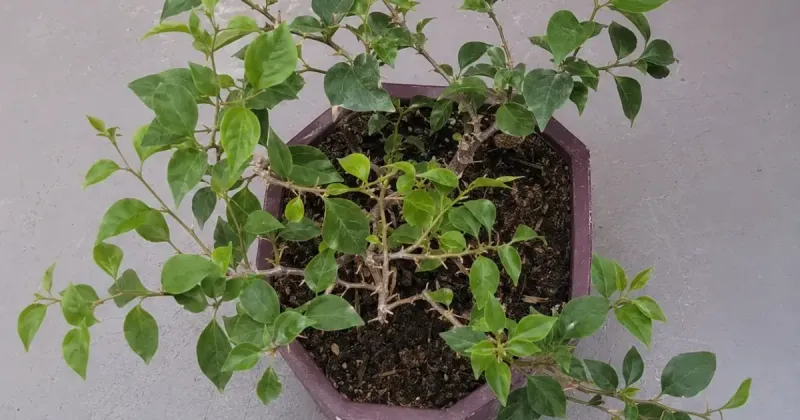
Lawn fertilizer is one of the most common ways bougainvillea ends up drowning in leaves instead of bracts. Grass fertilizers are typically high in nitrogen because turf needs it, but bougainvillea responds to excess nitrogen by pushing vegetative growth at the expense of flowering.
UF/IFAS Gardening Solutions specifically flags this as a feeding-related cause of poor bloom, and UC ANR’s bougainvillea resource echoes that overfeeding with nitrogen encourages leafy growth rather than flower production.
The key word in that warning is “excess.” A single, correctly measured, label-directed fertilizer application does not automatically shut down flowering. The problem builds when gardeners apply repeated doses, use products formulated for lawns, or reach for fertilizer as a reflex whenever the plant looks sparse.
Bloom failure has several possible causes, and nitrogen overload is one of them, not an automatic explanation for every quiet display.
Before cooler weather, the right move is to stop any routine or corrective feeding that is not clearly supported by the product label, a soil test, or qualified local advice. The University of Hawaii CTAHR bougainvillea guide recommends moderate nitrogen release and warns specifically against overfertilizing, noting that the plant’s fertilizer needs are real but modest compared to what many gardeners assume.
If you genuinely believe the plant is nutrient-deficient, check the product label and follow it precisely. Iowa State University Extension’s fertilizer guidance and University of Maryland Extension’s fertilizer basics both emphasize reading and following label rates rather than estimating.
Applying more than the label recommends does not speed results; it shifts the plant’s energy toward the wrong kind of growth at exactly the wrong time of year.
A high-phosphorus bloom booster is not a default fix
When a bougainvillea stops blooming, many gardeners assume the fix is a high-phosphorus bloom booster. The logic feels sensible: phosphorus supports root development and flowering, so more phosphorus should mean more flowers.
North Dakota State University Extension’s review of bloom-booster fertilizers explains why that assumption falls apart: extra phosphorus does not reliably increase flowering when the soil already contains adequate phosphorus, which is common in established California garden beds.
Adding phosphorus to a soil that does not need it can create problems rather than solving them. UMass Extension’s guidance on flower garden fertilization notes that excess phosphorus can interfere with the plant’s uptake of other nutrients and raises water-quality concerns when it runs off into local waterways.
Neither outcome helps your bloom display, and in California’s water-sensitive environment, runoff from excess fertilizer carries real consequences.
A soil test is the most direct way to find out whether your garden actually needs phosphorus before you add any. Penn State Extension’s guide to planting ornamentals recommends soil testing as a starting point for fertilizer decisions rather than applying amendments by assumption.
County cooperative extension offices across California can point you to reliable testing resources.
If fertilization is warranted and a soil test supports it, choose a balanced or controlled-release product and apply it strictly according to the label rate. Container-grown plants may need more frequent feeding than in-ground specimens because nutrients leach out faster through repeated watering, but that difference in frequency does not mean containers need heavier doses.
The label rate still applies, and the Hawaii CTAHR bougainvillea guide is consistent on this point: moderate, measured nutrition outperforms aggressive feeding every time.
Light, water, and pruning still control much of the bloom display
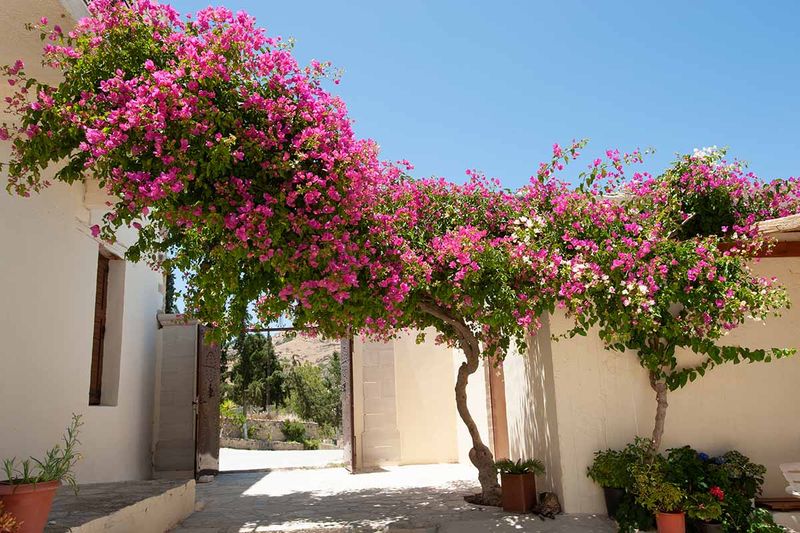
Fertilizer gets blamed for a lot of sparse bloom displays that actually come down to something simpler: not enough sun. Bougainvillea needs full sun or very strong direct light to flower reliably.
UC IPM’s bougainvillea page and UF/IFAS Gardening Solutions both identify full sun as a primary requirement. A plant that has shifted into partial shade as a nearby tree has filled out, or that sits on a north-facing wall, may bloom poorly regardless of what you feed it.
Water management is the next variable worth checking. Established bougainvillea can flower better with restrained irrigation, and mildly drier conditions between watering cycles tend to support flowering rather than suppress it.
That said, “keep it dry” should not be read as “stop watering entirely.” The CTAHR guide warns that excessive drying can cause leaf drop, stress, and dormancy. Newly planted specimens still need regular irrigation while they establish, and a UC ANR blog account of growing bougainvillea in the Central Valley reflects how establishment watering needs differ from mature-plant care.
Container plants dry out faster than in-ground plants and may need more frequent attention even when the goal is restrained irrigation.
Pruning timing also shapes what you see. Major pruning immediately before the expected bloom period removes the growth that would have carried the display.
UF/IFAS Miami-Dade’s holiday-color landscape guide notes that late-summer or early-fall pruning can reduce subsequent flowering. Light shaping to remove dead or crossing growth during the growing season is fine, while heavier pruning is better saved for after a bloom cycle finishes.
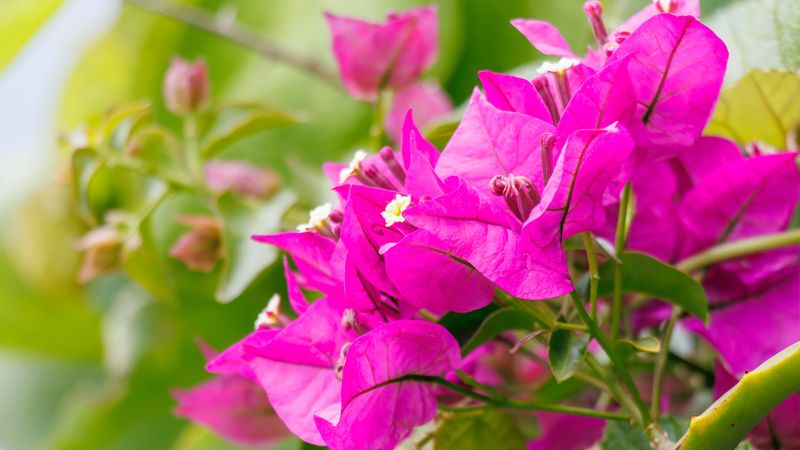
One more detail worth knowing: what most people call bougainvillea “flowers” are actually colorful bracts, modified leaves that surround the plant’s small true flowers. A change in bract color or persistence does not always mean flower production has changed.
Wear heavy gloves whenever you prune or handle the plant, because many cultivars carry sharp thorns that can cause serious puncture wounds.
Use local frost information instead of an arbitrary fall deadline
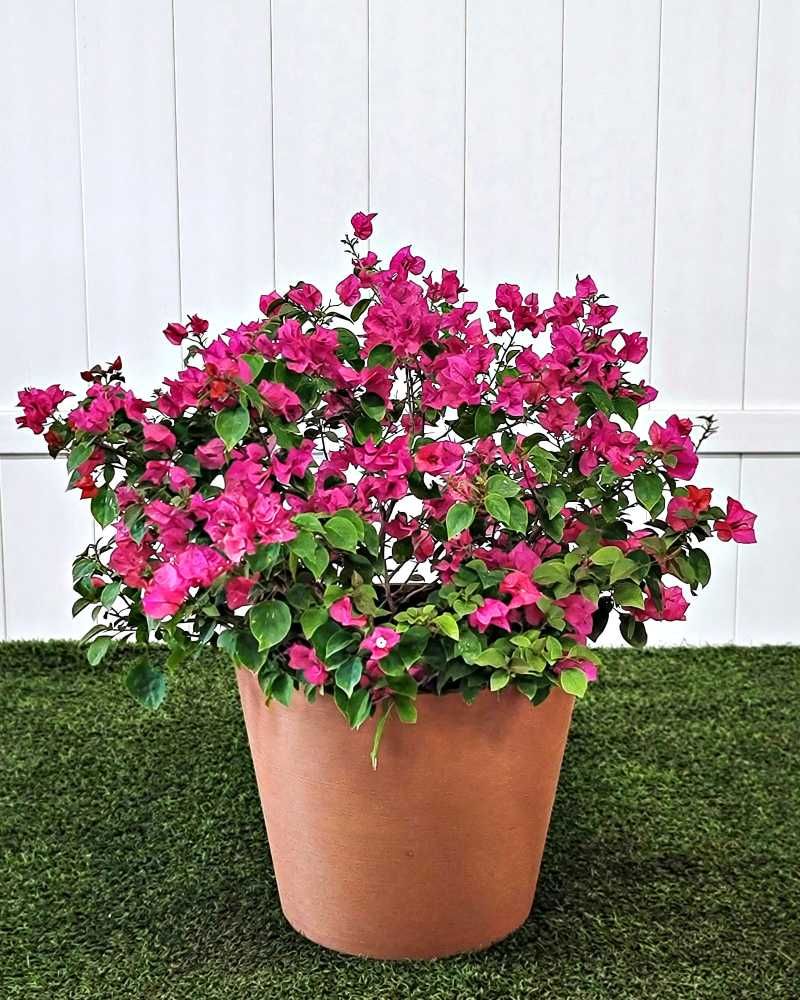
California’s frost timing is genuinely local. UC ANR’s frost-date resource for California shows that first and last frost dates can shift significantly over short geographic distances depending on elevation, coastal proximity, valley position, and neighborhood-scale microclimates.
A garden at 2,000 feet in the foothills may see its first frost weeks before a low-elevation coastal garden that rarely freezes at all. Following a statewide date or a temperature number you read online can lead you to protect too early, too late, or not at all.
UC ANR’s local frost planning guide recommends using your specific location’s historical frost data and current weather forecasts rather than regional averages. That means checking the National Weather Service forecast for your zip code, knowing your site’s exposure and how cold air settles in your yard, and distinguishing between a night that dips into the low 50s and a genuine freeze event.
UC Marin Master Gardeners’ frost guidance reinforces that the duration of the cold event and the plant’s exposure matter as much as the minimum temperature recorded.
Container plants have a practical advantage here. UC ANR’s bougainvillea care resource notes that containers can be moved to a protected location when a frost event is forecast, which is often the simplest form of protection available.
In-ground plants benefit from a south- or west-facing wall that holds daytime heat and blocks cold wind. Frost cloth or old bedsheets can reduce injury risk when temperatures are expected to dip near or below freezing, but no covering method is a guarantee against cold damage, especially during prolonged or severe events.
The decision to protect should come from your local forecast and your knowledge of your yard, not from a calendar reminder or a generic temperature cutoff. UC IPM’s bougainvillea page confirms that site conditions, including the plant’s position relative to structures and cold air drainage, shape how vulnerable any individual plant actually is.
Check the planting spot against California fire-safety guidance
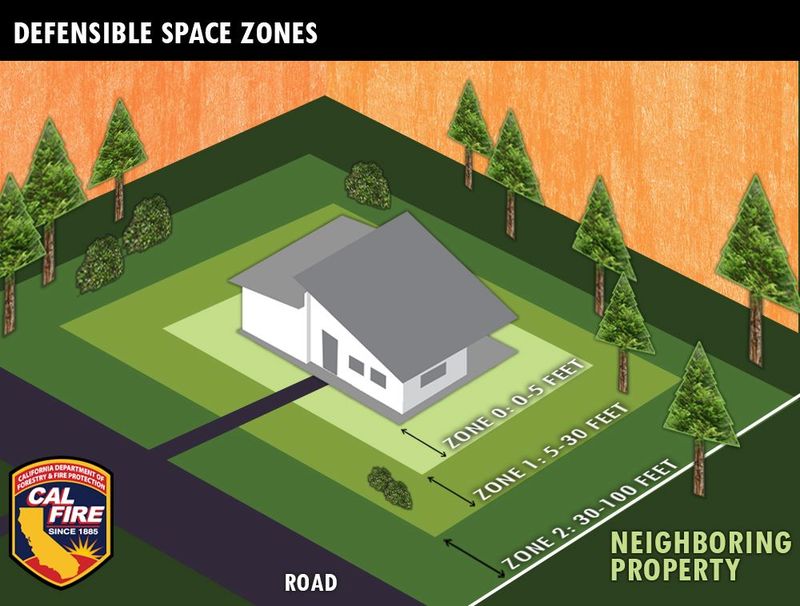
Bougainvillea is a woody, fast-growing vine with dry stems and papery bracts that can accumulate quickly, and its placement near a home carries fire-safety implications that vary by location and local rules. CAL FIRE’s defensible space program emphasizes maintaining an ember-resistant area immediately around structures, and training a large woody vine directly against a combustible exterior wall may conflict with that requirement depending on your property and jurisdiction.
Los Angeles County Fire Department’s defensible space guide specifically identifies bougainvillea attached to combustible structures as a concern. That does not mean bougainvillea is banned everywhere in California or that every property faces the same restrictions.
Monterey County’s vegetation management guidelines for defensible space illustrate how local guidance can differ in specifics while sharing the same underlying goal: reducing ignition risk near the home.
For homeowners in fire-prone or wildland-interface areas, checking with your local fire department or county planning office before placing or keeping bougainvillea against a structure is a straightforward step. In areas where the plant is appropriate, keeping it pruned, cleared of dead material, and positioned away from vents, eaves, and combustible siding reduces risk.
Fire-safety review is a practical part of fall garden preparation, not a separate concern from the bloom-care decisions covered in this article.
The practical pre-cool-night plan favors restraint and observation
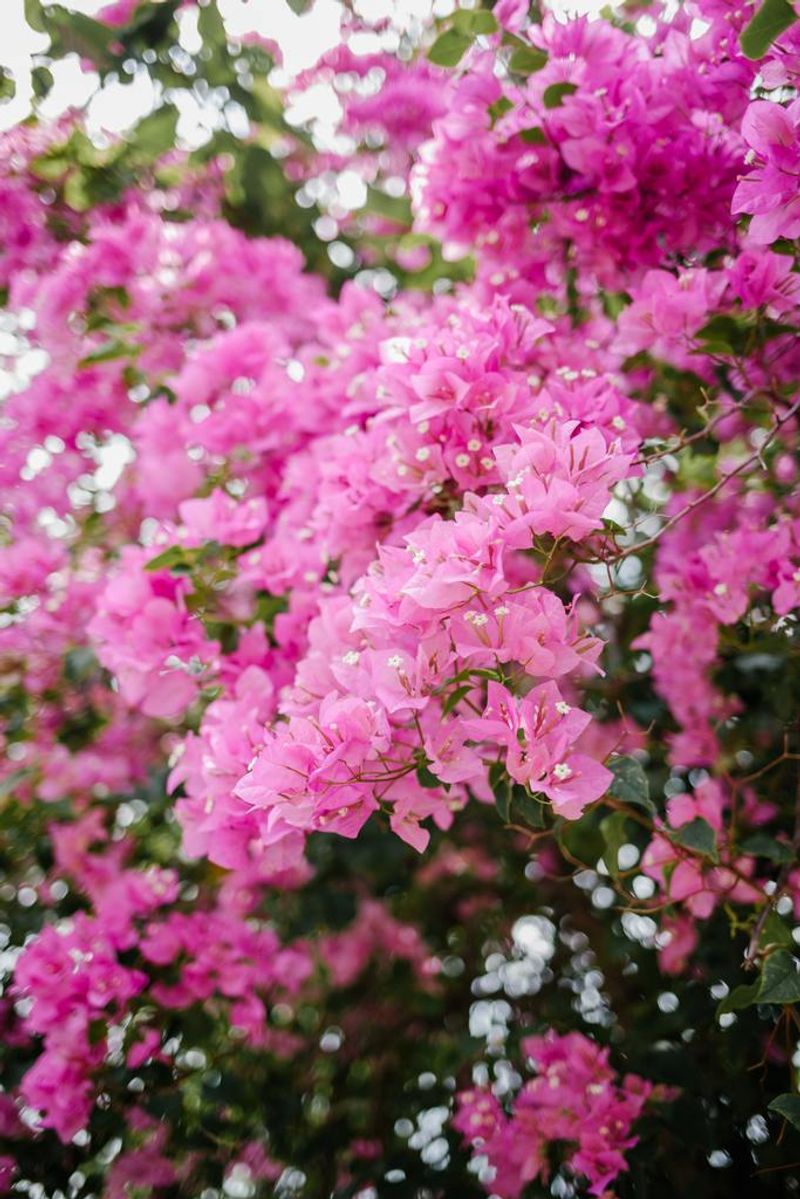
A solid pre-cool-night plan for bougainvillea is mostly about stopping things rather than starting them. Stop any routine or corrective fertilizing that is not backed by the product label, a soil test, or a clear nutrient deficiency.
Skip the automatic bloom booster unless a soil test shows your phosphorus is actually low. Confirm the plant is getting full sun, and if a nearby structure or tree has started to shade it, note that for a future placement decision.
UF/IFAS Gardening Solutions and UC IPM both treat light and restrained watering as more foundational to flowering than fertilizer timing.
Keep irrigation controlled but not absent. Container plants dry faster and may need more frequent checks, while established in-ground plants generally handle moderate drying better.
Postpone any major pruning until after the bloom cycle. Monitor your local frost forecast rather than reacting to a calendar date, and have frost cloth or a plan to move containers ready before a cold event arrives, not after.
The CTAHR bougainvillea guide and UC Marin Master Gardeners’ frost resource both point toward preparation based on local conditions rather than blanket rules.
If your plant is sparse this season, one feeding is rarely the whole story. Light, water, pruning history, plant age, cultivar, and cold exposure all play a role.
The goal heading into cooler weather is straightforward: protect the roots from freezing without forcing tender new growth that a cold night could damage. A bougainvillea that goes into fall well-sited, lightly watered, and free from unnecessary inputs is already in the best position it can be.