
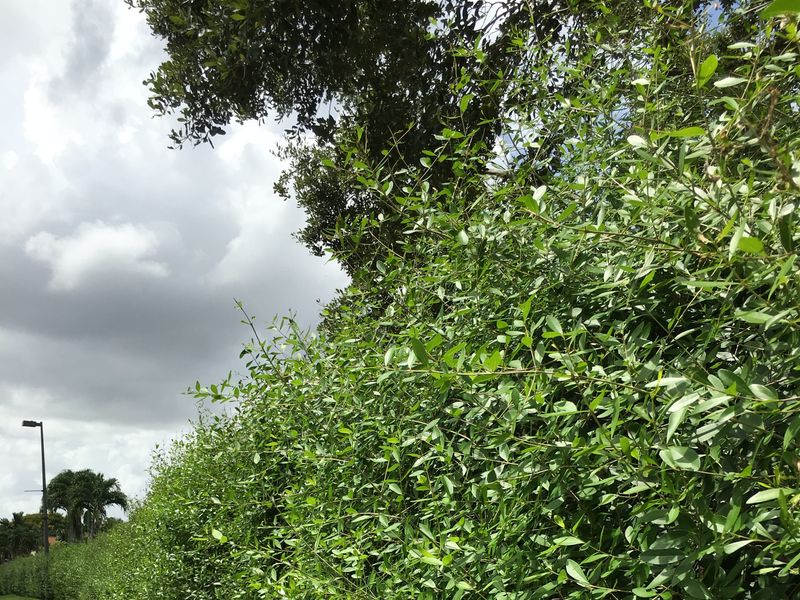
Vinyl fencing promises low maintenance, but Florida’s intense sun, hurricane-force winds, and salt air can put that promise to the test over the years. Meanwhile, a Florida-native shrub called Florida privet has been quietly earning attention from gardeners who want a living privacy screen that can grow denser and more useful as it settles in.
Known scientifically as Forestiera segregata, this plant can be clipped into a tight hedge, feeds local birds with its blue-black berries, and holds up well in sandy, sunny yards once established. Before you pull up your fence posts or fill a cart with shrubs, though, it pays to understand exactly what Florida privet can and cannot do for your property.
Florida Privet Offers One Native Living-Screen Option
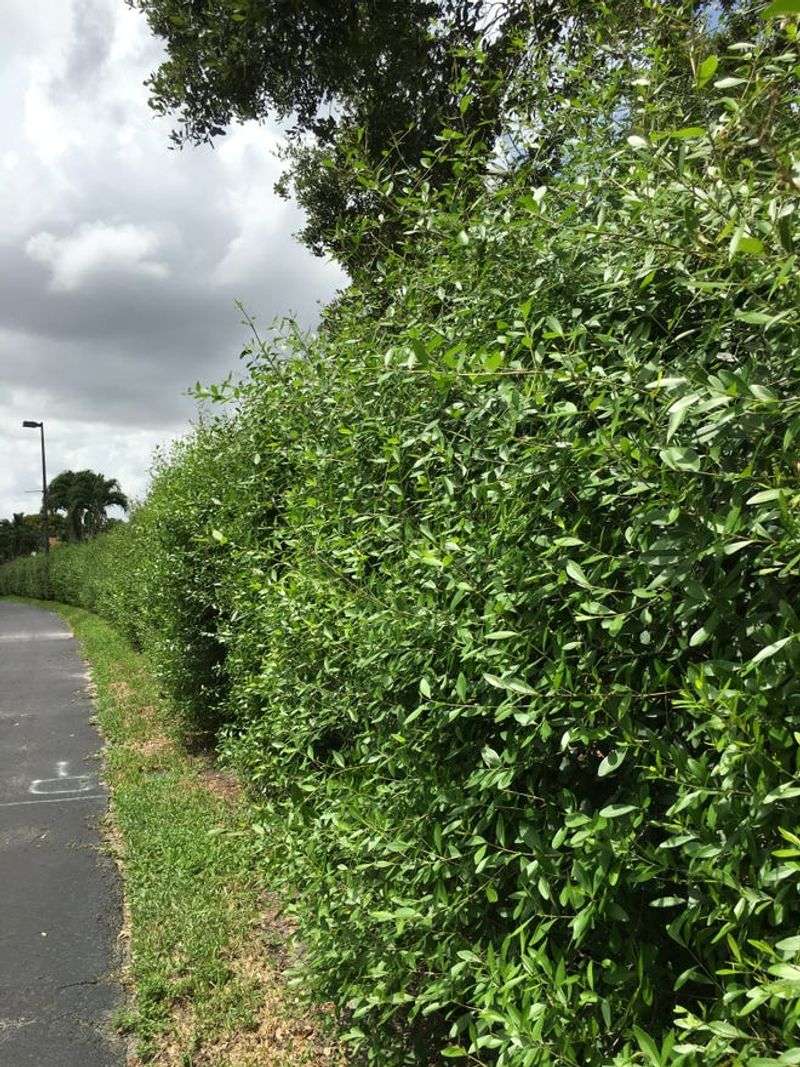
Plenty of shrubs carry the word “privet” in their common name, and that creates real confusion at the nursery. Florida privet, known by its scientific name Forestiera segregata, is a true Florida native with a completely different lineage from the nonnative Ligustrum privets that have become weedy problems in parts of the Southeast.
UF/IFAS guidance on low-maintenance landscape plants specifically warns that common names can mislead shoppers, which is why using the scientific name when selecting plants matters so much.
UF/IFAS describes Forestiera segregata as a dense shrub or small tree that tolerates regular clipping and shearing, making it well suited for use as a hedge or visual screen. The UF/IFAS woody-plant profile for wild olive lists its mature height at roughly 4 to 15 feet, with a spread of approximately 3 to 5 feet, though actual size depends on site conditions and how aggressively the plant is pruned.
That range means a homeowner who wants a 5-foot screen and one who wants a 12-foot windbreak could both potentially work with the same species.
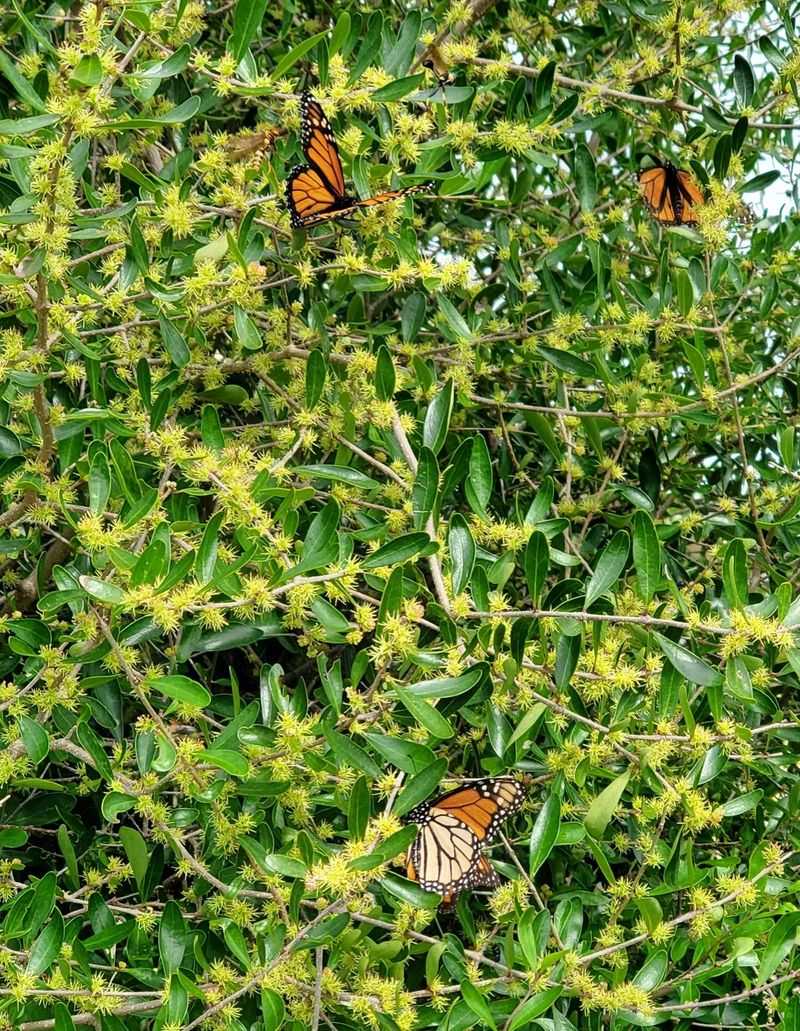
Florida privet is also called wild olive, a nod to its small, olive-like fruit rather than any close botanical relationship to culinary olives. UF/IFAS native plant recommendations for Florida’s Treasure Coast include it among densely foliated options suitable for hedging, and female plants produce the blue-black berries that songbirds favor.
It is a promising native option for the right site, not a universal best hedge for every Florida yard. Other natives, including cocoplum, marlberry, yaupon holly, wax myrtle, and Walter’s viburnum, may suit particular conditions better depending on region, drainage, and available space.
A Living Screen Can Gain Density and Habitat Value Over Time
One argument for choosing a living screen over a static barrier is the way a well-sited hedge can change character as it matures. A newly planted row of Florida privet looks like a row of shrubs.
Give it a few seasons of proper care on a suitable site, and the branching thickens, foliage fills gaps, and the hedge starts functioning as a genuine visual barrier. UF/IFAS describes Florida privet as densely foliated and tolerant of shearing, which means regular pruning actively encourages the compact, layered growth that makes a hedge useful for privacy.
The habitat side of the equation adds another layer of value that a vinyl panel simply cannot offer. The UF/IFAS Florida Bee Gardens database notes that Florida privet flowers attract insects, and its fruit is eaten by birds and other wildlife.
Planting a hedge that supports pollinators and feeds songbirds is a different kind of benefit from visual screening, and for some homeowners it is the stronger selling point.
That said, the gradual gains a living screen offers come with honest limits. UF/IFAS sources differ on whether Florida privet should be called evergreen, semi-evergreen, or occasionally deciduous, and the woody-plant profile notes that leaves may sometimes be shed in winter.
A perfectly opaque, year-round wall is not a reliable promise in every Florida location. UF/IFAS Extension Marion County’s guide to living fences is clear that a living screen serves privacy, wildlife habitat, wind reduction, and aesthetic purposes, but its usefulness depends on the plant being properly sited and maintained rather than simply planted and left alone.
A hedge that becomes fuller and more functional over time is a realistic goal; guaranteed improvement every single year without setbacks is not.
Match Florida Privet to the Site Before You Plant
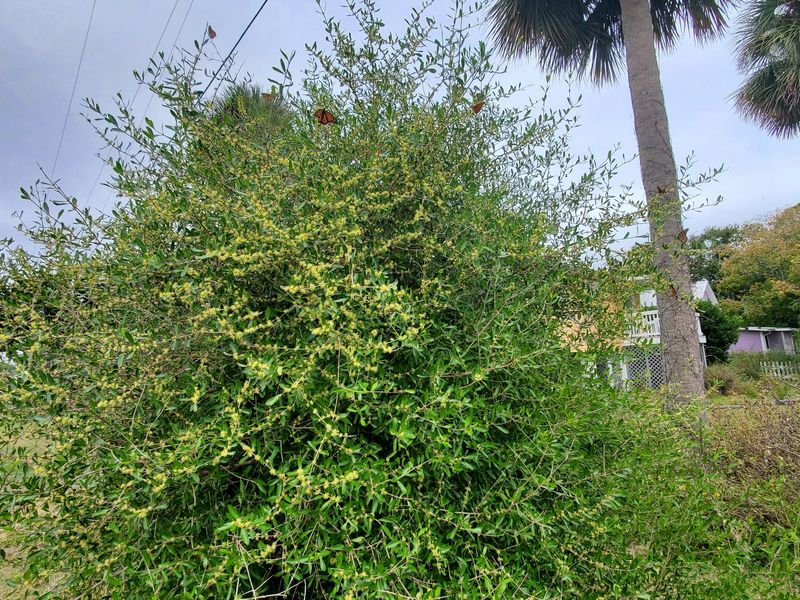
Before buying a single plant, check what the site actually offers. Florida privet performs best in full sun and well-drained to medium-drained soil.
The UF/IFAS wild olive profile specifically notes that the plant performs poorly in mucky soils, so a yard with chronic standing water or a low-lying area that floods after heavy rain is not a good candidate. Pushing a water-sensitive plant into a wet site is one of the fastest ways to lose an entire hedge row.
Salt tolerance is a genuine plus for coastal homeowners. The UF/IFAS Florida Bee Gardens entry for Florida privet rates it as having high drought and salt tolerance after establishment, which makes it a reasonable option for properties near tidal areas or those that receive salt spray.
The key phrase is “after establishment” – a newly planted shrub has not yet developed the root system that supports that tolerance.
Florida is a climatically diverse state, and a plant that thrives in Miami-Dade may face freeze pressure in Tallahassee. UF/IFAS guidance on right plant, right place makes clear that native status alone does not guarantee success – the plant still must match the site’s light, soil moisture, drainage, mature size, and cold-hardiness zone.
Florida privet is listed for hardiness zones 8a through 11, which covers most of the state, but gardeners in the northern tier should verify local freeze risk before committing to a long hedge row.
Space matters too. At a mature spread of roughly 3 to 5 feet, a hedge of Florida privet along a property line needs enough room to grow without crowding structures, utilities, or neighboring plants.
UF/IFAS native plant recommendations list several alternative screening plants, including cocoplum, Jamaican caper, Spanish stopper, yellow anise, and Walter’s viburnum, that may suit specific regional or drainage conditions better. The Florida-Friendly Plant Selection and Landscape Design Guide recommends consulting county Extension guidance when freezes, flooding, or unusual site conditions affect the decision.
Spacing and Early Watering Shape the Future Screen
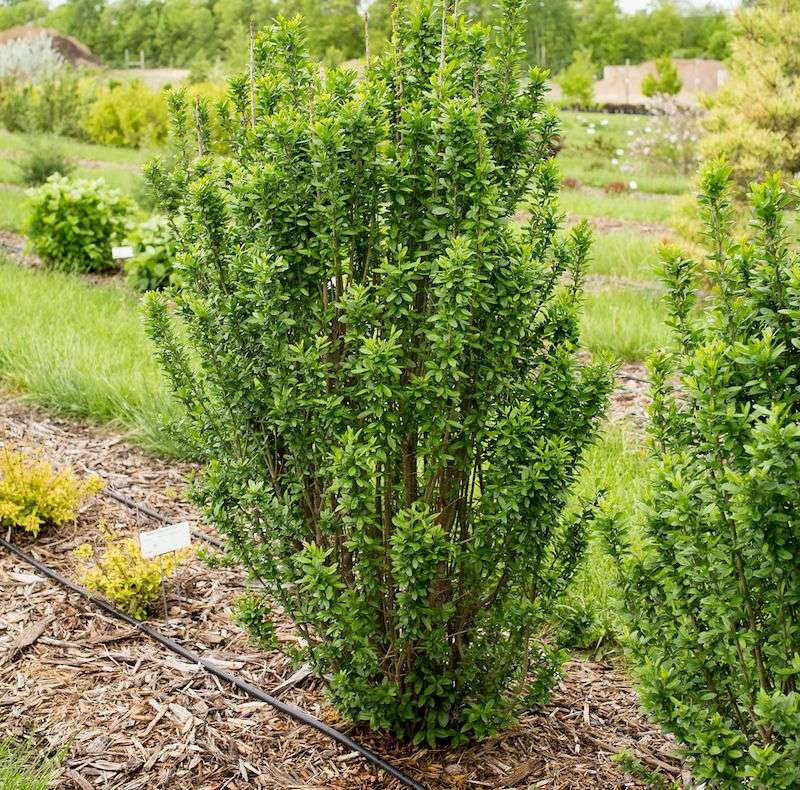
Getting the layout right from the start determines how quickly a hedge fills in and whether it stays healthy at ground level. There is no single correct spacing number for Florida privet or any other hedge plant.
UF/IFAS hedging guidance advises measuring spacing from plant center to plant center and basing that distance on the plant’s mature spread rather than a generic rule. A tighter spacing means faster screening but more competition for water and nutrients as the plants mature; a wider spacing takes longer to fill in but gives each shrub more room to develop a strong root system.
For Florida privet, a mature spread of roughly 3 to 5 feet means that center-to-center spacing somewhere in that range is a reasonable starting point for a dense screen. Narrowing the gap slightly accelerates canopy closure; widening it reduces crowding.
The available planting width, the desired screen height, and how quickly privacy is needed should all factor into the final decision before a single hole is dug.
Watering during establishment is not optional. UF/IFAS guidance on establishing shrubs in Florida landscapes recommends applying water directly to the root ball and the surrounding soil, with starting points that differ for sites north and south of Orlando.
Low-volume irrigation methods such as drip lines or bubblers are preferable to broad overhead watering because they target the root zone more efficiently and reduce water waste. Adjust frequency based on rainfall, local irrigation restrictions, and how quickly the soil dries out at your specific site.
UF/IFAS research on landscape irrigation gives a general establishment period of approximately 20 to 28 weeks for landscape shrubs, but that range is guidance rather than a fixed schedule. Container size, soil type, weather patterns, and the individual plant all influence how long the root system needs before it can sustain the plant through dry periods without supplemental water.
Weed control during this window matters too, since competing vegetation robs young shrubs of moisture and nutrients at the most vulnerable stage of development.
Pruning Keeps the Hedge Dense From the Ground Up
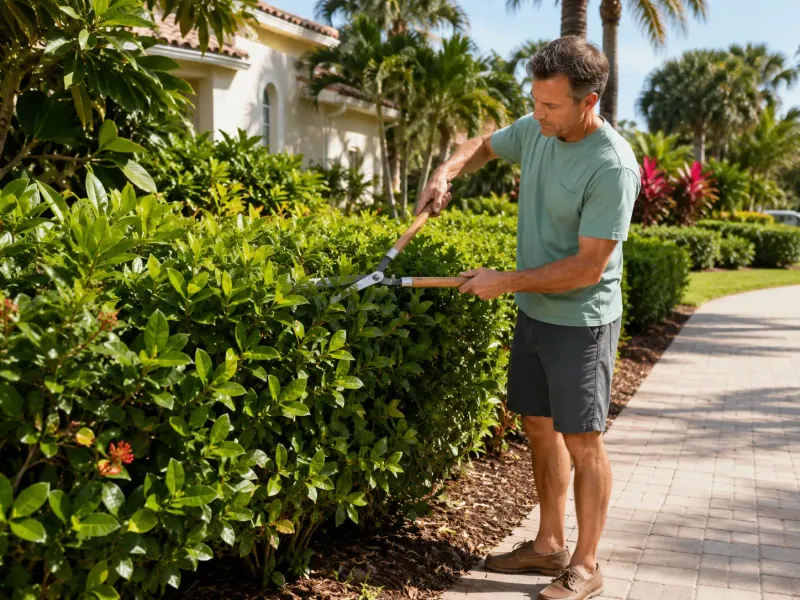
Florida privet tolerates clipping and shearing well, and that tolerance is one of the features that makes it a practical hedge candidate. But tolerance for pruning is not the same as not needing it.
A row of unpruned Florida privet will eventually produce a loose, open form that provides little visual screening at eye level – the opposite of the dense barrier most homeowners are trying to create.
One of the most important shaping principles for any clipped hedge applies directly here: keep the hedge wider at the bottom than at the top. UF/IFAS Florida-Friendly landscaping guidelines explain that this tapered profile allows sunlight to reach the lower foliage, which keeps leaves growing all the way to the ground.
A hedge that is narrower at the base than the top shades out its own lower branches over time, producing the bare-bottom, leggy appearance that defeats the purpose of a privacy screen.
Routine shaping is different from neglect punctuated by severe cutbacks. Light, frequent trimming after active growth flushes encourages branching and keeps the hedge compact.
Waiting too long between pruning sessions and then cutting back hard can stress the plant and open up gaps that take time to fill. UF/IFAS Extension Seminole County is direct on this point: a Florida-Friendly landscape is not a no-maintenance landscape.
Pruning, weed control, and monitoring the hedge during extended dry spells are ongoing responsibilities, not one-time tasks.
During prolonged drought, even an established hedge can show stress through leaf drop or slowed growth. Checking the lower branches regularly for bare patches or thinning foliage gives an early signal that the hedge needs attention before a gap becomes a permanent feature of the screen.
A Living Screen Does Not Replace Every Function of a Fence
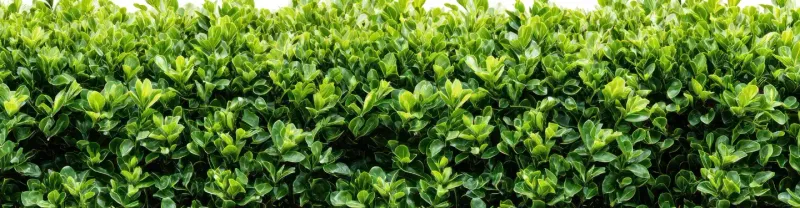
Honest expectations matter before a homeowner treats Florida privet as a complete vinyl-fence replacement. A hedge takes time to fill in – months to a couple of years on a good site – and during that establishment window it provides little visual screening, no pet containment, and no legal boundary marker.
A vinyl fence installed in a day provides all three of those things immediately. These are different tools with different strengths, and the right choice depends entirely on what the homeowner actually needs from the boundary.
The vinyl-fence side of this comparison deserves accurate framing too. Prolonged UV exposure, heat cycling, salt air, poor-quality materials, installation defects, and storm winds can all contribute to fading, embrittlement, warping, or damage in outdoor PVC products over time.
But not every vinyl fence is destined for early failure. ASTM F964, the standard specification for rigid PVC exterior profiles used for fencing and railing, covers weatherability, impact resistance, dimensional stability, and warp testing for PVC fence profiles – though it does not address wind-load performance for a complete installed fence assembly.
Product formulation, installation quality, and maintenance all affect how a specific fence holds up over years of Florida weather.
NIST research on weathering and formulation effects in vinyl siding offers useful general background on how outdoor PVC materials respond to UV exposure and climate conditions, but it is not direct evidence about every vinyl fence or complete fence assembly. The relevant variables for any given fence are the specific product, its installation, and its exposure history.
Wind performance adds another layer of complexity. UF/IFAS research on woody species for Florida windbreaks notes that wind performance for living plants varies with species, root development, planting conditions, pruning, and storm intensity.
A hedge should not be framed as a structural hurricane-protection device. UF/IFAS Extension Marion County’s living-fence guidance recommends defining your purpose, desired height, and location before selecting plants – advice that cuts both ways when comparing a living screen to a fence.
Choose Florida Privet for the Conditions, Not the Hype
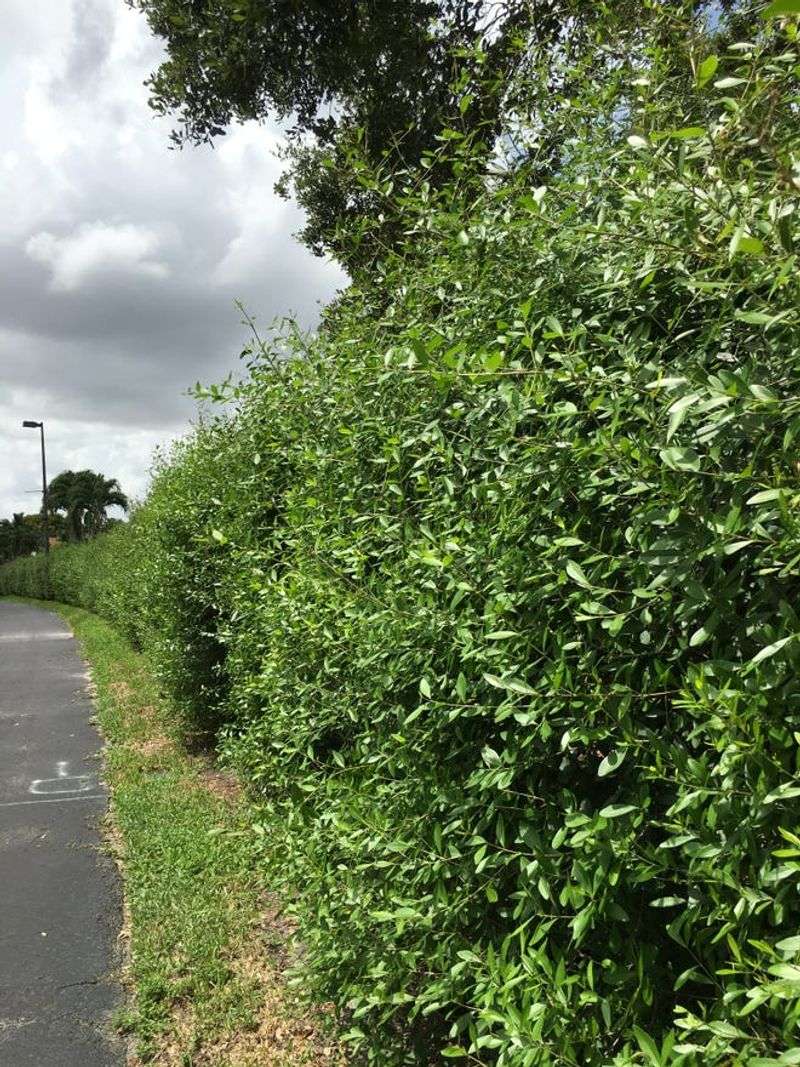
Florida privet earns consideration when the conditions line up: a sunny, well-drained site in hardiness zones 8a through 11, enough room for a mature spread of 3 to 5 feet per plant, and a homeowner who can commit to establishment watering and regular shaping. UF/IFAS right-plant, right-place guidance is the clearest framework for making that call – native status is a plus, but it does not override the need to match the plant to the actual site conditions.
The defensible advantage of a well-sited Florida privet hedge is the potential for a denser, more useful screen over time, along with flowers that attract insects and berries that feed birds. That gradual gain is real and worth planning for.
What it is not is a guarantee of yearly improvement, statewide superiority over every alternative, storm protection, or instant fence performance. The UF/IFAS wild olive profile and UF/IFAS native plant recommendations both point to alternatives – cocoplum, marlberry, yaupon holly, wax myrtle, and Walter’s viburnum among them – that may serve particular sites or regions better.
Before committing to a hedge row, verify local hardiness conditions, check drainage honestly, and compare a few native screening options side by side. A call or visit to your county Extension office can save a season of replanting.
The best living screen is not the one with the best marketing; it is the one that matches your soil, your sun, your space, and the patience your maintenance schedule actually allows.