
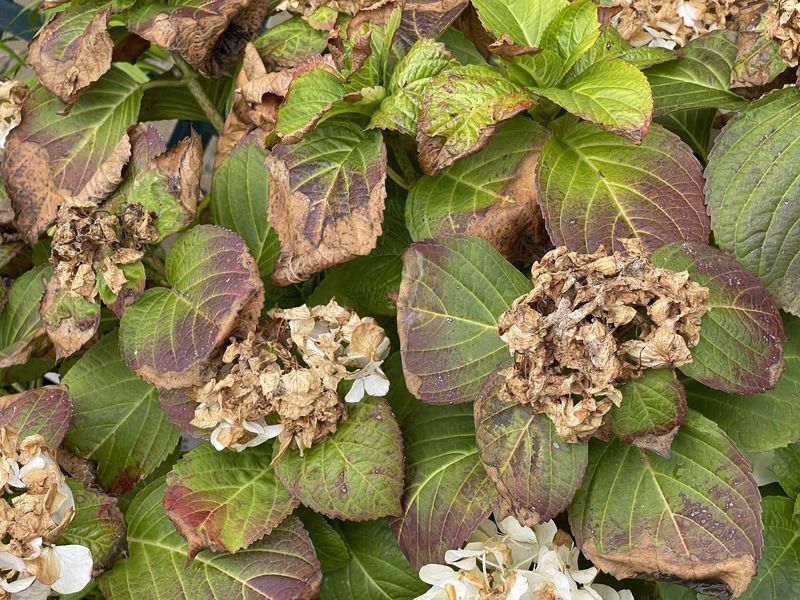
Drooping hydrangeas during a California heat spike can send even experienced gardeners straight for the hose, but that reflex can make things worse. A wilted plant is sending a signal, and the signal does not always mean it needs more water.
Learning to read that signal correctly, starting with what is happening a few inches underground, is the difference between a plant that bounces back and one that gets pushed further into stress.
Wilt Is a Warning Signal, Not a Diagnosis
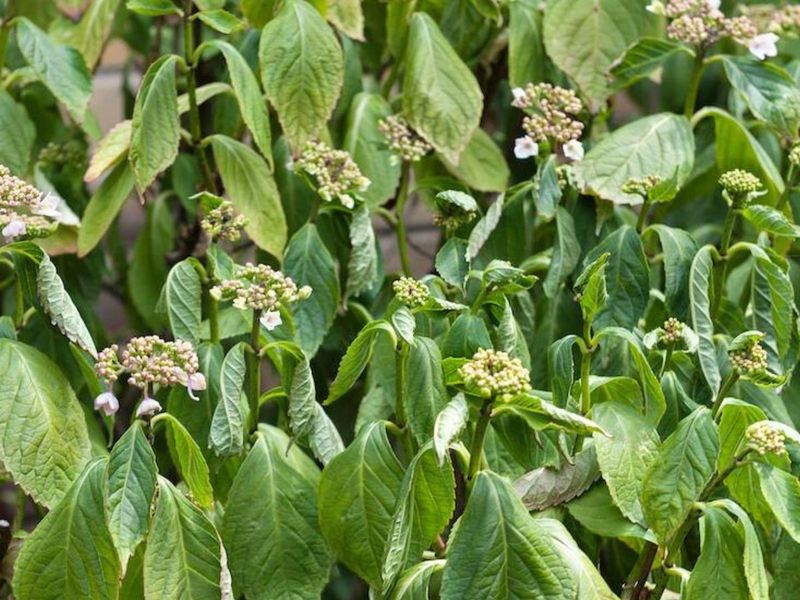
Drooping leaves have a way of triggering an immediate, sympathetic response from gardeners, but those leaves are not telling you what caused the problem. They are simply telling you something is wrong.
According to UC Statewide IPM guidance on water deficit and excess, wilting in ornamental plants can result from dry soil, waterlogged roots, compacted soil, root disease, salt injury, wind damage, pests, or vascular problems, and many of these conditions produce overlapping symptoms that look identical from above the soil line.
The first useful distinction to make is between a hydrangea that droops only during the hottest window of the day and then recovers on its own once temperatures fall, and one that stays wilted after the evening cools down. A plant that perks back up overnight is giving you one kind of information.
A plant that remains slumped the next morning, or begins to yellow and drop leaves, is telling you something more serious that a quick watering is unlikely to fix.
Heat alone can cause leaves to droop even when the root zone holds adequate moisture. As UC ANR guidance from Santa Clara explains, plants lose water through their leaf pores faster than roots can replace it during extreme heat, and temporary wilting during peak afternoon hours is a normal physiological response rather than proof of drought stress.
Acting on that visual before checking the soil is where most gardening mistakes during a heat wave begin.
The UC Marin Master Gardeners heat guidance reinforces this point clearly: look at the root zone, not just the leaf position. Diagnosing from the leaves alone skips the most important piece of information available to you, and the correct next step, whether that is watering, shading, or stopping irrigation entirely, depends on what you find when you actually check the soil.
What Does the Soil Say Several Inches Down?
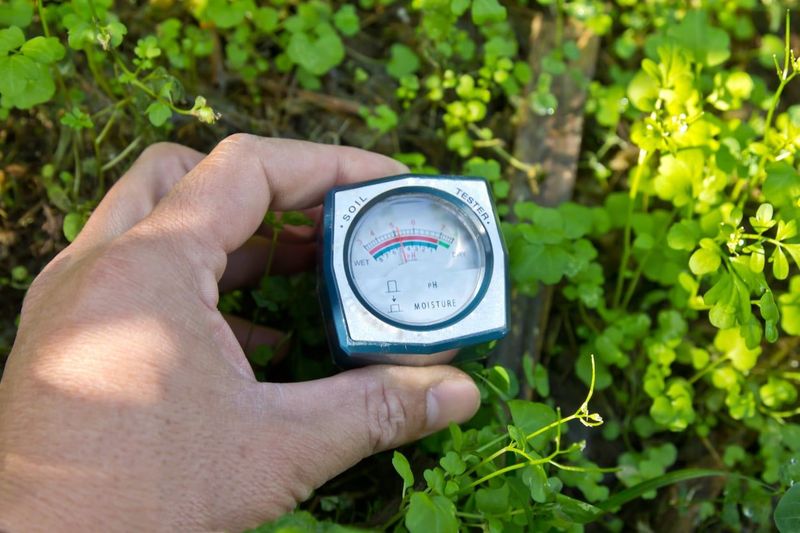
Before you reach for a watering can or turn on a drip zone, get your hand into the soil. Surface dryness can be misleading, because the top inch or two can dry out quickly in sun and wind while the active root zone several inches below remains adequately moist.
Press a finger or a wooden dowel at least three to four inches into the soil, angling toward the plant’s root zone but not directly against the crown or stem base.
What you feel there is the actual data point. Soil that feels dry and crumbles apart tells you the root zone is genuinely short on moisture, and watering is the right next move.
Soil that feels cool and holds together with visible moisture tells you the plant has water available, and adding more is unlikely to help the drooping leaves. Soil that feels sodden, smells off, or holds standing water in the hole you just made tells you a third and very different story, one that calls for stopping irrigation rather than adding any.
Check more than one spot around the plant. As UC ANR guidance on conserving water in the home garden notes, irrigation coverage can be uneven, and a single clogged or displaced emitter can leave one side of a plant’s root zone bone dry while the other side sits in adequate moisture.
A single probe near the drip emitter might read moist while the far side of the root zone is parched.
The UC ANR summer heat gardening guide also points out that soil texture and drainage affect how quickly moisture moves through the profile. Sandy soils drain fast and may be dry several inches down even after a recent irrigation, while dense clay soils can hold moisture near the surface while remaining compacted and poorly aerated deeper down.
Knowing your soil type helps you interpret what your fingers are telling you. The probe test is not complicated, but skipping it means making a watering decision based on incomplete evidence, and in a California heat spike, that gamble can push a stressed plant in the wrong direction.
When Dry Soil Calls for a Deep Drink
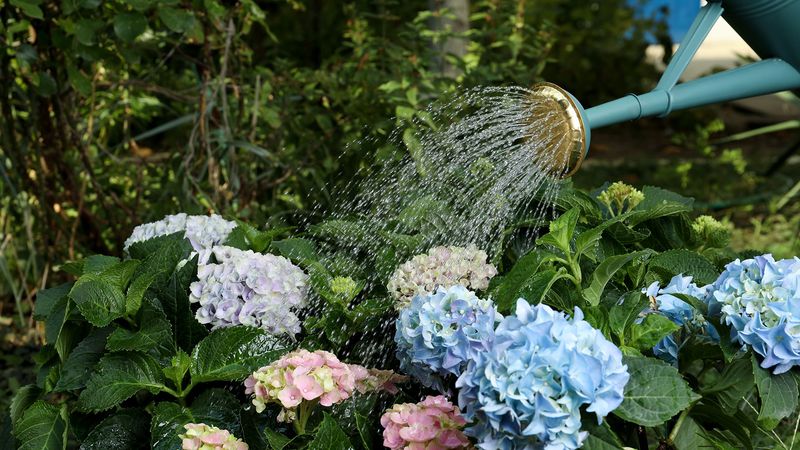
Once you have confirmed that the root zone is genuinely dry, the response is water, but the way you apply it matters as much as the timing. A brief sprinkle at the surface does the plant little good.
Short, shallow waterings encourage roots to stay near the surface, where they are more exposed to heat and dry out faster between irrigations. The goal is to wet the entire active root zone thoroughly so that moisture reaches the depth where the roots are actually working.
Apply water slowly at the soil line, giving it time to soak in rather than run off. Penn State Extension guidance on summer watering describes this as letting water penetrate the root zone rather than just wetting the soil surface, and the same principle applies whether you are using a drip system, a soaker hose, or a hand-held nozzle set to a gentle flow.
If water begins pooling or running off before the soil is saturated, pause and let it absorb before continuing.
Morning is the most practical default timing for several reasons. Watering in the early hours gives the plant time to take up moisture before the day’s heat peaks, and surface evaporation is lower when temperatures are cool.
The UC Marin Master Gardeners heat guidance supports morning irrigation as a general best practice during hot weather.
That said, if you discover in the middle of the afternoon that a hydrangea’s root zone is severely dry and the plant is visibly struggling, do not wait until the next morning to act. UC ANR drought and water conservation guidance is clear that midday irrigation does not inherently harm plants, and a genuinely dry, heat-stressed hydrangea needs water more urgently than it needs to wait for an ideal hour.
The UC ANR backyard gardener heat article also notes that timely intervention during extreme heat can mean the difference between a plant that recovers and one that suffers lasting damage. Water at the base, avoid drenching the foliage unnecessarily, and check the root zone again the following morning to see whether moisture has reached the full active zone.
When Moist Soil Means Less Water and Less Heat
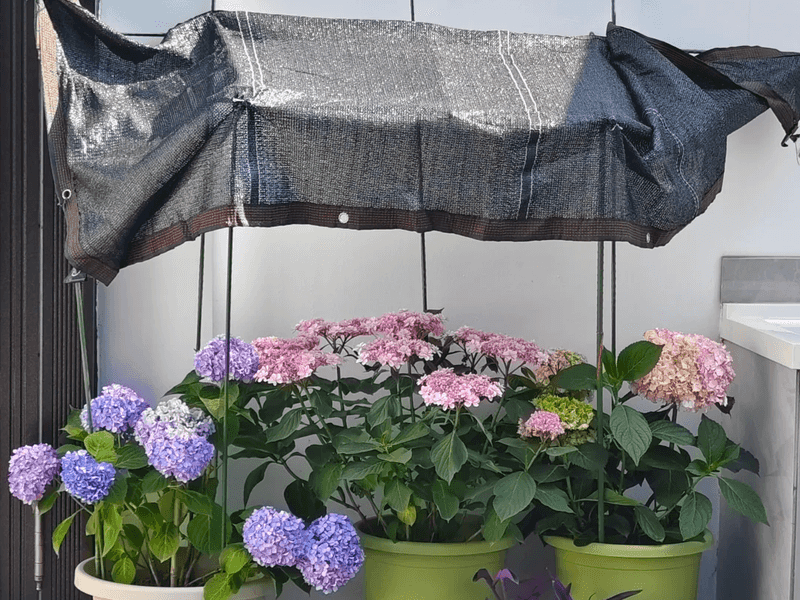
Finding moist soil when a hydrangea is drooping in the afternoon heat is actually useful information, even though it can feel confusing at first. It tells you that the plant’s problem is not a water shortage at the roots.
Instead, the leaves are losing moisture through transpiration faster than the roots can push it upward, which is a physiological response to heat load rather than a sign that the soil needs more water. UC ANR Santa Clara guidance confirms that this kind of temporary afternoon wilt is normal under extreme heat conditions and does not require an immediate irrigation response.
The practical fix here is reducing the heat the plant is experiencing, not adding water to soil that already has it. Temporary afternoon shade is one of the most effective tools available.
A shade cloth draped over the plant or propped on stakes to block direct sun during the hottest hours, typically between noon and 4 p.m., can meaningfully lower the heat load on the leaves. The UC Marin Master Gardeners heat guidance specifically recommends temporary shade as a protective measure during heat events, and it can be as simple as a piece of lightweight fabric held above the plant by garden stakes.
Reflected heat from concrete driveways, light-colored walls, patios, and south-facing fences can significantly amplify the temperature a hydrangea experiences beyond the ambient air temperature. Repositioning potted plants away from these surfaces, or placing a physical barrier between the plant and a heat-radiating wall, can reduce stress without touching the irrigation at all.
The OSU Extension hydrangea heat wave guide identifies reflected heat as a key factor in heat damage and recommends protecting plants from it during severe events.
Organic mulch is the other lever to pull. A 2 to 4 inch layer of wood chips or bark over the root zone insulates the soil against temperature swings and slows evaporation.
The UC ANR summer heat guide recommends keeping mulch away from stems and the crown to avoid creating conditions for rot. If the plant perks back up once evening temperatures fall, that recovery is a signal consistent with temporary heat wilt, and you may not need to water at all before the next morning’s scheduled check.
Saturated Soil Changes the Problem
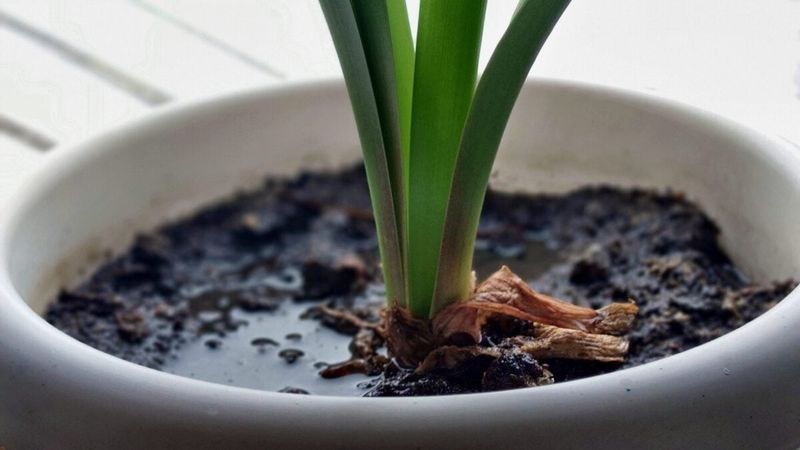
Soggy soil is not a reassuring finding when a hydrangea is drooping. Counterintuitively, saturated roots can produce the same visible symptom as dry roots: a wilted, limp plant.
The reason is that roots need oxygen to function, and when soil pores fill completely with water, that oxygen disappears. UC IPM guidance on aeration deficit explains that roots deprived of oxygen lose their ability to take up water and nutrients, even when surrounded by moisture, and the plant wilts as a result.
Adding more water to a saturated root zone makes the problem worse, not better. If you probe the soil and find it is already wet, or if water pools when you dig a small hole near the plant, stop irrigating immediately.
Check whether the drip system has been running longer than necessary, whether a nearby irrigation zone is overlapping, or whether the area has a drainage problem that allows water to collect rather than move through the soil profile.
Poorly drained clay soils, low spots in the yard, and beds bordered by hardscape that blocks lateral drainage are all common contributors in California gardens. UC IPM water deficit and excess guidance notes that repeated irrigation in poorly drained soil can cause aeration deficit and, over time, root decay.
A hydrangea sitting in a chronically wet spot may develop root rot that eventually prevents recovery regardless of how the watering schedule is adjusted.
If the soil is saturated and the plant remains wilted after temperatures moderate, the priority is assessment rather than intervention. Let the soil dry somewhat before irrigating again, evaluate whether the drainage can be improved, and inspect the roots if the plant continues to decline.
Saturated-root stress is a separate problem from both underwatering and temporary heat wilt, and treating it like either of those will not resolve it.
If the Hydrangea Does Not Recover, Inspect the System
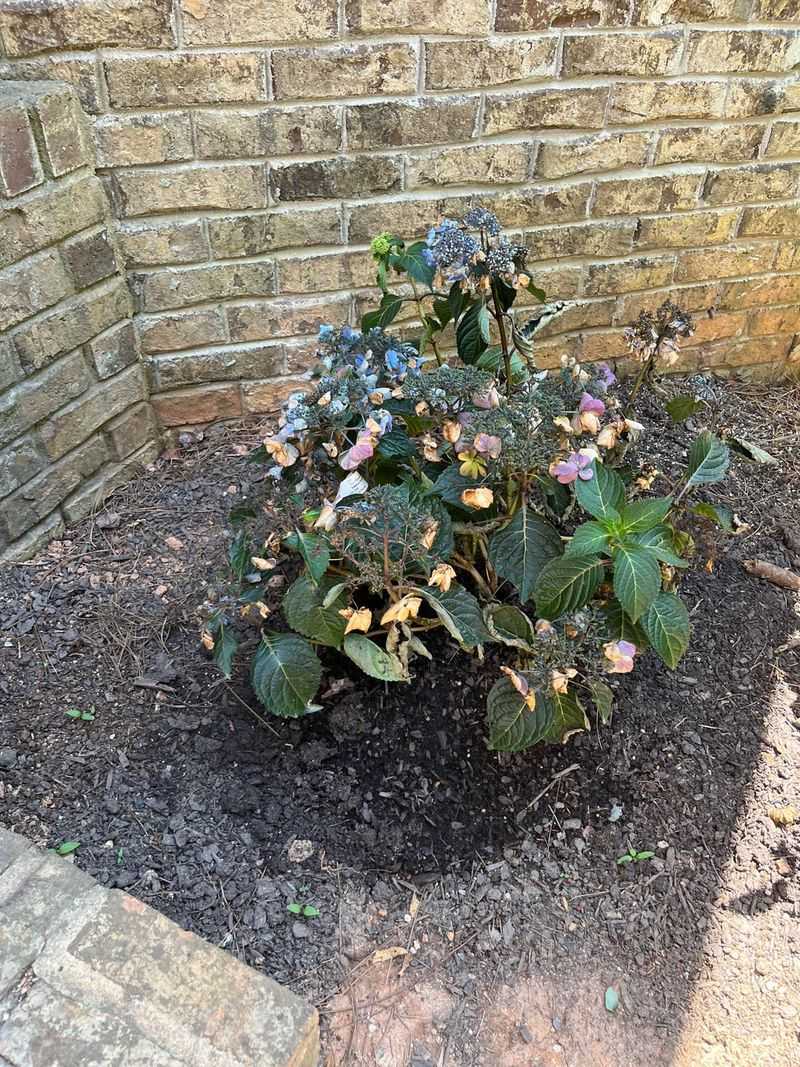
Most heat-stressed hydrangeas that receive the right response, whether that is watering, shading, or stopping excess irrigation, will show meaningful recovery within hours or by the following morning. When a plant stays wilted after temperatures have moderated, or when it begins to yellow, drop leaves, or show branch dieback, something beyond the immediate heat event is likely involved, and the investigation needs to go deeper than the soil moisture check.
Start with the irrigation hardware. A single clogged, displaced, or undersized drip emitter can leave one plant in a dry pocket while everything around it receives adequate water.
The UC ANR summer heat guide specifically flags irrigation system failures as a cause of isolated plant stress during heat events. Run the system manually, watch each emitter, and confirm that water is actually reaching the root zone rather than dripping away from the plant or pooling on compacted soil.
If the irrigation checks out, look at the roots. Gently expose a small section of root near the outer edge of the root zone.
Healthy roots are firm and light-colored. Soft, dark, or foul-smelling roots suggest decay, possibly linked to aeration deficit from repeated overwatering or poor drainage.
Root rot cannot be reversed by watering adjustments alone, and a severely affected plant may not recover regardless of care.
Persistent wilt paired with yellowing or browning tissue also warrants checking for pests, vascular disease, or salt accumulation, particularly in areas with high-mineral water or where fertilizer has been applied near the root zone recently. When you find brown, crispy leaf tissue, understand that it will not turn green again.
As UC ANR guidance on heat and sunburn damage makes clear, water and shade can protect living tissue going forward, but scorched cells are gone. The job at that point is protecting what remains, not restoring what is already lost.
A plant that fails to respond despite correct care, and that shows worsening symptoms over several days, may need a more complete diagnosis from a local UC Master Gardener or certified arborist.
The Next Heat Spike Starts with the Site
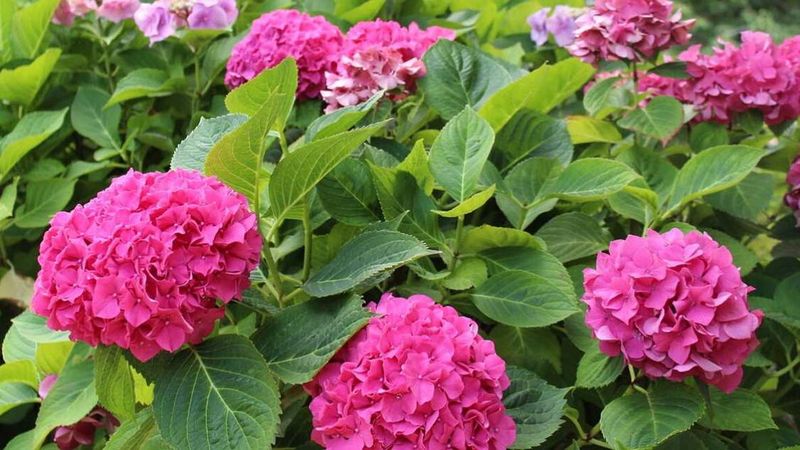
Surviving one heat spike is easier than surviving the next one, and the gap between events is where the most useful preparation happens. A few practical steps taken before the next heat wave arrives can dramatically reduce how much stress your hydrangeas experience when temperatures climb again.
Mulch is the most accessible and reliable starting point. A 2 to 4 inch layer of organic material, such as wood chips or shredded bark, over the root zone buffers soil temperature, slows evaporation, and helps maintain more consistent moisture between waterings.
The UC Marin Master Gardeners heat guidance recommends keeping mulch several inches away from stems and the crown to avoid trapping moisture against the base of the plant. Avoid black plastic and gravel, which can raise soil temperatures around heat-sensitive plants rather than lowering them, a concern flagged directly in the OSU Extension hydrangea heat wave guide.
Hold off on fertilizing in the days leading up to a forecast heat event and during it. Fertilizer applied before or during severe heat can push vulnerable new growth and add root-zone stress.
Once temperatures stabilize and the plant shows no signs of active stress, normal fertilizing can resume according to the plant’s seasonal needs.
Longer term, matching the hydrangea type to the California site makes a significant difference. Bigleaf hydrangeas, including the classic mophead types, are generally more sensitive to heat and drought and need more afternoon protection in inland and Southern California locations.
Panicle hydrangeas tolerate more sun and somewhat drier conditions, and oakleaf and smooth types generally handle heat better than bigleaf varieties, though all still benefit from consistent moisture. The OSU Extension hydrangea variety overview covers these differences in detail.
For California gardeners weighing a lower-water option, UC Master Gardeners of Sonoma County describe oakleaf hydrangea as needing only low supplemental water during dry summers once established, with greater sun tolerance near the coast and a stronger preference for afternoon shade inland. Whatever species you grow, the California Department of Water Resources plant and landscape guide directs homeowners to region-specific resources, including WUCOLS, for matching irrigation schedules to local conditions rather than following a universal watering rule.
Use the Root-Zone Test to Choose the Fix
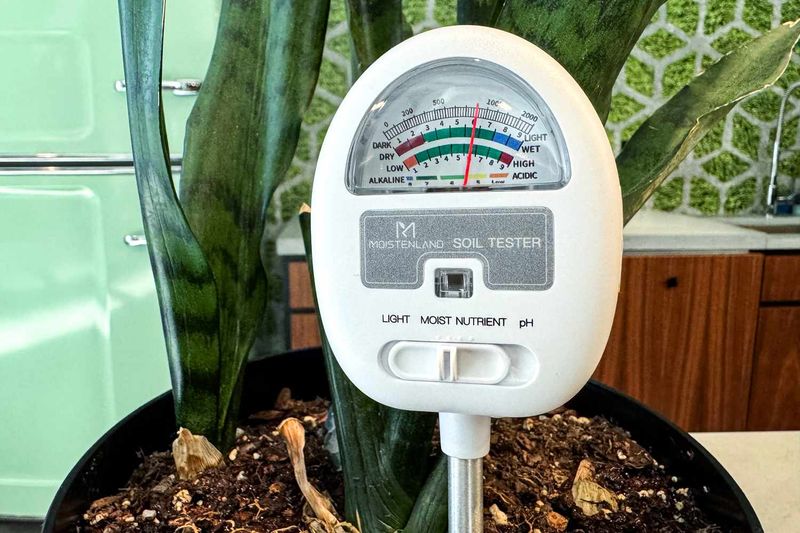
Every time a California hydrangea droops in a heat spike, the same three-part check applies. Probe the root zone several inches down before doing anything else.
Dry soil calls for slow, thorough watering at the soil line, applied until the active root zone is genuinely wetted. UC IPM guidance on water deficit and excess is clear that the correct response depends on actual soil conditions, not on how the leaves look from a distance.
Moist soil paired with a plant that recovers once evening temperatures fall points toward temporary heat wilt rather than drought stress. The right response there is shade, mulch, and protection from reflected heat, not more water.
Saturated soil with a wilting plant means stopping irrigation immediately and investigating drainage, because roots deprived of oxygen cannot take up water no matter how much is available in the soil.
No fixed watering schedule replaces this check. Soil type, plant size, microclimate, wind exposure, irrigation delivery, and the specific hydrangea variety all change how quickly conditions shift.
The UC Marin Master Gardeners heat guidance frames the core principle simply: read the conditions, then respond. A gardener who gets comfortable with that habit will make better decisions for every plant in the yard, not just the hydrangeas, because the root-zone test works the same way whether the thermometer reads 90 or 110.