
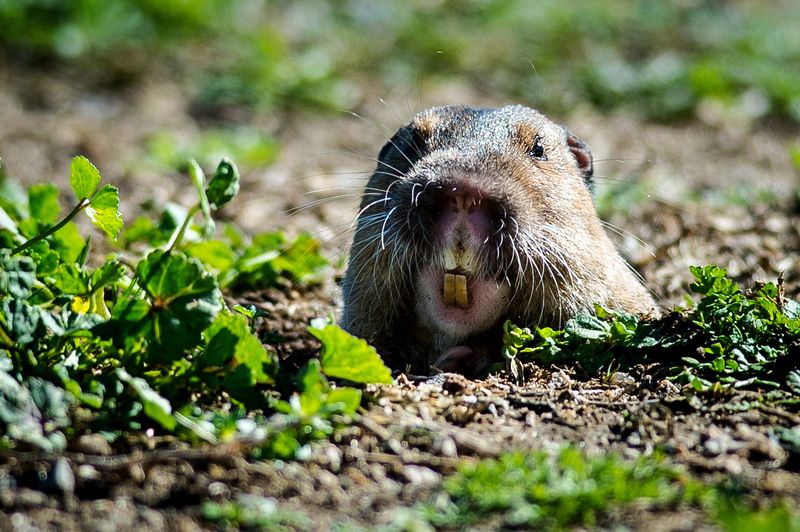
Pocket gophers are one of the most frustrating pests a California homeowner can face, because the damage happens underground before you even notice a plant is struggling. A popular idea claims that one native plant can stop gophers from tunneling right past your garden beds, but that claim does not hold up to scrutiny.
Understanding what actually works will save you time, money, and a lot of dead plants.
The famous gopher plant does not pass the evidence test
Somewhere along the way, a story spread through California gardening circles: plant the right species near your beds and gophers will turn around. The idea is appealing because it promises a low-effort, plant-once solution.
Trouble is, UC Integrated Pest Management guidance states clearly that plants marketed as gopher repellents, including gopher purge, castor bean, and garlic, have not been shown to repel gophers from an area.
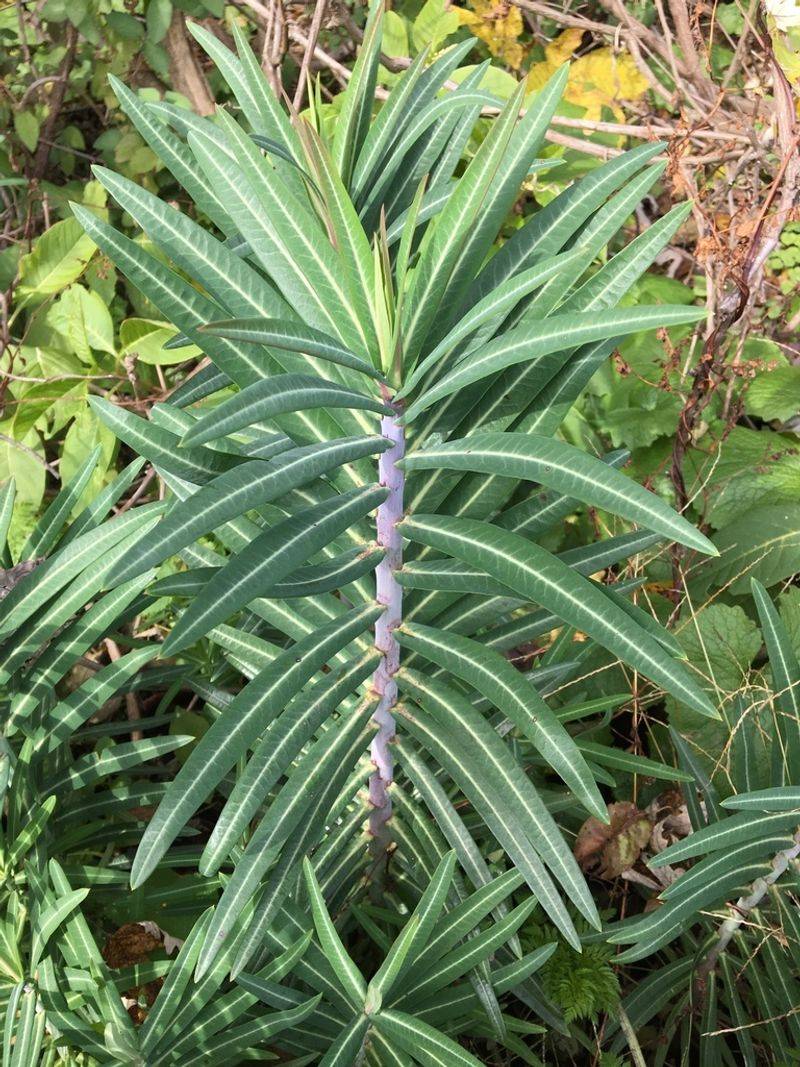
The plant most often at the center of this claim is Euphorbia lathyris, sold under names like gopher purge or mole plant. Many California gardeners assume it is a native because it grows wild across the state and nurseries stock it for exactly this purpose.
According to a California Agriculture profile of Euphorbia lathyris, the plant is actually introduced from the Mediterranean region, not native to California at all.
The UC IPM Pest Notes on pocket gophers confirm that research has not verified the repellent effect attributed to this plant. So no reliable evidence has been located showing that a California native plant consistently creates a barrier that pocket gophers refuse to cross.
The rest of this article replaces the plant-based promise with physical exclusion methods and population management steps that actually hold up under real yard conditions.
Why gophers reach plants from below
Most garden pests are visible. You spot the caterpillar on the leaf, the aphid on the stem, the snail near the base.
Pocket gophers operate on an entirely different plane, feeding almost entirely below ground on roots and other buried plant parts. UC IPM’s pocket gopher guidance notes that gophers can pull whole plants down into their tunnels and will also chew through irrigation lines, creating a damage pattern that can look like drought stress or disease before the real cause becomes obvious.
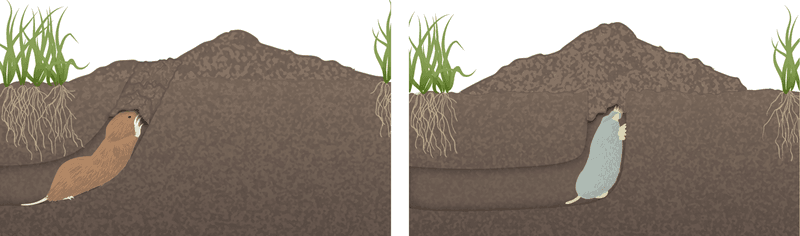
Fresh crescent-shaped mounds of loose soil are the clearest sign of active tunneling, but they can mislead you about exactly where the damage is happening. The mound sits above a lateral tunnel that branches off a deeper main runway, and the gopher may be feeding on roots several feet away from where the dirt was pushed up.
That gap between the visible mound and the actual feeding site is one reason surface-level interventions, including neighboring plants, mulch, or sprays applied above ground, cannot reliably block underground access.
A gopher can create multiple fresh mounds in a single day, and the tunnel network can extend across a large portion of a yard without the animal ever appearing above ground. Because feeding happens at root level and the approach comes through lateral tunnels rather than from directly above, protecting a plant means intercepting the gopher at the root zone itself.
Any strategy that stays at the surface leaves the underground path wide open.
Some plants tolerate feeding better, but none creates a force field
Root traits do influence how much damage a plant suffers when a gopher passes through. UC agricultural guidance on pocket gophers reports that plants with fibrous root systems often experience less damage, while plants with large, fleshy taproots tend to be more susceptible.
A fibrous root system spreads the damage across many fine roots rather than concentrating it on one critical structure, so the plant can sometimes recover. That tendency is real, but it is not immunity.
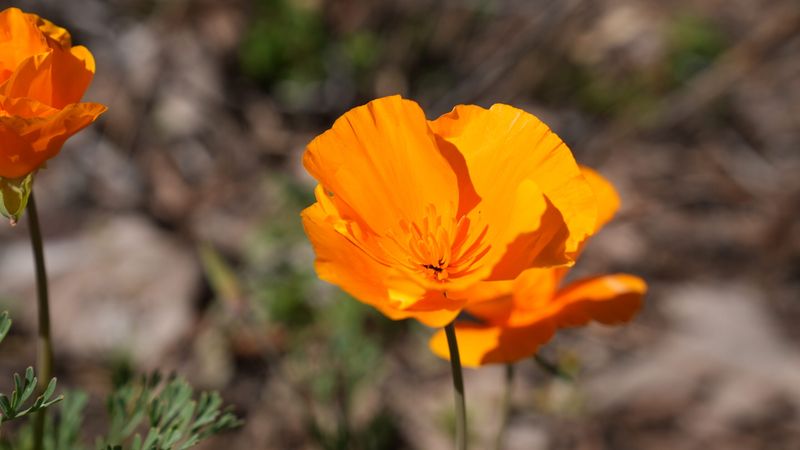
A peer-reviewed study examined population-level differences in root chemistry between mainland and island populations of California poppy and common tarweed. That research on plant resistance and tolerance to belowground herbivory found that mainland California poppies had higher concentrations of root alkaloids and were less palatable to captive pocket gophers than island populations.
The finding supports the idea that some native plants have evolved chemical defenses that make them less appealing to gophers.
What the study does not show is that California poppy, or any other named plant, forms a reliable underground barrier in a home landscape. The research compared population-level palatability using captive gophers, not a homeowner planting trial.
A plant being less palatable is meaningfully different from a plant that stops tunnel excavation. Hungry gophers will still move through soil near less-preferred plants, and a garden bed full of fibrous-rooted natives can still lose individual specimens.
Choosing plants that may tolerate damage better is a sensible layer of a broader strategy, but it is not a substitute for physical exclusion.
Hardware cloth is the barrier that reaches the roots
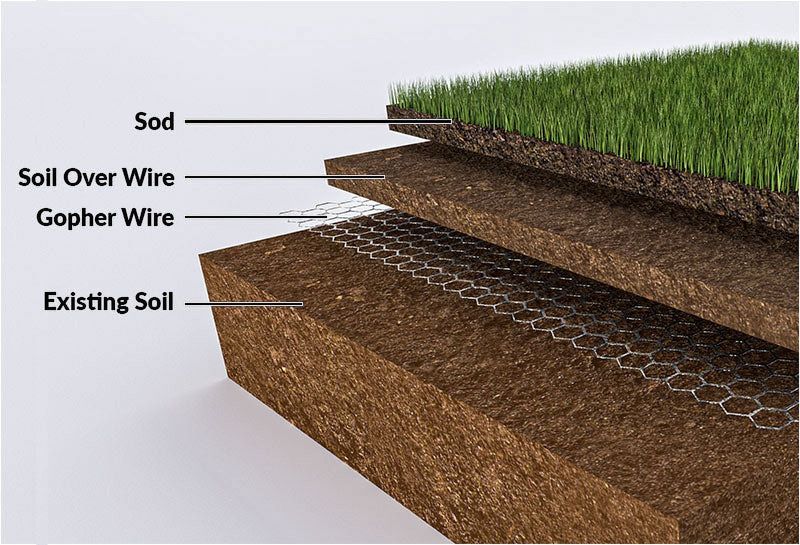
Physical exclusion is the evidence-backed answer to underground access. Rather than trying to discourage a gopher with a neighboring plant, hardware cloth or half-inch to three-quarter-inch wire mesh creates a mechanical wall that the animal cannot chew or push through quickly enough to make the effort worthwhile.
UC IPM recommends burying hardware cloth or mesh at least 2 feet deep, with an additional 6 inches bent outward at a 90-degree angle at the bottom to block gophers that try to go under the barrier rather than through it.
The outward bend matters because a gopher following a lateral tunnel will hit the vertical portion of the mesh and then probe downward looking for a gap. When the mesh turns horizontal at the base, the animal encounters more resistance rather than an opening.
Without that bend, a determined gopher can sometimes work its way beneath a straight vertical barrier over time. The 2-foot depth addresses the fact that main runways often run 6 to 18 inches below the surface, with lateral tunnels branching upward toward roots.
Galvanized steel mesh holds up better than plain steel or plastic alternatives in California’s clay and loam soils, where moisture and soil chemistry can accelerate corrosion. Stainless steel offers even longer service life in coastal areas where salt air is a factor.
The mesh approach blocks access physically rather than repelling or poisoning the animal, which means it keeps protecting your plants whether or not a gopher is actively working the area. That passive, ongoing protection is what makes it a dependable choice compared to repellent strategies that rely on the animal choosing a different path.
Choose between a root basket and a protected bed
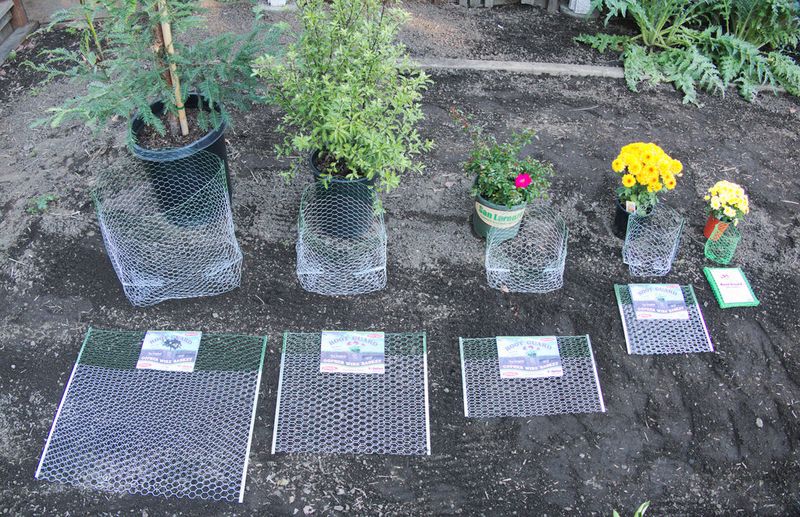
Homeowners face a practical fork when applying the mesh principle: protect one plant at a time with a basket, or protect an entire planting area with mesh lining beneath a raised bed. Each approach fits different situations.
A basket suits a single specimen, a newly planted tree, or a prized perennial in a mixed border where digging up the whole bed is not realistic. A lined raised bed makes more sense when you are starting fresh, planting vegetables, or managing a defined growing area where full-perimeter protection is worth the upfront installation effort.
Central Coast UC guidance on pocket gophers recommends half-inch to three-quarter-inch mesh extending about 2 feet underground and 6 to 12 inches above grade for individual plantings, with galvanized or stainless-steel mesh specified under raised beds for durability. The above-grade extension adds a buffer against gophers that surface briefly near a plant’s crown.
Basket sizing deserves more attention than it usually gets. A basket that fits the rootball at planting time may become a growth cage within a few seasons as roots expand.
UC’s managing pocket gophers guidance cautions that baskets must accommodate the plant’s mature root system: too small a basket can restrict root development, while a basket with inadequate coverage leaves the outer root zone exposed and vulnerable. Sizing up at planting costs very little compared to replacing a stressed or stunted plant later.
Exclusion protects the planting; trapping addresses the gopher
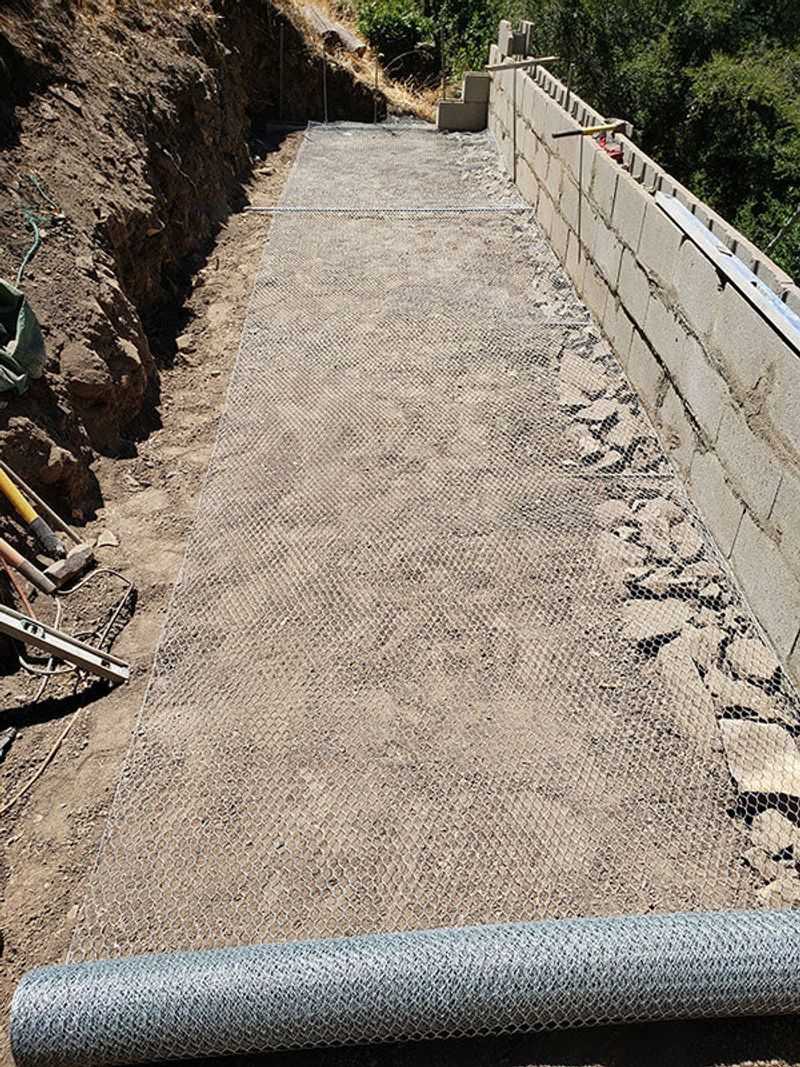
Burying mesh around a rose or lining a raised bed with galvanized cloth protects those specific plants, but it does not shrink the gopher population in your yard. A gopher blocked from one area will simply work around it, finding unprotected roots nearby.
Population reduction requires a different tool entirely, and for most California homeowners that means trapping.
UC IPM identifies pincer traps and box traps as common options and notes that food bait is not required to attract a gopher to a trap. Gophers investigate disturbances in their tunnels naturally, so a properly placed trap in an active burrow will often catch one without any added attractant.
The key word is active: traps placed in old, dry tunnels produce little. Fresh, moist mounds with loose crumbly soil indicate current activity and mark the right area to probe for the main tunnel.
University of Minnesota Extension’s guidance on controlling pocket gophers emphasizes continued monitoring and resetting as the key to effective trapping. Setting a trap once and checking it two days later is far less productive than checking daily and resetting in a new active location when a catch is made.
New mound activity after trapping stops is the clearest sign that the immediate population pressure has eased, though gophers from neighboring properties can recolonize over time.
California classifies pocket gophers as nongame mammals, and UC IPM notes that a trapping license is not required for their removal by homeowners. Other legally permitted control methods may also apply depending on your situation.
Whatever approach you choose, follow product labels and applicable local regulations to protect non-target animals and stay on the right side of the law.
Which shortcuts create a new problem?
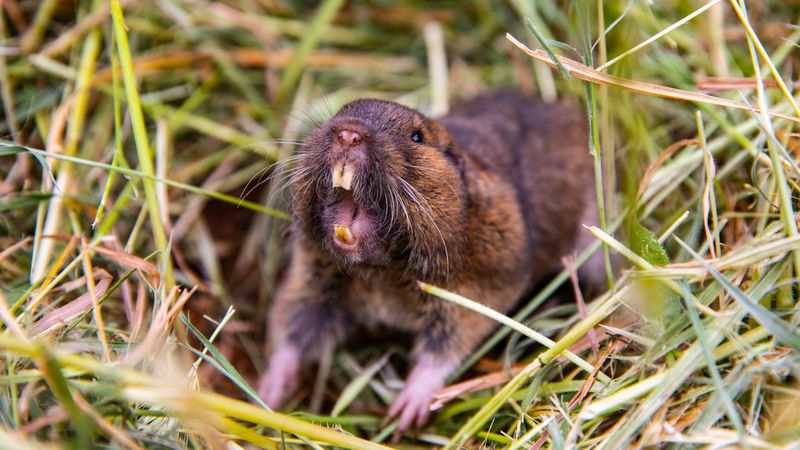
When gophers are actively destroying a yard, the temptation to try anything is real. Several popular shortcuts keep circulating online, and some of them trade a gopher problem for a safety problem without solving the original one.
Garlic, castor bean, and gopher purge are the three most commonly recommended plant-based fixes. UC IPM states that none of these plants has been shown to repel gophers from an area.
Castor bean carries an additional hazard: the ASPCA identifies castor bean as toxic to dogs, cats, and horses, particularly because the seeds contain ricin. Planting it in a yard where pets have access trades an uncertain gopher deterrent for a confirmed poisoning risk.
Euphorbia lathyris brings its own hazard. Poison Control warns that spurge sap can irritate or burn skin, eyes, and the mouth.
Anyone pruning, transplanting, or pulling gopher purge without gloves and eye protection risks a painful reaction, and children who handle the plant face the same risk.
Toxic baits present a different category of concern. UC IPM cautions that bait must be placed directly inside burrows rather than scattered above ground, and that improperly used toxic bait can endanger children, pets, and wildlife that encounter it.
Carbon-monoxide machines, fumigants, and explosive devices sit in a separate category that does not belong in ordinary DIY advice at all. The CDFA Vertebrate Pest Control Handbook and the California Department of Pesticide Regulation guidance on carbon monoxide for burrowing rodent control both document hazards including fire risk, property damage, injury, and licensing requirements that put these methods well outside a standard weekend project.
Always read product labels in full and verify what is legally permitted in your area before choosing any control method beyond trapping.
Build the barrier instead of waiting for a miracle plant
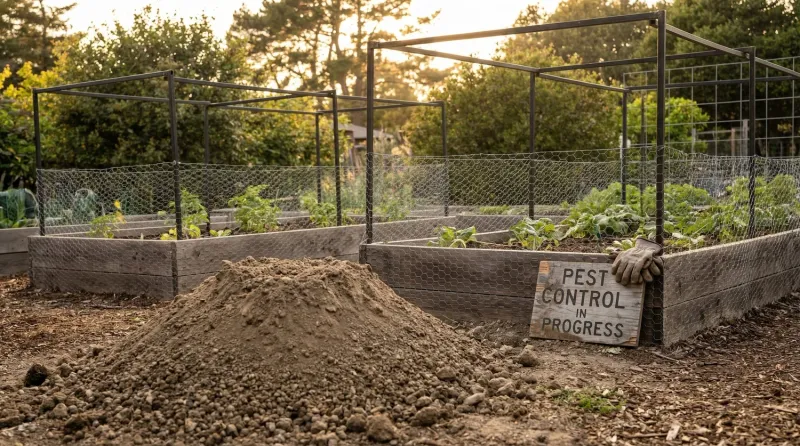
No reliable evidence has been located showing that a California native plant consistently stops pocket gophers from tunneling past it. The practical path forward combines three things: choose plants with fibrous root systems that may tolerate damage better, physically protect roots and beds with properly sized hardware cloth or mesh baskets, and use trapping or another legally permitted method when you need to reduce the gopher population rather than just redirect it.
Barriers handle the immediate protection job. UC IPM’s pocket gopher guidance gives you the installation specs: half-inch to three-quarter-inch mesh, at least 2 feet deep, with 6 inches bent outward at the base.
Trapping handles the population side, using active burrows identified by fresh mounds and continued monitoring until new activity stops. Together, these two steps address both the plant and the animal, which is more than any single native species has ever been shown to do on its own.
A yard that works with California’s conditions rather than against them is worth protecting carefully, and the tools to do that are straightforward once the plant-myth shortcut is off the table.