
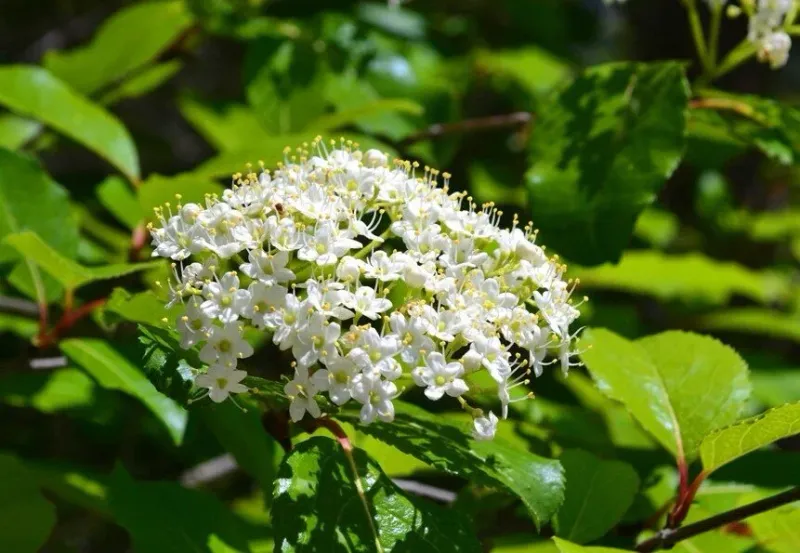
Florida yards do not get a gentle summer, but the right native shrubs can still look bright when many plants are tired. Full sun, sandy soil, storms, and long warm months call for plants that can handle real Florida conditions.
These shrubs bring color into October while also helping butterflies, bees, and birds. Use them in borders, foundation beds, sunny corners, or wildlife-friendly front yards that need beauty without constant fuss.
1. Firebush
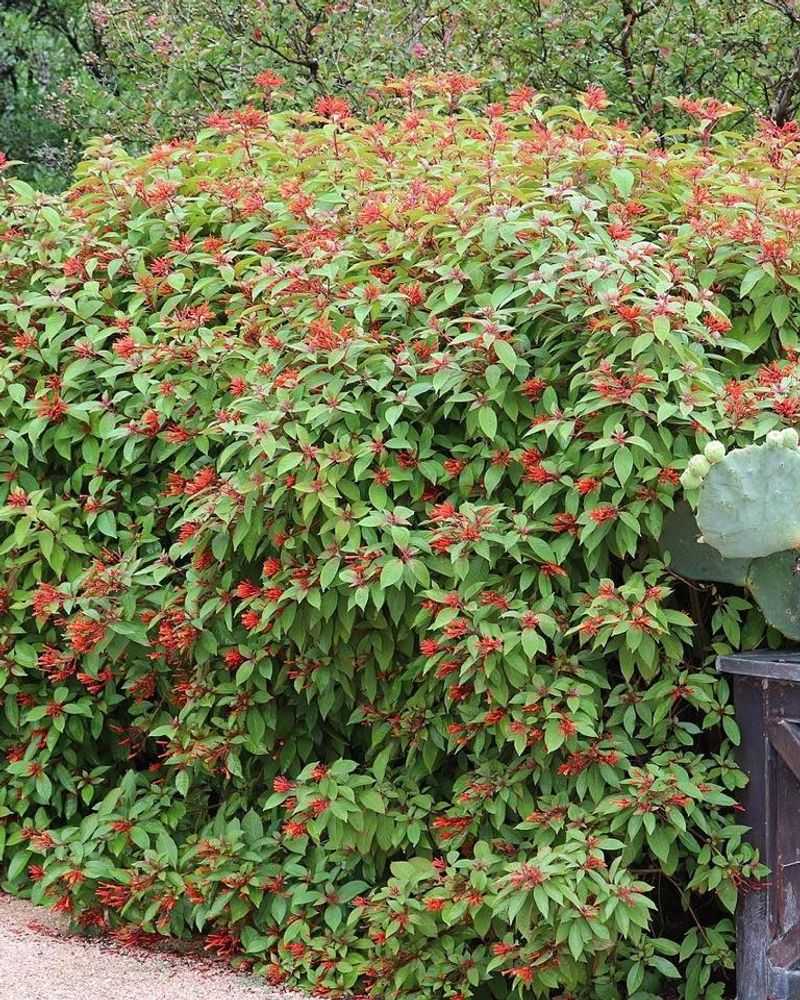
Some plants seem made for Florida heat, and firebush proves it every time the thermometer climbs. While softer shrubs pause or crisp at the edges, this native keeps pushing out orange-red tubular blooms that look bold against its deep green leaves.
Firebush stands out because it brings movement to the garden. Hummingbirds often zip in for nectar, and butterflies use the flowers as a steady food stop through the long warm season.
In much of Florida, flowering can continue into October, especially when the plant gets plenty of sun and has settled into the soil.
Give firebush a sunny spot with room to grow, since it can become a large, rounded shrub in frost-free areas. It tolerates sandy, fast-draining soil once established, but young plants appreciate regular water while roots spread.
Use it where you want a bright, wildlife-friendly anchor, such as the back of a sunny border, near a patio edge, or along a fence. If winter cold nips it back in North Florida, it often returns from the roots when warm weather comes back.
2. Beautyberry
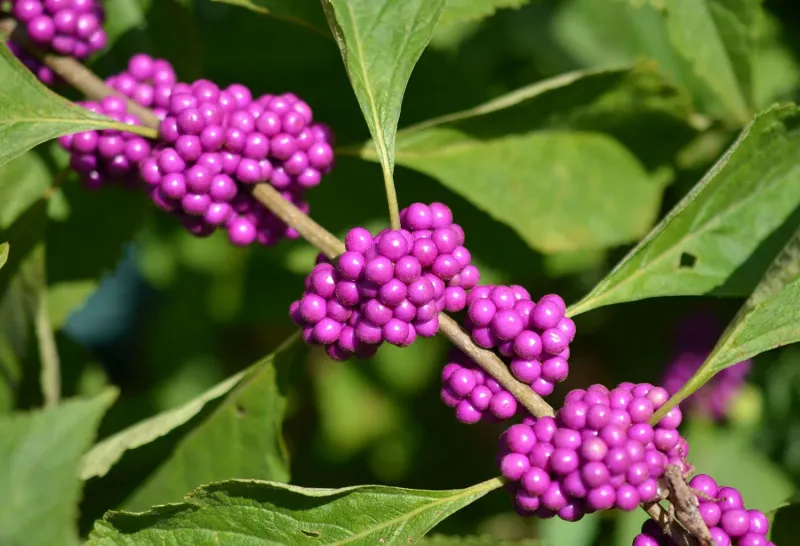
By early fall, beautyberry starts acting like the garden has been saving a surprise. Its tiny pinkish-lavender flowers may look modest up close, but they feed small pollinators and lead to those famous purple berry clusters that make the whole shrub unforgettable.
Beautyberry earns its place on this list because it bridges bloom season and berry season so well. In sunny Florida yards, flowering can stretch through warm months, and by late summer into October, berries often steal the show.
Birds notice them too, which makes the shrub useful beyond simple curb appeal.
Plant beautyberry in full sun to light shade, but choose sun if you want a denser shape and stronger berry display. It handles Florida’s lean soils better than many ornamental shrubs, especially after establishment.
A layer of mulch helps keep the root zone steadier without burying the crown.
Its loose, arching habit looks best in informal plantings, woodland edges, side yards, or wildlife borders rather than clipped into a tight hedge. Prune in late winter if needed, since flowers and berries form on new growth.
The result is a shrub that feels relaxed, native, and full of seasonal personality.
3. Walter’s Viburnum
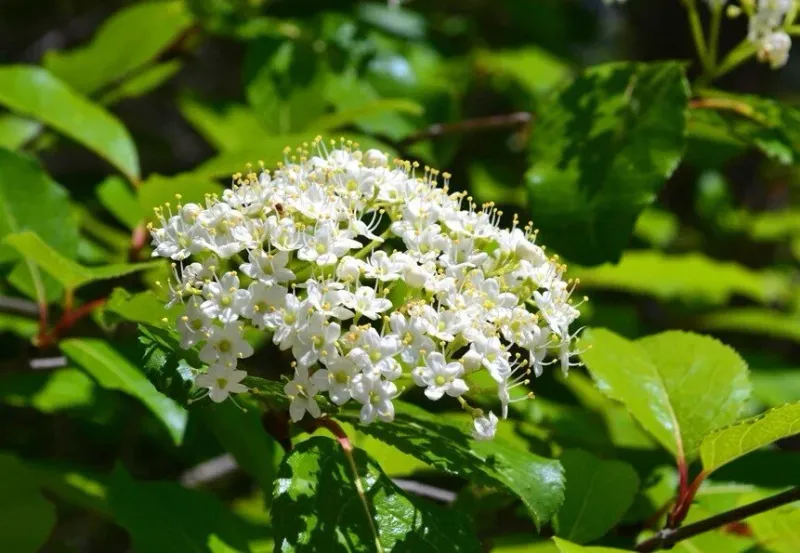
For gardeners who want something tidy without planting a stiff, lifeless hedge, Walter’s viburnum is a smart native choice. It can look polished enough for the front of the house while still offering flowers, cover, and berries for wildlife.
Its main bloom season is often spring, but in Florida’s long growing season, plants may produce scattered white flower clusters again during warm months and into fall. That repeat bloom is not always as heavy as spring, yet it adds welcome freshness when many hedge plants are just green walls.
Walter’s viburnum is different from the flashier shrubs here because its strength is structure. The leaves are small, the branching can be dense, and compact forms can be used where space is limited.
Full sun encourages a thick habit, while part shade creates a softer, looser plant.
It works well near walkways, property lines, driveway edges, and foundation beds where you need a native shrub with a clean look. Once established, it can handle normal dry spells, though it appreciates water during extended drought.
Skip hard, constant shearing if you want flowers and berries to develop. Light shaping after bloom keeps it handsome without turning it into a green box.
4. Simpson’s Stopper
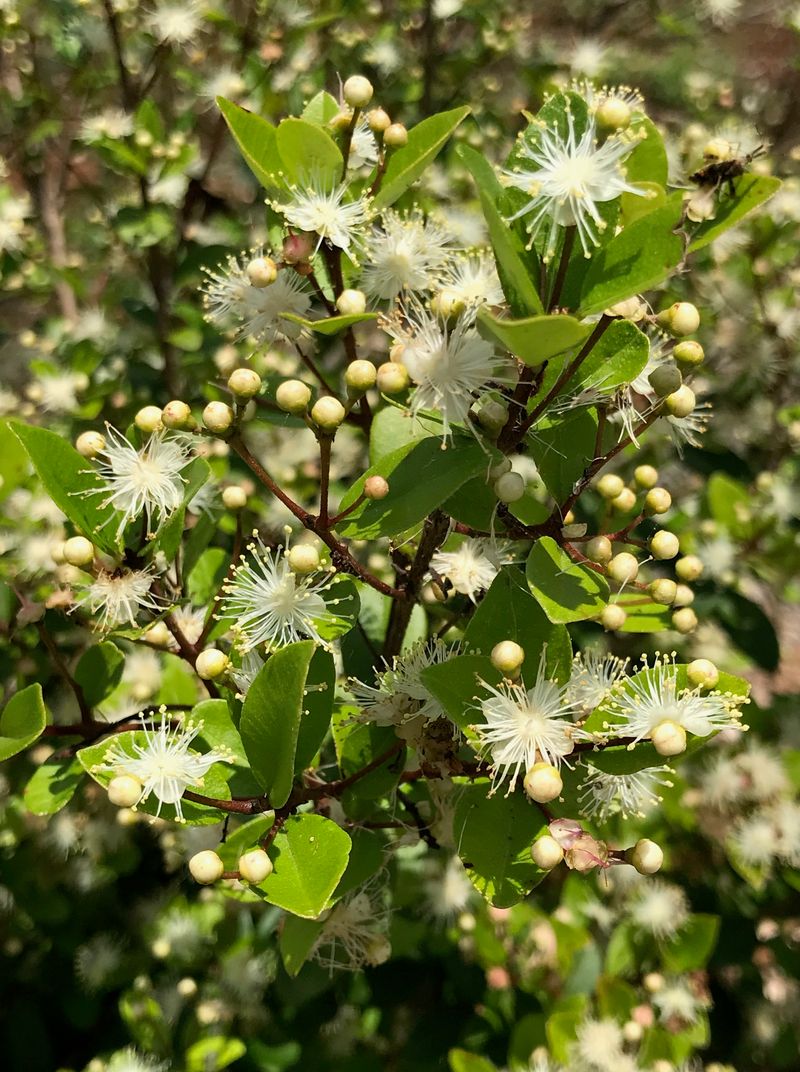
A sunny Florida entry bed can feel bare fast if every plant is chosen only for flowers. Simpson’s stopper fixes that by offering glossy foliage, fragrant white blooms, and colorful berries in one dependable native shrub.
The flowers are small, but they have charm. In warm parts of Florida, Simpson’s stopper can bloom off and on through much of the year, including into October when conditions are favorable.
The white flowers attract bees and other pollinators, while the berries that follow can bring in birds.
What makes this shrub especially useful is its flexibility. It can grow as a screening shrub, a small tree-like accent, or a clipped but not overworked hedge.
Full sun gives it good density, though it can also handle some shade.
Choose Simpson’s stopper for places where you want a native plant that looks refined without needing pampering. It tolerates sandy soil once established and is a strong fit for coastal and inland Florida landscapes, depending on local conditions.
Give young plants water during dry spells, then let them settle into a lower-maintenance routine. For best flowering, avoid trimming every few weeks, since constant cutting removes buds before they can open.
5. Bahama Cassia
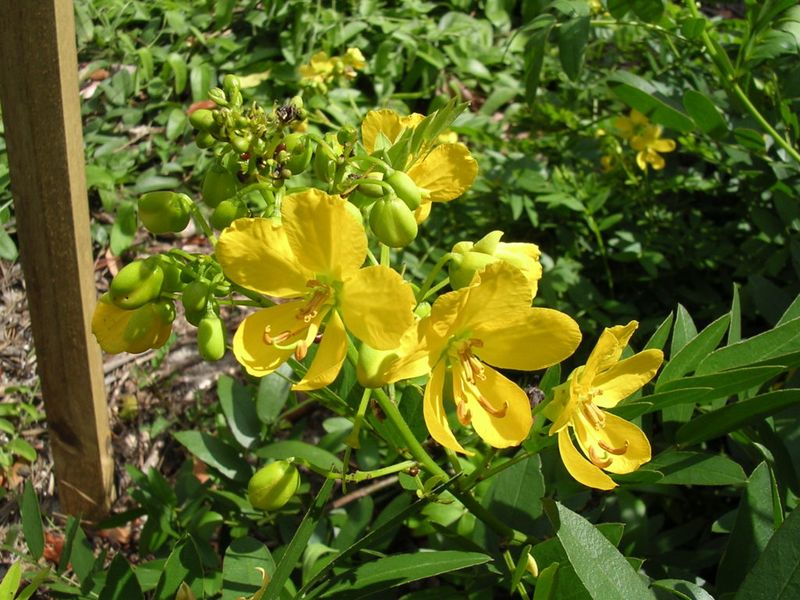
Yellow flowers have a way of making a hot yard feel cheerful instead of tired. Bahama cassia brings that sunny effect with soft green foliage and bright blooms that fit naturally into Florida butterfly gardens.
This shrub is a standout for homeowners who want pollinator action, especially from sulphur butterflies. The flowers can appear through warm months and often continue into fall in suitable parts of Florida.
Its open, airy form keeps it from feeling heavy, so it works well among grasses, wildflowers, and other native shrubs.
Bahama cassia is especially useful in Central and South Florida gardens where frost is limited. It likes full sun and well-drained soil, which makes it a good match for many sandy yards.
Once established, it usually does not need rich soil or constant attention.
Use it in a pollinator strip, along a sunny fence, or in a mixed native bed where its yellow flowers can contrast with purple beautyberry or red firebush. Some cassias and sennas can look similar in the nursery trade, so check labels carefully and choose plants sold as native or Florida-friendly by a trusted source.
Light pruning can keep it full, but let some flowers remain for butterflies and seed development.
6. Wild Coffee
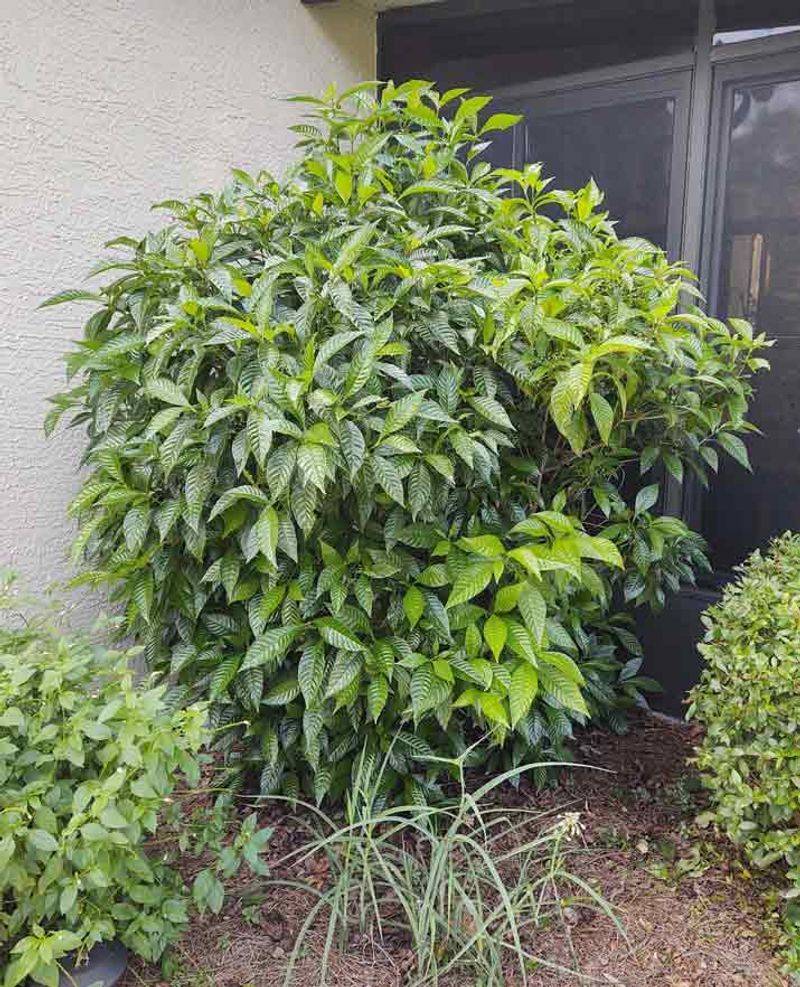
Not every October bloomer needs huge flowers to earn attention. Wild coffee wins people over with glossy leaves, neat growth, small white blooms, and red berries that make shady-to-sunny garden edges feel alive.
Although wild coffee is often used in part shade, it can handle more sun when moisture is steady and the site is not brutally exposed all day. In warmer Florida areas, it may flower in flushes during much of the year, including into fall.
The blooms are small but valuable to pollinators, and the berries add another layer of wildlife appeal.
Its difference is texture. The leaves look lush compared with many drought-tough shrubs, so it helps soften hardscapes, blank walls, and the base of palms.
It also fits nicely in smaller yards because it can be managed as a medium shrub rather than a giant screen.
Wild coffee prefers well-drained soil with some organic matter, so it benefits from mulch and occasional watering during dry periods. In full sun, watch young plants until roots are established.
Place it where morning sun or filtered afternoon light can keep the foliage looking its best. The berries are attractive, but this plant is grown for wildlife and ornament, not for making drinkable coffee.
7. Coral Honeysuckle
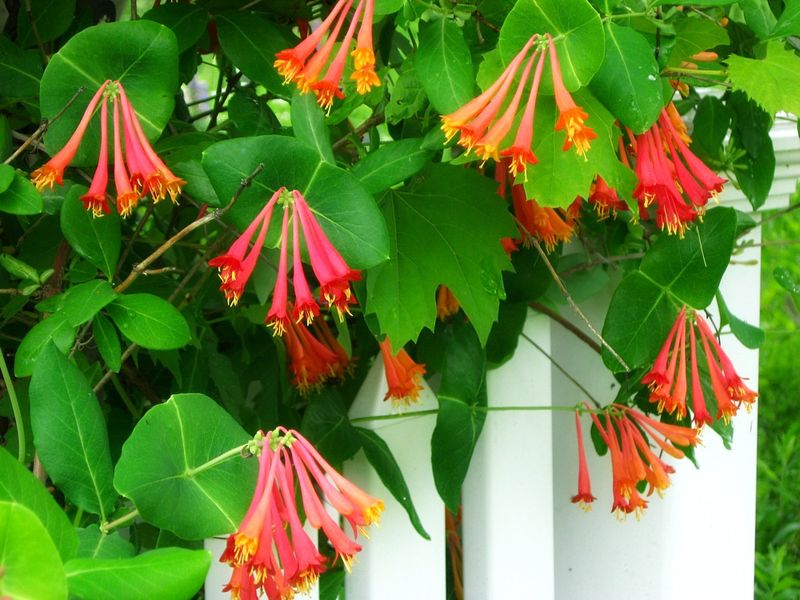
A vine on paper, coral honeysuckle can behave like a flowering shrub when it is trained on a short trellis, fence panel, or sturdy obelisk. That makes it perfect for gardeners who want vertical color without planting an aggressive vine that swallows the yard.
Coral honeysuckle brings coral-red tubular blooms that hummingbirds often check like tiny fuel stations. In Florida’s warm climate, it can flower over a long season, with blooms often appearing into fall when the plant gets strong sun and decent care.
Unlike invasive Japanese honeysuckle, this native is a better choice for wildlife-minded landscapes.
Its special talent is adding height in a small footprint. Place it beside a mailbox, patio post, sunny fence, or narrow side-yard bed where a wide shrub would not fit.
Full sun usually gives the best flowering, though some light shade is acceptable.
Give coral honeysuckle well-drained soil and water it regularly while it establishes. After that, it is fairly easy to manage with occasional pruning to guide its shape.
If you want it to read more like a shrub, keep the support compact and trim wandering stems after heavy bloom periods. It pairs beautifully with lower native plants that can hide the base and keep the bed looking full.
8. Buttonbush
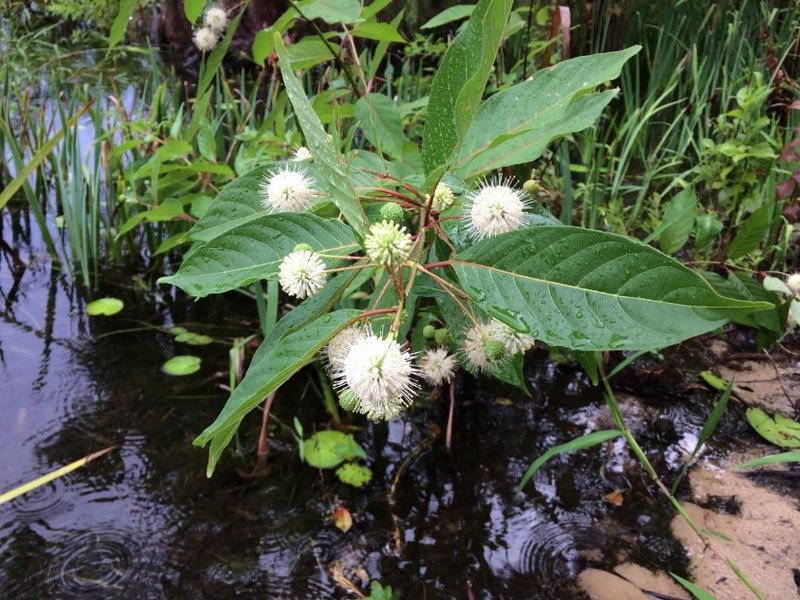
Got a low spot that stays damp after a storm? Buttonbush turns that problem area into one of the most interesting places in the yard.
Its round, white, pincushion-like flowers look almost playful, and pollinators treat them like a neighborhood gathering spot.
Buttonbush is different because it likes moisture more than most shrubs on this list. It is a natural fit for rain gardens, pond edges, swales, and sunny areas that flood briefly after heavy Florida downpours.
In the right spot, it can bloom through summer and into early fall, with lingering flowers possible as the season stays warm.
Full sun encourages strong flowering, but the plant needs enough water to match that exposure. In dry, sandy uplands, it may struggle unless irrigated, so do not force it into the hottest, driest bed by the driveway.
Save it for places where other shrubs sulk from wet feet.
Buttonbush can become large, so give it breathing room or prune thoughtfully during the dormant season. The seed heads add texture after flowers fade, and birds may use the shrub for cover.
For homeowners dealing with stormwater, it offers a practical native solution that also looks like a conversation piece.
9. Seaside Goldenrod
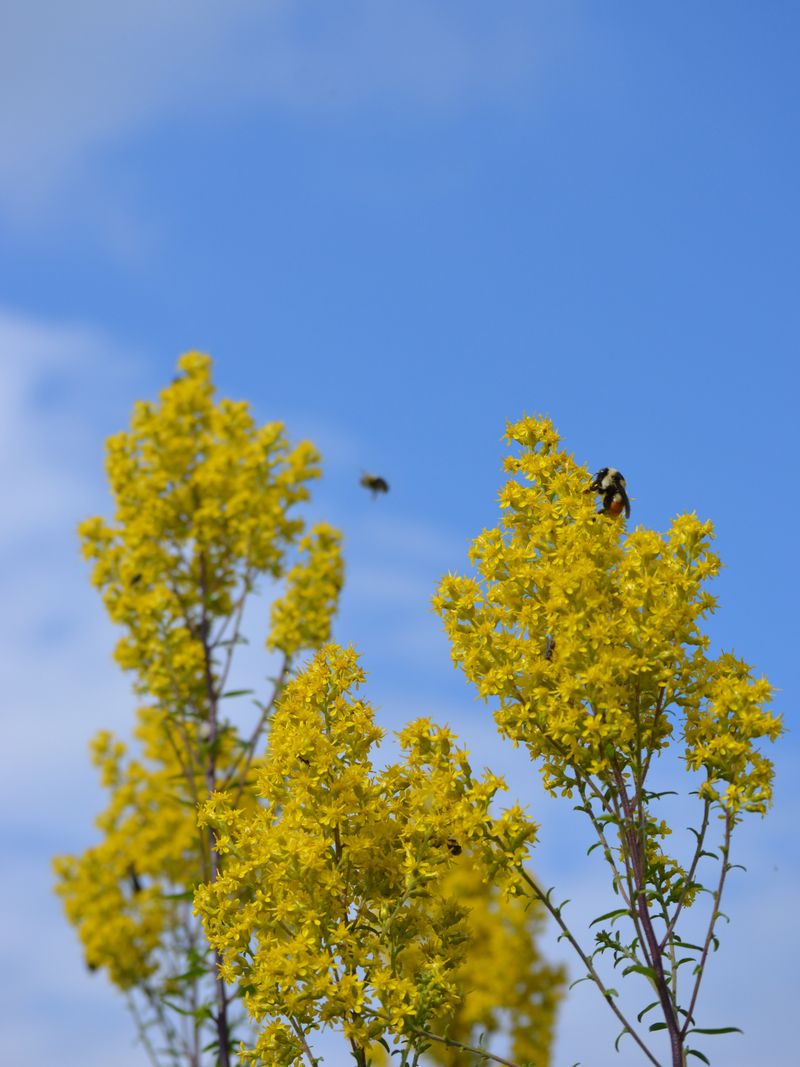
When October light turns softer, seaside goldenrod can make a Florida garden glow. Its golden flower plumes rise above narrow leaves and bring a wild, coastal look that feels right at home in sunny, sandy spaces.
Although often listed as a perennial rather than a woody shrub, seaside goldenrod fills the same role in many home landscapes: a sturdy, shrubby mass of late-season color. It earns a spot here because it is one of the strongest native choices for fall bloom in full sun.
Bees, butterflies, and other beneficial insects rely on flowers like these when nectar can be harder to find.
Seaside goldenrod is especially useful near coastal areas, but it can also work inland where soil drains well. It handles sun, salt exposure, and lean sandy ground better than many showier ornamentals.
Give it room, because a healthy clump can spread and look best when planted in groups.
Place it behind lower border plants, along a fence, in a pollinator bed, or near ornamental grasses for a natural Florida look. Cut it back after flowering if you want a tidier winter shape.
One helpful note: goldenrod is often blamed for fall allergies, but wind-pollinated ragweed is usually the bigger culprit. Goldenrod pollen is heavier and mostly moved by insects.