
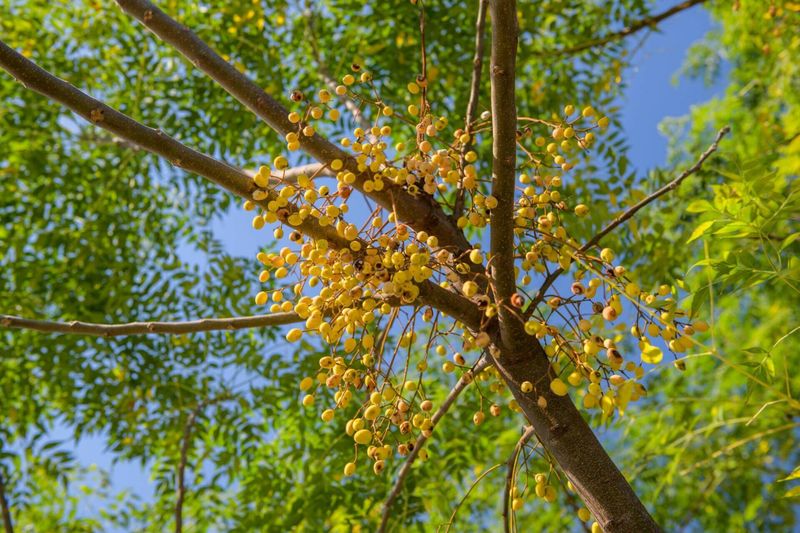
Walk the edge of almost any Central Texas creek and you might notice a tree you can’t quite name, one growing fast, fruiting heavily, and crowding out everything around it. That tree is likely chinaberry, and it’s quietly reshaping riparian corridors across the region.
Understanding what it does to creekside plant communities, and how to respond without causing more harm, is one of the more practical things a Texas property owner can do right now.
Chinaberry fits the Central Texas creekside pattern
Central Texas has no shortage of invasive woody plants, but chinaberry (Melia azedarach) stands out as the best-supported match for the fast-spreading, creek-crowding tree that property owners keep encountering. Austin’s invasive species management guide identifies chinaberry as forming significant stands in Texas riparian areas, spreading through root sprouts and bird-dispersed seeds, and producing thickets that reduce plant diversity.
That combination of traits makes it a serious habitat concern along creek corridors throughout the region.
Chinaberry is not the only plant worth watching. The same city materials flag privet, nandina, and other woody species as high-concern invasives capable of forming dense monocultures in Central Texas.
Treating chinaberry as the single answer to every creekside invasion would be a mistake. Correct identification comes first, and that matters especially because different species require different control approaches.
The article’s original framing, that chinaberry damages more creek land than fire ants, also needs a correction. Fire ants are an invasive animal problem with thoroughly documented effects on human health, livestock, wildlife, and agriculture.
One older Texas production-agriculture assessment placed annual statewide fire ant damages above $90 million, though that estimate reflects a survey of production-agriculture losses rather than a measure of creek-land loss. Chinaberry and fire ants cause different kinds of documented harm, and no reliable source compares those impacts using a shared metric.
What the evidence does support is describing chinaberry as a real and specific threat to creekside vegetation and habitat structure, which is reason enough to pay attention to it.
Identify chinaberry before disturbing the site
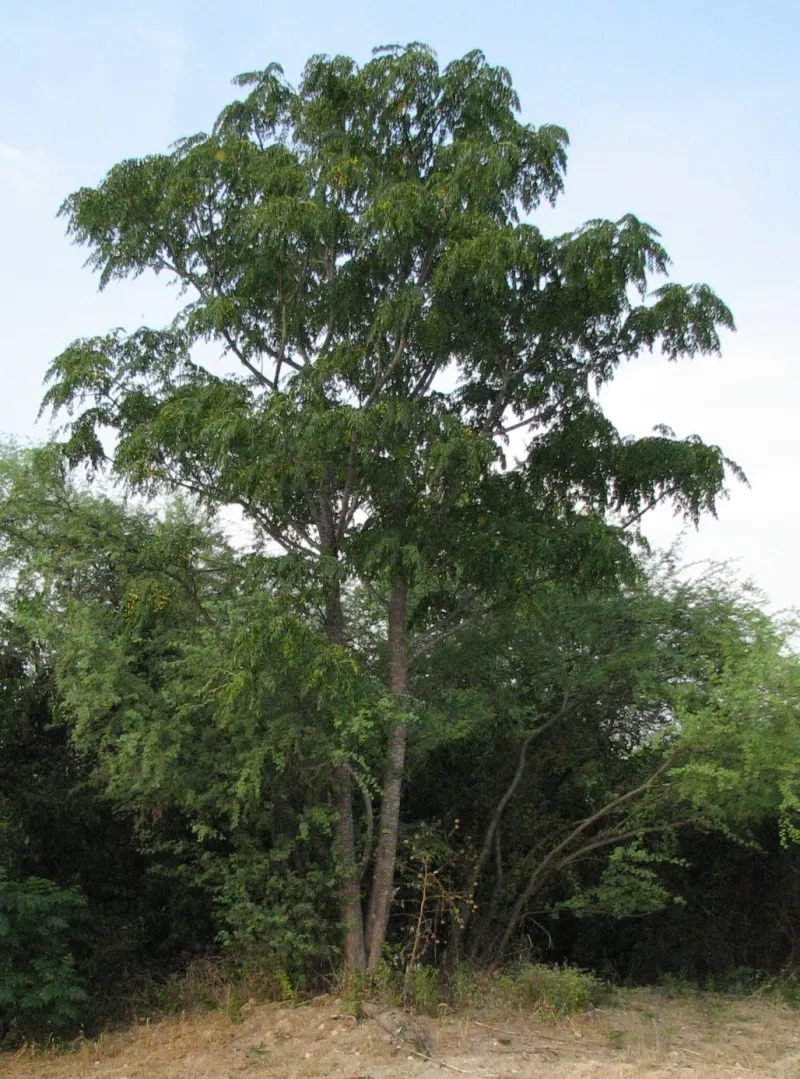
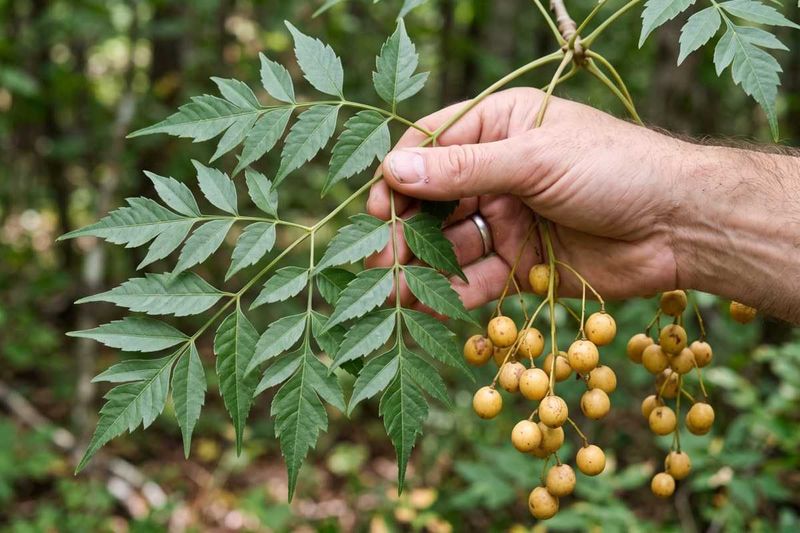
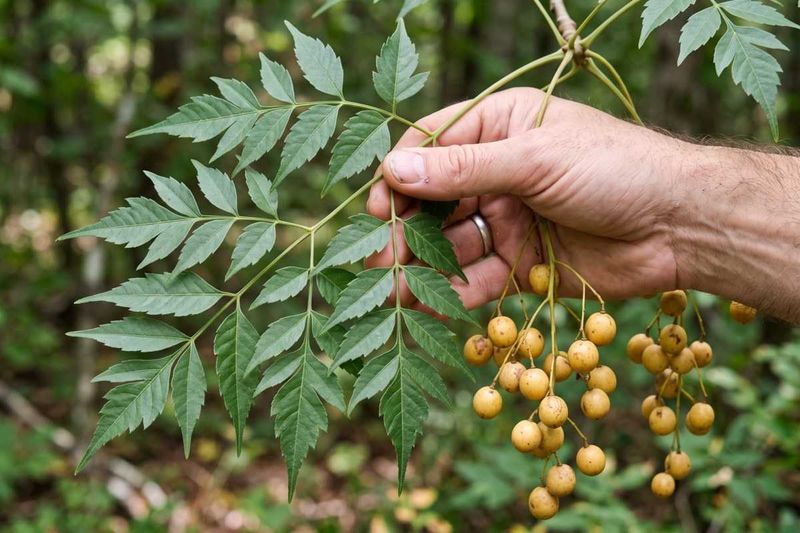
Chinaberry is a deciduous tree, meaning it drops its leaves in winter, and it often grows with multiple trunks rather than a single straight stem. The leaves are large and lacy-looking, made up of many small, dark-green leaflets arranged along a central stalk in a compound pattern.
In spring, the tree produces fragrant flower clusters in shades of white to soft lilac that are hard to miss when they’re in bloom.
After flowering, chinaberry develops round berries that start green and ripen to a waxy yellow. Those berries can hang on the branches well after the leaves have dropped, which makes winter identification easier than you might expect.
Austin’s invasive species guide notes that mature chinaberry trees can reach roughly 50 feet tall and 2 feet in trunk diameter, though many of the trees you encounter along creeks will be younger and considerably smaller.
Berries and creek-bank location are useful clues, but neither one is enough to confirm an identification on its own. Several native trees and other invasive species share some of those features, and a mistaken ID can lead to removing the wrong plant or applying a treatment where it doesn’t belong.
Before cutting or treating anything, take a photo and run it by your county Extension office, a Texas Master Naturalist, or a qualified arborist. Getting the species right first is not an optional step, it’s the foundation for everything that follows.
Root sprouts and birds drive its spread
Knowing that chinaberry spreads quickly is less useful than understanding exactly how it does it, because the mechanism shapes what any control effort has to address. Locally, chinaberry expands through root sprouts, new shoots that push up from the existing root system around an established plant.
A single tree can generate a ring of sprouts that gradually widens the infestation without any seeds being involved at all.
Longer-distance movement happens through birds. Chinaberry berries are eaten and the seeds deposited elsewhere, which is why new plants can appear in spots that seem disconnected from any known source.
Austin’s management guide documents significant chinaberry stands in Texas riparian areas and connects that pattern to both root-sprout expansion and bird-dispersed seed movement. Creek corridors are particularly vulnerable because birds move along them regularly and because disturbed, moist soil near water is favorable for seedling establishment.
One more trait makes chinaberry especially persistent: it reaches reproductive maturity while it is still shrub-sized. A plant that looks too small to be a concern can already be producing viable fruit.
That means a small-looking patch along a creek bank may already be seeding new locations upstream and downstream, even before it forms the kind of dense stand that catches a landowner’s attention. There is no established annual spread rate in the available research, so avoid treating any number you encounter as authoritative.
What is documented is the combination of local root expansion and bird-assisted seed dispersal that makes early detection genuinely worthwhile.
Dense thickets change the creekside plant community
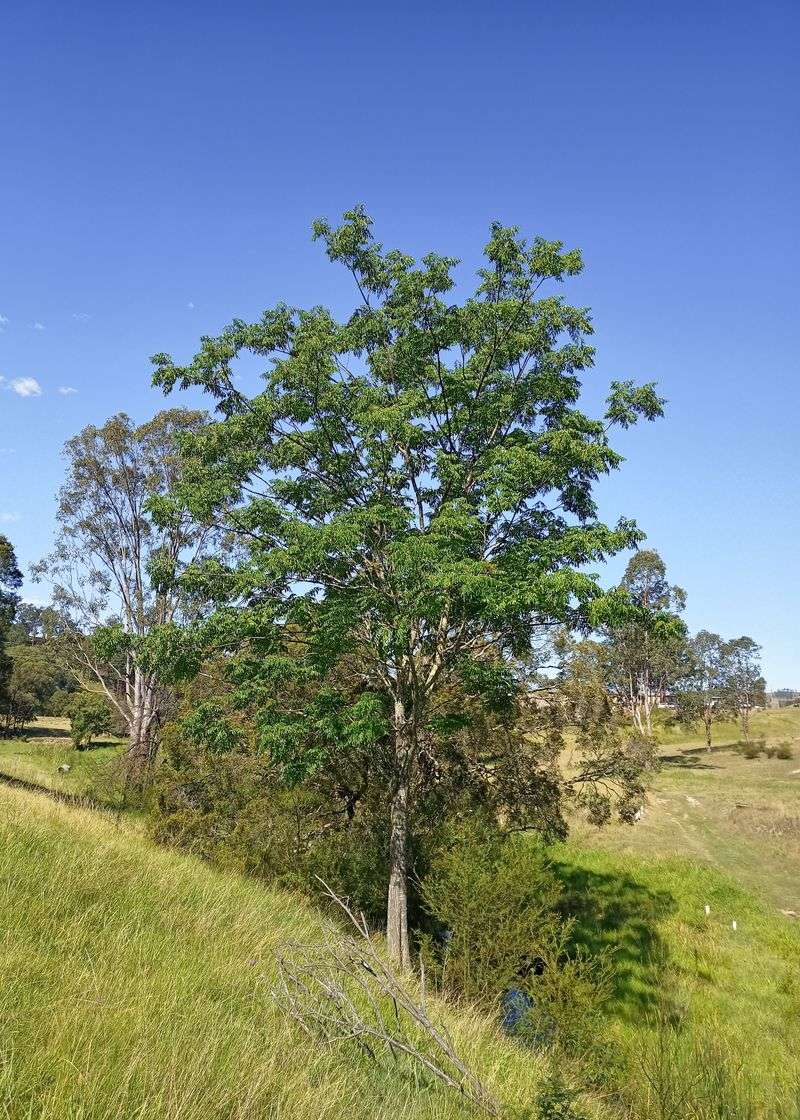
The practical concern with chinaberry along creek corridors is not just that it grows fast. The documented problem is what happens to the plant community around it when a thicket becomes established.
Austin’s invasive species guide reports that chinaberry thickets reduce plant diversity and compete with native vegetation for space, light, and resources. A creek bank that once supported a layered mix of native trees, shrubs, and groundcover can shift toward a single-species stand that provides little of the structural variety native wildlife depends on.
Chinaberry’s leaf litter adds another layer to the problem. As leaves break down, they can raise soil pH and alter the soil conditions that native plants and their seeds need to germinate and establish.
That means the effects persist even after individual trees are removed, because the soil itself has changed. Restoration in those spots often takes longer and requires more deliberate replanting than clearing a site that was never invaded.
None of this means chinaberry eliminates wildlife use entirely. Birds that disperse its seeds clearly interact with the plant, and other animals may move through chinaberry-dominated areas.
The concern is about what gets lost at the community level, the native species that can no longer establish, the structural diversity that disappears, and the altered soil that makes recovery slower. Describing chinaberry as a habitat and vegetation threat is accurate.
Claiming that it has displaced a measured share of Central Texas creek acreage is not supported by the available research, and that distinction matters for setting realistic expectations about what removal and restoration can accomplish.
Privet and Chinese tallow require different identification
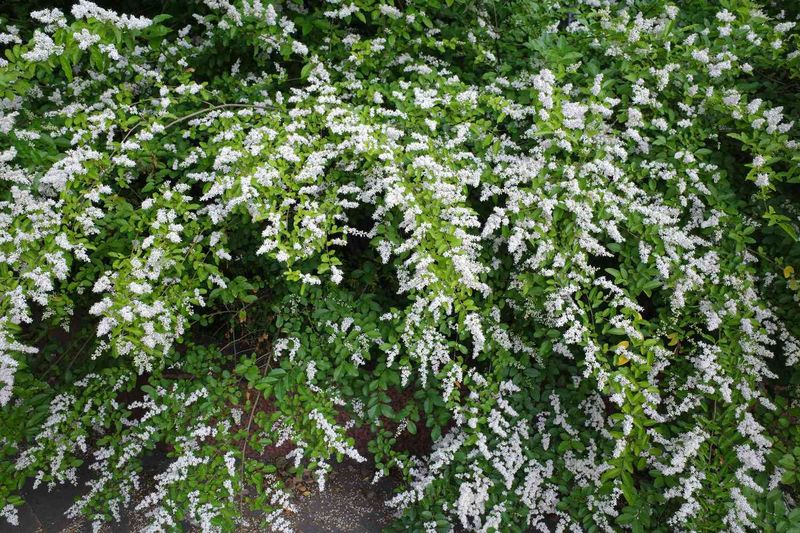
Misidentifying the plant you are dealing with can send a control effort in the wrong direction entirely. Two species come up most often when Central Texas landowners are sorting through their creekside options: privet and Chinese tallow.
Both are real concerns, but neither one is interchangeable with chinaberry, and the differences matter before you pick up a saw or open a chemical container.
Privet is generally an evergreen shrub or small tree rather than a full-sized deciduous tree. Its leaves are opposite, leathery, and relatively uniform in shape, quite different from chinaberry’s large, lacy, compound foliage.
Privet flowers are white and appear in clusters, and its berries are dark blue-black rather than chinaberry’s waxy yellow. Austin’s invasive species guide notes that privet occurs in floodplains and riparian forests, spreads by root sprouts and animal-dispersed seeds, and can form dense stands that outcompete native plants.
It is a serious problem in its own right, but it requires its own identification and its own control plan.
Chinese tallow is a different story geographically. Texas A&M Forest Service information describes it as fast-growing, flood-tolerant, and capable of seeding prolifically, but its strongest concentration lies in Southeast Texas and along the Gulf Coast rather than in Central Texas.
Including it in a general Texas invasive-tree conversation is reasonable, but substituting it automatically for chinaberry in a Central Texas creek article would misrepresent where the greater documented pressure currently exists. If you are in the Hill Country or the greater Austin area and you find an aggressive berry-bearing tree along your creek, chinaberry is the better-supported starting hypothesis, but confirmation through a local expert still applies.
Species identity shapes every decision that follows, from how you remove the plant to what you plant in its place.
Use a targeted control plan near water
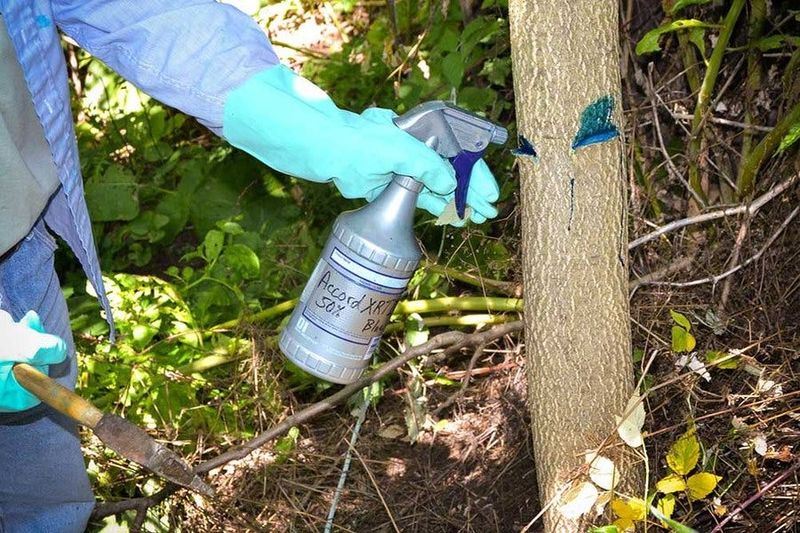
Before touching any tree on your property, check ownership, local ordinances, and whether the tree is large enough to fall under Austin’s protected-tree rules. Some mature trees require a permit before removal or any work that could affect their health.
Sorting that out first prevents a much bigger headache down the road.
For small chinaberry seedlings, hand-pulling is the recommended starting point. Work when the soil is moist so the root system comes out intact.
Leaving root fragments behind encourages resprouting, so pulling the entire root rather than snapping the stem at ground level is worth the extra effort. Austin’s chinaberry management guidance does not recommend chemical treatment for seedlings at this stage, making hand removal the cleaner and safer option near water.
Larger plants are more complicated. Cutting alone is not a reliable solution because chinaberry resprouts from the stump and from the root system.
Austin’s guidance recommends treating the cut stump promptly after cutting, or using carefully directed girdle, basal, or cut-surface herbicide treatments depending on the size and location of the tree. Each of those methods has specific application requirements, and the right choice depends on the site.
Near a creek, pond, drainage channel, or any body of water, herbicide selection becomes a critical decision. Avoid chemical treatment near water where feasible.
When it is genuinely necessary, use only a product that is formulated and labeled for aquatic use, and follow both the product label and any site-specific water-protection requirements that apply to your location. Austin’s protocol also advises against applying treatments when rain is expected within 48 hours or when winds exceed 10 mph.
Those are sensible protocol-specific precautions, but they supplement rather than replace the product label, which is always the governing document. Follow-up monitoring after any treatment is not optional, because regrowth and reinvasion are common and catching them early makes the next round of control much more manageable.
Restore the site and keep the comparison honest
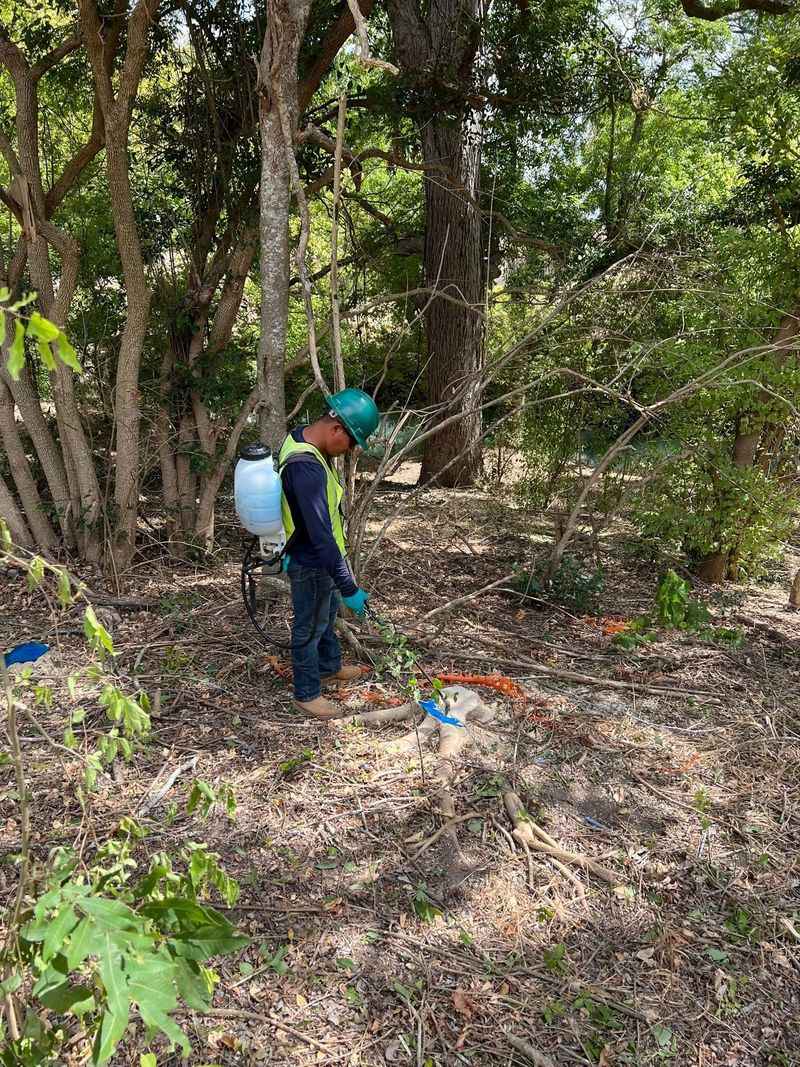
Clearing chinaberry from a creek bank is a starting point, not a finish line. Once plants are removed, the site is open ground, and open ground along a creek is exactly where new chinaberry seedlings and other invasive species establish fastest.
Monitoring for resprouts and new seedlings in the months after removal is a necessary part of the work, not an afterthought.
Replanting with appropriate native vegetation is the most effective way to close that window. Austin’s management guide recommends replanting or reseeding with native species after removal and, when immediate revegetation is not possible, mulching or otherwise covering bare soil to reduce both erosion and reinvasion.
A creek bank left bare after clearing is not a success, it is an invitation for the next wave of invasives to move in before natives have a chance.
Closing with the fire-ant comparison deserves a clear, plain-language answer. Chinaberry directly alters creekside vegetation, competes with native plants, reduces structural diversity, and changes soil conditions in ways that slow recovery.
Fire ants create a different set of documented problems: they affect human health, livestock safety, wildlife, agricultural production, and property. Texas production-agriculture research has documented substantial fire ant economic impacts, and Texas A&M fire ant research covers a wide range of human-health and ecological effects.
Those are not the same category of harm as habitat alteration along a creek, and no shared metric currently exists to rank one above the other. The honest takeaway is that Central Texas landowners have real reasons to manage chinaberry along their creek corridors, and those reasons stand on their own without needing a comparison to an unrelated pest.
A creek bank recovering with native plants is its own reward.