
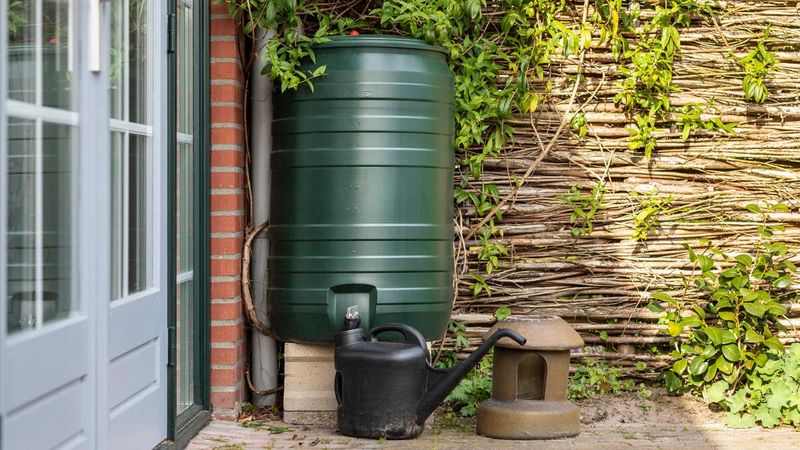
Dry fall weather sneaks up on container gardeners across North Carolina, leaving pots parched faster than expected. A rain barrel connected to your downspout can meaningfully cut down on hose use for a small group of ornamental containers, though it works best when matched carefully to your roof size, storage capacity, and actual plant demand.
This guide lays out a practical, honest strategy for reducing how often you reach for the hose, without pretending the setup runs itself or works everywhere without adjustment.
Reframe the promise: less hose use, not no care
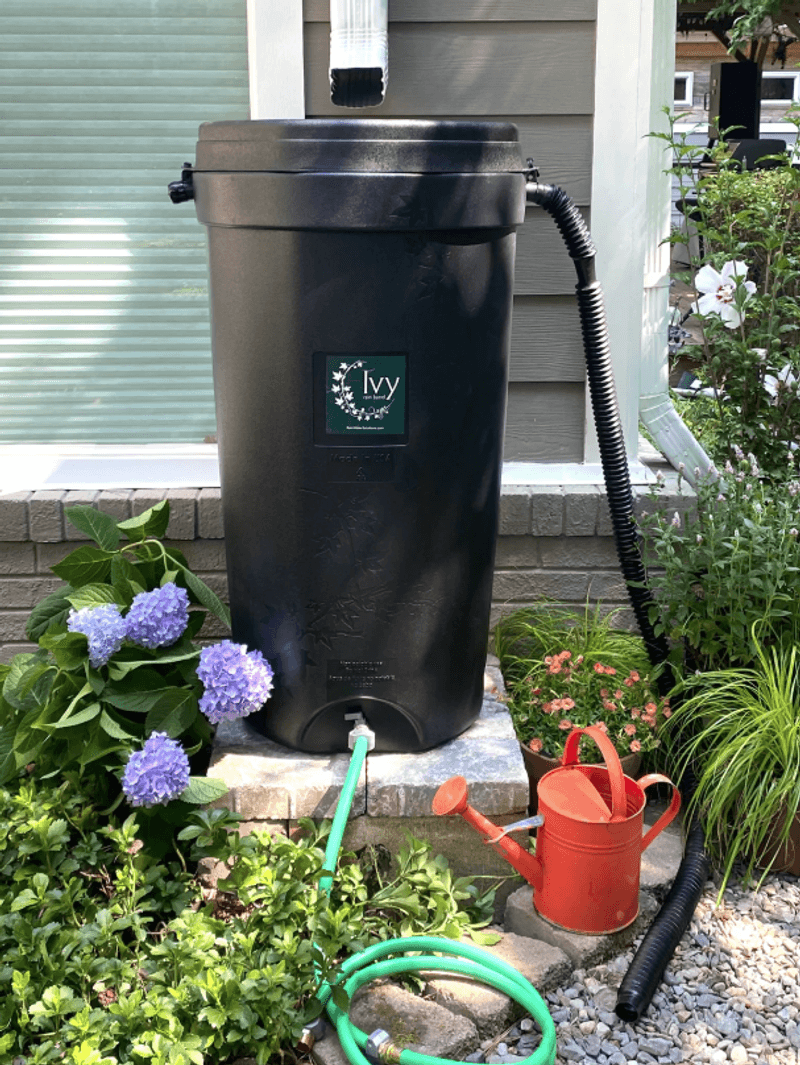
Rain barrels can genuinely reduce how often you drag out the hose for a small cluster of ornamental containers, and during some fall dry spells, stored rainwater may cover most or all of what a few nearby pots need. That is a useful outcome.
What the evidence does not support is a statewide, guaranteed method that keeps every container thriving through every dry stretch without any inspection or hand-carried water.
The difference matters because containers dry faster than in-ground beds. NC State Extension’s container gardening guidance notes that mature outdoor containers may need watering at least daily, with frequency shaped by heat, wind, sun, pot size, pot color, pot material, media volume, and plant growth stage.
A small dark pot sitting in afternoon sun on a Piedmont patio can dry out in hours, even in October.
“Without touching the hose” is a fair description of one possible outcome when stored rainwater is delivered by watering can or a short gravity-fed drip line. It should not be read as a promise that plants water themselves.
Moisture checks, occasional adjustments, and supplemental water when the barrel runs low are part of the routine.
Fall weather also varies significantly across the state. The National Weather Service documented exceptionally dry October conditions in southeastern North Carolina and northeastern South Carolina in 2024, which supports the seasonal premise.
That regional example does not describe the Piedmont, the mountains, or every fall across the state. Whether a rain-barrel setup reduces your hose use depends on your local rainfall pattern, your containers’ exposure, your plants’ thirst, and how well your barrel capacity matches actual demand.
NC DEQ recognizes rain barrels as a practical water-conservation tool suited to residences and small irrigation demands, not whole-yard supply. Starting with that honest scope makes the rest of the strategy workable.
Calculate whether the roof can refill the reserve
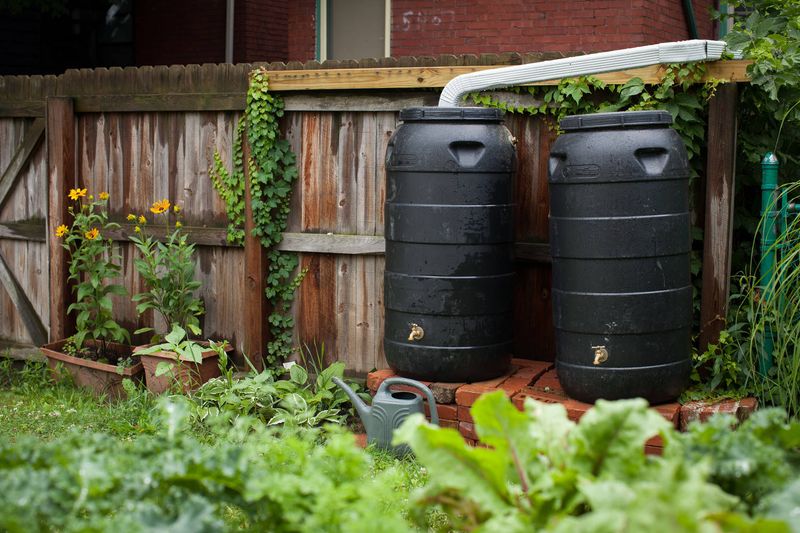
Before buying a barrel or rerouting a downspout, it helps to know roughly how much water your roof can actually deliver. A widely used planning estimate runs like this: multiply your roof’s drainage area in square feet by the rainfall amount in inches, then multiply by approximately 0.6.
That final number is a rough gallon yield before system losses.
As a concrete example, a 400-square-foot roof section draining to one downspout catching a half-inch rain event produces about 120 gallons on paper. NC DEQ notes that a 1-inch rain event produces roughly 600 gallons per 1,000 square feet of roof area, and that a typical quarter-inch event may fill a standard residential barrel.
In practice, actual yield falls short of the theoretical maximum.
Penn State Extension’s stormwater guidance explains that roof material, debris screens, first-flush diverters, and minor plumbing losses all reduce what reaches the barrel. A metal roof sheds water efficiently; an older asphalt shingle roof with a debris screen and a first-flush diverter in place may lose 20 to 30 percent more before the barrel sees a drop.
A standard 55- to 60-gallon barrel fills quickly in a decent rain and empties just as fast if several thirsty containers are drawing from it daily. EPA rainwater harvesting guidance reinforces that storage volume is a limiting factor, and that a barrel must be drawn down between storms to make room for the next rainfall.
Leaving a full barrel untouched while rain falls means runoff goes straight to overflow instead of into storage.
Matching that 55-gallon reserve to a realistic number of containers is the key planning step. Three or four medium ornamental pots in partial shade might draw one to two gallons total per day in mild fall weather.
That same barrel could last several days under those conditions, or run dry in a day if the setup includes six or eight large sun-exposed pots in a warm, windy spot. Running the estimate before committing to hardware tells you whether a single barrel is enough or whether a second barrel linked in series makes more sense.
Build containers that lose moisture more slowly
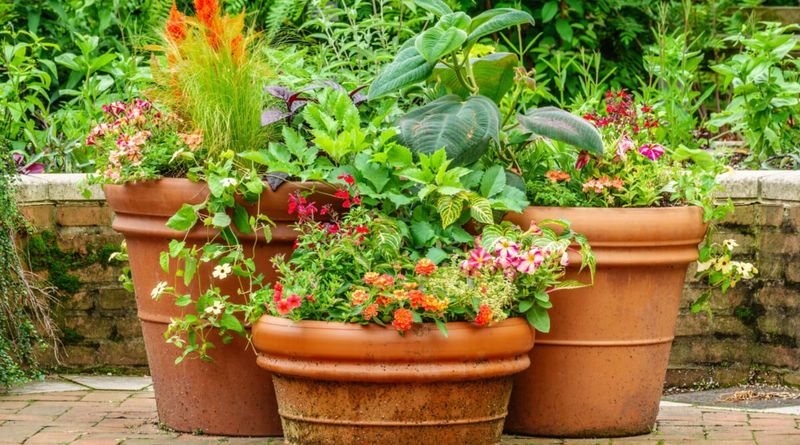
Cutting demand is just as valuable as increasing supply. Before adding any delivery equipment, gardeners who set up their containers to hold moisture longer get more mileage from every gallon stored in the barrel.
Container size is the single biggest lever. Larger pots hold more potting media, which means a larger moisture reservoir between waterings.
NC State Extension identifies small pots, dark-colored pots, porous materials like unglazed terra cotta, and full sun exposure as conditions that accelerate drying, while larger containers generally dry more slowly. When practical, swapping a 6-inch pot for a 12-inch pot serving the same plant can meaningfully stretch the time between waterings.
Drainage holes are non-negotiable. Good drainage prevents root rot and salt buildup, and a quality potting mix – not garden soil, which compacts and drains poorly in containers – supports both moisture retention and healthy root development.
One common misconception worth correcting: placing a gravel layer at the bottom of a container does not improve drainage. NC State Extension specifically warns against this practice, noting that it creates a perched water table that can leave the root zone saturated longer than intended.
Surface mulch is a straightforward addition that pays off quickly. Applying about 1 inch of bark mulch, pine needles, or a similar material across the potting-media surface slows evaporation noticeably, particularly during warm, breezy fall days.
NC State Extension research on mulches in container settings supports surface mulch as a moisture-retention tool, with approximately 1 inch representing a meaningful minimum depth. Keep the mulch about 1 inch away from plant stems to allow air circulation and prevent stem rot.
Placement also matters. Moving a container from a south-facing wall in direct afternoon sun to a spot that gets morning light and afternoon shade can cut daily water loss considerably without changing the plant, the pot, or the media.
These adjustments reduce how fast the barrel empties and extend the window during which stored rainwater is enough to keep plants healthy – but they do not replace the need to check moisture regularly, especially in small, dark, or porous pots where conditions can shift fast.
Install a secure, mosquito-resistant collection point
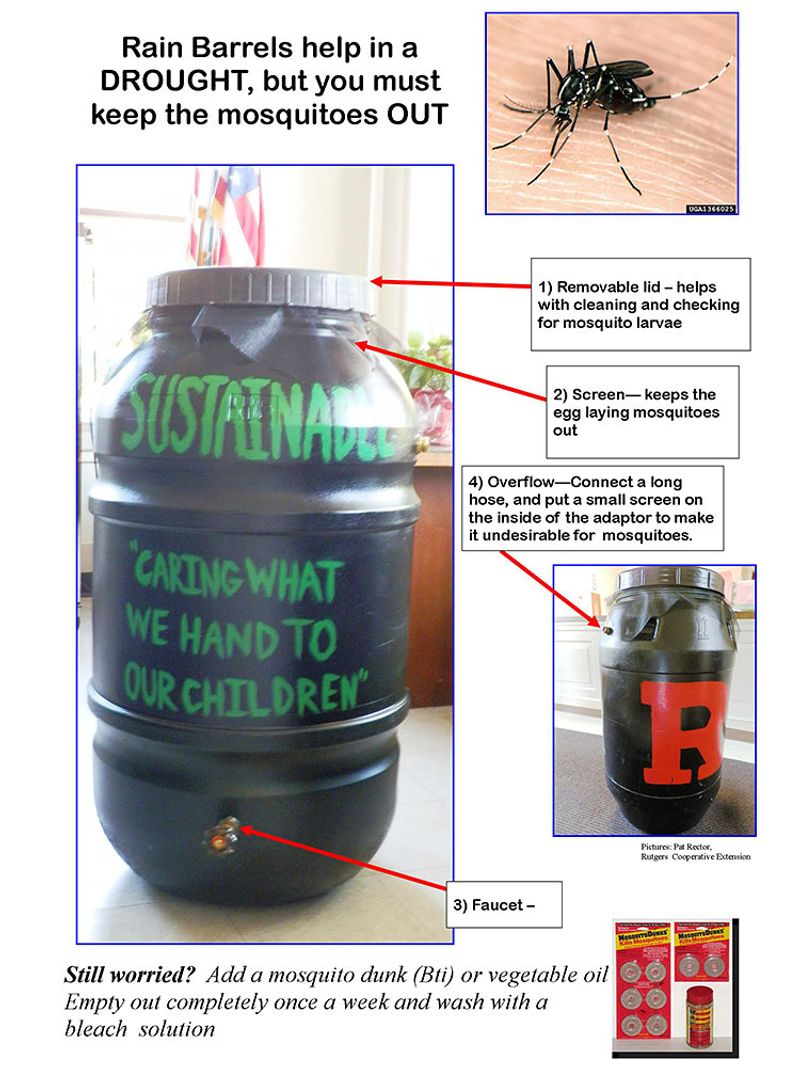
A rain barrel is only as useful as its physical setup. Getting the hardware right from the start prevents the most common problems: a tipped-over barrel, a clogged screen, standing water in the overflow, and uninvited mosquito breeding.
Start with a stable base. A full 55-gallon barrel weighs close to 460 pounds, and an unstable or uneven surface creates a genuine safety hazard.
Cinder blocks or a purpose-built stand work well, and elevation also matters for gravity-fed delivery, covered in the next section. University of Wisconsin Extension’s rain barrel guidance recommends a secure, level base and an overflow route that directs water away from the home’s foundation toward a suitable vegetated area, rain garden, or other appropriate drainage point.
A tight-fitting, opaque lid and a fine debris screen over the inlet are essential. Open barrels collect leaves, twigs, bird droppings, and anything else that falls from the roof, and they invite mosquitoes to breed in the stored water.
Keeping the screen clear and the lid sealed addresses both problems at once. UC Integrated Pest Management guidance on mosquitoes notes that even small amounts of standing water in containers, saucers, or open overflow components can support breeding.
Check fittings, the overflow outlet, and any saucers beneath containers regularly, especially after rain.
A first-flush diverter is a useful addition that routes the first portion of runoff – which carries the most accumulated roof debris – away from the barrel before the cleaner water that follows enters storage. This reduces sediment and organic matter in the barrel, which helps with filtration downstream.
First-flush diversion is a contamination-reduction measure, not a treatment system; the water remains non-potable.
On the legal side, North Carolina General Statute 153A-145 protects qualifying rainwater and cistern installations used for irrigation. Local governments retain authority to regulate installations for public health, safety, and nuisance concerns, so checking with your county or municipality before installing a barrel is a reasonable step, particularly if you plan a larger cistern or a more elaborate setup.
Match the delivery method to the garden’s size
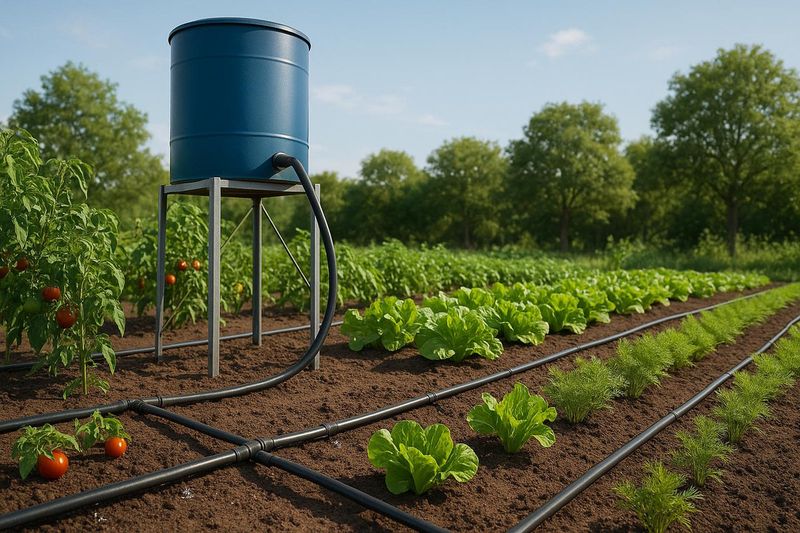
How water gets from the barrel to the containers is where many setups either work well or fall apart. Two practical options exist for a no-hose approach, and choosing between them comes down to how many containers you have, how close they are to the barrel, and how much setup time you want to invest.
The simplest and most dependable choice for a small container display is a barrel spigot and a watering can. Open the spigot, fill the can, carry it to the pot, and water at the base.
NC State Extension lists watering cans as fully compatible with rain-barrel delivery, and this method requires no tubing, no emitters, no pressure testing, and no filter maintenance beyond keeping the barrel screen clear. For three or four containers within easy walking distance of the barrel, it is hard to beat for reliability.
Gravity-fed drip irrigation makes sense when you want more automation or have containers spread across a wider area near the barrel. The system requires the barrel to be elevated enough to generate usable flow, a filter between the barrel outlet and the tubing, short tubing runs to each container, and emitters specifically rated for low-pressure operation.
Clemson Extension’s rainwater harvesting guidance explains that an elevated barrel typically provides enough pressure for a spigot, watering can, or compatible drip equipment, but often not enough for conventional soaker hoses, which are designed to operate at standard household hose pressure.
Standard drip emitters from a hardware store may also underperform or deliver unevenly at gravity pressure. Testing actual output at each emitter before relying on the system is not optional – it is the step that tells you whether each container is actually receiving water.
Maine Extension’s drip irrigation guidance recommends operating one low-flow zone at a time and matching the system to barrel height, capacity, proximity to containers, and plant demand. Longer runs, more emitters, and lower barrel elevation all reduce flow and can leave some containers short while others receive adequate water.
Either method works. The watering-can approach demands more physical effort but gives you direct control and a built-in moisture check each time you visit the pots.
The drip approach reduces trips but requires upfront setup, testing, and ongoing filter maintenance to keep sediment from clogging emitters.
Operate the system as a small, testable zone
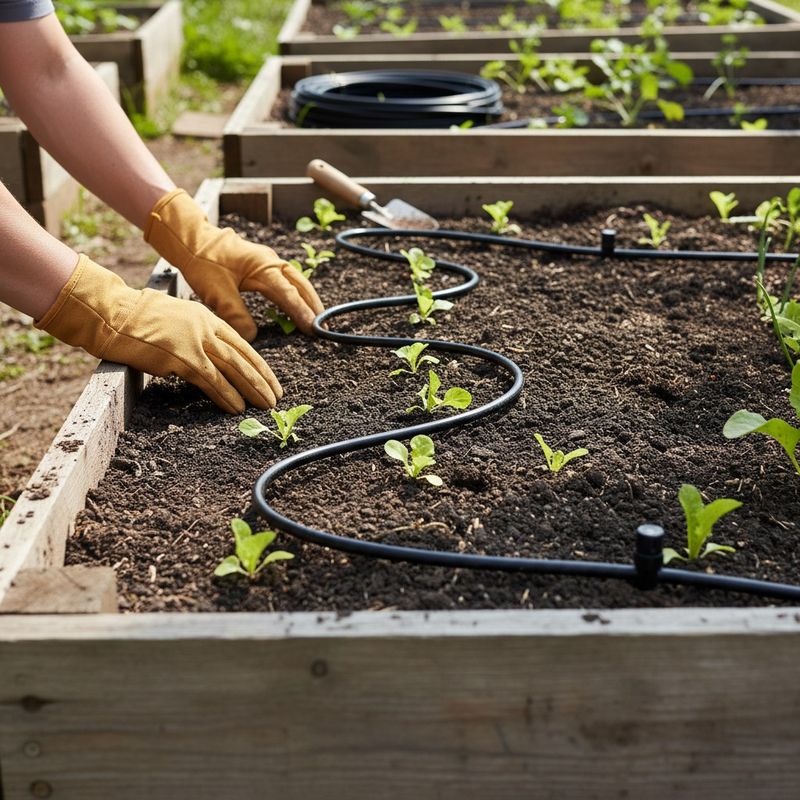
Setting up a barrel and running tubing to a few pots is only the first step. Getting consistent results means treating the whole arrangement as a small, observable system that you check and adjust rather than one you set and forget.
Keep tubing runs short and work with one zone at a time. Every additional foot of tubing and every added emitter pulls from the same limited gravity pressure, so splitting flow across too many lines reduces what each container actually receives.
Maine Extension recommends operating one low-flow zone at a time and confirming that output matches plant demand before expanding the system. Place emitters near the base of each plant so water reaches the root zone directly rather than wetting the media surface and evaporating.
Sediment and algae are the most common reasons gravity drip systems underperform over time. EPA rainwater harvesting guidance notes that stored roof runoff can carry particulates that clog emitters, making a filter between the barrel outlet and the tubing a necessary part of the setup rather than an optional upgrade.
Clean the filter on a regular schedule, not just when flow seems reduced.
Moisture checks remain part of the routine even when the drip system is running. NC State Extension recommends pushing a finger 2 to 3 inches into the potting mix; if that layer is dry, water thoroughly until water flows from the drainage holes.
Relying only on surface appearance is unreliable, especially with surface mulch in place, which can look damp on top while the root zone beneath is dry.
University of Minnesota Extension’s rain barrel guidance recommends watering at the base of plants and, when practical, doing so in the morning. Morning delivery reduces the time foliage stays wet and lowers the risk of leaf diseases encouraged by prolonged moisture on plant surfaces.
Empty any saucers after watering to prevent waterlogging, salt accumulation, and standing water that could support mosquito breeding. These steps together turn the system from a piece of equipment into a repeatable routine with predictable results.
Keep untreated roof runoff with ornamental plants
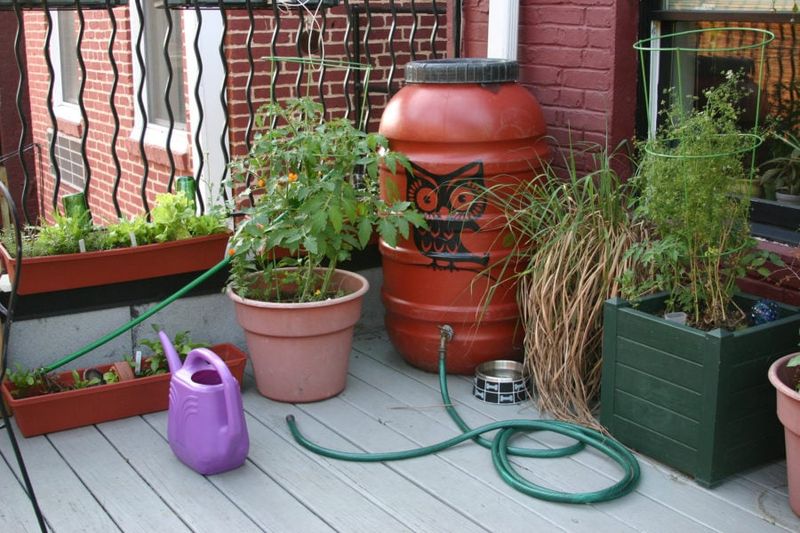
Rooftop runoff is a reasonable irrigation source for ornamental containers, but it is not treated water, and treating it as equivalent to tap water creates real safety risks when edible plants are involved.
EPA guidance on rain barrels is direct: water collected from roofs is non-potable and can contain bird-dropping bacteria, debris, and chemicals associated with roofing materials. The specific contaminant mix depends on roof type, age, surrounding tree cover, local bird and wildlife activity, and how long water has sat in the barrel.
Assuming the water is clean because it came from rain is not a safe baseline.
For ornamental containers, pansies, mums, ornamental kale, marigolds, and similar fall plants, this water is appropriate and effective. The risk profile changes when herbs, leafy greens, root vegetables, or raw-eaten fruit are in the mix.
University of Minnesota Extension advises against using untreated rooftop water directly on produce eaten raw, and for good reason. A peer-reviewed study on rooftop runoff and microbial risk found that some samples failed FDA microbial standards for irrigation water, with risk varying by roof material and how the water was applied.
If edible plants share the same patio, use tap water for those pots and reserve the barrel supply for the ornamentals.
A first-flush diverter reduces the volume of debris-laden initial runoff that enters the barrel, and it is a worthwhile addition to any setup. What it does not do is make the stored water potable or certify it as pathogen-free.
Think of it as a pre-filter that improves quality at the margins rather than a treatment system.
Mosquito prevention deserves a repeat mention in this context. UC IPM mosquito guidance notes that even small volumes of standing water are enough for breeding.
Keep the barrel sealed, the overflow routed and covered, and every container saucer emptied after each watering. A barrel that collects water responsibly but leaves open saucers sitting full underneath the pots has solved one problem and created another.
Recognize when the reserve cannot keep up
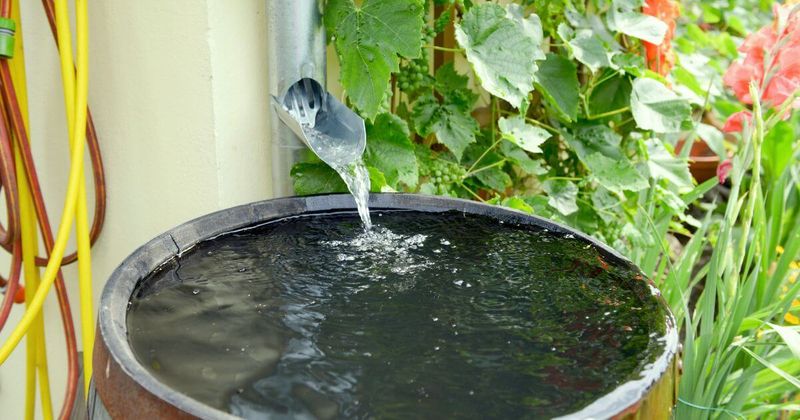
Knowing when the system is working is useful. Knowing when it is not is what keeps plants alive.
Several conditions can push water demand past what a single 55- to 60-gallon barrel can supply. NC State Extension identifies heat, wind, direct sun, low humidity, small pot size, dark pot color, porous container material, and active plant growth as factors that increase how quickly containers dry.
A warm, breezy October day in the Piedmont can dry out a small terra cotta pot as fast as a summer afternoon. Fall does not automatically mean low demand.
On the supply side, a barrel that was full after the last storm may be empty before the next one arrives. NC DEQ describes rain barrels as appropriate for small irrigation demands, not as a whole-yard reserve.
If you have added more containers than the barrel can realistically supply, or if a dry stretch extends beyond what stored water can cover, the barrel’s limitations become apparent quickly.
Gravity-fed drip systems add their own constraints. Clemson Extension notes that gravity pressure drops as elevation decreases and as tubing runs lengthen, which means containers at the far end of the line may receive less water than those closest to the barrel.
Maine Extension recommends keeping zones small and testing output rather than assuming every emitter is delivering equally.
When the system falls short, the response is practical: reduce the number of containers in the zone, move pots to a less demanding location, refill the barrel from a tap when local rainfall is insufficient, or hand-water with a can before plants show stress. Early action – checking moisture before leaves wilt rather than after – protects plants and keeps the system worth running.
The strategy works through matching storage, delivery, and demand honestly. Local fall conditions, not the setup itself, determine whether supplemental watering stays on the table.