
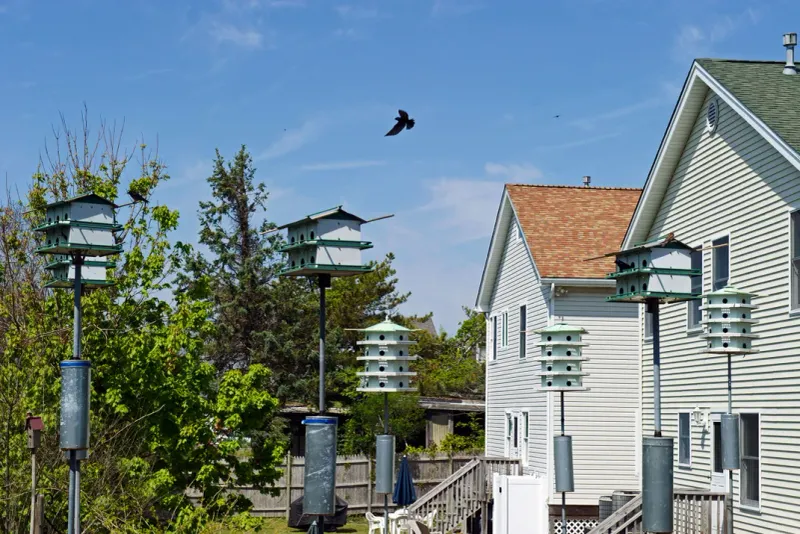
Purple Martins are one of the most eagerly watched signs of spring across Central Texas, and plenty of homeowners dream of hosting a colony in their own yard. Fall turns out to be a genuinely useful time to get housing ready, but it does not guarantee that birds will show up come spring.
Understanding what installation actually does, and what it does not do, puts you in a much better position to attract martins over time.
Install in fall, open in spring
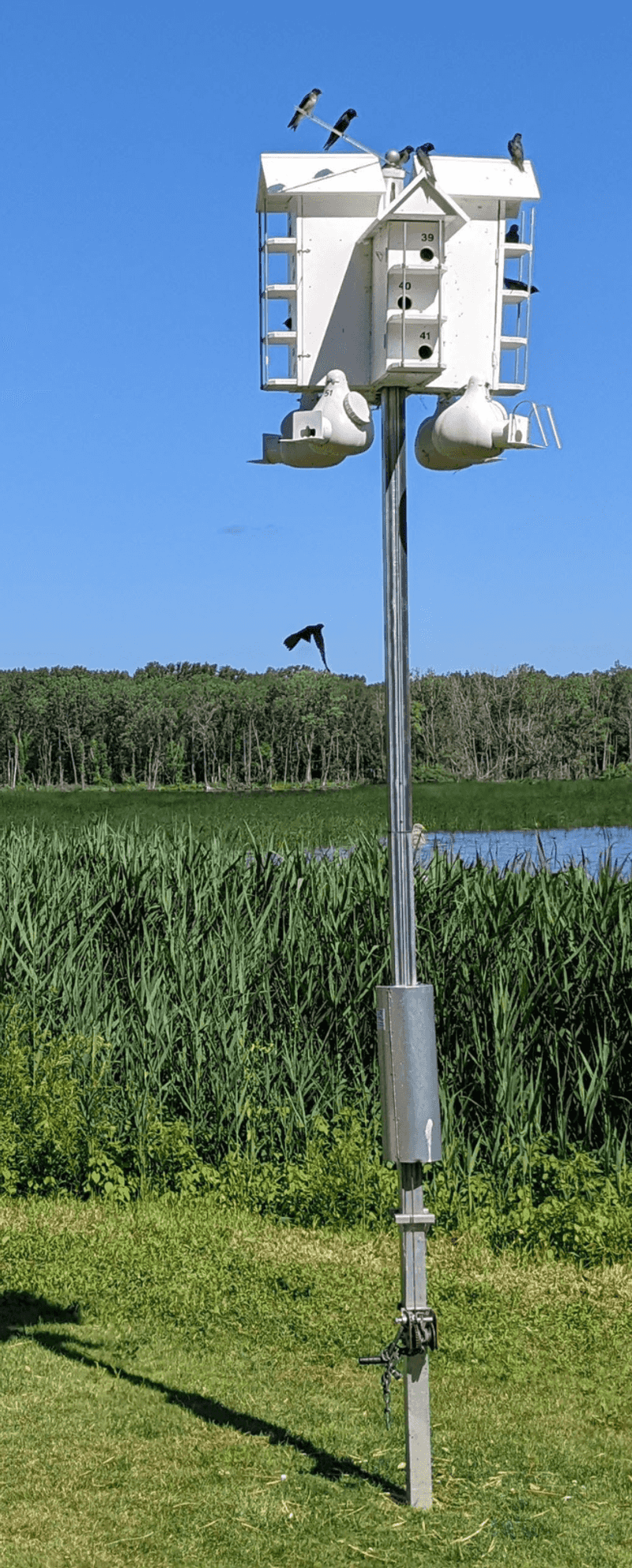
Fall gives Central Texas homeowners a practical head start on martin housing, but the work you do now and the moment you open the entrances in spring are two separate decisions. Mounting the pole, leveling it, adding predator guards, and confirming you have an open flight path are all tasks that go more smoothly before the spring rush.
What fall installation does not do is cause a new colony to claim the site before the first birds head north.
The popular image of a scout flying ahead of the flock, finding your freshly hung house, and then racing back to lead the colony to your yard is folklore. The Purple Martin Conservation Association’s terminology guide identifies this “scout” story as a common misconception.
Adult martins arriving early in spring are generally returning to breeding locations they already know, not prospecting for new housing to claim on behalf of a group.
At a brand-new site, the birds most likely to move in are second-year birds, often called subadults, who have not yet established a breeding location. PMCA’s timing guidance notes that subadult arrival typically begins weeks after the earliest adults appear, which has direct consequences for when you should open a new house.
Closing entrances during the nonbreeding season also matters: Texas Parks and Wildlife’s Purple Martin management guide recommends keeping entrances plugged outside the breeding season to prevent competing birds from settling in.
Think of fall as the construction phase. Secure the pole so it will not shift in spring storms, attach the baffle, verify that compartments open for inspection, and confirm the PMCA housing standards are met.
Then keep the entrances closed until the right spring window arrives for your specific situation.
Use local arrival timing to decide when the house opens
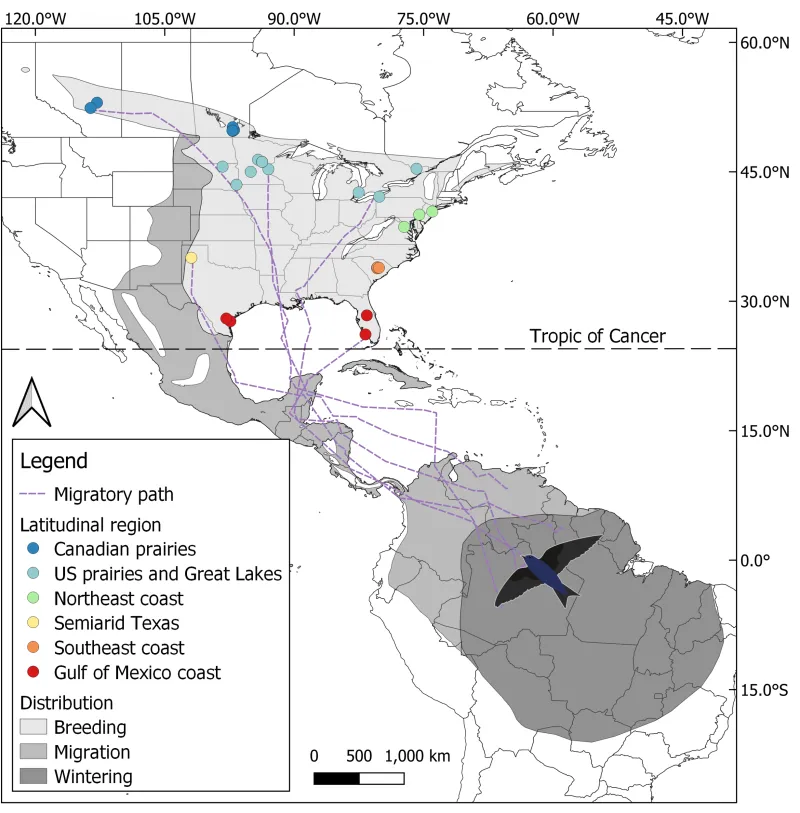
Texas is a big state, and Purple Martin arrival timing shifts considerably from one region to the next. Texas Parks and Wildlife’s migration timing data places the broad martin migration through Texas from mid-February to early March, but that range covers a lot of ground.
The Texas Breeding Bird Atlas reports that arrivals in South Texas can begin as early as mid-January, while birds in the northern Panhandle may not appear until late March. Central Texas sits somewhere in between, and no single calendar date applies reliably to every yard in the region.
Rather than picking a fixed date, check local birding groups and the PMCA scout-arrival map, which collects real-time reports from landlords across the country. Those community observations give you a far more accurate read on when birds are actually moving through your area than any published average.
The opening strategy also depends on whether your site is new or established. PMCA’s timeline resource explains that adult birds arrive before subadults, and subadult arrival commonly begins four to twelve weeks after the earliest adults.
Because subadults are the group most likely to colonize a new site, the Texas Parks and Wildlife management guide recommends making new-site housing available roughly four weeks after the local average return date, not when the first adult martins pass through.
An established site with a history of successful nesting works on a shorter lead time, generally one to two weeks before the local average return date. Opening a new house too early mostly gives House Sparrows and European Starlings a chance to move in before any martins arrive.
Patience with the calendar, combined with attention to what local birders are actually reporting, is a more reliable approach than following a single statewide rule.
Give approaching martins an open flight path
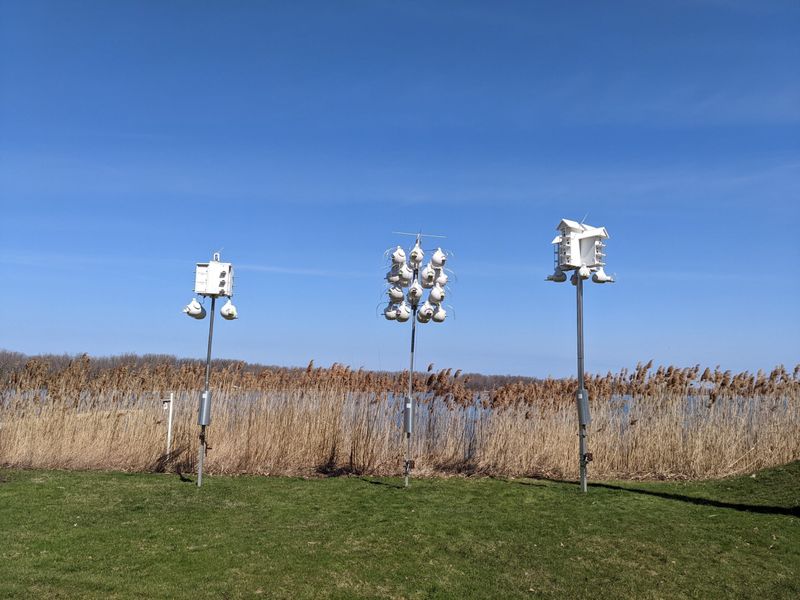
Location is often the factor that separates a productive martin site from an empty one. Before you commit to a spot, walk your yard and look at it the way a martin would: these birds need a clear, unobstructed approach from multiple directions.
PMCA’s housing standards recommend placing martin housing in the most open area available, at least 40 feet from trees or buildings and ideally closer to 60 feet, with the pole height set somewhere between 12 and 20 feet.
Proximity to human activity also matters. Martins in Central Texas have a long history of nesting near people, and housing placed within roughly 100 feet of a house or area with regular foot traffic tends to perform better than housing tucked away at the far edge of a property.
The Texas Parks and Wildlife management guide reports the highest occupancy rates when housing is at least 40 feet from trees or structures taller than the martin house itself.
That 40-to-60-foot guideline is a strong practical target, not a hard biological law. The PMCA helpful-hints guide acknowledges that landlords in southern locations sometimes attract martins with housing placed somewhat closer to trees than the general recommendation allows.
If your yard simply does not have a spot that clears 40 feet in every direction, aim for the most open position available rather than abandoning the project. The Texas Breeding Bird Atlas account for Purple Martins confirms that backyard colonies in Texas are commonly found in conspicuously open situations, which tells you what the birds prefer even when a perfect site is hard to find.
Assess the yard in fall while leaves are still on the trees so you can see which areas stay genuinely open and which ones will feel enclosed once the canopy fills back in during spring.
Choose housing that supports safe maintenance
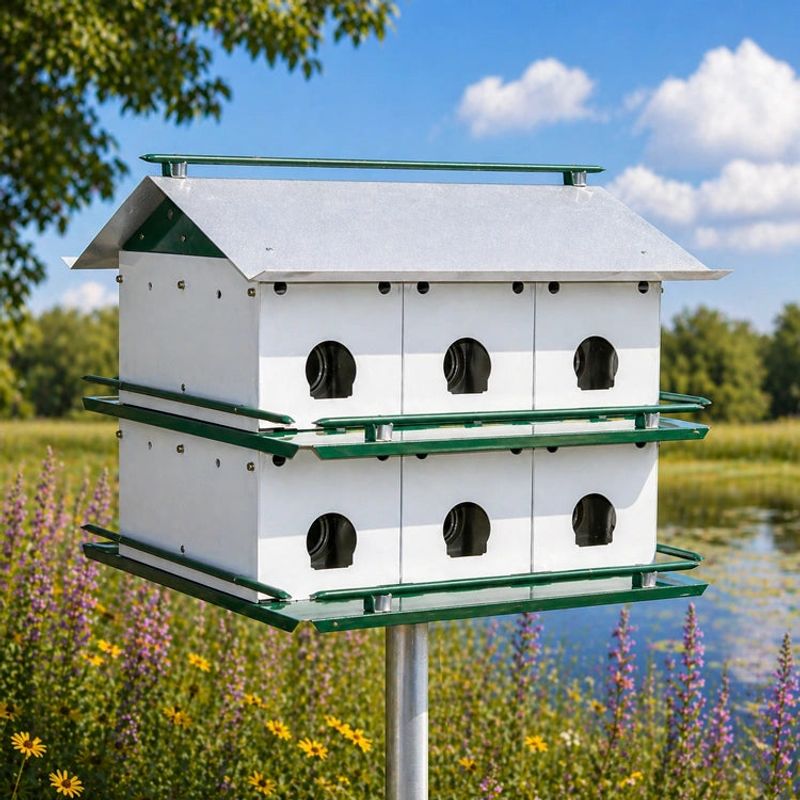
A Purple Martin house is a managed system, not a decorative ornament. The choices you make about pole type, compartment design, and predator protection in fall will determine how easily you can care for the colony once birds arrive in spring.
Getting these details right before installation is much simpler than retrofitting them later.
Start with the pole. A telescoping pole or a winch-operated system lets you lower the housing safely for inspections, cleaning, and repairs without climbing a ladder above martin height.
PMCA’s housing standards document emphasizes that accessible housing is one of the most important design features a landlord can choose, because weekly nest checks are a core part of responsible management. Fixed poles that require ladders or scaffolding make that kind of regular attention far less likely to happen.
Compartment design deserves equal attention. Look for housing with doors or panels that open fully, compartments large enough to allow inspection without disturbing eggs or nestlings, and entrances that can be plugged or closed during the nonbreeding season.
White or light-colored exteriors help reflect solar heat, which matters in Central Texas summers when compartment temperatures can become dangerous to nestlings. The PMCA FAQ notes that larger compartments also offer nestlings some protection from predator access through the entrance hole.
Predator protection belongs in the initial setup, not as an afterthought after a snake or raccoon visits the colony. A pole-mounted baffle positioned correctly below the housing is the most commonly recommended climbing-predator guard.
The Texas Parks and Wildlife management guide identifies snakes, raccoons, and cats as significant threats to adults and nestlings alike. Installing the baffle in fall, before any birds are present, means there is no risk of disturbing an active colony during a modification.
Manage the house after martins arrive
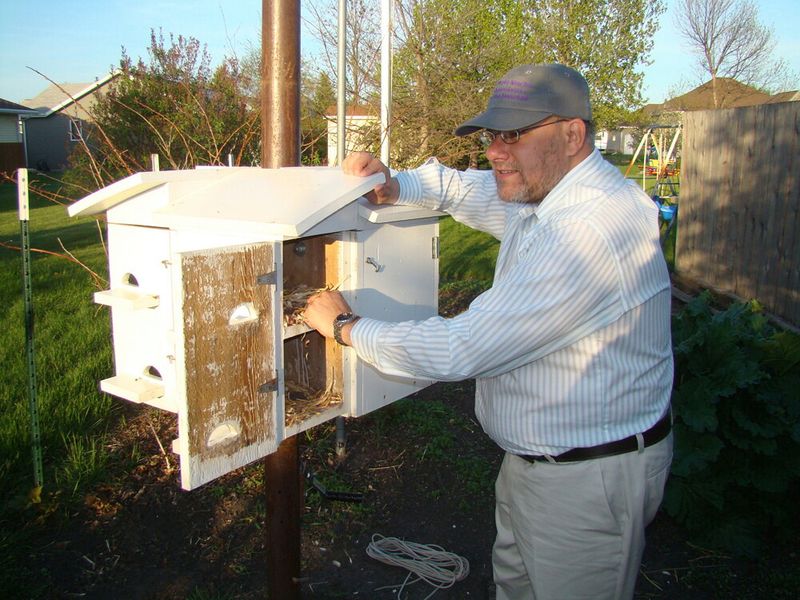
Once martins settle into your housing, the real work begins. Weekly nest checks are the single most useful habit a martin landlord can develop.
Lowering the housing, opening the compartments, and briefly noting what is inside gives you an early warning on nearly every problem that can affect a colony: wet or infested nests, predator damage, competitor occupation, and nestlings in trouble.
PMCA’s nest-check guidance explains that martins tolerate regular human attention well and that brief, careful inspections do not cause adults to abandon the nest. The key is working quickly and calmly, replacing the compartment covers securely before raising the housing back up.
Wet nests can be replaced with dry nesting material, and parasites such as blowfly larvae can be reduced by replacing infested nesting material during checks.
House Sparrows and European Starlings are the two competitors that cause the most harm. Both species can occupy martin compartments, destroy martin eggs, injure or kill adults, and significantly reduce a colony’s reproductive success.
The Texas Parks and Wildlife management guide recommends removing House Sparrow and European Starling nests promptly and using starling-resistant entrance designs to reduce their access. Trap-based management of House Sparrows is an established approach used by experienced martin landlords, and the PMCA FAQ provides detail on methods that experienced landlords use.
Any trapping or control activity involving starlings must follow current regulations. USDA APHIS guidance on starlings and blackbirds specifically advises checking applicable state and local laws before taking action, because requirements vary.
The broader point is that responsible martin housing requires consistent attention throughout the breeding season, not just a successful spring opening.
Protect native birds and follow wildlife rules
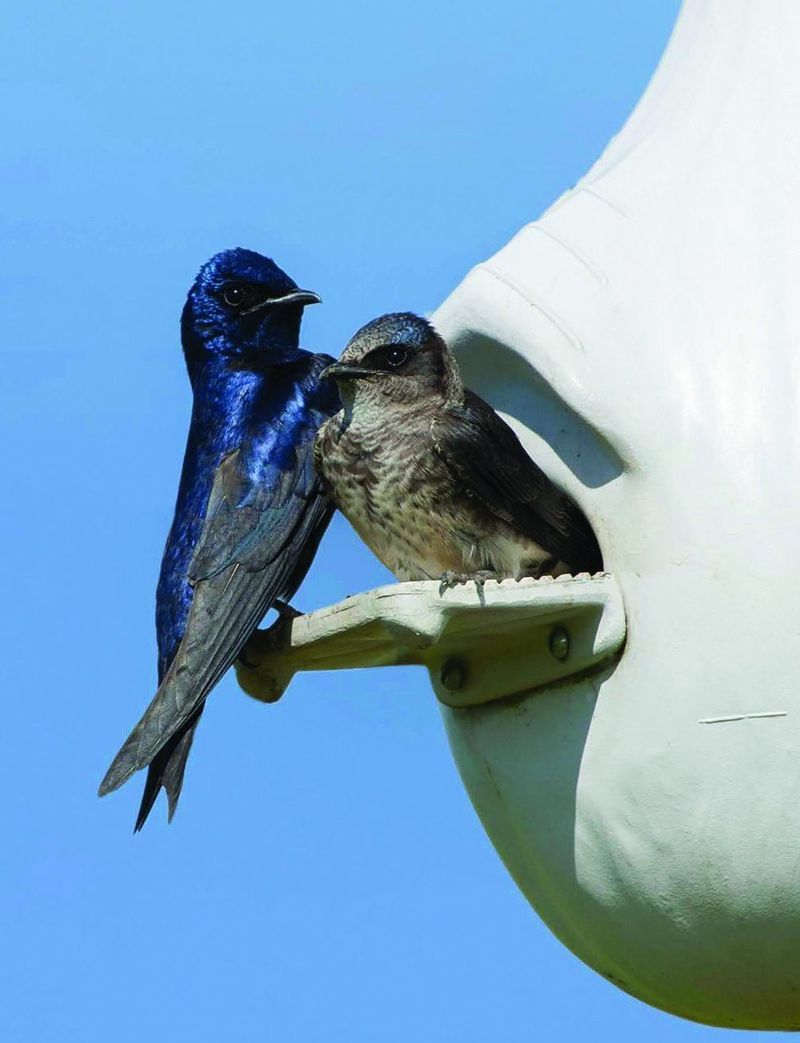
Before removing any nest from your martin housing, identify who built it. That step is not optional.
U.S. Fish and Wildlife Service guidance on bird nests makes clear that active nests, eggs, and young of native birds are generally protected under federal law.
Pulling out a nest without knowing the species first can create a legal problem, even if the intent was to protect martins.
Native cavity nesters such as Eastern Bluebirds, Tree Swallows, Carolina Wrens, and Tufted Titmice may investigate martin housing. These birds and their nests deserve a different response than the one appropriate for House Sparrows or European Starlings.
Texas Parks and Wildlife’s list of protected wildlife species and Texas Parks and Wildlife Code Chapter 64 govern what actions are and are not lawful in Texas regarding native birds. When in doubt, contact TPWD or a licensed wildlife rehabilitator before disturbing any active nest.
House Sparrows and European Starlings are not protected under the federal Migratory Bird Treaty Act, and Texas allows more management flexibility for these invasive species. Even so, any trapping or lethal control must comply with current federal, state, and local requirements and must be carried out in a way that does not endanger pets, children, martins, or other native wildlife.
USDA APHIS advises confirming applicable state and local laws before using any starling-control method.
The PMCA FAQ offers practical guidance on competitor management that has been developed specifically for martin landlords and stays within legal and ethical boundaries. Starting there before taking any action is a reasonable first step for anyone new to managing martin housing.
Treat a repeat return as a possibility, not a promise
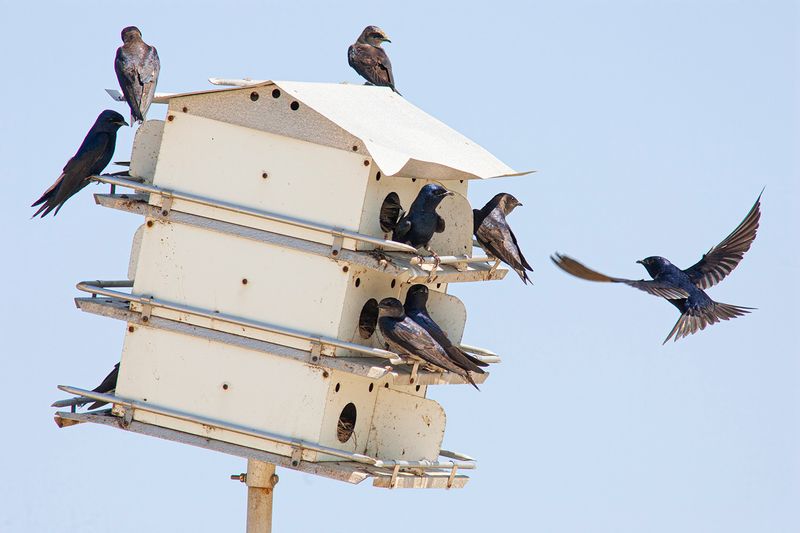
Once martins have successfully nested at your site, the odds of seeing them again the following spring improve considerably. PMCA’s timing resource notes that site fidelity is a real and documented tendency in Purple Martins, meaning birds that raised young at a location are likely to return to it.
That is the repeatable annual return worth working toward, and it is a realistic outcome for an established, well-managed site.
A new house at a new location is a different situation entirely. It may attract colonizers in its first season, or it may sit empty for a year or two, or it may never host a colony if the placement, predator pressure, or competitor load is too high.
Weather, food availability, and what happened at the site in the previous breeding season all play into whether birds come back. PMCA’s press materials are candid about the fact that no yard is guaranteed occupancy every year.
The practical sequence is straightforward: secure and prepare the housing this fall, use the PMCA scout-arrival map and local reports to choose the right spring opening window for your site, and then manage the housing consistently once birds arrive. Each successful breeding season builds the foundation for the next one.
Getting the setup right is the part you control; the martins decide the rest.