
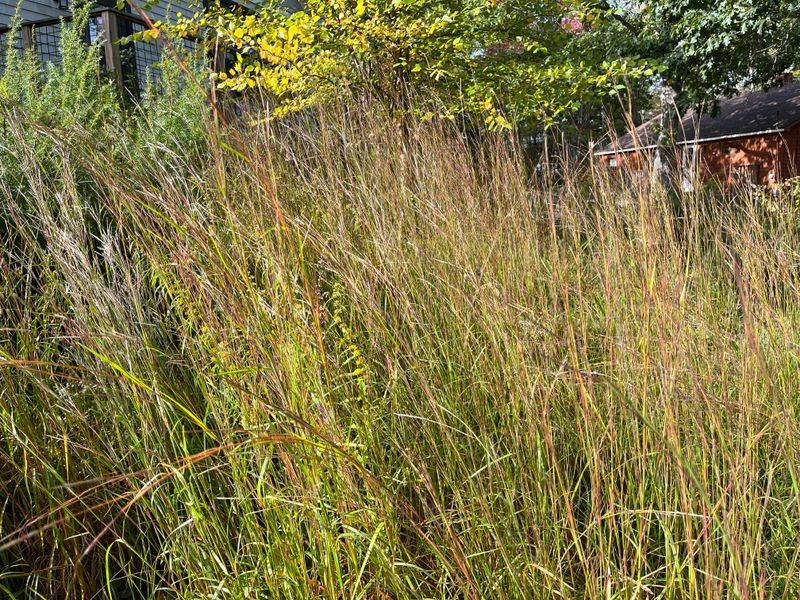
Most bed-edge plants in North Carolina look great in a nursery pot and fall apart by August, flattened by summer storms, cooked by Piedmont heat, or slowly strangled by clay. Little bluestem, a native warm-season bunchgrass called Schizachyrium scoparium, is an often-overlooked candidate that handles those conditions better than most.
It won’t win every storm, but planted in the right spot, it holds a tidy, upright clump from summer all the way through winter when almost nothing else does.
Little bluestem is a strong candidate for a tough mid-height edge
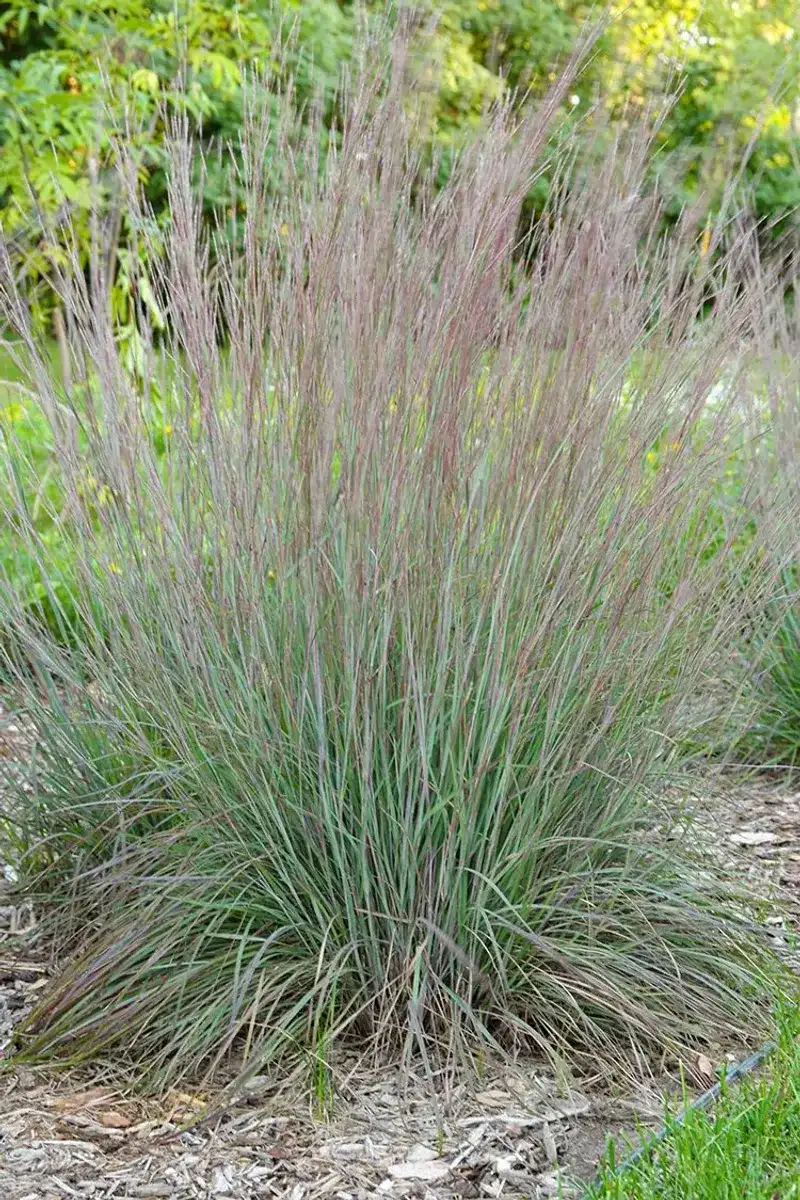
Schizachyrium scoparium, commonly called little bluestem, is a perennial warm-season bunchgrass native to all three of North Carolina’s major regions: the Coastal Plain, the Piedmont, and the Mountains. NC State Extension’s plant toolbox lists it as tolerant of clay, heat, humidity, drought, and salt, and describes its habit as naturally narrow, erect, and clumping, with documented use in border plantings and low-maintenance landscapes.
Planning dimensions run roughly 2 to 4 feet tall and 1.5 to 3 feet wide at maturity, which immediately tells you something important about how to use it.
Those dimensions place little bluestem in mid-height or back-of-edge territory rather than a low front-edging strip. If you’re imagining a tight row of 12-inch plants at the very front of a bed, this grass is not the right fit.
Set it where it can anchor the middle or rear of a planting, repeating at intervals to create a rhythm without crowding shorter companions in front of it.
The phrase “without flopping” in this article’s title needs a clear definition. Little bluestem’s narrow, self-supporting clumps give it a structural advantage over many tall, soft-stemmed perennials, but no plant is immune to heavy rain or poor site conditions.
What the evidence actually supports is a greater likelihood of retaining a useful, upright clump when the site delivers full sun, adequate drainage, restrained fertility, and enough space for each plant to develop at its natural width. Think of it as a plant with a strong tendency toward good form rather than a guaranteed storm-proof structure, and you’ll set realistic expectations before the first summer squall rolls through.
Its upright habit helps create a cleaner border rhythm
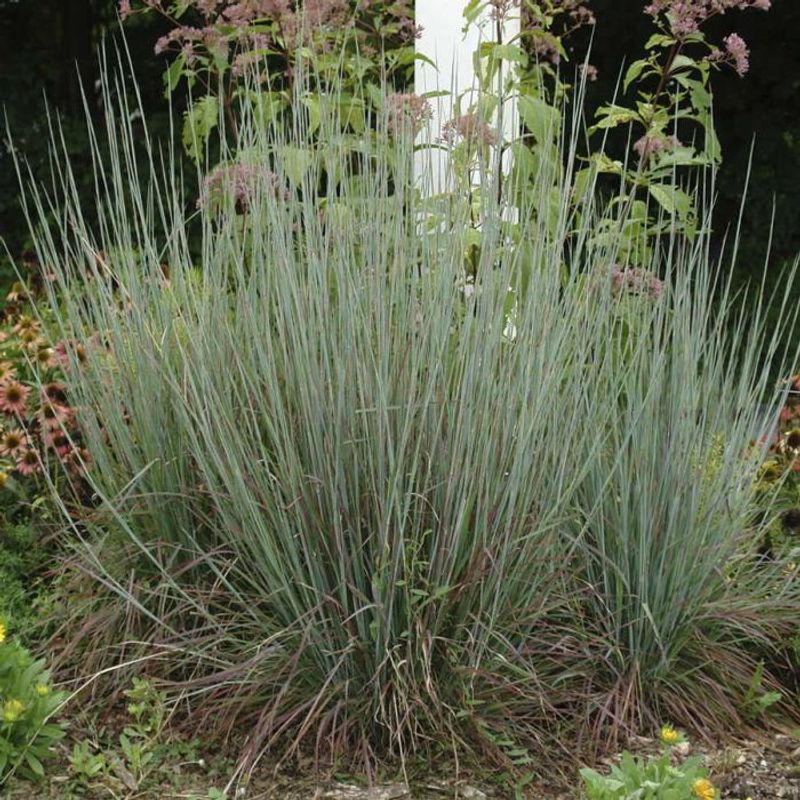
Bunchgrasses earn their place in a border by doing something flowering perennials often can’t: they hold a distinct vertical form through heat, rain, and humidity without sprawling into neighboring plants. Little bluestem’s clumping growth pattern creates a reliable repeated element in a mid-height planting, and that visual consistency is genuinely useful when summer storms flatten everything around it.
The grass does not spread aggressively by runners, so each clump stays where you put it rather than migrating into the bed.
That said, the upright habit is not unconditional. Virginia Cooperative Extension’s native plants for winter interest resource specifically notes that heavy rain can flatten little bluestem, and that rich soil, shade, excess watering, and over-fertilization all increase the tendency to lodge.
A plant growing in too much shade stretches upward looking for light, producing taller, weaker stems that are more likely to lean or collapse under a downpour. The same thing happens when soil is too fertile or too moist: lush, fast growth sacrifices stem stiffness.
Cultivar choice can shift the odds in your favor. NC State Extension lists ‘Standing Ovation’ among available cultivars, and Virginia Extension identifies it as a selection reported to hold an unusually upright habit through the growing season.
For a more formal border where clean vertical lines matter, ‘Standing Ovation’ is worth seeking out at a native plant nursery. Understand, though, that cultivar performance varies by nursery source, regional ecotype, and your specific site conditions, so it is a promising option rather than a guaranteed outcome.
The practical takeaway is straightforward: give little bluestem full sun, keep fertility and moisture in check, and choose an upright cultivar when you can find one. Those decisions collectively improve your chances of a border that holds its shape from July through February.
Clay works only when the planting bed drains

Clay tolerance is one of little bluestem’s most advertised qualities, and it is real, but it comes with a condition that matters enormously in North Carolina yards: the clay has to drain. NC State Extension’s plant profile lists clay as a tolerated soil texture while also listing good drainage as a cultural requirement, and those two facts belong together every time this plant is recommended.
The distinction between clay tolerance and waterlogging tolerance is not a fine point. Saturated, compacted soil deprives roots of oxygen regardless of what plant is growing in it.
Little bluestem planted in a low spot that holds standing water after a summer storm, or in a compacted area where runoff puddles and sits, is likely to underperform or fail even though the soil texture is technically within its listed tolerance. Before planting, check whether your bed sheds water within a few hours of a heavy rain or whether it stays soggy for a day or more.
If your planting area is compacted, the recommended fix is to incorporate organic matter across the entire bed rather than digging individual holes and amending them in isolation. NC State Extension’s soils and plant nutrients guidance explains that amending only the planting hole can actually create a bathtub effect, trapping water around the roots.
Working compost or other organic matter across the full planting footprint improves structure more broadly and gives roots somewhere to go.
One common mistake to avoid: adding small amounts of sand to clay soil. That approach can make the texture worse, not better, by filling pore spaces without improving drainage.
Organic matter is the right amendment for compacted beds. Also, never work clay when it is wet.
Tilling or digging saturated clay compacts it further and destroys the soil structure you are trying to improve. Wait until the bed passes a simple squeeze test: a handful of soil should crumble rather than hold a slick, moldable shape before you start working it.
Use full sun and mature-width spacing to protect the shape
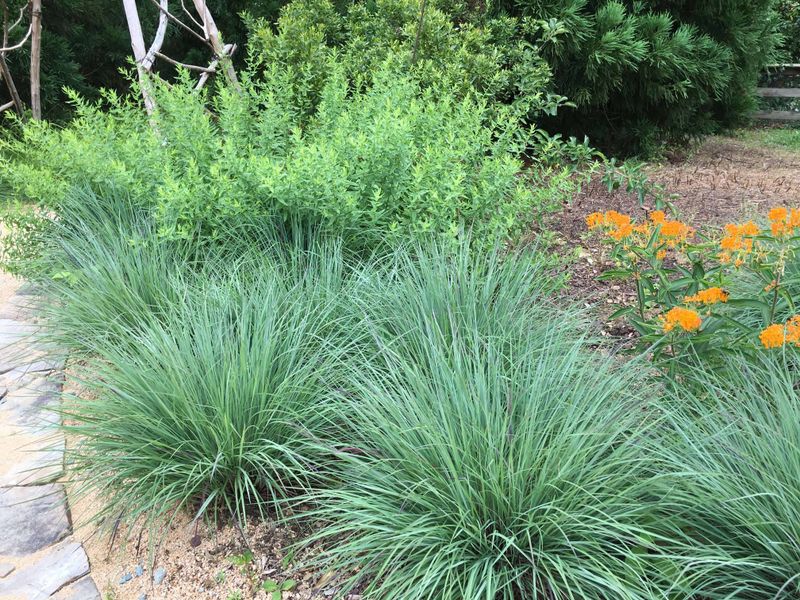
Sun exposure is not a minor preference for little bluestem; it is the single most important site factor for maintaining an upright clump. Full sun means at least six hours of direct sunlight daily, and more is generally better for this grass.
A bed that receives morning shade and afternoon sun, or that sits near a tree line that casts shadows through part of the day, may not deliver enough light to keep the stems stiff. In lower light conditions, the grass stretches toward available sun, producing taller and weaker growth that is far more likely to lodge during a heavy summer rain.
Deep shade, damp low spots, and the north-facing sides of structures are poor matches for this plant. The same upright habit that makes little bluestem useful in a sunny border becomes unreliable in compromised light.
If your bed gets fewer than six solid hours of sun, a different plant will serve the edge better.
Spacing deserves the same careful attention as sun exposure. NC State Extension’s plant profile gives a mature width of approximately 1.5 to 3 feet depending on cultivar and conditions, and that range should drive your spacing decisions rather than the size of the plant at purchase.
Setting little bluestem at 18-inch centers because the nursery pot is small will produce a crowded, competitive planting within two or three seasons.
The right spacing depends on what you want the finished edge to look like. If you prefer visible individual clumps with some breathing room between them, space plants at or slightly beyond their expected mature width.
If you want a more continuous edge rhythm, you can close the gap slightly, but allow enough room that each plant can develop its full natural form without competing for air circulation. Crowded clumps trap moisture and can develop center die-out or disease pressure, which undermines the tidy edge you were trying to create in the first place.
Check the mature size listed for the specific cultivar you purchase rather than relying on general species averages, since ‘Standing Ovation’ and other named selections may differ from the straight species.
Establish the roots before asking for drought tolerance
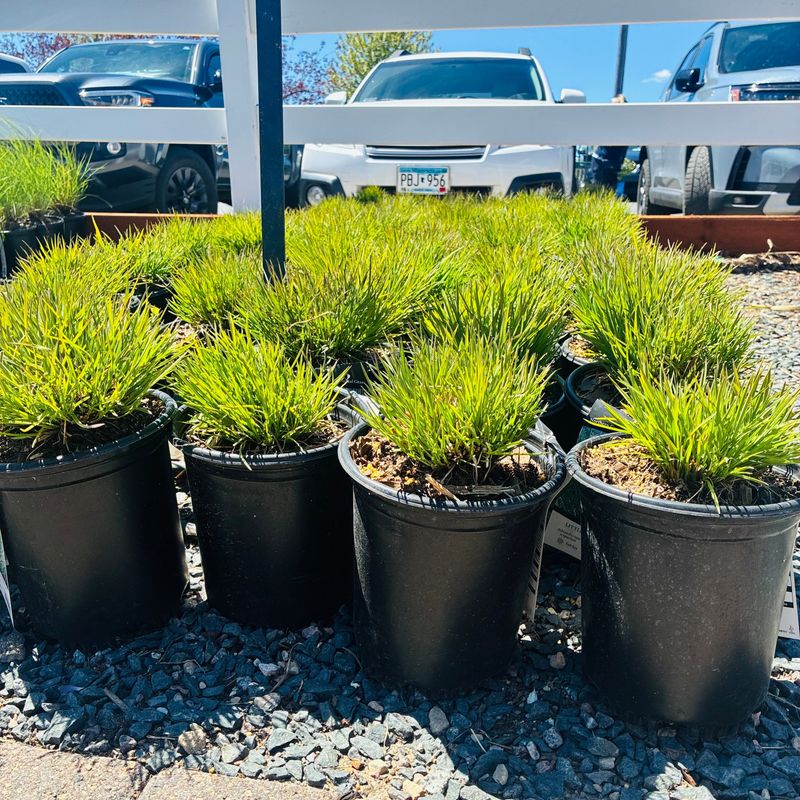
Drought tolerance is one of little bluestem’s most appealing traits for North Carolina gardeners tired of babying plants through August, but that tolerance kicks in after establishment, not on planting day. New plants need consistent moisture for the first several weeks while their root systems develop and anchor into the surrounding soil.
Skipping that initial watering because you know the plant is “drought tolerant” is one of the most reliable ways to lose it before it ever gets a chance to prove itself.
A practical first-season routine looks like this: water thoroughly at planting, then check soil moisture every few days and water again before the soil dries out completely. You are not trying to keep the soil wet; you are preventing it from drying out enough to stress roots that haven’t yet spread beyond the original root ball.
As the weeks pass and the plant puts on visible new growth, you can gradually extend the interval between waterings and let the plant start adapting to the site’s natural moisture cycle.
Mulch is a reliable tool during establishment. NC State Extension’s native plants handbook recommends a 2 to 3-inch mulch layer for native plantings to conserve moisture and suppress weeds.
Keep the mulch pulled back from the crown of each plant so the base stays dry and air can circulate. Piling mulch against the crown invites rot and can cause exactly the kind of crown damage that kills an otherwise healthy grass.
Fertilizer is a separate question that most gardeners answer too quickly. Do not automatically apply a balanced fertilizer at planting or in subsequent seasons.
Excess nutrients encourage the kind of lush, fast, soft growth that increases flopping risk. Let a soil test and the plant’s actual performance guide any nutrient decisions.
Virginia Extension’s native plants resource reinforces this point directly, noting that rich soil and over-fertilization make flopping more likely, not less. Once the plant is established and performing well, the annual maintenance task is straightforward: cut it to the ground in late winter or early spring, before new growth emerges, to clear away the previous season’s dried stems and make room for fresh shoots.
Expect stronger color and structure from summer into winter
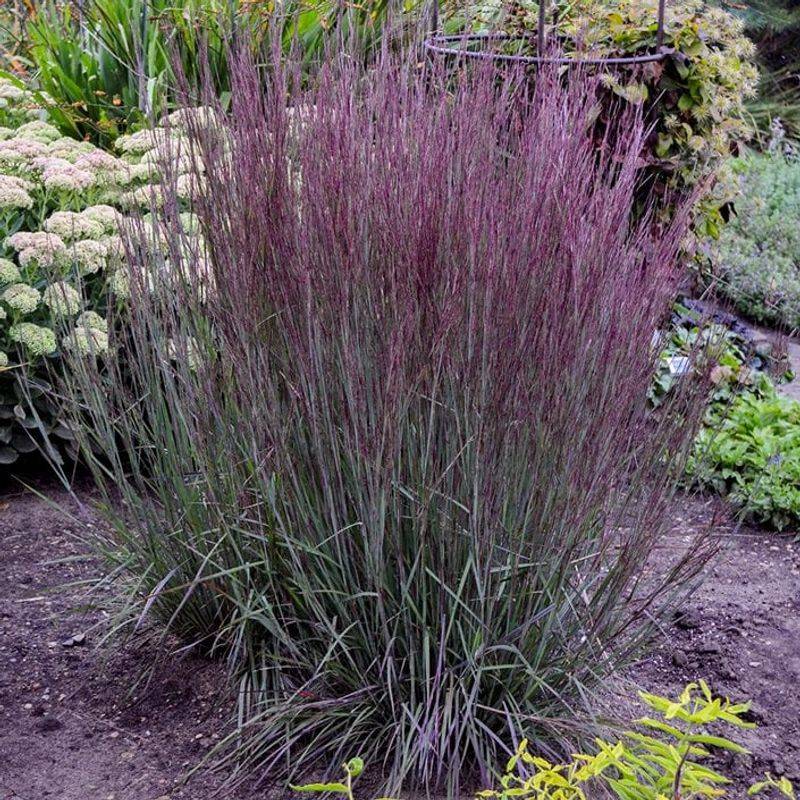
Little bluestem’s seasonal calendar runs differently from most of the plants sharing a North Carolina border with it. As a warm-season, deciduous grass, it emerges later in spring than cool-season plants and will not provide the lush green fullness that some gardeners expect at the front of a bed in March or April.
A newly planted bed can look sparse early in the year, and that is normal rather than a sign of failure.
The payoff begins in earnest during summer, when the blue-green foliage fills out and the grass settles into its upright form. NC State Extension’s plant profile describes yellow-orange to copper fall color and purple-bronze seed heads that develop through late summer and persist well into winter.
That combination of warm color and textured seed heads gives the plant genuine four-season presence from summer through February, even after the foliage dries and the green is gone. It is a deciduous plant, so it will not remain green year-round in North Carolina, but the dried structure it leaves behind is more interesting than the bare stems most perennials produce.
The ecological dimension of that winter structure matters. The seed heads that catch light and add texture to a January border are also a food source.
Songbirds and small mammals eat little bluestem seeds through fall and winter, and the dense clump base provides cover for ground-level wildlife. The plant also serves as a larval host for skipper butterflies and the common wood-nymph butterfly, supporting those species at a stage of their life cycle when host plants are genuinely scarce.
Deer pressure is a real concern in many North Carolina neighborhoods, and NC State rates little bluestem’s deer resistance as high, which is a meaningful advantage over many flowering perennials. High resistance means deer tend to pass it by, not that they will never browse it under pressure.
Exclude any claims about mosquito or tick control; the documented wildlife value is habitat, food, and butterfly-host function, and that is already a strong enough case on its own.
Choose it when the site supports its natural habit
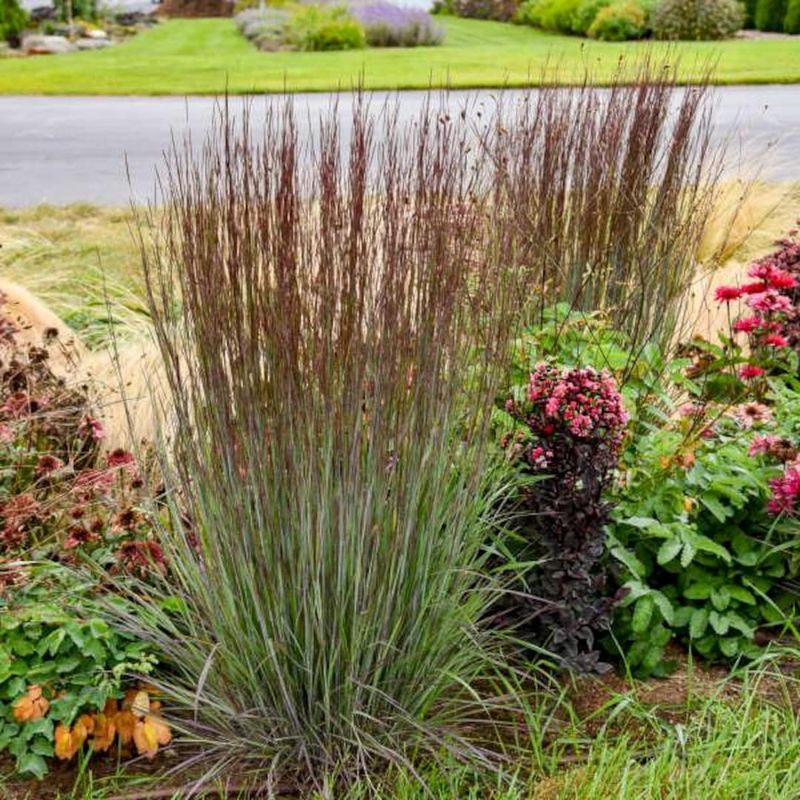
Little bluestem earns its place in a North Carolina bed edge when several conditions line up: full sun for at least six hours daily, clay soil that drains adequately within a few hours of rain, moderate moisture after establishment, restrained fertility guided by soil-test results, and enough room for each plant to reach its mature cultivar width without crowding. When those factors are present, the grass reliably holds a narrow, upright clump from summer through winter and asks for very little in return.
The conditions that work against it are just as clear. Saturated or compacted soil that stays wet, deep shade, heavily enriched beds where fast lush growth is encouraged, and tight spacing that restricts airflow all push the plant toward the weaker, floppy form that makes it a poor border choice.
Native status does not override site problems. NC State Extension’s native plants handbook is direct on this point: residential conditions including compaction, reflected heat, altered drainage, and poor planting practices can change how even well-adapted native plants perform.
When sourcing plants, choose nursery-propagated material or legally collected, regionally appropriate seed rather than digging from roadsides or wild populations. Wild-collected plants can perform poorly after transplanting, and collection may damage natural stands or run into legal protections.
A reputable native plant nursery that sources regionally is the most reliable starting point. For a more formal border edge, ask specifically about ‘Standing Ovation’ or other upright-leaning cultivars and confirm the mature size before spacing your planting plan.
NC State Extension and Virginia Extension together make a consistent case: little bluestem is a strong native choice for a tough mid-height border when the site works with its natural habit. Get the sun, drainage, and spacing right, and this often-overlooked grass can carry a North Carolina bed edge through conditions that leave most alternatives looking ragged by Labor Day.