
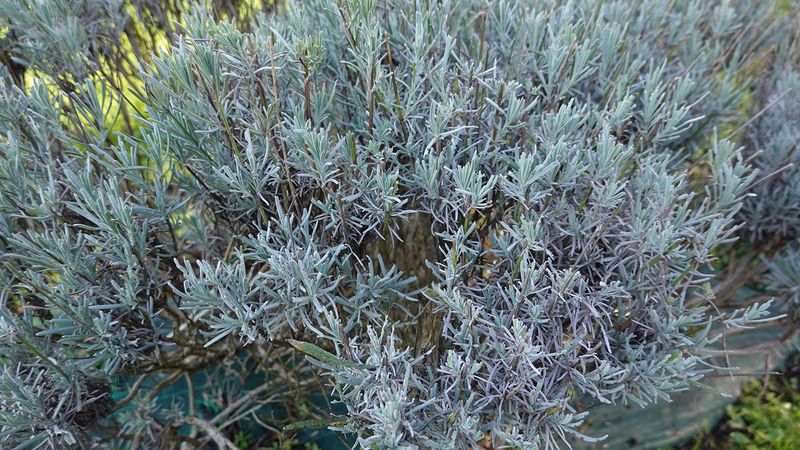
Lavender is supposed to be the tough, fragrant plant that practically takes care of itself, so finding it a gray, leafless tangle with barely a bloom can feel like a personal failure. The good news is that a woody lavender is not automatically a dead lavender, and many California gardeners throw out plants that still have a real shot at recovery.
Understanding what went wrong and what a careful cutback can actually do, and cannot do, is the first step toward getting your plant blooming again.
Woody does not automatically mean dead
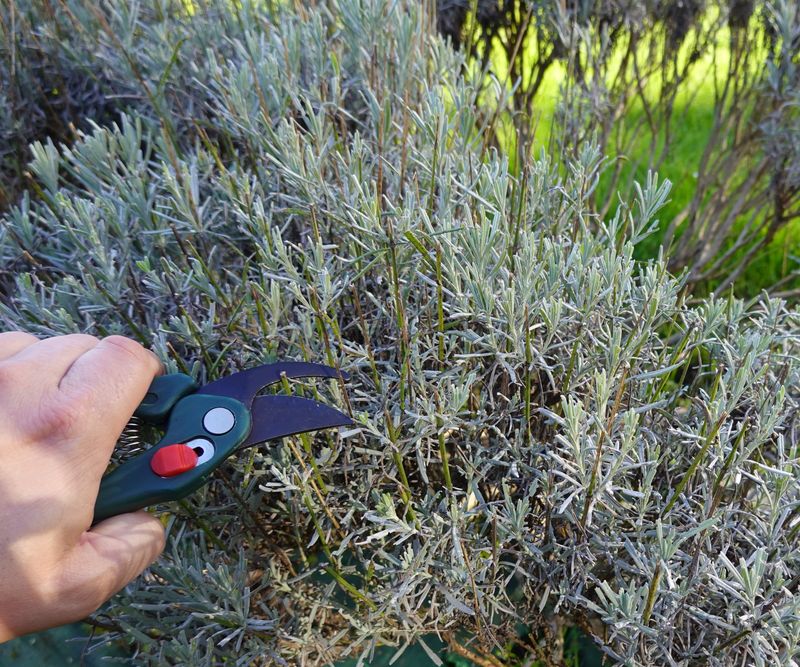
Pull back the lower leaves on almost any established lavender and you will find brown, bark-like stems at the base. That is not a warning sign.
Lavender is a woody perennial subshrub by nature, and developing a firm, lignified lower framework is simply part of how the plant grows. The woody section functions mainly as structural support and a transport system for water and nutrients, not as a source of new shoots.
The real question is what sits above that woody base. Run your fingers along the stems and look for shoots that bend without snapping, carry green or gray-green leaves, and feel alive rather than brittle.
If you find healthy, flexible growth above the brown lower section, the plant still has the raw material for a possible recovery. University of Maine Cooperative Extension guidance describes the lower woody section as tissue that generally functions as support and transport rather than as a reliable source of new shoots, which is exactly why the presence of living green growth above it matters so much.
Look more carefully if the green growth is sparse or concentrated in only one corner of the plant. Check the crown, which is the point where the main stems meet the soil.
Soft, dark, or mushy tissue at the crown can indicate root or crown rot, and pruning cannot fix that problem. Scratch a stem lightly with a fingernail; green or white tissue underneath is a sign of life, while dry brown tissue throughout suggests the stem is dead.
Separate normal aging from actual dieback before reaching for pruners. A plant with a naturally woody base and a full canopy of green, leafy shoots above it is a recovery candidate.
A plant that is woody from the ground to the tips, with no flexible green growth anywhere, is a different situation entirely, and the sections ahead will explain what to do in each case.
Several site problems can reduce flowering
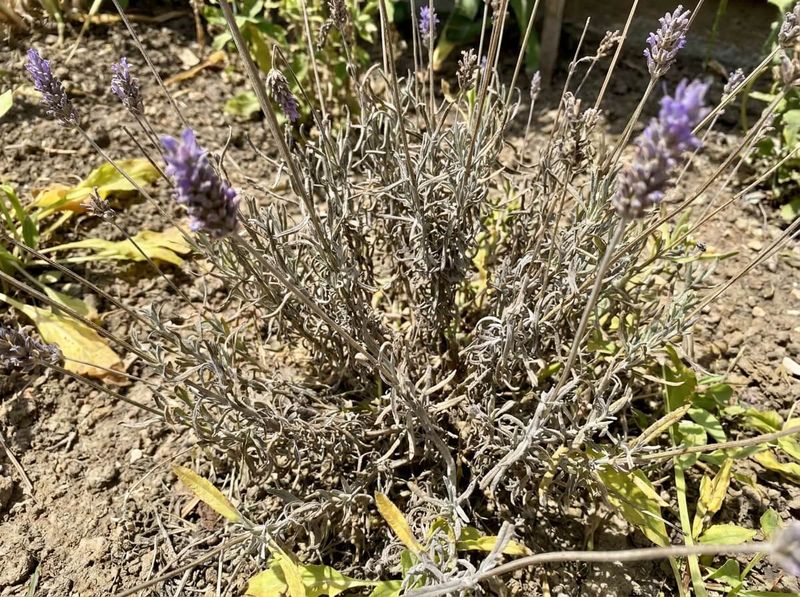
Skipped pruning gets most of the blame when lavender stops blooming, but the real picture is usually more complicated. Insufficient direct sunlight is one of the most common overlooked causes.
UC Statewide IPM guidance recommends at least six hours of direct sun for lavender to thrive. A plant growing under the edge of a tree canopy or against a north-facing wall may produce leggy, sparse growth and very few flowers regardless of how carefully it is pruned.
Excess nitrogen is another quiet culprit. Gardeners who fertilize lavender alongside roses or lawn grass often end up with plants that push out lush, floppy green growth at the expense of flowers.
Mature established lavender generally needs little or no supplemental fertilizer, and applying a high-nitrogen product can actively reduce bloom production while making stems weak and prone to splitting.
Water management matters as much as sunlight. Heavy or poorly drained soil combined with frequent summer irrigation creates conditions where root and crown rots, including Phytophthora, can take hold.
Lavender originated in the rocky, fast-draining soils of the Mediterranean, and sitting in moisture-retentive California clay, especially during warm months, puts the root system under stress that pruning cannot correct.
Plant age is also a factor that does not get enough attention. UC Master Gardeners of Sonoma County note that some lavenders are relatively short-lived and may decline after several years, particularly when drainage or summer watering is poor.
A plant that was never trimmed after flowering will also accumulate dead wood and lose its compact, productive shape over time, which can suppress new growth and reduce the number of flowering stems the plant is able to push out each season.
Identifying which of these factors applies to your plant before pruning is worth the extra few minutes. A cutback will not rescue a lavender that is sitting in saturated soil, shaded for most of the day, or rotting at the crown.
Correcting site problems alongside a careful trim gives the plant a better chance of responding, but no single fix guarantees renewed flowering.
The safest recovery cut preserves living green growth
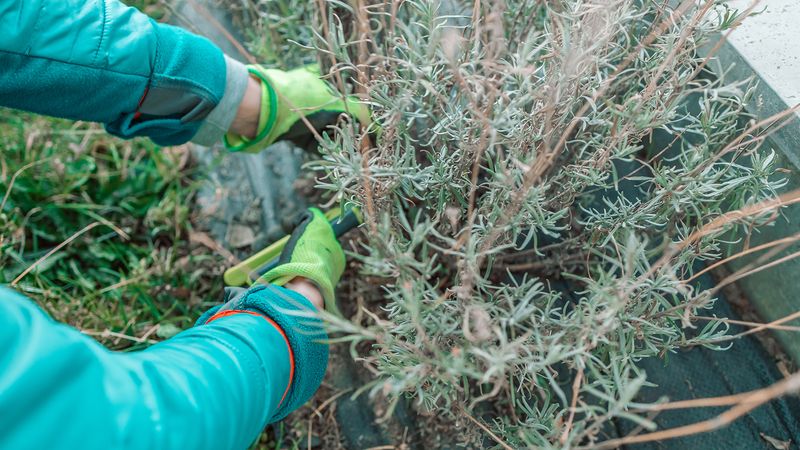
Timing the cut correctly is the first practical step. Wait until the plant has finished flowering for the season before pruning for shape, because cutting during active bloom removes the flowers before they can complete their cycle.
Harvesting flower stems while the plant is still in bloom is a reasonable exception, but the main shaping work should follow flowering rather than interrupt it.
Start by removing spent flower stalks. Clip each stalk back to where it meets the leafy foliage below, and clear away any dead or broken material while you work.
This tidying step alone makes it easier to see the plant’s structure and locate the boundary between the flexible green upper growth and the woody lower section.
Next, identify every shoot that is still supple and carries green leaves. These are the stems to work with.
Shape them into a compact, rounded mound by shortening each shoot, always placing your cut just above a set of leaves so that green foliage remains below the cut. UC Master Gardeners of San Luis Obispo County guidance on older lavender recommends trimming remaining green growth nearly to the woody base while avoiding the dry wood itself, which keeps the plant compact without exposing bare stems that may not resprout.
Removing roughly one-third of the green growth is a reasonable starting point for a plant that has not been pruned in a few years. UC Master Gardeners of El Dorado County note that some California guidance allows removing up to one-half to two-thirds of green tissue depending on the variety and the amount of healthy growth remaining.
The one-third figure is a cautious guideline, not a fixed rule that applies equally to every plant.
The firm limit in all cases is the bare woody section. Stop before you reach stems that carry no leaves at all.
UC IPM cultural tips for lavender support shaping into a compact mound after flowering, and multiple university sources agree that cutting into completely bare, gray wood is not a reliable way to generate new growth. Leave a buffer of green, leafy stems above the woody base so the plant retains the photosynthetic capacity it needs to recover.
The lavender type sets the pruning limit
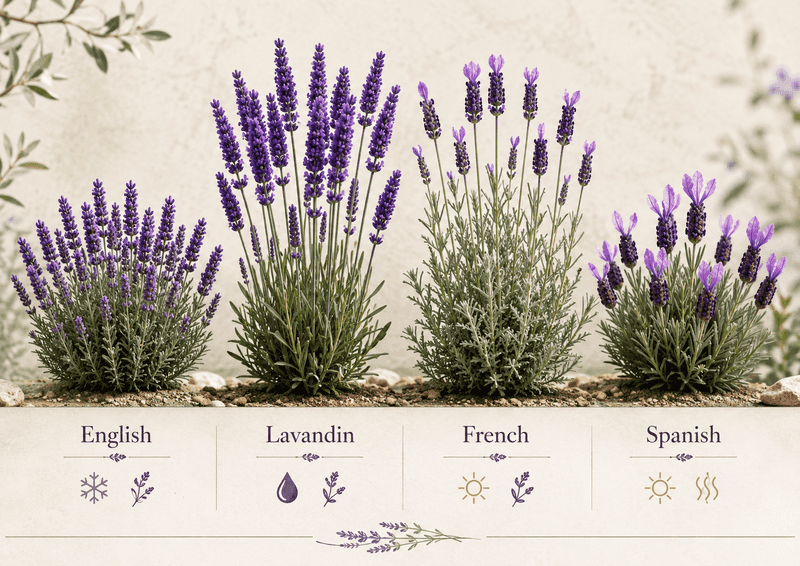
Not every lavender responds to pruning the same way, and applying one set of rules to all of them is a common source of accidental damage. The major types grown in California gardens include English lavender (Lavandula angustifolia), Spanish lavender (L. stoechas), French lavender (L. dentata), and lavandin hybrids (L. x intermedia).
UC Master Gardener pruning guidance describes these types as differing in size, bloom timing, heat tolerance, and response to pruning, which means the correct approach depends partly on what you are actually growing.
English lavender is generally considered the most cold-hardy of the group and tends to produce a tighter, more compact plant. Some UC sources suggest it may tolerate a somewhat harder trim than the other types, but there is conflicting advice in extension literature about how far into old wood is safe.
The safer and more broadly applicable recommendation is to preserve green tissue and treat the woody base as a firm boundary regardless of species.
UC Master Gardeners of Sonoma County describe Spanish and French types as generally calling for lighter or moderate trimming. These plants tend to bloom earlier in the season and may produce a second flush of flowers if faded stalks are removed promptly, though a second bloom is not guaranteed and varies by cultivar and growing conditions.
Lavandin hybrids grow large and are often used for commercial oil production; they benefit from consistent post-bloom shaping but can become very woody if trimming is skipped for several years.
If you are not sure which type you have, use the amount of healthy green tissue as your practical limit rather than a fixed percentage. University of Maine Cooperative Extension cautions that cutting into bare woody stems is risky across lavender types, and that the safest approach focuses on shaping living green growth.
When in doubt, trim less and observe how the plant responds before attempting a more aggressive cut the following season.
Improve the growing conditions before expecting recovery
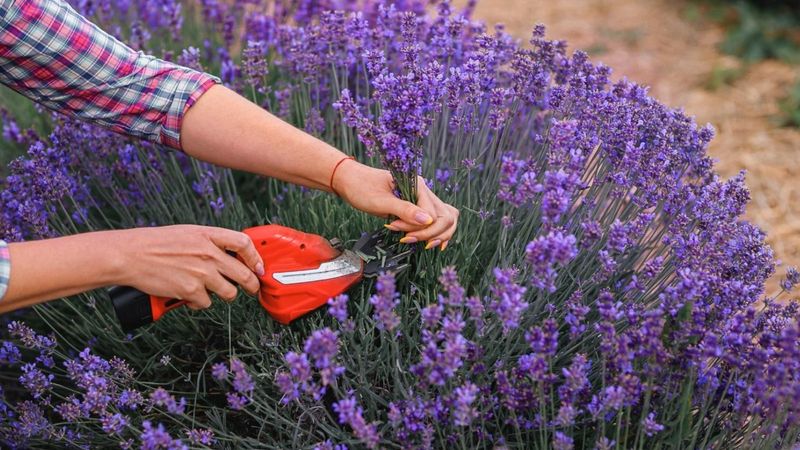
A careful pruning job gives a woody lavender its best opportunity to push out new growth, but the plant still needs the right conditions to follow through. Sunlight comes first.
Lavender needs a minimum of six hours of direct sun each day, and a spot that delivers full sun for most of the day is even better. Shade from buildings, fences, or nearby trees that has increased as those structures or plants have grown can quietly suppress flowering over several seasons without any other obvious problem.
Drainage is the other non-negotiable. UC IPM guidance consistently connects heavy, wet, poorly drained soil with root and crown rot in lavender.
If your soil drains slowly, consider planting into a raised bed, a low berm, or a mound of amended soil so water moves away from the root zone quickly. Mixing in coarse grit, decomposed granite, or gravel can help in heavy California clay, and UC ANR guidance on lavenders for California gardens recommends planting slightly high as a practical way to keep the crown above the water table in problem spots.
Irrigation habits matter more for lavender than most gardeners expect. Newly planted lavender needs regular watering through its first season to establish a root system, but mature plants are far more drought-tolerant.
Frequent summer irrigation of an established lavender, especially applied overhead, keeps the crown moist and creates conditions where rot can develop. Drip irrigation placed away from the main stem is a better option than sprinklers, and watering deeply but infrequently gives roots a reason to grow downward rather than staying near the surface.
Skip the fertilizer on established plants. Mature lavender growing in reasonable soil generally does not need supplemental feeding, and excess nitrogen produces the kind of soft, leafy growth that comes at the cost of flowers.
Correcting sun exposure, drainage, and irrigation habits after pruning gives the plant a meaningful advantage, but cannot guarantee that flowering will return. Think of these adjustments as removing obstacles rather than as a promise of a specific outcome.
Some plants are replacement candidates
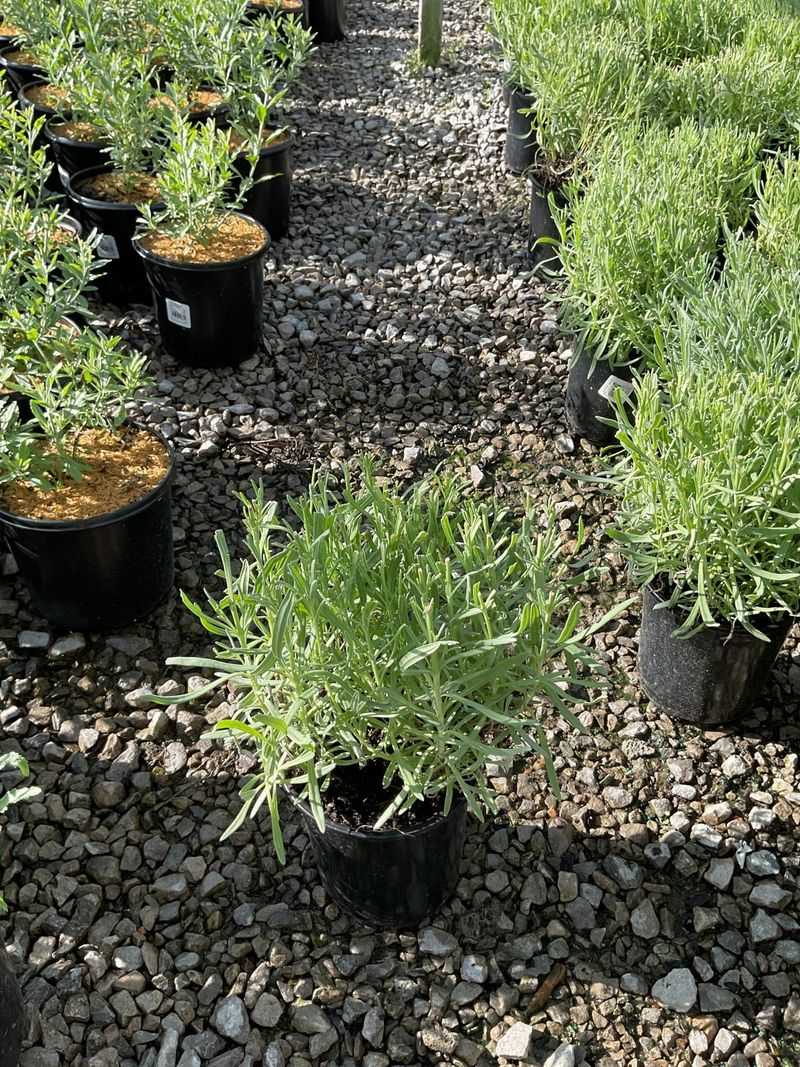
Recovery is not always the right goal. Before committing time and effort to a pruning project, spend a few minutes looking honestly at what the plant still has to offer.
A lavender with no healthy green growth anywhere above the woody base, with brittle stems that snap rather than bend, and with no living foliage in sight is not a recovery candidate. Cutting it harder is unlikely to produce new shoots, and may simply damage a plant that was already on its way out.
Crown and root rot present a similar problem. If the tissue where the main stems meet the soil is soft, dark, or smells off, the damage is below the point where pruning can help.
University of Maine Cooperative Extension is direct about the limits of pruning on lavender that has already lost its living tissue, noting that bare woody stems do not reliably produce new growth even when the plant is otherwise healthy.
Age is a legitimate factor too. UC Master Gardeners of Sonoma County note that lavender can be relatively short-lived, and a plant that is six to ten years old, woody throughout, and planted in less-than-ideal drainage may simply have reached the end of its productive garden life.
UC Master Gardeners of El Dorado County support this view, pointing out that older plants in poor sites often do not respond to even careful renovation.
Replacing a spent lavender is not a defeat. A new plant placed in corrected conditions, with proper drainage and full sun, will establish quickly and reach a productive, fragrant state far sooner than a struggling old plant that is being coaxed along with repeated interventions.
Choosing a variety suited to your specific California climate zone and planting it with good drainage from the start puts you ahead of where the old plant ever was.
Maintain the plant after flowering
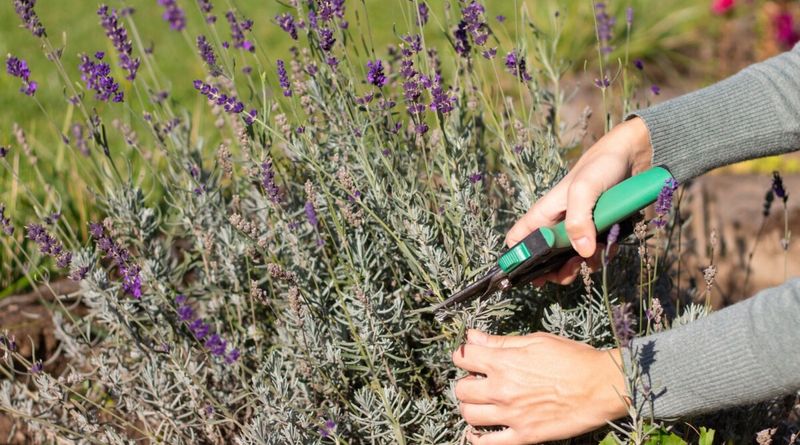
Getting a woody lavender back into shape is one project. Keeping it there is a different and more manageable habit.
The most effective maintenance schedule for lavender centers on the period just after the plant finishes flowering, which is when shaping does the least harm and the most good. Removing spent flower stalks at that point tidies the plant, reduces the weight of dead material, and may encourage additional flowers in some cultivars, though a second bloom is not guaranteed and depends on the variety and local conditions.
UC IPM guidance recommends pruning after the plant completes its flowering cycle, noting that removing faded flowers can encourage additional flowering in some types. Annual shaping of the green growth into a compact mound, done consistently each year, can help prevent the rapid buildup of bare wood that makes recovery cuts necessary in the first place.
Bloom timing across California varies widely, and a fixed calendar date does not apply equally to coastal gardens, inland valleys, the Central Valley, foothills, or mountain communities. UC IPM’s lavender overview reflects this regional variation, and “after flowering” is a more reliable guide than any specific month.
Watch the plant rather than the calendar.
Harvesting flower stems for dried arrangements or culinary use counts as a form of light pruning and fits naturally into the maintenance rhythm. UC Master Gardeners of Sonoma County describe this as a practical way to keep the plant tidy while getting direct use from it.
Consistent annual trimming cannot prevent every plant from eventually declining, but it can meaningfully extend the productive life of a lavender that has good sun, fast drainage, and appropriate irrigation.
Use the green-growth test before you prune
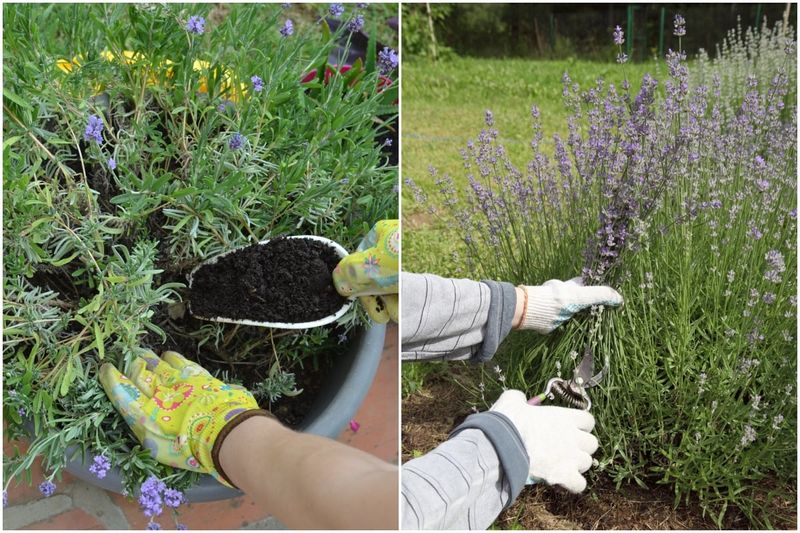
Before picking up the pruners, bend a few stems. Flexible shoots with green leaves above the woody base mean the plant is a reasonable candidate for a recovery trim.
Work only with that living tissue, shaping it into a compact mound after flowering while stopping well above any bare, gray wood below. Then address the conditions that can limit flowering: confirm the plant gets at least six hours of direct sun, check that water drains freely away from the root zone, adjust irrigation so the crown stays dry between waterings, and hold off on any fertilizer.
UC Master Gardeners of El Dorado County and University of Maine Cooperative Extension both caution that cutting into bare woody stems is not a reliable way to generate new shoots. If a plant has no green growth remaining, shows signs of rot at the crown, or is woody from the soil line to the tips, replacement is the more honest path forward.
A fresh plant in a well-drained, sunny spot will do more for your garden than a ground-level cut on a plant that has already spent its living tissue. The best lavender maintenance is not a dramatic rescue; it is a steady, post-bloom trim that keeps the plant young enough to keep it worth keeping.