
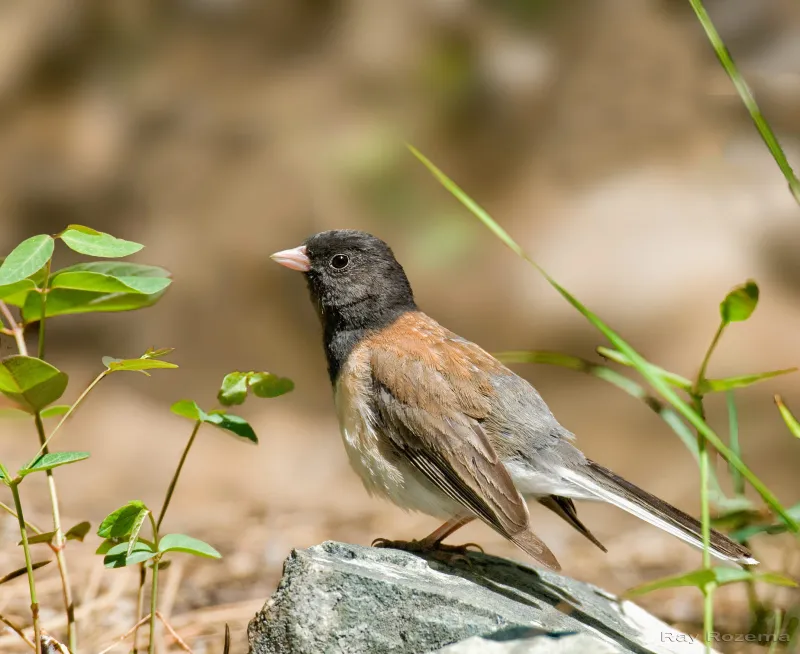
Every winter, small birds with dark hoods and white-flashing tail feathers show up in California yards and quietly work the ground beneath shrubs and along garden edges. Most homeowners walk right past them without a second look.
These are dark-eyed juncos, and what they do in your beds is more interesting, and more limited, than the rumors suggest. Understanding what juncos actually eat, and what they cannot do, helps you support them in ways that genuinely benefit your garden.
California juncos bring a seed-focused foraging habit to winter yards
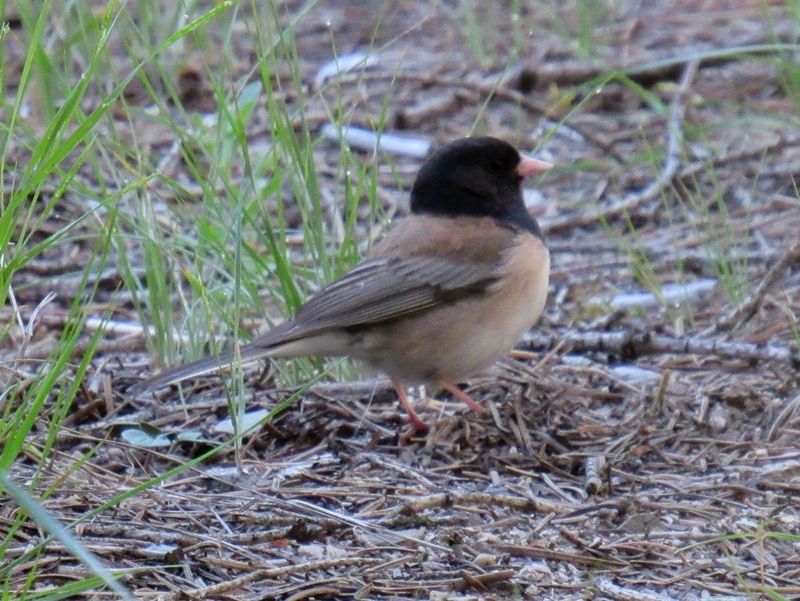
Dark-eyed juncos are one of California’s most reliably common winter birds, and many homeowners have them moving through their yards without realizing it. According to the California Department of Fish and Wildlife life history account for the dark-eyed junco, the species is common to abundant statewide, and residential areas provide exactly what wintering birds need: open ground for feeding combined with shrubs or trees nearby for cover and retreat.
One thing worth knowing before you expect a predictable seasonal pattern: not every California junco follows the same schedule. Some populations breed locally in the state’s mountains and higher elevations, while others move into lowlands and foothills during winter.
The birds you see in your yard in December may be year-round California residents, or they may be birds that nested far north and moved south for the season. Either way, the foraging behavior is the same.
The article title this piece is based on suggests juncos scour garden beds for aphids. That framing does not hold up, and this article addresses it directly in a later section.
What the title gets right is the seed-foraging part. Cornell Lab of Ornithology’s life history account describes juncos as ground foragers that hop and scratch through leaf litter and low vegetation, pecking at seeds on or near the soil surface.
Seeds make up roughly 75 percent of their year-round diet. A yard with accessible ground near shrubs can realistically support that behavior, and juncos may consume some fallen weed seeds in the process.
That is a modest but genuine garden benefit, and it is the right starting point for everything that follows.
What juncos actually eat beneath garden plants
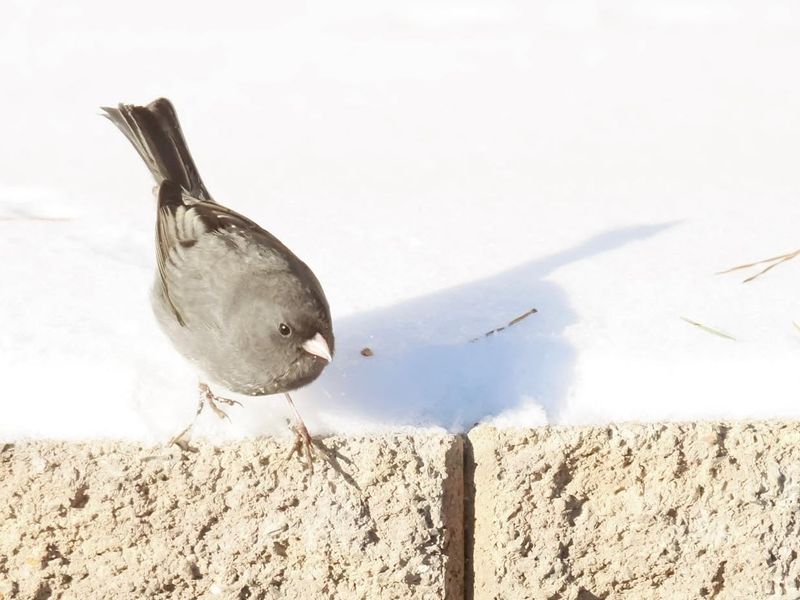
Watch a junco work a garden bed for even a few minutes and the behavior becomes clear fast. The bird hops forward, scratches backward with both feet at once, then pecks at whatever the scratch exposed.
Seeds on or just below the soil surface are the target. Cornell’s detailed life history account puts seeds at approximately 75 percent of the dark-eyed junco’s year-round diet, with documented items including chickweed, buckwheat, lamb’s quarters, and sorrel, all of which show up commonly in California garden beds.
Insects and other arthropods fill out the rest of the diet, and the proportion shifts by season. During the breeding season, juncos consume considerably more insects, including beetles, moths, caterpillars, ants, wasps, flies, grasshoppers, and true bugs, along with spiders.
That broader protein intake supports egg production and chick development. In winter, the balance tilts back toward seeds, which are far more available and easier to find when insect activity slows.
That seasonal distinction matters for setting realistic expectations. A junco scratching through your beds in January is primarily hunting seeds, not running down insects.
The species’ documented prey list does not include aphids as a notable food item in any authoritative account, and nothing in the winter foraging pattern suggests juncos are targeting small, colony-forming insects on plant stems. They are low to the ground, working the litter layer, not inspecting foliage for soft-bodied pests.
Juncos also occasionally glean food from low vegetation, and they will take small invertebrates when available. But the core picture for a California homeowner is straightforward: a junco in your winter bed is a seed-seeker, scratching through whatever organic material sits on the soil surface.
A yard with fallen seeds and some leaf litter gives them exactly what they are looking for.
Juncos may remove some weed seeds, but they will not clear a bed
Seed-eating birds do consume weed seeds that have already fallen to the ground, and that can reduce how many of those seeds survive to germinate. Research on post-dispersal weed seed predation confirms that birds, rodents, and invertebrates collectively remove meaningful quantities of seeds in agricultural settings.
That is a real ecosystem service, and juncos foraging through your beds are contributing to it in a small way.
The important qualifier is that the research almost never isolates dark-eyed juncos as the sole actor. Studies typically measure seed removal by mixed communities of birds, small mammals, and invertebrates working the same area.
Rodents and ground beetles alone can account for a large share of the removal in some habitats. Weed species also vary enormously in how palatable their seeds are to birds, and results shift depending on habitat type, season, and which predators happen to be present.
Translating those findings into a confident claim that juncos will noticeably reduce weeds in your specific garden beds overstates what the evidence actually shows.
Seeds that juncos miss, or seeds from plants that set seed before you noticed them, remain in the soil seed bank and can germinate for years. Perennial weeds, which spread through roots rather than seeds, are completely unaffected by any bird foraging.
Juncos do not pull plants, disturb roots, or do anything that resembles mechanical weed removal.
The practical takeaway is that juncos can be one modest part of a yard’s natural seed-removal process, but they are not a substitute for managing weeds yourself. Remove mature weeds before they finish setting seed, use hand-pulling or hoeing for established plants, and keep beds mulched to suppress germination.
A small wildlife-friendly strip with seed-bearing native or naturalized plants can give juncos something to forage in without letting problem weeds take over the rest of the garden.
Why juncos are not a reliable aphid-control strategy
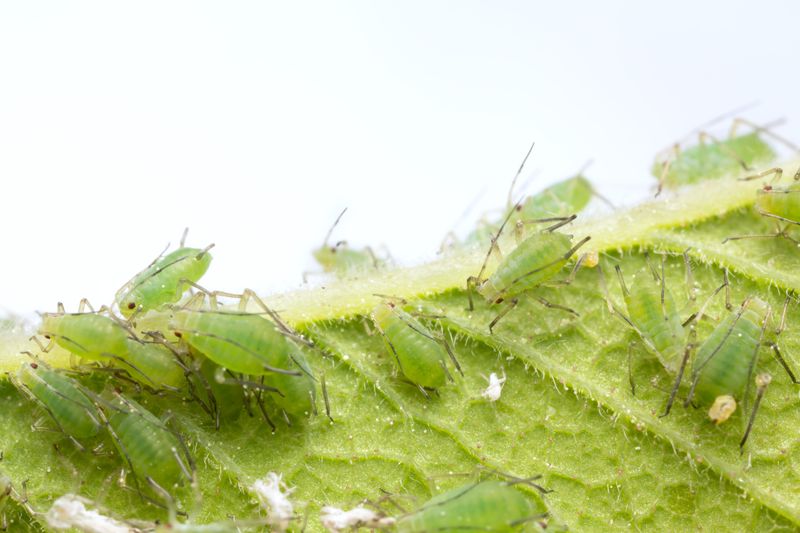
Aphids cluster on stems and new growth, sometimes in large numbers, and the idea that a bird hopping nearby might be cleaning them off is appealing. The problem is that authoritative accounts of the dark-eyed junco’s diet do not list aphids as a documented major food item.
Cornell’s life history account names beetles, moths, caterpillars, ants, wasps, flies, grasshoppers, true bugs, and spiders as insect prey, but aphids do not appear as a notable component. That omission matters: juncos are ground foragers working the litter layer, not birds that systematically inspect foliage for small, soft-bodied insects.
Seeing a junco scratch near a plant with an aphid infestation does not tell you that the bird consumed any aphids or that the plant will recover faster. Birds move through foraging areas for many reasons, and proximity to an infested plant is not evidence of pest control.
A 2020 review of bird-based integrated pest management found that bird pest-control effects vary considerably by bird species, prey type, crop or habitat, and that birds foraging in a given area can also consume beneficial insects such as predatory beetles and parasitic wasps that would otherwise help suppress pests naturally.
Winter is also the wrong season to expect meaningful aphid suppression from birds. Many aphid species overwinter as eggs rather than active colonies, and the ones that do remain active in mild California winters are not a primary junco food source by any documented account.
If aphids are building up on your roses, citrus, or ornamentals during the cooler months, a junco scratching the mulch below is not the solution.
Monitor plants regularly for aphid colonies and manage them directly: a strong spray of water dislodges many aphids, and insecticidal soap applied carefully can reduce populations without leaving residues that harm foraging birds. Keep juncos in the picture as seed foragers, not as an aphid crew.
Build a balanced feeding area instead of leaving every bed untidy
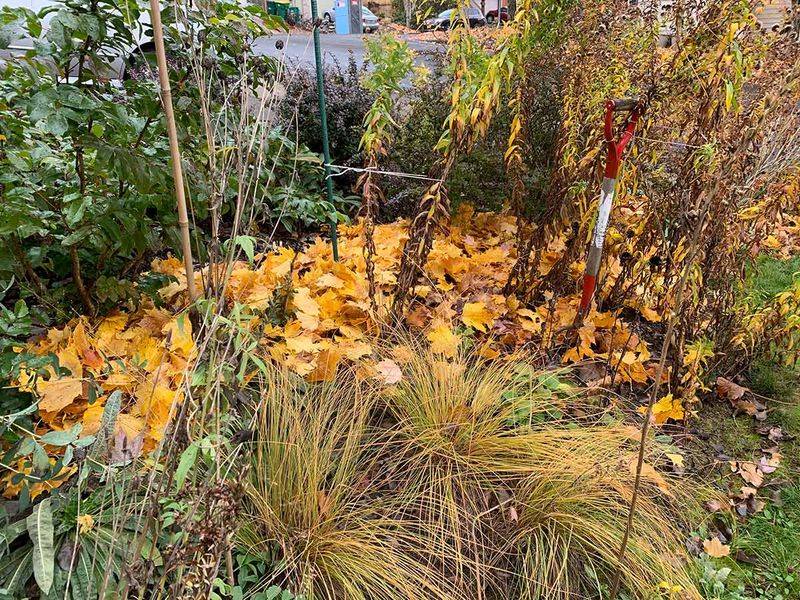
Juncos need two things in the same general area: open ground where they can reach seeds and litter to scratch through, and nearby shrubs or trees they can retreat to quickly if a hawk appears or a noise startles them. A yard that provides both is more useful to them than one that is either completely bare or so densely overgrown that ground foraging becomes difficult.
The practical translation for a California homeowner is not “stop cleaning your beds.” California wildlife habitat guidance for the dark-eyed junco describes a combination of open ground for feeding and trees or shrubs for cover as the key habitat requirement, not a specific level of bed messiness. You can achieve that combination deliberately.
Leave a thin layer of leaf litter along the edge of a bed that borders a shrub or small tree, keep a small open patch where the ground is accessible, and let a few seed-bearing plant stems stand through winter rather than cutting everything back at once.
Intensive cleanup across an entire yard may reduce the foraging substrate juncos depend on, but framing that as a proven cause of birds abandoning a yard goes further than the evidence supports. Think of it as a tradeoff: the more open, bare, and uniformly maintained every surface is, the less there is for a ground-feeding bird to work with.
Cornell’s foraging descriptions confirm that juncos use leaf litter and low vegetation as their primary foraging substrate, so removing all of it reduces opportunity without guaranteeing the birds leave entirely.
A carefully designed bed with a litter edge, a few seed-producing plants, and a clean open patch beside a shrub can offer a practical balance of feeding access and shelter. You do not need to let every weed stand or every corner go wild.
A limited, intentional wildlife zone within an otherwise well-maintained yard is enough to make the space usable for juncos.
Let natural food lead, and treat supplemental feeding as optional
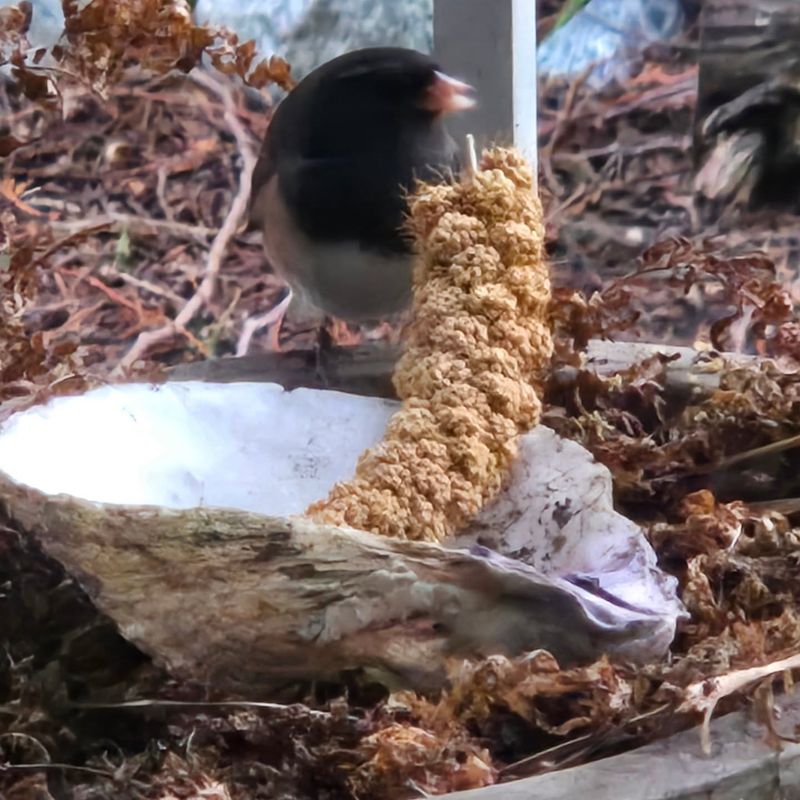
Naturally occurring grass and weed seeds already match junco foraging behavior, which means a yard with some seed-bearing plants and accessible ground may not need a feeder at all. Retained seed heads from ornamental grasses, native annuals, or even common weeds along a controlled edge give juncos something to work with through the winter without any extra effort or ongoing maintenance on your part.
If you want to add supplemental food, Cornell’s guidance identifies millet, hulled sunflower, cracked corn, and mixed seed as suitable options for juncos. Because juncos are ground feeders, a low platform feeder or a scattering on a flat, clean surface near, but not buried inside, shrubs fits their behavior better than a hanging tube feeder.
Place the feeding spot where the birds can see approaching threats and reach escape cover quickly.
Spilled seed is the main tradeoff to manage. Seed that accumulates on the ground attracts rats and mice, and commercial seed mixes sometimes contain species that germinate as unwanted plants if allowed to pile up.
Keeping the feeding area small and sweeping up or raking under it regularly reduces both problems.
Cornell Project FeederWatch recommends cleaning feeders regularly, more often during wet weather or heavy use, and allowing equipment to dry completely before refilling. If consistent cleaning is not realistic for your schedule, habitat planting and retained natural food are the lower-maintenance path.
A bird that finds seeds naturally in your beds is just as well served as one that visits a feeder, and without the hygiene obligation.
Reduce specific risks from pesticides, cats, and dirty bird equipment
Supporting juncos in your yard works against itself if common hazards go unaddressed. Three of the most documented risks are pesticide exposure, cat predation, and contaminated feeding equipment, and each one has a straightforward response.
On pesticides: EPA guidance on reducing pesticide impacts on wildlife advises following product labels carefully and considering effects on non-target animals before applying anything in your yard. Avoid broad or unnecessary insecticide applications in areas where birds forage, and do not assume a product is harmless because it is marketed as natural or organic.
Pesticide risk depends on the active ingredient, the formulation, the timing of application, and how much exposure a bird receives. Spraying aphid-infested plants with a contact insecticide while juncos are actively foraging nearby creates real exposure risk regardless of what the label says about target pests.
On cats: Audubon’s guidance on cats and birds is direct: keeping cats indoors is the most effective way to reduce bird predation. Outdoor cats can kill birds even when they are well fed, and ground-feeding birds like juncos are especially vulnerable because they spend time in the open at low height.
A secured outdoor enclosure or supervised outdoor access is a safer alternative to free roaming near areas where you want birds to forage.
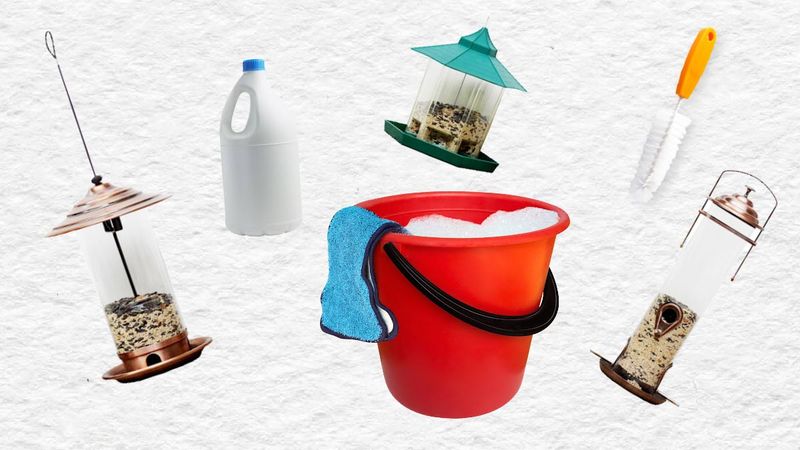
On feeders and baths: Project FeederWatch’s cleaning protocol calls for scrubbing feeders with a dilute bleach solution, removing accumulated seed and droppings from the ground below, and letting everything dry before refilling. CDC wildlife health guidance recommends cleaning feeders and baths away from food-preparation areas, washing hands thoroughly afterward, and taking extra precautions if you find sick or dead birds near your equipment.
Dirty feeders have been linked to Salmonella outbreaks in wild songbird populations, which can also affect people who handle contaminated equipment. None of these hazards erase the value of having juncos forage naturally in your yard, but they are worth managing so the habitat you create stays genuinely safe.
Support the birds without handing them the garden
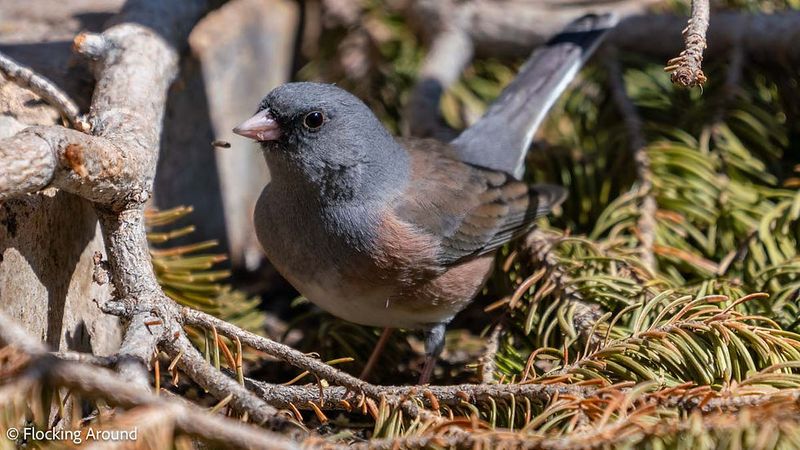
California dark-eyed juncos are worth welcoming. Their documented foraging behavior puts them on the ground in leaf litter and low vegetation, picking through exactly the material that accumulates in winter beds, and post-dispersal seed predation research confirms that birds contribute to natural seed removal in real garden environments.
That is a genuine, if modest, ecological benefit. What juncos cannot do is replace your weed management, suppress aphids, or eliminate pest problems you need to address directly.
Three actions cover most of what matters. First, preserve a limited litter-and-cover zone beside a small open patch of accessible ground, particularly where a shrub or tree provides quick retreat.
Second, pull or hoe weeds before they finish setting seed so you are not relying on birds to clean up what you could have prevented. Third, support birds only through habitat or feeding practices you can maintain safely, following pesticide label directions, keeping cats away from foraging areas, and cleaning any feeders or baths on a regular schedule.
California wildlife habitat accounts describe juncos as birds that fit naturally into residential yards when the basics are in place. Give them a patch of ground to work, a shrub to retreat to, and a yard managed without unnecessary chemical exposure, and you have done your part.
A junco scratching through your winter beds is not solving your garden problems, but it is doing something real, quietly, every time it visits.