
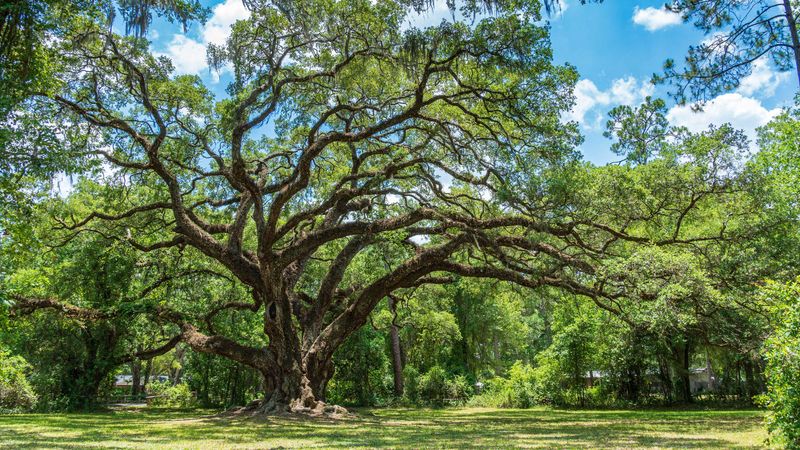
Every fall, Central Texas homeowners start hunting for a shade tree that can survive scorching summers, rocky Hill Country soil, and months without rain. Live oak keeps rising to the top of that list, and for good reason.
It is native, evergreen, and capable of spreading a broad canopy that cools a yard for generations. If you are thinking about planting one this season, knowing what to look for and when to shop can make the difference between finding the right tree and settling for whatever is left.
Why live oak belongs in this Central Texas conversation
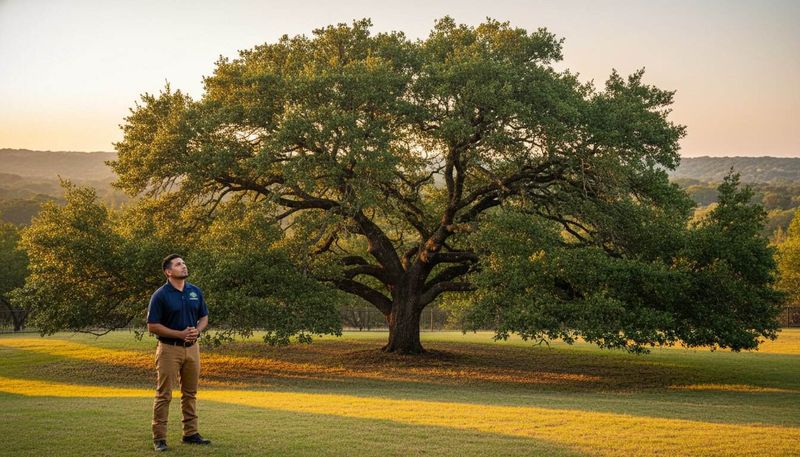
Few trees carry as much weight in a Central Texas yard as the live oak. It keeps its leaves year-round, grows into a broad, arching canopy, and once established, handles the region’s alkaline soil, summer heat, and extended dry spells better than most shade-tree alternatives.
Austin nursery guidance describes live oak as the area’s most popular tree, and that reputation is backed by something measurable: live oak ranks among the five most common tree species in Austin’s urban forest, reflecting decades of planting choices by homeowners who wanted reliable, long-lived shade.
The species most worth knowing in this region is the Escarpment live oak, Quercus fusiformis. Related to the coastal or Southern live oak but better matched to Central and West Texas conditions, it handles shallow, rocky ground and the thin soils over limestone that define so much of the Hill Country.
Texas A&M’s tree selector notes drought tolerance and alkaline-soil tolerance as key traits, while flagging that the species needs ample room and can develop surface roots over time.
None of that makes live oak the only tree worth planting, and popularity alone does not guarantee it fits every property. What it does mean is that live oak has earned its place in this conversation through genuine regional suitability, not marketing.
Austin’s urban-forest program treats live oak as a cornerstone of the city’s tree canopy, which tells you something about how local planners and longtime residents view its long-term value.
Check availability early because nursery stock changes
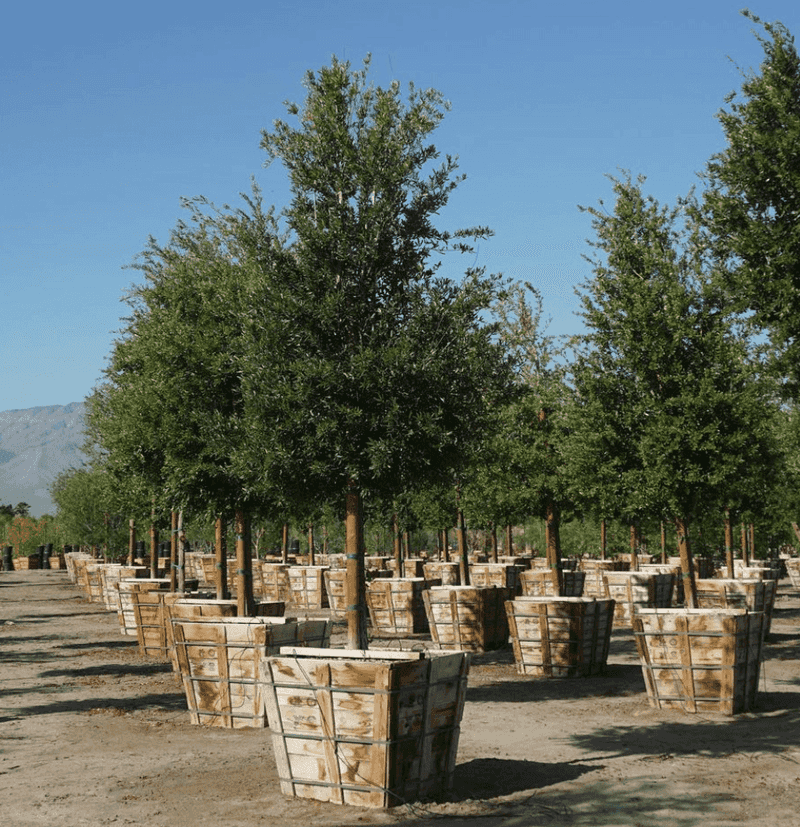
Shopping early for a live oak is a practical move, not a response to a documented regional sellout pattern. Nursery stock is a moving target.
What one location has in abundance on a Monday morning may be reserved, sold, or simply not restocked by the time you drive out on a Saturday. Hill Country Water Gardens notes that availability on native and adapted trees can be limited and recommends calling before making the trip, which is sensible advice for any serious tree purchase.
The variation runs deeper than just in-stock or out-of-stock. Container sizes differ by nursery, and a 15-gallon live oak and a 65-gallon live oak are not interchangeable decisions.
Some nurseries take phone or online reservations for larger specimens before they arrive. Others update their available inventory regularly, so a page you checked two weeks ago may no longer reflect what is actually on the lot.
Hill Country Tree Company’s inventory page is a good example of how stock can shift by species, size, and delivery schedule, making it a snapshot rather than a stable catalog.
Shoal Creek Nursery in Austin carries trees and shrubs across a rotating inventory, which reflects the general reality: Central Texas nurseries are stocking and moving trees throughout the October-through-March planting window, and no single date guarantees the best selection. Contact several nurseries, ask specifically which live-oak species they carry and in what sizes, and confirm current stock before you load up the truck.
That extra phone call can save a wasted trip and help you compare your options honestly.
Read the species label before you choose a live oak
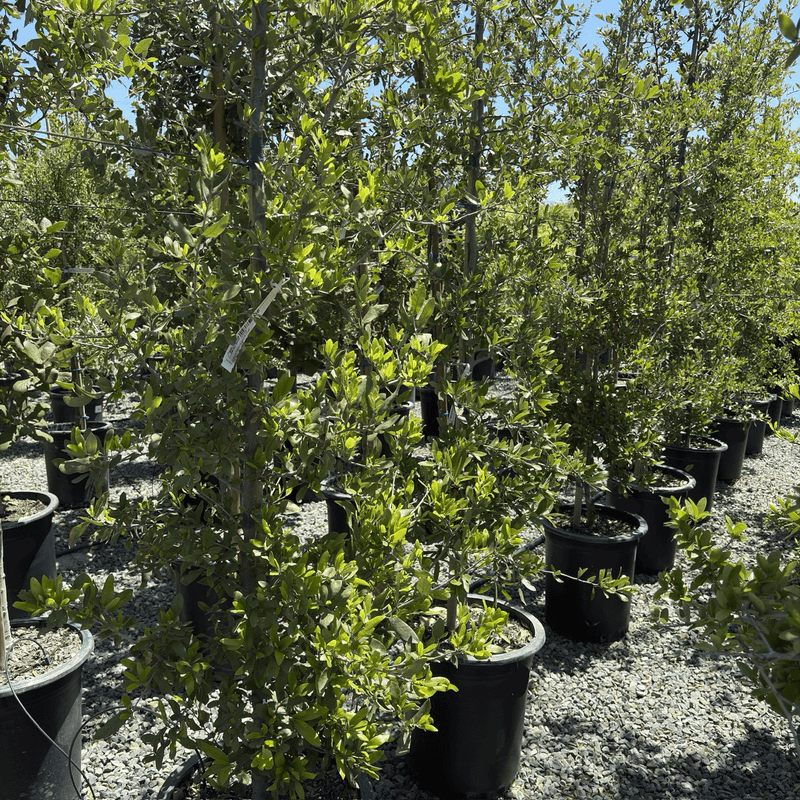
Grabbing any tree labeled “live oak” without checking the species name is a common shortcut that can lead to a mismatch between tree and site. Two species share that common name in Central Texas nurseries, and they are not identical.
The Escarpment live oak, Quercus fusiformis, is native to the Edwards Plateau and surrounding Hill Country terrain. It tends to stay somewhat more compact than its coastal cousin and handles shallow, rocky soil over limestone with more tolerance.
The Southern live oak, Quercus virginiana, is native to coastal Texas and the Gulf South, where soils are deeper and conditions are more humid.
Both are attractive, long-lived evergreen oaks, but their differences matter when your yard sits on caliche or thin topsoil over bedrock. Texas A&M’s tree selector identifies regional adaptation as a key variable between these species, and Central Texas gardeners on shallow Hill Country soils generally have better luck with Quercus fusiformis.
Ask the nursery staff directly which species they carry, and look at the tag. If a label only says “live oak” without a scientific name, that is worth clarifying before purchase.
Live oak of either species may not be the right call for every property, and that is an honest part of the decision. Cedar elm handles wet and dry extremes gracefully and fits smaller spaces.
Texas red oak delivers spectacular fall color. Bur oak tolerates heavy clay and limestone soils with deep roots that resist surface conflicts.
Lacey oak stays narrower and suits tighter lots. The Texas Tree Selector tool lets you filter by soil type, site conditions, and mature size, which makes it a useful starting point if you are still deciding whether live oak or an alternative fits your specific yard better.
Match the tree’s mature footprint to the property
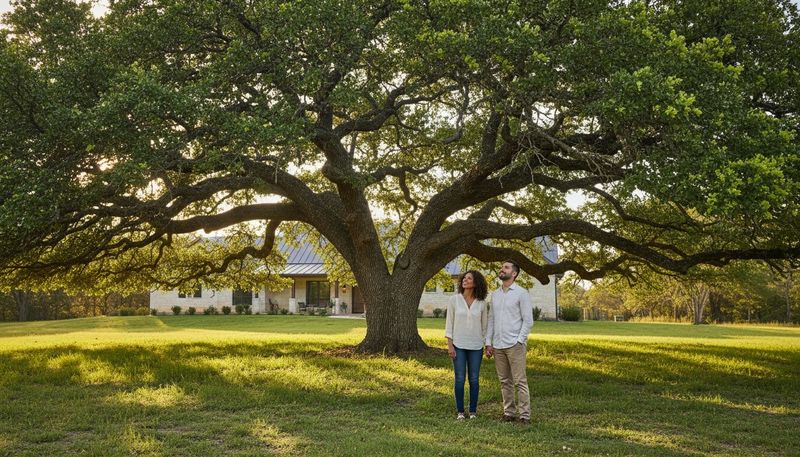
Before buying any live oak, picture the tree not at the size it is today but at the size it will reach in 30 to 50 years. A mature live oak can spread 50 feet or more in canopy width, and its roots travel even farther outward seeking water and anchorage.
That is a serious footprint, and it needs to land somewhere with room to grow without conflicting with your house, driveway, sidewalk, fence line, or buried utilities.
Texas A&M’s tree data for live oak warns directly that the species can develop surface roots and needs ample space, which becomes a pavement and foundation concern when the tree is planted too close to structures. Austin’s right-tree-right-place guidance reinforces that live oak requires a large open area, and that placing it incorrectly creates expensive problems down the road rather than the cooling shade you planted it for.
Run through a practical site checklist before you dig. Look up for power lines and overhead utilities.
Look down by calling 811 to locate buried gas, water, and electrical lines before any digging begins. Measure the distance from the planting spot to your foundation, driveway edge, and sidewalk.
Check soil depth by probing for bedrock or caliche layers, because shallow soil limits root development and can stress the tree during drought. Assess drainage too, since live oak tolerates dry conditions but struggles in spots that stay wet after rain.
Texas A&M Forest Service guidance on placing trees correctly frames this as a benefit-maximizing decision rather than a restriction, and that framing is right. A live oak in the right spot will outlast the house.
One planted in the wrong spot will cost more to manage than it ever saves in cooling costs.
Use the cool-season planting window wisely
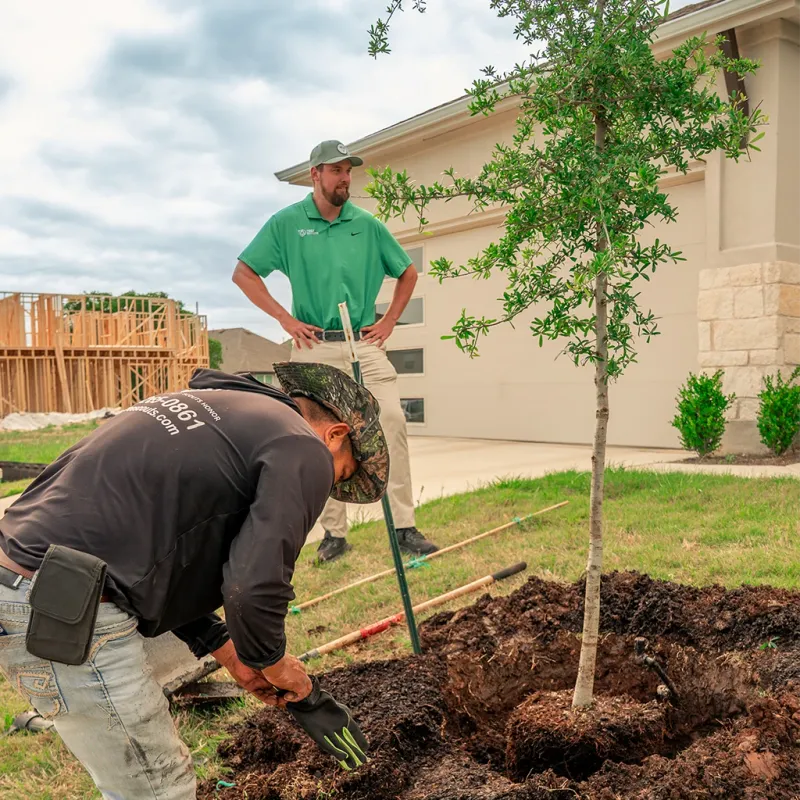
Central Texas has a real planting advantage that homeowners outside the region do not always appreciate. The cool season here is also a growing season for roots.
Austin’s native tree growing guide puts the practical window at approximately October 15 through March 15, and Texas A&M Forest Service describes late fall through early spring as the best general period for tree planting across Texas. Fall planting lets a tree spend months building its root system in mild temperatures before summer heat arrives and demands everything the tree has.
That window is not a rigid rule. A late-October heat wave, an unexpected freeze in early December, or saturated soil from heavy rains can shift the ideal planting date by days or weeks.
Watch local conditions rather than the calendar alone, and avoid planting into waterlogged ground or during an active freeze event. Within those limits, the earlier in the window you plant, the more root establishment time you give the tree before July.
Getting the installation right matters as much as the timing. Austin’s 11-step planting guide calls for digging a hole wider than the root ball but no deeper than its height.
Setting the tree too deep is one of the most common planting errors and can slowly kill an otherwise healthy specimen by suffocating the root flare. The root flare, the point where the trunk begins to widen at the base, should sit at grade or slightly above it, never buried under backfill.
After the tree is set and the hole is filled, apply roughly 3 to 4 inches of mulch across the root zone, keeping it several inches away from the trunk to prevent moisture buildup and bark rot. That mulch layer holds soil moisture, moderates temperature, and suppresses weeds through the establishment period.
Plan for establishment watering, not just drought tolerance
Drought tolerance is a long-game trait in live oaks, not a day-one feature. A tree that will eventually handle weeks without rain still needs consistent, careful irrigation during its first two years in the ground.
Roots need time to spread beyond the original root ball and tap into surrounding soil, and until that happens, the tree depends almost entirely on what you give it.
Austin’s planting guidance calls for checking the root ball frequently right after planting and then watering across a wider root zone as the tree settles in. During dry conditions, new trees generally need at least weekly watering through the first two growing seasons, though that frequency shifts with soil type, tree size, recent rainfall, heat intensity, and any local watering restrictions in effect.
A clay-heavy soil holds moisture longer than sandy or gravelly ground, so adjust accordingly rather than watering on a fixed schedule regardless of conditions.
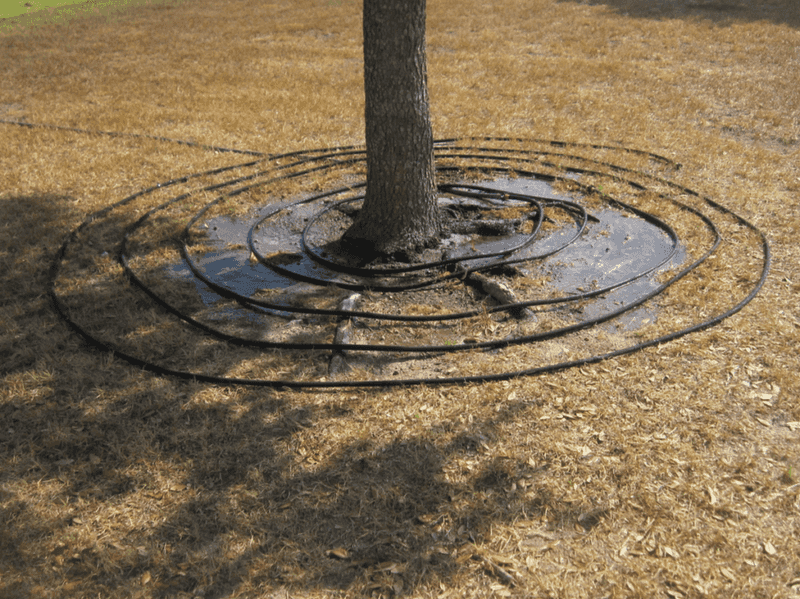
Where you put the water matters as much as how often you apply it. Austin’s guidance on watering established trees recommends slow soaking distributed across the root zone rather than a quick blast at the trunk base.
Check that moisture is actually penetrating several inches into the soil rather than running off the surface, especially on compacted or sloped ground. A soaker hose or slow-release emitter placed in a ring around the drip line works better than a sprinkler aimed at the trunk.
One more consideration worth noting before you shop: bigger is not always better when it comes to nursery tree size. Hill Country Water Gardens notes that smaller trees can establish faster than larger specimens, because the root-to-canopy ratio is more manageable.
A 15-gallon live oak may catch up to a 65-gallon tree planted the same day within just a few seasons, while requiring far less intensive irrigation to survive the transition.
Protect the tree from oak-wilt mistakes
Oak wilt belongs in the conversation before you buy, not after you notice a problem. It is a fungal disease that moves through Central Texas oak populations via two routes: sap-feeding beetles that carry spores from infected trees to fresh wounds, and underground root connections between neighboring oaks.
Live oak is particularly vulnerable. The City of Austin identifies live oak as the most frequently infected tree species in Austin, and infected trees in a grove can pass the disease through connected root systems to healthy neighbors within the same season.
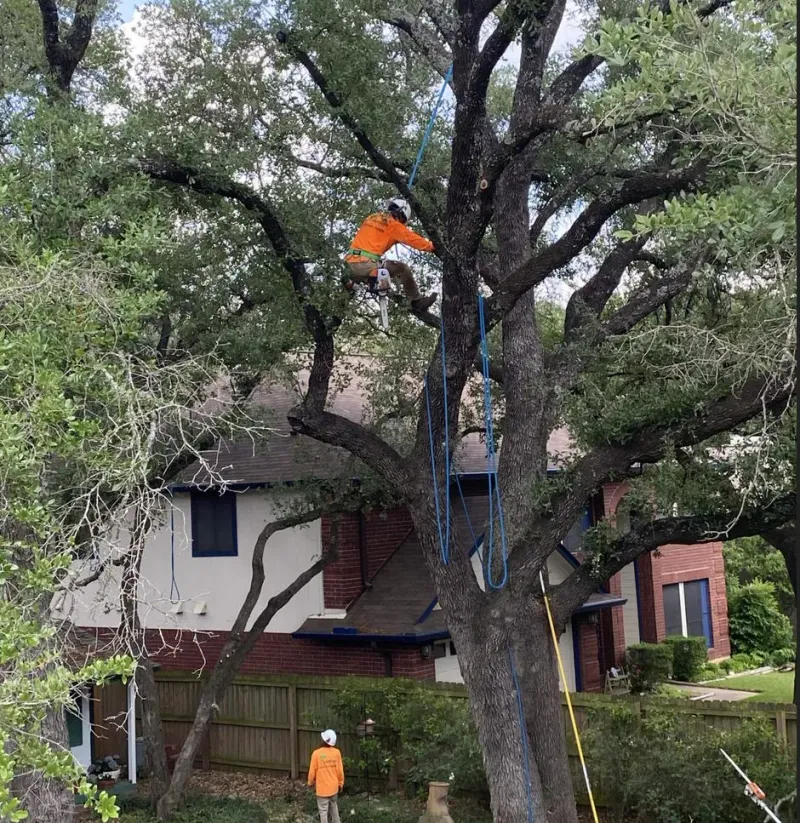
The most preventable mistake is pruning at the wrong time of year. Beetles that spread oak wilt are most active in spring, when they are drawn to fresh sap on newly cut wood.
Texas A&M Forest Service guidance on preventing oak-wilt spread advises avoiding pruning oak trees from February through June. If a branch breaks in a storm or a cut is unavoidable during that window, the wound should be painted immediately with an appropriate wound sealant to reduce beetle attraction.
Outside the high-risk window, wounds can still be treated promptly as a precaution.
Texas A&M Forest Service pruning guidance recommends checking current protocols for wound treatment and timing, since best practices can be updated as research continues. When planting near existing oaks, ask a certified arborist whether root-graft trenching is warranted if known infection exists nearby.
Oak wilt is serious, but it does not automatically make live oak the wrong choice. Knowing the risk, planting in a location with adequate spacing from infected trees, and following the pruning calendar are the three habits that keep the risk manageable for most Hill Country homeowners.
Make the purchase fit the yard and the care commitment
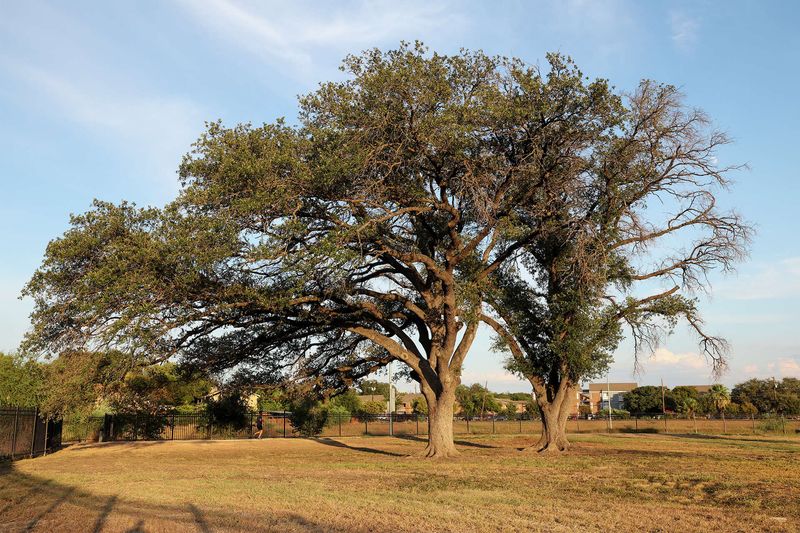
Live oak earns its reputation as a Central Texas shade tree through real regional credentials: native status, evergreen canopy, drought tolerance once established, and a lifespan that can outlast the people who plant it. Whether it is the right tree for your specific yard depends on a checklist only you can complete.
Contact nurseries early in the October-through-March window, because availability on native trees can be limited and changes over time. When you call, ask which live-oak species they carry, which sizes are in stock, and whether reservations are possible for larger specimens.
Confirm the scientific name on the label before you buy, since Quercus fusiformis and Quercus virginiana are not identical choices for Hill Country conditions. Use the Texas A&M tree data to review mature size and site requirements before settling on a planting location.
Plant with the root flare at grade, water slowly across the full root zone throughout the first two growing seasons, and adjust frequency based on your soil, recent rain, and local restrictions. Follow the oak-wilt pruning calendar by avoiding cuts from February through June, and treat any unavoidable wounds immediately.
Austin’s planting steps and oak-wilt resources cover both in plain language worth bookmarking. A live oak planted thoughtfully in the right spot is one of the few yard investments that genuinely gets better with every decade.