
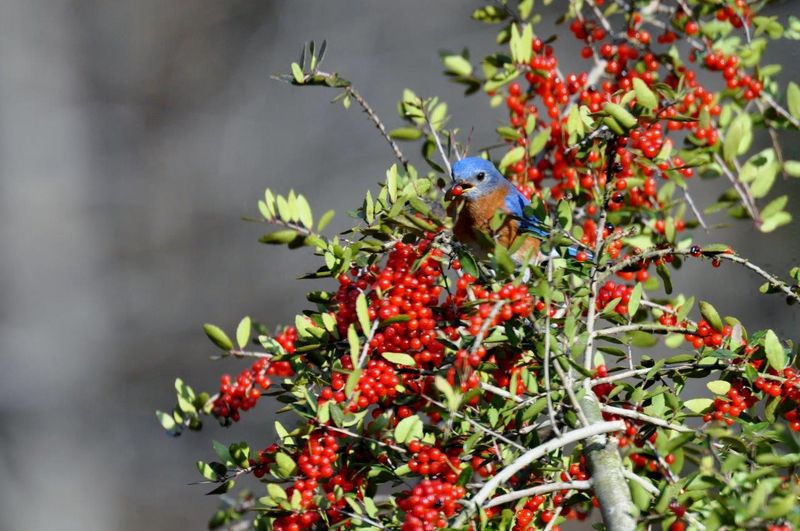
Possumhaw holly is a Central Texas native shrub that can genuinely help Eastern Bluebirds by providing bright winter berries, cover, and foraging habitat. Planting it during fall gives roots time to settle in before summer heat arrives.
But there is an important catch: bluebirds are cavity nesters, and a shrub alone rarely gives them the enclosed space they need to raise a family. Pair possumhaw with the right site, open habitat, and a properly built nest box, and you have a setup that may realistically support bluebird activity spring after spring.
What possumhaw can—and cannot—do for bluebirds
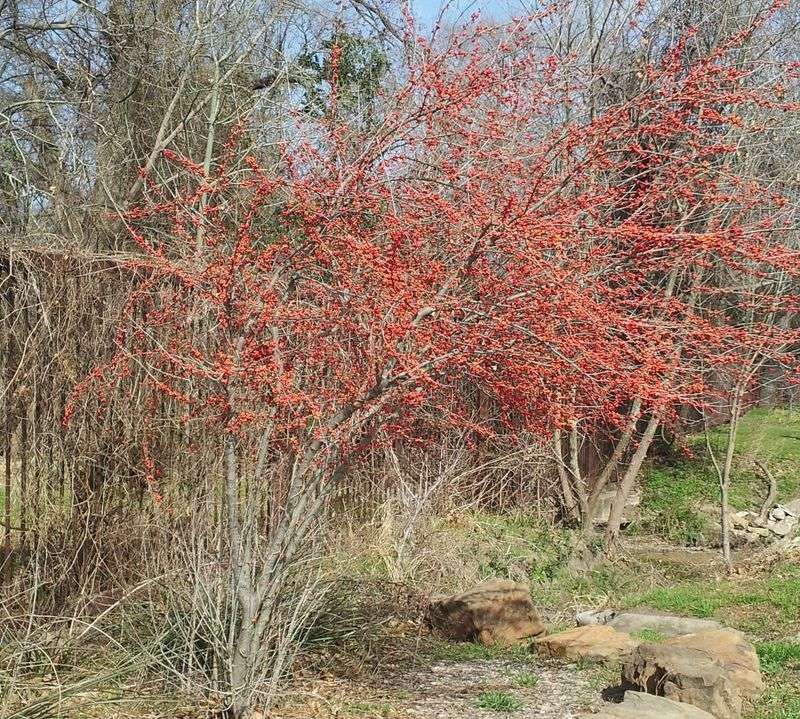
Possumhaw holly (Ilex decidua) is a deciduous native shrub or small tree that puts on one of Central Texas’s most striking winter displays. After its leaves drop, clusters of red-orange berries cling to bare branches for months, offering a reliable food source right when many other plants have little to offer.
The Texas Bluebird Society’s native plant guide lists possumhaw among several Texas natives whose berries Eastern Bluebirds actively seek out.
That documented food value is real and worth building on. Possumhaw can also provide cover, perching spots, and a small measure of shelter that rounds out a yard’s habitat quality.
What it cannot reliably do is supply the enclosed cavity a bluebird pair needs to actually build a nest.
Eastern Bluebirds nest in holes, not in open branches or leafy thickets. A shrub may occasionally contain a natural hollow, but ordinary landscape possumhaw plants do not automatically grow one.
So while the shrub can improve your yard’s appeal to bluebirds, it is most honest to describe that contribution as habitat support rather than a nesting guarantee.
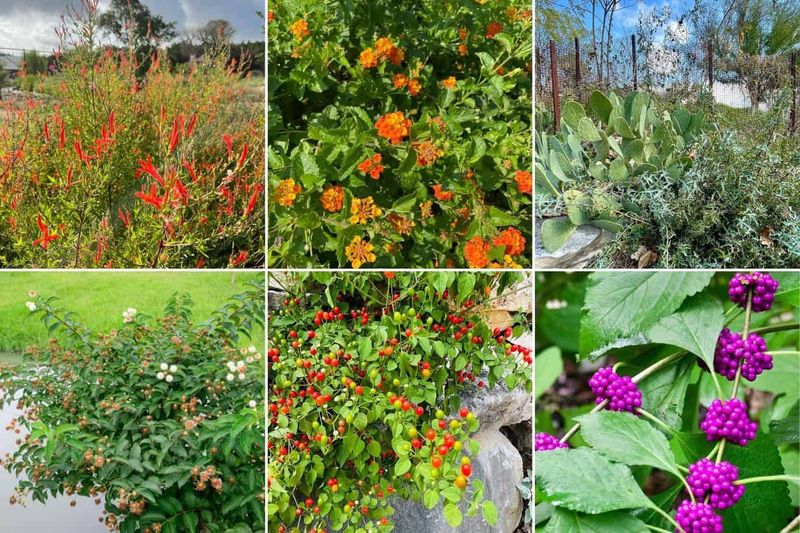
Texas sources, including TPWD and the Texas Bluebird Society, also list yaupon, roughleaf dogwood, American beautyberry, coralberry, hackberry, and several sumacs as native plants that provide bluebird food. Possumhaw is one good option, not the only one, and its suitability depends on your specific site.
The goal of adding it to a Central Texas yard is to make the landscape more hospitable, with the understanding that bluebirds will decide whether and how to use what you offer.
Bluebirds need a cavity, not merely a leafy shrub
Few backyard birds are as closely tied to a single habitat feature as Eastern Bluebirds are to cavities. They nest in natural tree holes, old woodpecker excavations, rotting fence posts, and purpose-built nest boxes, and they are particular about the size and placement of those openings.
TPWD’s bluebird naturalist guide describes them as secondary cavity nesters, meaning they rely on holes already made by decay or other birds rather than excavating their own.
That single biological fact changes how you should think about any shrub’s role in a bluebird habitat plan. A possumhaw planted in your yard may attract a bluebird that forages for berries, pauses on a branch between hunting insects in the lawn, or shelters briefly during cold weather.
All of that activity looks encouraging, and it is genuinely useful habitat behavior. None of it, though, means a nest is coming.
Eastern Bluebirds also favor relatively open landscapes. TPWD’s Eastern Bluebird species page notes that they prefer open woodlands, farms, roadsides, and orchards over dense timber or tightly enclosed shrub beds.
A yard with good open space, scattered perching points, and a visible cavity source is far more attractive to a nesting pair than a densely planted corner, however native the plants may be.
Understanding this distinction keeps expectations grounded and the planning practical. Possumhaw contributes food and structure to a bluebird-friendly yard.
The cavity requirement, however, almost always needs to be addressed separately, through a nest box designed specifically for this species.
Why fall can be a useful time to plant
Fall earns its reputation as a planting window in Texas for straightforward reasons. Once temperatures drop from their summer peaks, a newly installed shrub can put energy into root growth without the simultaneous stress of supporting full leaf and stem activity.
Texas A&M AgriLife Extension materials describe fall and winter as favorable periods for woody plant establishment precisely because cooler soil temperatures allow roots to spread while top growth remains slow.
For possumhaw specifically, getting roots settled before the following summer matters. Central Texas summers are hard on newly planted woody material, and a shrub that had several months to establish underground structure handles that heat challenge better than one installed in spring or early summer.
September through November is a practical target window for most of the region, though local weather in any given year can shift that range slightly.
One thing fall planting cannot do is produce an immediate habitat effect. A small possumhaw installed this October will not be a mature, berry-laden shrub by March.
It may produce some fruit within a year or two, but the full food and cover value builds over time as the plant grows. Counting on a newly planted shrub to attract nesting bluebirds the very next spring sets an expectation the plant is not yet equipped to meet.
Think of fall planting as an investment with a multi-season payoff. You are building habitat capacity for future years, not flipping a switch for the coming spring.
Choose a site that fits possumhaw
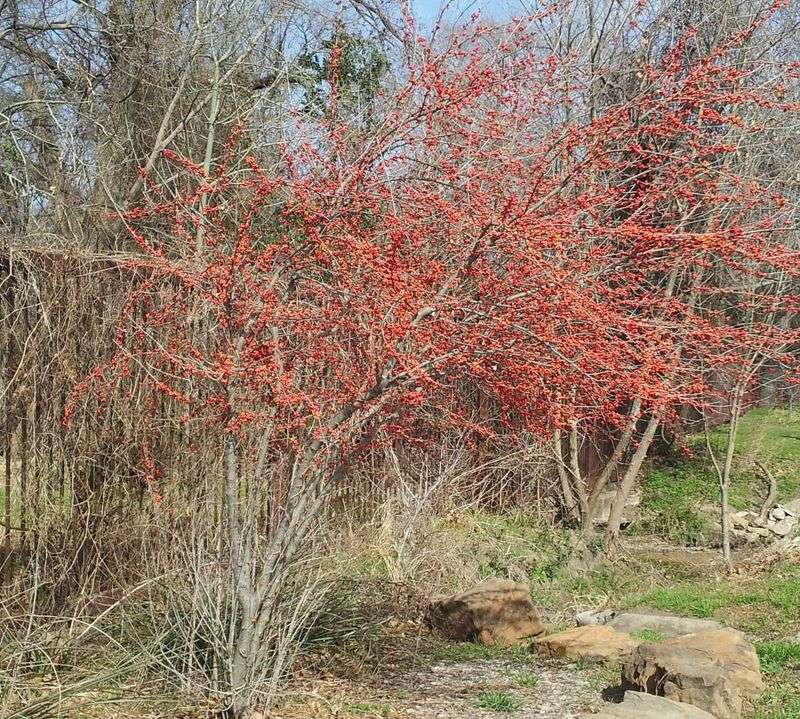
Matching possumhaw to the right spot in your yard is more important than simply getting it in the ground before frost. The USDA Forest Service’s detailed possumhaw review documents its natural association with moist soils, floodplain edges, riparian thickets, and woodland margins.
In Central Texas, that translates to sites where soil holds some moisture, drainage is reasonable rather than bone-dry, and the plant gets at least partial sun.
Full sun to part shade suits possumhaw well in most Central Texas settings. It tolerates heavier clay soils common in the region’s blackland prairies and does reasonably well along low spots, drainage swales, or the edges of seasonal wet areas.
Where it struggles is on thin, shallow limestone with almost no water retention and no supplemental irrigation during establishment. Those sites exist throughout the Hill Country and Edwards Plateau portions of Central Texas, and gardeners there may need to either irrigate consistently through the first year or two or consider a different locally appropriate native, such as agarita or Texas lantana, which are better suited to rocky, dry conditions.
Berry production adds another site-selection layer. The Texas Bluebird Society’s plant list notes that listed plants may be native only to parts of Texas, so confirming that possumhaw fits your specific ecoregion is worth doing before purchase.
Female possumhaw plants produce the showy fruit, so if you are buying from a nursery, ask whether the plant is sexed and whether a nearby male is needed for pollination.
For broader plant matching help, the Texas A&M AgriLife Earth-Kind Plant Selector lets you filter by county, soil type, and sun exposure to confirm whether possumhaw or an alternative native suits your specific yard conditions.
Use a nest box to create a dependable cavity
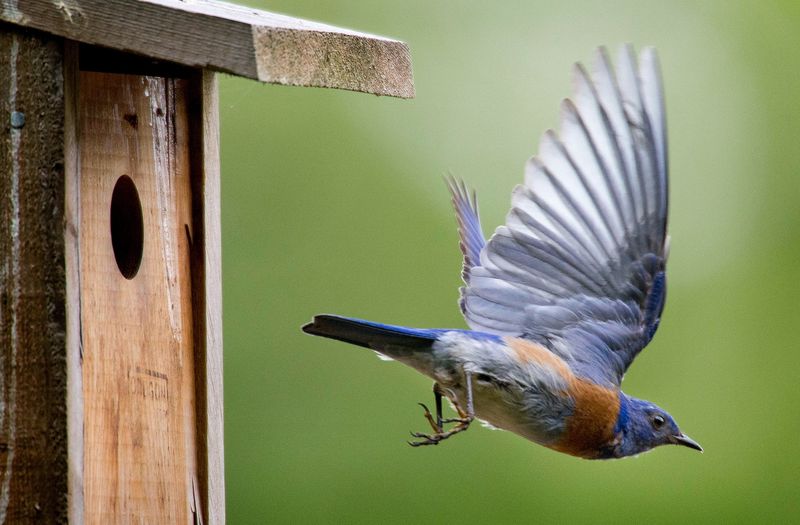
Pairing possumhaw with a correctly designed nest box turns a food-and-cover planting into a more complete bluebird habitat setup. The shrub handles the foraging side; the box handles the nesting requirement that the shrub cannot reliably meet on its own.
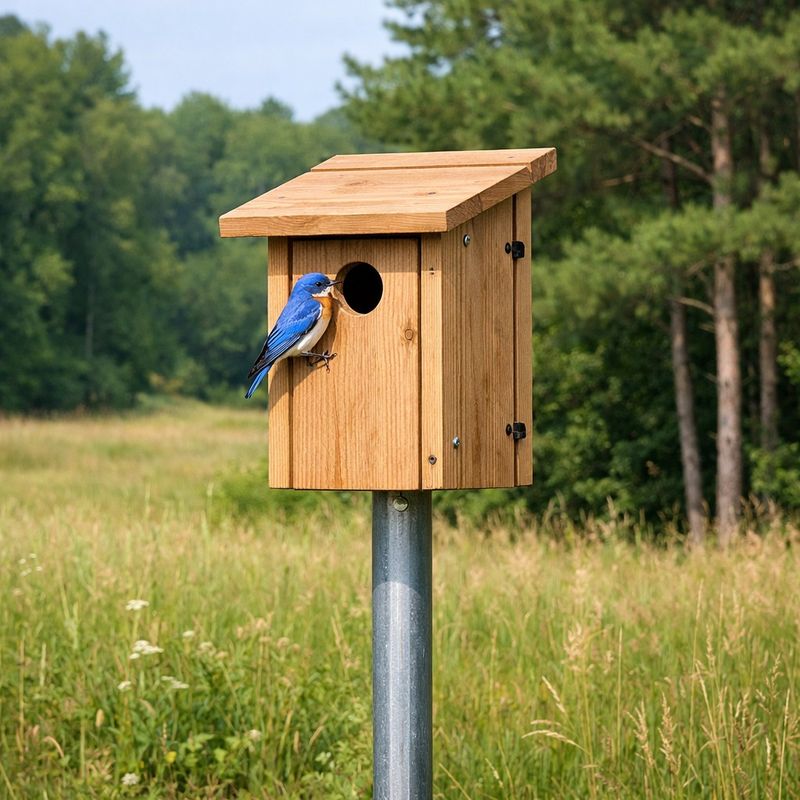
TPWD’s nest box guidelines for Eastern Bluebirds specify an entrance hole of exactly 1.5 inches in diameter. A floor measuring approximately 5.75 by 5.5 inches gives a bluebird pair enough room to build a nest cup without leaving excess space that invites competing species to move in.
The box should go on a metal pole at least 5 feet above the ground, with ventilation holes near the top and drainage holes in the floor to prevent heat and moisture buildup.
Leave the perch off entirely. Perches look natural but they give house sparrows and starlings a landing platform that makes it easier for them to investigate and claim the box before bluebirds arrive.
A smooth metal pole, ideally fitted with a baffle below the box, also discourages snakes and raccoons from reaching the entrance.
Position the box so the entrance faces away from the prevailing wind and morning sun, which helps regulate interior temperature. TPWD’s bluebird guide recommends spacing multiple boxes at least 100 yards apart if you install more than one, since bluebird pairs are territorial and will not nest too close to one another.
The nest box is where the repeatable nesting opportunity actually lives. Possumhaw nearby adds food and a perching station that may draw birds toward the box, but the box itself is what gives a bluebird pair somewhere to commit to a nest.
Both elements together create a more functional habitat than either one alone.
Build the combination around open, insect-rich habitat
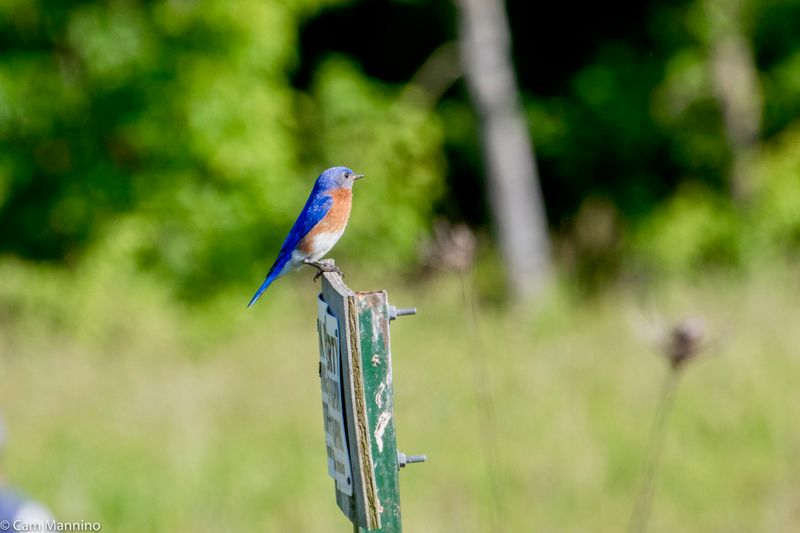
Where you place the plant-and-box combination matters as much as the components themselves. Eastern Bluebirds hunt insects by watching from a low perch and dropping to open ground, so they need clear sightlines and accessible turf or bare soil.
TPWD’s Eastern Bluebird profile consistently describes preferred habitat as open woodlands, farms, roadsides, and orchards, not dense shrub beds or closed-canopy woodland.
A yard that works well for bluebirds typically has a mowed or short-grass area near the box, with possumhaw or other native shrubs at the edges rather than crowding the box. The shrub provides a natural perching and foraging station within easy reach, while the open center gives hunting birds room to operate.
Tall, dense plantings directly around the box can actually reduce its appeal by blocking the low-and-open foraging style bluebirds depend on.
Insects are non-negotiable during nesting season. Adult bluebirds feed nestlings almost entirely on caterpillars, beetles, grasshoppers, and similar invertebrates, so a yard with healthy insect populations supports nesting far better than one treated heavily with broad-spectrum insecticides.
TPWD’s bluebird naturalist materials specifically advise against placing nest boxes near sites with widespread insecticide use, because reduced insect availability directly undercuts a nesting pair’s ability to feed young.
Native plants, including possumhaw, support the insect communities that bluebirds rely on, which is another reason they belong in a habitat-conscious yard beyond their berry value alone.
Maintain the box and manage competing risks
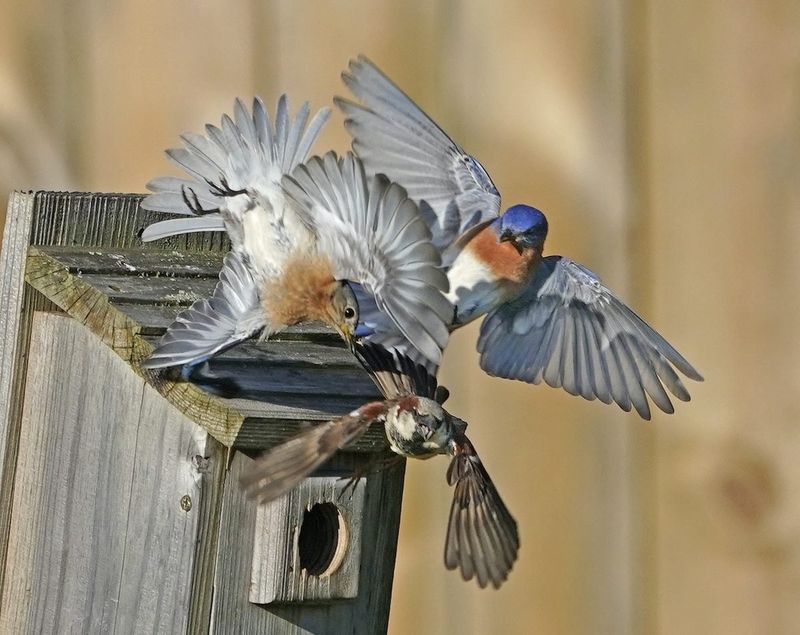
Installing a nest box is the beginning of an ongoing commitment, not a one-time project. Boxes that go unmonitored quickly become occupied by house sparrows or European starlings, two non-native species that compete aggressively for cavities and will displace bluebirds given the chance.
Checking the box every week or two during nesting season lets you identify and address that competition before a bluebird pair loses its site.
TPWD’s bluebird guide recommends cleaning the box after each successful hatch, removing the old nest so the pair can start fresh for a second or third brood. Bluebirds in Central Texas can attempt two or three nesting cycles in a season, and a clean box is more likely to be reused than one packed with old material.
TPWD’s nest box guidelines also emphasize that ventilation and drainage holes are essential for keeping the interior safe during Central Texas heat spikes.
Predator protection is worth taking seriously. A smooth metal pole with a cone-shaped or stovepipe baffle below the box discourages climbing mammals and snakes.
Even with every precaution, some seasons will see no bluebird activity, due to local bird population shifts, weather events, competition, or factors you cannot easily control. That is normal, and it is part of why no honest source promises annual nesting from any setup.
One more practical note on possumhaw: the same berries that bluebirds eat are not safe for people or pets. Poison Control’s holly berry guidance reports that holly berries can cause nausea, vomiting, and diarrhea in both humans and animals.
Keep children and pets away from fallen fruit, and place the shrub accordingly.
A practical Central Texas bluebird plan
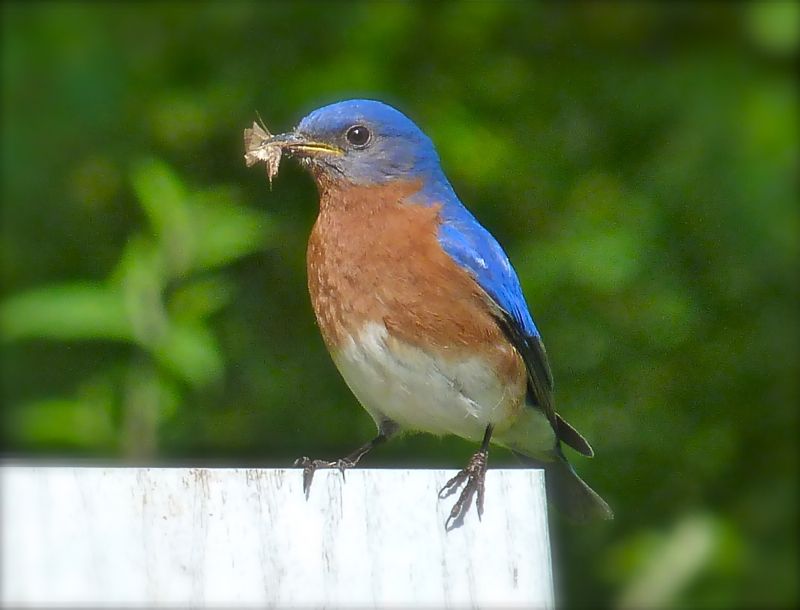
Putting this all together into an actionable sequence makes the project manageable. Start by evaluating your site: check sun exposure, soil moisture, and drainage to confirm possumhaw is a reasonable fit.
If your yard sits on shallow, dry limestone with no low spots or supplemental water available, consider whether another native, such as agarita or roughleaf dogwood, might establish more reliably before committing to possumhaw. The USDA possumhaw species review documents its preference for moister, riparian-adjacent conditions that not every Central Texas yard can supply.
Once you have confirmed site suitability, fall is a sensible time to plant. Roots can establish through the cooler months, giving the shrub a better chance of handling its first summer.
At the same time, install a correctly built nest box on a metal pole at least 5 feet off the ground, with the right entrance dimensions, no perch, and a predator baffle. TPWD’s birdhouse specifications give you the exact measurements to follow.
Keep the area around the box open, limit insecticide use, and plan to monitor and clean the box through the nesting season. TPWD’s Eastern Bluebird profile makes clear that habitat quality, local bird populations, and seasonal conditions all shape whether bluebirds show up and stay.
Possumhaw may improve that habitat and draw birds closer to the box; the box creates the repeatable nesting opportunity the shrub alone cannot provide. Neither element is a guarantee, but together they give you the most honest shot at a bluebird spring.