
You do not need a big backyard to grow buckets of sweet, homegrown berries in California. Even a sunny balcony or a small patio can hold a few pots that pump out fruit all season long.
Container growing also lets you control the soil and water, which is a huge win during our long dry summers and water restrictions. Here are nine berry bushes that thrive in pots and reward small-space California gardeners with real harvests.
1. Everbearing Strawberries
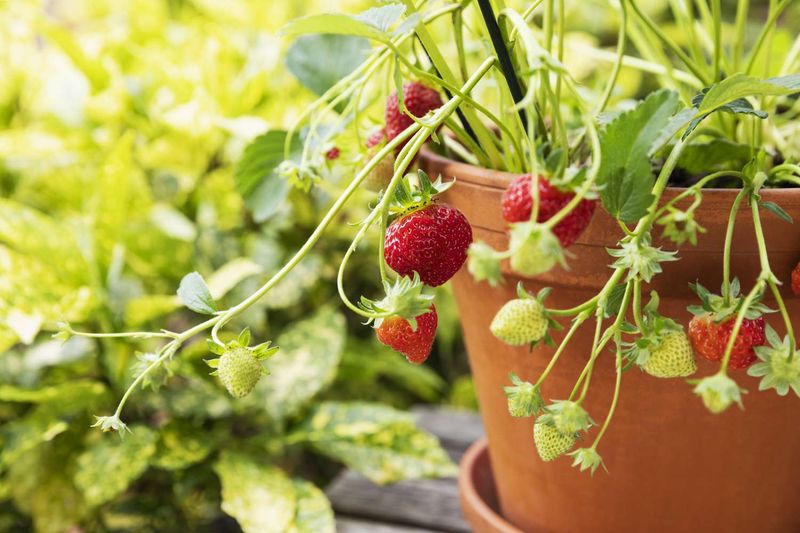
Few things beat plucking a warm, sun-ripened strawberry right off your railing planter. Everbearing types are the overachievers of the berry world, sending out fruit in waves from spring through fall instead of one quick burst.
They love shallow pots, hanging baskets, and strawberry towers, which makes them ideal when floor space is tight. In California’s Mediterranean climate, they appreciate morning sun and a little afternoon shade inland where summer heat gets intense.
Keep the soil consistently moist but never soggy, and feed lightly every few weeks. Snipping off the first round of runners pushes the plant to make more berries instead of baby plants.
Fun bit: strawberries are not true berries at all, botanically speaking. That does not stop them from filling a bowl faster than almost anything else you can grow in a container.
2. Dwarf Blueberries (Southern Highbush)
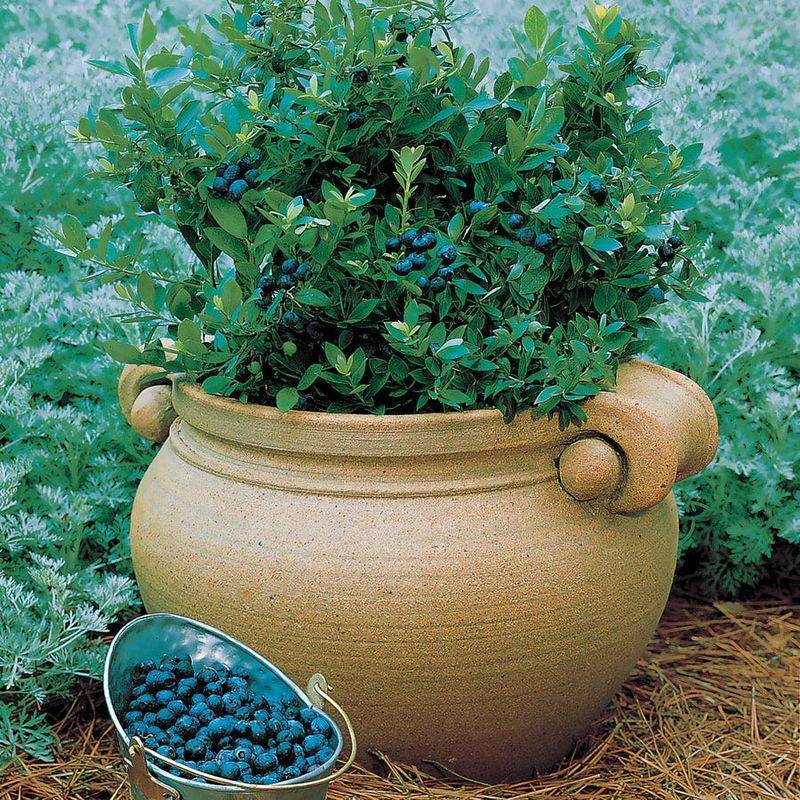
Blueberries have a reputation for being fussy, but the dwarf southern highbush varieties were practically made for California pots. Cultivars like ‘Sunshine Blue’ and ‘Jelly Bean’ stay small, around two to three feet, and handle our milder winters because they need fewer chill hours.
The real trick is soil. Blueberries demand acidic conditions, and a container lets you give them exactly that with an azalea or acid-loving potting mix, something our alkaline native soils rarely offer.
Water with rainwater when you can, since hard tap water slowly raises the pH they hate. A layer of pine bark mulch on top helps hold moisture through dry spells.
Plant two different varieties if you have room, and you may see bigger yields thanks to cross-pollination. The bushes turn a gorgeous red in fall too, so they earn their pot even between harvests.
3. Raspberries (Compact Fall-Bearing)
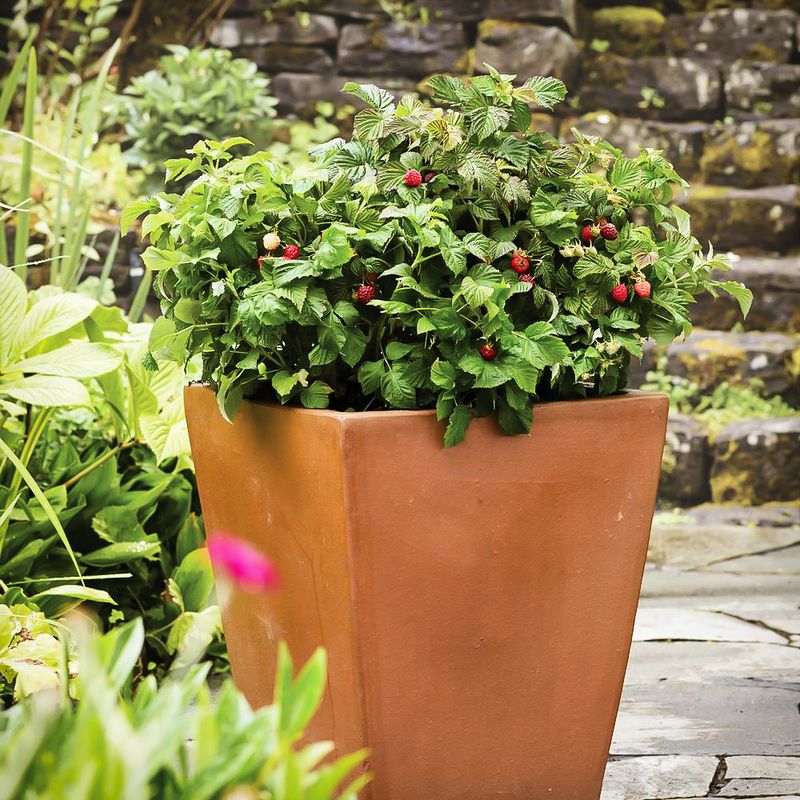
Raspberries in a tiny space sound impossible until you meet the compact fall-bearing types like ‘Raspberry Shortcake’, a thornless variety that grows in a tidy mound with no trellis needed. It fits happily in a large tub on a balcony.
Fall-bearing canes fruit on new growth, which means you can cut everything back to the ground each winter and still get a crop next season. That simplicity makes them forgiving for beginners.
Give them the biggest pot you can manage, at least a five-gallon container, because raspberries drink a lot of water and dislike drying out in California’s heat. Morning sun with afternoon protection inland keeps the fruit from scorching.
The payoff is a steady handful of berries you can pick without gloves, right at fingertip height.
4. Blackberries (Thornless Trailing)
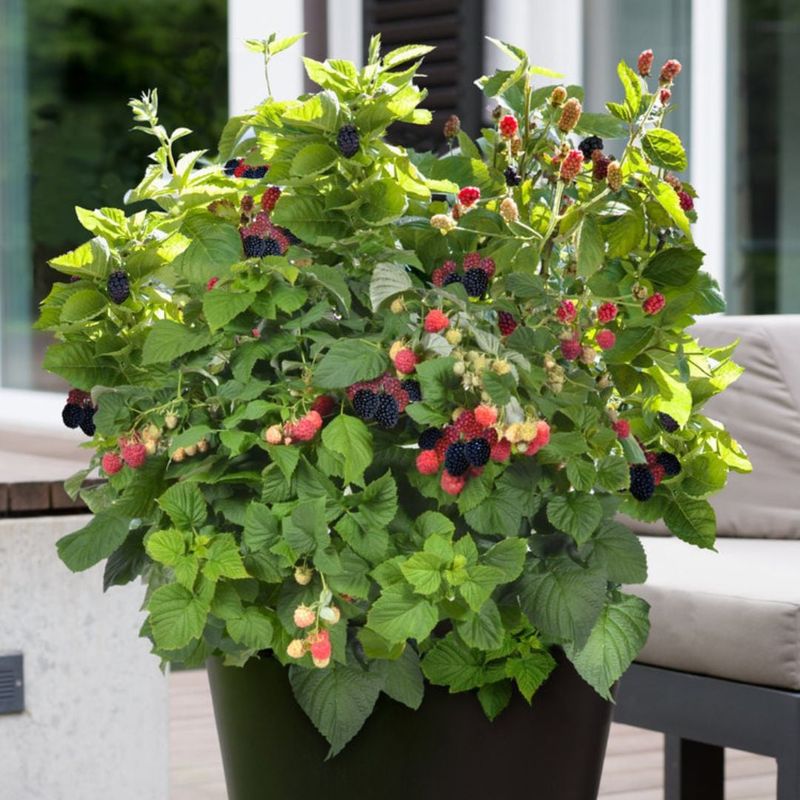
Thornless blackberries flip the script on a plant most gardeners remember as a scratchy, sprawling menace. Varieties like ‘Baby Cakes’ were bred for containers, staying compact and producing plump berries without a single thorn to snag your arms.
‘Baby Cakes’ even fruits twice in mild California zones, once in summer and again in fall, so a single pot keeps giving. A small stake or hoop trellis keeps the canes upright and tidy on a balcony.
These bushes handle heat well but reward you for keeping their roots cool and moist, so a light-colored pot and mulch go a long way. Prune out the old canes after they finish fruiting to make room for fresh growth.
The berries are big, glossy, and sweet enough to eat straight off the vine before they ever reach the kitchen.
5. Goji Berries
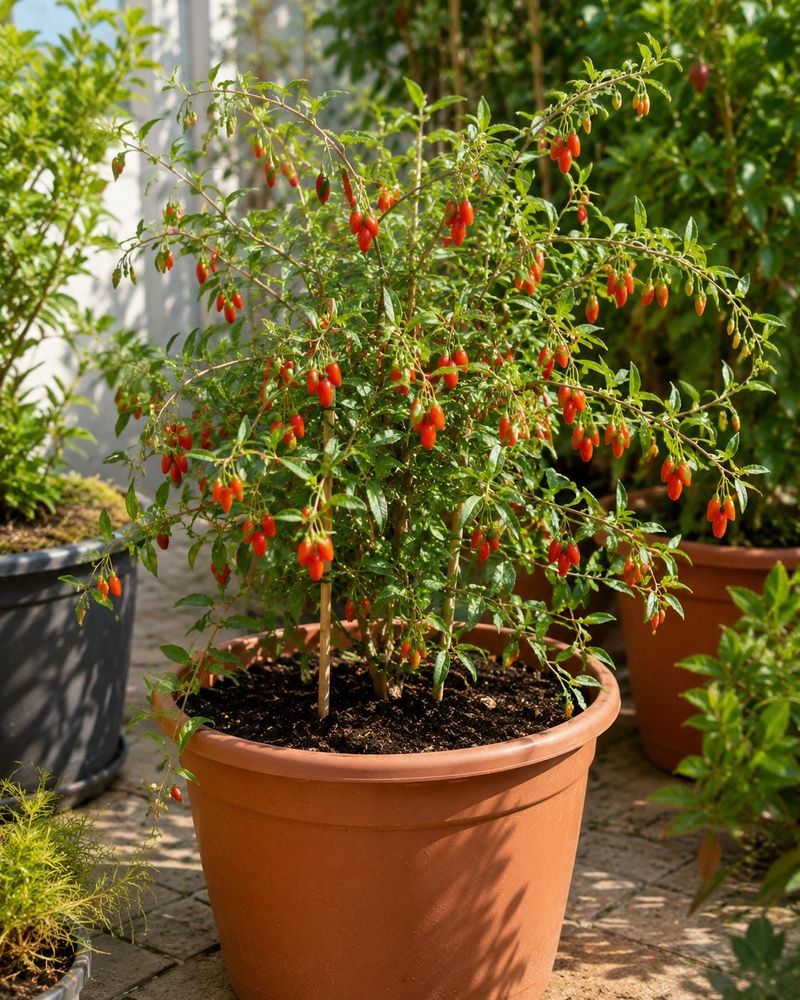
Goji berries feel almost tailor-made for the California container gardener who wants toughness. Native to dry regions of Asia, this shrub shrugs off heat, poor soil, and drought better than almost any berry on this list.
The arching branches can get leggy, so pruning keeps them bushy and pot-friendly. In a large container with full sun, a mature plant produces those bright orange-red berries that dry beautifully for snacks and teas.
Water restrictions are less of a worry here since gojis are genuinely drought-tolerant once established, a real bonus during our dry summers. They also handle salty coastal air fairly well.
Patience helps, as plants often take a season or two before hitting full production. Once they do, you get a steady supply of a berry that costs a small fortune at the store.
6. California Huckleberry
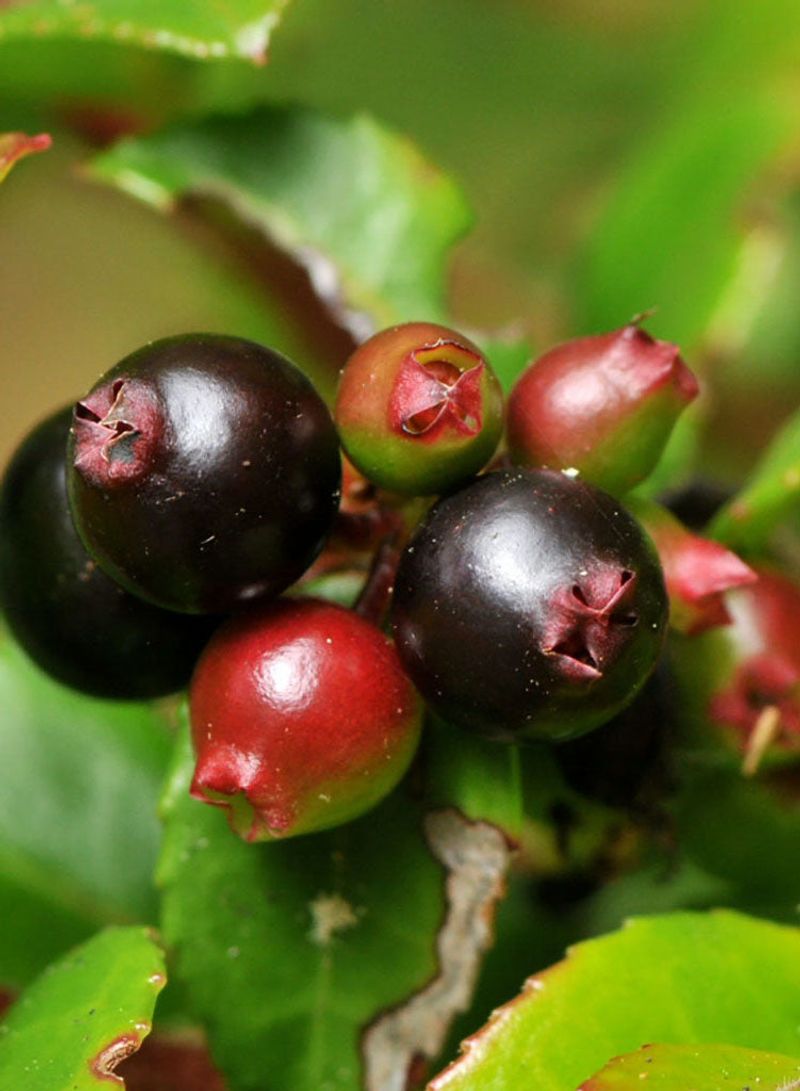
Here is a berry that belongs here in every sense. The California huckleberry, Vaccinium ovatum, is a true native evergreen shrub that grows wild along our coast, and it happily settles into a large pot.
Native plants pull double duty by feeding local birds and pollinators, so growing one is a small act of stewardship for your neighborhood wildlife. The dark, tangy berries are a favorite of both people and songbirds.
Unlike sun-hungry berries, huckleberry prefers partial shade and acidic, well-draining soil, which suits a shaded balcony or the north side of a patio. It grows slowly, staying manageable for years.
The glossy foliage looks handsome even out of season, so the plant earns its spot as an evergreen backdrop that also happens to hand you a native fruit each summer.
7. Currants and Gooseberries
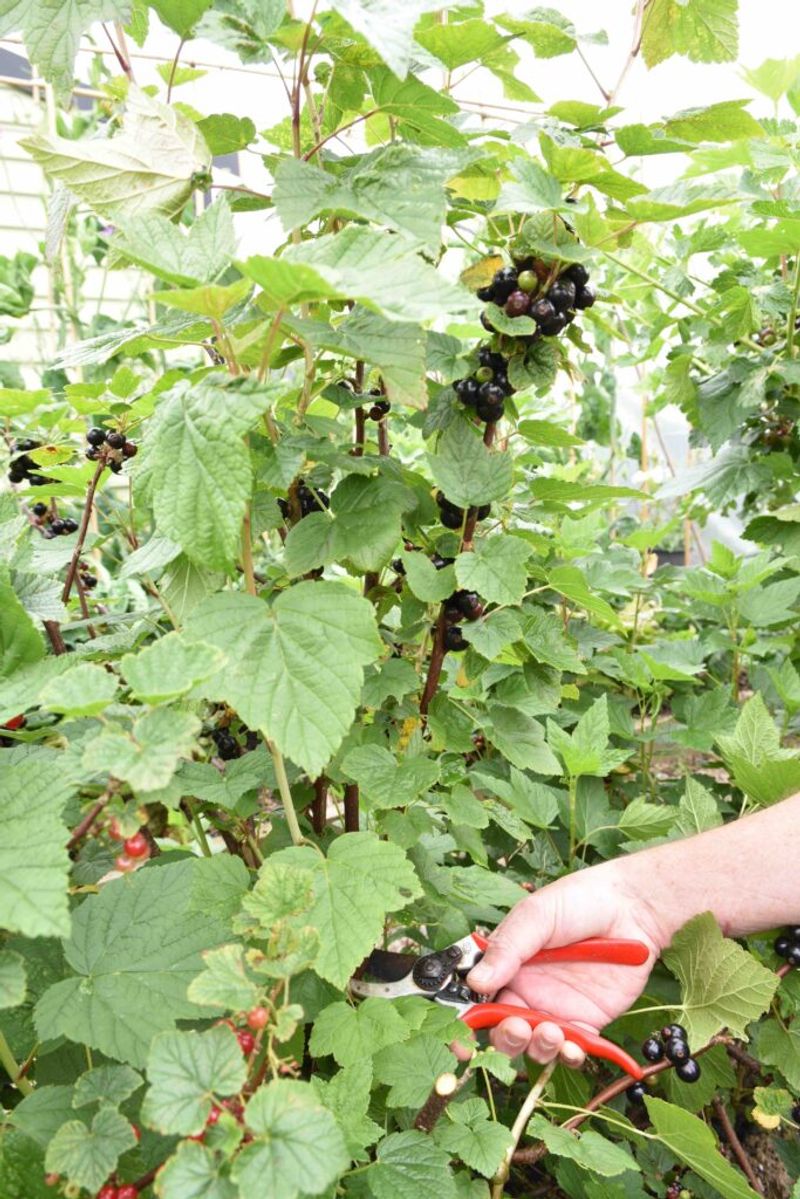
For gardeners in cooler coastal or foothill parts of California, currants and gooseberries are quiet workhorses. They tolerate partial shade better than most berries, so a balcony that only gets a few hours of sun can still produce fruit.
Currants dangle in jewel-like strands of red, white, or black, while gooseberries hang like little striped lanterns. Both grow well in five-gallon pots and stay a manageable size with a light yearly pruning.
They prefer the milder, damper conditions found near the coast and dislike blazing inland heat, so place them where afternoon sun is softened. Keeping the roots cool with mulch makes a big difference.
Note that some Ribes species are restricted in certain areas due to white pine blister rust concerns, so it is worth checking local rules before planting. Choose a permitted variety and you get an old-fashioned berry that is hard to find fresh anywhere else.
8. Alpine Strawberries
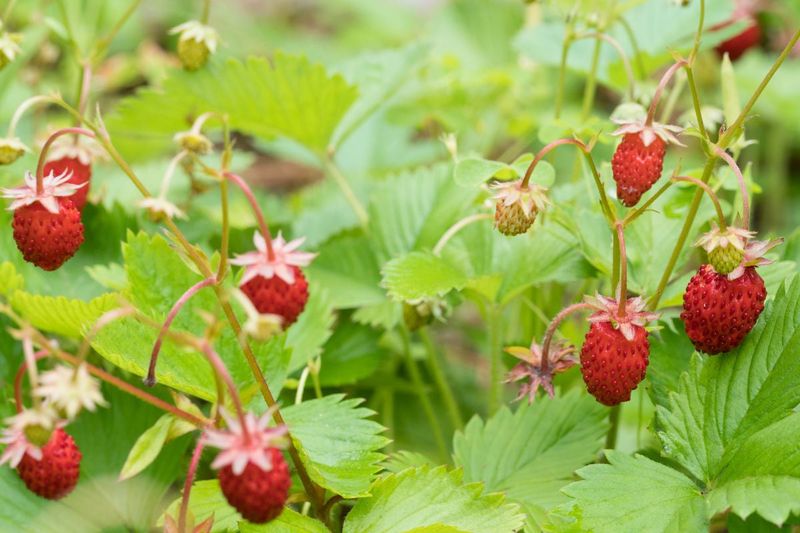
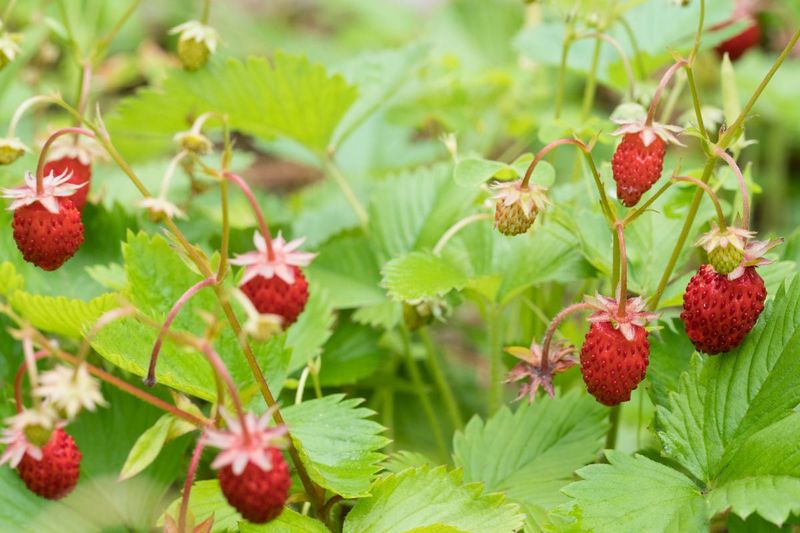
Tiny but mighty describes the alpine strawberry perfectly. These little plants produce miniature berries with an intense, almost perfumed flavor that dwarf grocery-store strawberries never come close to.
They do not send out runners, so they stay neat and clumping, which makes them ideal for window boxes, edging pots, and shady corners where other berries sulk. A balcony with dappled light suits them beautifully.
Alpine strawberries fruit steadily from spring into fall in California’s long warm season, offering a little handful nearly every day rather than a big flush. They also grow easily from seed if you want a whole tray for cheap.
Birds adore them, so tuck a plant where you can enjoy watching the wildlife or drape light netting if you want to keep the berries for yourself.
9. Dwarf Mulberry (‘Dwarf Everbearing’)
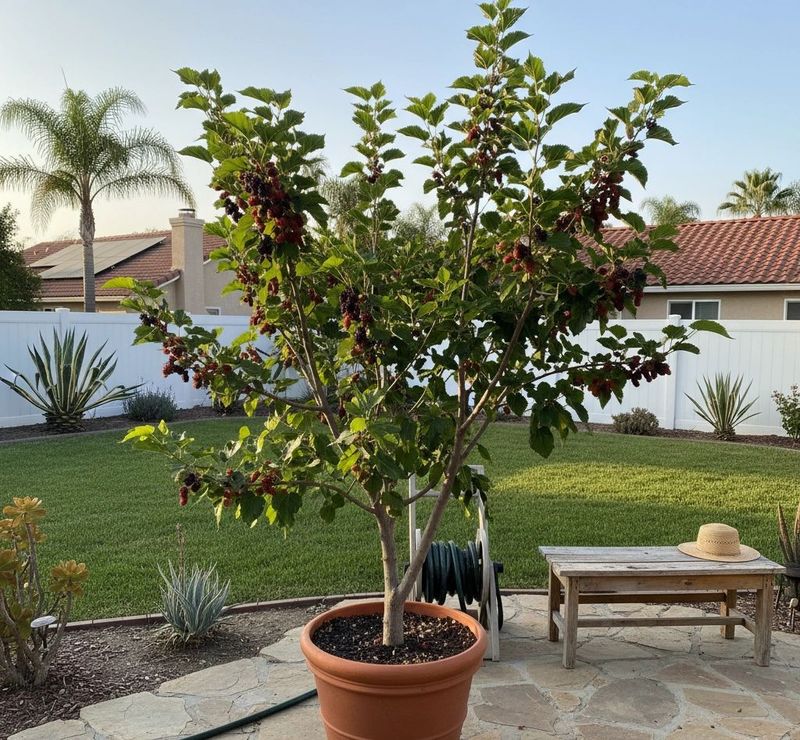
Saving a showstopper for last, the dwarf everbearing mulberry lets you grow a fruit tree in a pot without giving up your whole balcony. Kept pruned, it stays around six feet and fruits while still quite small, sometimes in its first year.
The berries ripen over a long stretch, dropping a steady supply of sweet, blackberry-like fruit through the warm months. That extended harvest window fits California’s long growing season like a glove.
Full sun and a large, sturdy container keep it happy, and regular pruning controls both the size and the shape. It handles heat well, making it a solid choice for inland patios and valley balconies.
One heads-up: ripe mulberries stain, so place the pot away from light-colored walls and floors. In exchange, you get a productive little tree that feels almost impossibly generous for its size.