
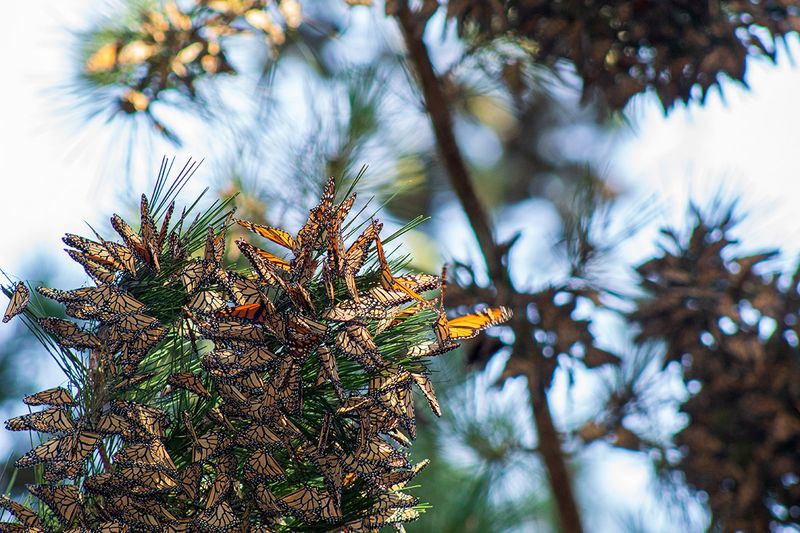
Every fall, orange-and-black wings fill certain California coastal trees by the thousands, drawing visitors who stand quietly beneath the branches and stare upward in disbelief. Those clusters are real, they are remarkable, and they are also widely misunderstood.
Western monarchs do not all funnel into one famous grove; they use hundreds of sites stretching across the California coast, and what pulls them there has everything to do with shelter, temperature, and trees. Understanding why they cluster, and what that means for your yard, is one of the most useful things a California homeowner can do for these butterflies right now.
California’s Monarchs Use Many Coastal Groves
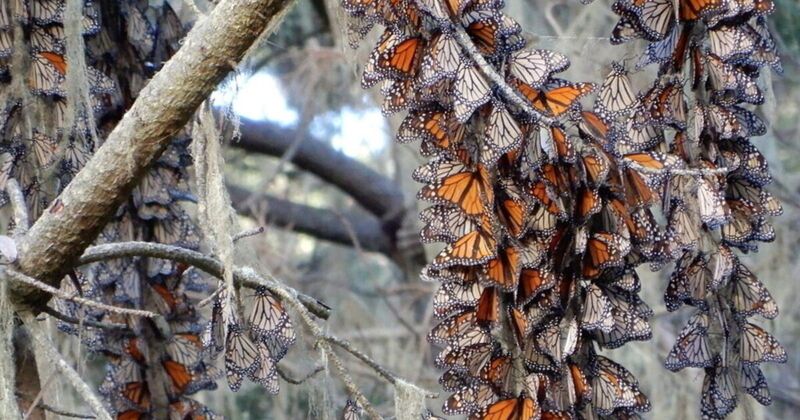
Picture the title of this article as a useful shorthand, not a literal map. When it says “one California coastal grove,” think of it as a stand-in for a single vivid example, because California State Parks confirms that western monarchs overwinter at sites spread along the California coast, and the broader network runs from Mendocino County all the way to Baja California, Mexico.
Pismo State Beach is among the most photographed and historically significant of those sites, but it represents the phenomenon, not the whole population.
Western monarchs are a distinct population from the monarchs most people read about in national news. Eastern monarchs migrate to mountain forests in central Mexico each winter, while western monarchs follow the Pacific flyway and settle along the California coast.
The U.S. Fish and Wildlife Service notes that the western population breeds across much of the western United States and southern Canada before funneling toward coastal California in autumn.
South Florida also hosts a largely nonmigratory monarch population, which means guidance written for California should not be copied wholesale for Florida or Texas.
Hundreds of overwintering sites dot the California coast, ranging from small roadside groves with a few dozen butterflies to major aggregations in the thousands. The Xerces Society’s overwintering site management resources describe this network as a conservation priority, because protecting monarchs means protecting many sites, not just one beloved grove.
Thinking in terms of a regional coastal network, rather than a single destination, is the starting point for understanding what these butterflies actually need.
The Grove Works Because Its Microclimate Does
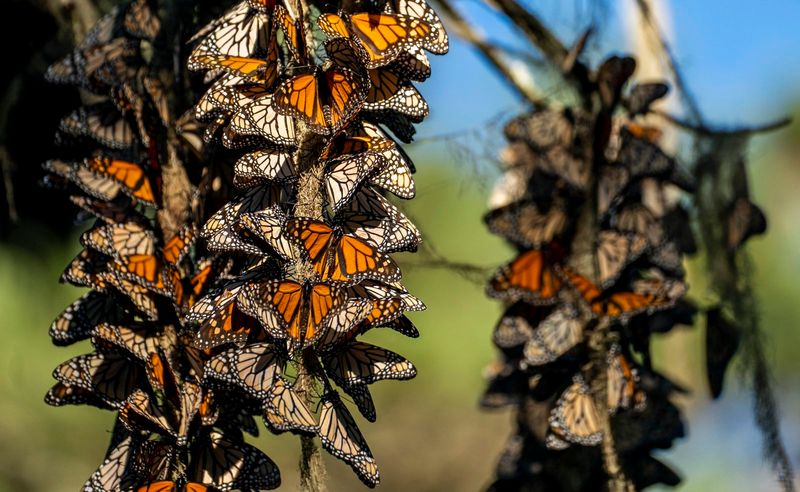
Monarchs are not choosing a grove for sentimental reasons. They are responding to a specific combination of physical conditions that keeps them alive through the cool, wet California winter.
Wind protection is the most obvious factor: coastal groves with dense canopy and surrounding topography buffer the butterflies from storms that would otherwise knock them from their roosts and cost them the fat reserves they need to survive until spring.
Temperature stability matters just as much as shelter from wind. A suitable overwintering site stays cool enough to keep monarchs in a low-metabolism resting state called reproductive diapause, but warm enough that they do not freeze.
California State Parks describes this thermal sweet spot as one of the key features that makes coastal groves functional roost sites. The combination of marine air, canopy cover, and surrounding terrain creates a relatively stable temperature band that an exposed hillside or an inland valley simply cannot provide.
No single tree species defines a suitable site. Eucalyptus, Monterey cypress, Monterey pine, and other trees with dense branching and year-round foliage can all provide the structural conditions monarchs use.
What matters is the canopy’s ability to moderate temperature and block wind, along with access to nearby nectar sources for the occasional warm-day foraging flight. A USGS study on overwintering abundance found that habitat selection at both regional and site scales reflects these physical conditions.
A grove that checks the right boxes will attract monarchs regardless of which tree species happens to be growing there, which is why protecting the whole grove, and not just one signature tree, is the more useful conservation goal.
The Site Returns, but the Same Butterfly May Not
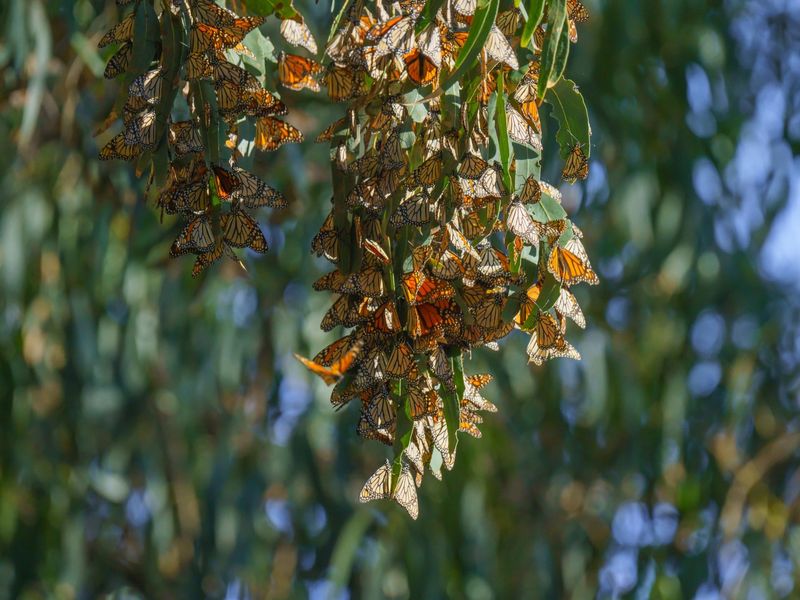
One of the most persistent ideas about monarch overwintering is that each butterfly flies back to the same tree it left the previous spring. The image is appealing, and the recurring use of particular sites, sometimes down to specific trees, is genuinely documented.
California State Parks notes that monarchs may repeatedly use the same groves and particular trees within them. What that does not mean, though, is that the individual butterflies at a grove this December are the same ones that clustered there last December.
The annual monarch cycle involves successive generations. Adults that overwinter along the California coast in late autumn are principally the late-season generation, butterflies that have never been to that site before.
They are in reproductive diapause, meaning their reproductive systems are paused, and their behavior centers on resting, occasional sunning on warmer days, rehydration, and infrequent nectar foraging. The Xerces Society’s state-of-the-overwintering-sites report describes this life-history context in detail, making clear that breeding is not happening inside the cluster.
Multiple overlapping generations are not gathered simultaneously in one winter grove.
Across different years, the site attracts new generations of monarchs because its physical conditions persist. A grove that offered the right microclimate last winter still offers it this winter, and butterflies navigating by environmental cues, including coastal topography, light, temperature gradients, and chemical signals, find it again.
That recurring use reflects the reliability of the habitat, not a memory encoded in any one butterfly. The wonder of a winter cluster does not require individual memory to be real; it requires a grove that keeps doing its job year after year.
Winter Concentration Creates a Conservation Bottleneck
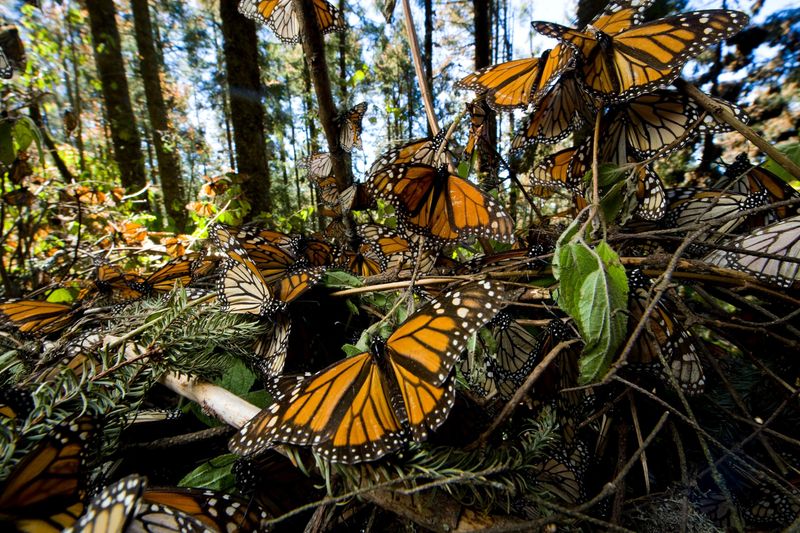
A winter monarch cluster is one of the most breathtaking wildlife spectacles in North America, and it is also one of conservation biology’s clearest examples of a bottleneck. When thousands of butterflies concentrate in a small grove, any threat to that grove becomes a threat to a disproportionately large share of the western population all at once.
Tree loss from development, storm damage, or drought can remove the canopy that makes a site functional. Pesticide drift from nearby agriculture or landscaping can reach roosting adults.
A single severe weather event at the wrong moment can cause significant mortality.
Xerces Society’s overwintering resources identify grove degradation, habitat loss, and pesticide exposure as primary threats to these concentrated populations. The western monarch count has declined dramatically from historical levels, with some surveys in recent decades recording only a small fraction of the millions documented in the mid-twentieth century.
The Xerces state-of-the-overwintering-sites report documents this long-term decline across California sites.
Annual counts, though, are indicators rather than a complete population census. The USGS overwintering abundance study found that counts vary with weather patterns, site conditions, survey effort, and population movement between sites.
A single low-count year does not necessarily mean the population collapsed further; a high-count year does not mean the problem is solved. The honest picture is a substantial long-term decline with real annual variability on top of it.
Protecting overwintering groves addresses only part of the problem. Monarchs also need breeding habitat, nectar sources during spring and fall migration, and a landscape with reduced pesticide pressure across the full seasonal range.
The bottleneck at the grove makes overwintering site protection urgent, but it does not make it sufficient on its own.
Feed Adult Monarchs With Flowers, Not a Routine Feeder

The word “feed” in this article’s title points toward something real and achievable, but it does not mean setting out a dish of sugar water. Wild monarch conservation guidance consistently emphasizes nectar plants, not feeders, as the right way to support adult butterflies in a yard.
Sugar-water solutions appear in captive-rearing and educational contexts; they are not a recommended practice for supporting wild monarchs in your garden.
Adult monarchs visiting a yard need nectar, which they get from flowers. Milkweed is a different story: its primary role is as a host plant for caterpillars, not a general food source for adults.
Milkweed flowers can provide some nectar, and the Xerces overwintering report confirms that overwintering adults do use nectar on warm days. However, a yard focused solely on milkweed misses the broader nectar support that adults need throughout their seasonal movement.
The more useful approach is planting a diverse mix of preferably native flowers with overlapping and sequential bloom periods that match when monarchs are present in your area. Xerces Society’s California monarch nectar plant guide offers regionally appropriate options and notes that plant performance varies by site, so selecting several species rather than one advertised “monarch plant” creates a more reliable resource.
California native options that tend to perform well include goldenrod, native asters, native buckwheats, gumplant, and coyote brush, with bloom times that can be staggered from late summer through fall to support migrating adults.
USDA Natural Resources Conservation Service guidance draws a clear line between nectar plants for adults and milkweed for larvae, pointing out that a flower garden can support adult monarchs without necessarily producing caterpillars. That is a reasonable and realistic goal for most California coastal homeowners: a pesticide-free sequence of blooms that provides fuel for adults passing through or foraging near a winter grove, without requiring a full breeding habitat setup.
Place Milkweed Only Where California Guidance Supports It
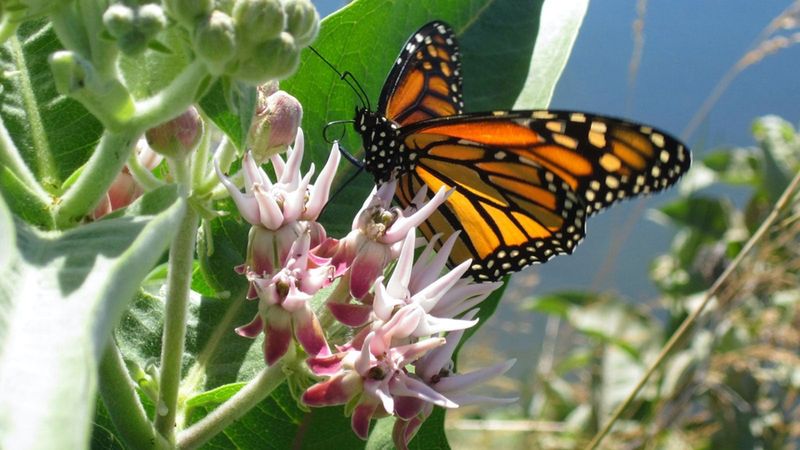
Milkweed is genuinely essential to monarch reproduction. Without it, caterpillars cannot complete development, and no amount of nectar planting substitutes for host plant availability during the breeding season.
A USDA Forest Service milkweed information sheet explains that monarch larvae are obligate milkweed feeders, making host plant availability a foundational conservation concern. In inland California and in areas with documented breeding habitat, planting locally native milkweed species is a meaningful contribution.
For central and northern coastal California homeowners, especially those living near known overwintering sites, the calculus changes. Guidance from conservation organizations raises concerns about planting milkweed close to the coast, particularly evergreen or late-season types that do not go dormant in winter.
Year-round milkweed near overwintering sites may interfere with reproductive diapause and create conditions favorable to the buildup of a protozoan parasite called Ophryocystis elektroscirrha, or OE. The Xerces California monarch nectar plant guide reflects this coastal caution, making diverse nectar planting, rather than milkweed, the default recommendation for homeowners near overwintering groves.
When milkweed is appropriate for your location, species choice matters. Xerces Society’s milkweed planting guide recommends California-native species matched to your specific habitat.
Narrow-leaved milkweed, showy milkweed, California milkweed, woollypod milkweed, and heartleaf milkweed are among the options named for different California regions and conditions, but the right choice depends on where you live and what grows naturally nearby.
Tropical milkweed, widely sold at garden centers, is a cautionary case. The Xerces milkweed FAQ recommends against it, citing concerns about year-round foliage, disrupted migratory timing, and parasite buildup, especially in California’s mild coastal climate.
Regional and population-specific factors do affect how serious the risk is, so the honest guidance is to avoid tropical milkweed in California and consult local resources before planting any milkweed near the coast.
Remove Pesticides and Protect the Habitat You Create
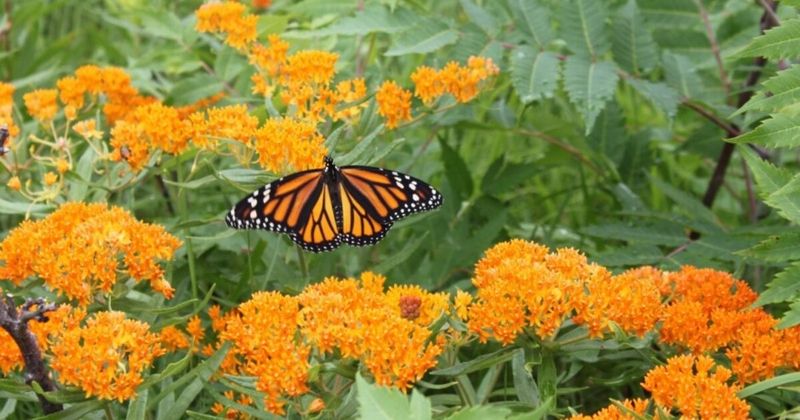
Planting the right flowers is only half the job. A yard full of goldenrod and native asters treated with a systemic insecticide is not monarch habitat; it is a trap.
Monarch Joint Venture’s pesticide guidance is unambiguous: insecticides applied to milkweed or nectar plants can kill monarch eggs, caterpillars, and adults, and systemic products are especially concerning because the active ingredient moves into pollen and nectar. Even soaps and horticultural oils can harm beneficial insects when they contact them directly, so “organic” does not automatically mean safe for monarchs.
Herbicides also pose a risk that is easy to overlook. Spraying weeds along a fence line or driveway can eliminate milkweed and flowering plants that provide monarch resources in ways that are hard to see until the plants are already gone.
If treatment is unavoidable anywhere near monarch habitat, integrated pest management principles apply: use the most targeted method available, follow label directions precisely, apply when blooming plants are not in flower, and avoid broad applications near any plant that monarchs or their caterpillars use.
USDA NRCS habitat management guidance recommends timing mowing before monarchs arrive in an area or after they depart, and leaving some sections of the yard unmanaged where feasible. Clearing an entire patch of habitat at once removes shelter and food in one stroke; a staggered approach preserves at least part of the resource at any given time.
Leaving seed heads, dry stems, and some plant litter through winter also benefits a wider community of insects beyond monarchs.
At an overwintering grove, the rule is simpler: observe, do not intervene. California State Parks advises visitors to stay on designated paths, avoid touching or disturbing clusters, and refrain from trimming or altering grove trees without an appropriate management plan in place.
Handling monarchs can require a scientific collection permit. The most helpful thing a visitor can do at a grove is nothing at all, beyond watching quietly.
A Helpful Yard Supports the Whole Seasonal Network
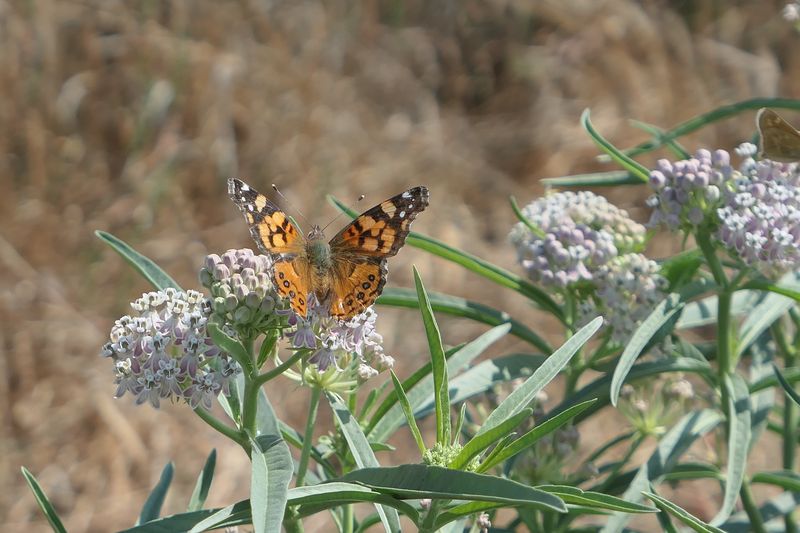
A realistic checklist for California homeowners committed to monarch support comes down to four actions. Plant a pesticide-free sequence of regionally appropriate nectar flowers with overlapping bloom times that cover the periods when monarchs move through or forage near your area.
Add locally native milkweed only if your location and regional guidance support it, and check with Xerces Society’s overwintering resources or your local native plant society before planting near the coast. Protect the habitat you create by keeping it free of insecticides and avoiding unnecessary clearing while monarchs or caterpillars are present.
Leave winter clusters completely undisturbed.
What a yard cannot do is equally worth knowing. A single garden, however well planted, will not restore western monarch migration or reverse the population’s long-term decline on its own.
Xerces Society’s California nectar plant list frames individual gardens as contributors to a larger network of habitat, not as standalone solutions. Recovery depends on protected overwintering groves, breeding habitat across the western range, migration corridors with adequate resources, and reduced pesticide pressure at a landscape scale.
The most important shift in thinking is from “feeding butterflies” to “maintaining habitat.” Monarch Joint Venture’s guidance consistently frames the homeowner’s role as stewardship rather than direct management of wild butterflies. You are not trying to attract, handle, or control monarchs; you are making your corner of California a place where they can find what they need.
A yard that quietly provides clean nectar, appropriate host plants, and zero pesticide exposure is doing exactly what the western monarch network needs from individual homeowners, one property at a time.