
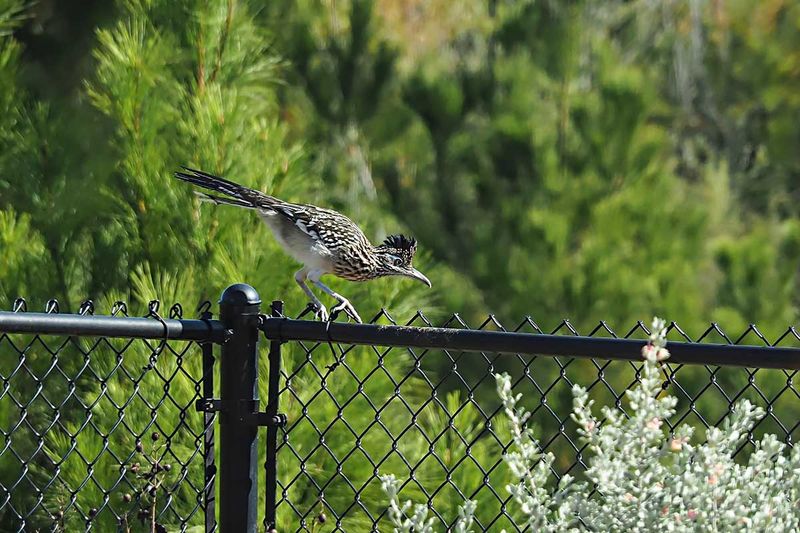
Spotting a Greater Roadrunner perched on your fence at first light is one of those Hill Country moments that stops you in your tracks. These birds carry a lot of folklore, but the real story behind that pause is more practical and more interesting than any lucky omen.
Understanding what the sighting can and cannot tell you about your yard helps you make smarter choices for the wildlife around you.
The Fence Pause Has Several Ordinary Explanations
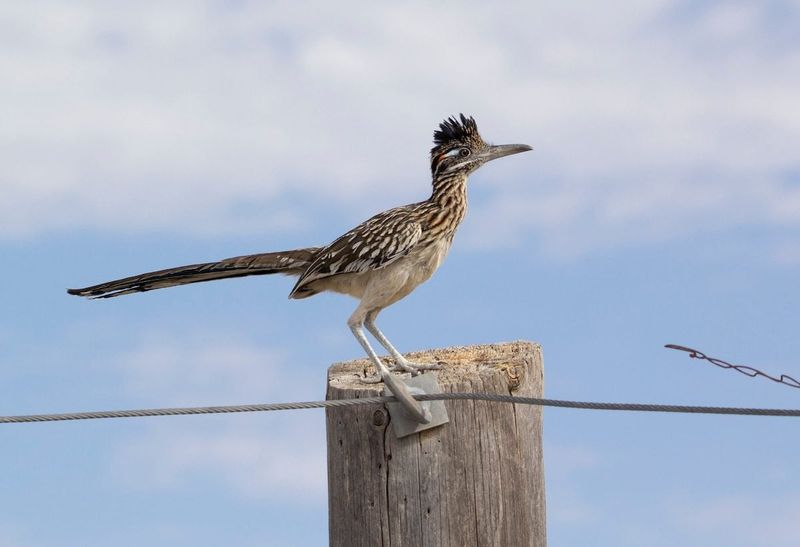
Greater Roadrunners are ground birds with a habit of climbing. Fence posts, rock outcroppings, low tree branches, and similar structures serve as convenient elevated spots, and a wooden or wire fence running along a Central Texas property fits that description perfectly.
According to Cornell Lab of Ornithology’s All About Birds species account, roadrunners use a range of perches for territorial calling, scanning their surroundings, and moving through their home range.
A pause at dawn could be compatible with several ordinary behaviors happening at the same time or in quick sequence. After a cool Hill Country night, a roadrunner may spread its feathers and orient itself toward the rising sun to warm up, a behavior sometimes called sunbathing or sunning.
Males also call from elevated posts to advertise their territory, so a bird sitting still on your fence may be vocalizing or listening for a response.
Scanning for prey from a height, resting between movements across a large home range, or simply using the fence as a convenient waypoint are equally plausible explanations. Texas Parks and Wildlife Department’s roadrunner profile describes the bird as an active, wide-ranging species that moves through varied terrain daily.
None of these possibilities outranks the others as the definitive reason for one specific pause, and the time of day does not create a reliable biological signal or lucky omen.
The honest takeaway is that the fence provided something useful in the moment, whether that was warmth, height, a calling post, or a vantage point. Treating the sighting as one ordinary behavior rather than a meaningful verdict keeps the interpretation grounded and accurate.
What the Sighting Can Suggest About the Landscape
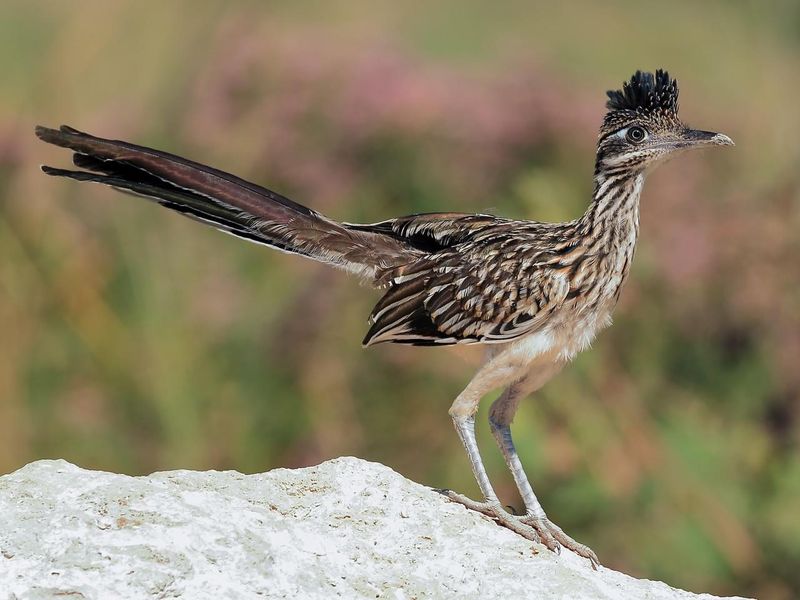
A roadrunner does not wander randomly. The species has documented habitat preferences, and a sighting near your property offers a limited but real clue about the surrounding area.
The Texas Breeding Bird Atlas account for the Greater Roadrunner describes the bird as favoring open and semi-open landscapes, including brushlands, open woodlands, savannas, limestone hills, and stream corridors. Suburban and rural yards in the Hill Country often sit within or adjacent to exactly those conditions.
For a roadrunner to use your fence, the broader area likely offers at least some combination of open ground for walking and foraging, nearby shrubs or trees for cover and potential nesting, available prey such as insects or small reptiles, and elevated structures for perching. Those are the basic habitat pieces the species needs, and your fence satisfies one of them.
Audubon’s field guide entry for the Greater Roadrunner reinforces that the species generally needs a mix of open foraging space and taller vegetation or structures nearby.
The important qualifier is scale. A comprehensive roadrunner species account published in Western North American Naturalist and USGS research on roadrunner habitat use both indicate that roadrunners use large home ranges, measured in tens of hectares in some Texas studies.
A bird on your fence may have come from a neighboring ranch, a greenbelt, an undeveloped lot, or a creek corridor several hundred meters away.
That means the sighting reflects landscape conditions across a broader area, not a verdict on your individual property. Treat it as a signal that the surrounding neighborhood retains enough open ground, cover, and prey to support a wide-ranging predator, rather than as confirmation that your specific yard earned the visit.
A Roadrunner Is Not a Yard-Health Test
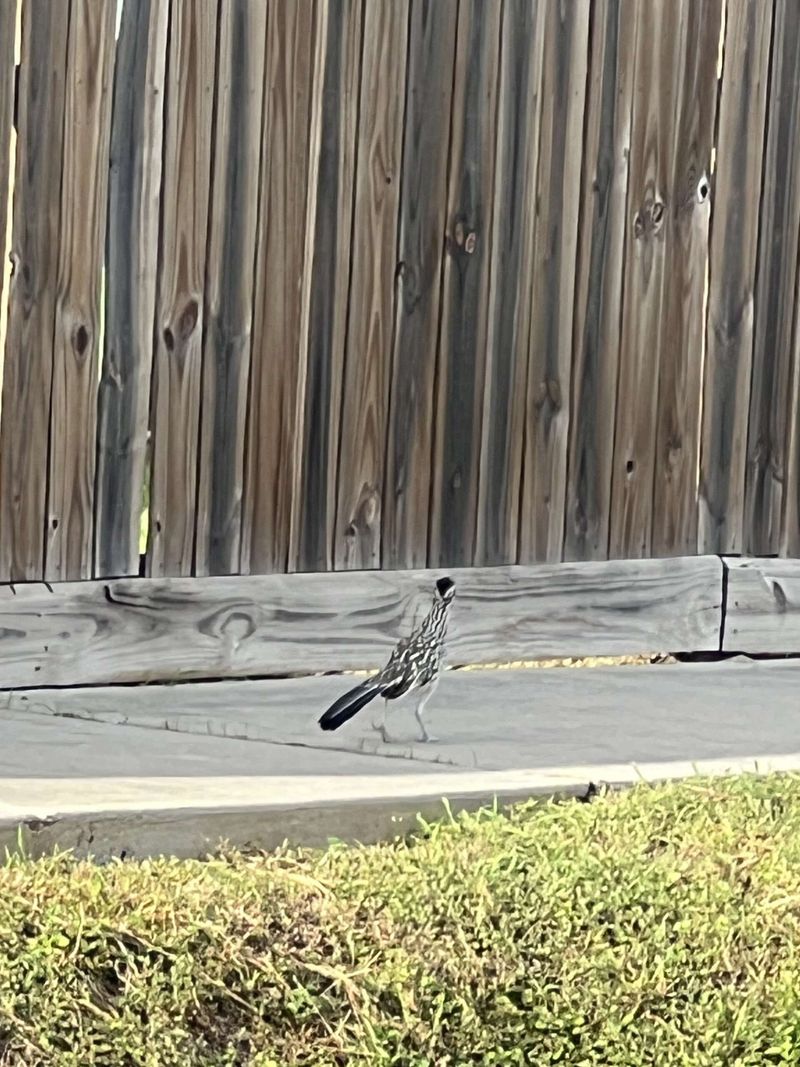
One bird on one fence post cannot diagnose the condition of a yard. That boundary matters, because it is easy to read a charismatic animal as a reward for good stewardship when the biology does not support that conclusion.
No peer-reviewed source or wildlife agency establishes a roadrunner sighting as a validated indicator that a property is healthy, pesticide-free, unusually biodiverse, or functioning well as a habitat patch.
Home range size explains why. The Western North American Naturalist species account and supporting USGS habitat research both document that roadrunners move across large territories.
A well-kept, heavily landscaped yard with little native cover can still host a passing bird if the surrounding neighborhood provides the habitat components the species needs. Conversely, a yard planted with diverse natives and managed carefully may go months without a roadrunner visit if the broader landscape lacks open foraging space or if the bird’s range simply does not overlap that block.
A fence perch is also not evidence of residency. The Texas Breeding Bird Atlas account and the All About Birds life history profile both describe roadrunners as wide-ranging birds that use many structures across their territory.
Sitting on your fence for a few minutes at dawn does not mean the bird has claimed your property as a home base or that your yard was specifically selected over your neighbor’s.
The practical upshot: enjoy the sighting for what it is, an ordinary behavior from a fascinating native bird moving through a landscape that still supports it. Resist the urge to treat the moment as a certification of your yard’s ecological worth, and resist equally the temptation to change everything you are doing on the assumption that one visit will become a permanent arrangement.
Its Diet Does Not Make It Pest Control
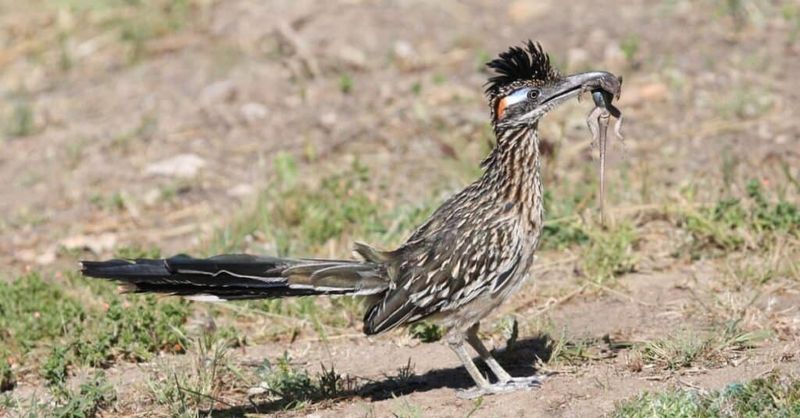
Roadrunners eat a remarkable variety of things. Cornell Lab’s life history account lists documented prey items that include insects, spiders, centipedes, scorpions, lizards, snakes, frogs, small mammals, birds, eggs, and carrion, along with plant material such as fruit and seeds.
That breadth reflects an opportunistic foraging strategy: the bird takes what is available and catchable, not what a homeowner most wants eliminated.
Because the diet shifts with season and local prey availability, a roadrunner near your fence is not targeting one specific nuisance. Texas Parks and Wildlife’s roadrunner profile directly addresses the tick-eating reputation and calls it exaggerated.
The bird may eat a tick it encounters while foraging, but it is not a reliable or consistent tick-reduction service. The same caution applies to snakes, scorpions, and rodents: a roadrunner may take any of them when the opportunity arises, but counting on one bird to manage a pest population is not realistic.
There is also an ecological dimension worth noting. A Texas Parks and Wildlife Department publication on roadrunners and Texas horned lizards raises the concern that roadrunner predation in some settings may affect Texas horned lizard populations, even though lizard numbers remained stable in the cited study area.
Roadrunner predation is not universally beneficial to every species in the local food web, and that nuance is worth keeping in mind before celebrating the bird as a blanket ecological ally.
Appreciating the roadrunner as a wide-ranging, opportunistic predator that contributes to a complex food web is more accurate and more useful than framing it as a targeted pest-control contractor. Its presence suggests prey diversity in the landscape, not a guarantee that any one problem species is being managed.
Build Habitat a Roadrunner Can Use
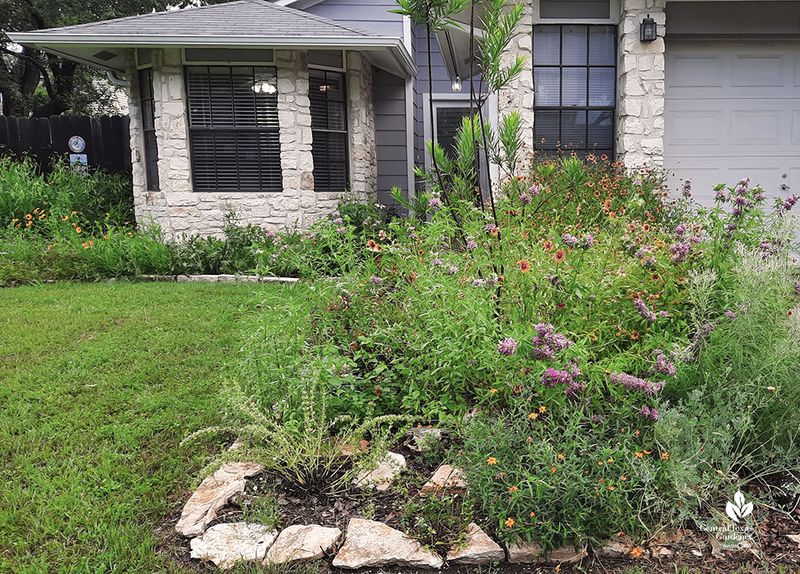
Rather than trying to lure a specific bird back to your fence, the more useful response to a roadrunner sighting is to ask whether your yard supports the habitat basics that benefit a wide range of native wildlife. Texas Parks and Wildlife’s Wildscapes certification program identifies food, water, and shelter as the three core requirements for a functional wildlife habitat yard, and those same elements align with what roadrunners and many other Hill Country species need.
On the plant side, TPWD’s Wildscapes design guidance recommends choosing native plants suited to your specific ecoregion rather than generic wildlife-garden lists. For Central Texas and the Hill Country, that means species adapted to thin limestone soils, seasonal drought, and triple-digit summer heat.
Native shrubs such as Texas sage, agarita, and turk’s cap can provide layered cover. Native grasses and groundcovers support insects that form the base of the food web that roadrunners draw from.
TPWD’s urban wildscapes tips also emphasize preserving open ground between plantings, which matters for a ground-foraging species like a roadrunner. A yard that is entirely covered in dense groundcover or thick mulch leaves less room for a bird to walk, scan, and chase prey.
Mixing planted areas with open patches of bare or sparsely covered soil gives foragers usable space.
Native planting can support a broader food web and improve cover, but framing it as a guaranteed roadrunner lure overstates what habitat work can deliver. The bird moves across a large territory and responds to landscape-scale conditions.
What you can reasonably do is make your yard a functional piece of a larger habitat mosaic. That is a worthwhile goal regardless of whether a roadrunner ever returns to the fence.
Also keep wildlife-friendly landscaping compatible with Central Texas fire safety: avoid dense or highly flammable vegetation immediately around the house, especially if your property sits in the wildland-urban interface, where defensible space is a practical necessity alongside habitat value. Consider consulting TPWD’s Bird City Texas habitat resources for regionally tested planting and yard-management guidance.
Support Wildlife Without Creating New Risks
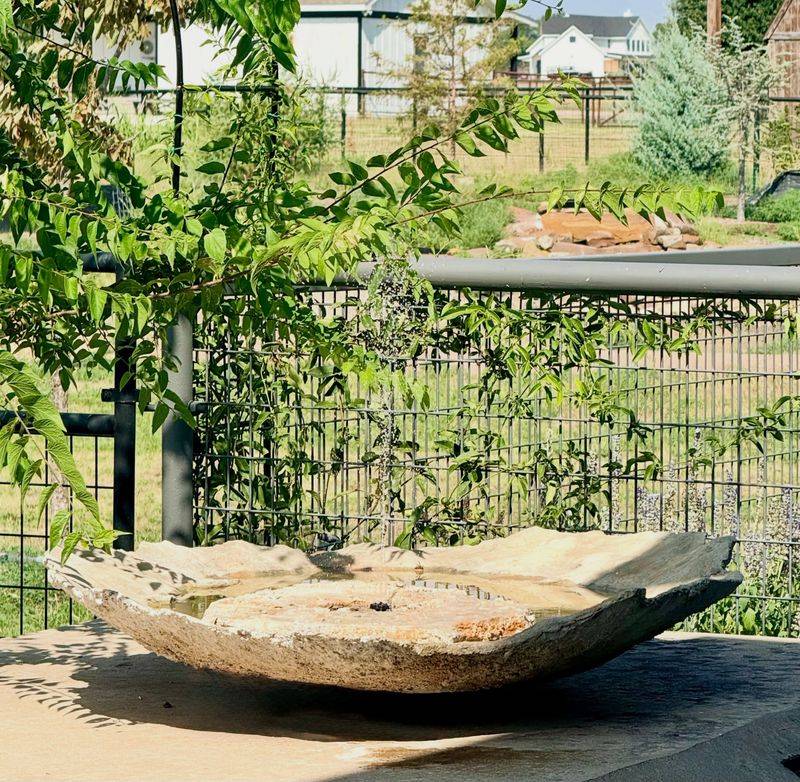
Adding water to a yard can meaningfully support wildlife during Central Texas summers, when natural water sources dry up and temperatures push well past 100 degrees. If you add a water feature, keep it shallow.
TPWD’s wildlife water guidance and urban wildscapes tips both recommend a source no more than 3 inches deep, changed and cleaned regularly to prevent algae buildup and bacterial growth. A shallow dish, tray, or ground-level basin works better for most ground-foraging wildlife than a tall pedestal bath.
Pesticide use is another area where small changes can have real consequences. EPA guidance on reducing pesticide impacts to wildlife notes that animals can be exposed directly to pesticides or indirectly by eating contaminated food, water, or prey.
EPA’s pesticide incident documentation also shows that product misuse and runoff are common exposure pathways. The practical steps are straightforward: treat only when a pest problem actually warrants it, follow the product label precisely, and take care to keep pesticides away from water sources and from insects and small animals that form part of the local food chain.
Reducing pesticide use is responsible yard management and benefits a wide range of wildlife. It should not, however, be presented as the confirmed reason a roadrunner visited your fence.
One sighting cannot reveal the pesticide history of a property or neighborhood.
Fire safety also belongs in any Central Texas habitat conversation. TPWD’s Wildscapes program recommends maintaining defensible space and avoiding highly flammable or resinous vegetation immediately around structures, particularly in the wildland-urban interface.
Wildlife-friendly landscaping and fire-smart landscaping are not opposites, but they require deliberate planning to work together.
Finally, keep your distance from the bird itself. Greater Roadrunners, along with their nests, eggs, and young, are protected under the federal Migratory Bird Treaty Act.
The U.S. Fish and Wildlife Service’s MBTA page explains that unauthorized take, possession, or disturbance of protected birds is prohibited.
TPWD’s guidance on native wildlife reinforces that the right response is observation from a respectful distance. Do not feed, bait, handle, capture, or approach the bird, its eggs, or its young under any circumstances.
Read the Moment as a Clue, Not a Verdict
That bird on your fence at dawn was doing something ordinary, whether warming in the early sun, calling out across a territory, scanning for breakfast, or simply moving through a large home range. Cornell Lab’s roadrunner life history and the Texas Breeding Bird Atlas account both describe these behaviors as routine for the species, not signs of special conditions at one property.
What the sighting can reasonably suggest is that the broader Central Texas landscape around your home still offers at least some usable combination of open foraging ground, cover, prey, and elevated perches. Range and habitat research and USGS field studies frame that as a landscape-level inference, not a yard-level certification.
The right response is to support habitat basics, observe patiently from a distance, and let the bird move on its own terms. A roadrunner pausing on your fence is worth more as a prompt to tend the landscape thoughtfully than as a verdict on how well you have been doing it.